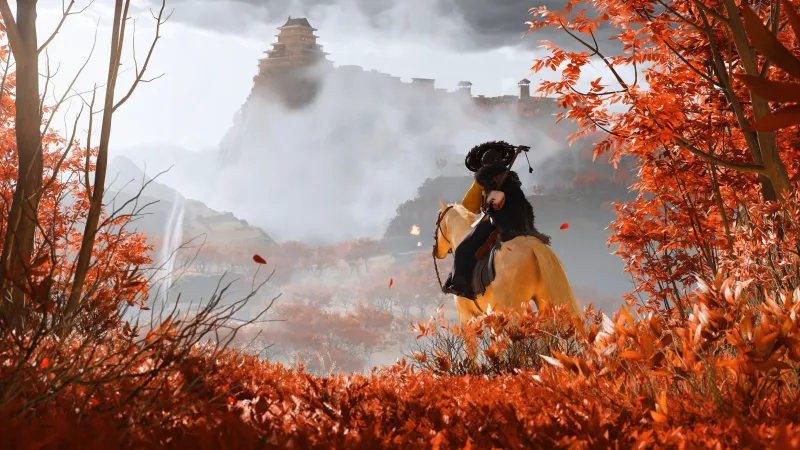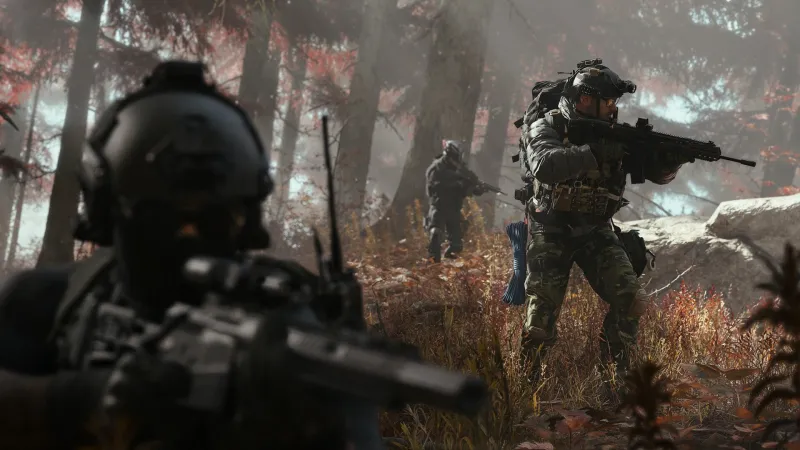
NBA The Run Preview – The NBA Street Spiritual Successor Is A Strong Prospect

NBA The Run

Platform:
PlayStation 5, Xbox Series X/S, PC

Publisher:
Play by Play Studios

Developer:
Play by Play Studios

Release:
2026

Rating:
Everyone

When I was in high school, few games captivated me the way NBA Street Vol. 2 did. I loved the evolution from what NBA Jam and NBA Hangtime accomplished, bringing forward the gravity-defying, rim-rattling dunks and no-rules defensive play, and recontextualizing it through the then-current streetball craze. The result was a smash hit that bridged the gap between die-hard sports gamers and the wider mainstream audience. Both sides of that aisle ate it up. However, after Electronic Arts shuttered the EA Sports BIG label and companies like Midway went under, arcade-style sports games became fewer and further between. 

Enter Play by Play Studios, a team consisting of several seasoned sports game veterans, including Mike Young, who worked on the NBA Street, FIFA Street, and the SSX series before becoming creative director on the Madden franchise for nearly a decade. In 2021, the studio began working on a streetball game called The Run: Got Next, consisting of entirely fictional characters. Around 2024, the NBA caught wind of the project and contacted the studio about licensing its teams and players. 

Game Informer

While the game now contains 32 NBA players from across the league, it retains all the core tenets the team went into the project with, namely fast-paced, approachable arcade-style gameplay and injecting personality. The result is NBA The Run, an online-focused 3v3 game that treats its players less like unidentifiable players amidst a greater team, similar to how many sim-focused sports games can feel, and more like characters in a hero shooter. Every player is hand-crafted, from their animations to their looks, creating exaggerated, yet faithful appearances that aptly capture how they look and play within these 3v3 games.

I experience this firsthand during a gameplay session with the developers, which shows me this game is more than just talk. Everything on the court feels fantastic, whether you’re talking the satisfying dunks, the hard-hitting defense, or the swish sound coming over your speakers after draining a shot from downtown. And not only do more well-rounded players like Anthony Edwards and LeBron James control completely different than specialists like Steph Curry and Giannis Antetokounmpo, but Play By Play Studios approached them with the idea of making the players feel like characters, pulling inspiration from notoriously overpowered players like Bo Jackson in Tecmo Bowl or Michael Vick in Madden NFL 04. That was certainly true when looking at an unstoppable force like Victor Wembanyama, who can dominate in the paint on offense or defense, or drain shots from beyond the arc with decent regularity. 

Game Informer

Building a well-rounded team is essential, as the ruleset varies from game to game. As you play through the Knockout Tournament structure of NBA The Run, en route to hopefully winning the championship, the rulesets randomize. This means that one game might give extra points for dunks, while another ruleset could incentivize threes. Others, still, could operate on a timer, making it so ball control is crucial if you’re hoping to exert some influence over the clock. If you happen to have an all-bigs team, you’re gambling that paint play will be rewarded, and you’re hoping to the RNG gods that a three-ball ruleset doesn’t come up in the roulette wheel.

I enjoy the unpredictable nature of the rules, which helps keep the experience fresh from game to game. With a push for quick-hit gameplay sessions, you can jump into a tournament, lose your first game in a few minutes, and almost immediately jump back into another tournament. It’s designed with inspiration from games like Fortnite, where once you lose, you can quickly get back into the action with another match. And though it’s all online, you do have the choice to squad up with either match-made teammates or friends, or go into solo play where you control all three players on your team at once.

Game Informer

When I first heard about NBA The Run, I was excited, but skeptical. After all, the single-player career mode of NBA Street Vol. 2 was my go-to experience; would a game, even one that draws heavy inspiration from NBA Street, have the same staying power for me without that long-form destination? While I still miss the Street games, I came away from my hands-on time extremely impressed with not only how well NBA The Run plays, but how the quick-hit structure compelled me to want to keep playing. And with a release coming in June, not to mention a beta starting on May 1, I’m looking forward to the opportunity to get back out on the streets as my favorite NBA stars.

Spoiler-Free Tips And Tricks To Know Before Starting Saros

Game Informer

Like its spiritual predecessor Returnal, Saros is a challenging game, but not an insurmountable one. Frankly, on the Dark Souls scale of difficulty, I personally find Saros to be less challenging (in a complementary way) than From Software’s games and the Souls games it has inspired. Starting Saros might be intimidating, but the reward of the experience is worth the effort. Below you will find some tips both to help you get started and even some to help you along as you start making good progress. I wish I had known these before I started the game, but now, with the aid of my hindsight, you can start with some great tools to survive Carcosa.

For Game Informer’s written and video review of Saros, follow the link.
Game Informer

Absorb Blue, Dodge Yellow, Counter Red

There are three different colored projectiles you have to worry about in Saros. Managing how to deal with these is arguably the primary gameplay mechanic. Knowing how to stay alive in the face of thousands of bullets flying at your face will actually serve you better than making sure you’re firing off your weapons. It will feel like chaos at first, but the headline of this tip is the simplest summary for how to succeed.

Hold down R1 to activate the shield when you’re about to get hit by blue projectiles, and make sure to release your shield as soon as it’s safe. You can absorb yellow projectiles with the shield, too, but it has its downsides, so it’s best to just always avoid them by dashing through them or jumping over them.

It will be some time before you start seeing red projectiles and receive the ability to counter them, but these cannot be dashed through. You must jump over them, or press R1 to essentially melee them away. Do not be scared of countering the red projectiles! The window to knock them back is big, and successfully doing so basically gets rid of all of them. Get the hang of countering them as soon as possible.

When in doubt, however, or if things are getting overwhelming, jump and dash. Better to stay alive and out of the way than to miss the window on absorbing blue projectiles or countering red ones.

Game Informer

The Smart Gun Is The Smart Choice

There are a lot of gun options in Saros and you will find what you like and what works for you over time. I suggest, however, early on (and later on, too, frankly) gravitating toward the Smart Gun options. The Smart Guns do a lot of the aiming so you don’t have to and you can just hold down the trigger while you concentrate on dodging projectiles and staying alive. There are stronger weapons that do more interesting things, but the Smart Gun will help you get your feet under you in the beginning.

Game Informer

Don’t Save Health Items

In Returnal, there was a somewhat helpful, albeit inconvenient, strategy where you could leave health items on the map and mop them up before heading to a boss. Picking up health items at full health also had a benefit in Returnal. In Saros, those kinds of strategies do not exist. Picking up a healing item at full health gives you Lucenite, which you need for permanent and impermanent upgrades. It may feel a little wasteful to pick up a health item when you don’t need it, but more Lucenite is good and, more importantly, progress in Saros is almost always a one-way trip. You rarely, if ever, can go backwards through a level.

Keep The Weapon You Like, Even If There Are Stronger Ones

It is tempting to automatically pick up the weapon with the bigger number. It probably does a little more damage. But, after you’ve spent some time learning the game and figuring out which weapons you like, it is often better to keep a weaker weapon that fits your playstyle than it is to take the incremental upgrade you’re not as comfortable with. The other advantage of not grabbing that slightly better but worse-feeling weapon is that by the time you do find the weapon you like later, it will be a lot stronger.

Hold L1 To Sprint Faster (Sometimes)

Arjun runs incredibly fast, and you will be constantly dashing out of danger with L1. But know that when all the enemies are defeated, and you’re just trying to get to the next point of interest, you can hold L1, and he will somehow run even faster. It also works as an indicator of whether or not you have defeated all the enemies if you don’t feel like looking for red dots on the mini map.

Game Informer

Chase The White Flag

There will often be two paths in front of you, indicated by blue and white flags on the mini-map, or in the HUD if you scan the surroundings by pressing down on the d-pad. The blue flag is the primary path. The white flag is the optional path. In general, it is always worth pursuing the optional path. Sure, you will fight optional enemies, but the rewards are basically always worth it; Anything to get more Lucenite.

Game Informer

You Should Probably Just Activate The Solar Eclipse

Often in Saros, you are forced to activate the solar eclipse to progress, but sometimes you can choose not to. In general, however, it is pretty much always worth it to go ahead and activate it. Enemies are a little tougher, and they don’t shoot as many blue projectiles at you, and the upgrades all come with downsides, but without the eclipse, certain paths are closed, and it’s not worth missing out on  those potential upgrades.

Game Informer

Pick Based On The Detriment, Not The Upgrade

Speaking of all that, before you activate a solar eclipse, all the upgrades are fully positive. There is no reason not to grab them. It’s why you don’t have to hold down the triangle button to pick them up. After the solar eclipse, however, all the upgrades have attached downgrades. Here’s the thing, though – you will always run out of room for upgrades, so you can be very picky about what you take. Rather than looking at the upgrades, pick based on the detriment. For example, I never pick up anything that limits the refresh on my dash ability. It will never be worth it. Losing a little Lucenite when I take a hit, however? Or fall damage, something that is very easy to avoid by dashing right before you hit the ground? Or doing less damage while stationary in a game where you are constantly moving? I will barely notice those. Frankly, I don’t even look at the upgrade part of it anymore. Just weigh if the downgrade is worth it.

Use Power Weapons Before Picking Up Health

Getting hit by yellow projectiles poisons Arjun, in a sense. It essentially makes his health bar smaller. You can undo the poison, however, with power weapons. Power weapons are deployed by fully depressing the left trigger and firing the right trigger. Some function like a rocket launcher, some charge up, and some just need to be held down. Absorbing blue projectiles with the shield collects ammo for the power weapons.

Here’s the thing to know about using power weapons to undo poison – they do not need to connect with enemies. So, if you’re looking at a health item, but you are poisoned, fire off a few power weapon shots before picking it up. Don’t worry, those weapons get powered back up pretty quickly.

Game Informer

Use Your Rerolls, But Save Them For Later

From the beginning, you will always have a few rerolls (called Acolyte’s Wager) in your pocket before every run in Saros. You can use these to delete artifacts or try to get something different from a random upgrade drop. These rerolls refresh every run, so just use them. My suggestion is to use them right before the boss to try to get your favorite weapon.

Don’t Forget Melee

Arjun starts with a melee attack (Selene had to find an energy sword in Returnal), but in the midst of all the gunplay and bullets, it’s easy to forget it exists. The attack is strong, so don’t forget to punch a monster if it makes the mistake of getting too close. It is also required to get through red energy doors and remove red energy shields from enemies. Dashing in, punching, and dashing can be a good strategy. Don’t forget it’s an option.

Always Go Halcyon

Sometimes you will be given the choice between Halcyon and something else. I never know what the other thing is because it is basically always in your best interest to grab the Halcyon. These are a valuable currency for permanent upgrades, and there is a limited number of them in the larger game. In the late, late game, I have run out of things I can upgrade with my Lucenite, but I have plenty of Halcyon upgrades still available. I wish I had lots more.

Game Informer

Save Your Keys For Doors

You will find the occasional key in the world, and permanent upgrades allow you to start runs with keys, as well. The keys can be used to open doors or unlock yellow chests. In general, the yellow chest upgrades are always a bit underwhelming. The locked doors, however, tend to have a lot more and better stuff. My strategy was to always keep one key for a future door, and then any extra keys on those yellow chests. However, it’s best to save unlocking yellow chests for later in the levels, even if you do have keys.

Game Informer

Opt To Lose An Artifact

Once you defeat the second boss (congrats!), you will be able to elect some pros and cons for your runs in the Carcosan Modifier section of Primary’s menu. Picking these really pertains to your playstyle, but one you can definitely take advantage of on the “make game harder” side is Artifact Destruction, where you lose a random upgrade Artifact when you move to a new biome. You will always run out of room for Artifacts anyway, so losing a random one only gives you a chance to get something new. Frankly, it’s a good thing.

Game Informer

Don’t Worry About Saving Overdrive Too Much

The Overdrive attack (activated by pressing L3 and R3), unlocked about halfway through the game, is a powerful, limited-use attack that is great to use against bosses. It powers up based on how much damage you’re doing to enemies. The understandable temptation is to save and use it against the bosses, but you don’t have to be too judicious with it. It powers up fairly fast (and can power up even faster with permanent upgrades), so if you’re fighting a strong miniboss or are just getting overwhelmed with too many enemies, go ahead and use it. I am not saying use it immediately whenever it becomes available, but just know it will be back pretty quickly. Even at its lower levels, you should be able to use it twice during a boss fight.

Game Informer

Take Note Of When The Bosses Are Invincible

Pretty much all the bosses in Saros have phases, and they cannot take damage while switching phases. This is indicated primarily by them not taking damage when you shoot them, obviously, but also by a grate appearing over their health bar. Saros is a game that moves very, very fast, so it’s easy to miss that all the bullets you’re firing aren’t doing anything. The problem I ran into a few times is that I was firing off valuable power weapons or worse, the L3/R3 attack, and it was a complete waste. So, this is just a warning to be mindful. When the grate covers up their health bar, don’t use the big guns.

Thick As Thieves Will Launch At $5 In May With ‘Introductory Campaign’ And Expanded Upon With Future Content

Thick As Thieves Immersive Sim Single-Player OtherSide Entertainment Warren Spector May 20 Release Date Pricing

Developer OtherSide Entertainment, the studio led by Deus Ex and Thief: The Dark Project creator Warren Spector, has revealed that its upcoming stealth adventure game, Thick As Thieves, will only cost $4.99 when it launches on Steam on May 20. Alongside this pricing news, OtherSide has detailed its plans for the game, highlighting that the initial content offering at launch will be an “introductory campaign.” 

This introductory campaign will feature 16 missions set across two replayable maps and six pieces of gear to unlock. OtherSide says the campaign will run at least four hours, but is just the beginning of the studio’s plans for its 1900s alt-history city of Kilcairn. The studio says its intention is to expand the setting and the stories of Thick As Thieves in future content, according to a press release. “This decision reflects the team’s desire to bring players into the world sooner, and to give the team the flexibility to develop additional content informed by how players engage with the game.” 

To go with today’s news, OtherSide also released a new developer walkthrough with more than five minutes of new gameplay, and you can check it out below: 

Thick As Thieves will launch on May 20 on PC via Steam. The game is planned for PlayStation 5 and Xbox Series X/S as well, but there’s no word on when to expect those versions. 

In the meantime, read Game Informer’s exclusive preview of Thick As Thieves, and then read about how the game recently abandoned its PvPvE elements to focus on being a single-player and co-op adventure

Are you picking up Thick As Thieves next month? Let us know in the comments below!

Saros’ Creators Say The Returnal Successor Is About Obsession, Greed, Power, And Corruption

Game Informer

Saros releases this week, April 30, and it’s good. You can read my review right here. Ahead of its release, I spoke with Housemarque’s creative director, Gregory Louden, and art director, Simone Silvestri, about the game’s development, its cosmic-horror inspirations, Sony’s purchase of the studio following the release of Returnal, keeping narrative secrets, and much more.

Game Informer

Game Informer: How quickly did development on Saros begin after Returnal? What was that process?

Gregory Louden: Right after Returnal launched, there was a very small team, which was basically kind of the small group of Returnal directors, and we essentially started to think of the new game. But we also knew we wanted to continue to support Returnal, so there was the Tower of Sisyphus Returnal Ascension update. A lot of the Housquemarque team was working on this, sort of the pre-DLC we did for players that came out a year later. And then there was a small vision team that was beginning to work forward on what would be Saros.

From there, the game’s changed in many ways, but in other ways, it hasn’t, like some of the core goals. We knew after Returnal we wanted to explore permanent progression systems, so “come back stronger” was one of the initial kind of lines that we had Arjun say in a script, and it became like a vision statement for the entire game and even our tagline. We knew we wanted to add more characters and more viewpoints. We love the story of Selene and Returnal, but we wanted to add more viewpoints to cosmic horror. And last, but not least, a very early point was this idea of the eclipse and how it’s such a special cosmic event. It’s literally two celestial bodies that felt so ripe for cosmic horror. So it was a small team with big ideas that started to kind of build the game. And then after Returnal Ascension, the full Housemarque team joined in, and the result is Saros.

Sony purchased Housemarque after Returnal launched. Was it simply a matter of Sony loving Returnal so much that it wanted to lock you in and have more games like Returnal, and then it was off to the races?

Gregory Louden: Yeah, it’s been amazing. They basically, to your point, said, “We love Returnal. We love your identity. We think you’re doing something special.” I think [CEO of Sony Interactive Entertainment] Hermen Hulst said, like, “Bring on the bullets.” So, he knew. From there, it was just about you building something really special, and we started talking about our ambitions and how we wanted to do something new, and we wanted Returnal to stand on its own, and PlayStation supported us. It’s been really, really amazing and such a fantastic opportunity for us, and a lot of support for this really bold, bold game that we’ve done, and us really wanting to kind of push the hardware and push the medium and push ourselves as a team. So, yeah, amazing support.

Saros is not a Returnal sequel, but they are intentionally mechanically very similar, which, you know, is intentional. Was there a temptation to try something completely new, or was there just excitement about reevaluating Returnal’s mechanics and expanding them?

Gregory Louden: I’d say there was excitement about wanting to re-examine them. We really loved what we made, but we also knew we wanted to push it and reshape it and elevate it and sort of twist it to a point. We had all these amazing lessons that we learned, and we wanted to keep pushing them and add new layers. And Returnal really resonated with a lot of people, so we knew we built something special. It was just about refinement, not reinvention. It was really that we’ve got something. Let’s keep expanding the formula and keep trying to build something really special. It was a very early decision to say let’s keep building, but let’s also add elements that change it. Have some reverence for the past, but also an ambition to be innovative and push for new things.

Game Informer

Returnal (2021)

Returnal and Saros have similar art direction. Is it hard to exist in this dark, oppressive world you have created? Does that hurt your brain and emotional state over the course of many years?

Simone Silvestri: I think it’s actually a very interesting place to be creatively. I love cosmic horror, and that’s something that we feed off a lot. And I think that there’s a reason why Lovecraft did Cthulu in the water, right? Because at the time, the ocean was so mysterious, and as humans, we keep asking questions out of the darkness. But now we have light everywhere, so the final darkness is the void, is the space, is the cosmic horror of the unknown, right? And to me, that’s that what stimulates me, that stimulates my curiosity a lot. I think that it resonates a lot with players as well, because you have this haunting mystery where to know is to be damned, but to not know is to be lost and you can feel that through this game, as well.

Actually, I was very happy when I got onboarded onto the project, and [Louden] talked to me about the eclipse as this cosmic force. There’s nothing bigger than actual cosmic bodies creating a cosmic horror. To me, that was just the perfect golden thread that I would want to follow throughout that direction. And that’s why we went into building something so extreme where there is an entire civilization dedicated to the worship of the celestial body, and it allowed us to go and draw upon a lot of history and mysticism for our civilization.

Then, from there, you always want to abstract yourself from that grounded aesthetic and start injecting things that are very different. We draw upon anime and comics and 80s sci-fi movies. And sometimes just an animated object on your desk becomes a shape language of some kind that you want to introduce. I think the thing that we love doing more the most is to bring contrast, so that you create this visual friction. And in that visual friction, you can find something very unique. We’re always out to do this cocktail to create a character out of the world, character out of the architecture, character out of the design of Arjun himself. And how do we describe our plan of cosmic order? And is it similar to the Returnal in the sense that we revere the atmosphere of that game. Returnal is a master class of atmosphere, so we wanted to make sure that we could preserve the atmosphere. But this game needed something different. It needed its own expression. It needed its own identity. And that was really an awesome journey to get together.

You mention cosmic horror, and there is, of course, weird fiction like The King in Yellow, which is specifically relevant to Saros. You also call out media like anime and comics. Are there other specific stories, characters, monsters, or elements of that larger Lovecraftian fiction that you looked to specifically for Saros, or maybe even specific elements of The King in Yellow?

Simone Silvestri: We can always go into specifics and find references, but usually it’s just for one piece of one element. And I think Robert W. Chambers with The King in Yellow was the main starting point. But visually speaking, it’s really about the blend. It’s really about finding more than one source and taking each piece that you want to express the feeling that you need. And for us, the golden thread has always been the narrative, and then the constraints of gameplay, and what do we need to do to facilitate gameplay with that.

Gregory Louden: Similarly, I’d say there was kind of an initial, sort of genesis point for us to go back to. The Lovecraft resource was really inspiring for us with Returnal, but we also wanted to do something new. So, everything was unique for Returnal, but then we wanted to find more cosmic horror, and Lovecraft was inspired by The King in Yellow, so it felt like a natural way to go deeper. And then, from there, there are connections in this game, but in the end, it was just a starting point, and everything else we’ve tried to create has been a brand-new science fiction world. All of our overlords, the bosses you meet, the meanings, the Echelon crews, it’s us trying to create this really exciting new dark sci-fi world. We love dark sci-fi on our team. We love all the greats and we aspire to try to create something really special for players to get lost in that feels familiar, but also new and different, and ideally, to them, feels really bold. They haven’t ideally played a game like this.

Game Informer

Across Returnal and Saros, there are themes of madness and incomprehension of vast forces and obsession. Why is Housemarque attracted to that? Is there something larger to be said there about making a video game and becoming obsessed with making a video game? Or am I reading too much into it?

Gregory Louden: It comes from a place, with both Returnal and Saros, where we wanted to explore, like universal human themes and really try to push the medium in a way. It was a big discussion we had in Returnal that we have a responsibility where we’re working on the next generation of PlayStation consoles. What can we do to help push the medium and have new types of gameplay, have new types of stories? For us, we wanted to explore… Saros is, in a lot of ways, about obsession. It’s about greed. It’s about power. It’s about corruption. We wanted to explore these grand themes and explore them through our gameplay, explore them through our story, through our art, through our sound, through our music. I think it was just a grander aspiration of wanting to do something different and like show new ways to kind of examine different concepts, so I think it came from there. And once again, it’s the lens of dark science fiction that lends you towards these types of ideas and concepts. I think that’s why you’re seeing this. It’s us aspiring to explore bigger ideas through our gameplay and through our story and through our worlds.

Returnal. Saros. Separate games, obviously. Different characters, different planets, different circumstances… but do they exist within the same universe?

Gregory Louden: This is something that we prefer the players to figure out rather than we answer.

Where is the line between laying it all out and telling you what’s going on and not telling you at all? What is the value of not stating narrative details directly?

Gregory Louden: I’d say the value in a lot of ways, and it is a fine line for us, but our goal is to create something that’s mysterious and haunting. The stuff that’s really inspired us as a team is it almost feels like… how was this made? It almost feels like this special thing, even though it’s just made by a team that’s working together on something. But I think in the end, we’re doing it because we want to create a really deep and personal experience for players, where everyone who plays Saros or Returnal will have their own experience. The world shifts. You get the story in different ways. You get different meanings. Everyone comes to these games with different ideas and experiences, and the game challenges you. The same way the gameplay challenges you, the story does, too. The thing that we loved about Returnal, and we aspire to with Saros, is everyone will come out of it with different ideas and different thoughts and different meanings. We do it so it’s not just one answer. There are many answers, and there’s something beautiful in that, then everyone can have their own experience with something, and can take something away from it.

Do you want to do DLC? Do you want to do expansions for Saros like you did Returnal?

Gregory Louden: We’re only talking about Saros for launch day.

Game Informer

[Editor’s note: Below is a minor mechanical gameplay spoiler I wish I had known before playing, but I decided to spoiler-gate it in case you wanted to avoid this small detail.]

The tombstone-shaped chests where you get new items and new guns: you can either press triangle to open them, or you can punch them open. Do you get different items depending on how you open them?

Simone Silvestri: That’s one of the joys of gameplay-first games, because this is one of those moments in which there is synergy between art and gameplay. I made the design of the chest together with our associate art director, [Ilmari Kumpunen] and we were like, “Wouldn’t it be great if it was this sort of like weird crystal formation?” And when we put it into the game and the first thing that designers did was say, “Oh, we need to break this. We need to punch this immediately. This is how you’re going to open the chest. You’re going to punch them.” And the reason was because we don’t want to have any animation time when you open a chest. Otherwise, we slow you down. We get you out of the flow. No, you need to be able to jump dash, break the chest, press triangle, get the item. Keep going, stay in the flow, right? So that’s very intentional, that it’s so fast. It was awesome to see them go, “Oh, that looks breakable. We’re just gonna enable you to punch it.” And I love when that happens because there are very few examples of this throughout the game that are this perfect thought synergy. We didn’t set out to make it like that. It’s just happened because they wanted to break it. And for us, it was like, “Yeah, that’s why it looks like a crystal.”

But should I press triangle to open it? Or punch it? Do the different actions lead to different outcomes?

Simone Silvestri: Oh, yeah. It’s the same thing. It’s just you get to discover a different interaction for it that makes you go faster.

In a way, maybe accidentally, sometimes, at least initially, it made me go slower, because I would stop in front of it and be like, “Wait, should I punch this? Or should I press triangle?”

Gregory Louden: It was very intentional that it’s Arjun punching. He punches through these.

Oh, yeah, it feels good. I usually punch them.

Gregory Louden: [laughs] Good for you.

Could you define the difference between a roguelike with a ‘K’ and a roguelite with a ‘T’? It’s a question I like to ask rogue developers to learn where they land on it. And also, what is Saros?

Gregory Louden: I’d say, in a lot of ways, it’s just been a starting point for us, and I feel like for us as a team, it’s a style of game. We feel like we’re creating something different in a lot of ways. If you want to play something like Saros, the only other game like it is Returnal in terms of the gameplay, the story, the atmosphere, the style. There are elements of the shape-shifting and the change, but it feels like we’re creating something different. I love the genre and love the style, but it’s not something that we’re beholden to. We’re almost trying to push through and create something different.

But to your other point, I think it’s complicated, the -like or -lite. It’s tricky. I feel like I’m probably going to get it wrong, because there’s such specificity, and people are so into it. But I think in a lot of ways, I usually just say rogue that it has rogue elements, rather than saying it has other things. Because in a lot of ways, we do stuff that isn’t true to the original Rogue and it’s when we do that that we’re a roguelite. But in the end it’s not something we really use to describe the game, at least from my side.

Simone Silvestri: To be honest with you, the difference is very ephemeral to me. We very rarely talk about Saros as a rogue game, because we have so many elements that are not that, and we are not trying to go into a genre intentionally. It’s just, “What fits replayability? Oh, these kind of things.” What surprises the player when you get back out into the world and it has shifted. Why do we do that? Because we want you to play something different every time, but also because we want to have a moment of tension for the player, where you don’t recognize your surroundings, right? And the cycle of death and rebirth is interesting thematically and it brings something to the creative endeavor that a linear campaign maybe cannot do.

That’s kind of the sphere that we’re interested into. But it’s more than, “We need to make a rogue game.” It’s just that some of those mechanics are actually a very good fit for our second-to-second action gameplay, for our minute-to-minute power progression and our hour-to-hour psychological narrative. They just fit together really well. But it’s hard for me to categorize Saros in any of these, because it’s sort of trying to do its own thing, and we didn’t set out to be in a genre or defy a genre. It just happened organically as we were trying to make the best game possible.

But yeah, the difference between the two, to me, is very difficult to articulate, to be honest.

Game Informer

I love that within the genre – the loop – how Saros contextualizes it and makes it part of the story. I love that element and I imagine that it was something early on that you wanted to craft a story around being a video game as Saros is. Is that a fair assumption?

Gregory Louden: Yeah, definitely it was. It was something that with Returnal, it was a core thing, and it was important to us with Saros that we have that as well. The eclipse remakes the world, and there’s the mystery of how Arjun is remade as well. So, yeah, yeah.

Do you have any Saros tips for new players?

Gregory Louden: I’d say the big thing is that projectiles are not obstacles. They’re opportunities. So run into the projectiles. Collect them. Another quick tip: collect the Lucenite. It’s what Soltari has come to Carcosa for, and it’s how you’ll grow Arjun and how you’ll get him to the end. So really, run towards the projectiles. Run towards the Lucenite. Collect it. That’s a really big survival tip.

Simone Silvestri: That’s the biggest one, right? Learn to dance within the combat so that you can be comfortable in the eye of the storm, because that’s where the game is at its absolute best. The next thing I would say… just be curious. There’s so much depth in the gameplay systems, in the narrative that we built into the world, and in the building of the world. I think we are rewarding curiosity with very, very interesting elements. So that’s definitely number two on the list.

I like that tip because I was initially scared to counter the red projectiles. I was pretty late in the game when I finally started doing that. I just wanted to thank you for making that parry window actually pretty generous. That’s the tip I am going to offer new players: don’t be scared to parry the red projectiles.

Gregory Louden: You’re welcome. It’s important.

Any recent rogue games that you’ve enjoyed?

Simone Silvestri: Hades II has been, for me, really, really good. I really, really enjoy Supergiant Games, so that’s just an awesome rogue game. And for me, one of the standards of that particular genre.

Gregory Louden: I would give a shout-out to Hades II, as well. Wonderful game. Love Balatro. That’s the thing with the rogue genre. It’s so vast. Special games, both of them.

I asked Louden and Silvestri and few questions about the game’s ending, but will save those for the future. Check back on May 8 and I will add the spoiler questions to the end of this interview.

The Blood Of Dawnwalker Launches This September, New Story Trailer Released

The Blood of Dawnwalker Gameplay Overview Vampires Witcher

Bandai Namco has revealed that The Blood of Dawnwalker, the vampire RPG from former Witcher 3 and Cyberpunk 2077 developers, will launch on PlayStation 5, Xbox Series X/S, and PC on September 3. Alongside the news, developer Rebel Wolves has released a new story trailer showcasing more of what to expect from protagonist Coen’s adventure when it begins later this year. 

This new trailer highlights some of the characters Coen will meet in the game – some friends, some foes – as well as never-before-seen locations across the mysterious Vale Sangora region of the Carpathian Mountains. This trailer was one part of a larger road-to-launch event for Rebel Wolves in the lead up to the September release of The Blood of Dawnwalker, and you can watch today’s entire stream here for more details. 

Check out the new story trailer for The Blood of Dawnwalker for yourself below: 

Game Informer recently attended a preview event at Rebel Wolves Poland-based studio to go hands-on with the game, and you can read our Blood of Dawnwalker preview thoughts for more about why it’s a game we can’t wait for more of. 

The Blood of Dawnwalker launches on PlayStation 5, Xbox Series X/S, and PC on September 3. 

In the meantime, check out the first gameplay trailer for The Blood of Dawnwalker, and then read about why The Blood of Dawnwalker is more than The Witcher with vampires. Check out this 20-minute Blood of Dawnwalker gameplay video after that.

Are you going to play The Blood of Dawnwalker this September? Let us know in the comments below! 

The Blood of Dawnwalker Preview – A Choice-And-Consequence Playground Lives Up To The Witcher 3 Pedigree

The Blood of Dawnwalker

Platform:
PlayStation 5, Xbox Series X/S, PC

Publisher:
Bandai Namco

Developer:
Rebel Wolves

Release:
2026

Rating:
Mature

Rebel Wolves is a studio comprised of several instrumental members of the team that brought us The Witcher 3: Wild Hunt, a game considered by many to be one of the greatest video games of all time. Perhaps most notably is Konrad Tomaszkiewicz, director of The Witcher 3 and its critically acclaimed expansions, as well as a second director and head of production of Cyberpunk 2077. But Tomaszkiewicz isn’t the only member of the team that came from RPG royalty, as several other important members of the Witcher 3 development team, as well as former employees from studios like Techland, Rockstar Games, Riot Games, People Can Fly, and Capcom, joined the studio early on. Now, with its debut game, The Blood of Dawnwalker, on the horizon, I flew to Warsaw, Poland, to get a good look at what this immensely experienced team has been up to since its founding in 2022.

The hands-off demo I witnessed began with a cutscene showing a man and a young girl on the run through the Vale Sangora region, a Carpathian mountain valley, in 1347. We learn that this is Coen, the game’s protagonist, and his younger sister, Lunka. This era of 14th-century Europe is riddled with crises, including a plague outbreak that decimated the continent. It turns out that Lunka has the plague, and soldiers have orders to stop the spread by any means necessary. Though Coen pleads for her life, the soldiers strike her down. However, a group of vampires shows up, decimating the soldiers and feeding Lunka their blood, healing her. They save her life, but the sequence of events weighs heavily on Coen. From there, the extended gameplay demo begins.

Game Informer

The Blood of Dawnwalker is a dark, choice-driven action RPG that plays into the pedigree of the developers behind it. However, when I say it’s choice-driven, it may lean even more into that than even The Witcher 3, which is acclaimed for enabling players to progress through the story in their own way. During the prologue, I see that play out, as players are asked to retrieve herbs to save their mother’s life. It feels like a main quest, but you can actually completely ignore it. Similarly, Coen runs right past a woman pleading for help, instead opting to help a man whose brother didn’t come back from his trip into the woods, as well as a pig-owner whose prized hog escaped. 

Along the way, I encounter various combat situations. Using directional combat, where you react to the direction from which the attack is coming as well as the timing, the team at Rebel Wolves aims to deliver engaging combat that keeps players immersed, rather than feeling like passive participants in the combat. There are omnidirectional parries as well, but they consume more stamina.

Game Informer

Performing certain actions, selecting certain dialogue options, and pursuing quests consumes time segments; there are eight during the day and eight during the night, and the game takes place over 30 24-hour periods. This means you must be judicious about which quests you take on, and you may not be able to do everything in a given time. 

If 30 days sounds like a short time in which to tell an in-depth RPG story, Tomaszkiewicz claims it will still offer plenty of gameplay as you navigate that month. “Right now, the average [playthrough] is 50 hours, but it depends on which difficulty you play, it depends on how picky you are, how much you explore, and how much you upgrade your gear and so on,” he says. “A few people from our team have finished the game […] and there are big differences. It’s like from 50 hours to around 70.”

Game Informer

Not only that, but some quests require swift action; if you opt to find the missing brother early in the day, he’s still alive in the cave in which he fell. However, if you put it off until later, you won’t have made it in time and will have succumbed to his injuries. Similarly, since we ignored the woman pleading for help, her quest went unfulfilled and she is eulogized in a later cutscene.

In The Blood of Dawnwalker, Coen is the eponymous Dawnwalker, thanks to a high content of silver dust in his blood from his childhood spent mining the precious metal, preventing him from becoming a full-on vampire. This means that he’s a human by day and a vampire by night. That brings with it different abilities and ways to approach quests. Sometimes, different quests will be available depending on when you’re playing, plus you can approach others in substantially distinct ways, given that you have various supernatural powers as a vampire, plus additional combat abilities. 

Game Informer

Thanks to his claws and fangs, Coen can handle himself without a sword in his vampiric form, including feeding on enemies to regain health. Not only that, but he can also traverse huge gaps, scale walls, and slide down steep cliffs using his claws. However, he must also quench his thirst for blood; if his blood cravings become too great, he can lose control and be forced to kill the first NPC he comes into contact with. If you’re lucky, it could be a completely inconsequential character, but you have the potential to kill either a favorite NPC or someone who has a questline. And since the story is designed to adapt to your choices, you could inadvertently cut off entire parts of the game.

“Because this is a new company, we have the chance to do something innovative and maybe more crazy to try, to do something new, and we decided that, adding this open structure will give us the feel of total freedom, and it will boost immersion,” Tomaszkiewicz says.

Game Informer

The demo concludes with Brencis, the main antagonist, attempting to feed on Coen, but the silver burns his mouth. Instead, the vampiric leader pins Coen to a wall with an axe and takes what remains of his family, setting a clear goal of what you must accomplish in the 30 days of gameplay that will follow. 

I came out of my demo wowed by the sheer ambition of what Rebel Wolves is trying to accomplish with The Blood of Dawnwalker. The level of freedom feels head and shoulders above what others in the RPG space are attempting, and if the prologue I witnessed is any indication, the studio’s stockpile of seasoned game-development talent might just have pulled it off. I’m excited to learn more as we get closer to launch.

Report: Steelrising Studio Spiders Shutting Down Just Six Weeks After The Launch Of GreedFall 2

GreedFall 2: The Dying World

Paris-based developer Spiders released its latest RPG, GreedFall 2: The Dying World, just six weeks ago, back in March, and it might be the studio’s last game. That’s because, according to a new report from French outlet Origami, Spiders will soon close its doors. 

Origami reports its sources say the studio will shut down after Spiders’ publisher, Nacon, was unable to find a buyer for the game maker following a filing for insolvency last month. The publication reports that the court-appointed administrator overseeing Nacon’s restructuring will request Spiders’ liquidation before the commercial court tomorrow, a move its sources say is a mere formality at this stage, according to Google Translate’s transcription of the article. 

Within the studio, developers have been updating resumes and holding “self-study sessions” in place of working on games, according to Origami.

Game Informer has reached out to Spiders for confirmation and comment, and will update this story if it learns more. 

[Source: Origami]

The hearts of Game Informer staff are with everyone affected by this closure. 

PowerWash Simulator 2 Gets Star Wars DLC This Summer

Game Informer

PowerWash Simulator is no stranger to crossing over with major franchises. From Final Fantasy and Warhammer 40K to Shrek and SpongeBob, there are few corners of pop culture the series has yet to touch. Today, developer FuturLab announced the series is adding one more crossover to its wheelhouse, this one from a galaxy far, far away. 

Check out the teaser trailer for the PowerWash Simulator 2 Star Wars pack below:

The teaser shows little gameplay, but it looks like players will visit a handful of destinations from Star Wars’ original trilogy: the icy planet Hoth, the desert planet Tatooine, and the hangar of an Imperial Star Destroyer. A press release says the pack will also include “a smattering of stops along the Outer Rim.” It also says you (and your friends, if you choose to play in co-op) will play as “P0-W2, a humble Class Five cleaning droid” to spray down Star Wars-themed buildings, vehicles, droids, and more.

While the original PowerWash Simulator has numerous DLC packs available, this is only the second released for PowerWash Simulator 2, the first being five levels set in the Adventure Time universe.

The Star Wars pack will drop sometime this summer. For more PowerWash Simulator 2, check out our review from last fall.

We’re Finally Getting A Sequel To Alien: Isolation, 12 Years Later, And The First Teaser Is Here

Game Informer

Sega released Alien: Isolation nearly 12 years ago, in October of 2014, and to celebrate Aliens’ 40th Anniversary yesterday, developer Creative Assembly released a teaser trailer for the sequel. Yes, a sequel is actually/finally happening more than a decade later, which is just enough time for Alien: Isolation, which received mixed reviews at launch, to reach cult-hit status amongst fans of Xenomorphs and retro-sci-fi tech. 

The video is titled “False Sense Of Security,” and given its teaser nature, it doesn’t reveal too much at all. We see a menu pad with a low-battery light, which turns on with a new battery, before a large hangar door opens, suggesting this sequel might take place on a planet (rather than on a single ship as in Alien: Isolation). That’d be a fitting change for the Xenomorph-stalker horror game, given the first one takes place on a ship (like the first Alien movie) – the sequel movie, Aliens, took Ripley onto an actual planet to open up the horror playground of the infamous Xenomorphs, so we’d love to see the Alien: Isolation sequel do the same. 

Check out the Alien: Isolation sequel teaser for yourself below: 

Though this teaser doesn’t necessarily indicate it’s for a sequel to Alien: Isolation, Disney Games sent along a press release to say that it is, in fact, for Creative Assembly’s sequel to Alien: Isolation, putting any doubt to rest. 

Elsewhere, for Aliens’  40th Anniversary, Disney Games highlights that developer Survios recently released Alien: Rogue Incursion – Part One Evolved Edition for Nintendo Switch 2, noting that a PlayStation 4 version will arrive soon. Plus, Behaviour Interactive announced the Bloodbound Pack for Dead by Daylight, and it will feature Private First-Class William L. Hudson as an Ellen Ripley Skin alongside colonial marine gear when it goes live in-game tomorrow, on April 28. 

While waiting to learn more about this sequel, read Game Informer’s Alien: Isolation review, and then read this retrospective about how Creative Assembly built its perfectly evolved AI Xenomorph. 

What do you hope to see in this Alien: Isolation sequel? Let us know in the comments below!

The Video Games You Should Play This Weekend – April 24

Game Informer

There are some very exciting games coming out next week that we posted reviews for this week that you still need to wait for. I am sorry it worked out this way. We are not trying to brag that we already played Saros and Diablo IV’s Lord of Hatred expansion. But we do want to let you know that they are good, we promise! We also reviewed Tide of Tomorrow, though, and that one you can play right now.

Thankfully, there is still plenty to get excited for this weekend. But before that, here are a bunch of the week’s links that we recommend checking out.

Game Informer

Vampire Crawlers

Brian Shea

As a diehard Vampire Survivors fan, I was intrigued to see Poncle’s next project emerge as a dungeon-crawling deckbuilder. Vampire Crawlers brings over many of the same characters, weapons, powers, conventions, and enemies, but through recontextualizing them in this way, it flips the entire experience on its head. I’m having a blast exploring these maps in the first-person view, taking on swarms of enemies, pilfering loot, and building an ultimate deck en route to my ultimate demise at the hands of the monsters with whom I’ve spent tens of hours slaying in Poncle’s previous smash-hit title. I haven’t spent enough time in Vampire Crawlers to render my final verdict, but my early impressions are positive.

Game Informer

Sayonara Wild Hearts & Lorelei And The Laser Eyes

Kyle Hilliard

Earlier this week, Annapurna announced its plans to release some of its games on Switch 2 and that two would be available immediately: Sayonara Wild Hearts and Lorelei And The Laser Eyes. I reviewed both of these games and you can find them by following the links. I like Sayonara Wild Hearts and listen to its soundtrack often. I particularly like its rendition of Clair de lune. The game feels like playing through an interactive music video.

I feel stronger, however, about Lorelei And The Laser Eyes. When it was released in 2024, I booted it up not with the intention to play and beat it, but rather just to check it out so I could talk about it a little on a podcast. I was so quickly enamored with it, however, that I played through the whole game and wrote a review for it, which is not something I often do. It’s just a great, moody, rewarding puzzle game with an interesting story that examines the ideas behind creating art and the value of doing so. If you happened to miss it in 2024 and you have a Switch 2 (and you like puzzles) I can’t recommend it enough.

Game Informer

Diablo IV

Marcus Stewart

With the impending launch of Diablo IV’s second big story expansion, Lord of Hatred, next week, this weekend is a great opportunity to return to Sanctuary. Whether it’s to shake off any rust, catch up on the story via the base campaign or the Vessel of Hatred expansion, or to stop Lilith for the first time, the existing package is already a strong experience worth playing. It’s also a good chance to re-familiarize yourself with the available content and features to appreciate what Lord of Hatred brings to the table (spoiler: it’s a fun expansion, as explained in my review).

Game Informer

Titanium Court

Kyle Hilliard

I often contend to anyone who will listen that 2015’s You Must Build A Boat from designer Luca Redwood, to this day, is my favorite mobile game. It is the sequel to the also-excellent 10000000 and combines a great-feeling match-three puzzle game with some simple base building and RPG mechanics. Since playing those games, I have always been on the lookout for games that take match-three mechanics and combine them with rewarding upgrade systems in a comparable way.

I am not far into Titanium Court, but it has the potential to hit those same high notes that I loved from Redwood’s games, and it is wrapped in a clever narrative package that I am already fairly charmed by. In Titanium Court, you play a match-three puzzle game to collect resources and defend your home castle. Moving tiles feels good, and watching the defense battles play out as a result of the arrangement of the tiles is an interesting palette cleanser. I need to play more (and can now that Saros is kind of behind me), but I am enjoying it so far.

And while we’re kind of on the topic of Luca Redwood games, you should also check out Photographs, a great little puzzle game with small short stories that have really stuck with me even after all these years.