Beast of Reincarnation Review – Game Freak’s Take On Action Combat Impresses, But Little Else In The Game Does

Beast of Reincarnation PlayStation 5 PS5 Xbox Series X/S PC Game Freak Fictions

Reviewed on:
PC

Platform:
PlayStation 5, Xbox Series X/S, PC

Publisher:
Fictions

Developer:
Game Freak

Release:

Rating:
Teen

The protagonist of Beast of Reincarnation is a synthetic human being named Emma. She does not have a soul, but she thinks she wants one. It’s lamentably fitting, then, that Beast of Reincarnation feels soulless. Emma, perhaps appropriately, is stiff and lifeless, but so are her companions and just about every other character in this post-post-apocalyptic Japan. Even the world around them – a network of wide corridors made up of concrete reminders of what was, blanketed in familiar vines, shrubs, and greenery – is stiff. The explorable setting is unchanging and placed within gameplay uninterested in the mystery the setting otherwise evokes. Everything funnels you forward to the next fight, rushing you to advance in an effort to obscure the literal and metaphorical cracks in each zone. Fortunately, that next fight is the best part of Beast of Reincarnation, courtesy of a satisfying combat system filled with experimentation and tense fun. If only the rest of Game Freak’s venture into the action space matched it. 

Game Informer

Emma, a mysterious old man named Brad, a young girl named Kagura, and your trusty wolf companion Koo travel throughout Japanese colonies in a Cleanse Walker mech. Emma, a purifier, is tasked with, well, purifying beasts overtaken by a blight en route to the Capitol, where she must defeat the Beast of Reincarnation to save mankind. 

These characters talk directly to Beast of Reincarnation’s transparent themes, taking a blunt approach and leaving little for the player to dissect or work through. The importance of friendship, family, having a soul, fighting to save people, and more are discussed ad nauseum in overly long cutscenes void of life. These characters are paper-thin, and the story, which features predictable arcs, lackluster villains, and plot beats about Koo you’ve seen in dozens of other dog-related stories, does little to inspire me as the controller of Emma. But her blade picks up the slack. 

Game Informer

Game Freak blends Emma’s Sekiro- and Stellar Blade-style swordplay, which relies on parrying, dodging, and stagger bars, with Koo’s QTE elemental abilities that are reminiscent of last year’s Clair Obscur: Expedition 33 to create an excellent combat system. So excellent, in fact, that sitting through 10-plus-minute cutscenes after each milestone of progression is doubly excruciating. For a game that demonstrates such confidence in its combat, Game Freak is determined to pull you away from it with yet another exposition dump. 

While clearly pulling from the aforementioned inspirations, Beast of Reincarnation’s combat is easier. Bosses and more elite enemies still pose a great challenge, but generous HP recovery, powerful attacks that are easy to pull off, and large parry and dodge windows will help the less experienced feel capable and seasoned players feel untouchable. 

Initially, boss fights are tense arenas for learning and mastering the combat. However, they, too, become repetitive, with recurring bosses appearing far too much, especially for what are meant to be Beast of Reincarnation’s end-of-stage setpiece moments. Pay attention too closely, and you’ll find that enemies share many animations, removing the enigma of duels and bouts. It doesn’t help that Beast of Reincarnation takes a formulaic approach to each stage, either: The big boss of the area appears for a quick fight at the start, runs off when you’ve hurt it enough, and then waits in its lair while you fight through the stage until you reach it for a proper fight. But still, fighting a boss, whether a repeat or not, means engaging in the game’s combat, and doing so is congenial throughout. 

Game Informer

Challenge aside, which comes in three difficulty settings, the combat is rewarding and highly reflexive to one’s strengths. I stuck to an elemental build where I’d begin each fight with Koo’s lightning Javelin equipped with a 2x status build-up mod, allowing my lightning-imbued katana to inflict the “Shock” effect in just seconds. That creates a window of paralysis that lets Emma’s various combo moves and finishers inflict heavy damage and stagger, if not outright kill. 

And that’s just one of the many builds I experimented with in Beast of Reincarnation. There’s room for ranged, stealth, fire, poison builds, and more. Through an expansive skill tree that continues to grow, even after the game’s final (and anticlimactic) fight, there’s no world where two players’ Emmas work the same. Generous attribute points used for raising attack, defense, and the usual standard RPG stats make the act of doing so feel inconsequential, and I rarely paid attention to my progression here. But the subsequent skill points I’d unlock, which let me power up specific abilities and moves in Emma and Koo’s kit, came in the dozens, and working through the associated skill tree was a gluttonous climb of power. 

Game Informer

There’s a unique double jump in the form of a vine that Emma can use to push herself higher, and she can use those vines to whip to high-up perches and locations, but Game Freak is uninterested in how this might affect locomotion outside of battle. Utilizing these vines to get some air and slam down into enemies below with my Helm-Splitter ability is a treat – whipping up to a boring hallway littered with boring enemies to open a boring chest with boring rewards inside is not. 

You will open the same type of chest to receive the same types of resources countless times, and the “take all” button is your best friend because what these items do matters little. There are crops to grow from seedlings collected for Kagura to cook up stat-boosting meals, but these bonuses are negligible. There are skulls to collect to power up your Cleanse Walker, but I had maxed out this mech before the game’s halfway point. There are books (you can’t read) to collect, rations for a hunger system that matters little, and currency you will never struggle to accumulate. Seeking out these resources is as rote as the resources themselves. 

Game Informer

The final act of Beast of Reincarnation, with its telegraphed revelations and color-by-numbers moments, left me feeling… nothing. But the ensuing New Game+ notification stopped me from uninstalling the game after the credits rolled. I don’t know if I’ll return to play more, but if I do, it won’t be because of Emma, but rather, what Emma’s sword can do. 

Score:
6

About Game Informer’s review system

Dave Bautista Reportedly In Talks To Replace Injured Ryan Hurst As Kratos In God Of War Series

Game Informer

Production of Amazon Prime’s live-action God of War TV series halted last month after Kratos actor Ryan Hurst suffered a bicep tear while filming. Since Hurst will require months of rehab following his surgery, Amazon is recasting his role. Variety reports that Dave Bautista may be filling those shoes.

According to Variety’s sources, Bautista is in talks with Amazon to portray Kratos in the upcoming series. Bautista, a former WWE star, is best known for portraying Drax in the Guardians of the Galaxy franchise and the wider Marvel Cinematic Universe, but has notable roles in the Dune series, Blade Runner 2049, Glass Onion, Knock at the Cabin, Army of the Dead, The Killer’s Game, and is set to appear in Road House 2 and Highlander. Bautista is no stranger to the world of video games, as he appeared in Gears 5 as a model swap for Marcus Fenix (after the actor campaigned to portray the character in a movie). 

Game Informer

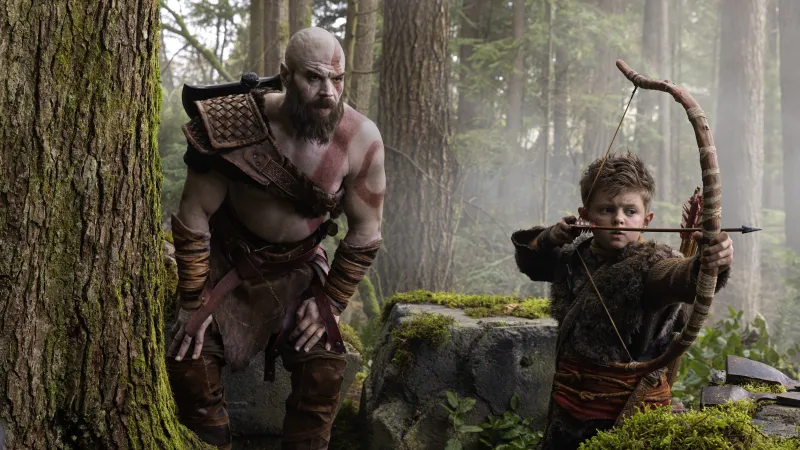
Ryan Hurst as Kratos in a God of War on-set photo

Deadline had previously reported that four episodes of God of War had been filmed at the time of Hurst’s injury; it’s unknown if those episodes will ever see the light of day. 

The rest of God of War’s cast so far remains the same, which includes Callum Vinson as Atreus, Ed Skrein as Baldur, Max Parker as Heimdall, Ólafur Darri Ólafsson as Thor, Mandy Patinkin as Odin, Alastair Duncan as Mimir, Danny Woodburn as Brok, and Jeff Gulka as Sindri. The series will adapt the 2018 God of War and has received a two-season order. 

For more on God of War, the next entry in the series, God of War Laufey, recently got a February release date

[Source: Variety]

A Look Back On The First Two Onimusha Games With Planner And Director Motohide Eshiro

Game Informer

Onimusha: Way of the Sword is Capcom’s return to its samurai action series after a 20-year hiatus, and it’s also the latest game to grace the cover of Game Informer. I traveled to Capcom’s Osaka HQ to play the game for hours, interview its various developer leads, and explore neighboring Kyoto to learn how it inspired the game. I was also able to speak to Motohide Eshiro, the director of Onimusha 2: Samurai’s Destiny and its recent remaster

Though he’s not directly involved with Onimusha: Way of the Sword, Eshiro tells me he serves as a producer these days. But rather than being a head producer on a project himself, he supports up-and-coming producers on a variety of projects. Before directing Onimusha 2: Samurai’s Destiny, which launched in 2002, he worked as a planner on Onimusha: Warlords, which Capcom released in 2001. 

Game Informer

Game Informer

Capcom producer Motohide Eshiro

Eshiro tells me he’s been “very surprised and impressed” with the way video game graphics, particularly across the Onimusha series, have evolved alongside the action genre over the past two decades since Onimusha’s start. 

Having just finished the remasters of Onimusha: Warlords and its sequel prior to this June trip, I was curious to discuss the series’ “Sengoku Biohazard” origins because Warlords, especially, is so clearly a Resident Evil game with a samurai skin (and it still rules today). 

“One of the producers at the time behind the Resident Evil series was looking at what they were able to achieve with the pre-rendered graphics for Resident Evil, which has a focus on gunplay and long-distance combat, but felt that it would be quite interesting to see what they could do in the vein of a close-range action-based game, and that’s where that idea was born from,” Eshiro tells me. “Setting it during the Sengoku period, the Warring States period, would provide them a good setting to essentially have this close-range combat system with swords, so that’s where that [setting] and code name originated from.” 

Eshiro says he joined the development of Onimusha: Warlords after it had already begun, so much of the game was set in stone already. But he was promoted from planner to director for the sequel, Onimusha 2, and says his main goal was to expand the scale. 

“The first game was a very complete package, but it was also quite simple,” Eshiro tells me. “So, in approaching the next project, the sequel, we wanted to expand on the scale and really make players feel that the world was more alive and more liveable. [That’s why we] introduced elements such as the friendship system and having allies, so you get a bit of human drama there to get closer to the characters and understand them better. But we also wanted to improve the visuals as well.” 

I still adore pre-rendered backgrounds, and though the indie space in 2026 is still using them, triple-A has abandoned the practice. Eshiro tells me it was a case of limitations back in the day, but says full camera control gives players additional layers of immersion. The tradeoff, however, is “with pre-rendered, you can have these really curated and crafted settings and scenes, so there’s definitely space for both beliefs.” Onimusha: Way of the Sword director Satoru Nihei adds, “the camera does allow for more freedom but there’s the downside that you can have these perfectly crafted scenes where you have this historic building, like Kiyomizu-dera Temple, that you want people to focus on, but because people can control the camera, they’re not really going to necessarily do that.

“There are definitely some downsides to having cameras, but in terms of pre-rendered, yeah, there’s the same kind of strengths.” 

At the end of Onimusha: Warlords, Samanosuke takes on an Oni Form in a cutscene. But in Onimusha 2, Jubei can transform into his Oni Form at will. Eshiro says the team knew players thought the Oni Form was “cool,” and really wanted to double down on the cool factor in the sequel. Capcom reached out to Japanese film director, screenwriter, and character designer Keita Amemiya to create Jubei’s form. His rendition of Jubei’s Oni Form was cool, and that was that. 

Game Informer

At this point in the interview, it was time to ask Eshiro the most important question of this entire cover story trip: Did the Resident Evil 4 team steal the jetski idea from the Onimusha 2 team? 

“I really doubt it,” Eshiro says, probably practicing some professionalism instead of saying, “Of course they did,” like he probably wants to. 

Similarly, I then ask Eshiro about robots and TVs appearing in Onimusha 2. He says the designs came from Amemiya and were put in the game to further push the dark fantasy aspect of the game and push for modernism or realism – I guess TVs and robots were all the hotness in 2002. Of note, Nihei tells me we won’t see TVs, robots, “or anything like that” in Way of the Sword. 

I close out my interview with Eshiro by asking him why he thinks Onimusha was a success back in the early 2000s. He points to the use of real-world stars in the games. 

“There are quite a few elements, but one of them is that at the time, in particular, it was quite rare to use real-life movie stars and actors as main characters in a game, and that was one of the big selling points for [Onimusha: Warlords] at the time,” Eshiro says. “But as well as that, the gameplay was also quite unique at the time. There weren’t really many other games out there doing the same things, necessarily. So, for instance, the soul absorption mechanics, or the Issen with Onimusha 2 – we introduced the Chain Issen and Charge Issen to kind of really flesh out that system. And even with pre-rendered background, which you know were features in Resident Evil, a lot of people maybe saw those pre-rendered backgrounds in Onimusha and thought, ‘Oh, it’s just like Resident Evil,’ but then saw our unique spin with the swordplay and the setting. So, all of those elements combined contributed to the success of the original games.” 

Game Informer

You can read about how Capcom landed on using the late Toshirō Mifune’s likeness for Musashi’s appearance in Way of the Sword here

Since the release of Onimusha: Warlords in 2001, the series has gone on to sell more than 9 million copies, and Onimusha: Way of the Sword is set to push that number further when it launches this September. 

I’ll be diving deeper into Capcom’s return to Onimusha as part of Game Informer’s month of Way of the Sword coverage. We’ll be publishing exclusive gameplay and behind-the-scenes videos (including a Rapid-Fire Interview) on the Game Informer YouTube channel as well. Keep an eye on the Onimusha: Way of the Sword coverage hub so you don’t miss any of it. 

In the meantime, here’s some additional Onimusha: Way of the Sword reading for you:

Have you played Onimusha 1 and 2? Let us know which one you think is better in the comments below!

Big Walk Review – A Walk To Remember

Game Informer

Reviewed on:
PC

Platform:
PlayStation 5, PC, Mac

Publisher:
Panic Inc.

Developer:
House House

Release:

Seeing a game lean as heavily into its core ideas as Big Walk does is rare. Untitled Goose Game studio House House built an experience filled with activities: puzzles, physics, basketball and music, lights and sounds, as well as secrets and foreboding premonitions of future discoveries. But the larger experience is mostly a lot of walking with your friends. And it’s a pretty good walk, too.

Big Walk requires co-op; puzzles adjust to lobby size, from two to three, to four-plus. You can have up to 12 players in a lobby – puzzles will still be sized for four players – but you cannot play alone. And while there’s no real way to enforce this approach, House House strongly encourages you to use proximity voice chat in-game, rather than hopping on a Discord call or playing local split-screen. These requirements can seem stringent compared to other co-op adventure games, and it makes coordinating a Big Walk session feel akin to setting up a board game night. But what you get in exchange for following those rules for play, though, is entirely worth it.

Each player gets their own orbish, bird-like in-game avatar. Tools littered in the tutorial area let you customize your character, learn the controls, and gradually understand the verbiage. You can gesture with your arms, such as lifting them up in the sky, pointing, or raising them out to the side. Sitting plops you down in place, or sends you sliding down a hill. There’s jumping, crouching, and even picking up items and kicking them like a field goal. Movement and interaction is delightfully tactile and involved, as you can talk with your hands and express thoughts with your in-game avatar body, literally pointing at things, waving, and doing the Rocky pose when you conquer a puzzle.

Distance reduces your voice volume, so walkie-talkies, radios, and even whiteboards became methods for long-distance communication for our group. A flashlight might be useless during the day, but at night you need one to navigate the darkness. Since you can initially only hold one thing in your hands at a time, equipment comes at a premium, so you make interesting decisions about what to take and leave behind. The limitations do prevent, however, carrying and using some of the more interesting and fun tools; the whiteboard is a really clever nonverbal tool to mess around with, for instance, but not as “effective” as a walkie-talkie or radio, which are abundant on the island. But that doesn’t mean I didn’t love writing “Kick Me” on a whiteboard and sticking it in my friend’s backpack as we explored.

Going anywhere takes time; not a gameplay resource or number on a meter, but just real-life time. This naturally leads to downtime which facilitates some of Big Walk’s best moments. Stumbling across a new puzzle room or gadget leads to hijinks. We argued over who got to hold the megaphone we’d just found, or go fumbling in the dark trying to find where we dropped a key item. If cartoon birds could ever re-enact Stand By Me in the Australian wilderness, it’d look a lot like Big Walk.

A north-star objective underpins all of this: small red objects, which look a little like those rubber Kong toys you fill with peanut butter for dogs, which we took to calling “gourds.” Usually, to solve these, we’d need to figure out the solution to an ambient puzzle, which had a delightful range including blindfolded obstacle courses, pitching machines, egg timers, mazes, lights and pictures, and many, many wooden blocks with symbols to hold up and nod or shake our heads at. 

Big Walk loves to play with means of communication in these rooms too, and its best puzzles take full advantage of your buy-in to its requirements. Soundproof rooms forced our team to figure out how to communicate nonverbally. Shorthands evolved around specific puzzle pieces. Shouting “turn 10 degrees to your left and scooch forward” to my pal, as they’re wearing a giant helmet that muffles their voice and blocks their vision, was genuinely fun. These gourd puzzles feel like summer camp activities in the best ways.


Gourds can be placed in specific locations and, once enough have been placed, they open a secondary puzzle, which then unlocks a new feature on the island. I’m being intentionally vague because, after the initial tutorial, they become Big Walk’s big reveals. Each one introduces a new feature that recontextualizes a piece of the island, which is impactful and exciting.

If anything, that’s where Big Walk starts to slow its pace a bit. As we focused on unlocking more of the island, completing more puzzles, and figuring out what lay at the end of it all, the “walk” of it fell to the background. Walking itself is sometimes a bit too finicky; jumping up terrain and ledges, in particular, can be frustrating to manage. The expanse of the island closed in a bit, even as we uncovered more and more secrets, and found a larger post-credits puzzle chase meant for those who want more. I wanted more silly opportunities to play and find goofy levity in this large experience.

In the nine hours it took my crew of three to see the end of Big Walk, though, it felt like we had made a real journey together. We laughed a lot and came up with many absurd puzzle solutions that still somehow worked. Big Walk’s excellent finale effectively brought the message home: more than anything, this was our shared walk.

Sharing that journey is the point of Big Walk. It asks you to isolate, to put yourself in a siloed-off game station on proximity chat, so you can experience what it feels like to journey together in its virtual world. It provides tools for you to venture apart, to go vast distances, and still reconnect to gather your gourds and unlock more of the island. House House lays out all the ways your group could go, and lets you loose. Look for an ending, seek out puzzles, search for mysteries or climb for adventure; no matter what, you’re all going on a memorable walk together, and that’s a pretty good way to spend a few evenings together with friends.

GI Must Play

Score:
9

About Game Informer’s review system

Attack On Titan 3 Gets A New Trailer And December Launch Date

Game Informer

Attack on Titan 3, the latest video game adaptation of the popular manga/anime, is coming on December 10. The game was first revealed during this year’s Summer Game Fest.

This new action game boasts improvements to its omnidirectional mobility, letting players soar through the air with greater precision. Titans are said to be more unpredictable in their movements, engendering more challenging encounters against the massive threats. Attack on Titan 3 also features new Special Exterior Missions that let players take on challenging quests beyond the city’s walls. 

Attack on Titan 3 is billed as the culmination of the Attack on Titan saga, depicting the entire story up to its big finale. As such, those who are currently reading or watching Attack on Titan may want to steer clear of this game, but if you’re caught up and looking to relive the story’s climactic events, check out the new trailer below.

Attack on Titan 3 will launch on December 10 for PlayStation 5, Xbox Series X/S, Switch 2, and PC.

Fire Emblem: Fortune’s Weave Nintendo Direct Airs Tomorrow

Game Informer

A Nintendo Direct focused on Fire Emblem: Fortune’s Weave is airing tomorrow, August 4. The event will share 20 minutes of new details about the game.

The Direct begins at 7 a.m. PT/10 a.m. ET. Fire Emblem: Fortune’s Weave is scheduled to launch on September 17 for Switch 2, and centers on four playable protagonists competing in a combat tournament called the Heroic Games. The four characters, Cai, Theodora, Leda, and Dietrich, all have personal reasons for wanting to win the tournament and have their wish granted by the world’s ruler. 

The Heroic Games are approaching! Tune in on Aug 4 at 7am PT for the Fire Emblem: Fortune’s Weave Direct, featuring roughly 20 minutes of new information about the game. #NintendoDirect

Watch here: ninten.do/6013a8Sxz

[image or embed]

— Nintendo of America [Twitter/X Mirror] (@nintendousa.bsky.social) August 3, 2026 at 10:02 AM

Like previous Fire Emblem games, Fortune’s Weave is a turn-based strategy game and features the now-staple free time structure that allows you to recruit, train, and bond with units.  To see the game ahead of tomorrow’s Direct, check out the latest trailer announcing the game’s release date. 

The Best Indie Games of 2026 (So Far) | The Game Informer Show

best indie games of 2026

In this week’s episode of The Game Informer Show, the crew highlights the best indie games of 2026 so far. No, this isn’t an exhaustive list, but after listening, you’ll likely have several new video game recommendations to play. Highlights include The Mermaid Mask, Into The Grid, Super Battle Golf, and Helix: Descent N Ascent. Are there a couple of games that are technically not indie on this list? Yes, but they embody the spirit of small games made by smaller teams.  The Game Informer Show is a weekly podcast covering the video game industry. Join us every Friday for chats about video game reviews, news, and exclusive reveals alongside Game Informer staff and special guests from around the industry. Support the show by subscribing to our physical video game magazine! 

Watch or Listen to The Game Informer Show: 

Listen to “The Game Informer Show” on Spreaker.

Follow our hosts online:

Jump ahead using these timestamps:

  • 00:00 – Intro
  • 03:15 – Best Indie Games of 2026
  • 54:35 – Small Teams, Big Potential (Upcoming Indie Games)
  • 58:18 – Ad Break
  • 58:19 – Scarlet Deer Inn (Adventure Game Made of Embroidery)
  • 01:06:00 – Helix: Descent N Ascent (Monochrome 2D Puzzler)
  • 01:11:00 – Listener Questions