The Sinking City 2 Review – A Sinking Feeling

Game Informer

Reviewed on:
PlayStation 5

Platform:
PlayStation 5, Xbox Series X/S, PC

Publisher:
Frogwares

Developer:
Frogwares

Release:

(PlayStation 5,
Xbox Series X/S,
PC), 2027 (Switch 2)

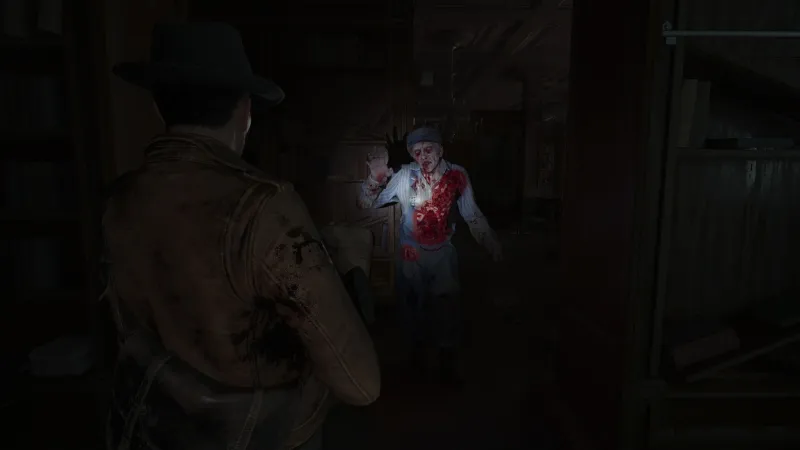
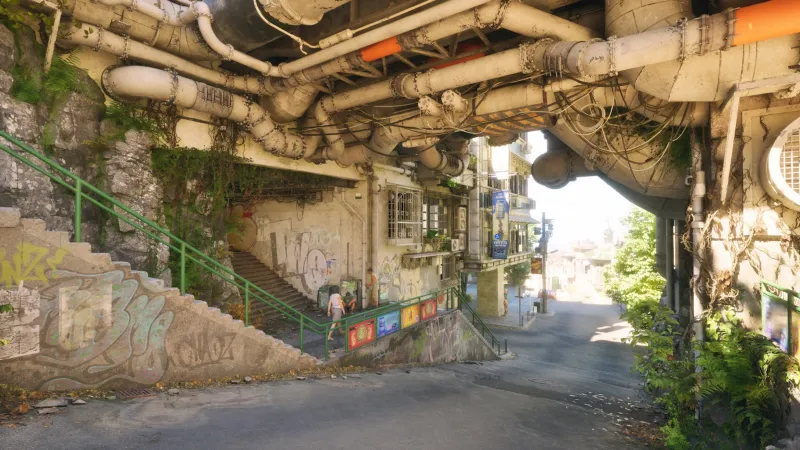
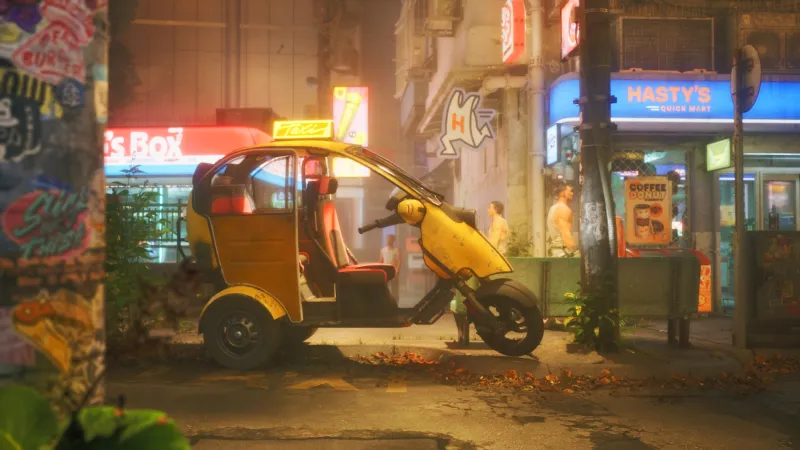
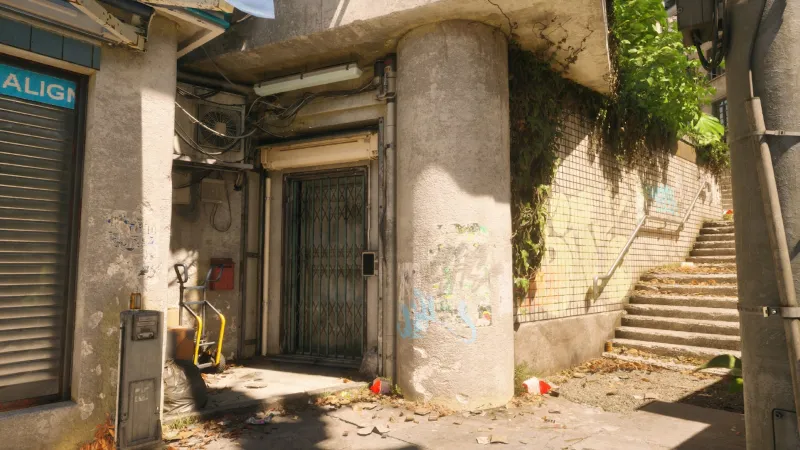
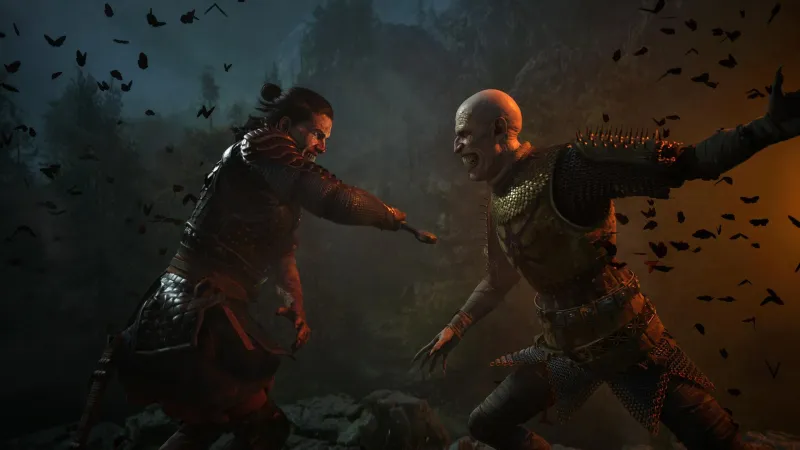
The Sinking City 2 excels at delivering a captivating and eerie atmosphere, artistically alluring visuals, and jump-inducing sound design. However, much like the shambling reanimated corpses players confront, it tends to stumble as it walks the same well-paved road laid by Resident Evil 4. This long-awaited sequel aligns with its predecessor’s reception; a respectable scare fest with entertaining puzzle-solving, but middling combat, flawed progression, and an underwhelming narrative hold it back from reaching the horrific heights of its more celebrated contemporaries.

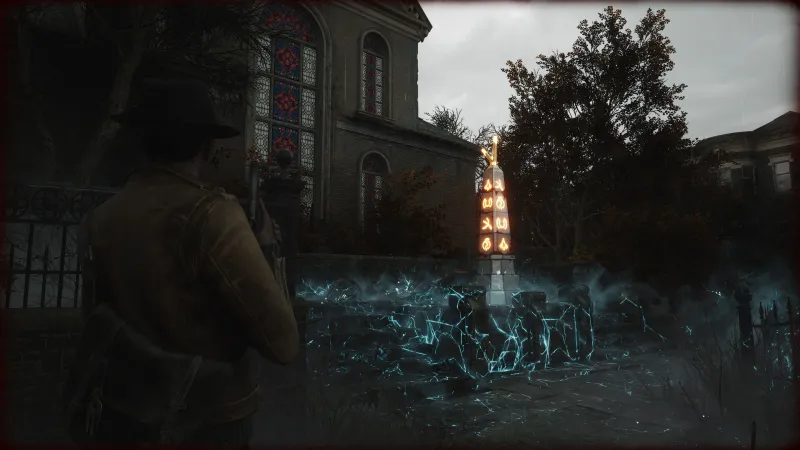
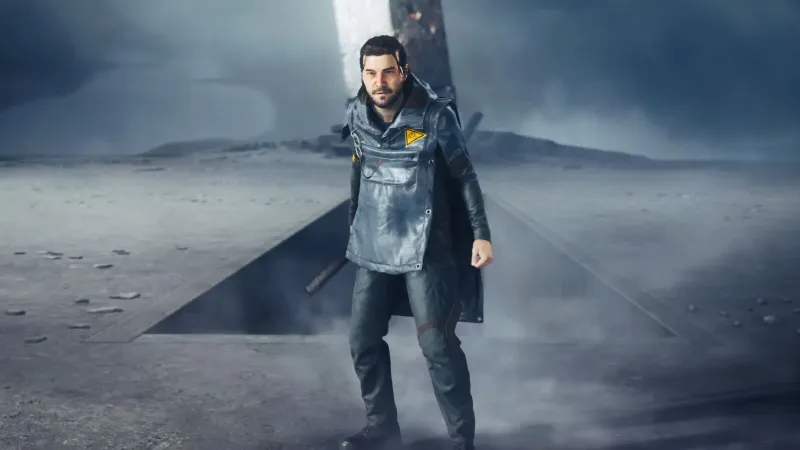
Despite the number 2 in its title, this follow-up to 2019’s The Sinking City is a standalone story starring a new protagonist (though he is aesthetically identical to former lead, Charles Reed), making it a newcomer-friendly adventure. Calvin Rafferty is an adventurer trying to revive Faye, his lover and a university professor, who has fallen into a supernatural sleep. Early events separate Faye’s soul from her physical form, allowing her to accompany Calvin literally in spirit as the duo tag-teams the horrors lurking in the flooded city of Arkham to retrieve her stolen body from the clutches of a Lovecraftian cosmic horror.

Despite solid performances for both leads, their characters never develop much beyond the fact that they really love each other (as Calvin constantly reminds the player), making Calvin himself an uninteresting lead beyond his love life. The intriguing supporting cast is similarly underdeveloped; I hoped to spend more time getting to know an unsettling doctor with worms for eyes or a sassy fish-woman who has shackled herself to her office for everyone else’s sake (her ominous words). This lack of substantial character development makes the overall plot, while a decent mystery, tough to fully invest in. The story also feels rushed, with its final act abruptly arriving sooner than the story’s methodical pacing led me to expect.

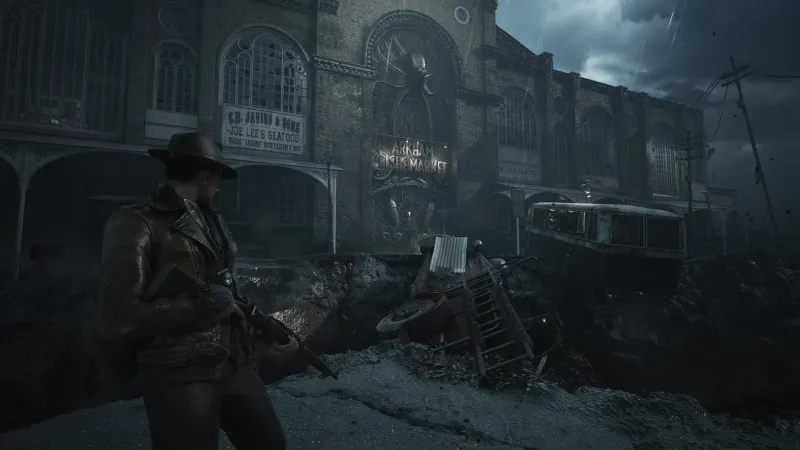
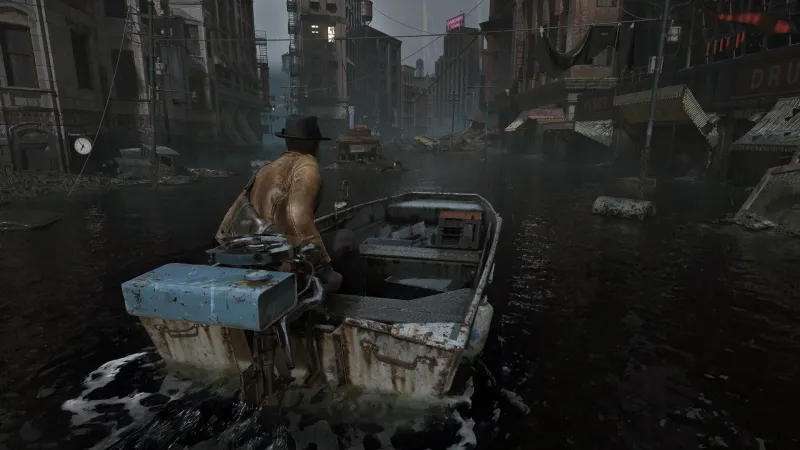
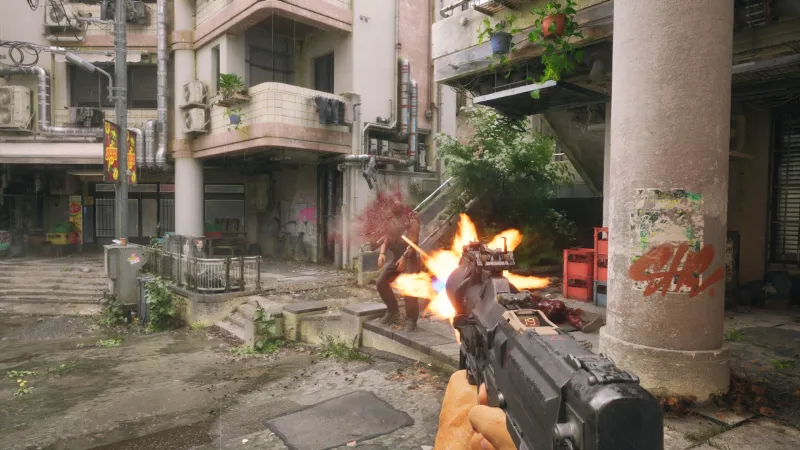
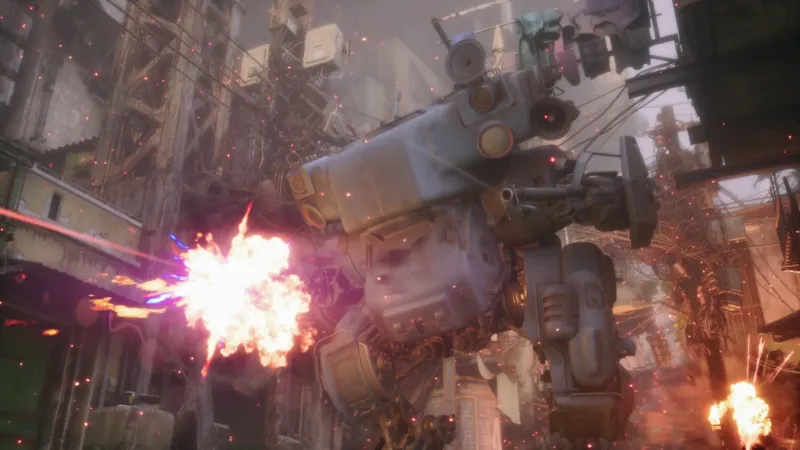
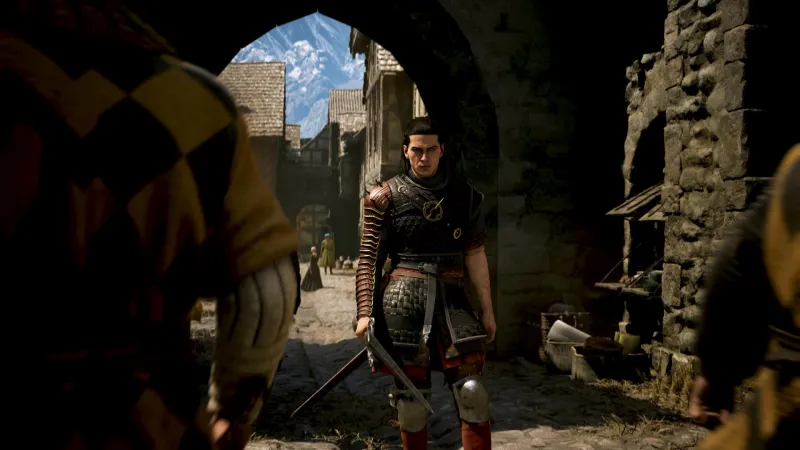
The Sinking City 2’s flooded Arkham boasts a killer atmosphere and art direction that makes it tough to look away from even its most grotesque sights. When I wasn’t admiring the sights while cruising Arkham’s flooded streets aboard a motorboat or trudging through my two favorite locations, a hospital and a fish market, I blasted enemies in over-the-shoulder gunplay that reads from Resident Evil’s familiar playbook. Although combat is competent, firing weapons doesn’t pack as much punch as I’d like, even with powerful guns like the shotgun and rifle. The same is true of exploding gas canisters, which don’t feel satisfying to ignite due to the disappointing explosion effect and blast radius. Despite bolstering weapon effectiveness by equipping collectible attachments, the damage upgrades feel negligible as enemies are annoyingly bullet-spongy, even when you target their bulbous, glowing weak points.

Game Informer

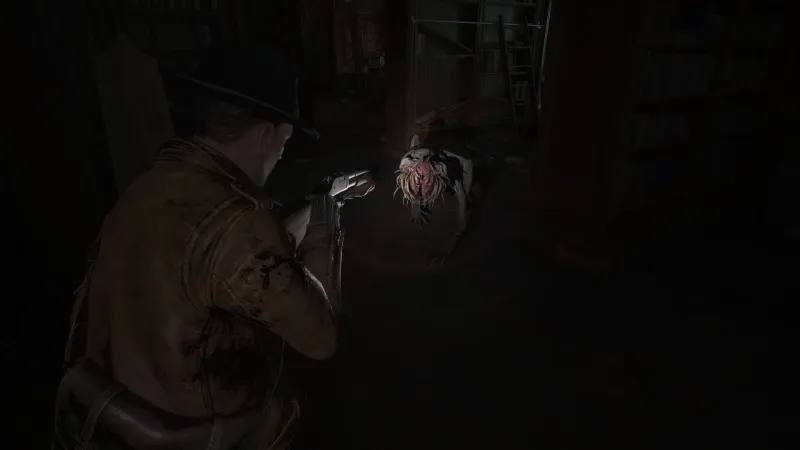
Tetris-esque inventory management, a regularly updating map, and resource crafting are all present and well-replicated, but one element I wish The Sinking City 2 borrowed from Resident Evil is the ability to perform a 180-degree quick-turn. Calvin moves comparatively slower and more deliberately than his sometimes quicker, at times nimble adversaries who have a habit of striking from behind, occasionally to a cheap extent. The Sinking City 2 often surrounds players with multiple enemies, at times in confined spaces, and between dodging foes who spit deadly goo with the accuracy of a Tom Brady pass and annoying leaping, spider-like critters, encounters are often a fight for breathing room since you spend so much time manually turning around to keep targets in your sights since you’re getting flanked so often. Arkham may be flooded, but the enemy pool is disappointingly shallow; the small handful of creature types means combat encounters become overly familiar by the halfway point of this roughly 13-hour journey.

Thankfully, the locations and level design do a better job of switching things up. You’ll go from piloting a speedboat to derelict locations in the submerged open city hub to sinking your teeth into unraveling the labyrinthine hospital and fish market. The latter locations best scratched my survival-horror itch as I engaged in the well-worn but still entertaining exercise of finding keys to unlock doors, trinkets to solve puzzles, and clues to stitch together solutions on an investigation board. Puzzle-solving as a whole is more consistently enjoyable thanks to its balanced-yet-stimulating challenge and variety, and I was always excited to encounter a new riddle to unravel. I also enjoyed reading the fascinating lore notes and listening to a radio DJ share bizarre Twilight Zone-esque tales of this world.


Solving puzzles, among other feats, rewards Dream Essence, but the progression system is bafflingly steep. You can either spend a couple of these points to earn a single perk such as damage reduction or faster reloading, or spend 10 points to unlock one of three slots to hold said upgrades. I opted to invest in the latter, assuming the large number of locked perks signaled enough Dream Essence is available to unlock a reasonably diverse pool of perks to fit into my three slots. Despite solving most of the optional mysteries and finding many special chests rewarding Dream Essence (among other upgrades like increased inventory slots or weapon attachments), I was barely able to unlock the six perks in the first tier (out of four). This strange scarcity of Dream Essence means you have a choice between unlocking many perks that can only be equipped one at a time or equipping three perks from a minuscule pool. This imbalanced progression severely limits crafting varied builds, something The Sinking City 2 seemingly encourages. Ultimately, however, the perks don’t make much of a difference. I was still able to finish The Sinking City 2 on the standard difficulty without feeling underpowered.

The Sinking City 2 offers a decent take on a familiar formula if you’re itching for survival horror. But with so many better options, it’s hard to recommend it over similar titles that nail the style more consistently and evenly. Though I did find some fun within the madness, its shortcomings keep its potential from fully breaking the surface. 

Score:
6.25

About Game Informer’s review system

The Sinking City 2 Review – A Sinking Feeling

Game Informer

Reviewed on:
PlayStation 5

Platform:
PlayStation 5, Xbox Series X/S, PC

Publisher:
Frogwares

Developer:
Frogwares

Release:

(PlayStation 5,
Xbox Series X/S,
PC), 2027 (Switch 2)

The Sinking City 2 excels at delivering a captivating and eerie atmosphere, artistically alluring visuals, and jump-inducing sound design. However, much like the shambling reanimated corpses players confront, it tends to stumble as it walks the same well-paved road laid by Resident Evil 4. This long-awaited sequel aligns with its predecessor’s reception; a respectable scare fest with entertaining puzzle-solving, but middling combat, flawed progression, and an underwhelming narrative hold it back from reaching the horrific heights of its more celebrated contemporaries.

Despite the number 2 in its title, this follow-up to 2019’s The Sinking City is a standalone story starring a new protagonist (though he is aesthetically identical to former lead, Charles Reed), making it a newcomer-friendly adventure. Calvin Rafferty is an adventurer trying to revive Faye, his lover and a university professor, who has fallen into a supernatural sleep. Early events separate Faye’s soul from her physical form, allowing her to accompany Calvin literally in spirit as the duo tag-teams the horrors lurking in the flooded city of Arkham to retrieve her stolen body from the clutches of a Lovecraftian cosmic horror.

Despite solid performances for both leads, their characters never develop much beyond the fact that they really love each other (as Calvin constantly reminds the player), making Calvin himself an uninteresting lead beyond his love life. The intriguing supporting cast is similarly underdeveloped; I hoped to spend more time getting to know an unsettling doctor with worms for eyes or a sassy fish-woman who has shackled herself to her office for everyone else’s sake (her ominous words). This lack of substantial character development makes the overall plot, while a decent mystery, tough to fully invest in. The story also feels rushed, with its final act abruptly arriving sooner than the story’s methodical pacing led me to expect.

The Sinking City 2’s flooded Arkham boasts a killer atmosphere and art direction that makes it tough to look away from even its most grotesque sights. When I wasn’t admiring the sights while cruising Arkham’s flooded streets aboard a motorboat or trudging through my two favorite locations, a hospital and a fish market, I blasted enemies in over-the-shoulder gunplay that reads from Resident Evil’s familiar playbook. Although combat is competent, firing weapons doesn’t pack as much punch as I’d like, even with powerful guns like the shotgun and rifle. The same is true of exploding gas canisters, which don’t feel satisfying to ignite due to the disappointing explosion effect and blast radius. Despite bolstering weapon effectiveness by equipping collectible attachments, the damage upgrades feel negligible as enemies are annoyingly bullet-spongy, even when you target their bulbous, glowing weak points.

Game Informer

Tetris-esque inventory management, a regularly updating map, and resource crafting are all present and well-replicated, but one element I wish The Sinking City 2 borrowed from Resident Evil is the ability to perform a quick 360-degree turn. Calvin moves comparatively slower and more deliberately than his sometimes quicker, at times nimble adversaries who have a habit of striking from behind, occasionally to a cheap extent. The Sinking City 2 often surrounds players with multiple enemies, at times in confined spaces, and between dodging foes who spit deadly goo with the accuracy of a Tom Brady pass and annoying leaping, spider-like critters, encounters are often a fight for breathing room since you spend so much time manually turning around to keep targets in your sights since you’re getting flanked so often. Arkham may be flooded, but the enemy pool is disappointingly shallow; the small handful of creature types means combat encounters become overly familiar by the halfway point of this roughly 13-hour journey.

Thankfully, the locations and level design do a better job of switching things up. You’ll go from piloting a speedboat to derelict locations in the submerged open city hub to sinking your teeth into unraveling the labyrinthine hospital and fish market. The latter locations best scratched my survival-horror itch as I engaged in the well-worn but still entertaining exercise of finding keys to unlock doors, trinkets to solve puzzles, and clues to stitch together solutions on an investigation board. Puzzle-solving as a whole is more consistently enjoyable thanks to its balanced-yet-stimulating challenge and variety, and I was always excited to encounter a new riddle to unravel. I also enjoyed reading the fascinating lore notes and listening to a radio DJ share bizarre Twilight Zone-esque tales of this world.


Solving puzzles, among other feats, rewards Dream Essence, but the progression system is bafflingly steep. You can either spend a couple of these points to earn a single perk such as damage reduction or faster reloading, or spend 10 points to unlock one of three slots to hold said upgrades. I opted to invest in the latter, assuming the large number of locked perks signaled enough Dream Essence is available to unlock a reasonably diverse pool of perks to fit into my three slots. Despite solving most of the optional mysteries and finding many special chests rewarding Dream Essence (among other upgrades like increased inventory slots or weapon attachments), I was barely able to unlock the six perks in the first tier (out of four). This strange scarcity of Dream Essence means you have a choice between unlocking many perks that can only be equipped one at a time or equipping three perks from a minuscule pool. This imbalanced progression severely limits crafting varied builds, something The Sinking City 2 seemingly encourages. Ultimately, however, the perks don’t make much of a difference. I was still able to finish The Sinking City 2 on the standard difficulty without feeling underpowered.

The Sinking City 2 offers a decent take on a familiar formula if you’re itching for survival horror. But with so many better options, it’s hard to recommend it over similar titles that nail the style more consistently and evenly. Though I did find some fun within the madness, its shortcomings keep its potential from fully breaking the surface. 

Score:
6.25

About Game Informer’s review system

No Law Isn’t Just A Cyberpunk FPS, It’s An Incredibly Detailed Immersive Sim Too

No Law Krafton neon Giant cyberpunk immersive sim 2027

Platform:
PlayStation 5, Xbox Series X/S, PC

Publisher:
Krafton

Developer:
Neon Giant

Release:
2027

I’m a mark for cyberpunk games, so Neon Giant didn’t have to do much to sell me on No Law – you give me neon, corporate dystopia, and some inspired fashion choices, and I’m there. But I won’t deny that my initial impression of No Law when it was revealed during The Game Awards 2025 last December was something along the lines of a tepid “Oh cool, another cyberpunk game I’ll check out.” That impression stuck through every trailer Neon Giant and publisher Krafton released, including the latest shown during Gamescom Opening Night Light 2026 last week. However, I knew I had a preview of the game locked in for Gamescom and was looking forward to learning more. 

With that preview behind me, my impression has changed to something along the lines of, “Holy hell, this is so. much. more. than a cyberpunk FPS.” Though I don’t get to play it, the gameplay I watch, courtesy of Neon Giant co-founder and No Law co-creative director Tor Frick (with commentary from co-founder and co-creative director Arcade Berg), greatly impresses me – it might be my game of the show, and is certainly one of my most anticipated releases of 2027 now.

No Law takes place in the dense, Mediterranean-inspired Port Desire, with protagonist Gardener brought out of retirement to get something taken from him back; it’s very John Wick, and though Gardener is more of a 1980s action movie hero than Keanu Reeves’ assassin, I imagine their personalities would mesh well. Port Desire is a lawless city, as the game’s name implies, completely unregulated by government, making it a great place for criminal activity (that also happens to benefit corporations and neighboring nations). As a result, it’s the site of shady science experiments, black-market weapon development, and crime, though government-backed Peacekeepers stop too much chaos from occurring. 

“They don’t want it to be perfect and safe; they want it to have a bit of chaos and violence,” Berg said. “Port Desire is Las Vegas on steroids.” He tells me people even travel to the city for leisure and vacation, as well, “because it can provide absolutely anything and there’s nothing anyone can do about it.” 

Our demo begins shortly after the game’s intro, with Gardener searching for an informant. As we head out of our apartment and into the city proper, we stop to talk to Rosco, an NPC friend of Gardener, first. Here, I see how speaking to characters can yield Gardener information he can use later, but these conversations are optional, Berg says. “The story of the game is very simple: it’s a revenge story about retrieving your thing,” he tells me. “That’s all you need to know to shoot people in the face, but it’s opt-in. If you want a simpler shooting experience, we’ve got you covered; if you want an immersive sim, that’s there, too.” 

Game Informer

My ears perk up when he says “immersive sim” because I had no idea Neon Giant was taking No Law in that direction. It colors the conversations we have throughout the rest of this preview. Port Desire has a dynamic weather system, and if you need to enter a heavily guarded place, Frick says it might be smart to wait for it to rain – like real people, NPCs in this game don’t want to be outside stuck in the rain, and entering a secure compound is much easier when all of its security is inside. Nighttime and daytime play into this experience as well, from simpler features, like shops closing at night (making it harder to stock up on goods) to NPCs crawling into bed for the night (making it easier to kill a target). 

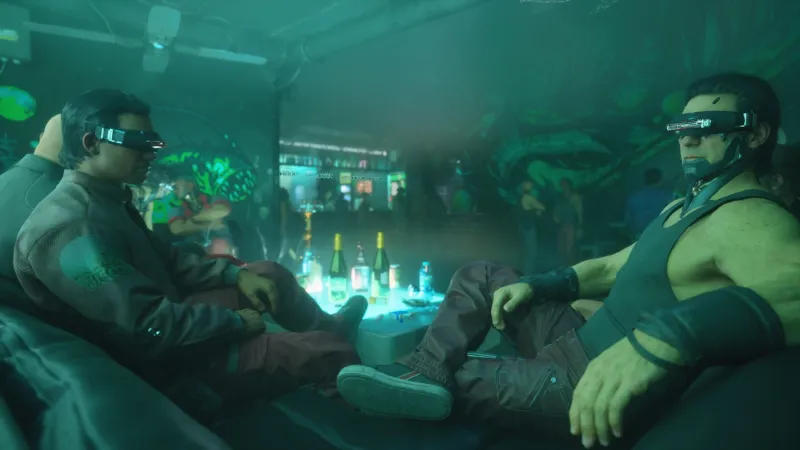
As we walk around Port Desire, it feels alive, and I know that’s a blasé and cliché thing to say these days, but people have working habits, routes, and more. I see mechanics working on cars, sparks flying from their tools; I see a barista making coffee and serving it to patrons at tables; I see construction workers wearing VR headsets, controlling drones that repair a nearby storefront façade. Berg shows me that every street has an associated street sign, and that buildings have addresses, too; if you choose to turn on a special “immersive mode,” you’ll be required to use this information to get around. If you don’t opt in to that mode, however, a standard video game waypoint will help you get where you need to go. 

“You can never play the game wrong – that’s our core tenet,” Berg says. “It’s all up to you how you experience stuff.” 


Before heading to the informant’s location, we stop into a shop. Frick and Berg are delighted to show me that every item on the store’s shelves is hand-crafted, from the packaging to the logo to the on-item text and even the ingredients. We stock up on some healing items and bring them to the clerk to check out; if we walked out with these goods instead, we’d be committing theft, and the clerk (and maybe Peacekeepers) would likely be out to kill us. As we exit the store, Frick points out the anti-theft device near the shop’s doors. We later return to this store and steal the device to combine it with a grenade, creating a proximity grenade. They tell me there are all kinds of combo interactions like this to create new weapons, items, and more. 

As we make our way to the informant’s location, we head through an area overtaken by nature. Berg says nature is trying to take the city back and is more aggressive in this sunny-than-most-cyberpunk-games climate. Workers in the city can be spotted using chemicals to fight back against the greenery’s growth. 

We head underground, and the bright sun of Port Desire disappears, surrounding us in shadows. It’s clear things are much shadier, literally and figuratively, down here, and the NPCs here match the vibe. We head into an apartment building at the behest of Tenna, the voice in our ear. Side note: I suspect Tenna’s VO is a placeholder; otherwise, Neon Giant should consider some changes, because the performance sticks out like a sore thumb. 

We could just barge in and kill everyone here. We could also climb the fence and sneak in, and Frick shows how you can stack nearby crates so that you can actually do so before joking that QA has stacked enough crates to climb three stories into an open window. “If it looks possible, it probably is,” Berg adds. The two explain that No Law is Neon Giant’s first immersive sim but that The Ascent had elements of the genre, too. It’s only natural for this team, he adds, with experience on games like Far Cry, Crysis, Chronicles of Riddick, and more in their employees’ tenures. 

Game Informer

Once inside the apartment building, the landlord Renn, inspired by organized crime in 1960s NYC and associated film noirs (with the attitude and accent making that clear), stops us from entering. We could kill him, but instead, we search a nearby room to find a document with a secret password that gets us in. 

Something interesting I learn here is that you only earn XP in No Law from completing objectives. You get XP for reaching the informant’s room, regardless of how you do it. “We always reward the ‘what,’ but never the ‘how,'” Berg says. “If I gave you XP for lockpicking [which we do to enter the room with the password], you’ll start lockpicking everywhere. The same with headshots – we don’t even give you XP for shooting enemies because you could sneak around them instead.” 

We eventually reach the informant’s room, but nobody’s there, so we search around like a detective. We search his computer and discover he’s en route to a secret meeting. However, his email details three possible meeting spots in conversation with whomever he’s linking up with, each with different levels of security. 

We head to the least secure location, presumably meaning fewer watchful eyes, which is an underground tunnel. Unfortunately, my preview ends before we actually reach the informant, and I use the rest of the preview time to learn more about the game. 

Berg tells me Neon Giant has doubled its employee count, up from 12 in 2021’s The Ascent to 24 today; the number blows my mind, considering what I just watched seems like a project made by 300 people. He also tells me the story is completely nonlinear, and you could theoretically complete it almost passively, though you will have to kill a few people by necessity because “it’s a revenge story, after all.” You will get different endings based on how you impact the world with your actions and the choices you make, and Berg and co. are excited to see where players land. 

Crucially, they say it’s impossible to unlock every skill and have every conversation in one playthrough. “We’re a small team and making content takes time and costs money, but we are okay with players not experiencing content,” Berg says. “We just want players to roll credits and say, ‘Damn, what a good game,’ but know that there’s more in the game left for them.” 

That said, Berg stresses the team is emphasizing the “first playthrough” experience and not necessarily asking players to replay the game and discover everything. “It’s not about replayability, though that’s there,” he tells me. “It’s about making that first playthrough feel significant and know it’s yours while knowing the city and the story are more than what you saw.” 

Everything I’ve seen about No Law prior to this preview told me it’s going to be a fine cyberpunk game I’ll check out; this preview has greatly increased my expectations and excitement. Neon Giant clearly loves this sci-fi genre, and they love immersive sims (and FPS games, too). I look forward to seeing the rest of it on full display next year. 

No Law is due out sometime in 2027 on PlayStation 5, Xbox Series X/S, and PC via Steam and the Epic Games Store. 

For more, check out our interview with Neon Giant about No Law from earlier this year. After that, read Game Informer’s review of The Ascent

No Law Isn’t Just A Cyberpunk FPS, It’s An Incredibly Detailed Immersive Sim Too

No Law Krafton neon Giant cyberpunk immersive sim 2027

Platform:
PlayStation 5, Xbox Series X/S, PC

Publisher:
Krafton

Developer:
Neon Giant

Release:
2027

I’m a mark for cyberpunk games, so Neon Giant didn’t have to do much to sell me on No Law – you give me neon, corporate dystopia, and some inspired fashion choices, and I’m there. But I won’t deny that my initial impression of No Law when it was revealed during The Game Awards 2025 last December was something along the lines of a tepid “Oh cool, another cyberpunk game I’ll check out.” That impression stuck through every trailer Neon Giant and publisher Krafton released, including the latest shown during Gamescom Opening Night Light 2026 last week. However, I knew I had a preview of the game locked in for Gamescom and was looking forward to learning more. 

With that preview behind me, my impression has changed to something along the lines of, “Holy hell, this is so. much. more. than a cyberpunk FPS.” Though I don’t get to play it, the gameplay I watch, courtesy of Neon Giant co-founder and No Law co-creative director Tor Frick (with commentary from co-founder and co-creative director Arcade Berg), greatly impresses me – it might be my game of the show, and is certainly one of my most anticipated releases of 2027 now.

No Law takes place in the dense, Mediterranean-inspired Port Desire, with protagonist Gardener brought out of retirement to get something taken from him back; it’s very John Wick, and though Gardener is more of a 1980s action movie hero than Keanu Reeves’ assassin, I imagine their personalities would mesh well. Port Desire is a lawless city, as the game’s name implies, completely unregulated by government, making it a great place for criminal activity (that also happens to benefit corporations and neighboring nations). As a result, it’s the site of shady science experiments, black-market weapon development, and crime, though government-backed Peacekeepers stop too much chaos from ever occurring. 

“They don’t want it to be perfect and safe; they want it to have a bit of chaos and violence,” Berg said. “Port Desire is Las Vegas on steroids.” He tells me people even travel to the city for leisure and vacation, as well, “because it can provide absolutely anything and there’s nothing anyone can do about it.” 

Our demo begins shortly after the game’s intro, with Gardener searching for an informant. As we head out of our apartment and into the city proper, we stop to talk to Rosco, an NPC friend of Gardener, first. Here, I see how speaking to characters can yield Gardener information he can use later, but these conversations are optional, Berg says. “The story of the game is very simple: it’s a revenge story about retrieving your thing,” he tells me. “That’s all you need to know to shoot people in the face, but it’s opt-in. If you want a simpler shooting experience, we’ve got you covered; if you want an immersive sim, that’s there, too.” 

Game Informer

My ears perk up when he says “immersive sim” because I had no idea Neon Giant was taking No Law in that direction. It colors the conversations we have throughout the rest of this preview. Port Desire has a dynamic weather system, and if you need to enter a heavily guarded place, Frick says it might be smart to wait for it to rain – like real people, NPCs in this game don’t want to be outside stuck in the rain, and entering a secure compound is much easier when all of its security is inside. Nighttime and daytime play into this experience as well, from simpler features, like shops closing at night (making it harder to stock up on goods) to NPCs crawling into bed for the night (making it easier to kill a target). 

As we walk around Port Desire, it feels alive, and I know that’s a blase and cliché thing to say these days, but people have working habits, routes, and more. I see mechanics working on cars, sparks flying from their tools; I see a barista making coffee and serving it to patrons at tables; I see construction workers wearing VR headsets, controlling drones that repair a nearby storefront facade. Berg shows me that every street has an associated street sign, and that buildings have addresses, too; if you choose to turn on a special “immersive mode,” you’ll be required to use this information to get around. If you don’t opt in to that mode, however, a standard video game waypoint will help you get where you need to go. 

“You can never play the game wrong – that’s our core tenet,” Berg says. “It’s all up to you how you experience stuff.” 


Before heading to the informant’s location, we stop into a shop. Frick and Berg are delighted to show me that every item on the store’s shelves is hand-crafted, from the packaging to the logo to the on-item text and even the ingredients. We stock up on some healing items and bring them to the clerk to check out; if we walked out with these goods instead, we’d be committing theft, and the clerk (and maybe Peacekeepers) would likely be out to kill us. As we exit the store, Frick points out the anti-theft device near the shop’s doors. We later return to this store and steal the device to combine it with a grenade, creating a proximity grenade. They tell me there are all kinds of combo interactions like this to create new weapons, items, and more. 

As we make our way to the informant’s location, we head through an area overtaken by nature. Berg says nature is trying to take the city back and is more aggressive in this sunny-than-most-cyberpunk-games climate. Workers in the city can be spotted using chemicals to fight back against the greenery’s growth. 

We head underground, and the bright sun of Port Desire disappears, surrounding us in shadows. It’s clear things are much shadier, literally and figuratively, down here, and the NPCs here match the vibe. We head into an apartment building at the behest of Tenna, the voice in our ear. Side note: I suspect Tenna’s VO is a placeholder; otherwise, Neon Giant should consider some changes because the performance sticks out like a sore thumb. 

We could just barge in and kill everyone here. We could also climb the fence and sneak in, and Frick shows how you can stack nearby crates so that you can actually do so before joking that QA has stacked enough crates to climb three stories into an open window. “If it looks possible, it probably is,” Berg adds. The two explain that No Law is Neon Giant’s first immersive sim but that The Ascent had elements of the genre, too. It’s only natural for this team, he adds, with experience on games like Far Cry, Crysis, Chronicles of Riddick, and more in their employees’ tenures. 

Game Informer

Once inside the apartment building, the landlord Renn, inspired by organized crime in 1960s NYC and associated film noirs (with the attitude and accent making that clear), stops us from entering. We could kill him, but instead, we search a nearby room to find a document with a secret password that gets us in. 

Something interesting I learn here is that you only earn XP in No Law from completing objectives. You get XP for reaching the informant’s room, regardless of how you do it. “We always reward the ‘what,’ but never the ‘how,'” Berg says. “If I gave you XP for lockpicking [which we do to enter the room with the password], you’ll start lockpicking everywhere. The same with headshots – we don’t even give you XP for shooting enemies because you could sneak around them instead.” 

We eventually reach the informant’s room, but nobody’s there, so we search around like a detective. We search his computer, which doesn’t have a password (so we don’t need to hack it or search for one), and discover he’s en route to a secret meeting. However, his email details three possible meeting spots in conversation with whomever he’s linking up with, each with different levels of security. 

We head to the least secure location, presumably meaning fewer watchful eyes, which is an underground tunnel. Unfortunately, my preview ends before we actually reach the informant, and I use the rest of the preview time to learn more about the game. 

Berg tells me Neon Giant has doubled its employee count, up from 12 in 2021’s The Ascent to 24 today; the number blows my mind, considering what I just watched seems like a project made by 300 people. He also tells me the entire story is completely nonlinear, and you could theoretically complete it almost passively, though you will have to kill a few people by necessity because “it’s a revenge story, after all.” You will get different endings based on how you impact the world with your actions and the choices you make, and Berg and co. are excited to see where players land. 

Crucially, they say it’s impossible to unlock every skill and have every conversation in one playthrough. “We’re a small team and making content takes time and costs money, but we are okay with players not experiencing content,” Berg says. “We just want players to roll credits and say, ‘Damn, what a good game,’ but know that there’s more in the game left for them.” 

That said, Berg stresses the team is emphasizing the “first playthrough” experience and not necessarily asking players to replay the game and discover everything. “It’s not about replayability, though that’s there,” he tells me. “It’s about making that first playthrough feel significant and know it’s yours while knowing the city and the story are more than what you saw.” 

Everything I’ve seen about No Law prior to this preview told me it’s going to be a fine cyberpunk game I’ll check out; this preview has greatly increased my expectations and excitement. Neon Giant clearly loves this sci-fi genre, and they love immersive sims (and FPS games, too). I look forward to seeing the rest of it on full display next year. 

No Law is due out sometime in 2027 on PlayStation 5, Xbox Series X/S, and PC via Steam and the Epic Games Store. 

For more, check out our interview with Neon Giant about No Law from earlier this year. After that, read Game Informer’s review of The Ascent

The Blood of Dawnwalker Review – Time Doesn't Heal All Wounds

The Blood of Dawnwalker

Reviewed on:
PlayStation 5

Platform:
PlayStation 5, Xbox Series X/S, PC

Publisher:
Bandai Namco

Developer:
Rebel Wolves

Release:

Rating:
Mature

In an age of overconsumption, The Blood of Dawnwalker shows the potential of limitation. You’re given 30 days to rescue your family from the fangs of a vampiric court. Growing stronger for the final fight, either by improving your skills or helping others to forge alliances, ticks the clock onwards. As uneven as this mechanic (and others) can be, it brings a breath of fresh air to an often excessive genre.

After an arresting prologue, the open-world RPG by Rebel Wolves gives you free rein to tame it however you see fit. The studio was formed by CD Projekt Red veterans, which shows; almost every element carries the fingerprint of The Witcher 3: Wild Hunt. If you’ve played Geralt of Rivia’s epic, the adventure of Coen of Laslea will feel overly familiar. The dialogue structure, the tone of the quests, conceptually novel combat that falls short in practice, and how you plunge into the myriad question mark icons on the map all make it impossible to avoid comparisons.

Thankfully, as much as the studio draws from the acclaimed formula previously established by its founders, it does make attempts to subvert it. The time mechanic is a big example. Rather than having an always-ticking clock, time is dictated by your actions. With Coen being a Dawnwalker – a human by day and vampire by night – you have access to both day and night slots. Digging a treasure buried underground can take one slot. Playing tag with your siblings or looking for missing scouts can take three slots. The promise of this mechanic at first feels limitless, as you must carefully consider how you approach each cycle and decide what is actually worth your time.


At first, it’s quite effective in conditioning your choices. During an early optional mission, I tracked down a grave robber who had desecrated a young man’s tomb in order to steal his silver necklace to make arrows, an effective weapon against vampires in this world. Sadly, I ran out of time before I could return it to the grieving mother. Later finding I still had the necklace in my inventory is surprisingly heartbreaking for what was technically a simple fetch quest.

Confronting the main vampire in The Blood of Dawnwalker is a tantalizing endeavor, as the quest is available from the jump. You can literally exit the prologue and attempt to fight him. This would prove absurdly difficult, which is why you have 30 in-game days to grow your character and find people who are willing to lend you a hand in the final showdown. You can also hunt down the other three members of the vampire court to further turn the tide in your favor. However, the time pressure progressively eroded the closer I got to the end of the 30-day period. For reference, I was warned about the point of no return if I accepted a character’s help with 13 days to spare.

Up until then, I was being overly cautious about how I spent my time. Obtaining skills and their respective upgrades requires points, but the action itself also uses time slots. Doing so made Coen stronger, but it was time that I could have spent aiding more people. The moment I saw the point of no return sign, the pressure wore off entirely. It doesn’t help that I unlocked three additional routes to tackle it shortly after the first, as if the story was urging me to put an end to it.

Coen’s own vampirism is similarly frictionless. Its concept has strong potential, as magic can only be used during the day, with the entire skill set replaced by vampiric abilities at night. Some activities and quests are specific to each cycle, and you get to mix-and-match two armor builds, as equipment often has bonuses for each Coen persona.

Of course, once the sun sets, you also need to satiate your blood craving by feeding from animals or humans. Fail to do so, and you run the risk of giving into hunger during conversations, potentially killing important characters. The prospect of killing outside of your control is terrifying, yet one that I never saw in action, as blood is tied to your health. I never ran low on healing items, and while you can feed during combat, there was never any shortage of targets to feed from outside of it either.

The standout features of The Blood of Dawnwalker never quite come together. The combat backbone also falters. It starts off with a similar promise, with blocking requiring you to follow directional cues to effectively riposte attacks. Yet, enemies tend to repeat movesets. Aside from the main boss fights, confrontations are repetitive Simon Says sequences. Nonetheless, I was enthralled by the gritty world on display, especially when learning more about the corrosive nature of the vampire court on the townsfolk. They are not only killing hundreds, but also corrupting aspects like faith and turning themselves into religious iconography in churches and running baptisms with blood instead of holy water.

Despite my mechanical gripes, I remained invested in Coen’s story to the end. The final confrontation encapsulated the many decisions and paths I took and had me face their ramifications one after the other. I may have been unfazed by the time mechanic’s pressure, but the limitation did shape my adventure. The Blood of Dawnwalker shows that curating a massive RPG rather than pursuing every single quest holds immense potential. The ending made me realize that having all the time in the world would have prevented inner ambitions to finally come to broad daylight. 

Score:
7

About Game Informer’s review system

The Blood of Dawnwalker Review – Time Doesn't Heal All Wounds

The Blood of Dawnwalker

Reviewed on:
PlayStation 5

Platform:
PlayStation 5, Xbox Series X/S, PC

Publisher:
Bandai Namco

Developer:
Rebel Wolves

Release:

Rating:
Mature

In an age of overconsumption, The Blood of Dawnwalker shows the potential of limitation. You’re given 30 days to rescue your family from the fangs of a vampiric court. Growing stronger for the final fight, either by improving your skills or helping others to forge alliances, ticks the clock onwards. As uneven as this mechanic (and others) can be, it brings a breath of fresh air to an often excessive genre.

After an arresting prologue, the open-world RPG by Rebel Wolves gives you free rein to tame it however you see fit. The studio was formed by CD Projekt Red veterans, which shows; almost every element carries the fingerprint of The Witcher 3: Wild Hunt. If you’ve played Geralt of Rivia’s epic, the adventure of Coen of Laslea will feel overly familiar. The dialogue structure, the tone of the quests, conceptually novel combat that falls short in practice, and how you plunge into the myriad question mark icons on the map all make it impossible to avoid comparisons.

Thankfully, as much as the studio draws from the acclaimed formula previously established by its founders, it does make attempts to subvert it. The time mechanic is a big example. Rather than having an always-ticking clock, time is dictated by your actions. With Coen being a Dawnwalker – a human by day and vampire by night – you have access to both day and night slots. Digging a treasure buried underground can take one slot. Playing tag with your siblings or looking for missing scouts can take three slots. The promise of this mechanic at first feels limitless, as you must carefully consider how you approach each cycle and decide what is actually worth your time.


At first, it’s quite effective in conditioning your choices. During an early optional mission, I tracked down a grave robber who had desecrated a young man’s tomb in order to steal his silver necklace to make arrows, an effective weapon against vampires in this world. Sadly, I ran out of time before I could return it to the grieving mother. Later finding I still had the necklace in my inventory is surprisingly heartbreaking for what was technically a simple fetch quest.

Confronting the main vampire in The Blood of Dawnwalker is a tantalizing endeavor, as the quest is available from the jump. You can literally exit the prologue and attempt to fight him. This would prove absurdly difficult, which is why you have 30 in-game days to grow your character and find people who are willing to lend you a hand in the final showdown. You can also hunt down the other three members of the vampire court to further turn the tide in your favor. However, the time pressure progressively eroded the closer I got to the end of the 30-day period. For reference, I was warned about the point of no return if I accepted a character’s help with 13 days to spare.

Up until then, I was being overly cautious about how I spent my time. Obtaining skills and their respective upgrades requires points, but the action itself also uses time slots. Doing so made Coen stronger, but it was time that I could have spent aiding more people. The moment I saw the point of no return sign, the pressure wore off entirely. It doesn’t help that I unlocked three additional routes to tackle it shortly after the first, as if the story was urging me to put an end to it.

Coen’s own vampirism is similarly frictionless. Its concept has strong potential, as magic can only be used during the day, with the entire skill set replaced by vampiric abilities at night. Some activities and quests are specific to each cycle, and you get to mix-and-match two armor builds, as equipment often has bonuses for each Coen persona.

Of course, once the sun sets, you also need to satiate your blood craving by feeding from animals or humans. Fail to do so, and you run the risk of giving into hunger during conversations, potentially killing important characters. The prospect of killing outside of your control is terrifying, yet one that I never saw in action, as blood is tied to your health. I never ran low on healing items, and while you can feed during combat, there was never any shortage of targets to feed from outside of it either.

The standout features of The Blood of Dawnwalker never quite come together. The combat backbone also falters. It starts off with a similar promise, with blocking requiring you to follow directional cues to effectively riposte attacks. Yet, enemies tend to repeat movesets. Aside from the main boss fights, confrontations are repetitive Simon Says sequences. Nonetheless, I was enthralled by the gritty world on display, especially when learning more about the corrosive nature of the vampire court on the townsfolk. They are not only killing hundreds, but also corrupting aspects like faith and turning themselves into religious iconography in churches and running baptisms with blood instead of holy water.

Despite my mechanical gripes, I remained invested in Coen’s story to the end. The final confrontation encapsulated the many decisions and paths I took and had me face their ramifications one after the other. I may have been unfazed by the time mechanic’s pressure, but the limitation did shape my adventure. The Blood of Dawnwalker shows that curating a massive RPG rather than pursuing every single quest holds immense potential. The ending made me realize that having all the time in the world would have prevented inner ambitions to finally come to broad daylight. 

Score:
7

About Game Informer’s review system

PlayStation Schedules Back-To-Back State of Plays For Thursday

Game Informer

Following a wild week of announcements from Gamescom, PlayStation is turning the spotlight back on itself with not one, but two State of Play presentations. The first showcase will be a standard State of Play, while the latter is the return of State of Play Japan, and will be hosted by Yuji Kaji. Both will air this Thursday, September 3 at 6:00 a.m. PT / 9:00 a.m. ET / 3:00 p.m. CEST / 10:00 p.m. JST.

Game Informer

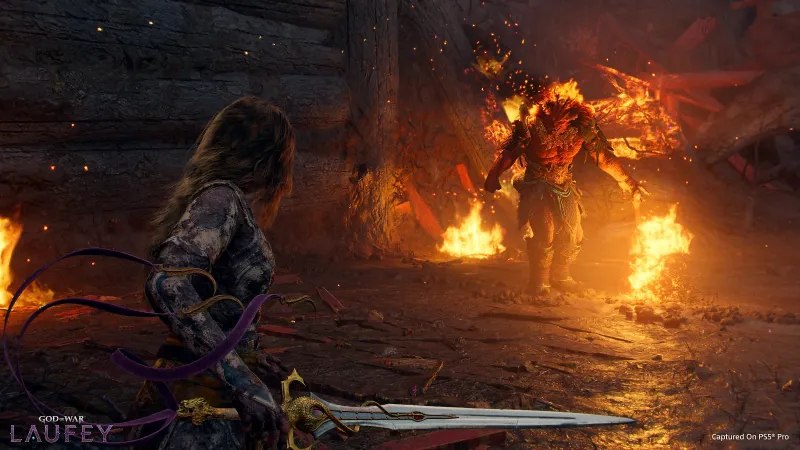
“First, tune in for a new State of Play featuring updates and announcements from PlayStation Studios and our third-party partners, concluding with an extended look at the vast world of Final Fantasy VII Revelation from our friends at Square Enix,” an announcement post on the PlayStation blog reads. In addition to seeing more of Final Fantasy VII Revelation (which just got a new trailer during Gamescom), we can probably expect to see some of the other big PlayStation games on the horizon. It’s pure speculation, but it’s not out of the realm of possibility to see Marvel’s Wolverine, God of War Laufey, or maybe even Kena: Scars of Kosmora. And after last week’s impressive extended look, our fingers are crossed to see more GTA VI, even if it’s unlikely.

The second showcase, which will immediately follow the first, is specifically focused on “upcoming games from game studios in Japan and Asia, including new gameplay, announcements, and more,” according to the blog announcement. On that front, we might hear about new projects from Atlus, Sega, RGG, or Phantom Blade Zero, which is due out this October. The State of Play Japan will air in Japanese, but with English subtitles.

The announcement doesn’t hint at how long the presentation will be, unfortunately. You’ll be able to watch it live on September 3 on PlayStation’s YouTube or Twitch channels.

PlayStation Schedules Back-To-Back State of Plays For Thursday

Game Informer

Following a wild week of announcements from Gamescom, PlayStation is turning the spotlight back on itself with not one, but two State of Play presentations. The first showcase will be a standard State of Play, while the latter is the return of State of Play Japan, and will be hosted by Yuji Kaji. Both will air this Thursday, September 3 at 6:00 a.m. PT / 9:00 a.m. ET / 3:00 p.m. CEST / 10:00 p.m. JST.

Game Informer

“First, tune in for a new State of Play featuring updates and announcements from PlayStation Studios and our third-party partners, concluding with an extended look at the vast world of Final Fantasy VII Revelation from our friends at Square Enix,” an announcement post on the PlayStation blog reads. In addition to seeing more of Final Fantasy VII Revelation (which just got a new trailer during Gamescom), we can probably expect to see some of the other big PlayStation games on the horizon. It’s pure speculation, but it’s not out of the realm of possibility to see Marvel’s Wolverine, God of War Laufey, or maybe even Kena: Scars of Kosmora. And after last week’s impressive extended look, our fingers are crossed to see more GTA VI, even if it’s unlikely.

The second showcase, which will immediately follow the first, is specifically focused on “upcoming games from game studios in Japan and Asia, including new gameplay, announcements, and more,” according to the blog announcement. On that front, we might hear about new projects from Atlus, Sega, RGG, or Phantom Blade Zero, which is due out this October. The State of Play Japan will air in Japanese, but with English subtitles.

The announcement doesn’t hint at how long the presentation will be, unfortunately. You’ll be able to watch it live on September 3 on PlayStation’s YouTube or Twitch channels.

The Can’t Miss Games We’ve Played At Gamescom 2026, From Control Resonant To The Witcher 3’s New Expansion And More

Game Informer

Introduction

Gamescom 2026 has arrived, and everyone here on the Game Informer editorial team has a schedule packed with back-to-back appointments. From Control Resonant to other exciting games like The Witcher 3’s upcoming Songs of the Past expansion, we plan to bring you our thoughts as quickly as possible in this roundup. 

For smaller games and bigger games alike, keep an eye on this story here, and for some games, we might even break out our write-ups into larger previews for you to read. Wherever you click on Game Informer today, you’re sure to find some insightful Gamescom writing, and we can’t wait to bring all the German gaming home to you. Without further ado…

The Most Dope Games We’ve Played At Gamescom 2026

Below, we’ll list the games we’ve played in order of when we’ve actually seen them. For easier navigation, use the Table of Contents on the side. 

About Fishing

Game Informer

About Fishing

By Eric Van Allen

Developer The Water Museum has been making a mark with their particular brand of games. 2024’s Arctic Eggs was took the physics of frying an egg in a pan to its utmost limits, and About Fishing seems to be doing the same for the leisurely past-time of fishing.

A mixture of lo-fi PS2-era graphics and well-honed fishing controls made this a joy to demo. The craftiness, tension, and struggle between an angler and their nautical prey might have been enough to impress me; it was easy to get lost in finding the perfect way to drop my hook right in the path of a fish, and the system even encouraged creativity, like hooking a line around a rock in a current to hold it in place for a big catch.

The narrative teases, though, baited the hook for me. About Fishing has both the fascinating gameplay and standout story beats to make me very, very curious about where it will go. It’s jumped quite high on my watch-list, and I recommend checking out its Steam demo if you’re at all interested in the wave of throwback-styled indie gems.

 Agni: Village of Calamity
Game Informer

Agni: Village of Calamity

By Wesley LeBlanc

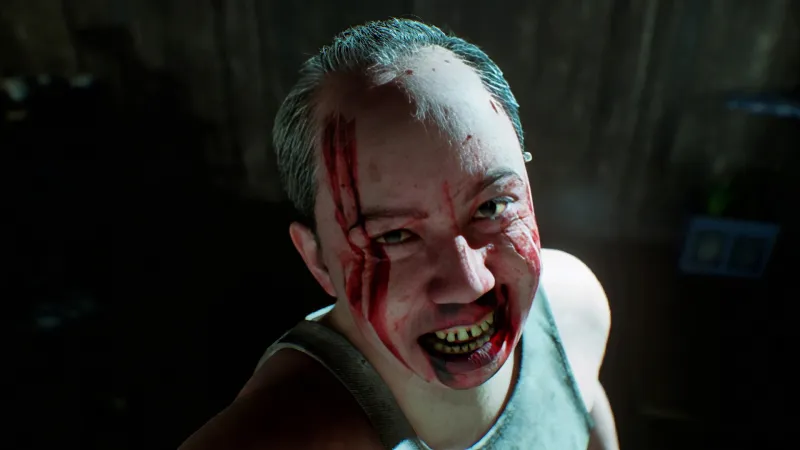
Agni: Village of Calamity is a survival horror game set in Indonesia, developed by Indonesian studio Separuh Interactive, and based on Indonesian horror films. Agni is looking for a friend who’s gone missing in a remote village, and she runs into strange creatures, Remedy Entertainment-inspired phenomena, and a stalking middle-aged man who wants to chop her body to pieces. 

It’s not doing anything too different from your typical survival horror game, but the Indonesian setting and inspiration provide a new lens to look through – I’m excited by that and look forward to playing some more. 

Control Resonant
Game Informer

Control Resonant

By Wesley LeBlanc

Let me say right off the bat: I am stoked for Control Resonant as a Remedy-verse fan, but I still have not played the game. Unfortunately, that hasn’t changed at Gamescom 2026, because my preview of a new section of Control Resonant was hands-off. This didn’t inspire confidence in me, especially as Control Resonant marks a big departure for the studio with its melee action combat and RPG elements. However, what I watched the Remedy Entertainment employee play was another exciting look at the game. 

My colleague and senior associate editor Marcus Stewart did go hands-on with it at SGF and came away with positive thoughts about actually playing the game, so I do still have hope, but alas. Okay, that’s enough about that – here’s what I actually saw. 

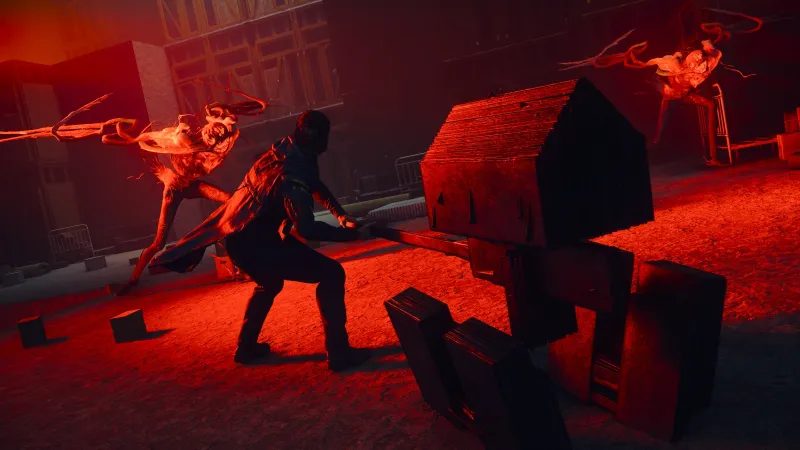
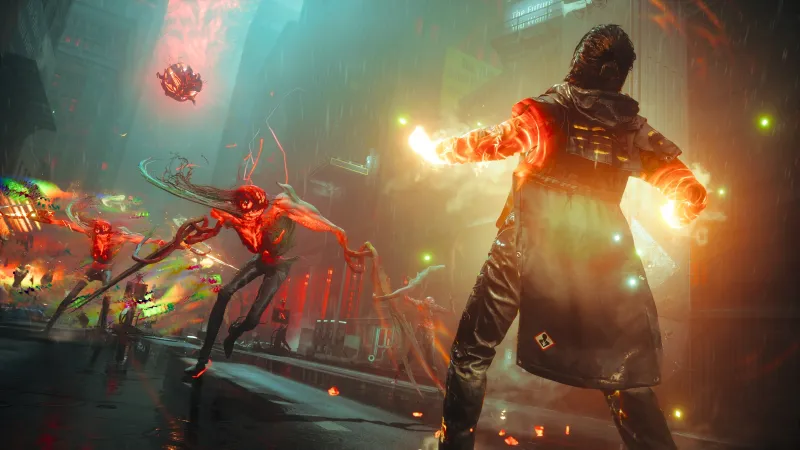
Dylan Faden, the brother of Control protagonist Jesse, is out of the FBC’s containment alongside all of the Hiss the Oldest House tried to keep at bay. There have been plenty of looks at the Hiss’ role in Control Resonant, but for this hands-off preview, Remedy showed off a Manhattan park area covered in a blue mold, complete with various mold enemies, too. Dylan is tasked with finding a Resonant here – the big bosses of the game. 
Game Informer

Curiously, Remedy says you will fight the same first and last boss no matter how you play the game, but that all the Resonants you fight in between can be tackled in any order you choose. In this preview, we’re after a moldy Resonant boss, but first, we have to eat some mold to learn more about it. 

If you didn’t already know, the mold in Control Resonant is “delicious,” according to Remedy, and hard to resist. As such, Dylan passes all kinds of bodies who look dead but are actually paralyzed in a euphoric state (because they’ve willingly eaten the mold). En route to the mold Dylan needs to eat, we pass an FBC Field Content Research facility before shifting gravity so we can climb up a vertical wall.  

Up ahead, there’s a group of mold enemies. The standard mob enemies are easy to take out, but they’re great for farming Dominance, an effect activated by Dylan’s combat kit that increases damage after killing an enemy. After garnering some Dominance, we tackle the massive garlic bulb-looking enemy skulking about, placing mold mines in the area. This enemy is about the size of an elephant and shoots mold mines and other projectiles out of its “trunk,” for lack of a better term. 

Here, Remedy explains that the equipped Dual Blades have a critical chance buff, and that the drill transformation for his transforming Aberrant weapon does some serious Falter damage. Every enemy has a yellow Falter bar below their red health bar – Falter is essentially a Stagger meter. When you fill it up, you can perform an execution by pressing L3 (on PlayStation 5). 
Game Informer

After taking this enemy out and clearing out the others, we make our way toward the mold Dylan needs to eat. On the way, we see a traffic barrier behaving weirdly, rotating in a glitchy fashion; Remedy says this indicates a nearby world event, but we don’t have time to complete it.

At this point, I ask Remedy if there are real-world locations from Manhattan in Control Resonant. They say no, and that instead of actual named locations, the places within Control Resonant are meant to feel inspired by the real Manhattan, but with a “twisted” Remedy spin on it. We continue forward, fight some additional enemies, and I see Dylan’s shoulder button abilities on display; R2 deals fire damage by way of Ignite, while L2 uses the Barrage ability, which pummels enemies with rocks to greatly increase Falter damage. R1 is Push, and it’s basically a Jedi force push. 

I also learn here that there is no parry and no block – there’s just a dodge (and you can perfect dodge to slow down time and deal extra damage). Remedy wants Control Resonant players to be aggressive; that’s why you can only heal by defeating enemies, as they drop blue orbs that add health to your HP bar. 

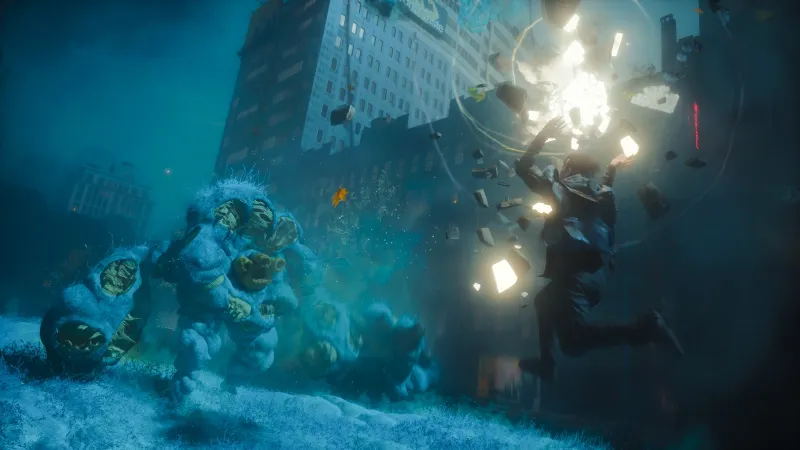
A few minutes later and we finally reach the mold for Dylan to eat. He eats it, and we get some strange dialogue choices to select. Remedy says dialogue choices won’t change the game’s ending – there’s only one ending – but that some side quests can have different endings depending on your choices. Plus, your dialogue choices will change how NPCs perceive you. It’s not a Mass Effect-like system or anything like that, but Remedy says you will notice NPC perception in their attitude toward you. 
Game Informer

After eating this mold, Dylan has an idea of where the Resonant he’s after is hiding. We find it underground; it’s called the Collective, and it’s a giant pile of mold shaped into various frowning faces. During this boss fight, Dylan can’t do any damage to the Collective. Instead, you have to attack the Collective’s tentacles attached to the walls in the arena. To do that, you need to gravity shift so that you can walk on the walls and hit the tentacles. All the while, the Collective is firing moldy projectiles at you and summoning enemies to slow you down. After damaging all of the tentacles, weak spots open up, and you finally do some actual damage to the Collective. 

I don’t get to see the fight’s conclusion, but I’m excited to do so myself in the final game. It’s not the wildest boss, but seeing Remedy’s spin on the “attack weak points to defeat the boss” formula is neat. I expect a lot of weird and strange when I play a Remedy game and so far, Control Resonant seems like it’s going to deliver all that and more. 

Control Resonant launches digitally on PlayStation 5, Xbox Series X/S, and PC on September 24. The physical version is planned for October, and a Mac version will launch later. 

 Cosmo Tales

Game Informer

Cosmo Tales

By Wesley LeBlanc

Cosmo Tales comes from Czech-based Bohemia Interactive, and after playing roughly 20 minutes or so of it, it’s a game I’m greatly looking forward to. It launches in Early Access next week, on September 3, before an anticipated Q1/Q2-ish 1.0 launch. The pitch is simple: it’s a retrofuturistic 1980s space-age-inspired shooter where you fly around bright and colorful arenas, shooting robots with lasers, rockets, and more. 

It’s a roguelite, too, so there are pickups to earn after completing each arena bout, like an electrifying Tesla coil, flame-imbued weapons, and more, and you earn XP at the end of each run to further upgrade your various ships. Each ship is based on a car, with many based on the Czech vehicle manufacturer Skoda. The combat and movement are simple, but that’s by design because Bohemia Interactive intends for the game to be children-friendly; the team told me it’s aiming for it to be your 10-year-old’s first roguelite, and I can definitely see what they’re getting at. 

But don’t let that deter you – it’s a light, breezy, but, crucially, fun time, and it’s all backed by a groovy score. It will launch on PC via Early Access next week, but the team hopes to bring it to PlayStation 5 and Nintendo Switch 2 for the 1.0 launch next year. 

Crimson Moon

Game Informer

Crimson Moon

By Wesley LeBlanc

Crimson Moon is developer/publisher ProbablyMonsters’ take on the Soulslike, but instead of aiming for a massive, grandiose FromSoftware-style game, it’s aiming for a smaller experience; it’s more focused on replayability, especially with a co-op buddy. That’s why the game is only $19.99. That said, the 30 minutes I played reflect the game’s more scaled-down approach and smaller price of entry. 

The game’s combat feels reminiscent of other Soulslikes, with light and heavy attacks, blocking, parrying, and dodging. You also have special abilities you can tap into to do heavy damage, and an ultimate-like transformation that turns your Crimson Moon acolyte knight into an angelic being with a huge halberd that hits hard. Despite these similar trappings, the combat looks and feels like something more akin to Kingdom of Amalur: Reckoning. The “heavy metal” fantasy visual design reflects that too, with a touch of classic World of Warcraft fantasy. This art design is what I walked away most impressed with – it’s a nice change of pace from the typical dark and brooding gothic feel of the Soulslike. 

That said, the game’s main appeal is the co-op element, and unfortunately, I didn’t get to experience any of that. But I do know the co-op party sessions begin from the game’s primary hub, and that loot is not shared. If your buddy takes a sword from a chest, it’s theirs. Despite the emphasis on co-op, it feels like a game built around runs in isolated linear missions, so it should work fine solo. 

The game feels janky, but the final build may feel better (though it launches next week, so we’ll see). Nonetheless, if you’re looking to spend $20 on a Soulslike you can play with your friend, Crimson Moon might be one to keep an eye on. 

 Hellraiser: Revival
Game Informer

Hellraiser: Revival

By Wesley LeBlanc

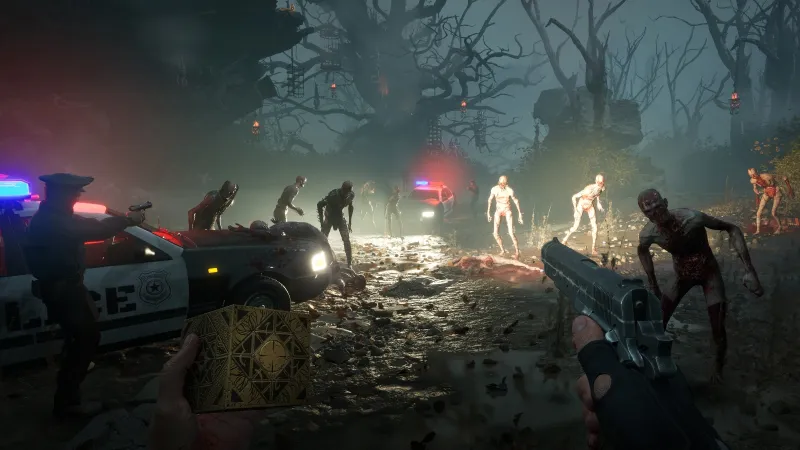
If you told me an upcoming Hellraiser video game adaptation was a first-person shooter, I’d scoff at the idea – it’s quite low on my list of game styles I’d imagine a Hellraiser game to be created in. But, after 30 minutes of hands-on time with its latest build, I can’t wait for more. It’s decrepit, with mangled bodies strewn about what appears to be a luxury apartment home to a deviant cult, and fresh blood and gore painting the walls of its hallways. 

Combat is pretty straightforward; I used a pistol and shotgun (both with limited bullets) to take down leather-strapped-and-gagged enemies as I searched for a way to get through this apartment’s various doors. In a fun survival-horror twist, LeMarchand’s Box, or the Lament Configuration cube, allows you to grab scissors, knives, and even fire from candles and projectile-throw them at enemies. 

Halfway through the demo, I was brought to the Labyrinth to solve a simple platform-moving puzzle before I landed in a house.  In this house, which is clearly a nod to Hideo Kojima’s P.T. demo, I move through hallways over and over again, searching for differences and clues to the way forward. It’s clear the protagonist is beaten up about Sunny, his girlfriend, falling victim to the torturous cenobites, and he’s on a frantic search to learn more about them. 

Hellraiser: Revival launches October 8, and I’m looking forward to playing more of this horror adventure (which will run 10 to 12 hours, according to the developers, making it a perfect game for the Halloween season). 

 Kingdom Hearts Collection I~III on Nintendo Switch 2

Game Informer

Kingdom Hearts Collection I~III on Nintendo Switch 2

By Wesley LeBlanc

Have you ever played Kingdom Hearts 1, 2, or 3, or any of the various spin-off-but-still-inexplicably-very-important-to-the-story games? If you have, great! Just imagine playing them on a small handheld made by Nintendo called Switch 2. Square Enix isn’t really doing anything surprising or exclusive here for this collection of games – it’s just bringing the Kingdom Hearts series to Switch 2 and making sure they run excellently (they do!). That said, there’s something special about playing them on a Nintendo console after all this time, considering just how many were released for various Nintendo handhelds over the years. 

If you haven’t played Kingdom Hearts, the Switch 2 is a great place to do so; just as great as playing through these games on PlayStation or Xbox or PC. Kingdom Hearts IV is due out next year so now is the perfect time to get started (or pick back up on) on this adventure with Sora, his friends, and the various characters from Disney and Final Fantasy. 

 Kumarn: The Wandering Spirit
Game Informer

Kumarn: The Wandering Spirit

By Wesley LeBlanc

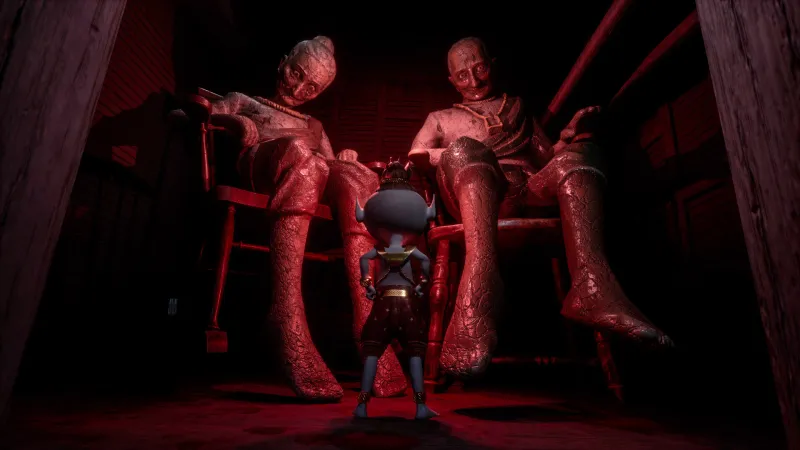
Kumarn: The Wandering Spirit is a Little Nightmares-style adventure/platformer game with Thai horror influences from Thailand-based developer WereBuff Studio. You play as a young child spirit stuck in a terrifying, ancient land inspired by supernatural Thai stories. Its movement and platforming aren’t doing anything too different from the aforementioned Little Nightmares formula, but its unique setting spices up what might otherwise be a standard adventure game. 

Plus, your companion is a cute and chunky lil zebra, and it’s sure to be the game’s fan-favorite character. There’s no word on when it’s launching, but if you’re in the mood for something spooky, with Thai horror figures who stalk and chase after you while their bones crunch in the darkness, keep an eye on Kumarn: The Wandering Spirit.  

Locator: The Search for Abigail Lidari
Game Informer

Locator: The Search for Abigail Lidari

By Eric Van Allen

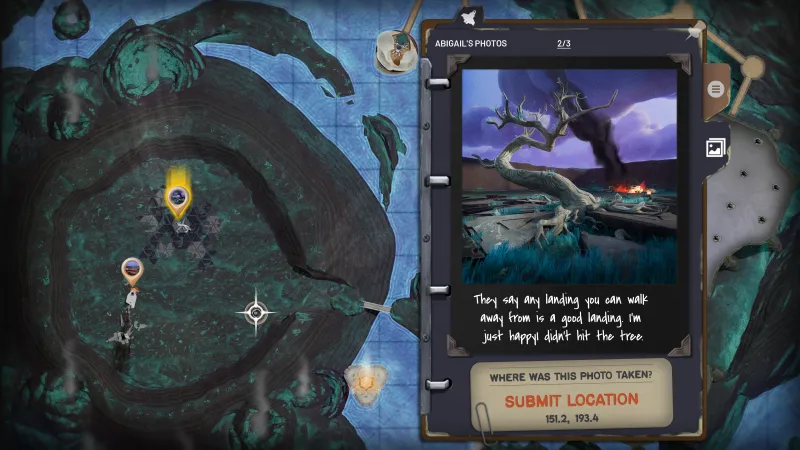
Sometimes, you get so locked into a demo that you absolutely lose track of time. That happened to me several times over while playing Locator alongside its developer, Empty Exhibit, at Gamescom 2026. Easily billed as Return of the Obra Dinn-meets-GeoGuessr, Locator: The Search for Abigail Lidari has you tracking a lost space explorer through photos, journal entries, and more.

You get new information in batches, and use pins to plot where you think Abigail took various photos on a topographical map. Basically, you street-view and map-view a path through strange alien lands, all the while trying to solve what Abigail was searching for, what she ultimately discovered, and where all of it led her.

If you enjoy solving mysteries and getting them proven right in groups of three, Locator’s looking like another fantastic entry in that burgeoning genre. Or, maybe you just like sci-fi mysteries similar to Scavenger’s Reign or Outer Wilds; or maybe you just like the idea of playing a narrative GeoGuessr game. Any of those reasons are reason enough to be looking out for Locator: The Search for Abigail Lidari.

Mega Man: Dual Override

Game Informer

Mega Man: Dual Override

By Kyle Hilliard

The first thing I learned playing what is ostensibly Mega Man 12 is that the game is called “Override” and not “Overdrive.” A crucial distinction. The other thing I learned is that the game feels great and is optimistically a worthwhile follow-up to 2018’s Mega Man 11. I played through three stages leading up to a boss fight with Twinkle Girl. The biggest shift from Mega Man 11 is the Dual Override mode which activates when your health is low and gives you some extra fire power after a flashy (but skippable) cutscene. It feels a bit like a last chance, but doesn’t radically give you the edge in the fight. Your health is still low, after all. But emotionally, it feels like a final chance at success in a challenging game, so I liked its implementation. Look out for a larger hands-on preview with more details in the coming days.

 Murals
Game Informer

Murals

By Wesley LeBlanc

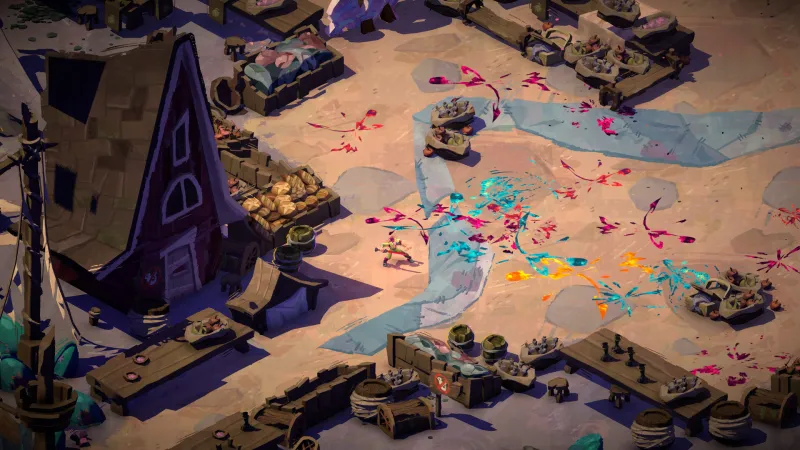
If you know me, you know I adore Dlala Studios’ Disney Illusion Island – you can read my review here to learn more about why. Murals is a new action game from Dlala that sees the studio spinning up its own take on classic fairy tales, not unlike what Disney has done with the works of Hans Christian Andersen and more. I’m told there are more fairy tales to play through, but my hands-off demo during Gamescom pulled back the curtain on Dlala’s Little Mermaid. 

The humor is very British, the art is warm, inviting, painterly, and beautiful, and the score, made by returning composer David Housden, sounds grand and amazing (and this demo still featured Housden’s MIDI tracks, so it’s not even the final orchestral arrangements). The combat looks fun and experimental, too, with a clear inspirational nod to Hades. Unlike Hades, which typically gives you free rein in the various arenas, Murals uses some intentional blocking and environmental hazards to keep consecutive arena bouts feeling different. I don’t know if it feels as good as it looks to play, but Dlala has shown prowess in creating characters that feel great to control, so I have high expectations. 

There’s a lot more going on in Murals, from charming voice performances to some neat Boon-like pickups that change your combat kit (à la Hades) to different weapons to use and some unique spins on classic fairy tales I look forward to learning more about. I’ll be diving deeper into my impressions in a later (separate) preview, so keep an eye out for that. 

Nekome: Nazi Hunter
Game Informer

Nekome: Nazi Hunter

By Wesley LeBlanc

Earlier this year, I discovered a trailer for Nekome: Nazi Hunter, which is how I learned it’s a Grindhouse-inspired action game where you brutally kill a lot of Nazis. Immediately, I was in. And now, after playing it for roughly 30 minutes, I’m even more in. 

Nekome: Nazi Hunter is absolutely, deliciously, disrespectful to the Nazi’s of the 1940s Nazi regime in Germany during World War II. It begins with protagonist Vano Nastasu dressed as a butler within a palace of sorts. Inside, a group of Nazis is seated around a table covered in delicious food. As the Nazis eat, a leader figure praises the group for opening up three more death camps, gloating about their awful acts of violence while eating chicken, vegetables, and more. Vano wheels in a silver platter, removing its cover to reveal a decapitated Nazi head with a knife through its skull. 

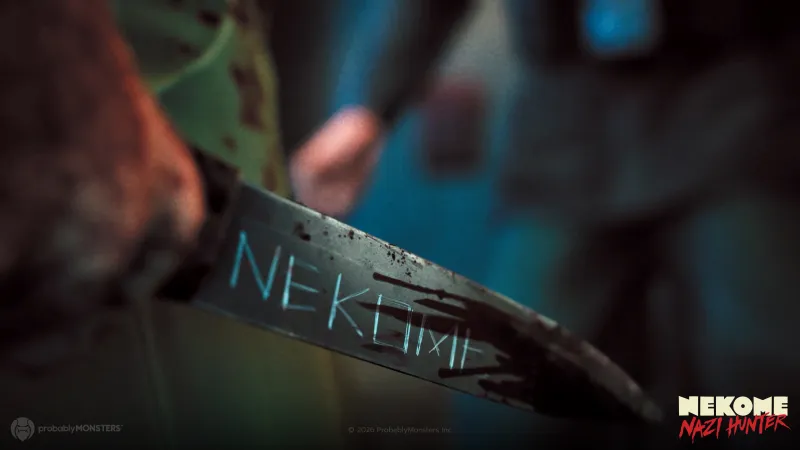
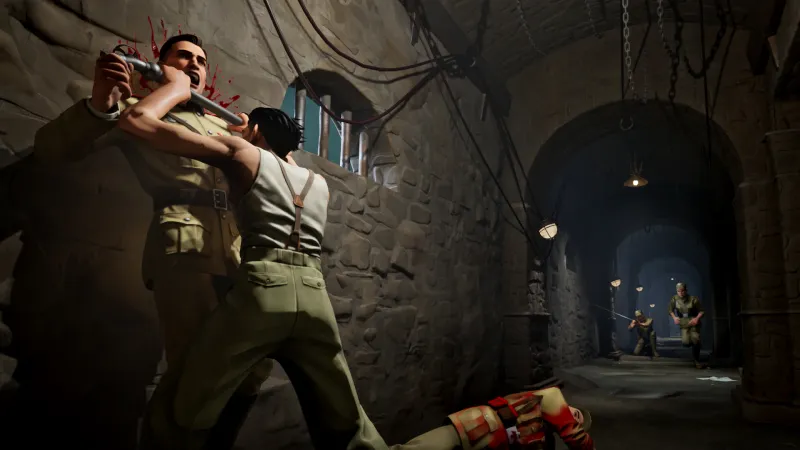
He then uses a knife engraved with “Nekome,” which is Yiddish for vengeance, according to the game, to completely slice off the leader’s arm. He then guts his belly before slitting the Nazi’s throat. At this point, I take over on the sticks, pressing X repeatedly to deliver all manner of cuts, slashes, and more to the other Nazis in the room – they stand no chance, and I quickly paint the ballroom red. 
Game Informer

You can parry with Y and break their blocks, but ultimately, combat is simple, more focused on delivering bloodshed than intricacy. What I play is in a pre-beta stage, and it’s evident – it’s a bit janky, but not enough to distract me from the delight I take part in as I rip apart Nazis galore. 

From here, we flash back to Vano as a child to learn that his entire family is ripped from him at the hands of “Hitler’s Hyenas,” which is seemingly led by the Nazi leader Vano kills at the preview’s start. I’m glad he gets his revenge, because that leader shoots Vano’s father point-blank, then his mother, then forces Vano and his brother to fight over a knife to kill each other, reminiscent of the pool stick scene in The Dark Knight. Vano refuses to kill his brother and stabs himself instead. The aforementioned Nazi leader shoots Vano in the back and doesn’t check to make sure he’s dead. 

I flash forward again to see Vano in the future, somewhere in New York City. He’s speaking with Harold, a butcher-mentor with a heavy NY accent. He explains to Vano the importance of training before exacting revenge, but Nazis soon storm the room and take Harold out, adding more fuel to Vano’s vengeance-filled journey. Searching for Harold’s killer, I stalk through a NYC alley to learn there’s an American-German Bund group in support of Nazis in 1940s America. I utilize the game’s stealth kills here and like the action combat, it’s simple (but effective). Turns out, killing Nazis just doesn’t get old, at least in this 30-minute preview. 

I hope to continue my Nazi-killing delight in the full game when it launches sometime early next year. 

 No Law
Game Informer

No Law 

By Wesley LeBlanc

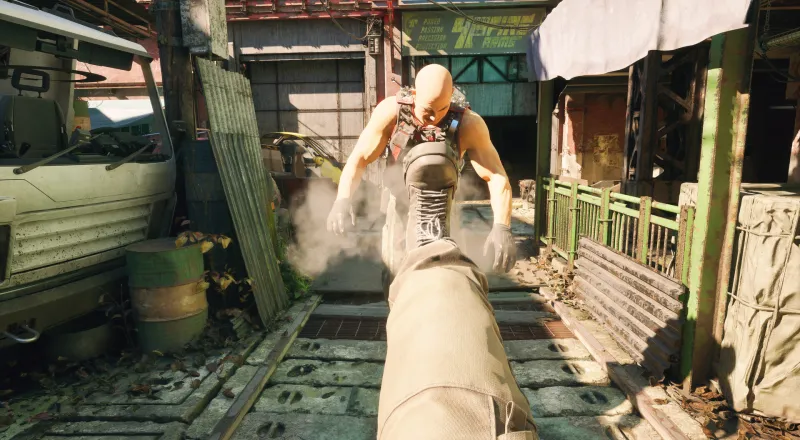
I need to think on it some more, but No Law, the cyberpunk FPS (that can be played as a straight shooter or an incredibly detailed immersive sim) from The Ascent developer Neon Giant, might be my Gamescom 2026 game of the show. It is slick in all the ways the cyberpunk genre of sci-fi typically inspires, but instead of the usual doom-and-gloom feel, Port Desire has a bright and airy Mediterranean feel (though don’t worry – the neon-lit streets and soft rainfall still happen). 

And though Port Desire isn’t as big as, say, Cyberpunk 2077’s Night City (Neon Giant is just 24 developers), it looks incredibly dense. NPCs have routines, there is a day-night cycle, and dynamic weather affects who you see and how you might complete an objective. Enemies guarding a building outside might not be there if it’s pouring rain, leaving you with a breezy, direct entrance, for example. 

Neon Giant tells me you can play No Law as a straightforward FPS, blasting your way through objectives and killing your way through the game; the team also says you can play No Law like an immersive sim, and that’s where I’m most impressed. I’ll dive deeper into it in an upcoming full preview, but here’s a few quick examples of the game’s im-sim elements: if you kill a shopkeeper, nobody can work the store so it will be closed for the remainder of the game; if you can’t climb over a fence, there might be a crate or three nearby for you to stack and climb upon; if you see a store’s theft detection unit near the door, you can break into the store when it’s closed, steal that unit, and attach it to a grenade to create a proximity sensor; It’s all incredibly impressive, and I really hope Neon Giant is able to make everything work in harmony when No Law launches next year. 


 Persona 4 Revival

Game Informer

Persona 4 Revival

By Wesley LeBlanc

If you haven’t played Persona 4 Golden before, you’re in for a treat if you check out Persona 4 Revival when it launches in February. If you have played it, you might check this out, if only to play through a fantastic RPG again, but upgraded visuals and more await you nonetheless. This was my first time going hands-on with this remake, and I honestly don’t have too much to say – it’s Persona 4, but it isn’t chibi, and it looks more in line with Persona 3 Reload and Persona 5 Royal now. And that’s not a bad thing, as I love those games. It plays like them too. 

That said, roaming around Inaba was good fun. It’s a wonderful change of pace from Persona’s city adventures, as Persona 4 Revival’s Inaba showcases rural Japan. It’s fun to see the various shopkeepers and personalities on the streets I haven’t spoken to in over a decade, and it was especially great to pop into the famous Junes department store (the jingle still rules). I played through a dungeon on April 18 and April 19 in-game, trying to figure out what’s going on with TV reporter Yukiko Amagi and the castle she’s lording over, and it was fun. Persona 4’s combat still feels great, and I’m not at all surprised. 

 Showa American Story
Game Informer

Showa American Story

By Wesley LeBlanc

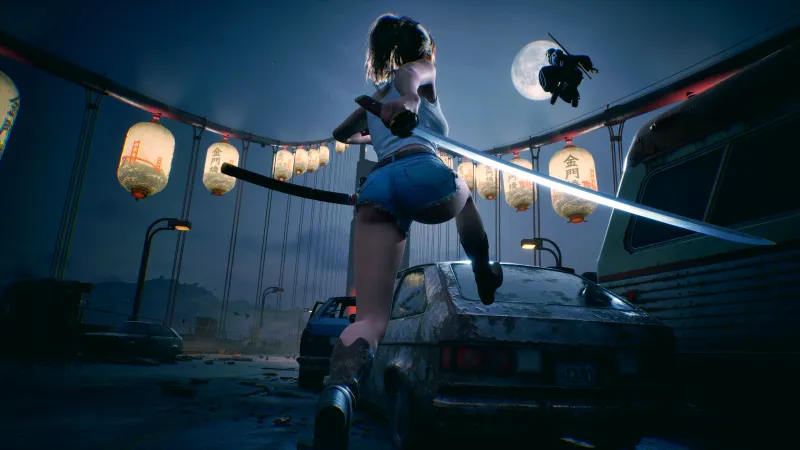
Based on rumors the game’s director remembers hearing in China about Japan’s 1980s economic prowess, Showa American Story is an action RPG set in an America that Japan purchased and colonized. As such, Hollywood is now Neo Yokohama, and Chigusa Choko is on a road trip searching for her sister. 

I fight various “Warriors” as I run up roads leading to the mountain home to the Neo Yokohama sign. Combat is most reminiscent of RGG’s Yakuza/Like a Dragon series, with a comedic intensity to each hit. In my 30-minute demo, I use a massive BioShock-like drill, a large (and sharp) American flag, a katana, a machine gun, and a shotgun to lay waste to enemies in Tarantino-esque fashion. That checks out, as developer Nekcom Entertainment tells me director Quentin Tarantino’s Kill Bill movies are a massive inspiration for the game. 

The combat is brutal, bloody, graphic, and hilarious – it never got old executing enemies by impaling them with an American flag. The world and characters are also hilariously raunchy. I stumble upon a guy who did not pay a sex escort the money she’s owed, so the Warriors, a gang of sorts that resides here, smash his “balls” into a tree over and over. After I defeat the goons, Choko can choose to ask how the tree is doing or how the man’s “balls” are doing. 

There are plenty more laugh-out-loud moments I experience in this short demo, and you can read more about them in a separate preview I anticipate writing later. 

 State of Decay 3
Game Informer

State of Decay 3

By Brian Shea

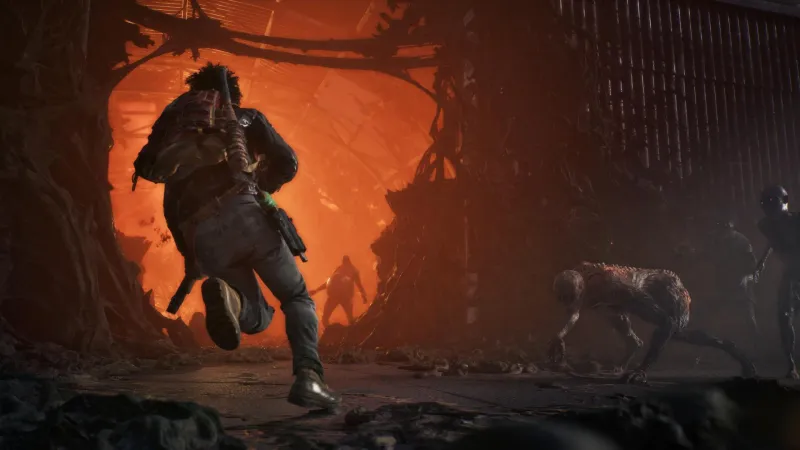
It’s been a long road for Undead Labs. After announcing the game in 2020 and going most of the Xbox Series X/S generation without giving any additional information, Undead Labs was reportedly staring down the barrel of Xbox’s impending closures. Thankfully, it avoided that fate alongside several other previously Xbox-owned studios, and is now under new, hopefully more stable ownership. And the cherry on top of that is that I was able to get my hands on the long-awaited State of Decay 3 during this year’s Gamescom.

The same zombie-slaying, panic-inducing action still permeates the entire experience, but now, with better gameplay and even more involved systems. The most impactful addition outside of core gameplay improvements look to be new Plague Heart networks that spread corruption between encampments, strengthening zombie strongholds and weakening your positions. However, I am particularly excited about the new option to share a save file with your friends, letting them join your world, characters, and progress, whether you’re playing co-op or not. State of Decay 2 launched in pretty poor state, but Undead Labs seems confident its sequel is in a much better state due to iterative updates to the second entry, as well as early community testing for its third title.

For more on my time with State of Decay 3, read my full preview here.

 Stranger Than Heaven

Game Informer

Stranger Than Heaven

By Wesley LeBlanc

I got to play through three battles, each more difficult than the last, in Yakuza/Like a Dragon developer RGG’s upcoming century-spanning action-brawler game, Stranger Than Heaven. I didn’t spot Tupac, nor did I get to talk to the team about his inclusion (though we asked RGG about it back in June), but I did spot plenty of street goons to beat the ever-living crap out of with my fists, a large metal pipe, a knife, and a machete. 

I continue to be impressed with RGG’s efforts to do something new with the action-brawler space it has cultivated across multiple Yakuza games. You control the main character’s right fist and right leg with the RB/RT shoulder buttons, and his left side with the LB/LT shoulder buttons. You can punch, kick, slam, and more, but crucially, you must also block using the correct side of your body as well. Having to watch an opponent’s movements to recognize they’re swinging left or right and must be blocked appropriately by that side of my body is thrilling; it adds a rhythm/fighting game vibe to the street brawling RGG is known for, and it rules. 

It’s difficult and demanding, but landing multiple blocks in a row to defeat a katana-wielding enemy in the streets of 1943 Osaka was a blast. I look forward to playing more when it launches in January, though I remain skeptical of pretty much everything outside of combat considering I haven’t experienced any of it. 

The Witcher 3: Wild Hunt – Songs of the Past
Game Informer

The Witcher 3: Songs of the Past

By Eric Van Allen

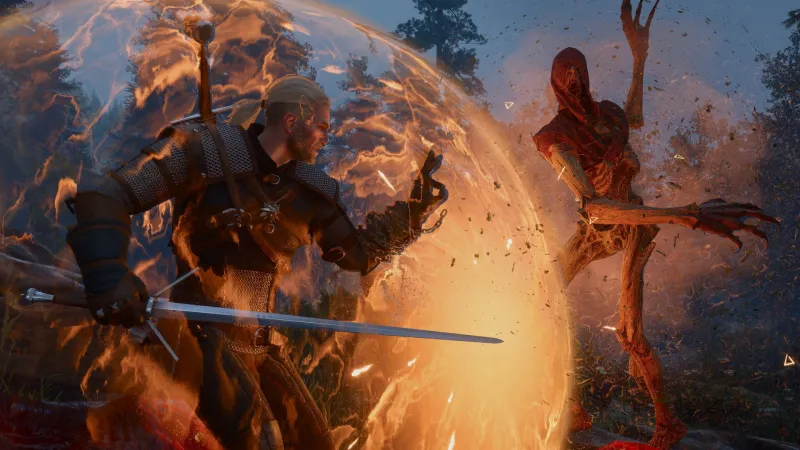
It’s been over a decade since Geralt hung up his swords. But ahead of Ciri taking on the family business in The Witcher IV, CD Projekt Red is giving Geralt another mystery to solve in a new DLC for The Witcher 3: Wild Hunt called Songs of the Past.

We got to see a chunk of the new story, which sends Geralt to Dandelion’s hometown of Lettenhove. After a death in the bard’s family, Geralt and Dandelion have traveled to the latter’s estate; but Dandelion’s sudden disappearance after a long night of festivities sends the monster hunter down a dormant, dangerous path.

What’s remained good about The Witcher 3: Wild Hunt is still here: rewards for investigation and preparation, Geralt as a wonderfully stoic lead, and a chilling fantasy tale unraveling around you in a sprawling open world. Songs of the Past benefits from some quality-of-life upgrades from the Remastered Edition arriving next month, too, including updated combat and a new chain weapon that gives Geralt some impressive new options in a fight. Seems like we’ll have plenty of reason to return to this massive RPG adventure when the DLC arrives.

Total War: Warhammer 40,000

Game Informer

Total War: Warhammer 40,000

By Eric Van Allen

The absolute breadth and scale of Total War’s grand strategy battles have often been their draw. Creative Assembly has taken that scope to new heights, though, with Total War: Warhammer 40,000, a galactic-level strategy game that feels fittingly gratuitous with its explosions, carnage, and declarations of undying loyalty to the Emperor.

In a short demo, I went from commanding a small detachment of Space Marines to leading massive forces across the face of a planet. Beset on all sides by Orks who were Waagh’ing out of their collective gourds, my Space Marines had to rally and find cover, position and hold the line against overwhelming numbers. 

Aside from aesthetics, the greatest difference between this and, say, the fantasy-laden Total War: Warhammer (non-40k) is the weaponry. Space Marines can deploy bolters or swap to melee options, and giant tanks pierce deep through infantry lines. Still, tactics matter as much as they always have, and utilizing future tech — like dropping in Space Marines from your space-faring vessel on-high — will likely come to define the strategy of this new entry. 

There’s much, much more we only had a chance to hear about, rather than play, including a massive breadth of options for the factions and an ambitious campaign. A short 50 minutes only feels like scratching the surface with something as big as Total War, but from the scope and carnage on display, I’m certainly curious to see whether Creative Assembly can achieve the scope of sim they’re reaching for.

 When Sirens Fall Silent

Game Informer

When Sirens Fall Silent

By Wesley LeBlanc

When Sirens Fall Silent is an upcoming psychological thriller-horror set in 1990s Italy, developed by Martha Is Dead developer LKA. Though I didn’t care much for Martha Is Dead as a horror game (read why in my Game Informer review here), I adored how well the studio captured Italy as a setting. Florence, Italy-based LKA is aiming to do the same with When Sirens Fall Silent, this time putting you in control of a rookie cop on the outskirts of Rome, investigating mysterious and disturbing murders. 

As the name implies, there is likely something related to Sirens behind these murders, but that’s all I can say for now. I’ll have more to share later, but I finished a quick 15-minute demo of the game and was impressed by its authenticity and retro survival-horror puzzle-solving style. If you like horror, the 1990s, and folk tales and legends, you should keep an eye on When Sirens Fall Silent. 

Take A Tour And Watch Us Hand Out Magazines At Gamescom 2026

Game Informer

Didn’t make it to E3 heir apparent, Gamescom, in Cologne, Germany this year? Don’t worry. We’ve got you covered with our tour video.

Join Game Informer editors Kyle Hilliard and Wesley LeBlanc (mostly Wesley), for a tour of the hall floors showing off the impressive spectacle booths, myriad cosplayers, and food options while we only really get lost once.

And while we were touring the show floor, we were handing out issues of Game Informer to anyone lucky enough (or unlucky enough, depending on your perspective) to run into us. We tackled Gamescom in a big way this year using it as an opportunity to highlight our new international subscriptions and our brand new Apple and Android apps. Check out the show tour video above.

Want to see more of Gamescom 2026? Check out Brian Shea’s photo gallery here. You can also read our various previews from the games we got to see and play right here.