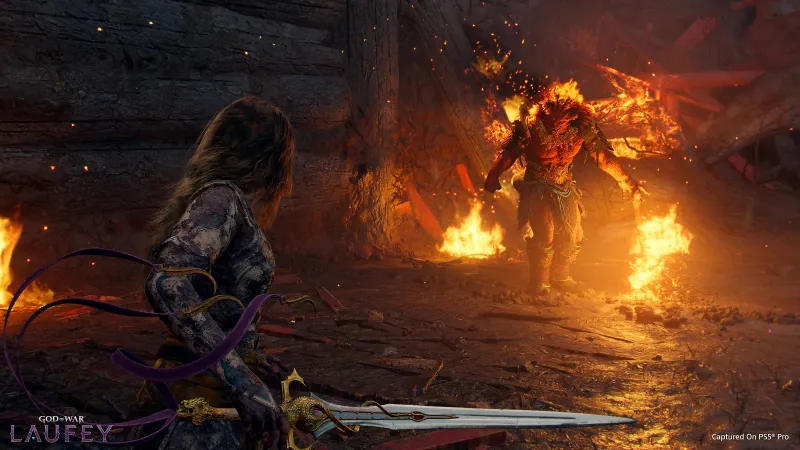
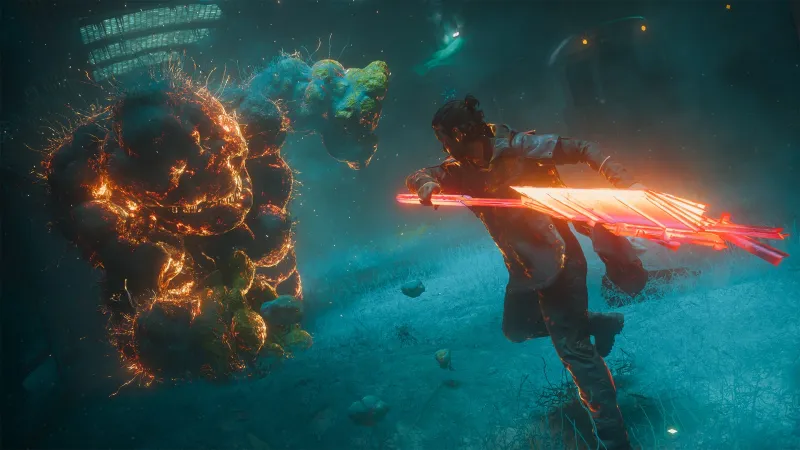
Santa Monica Studio has revealed new combat details for God of War Laufey, chiefly a new weapon for the titular protagonist. With the game slated to launch in February, pre-order details and a Digital Deluxe Edition have also been announced.
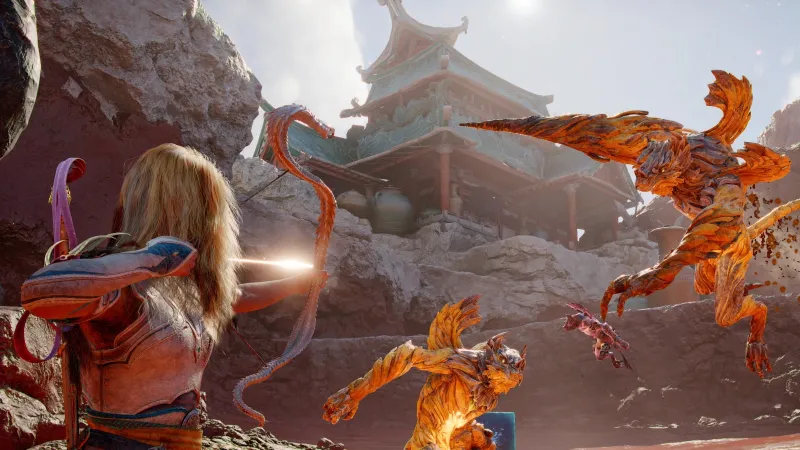
God of War Laufey stars Kratos’ wife, Faye, as she battles to liberate and survive the Everywhen, the afterlife of the Gods, after she dies at the beginning of God of War (2018). A PlayStation Blog post reveals a new weapon for Faye alongside her sword: the Serpent’s Bow. This mythical bow gives Faye a ranged option to keep foes at bay, and its quickness allows players to weave arrow shots into their melee attack strings. Short clips posted on the blog show Faye knocking opponents in mid-air and peppering them with a few quick arrows before resuming her melee combo.
Holding down the fire button charges precision shots to target weak points that can hinder enemy movement and offense. Charging shots also allows Faye to notch and unleash up to five arrows at once. Faye also has an arsenal of arrow types, including rapid-fire, explosive, and multi-targeting options. The Serpent Bow can also be customized by equipping scales that alter its appearance and performance.
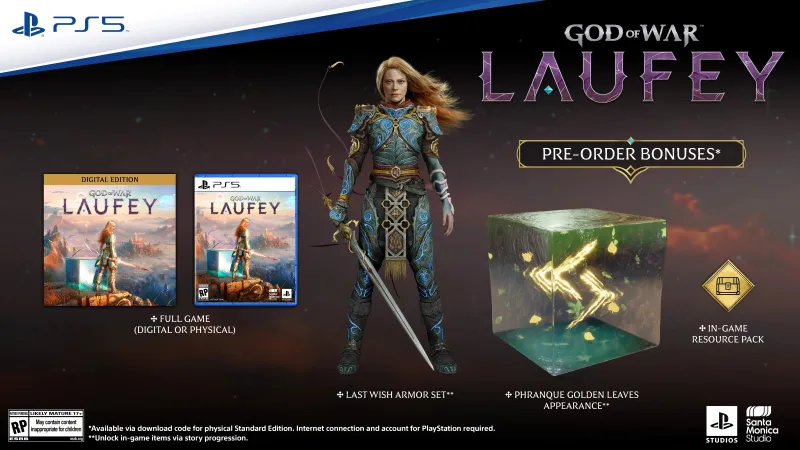
God of War Laufey pre-orders open tomorrow, September 29, and include the following items. According to the blog post, items with an asterisk are denoted as “Unlock in-game items via story progression.”
Last Wish Armor Set*
Phranque Golden Leaves Appearance* (cosmetic)
In-game resource pack
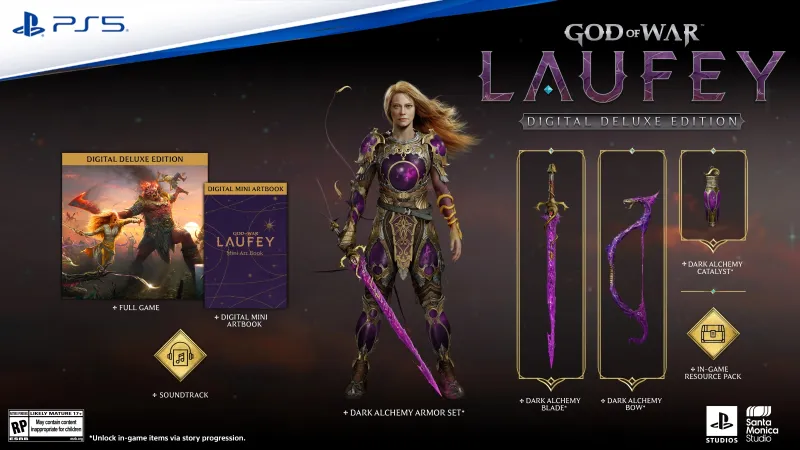
A Digital Deluxe Edition, which currently has no listed price, includes the following bonuses:
Dark Alchemy Armor Set*
Dark Alchemy Blade*
Dark Alchemy Bow Scales*
Dark Alchemy Catalyst*
In-Game Resource Pack
Digital Mini Artbook
Official God of War Laufey Digital Soundtrack
God of War Laufey launches on February 16 for PlayStation 5.
Platform:
PlayStation 5, Xbox Series X/S, Switch, PC
Publisher:
Xbox Game Studios
Developer:
Mojang, Double Eleven
Release:
Rating:
Everyone 10+
Minecraft Dungeons II truly sang when I reached its endgame and settled on a character build I loved. I wielded an Emerald Hammer that electrocuted nearby enemies and a crossbow that pierced through them. I upgraded and enchanted all my armor pieces so they either healed me or made potions even more effective. I felt powerful, in control of every encounter, and like nothing could stop me. I wish Minecraft Dungeons II didn’t wait for its endgame to give me that incredible power fantasy.
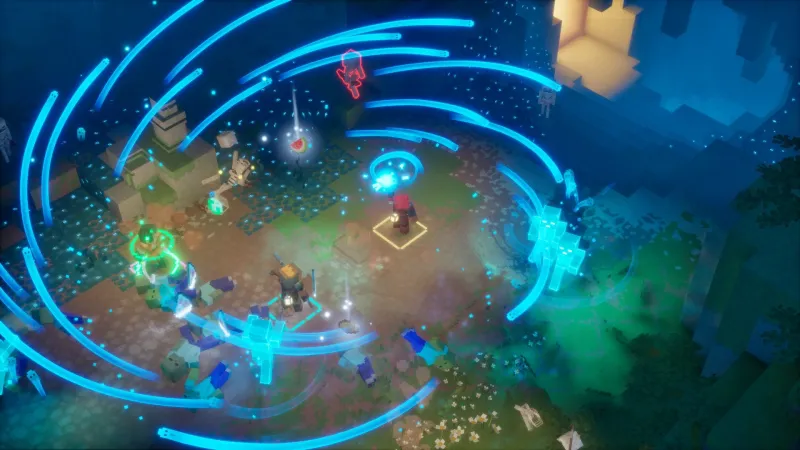
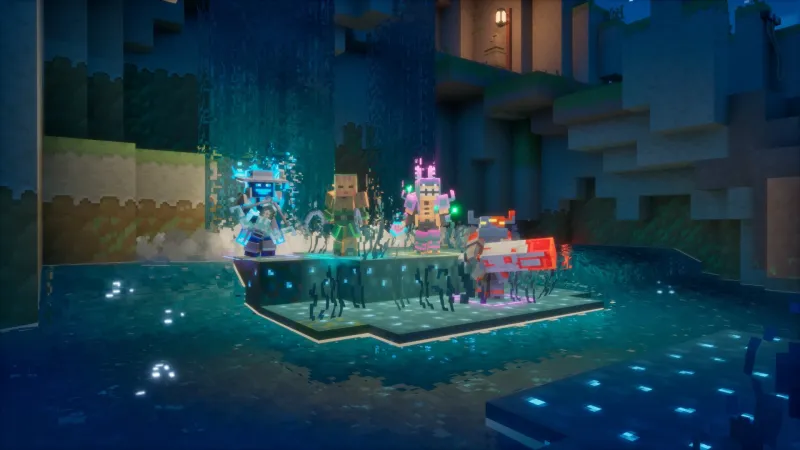
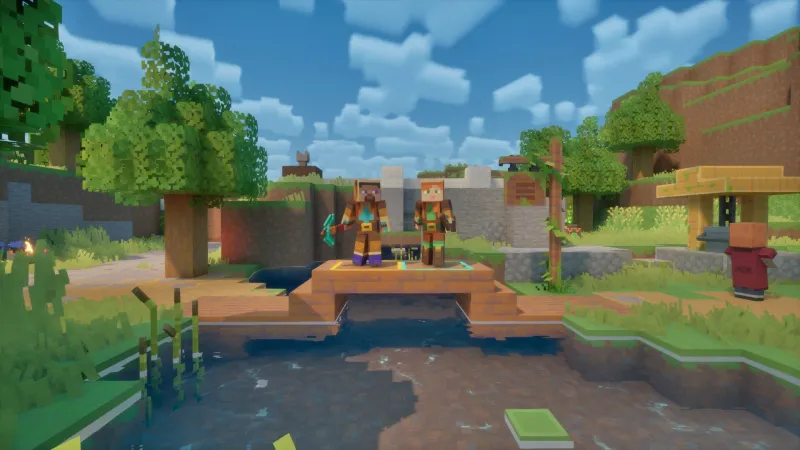
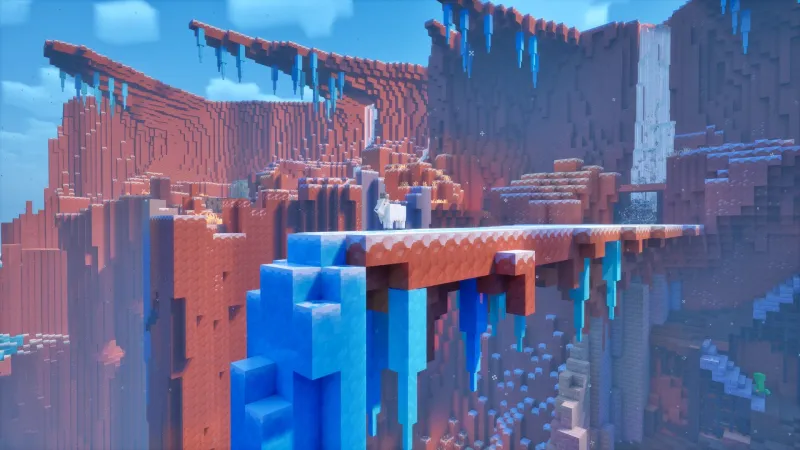
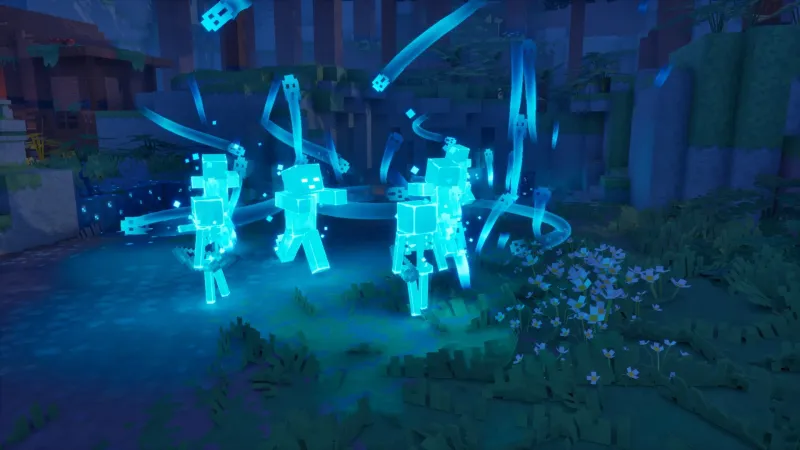
Minecraft Dungeons II is a step up from its 2020 predecessor, which gave the action RPG dungeon-crawling formula popularized by Diablo a Minecraft makeover. The added jump mechanic makes traversal and movement more fluid, in-game menus surface important information effectively, and there’s more enemy and weapon variety than before. It even adds meaningfully to Minecraft as a franchise by introducing a new ethereal dimension called the Sift, coming to Minecraft proper in 2027.
Shortcomings from the original persist, though, like its eschewing of a class-driven character progression approach in favor of an item-driven one. Player abilities aren’t tied to character classes like Barbarian or Monk. Instead, every weapon, piece of armor, and ability-granting artifact or talisman I found had unique effects. I then had to mix, match, upgrade, and enchant those at different vendors to create the tank-like build I settled on by the endgame.
This approach should have been freeing, since I wasn’t locked into a specific character build. In practice, progression is linear yet aimless, as no individual piece of loot stood out to me until I improved it with enchantments. I never felt I was mastering a certain playstyle in Minecraft Dungeons II, just that I stumbled onto something powerful. I went with the flow and learned to like whatever the most powerful loot I had was until something better dropped.
At first, the fun came primarily from the boss fights. By the time my artifacts and other loot made the standard enemy encounter entertaining, I was already playing through the most repetitive endgame content. That stings, as Minecraft Dungeons II is quite short, and its endgame currently just consists of wrapping up unfinished side quests and destroying Storm Generators for randomized loot and upgrade currency. I beat it in under 10 hours, and after 15 or so hours, I feel like I’ve seen everything the game has to offer. Now, I mostly just enjoy randomly matchmaking into co-op sessions to help weaker players.
Those obsessed with the little bits of lore we occasionally get about the Minecraft universe will find revelations to enjoy here. The story pits players against the Illiger High Council, who discovered the soul-filled Sift dimension and are wielding its power to take control of the Overworld. It’s a light, breezy narrative that unfortunately ends unsatisfyingly.
The story ultimately serves as a backdrop for its open-world setup across the Overworld and Sift, though players’ actions don’t impact the world as much as I would have liked. Minecraft Dungeons II’s connective tissue to Minecraft is mostly aesthetic; it offers a beautiful isometric rendition of the Overworld and recognizable tools-turned-weapons, but I never did much mining or crafting during the adventure.
Minecraft Dungeons II proves this spin-off franchise can stand on its own and improve with subsequent entries at a time when Xbox is refocusing on its biggest IP. There’s plenty of room to expand, improve, and let me reach that endgame feeling of satisfaction much sooner, though. Right now, Minecraft Dungeons II is simply a straightforward, entry-level action-RPG.
Hey! I hope you’re getting ready to have a good weekend or whatever, but did you see that we announced the next Game Informer cover? It’s Grand Theft Auto VI, baby. We have a 14-page story with exclusive interviews with members of the Rockstar development team, brand new screenshots, and gorgeous original cover art. We’re very, very excited about it. Subscribe now to make sure you get your copy of the issue in the mail!
The cover story? That will be available for subscribers to read digitally next week. And the actual Grand Theft Auto VI game? That releases November 19. That doesn’t help you right now. Thankfully, we have weekend recommendations below that you can play right now. But before all that, here are some of the biggest stories of the week.
I wrote in my review of this sequel to Control that I love the storytelling, characters, and world, but that the enjoyable combat suffers from way-too-tanky enemies. Thankfully, Remedy swiftly released a day-one patch addressing this very concern. Although I haven’t yet tested the game to see how much it remedies my biggest criticism, I feel even better about recommending Control Resonant. Fans of the first game will have plenty to love and more, as Resonant boasts the same alluring surrealism and fascinating lore as the original, only blown out and spread across a big city. Dylan Faden’s powers make traversing a distorted and visually impressive Manhattan like a superhero feel appropriately cool, and the action only gets deeper and more entertaining as the story progresses. Boasting a strong cast and several memorable moments, Dylan’s adventure is a worthy successor to his sister Jesse’s.
Silent Hill: Townfall
Kyle Hilliard
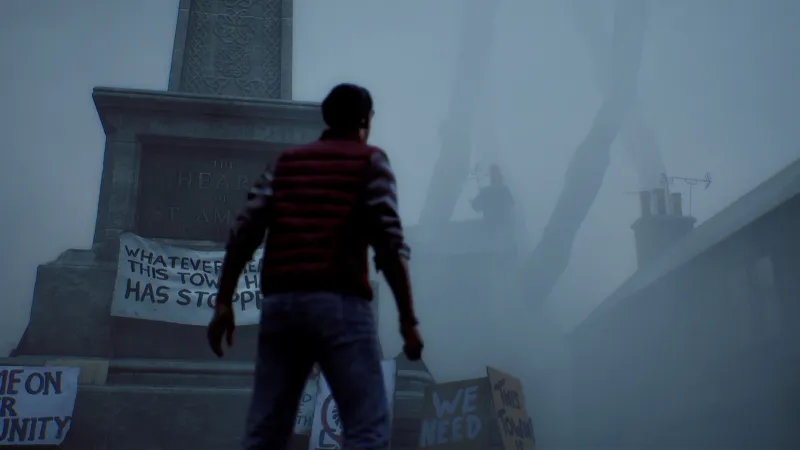
Silent Hill has been on an impressive streak (as long as you don’t think too much about the bizarre 2024 streaming series, Silent Hill: Ascension, or the recent 2026 film, Return to Silent Hill), and Silent Hill: Townfall does not break the streak. Since deciding to go all back in on the franchise, Konami has been doing a good job of enlisting development partners that all seem to understand what makes the series work. Townfall is not without its shortcomings, which primarily lie in the unfair difficulty of its stealth and combat, but the mood is spot on. I also enjoyed the narrative, which is about corporate nihilism among other fascinating and emotional topics. It also features Terry O’Quinn (of Lost fame) in a prominent role, and he is an actor born to be in a Silent Hill game. You can read Game Informer‘s Silent Hill: Townfall review by following the link.
EA Sports FC 27
Brian Shea
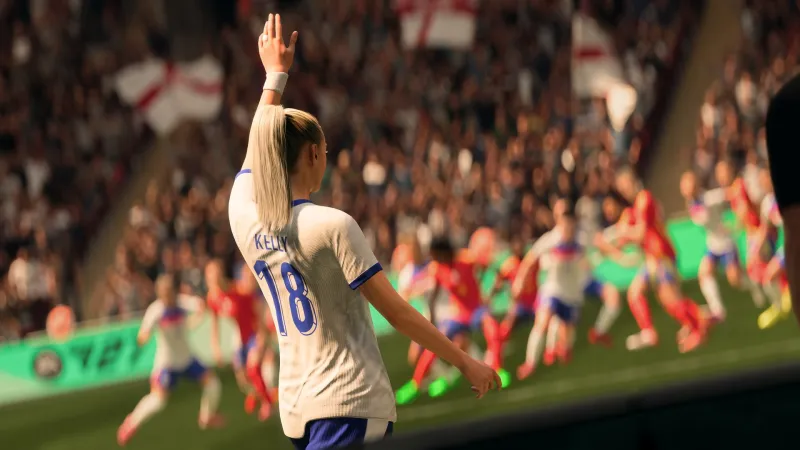
If you’re still buzzing from World Cup fever, EA Sports FC 27 is out now. Though this new version doesn’t change up a ton from its predecessor, it does give you more control of the players on the pitch, requiring more strategy as you push toward the goal. Off the field, a new social playground called The Grounds funnels players toward the multiplayer features, while continued refinements to Ultimate Team and the Career modes offer more long-form options. You can read Game Informer‘s EA Sports FC 27 review by following the link.
Kingdom Rush 6: Genesis
Matt Miller
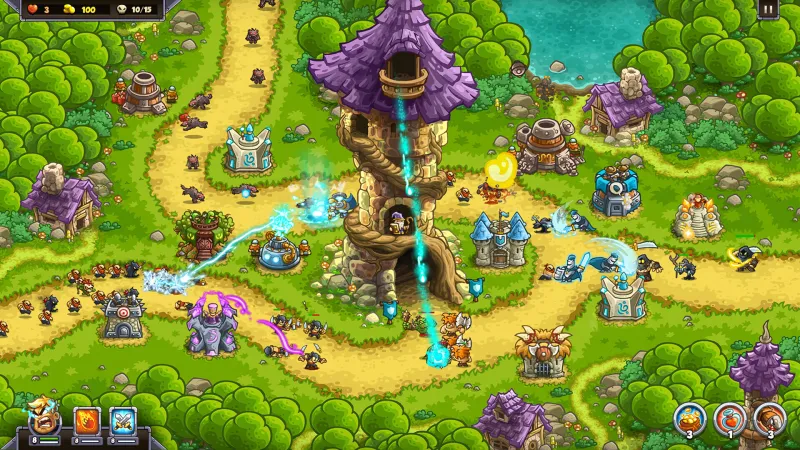
It’s pretty rare that I’ll step in to offer a full-throated endorsement for a mobile game, but Kingdom Rush is one of those consistently fun series that always manages to pull me in. The new (sixth!) installment just released this week, and its tower-defense formula remains as fun as ever. While the game will feel mostly familiar to returning fans, Ironhide Game Studio has gone to pains to add some new twists to this iteration, including additional replayability for each of the 18 stages through five unique victory paths for each. The game has a whimsical presentation that belies the high challenge that can define some of the later stages. If you want an approachable game on your mobile device for wherever you’re headed this weekend, it’s a sure bet. It’s also on Steam if that’s your preference!
Wardogs
Eric Van Allen
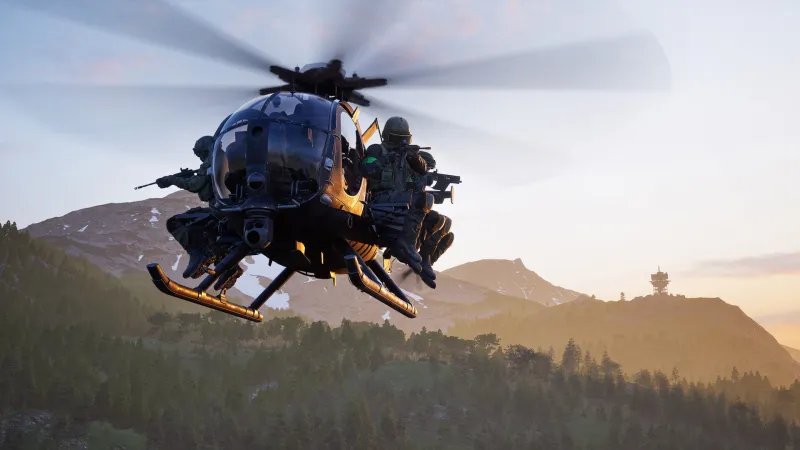
There’s been a hunger in the FPS space writ large, I think; a desire for the days of server browsers, lively interactions, and team-based asymmetrical warfare. Wardogs, an Early Access game from Bulkhead currently dominating the Steam charts, ticks all of those boxes. It’s easy enough to understand that Battlefield fans can hop in, but it still veers plenty hard into the military sim to have plenty of craftsmanship in your chosen niche. Be a supply driver or builder, constructing forward operating bases, or a helicopter pilot ferrying freshly respawned fighters to the field, or one of those grunts, keeping a body in the hot zone at all times; anything you do builds towards capturing and holding the zone, and accruing your account match-over-match cash in the process. Wardogs has become a nightly ritual for my group, and has been the closest I’ve felt to days of scrolling Battlefield 1942 servers in ages.
Twisted Tower
Wesley LeBlanc
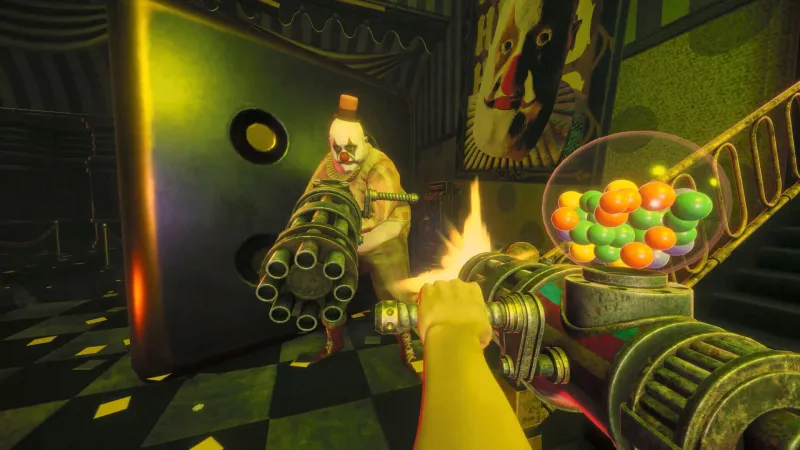
Twisted Tower does not try to hide its BioShock inspiration. Instead, it embraces it, using what players know of BioShock to set expectations and surprise; after playing through its story in about 8 hours in just two sittings, I can now add “delight.” It takes place in the 20th Century and stars a man trying to save his love. To do so, he must travel to the Twisted Tower amusement park, a mix of BioShock’s Rapture and Walt Disney World, with the abandoned twistedness you’d expect from the former and the hokey thrills and theming you’d expect from the latter. Using first-person, mostly gun-focused combat and some unlockable toys that give you abilities like dash and grapple, you will traverse five themed levels as you make your way up the titular landmark. All the while, Mr. Twister goads and mocks you along the way, in a very Andrew Ryan-esque way. Of course, there are narrative twists, scares, lots of blood, and plenty of demented employees who haven’t clocked out of their Twisted Tower shift yet, awaiting you in each, and it remains fun from start to finish. It can feel a bit rudimentary in how much it leans on its inspirations, but it’s one of the best BioShock-likes I’ve played in a minute, and it’s perfect for an exciting weekend gaming jaunt.
Shinobi: Art Of Vengeance
Brian Shea
Shinobi: Art of Vengeance was one of the best action games from last year, but the Switch version wasn’t quite as amazing as the other platforms. Sega hopes to remedy that with this week’s Switch 2 edition. Whether you’re acrobatically exploring, slicing through hordes of enemies, or taking on daunting boss fights, Shinobi: Art of Vengeance is one that no fan of 2D action games should miss. You can read Game Informer‘s Shinobi: Art of Vengeance review by following the link.
Tabletop Pick – A-Way
Matt Miller
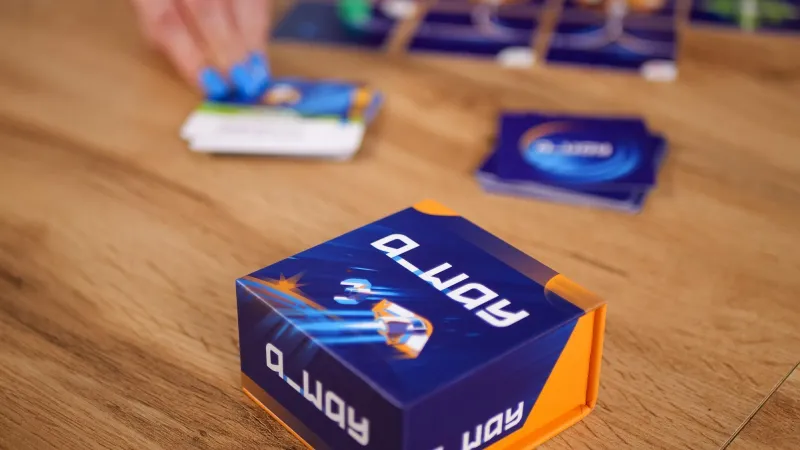
This recent card game is packed inside a tiny box that belies a surprisingly rich (if brisk) tactical play experience. You are charting a route for your spaceship to get from point A to B, gradually laying out square cards that will let you cross the far reaches of space. However, certain routes are only one-way, and specific actions (including those played by your opponents) can rotate the cards and block a previously accessible path.
As much as you’re aiming to speed to your own finish, you’re looking for ways to block your opponents. That adds a mean streak of play interaction that will delight many, but frustrate others. But the short playthrough length lessens the sting of being messed with, making this an extremely fun filler game in between other larger experiences during your evening of play. (edited)
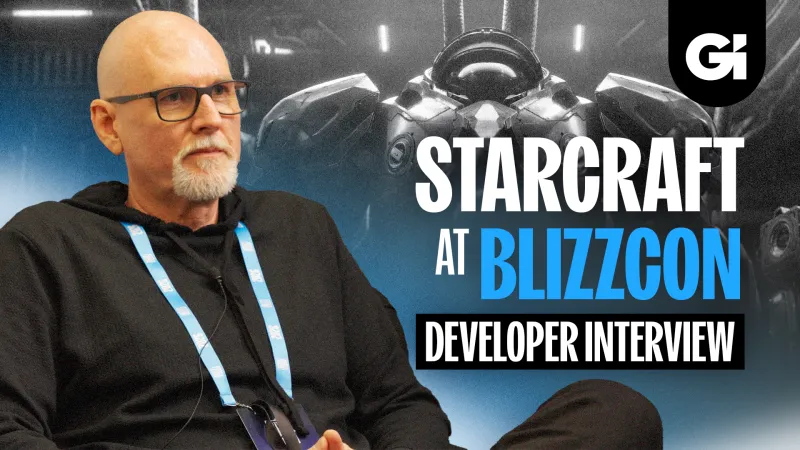
Game Informer interviewed the StarCraft team at BlizzCon 2026 about the open-world shooter and asked our biggest questions about the game’s production. Lead developers Dan Hay and AnaLee Haertling share new details about the upcoming project and the themes and plot points Blizzard considers important as it works to ship the new game in 2030.
This week on The Game Informer Show, Marcus joins the Video Vans to discuss his review of Control Resonant. Did it resonate with us, and does he think the day-one patch will affect early impressions of the game for its incoming players?
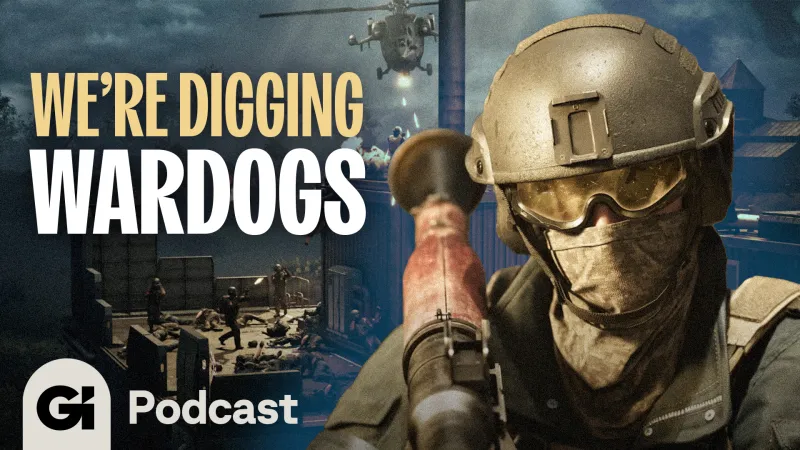
After that, Alex and Eric dig into their impressions of the latest breakout hit on Steam, Wardogs. The new FPS on the block has some surprising lineage, and also some surprisingly refreshing ideas, all of which are capturing our attention so far. Then, for the card game aficionados at the end, we crack a few Collector’s Boosters of Magic: The Gathering’s latest set, Reality Fracture. Find out what a Fblthp is, together with us, on The Game Informer Show.
The Game Informer Show is a weekly podcast covering the video game industry. Join us every Friday for chats about video game reviews, news, and exclusive reveals alongside Game Informer staff and special guests from around the industry. Support the show by subscribing to our physical video game magazine! Submit a question or topic you’d like to hear us discuss: Podcast@GameInformer.com.
Grand Theft Auto VI is the biggest game of the year, decade, and quite possibly of all time, and it’s gracing the cover of Game Informer this month. I spoke with several lead designers at Rockstar Games to learn exclusive new details about its highly anticipated sequel, with a particular focus on how Rockstar brought the game’s setting and Florida parody, Leonida, to life.
Our 14-page cover story features exclusive interview quotes and details of all things Vice City and Leonida. As a lifelong native of South Florida, I offer my homegrown perspective as I discuss with Rockstar never-before-shared features such as Grand Theft Auto VI’s advanced weather systems that simulate Florida’s less sunny weather phenomena, the staggering amount of wildlife – native and otherwise – roaming Leonida on land, air, and sea, and Rockstar’s approach to researching Miami and Florida to ensure it created the most culturally and aesthetically accurate and lifelike world to date. If you want to know just how “Florida” GTAVI aims to be, you don’t want to miss this story.
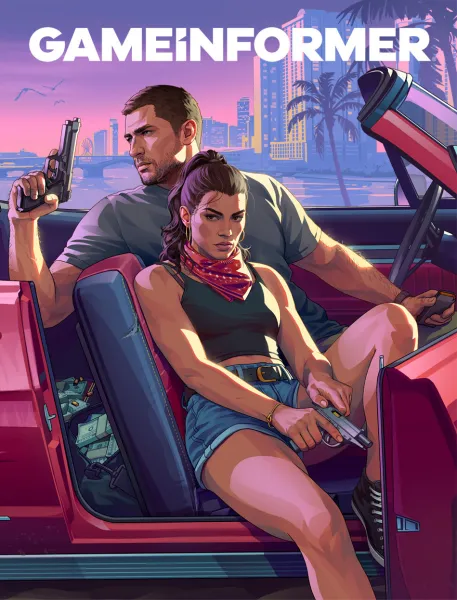
12 new, exclusive screenshots accompany the cover story, showing off more of Grand Theft Auto VI’s sights and citizens. The magazine cover features beautiful original artwork, courtesy of Rockstar Games, featuring protagonists Jason Duval and Lucia Caminos, making it a cool collector’s item for Game Informer and GTA fans alike. Check it out in the gallery below.
As big as our GTAVI cover story is, issue 382 includes lots of other cool features. We have plenty of previews from the staff’s recent trip to Gamescom; Editor-in-chief Matt Miller spoke to Invoke Studios to learn more about its dark fantasy action game Warlock: Dungeons & Dragons, including an interview with one of the game’s voice actors, Maggie Robertson, by video editor Eric Van Allen. Senior associate editor Wesley LeBlanc played Persona 4 Revival and learned behind-the-scenes details about the upcoming remake from developer/publisher Atlus. Wesley also visited China to play Tides of Annihilation, and shares his impressions of the Arthurian-inspired action game across 10 pages. Comedian Mike Drucker returns to pen an amusing feature attempting to define what makes a “good” bad game, and executive editor Kyle Hilliard interviews Stranger Things star and musician Finn Wolfhard about his favorite Pokémon games and video game soundtracks.
The GTAVI issue also includes previews for titles such as The Legend of Zelda: Ocarina of Time remake, Metroid Ravenous, State of Decay 3, Mega Man: Dual Override, Tomb Raider: Legacy of Atlantis, Final Fantasy VII Revelation, and many more. Our stacked reviews section includes impressions of huge games including Fire Emblem: Fortune’s Weave, Marvel’s Wolverine, Star Wars Zero Company, Trails in the Sky 2nd Chapter, and Resonance: A Plague Tale Legacy.
To get your hands on the Grand Theft Auto VI cover story, subscribe to a Game Informer print subscription now to receive it as your first issue. A subscription includes 10 issues a year delivered in the U.S. and now internationally across over 50 countries. You can read the digital version on September 29, while the print version will reach subscribers’ mailboxes and arrive in bookstores/newstands in the coming weeks. The GTAVI issue will only be available for a limited time, so don’t wait; subscribe to secure your copy today!
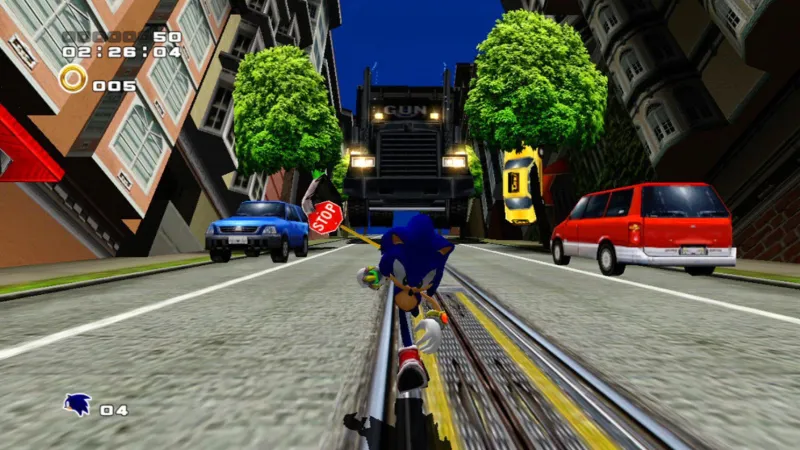
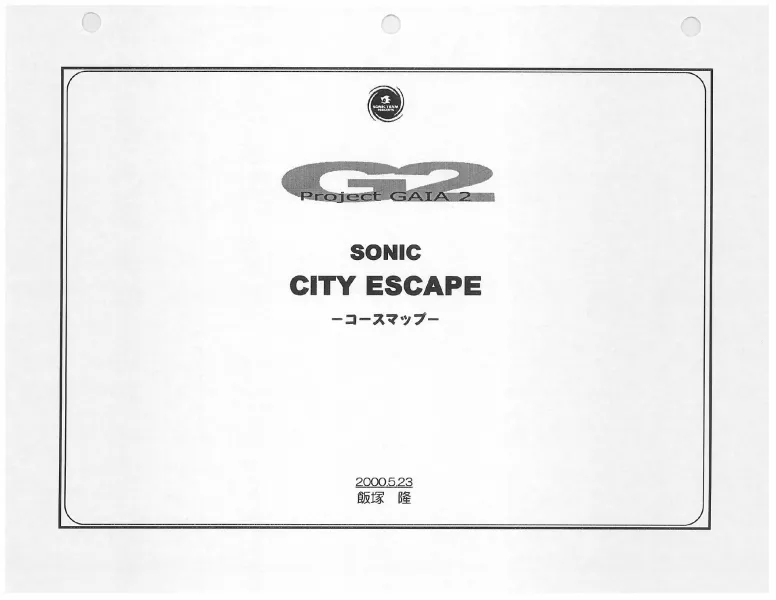
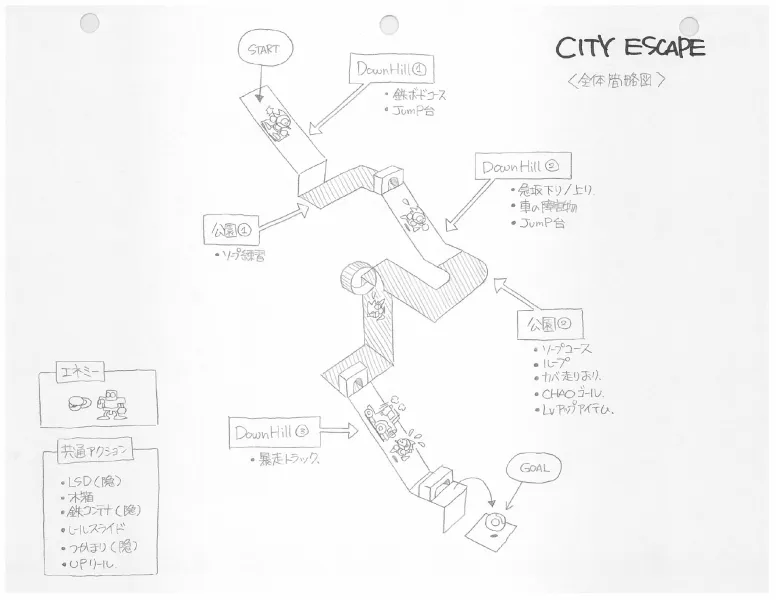
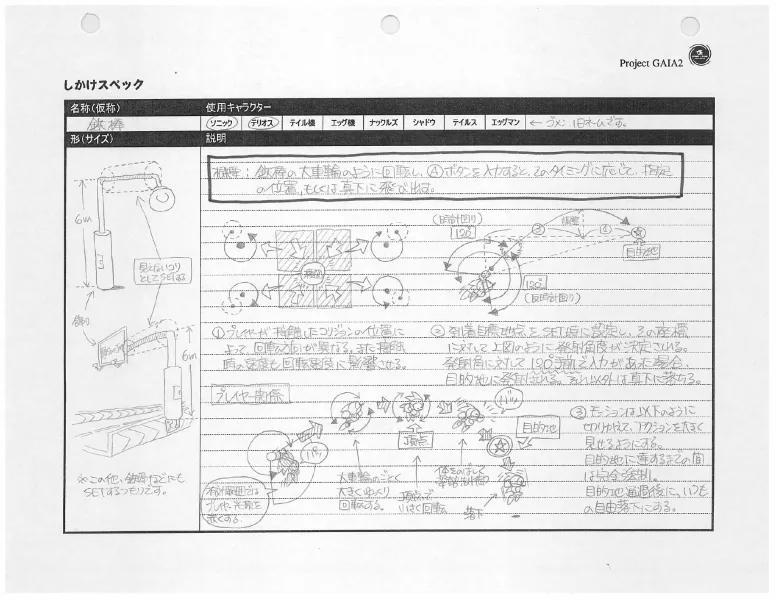
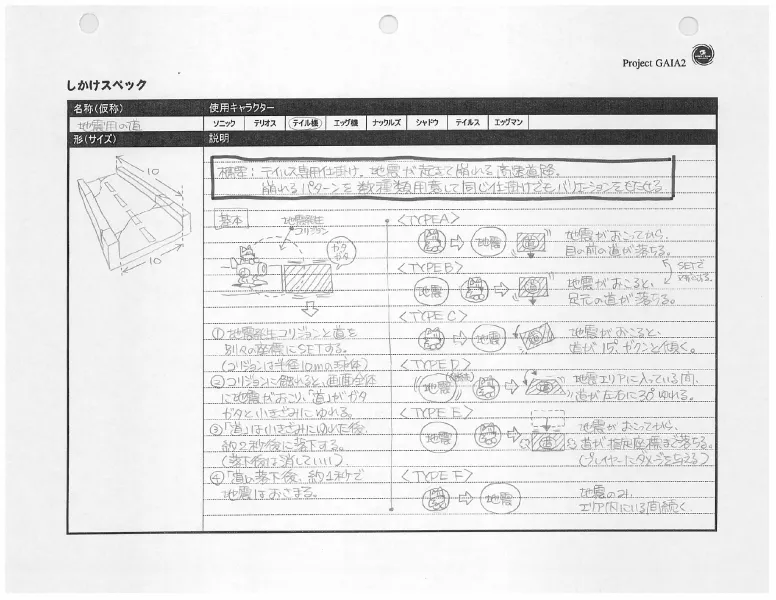
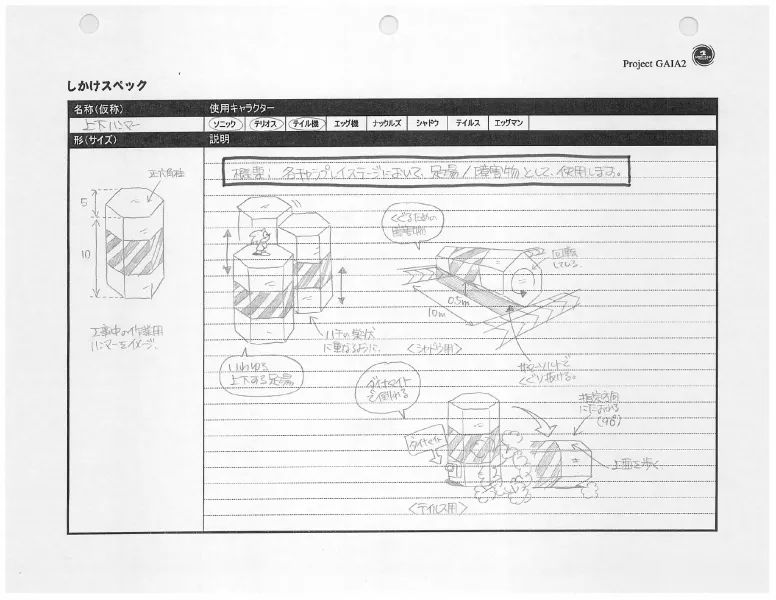
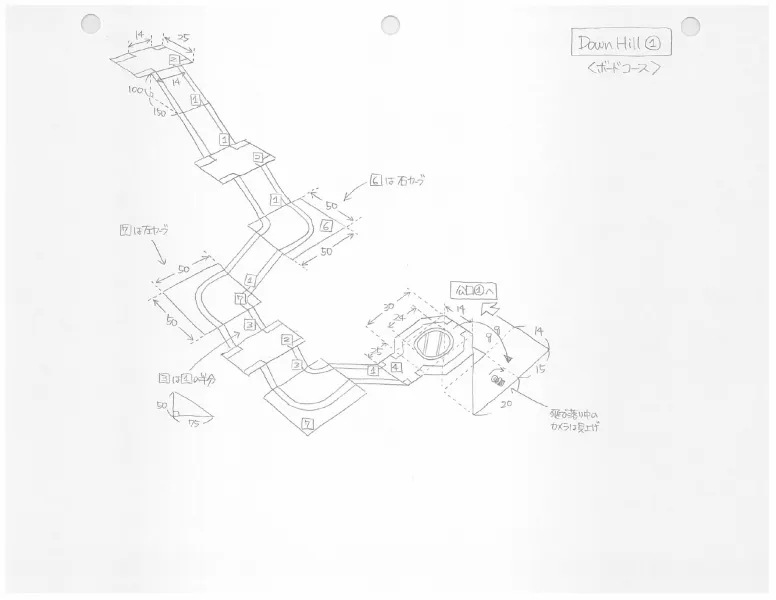
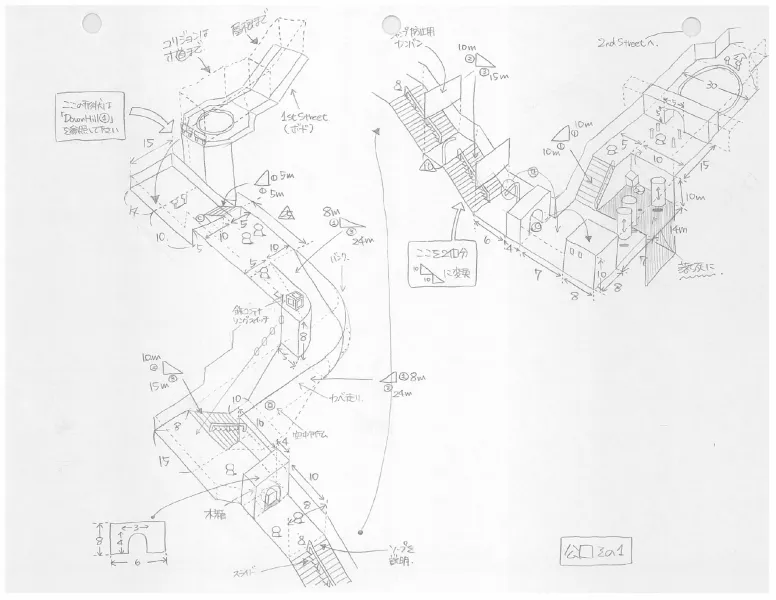
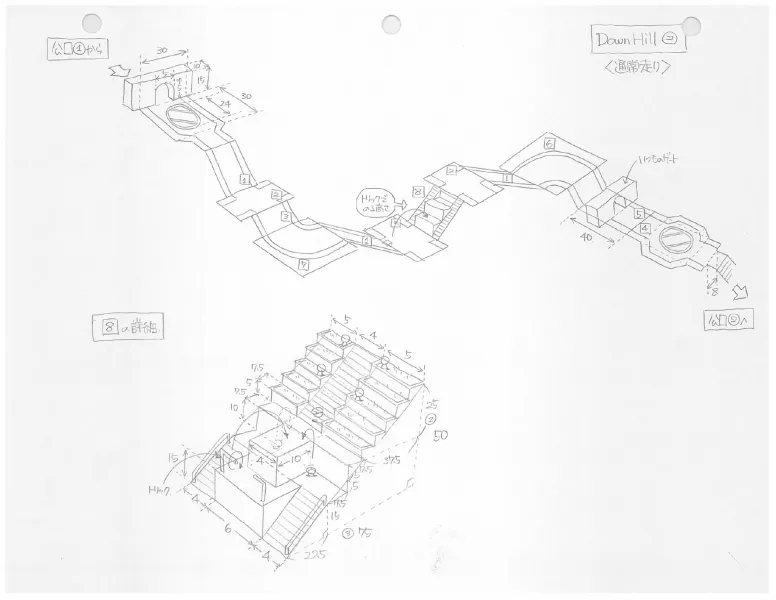
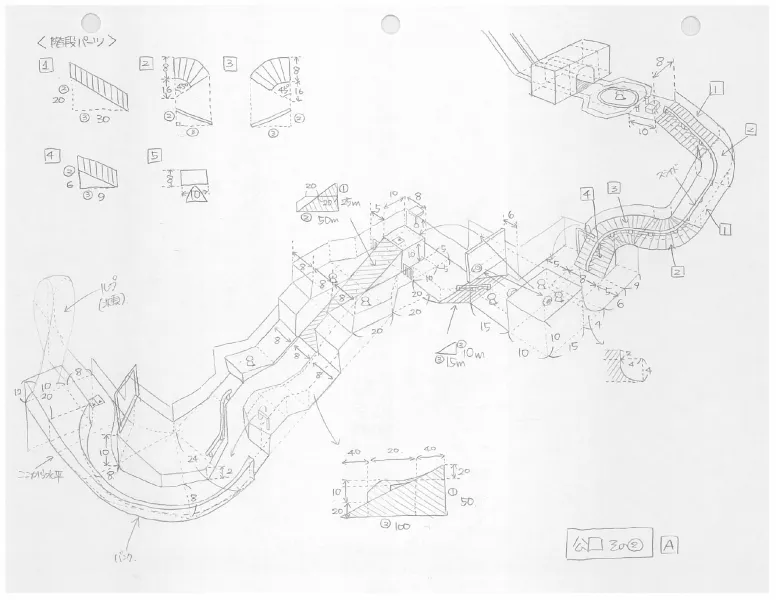
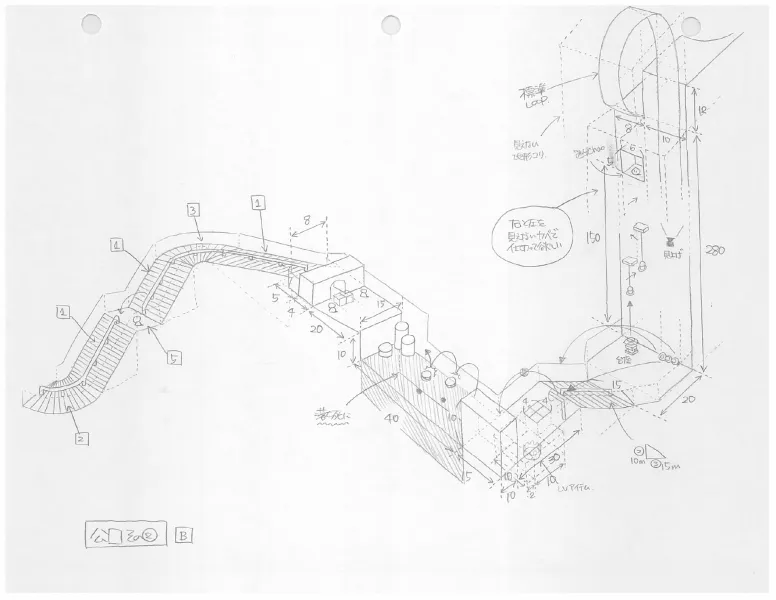
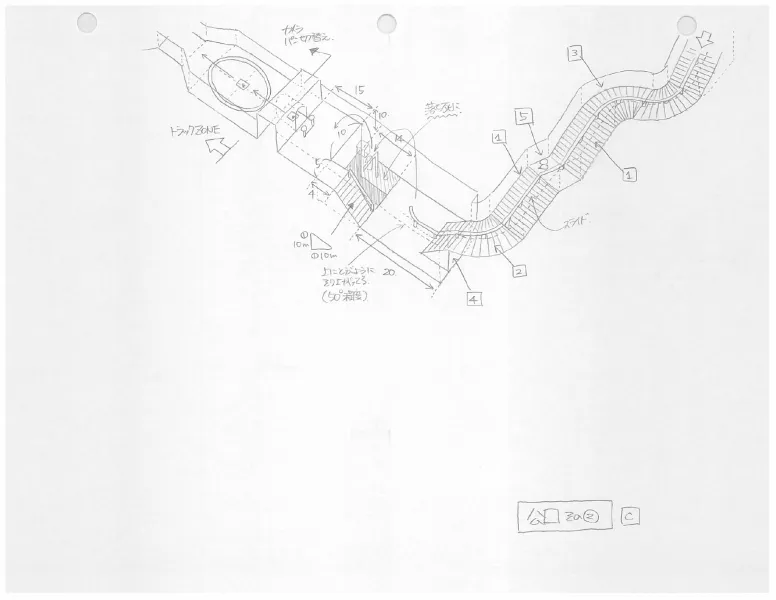
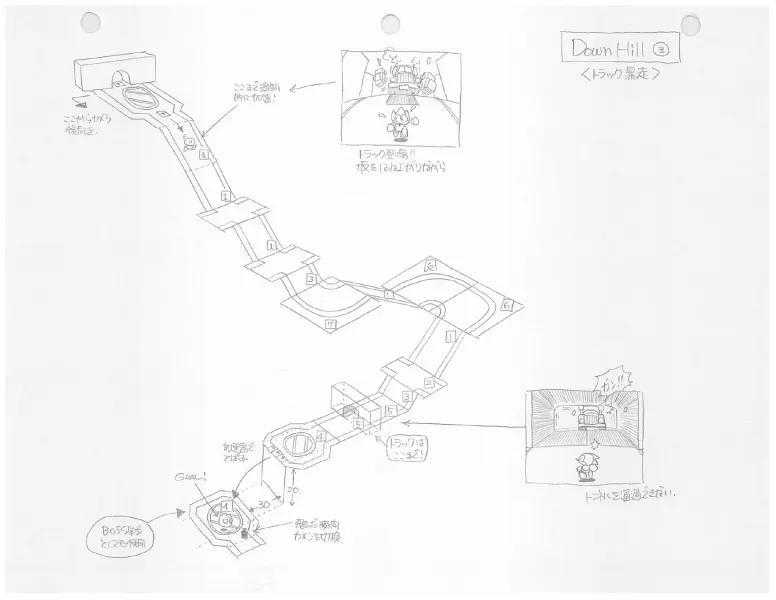
Few video game openings make the impression City Escape does in Sonic Adventure 2. After jumping out of a helicopter, Sonic uses a piece of debris to snowboard down the city streets as the generational earworm, “Escape from the City” blasts. It was a defining moment for gamers, whether they were playing it on the original Dreamcast in 2001 or GameCube in 2002. It’s also one of the best-designed levels in 3D Sonic history. Ahead of its appearance in Sega and iam8bit’s 35 Years of Speed: The Sonic Art Exhibit this weekend in Los Angeles, we got ahold of the design document Sonic Team used to lay out just how this iconic level would eventually play out while Sonic Adventure 2 was still in development.
Originally codenamed Project GAIA 2, Sonic Adventure 2 had the unenviable task of following up the acclaimed Dreamcast launch title, Sonic Adventure. Not only was that a daunting task on its own, but Sega found itself in dire financial straits as the PlayStation 2 was decimating the Dreamcast in sales. Sega, on the brink of exiting the hardware business, dramatically downsized the development team behind Sonic Adventure 2 and relocated them to San Francisco, California, which heavily inspired the hilly urban design of the game’s opening level.
“Our team of 120 got pared down to 11, sent to America, and told to go make Sonic Adventure 2,” Sonic Team creative officer and Sonic Adventure 2 director Takashi Iizuka told me in 2016. “Part of what we had to resolve was ‘How are we going to make the same game with 11 people when we have less than a tenth of the staff on-board?’ I was really tasked with trying to make the impossible possible.”
Regardless of the challenges, Sonic Team, under Iizuka’s leadership, was able to clear the hurdles and deliver one of the Dreamcast’s most beloved games in just a year and a half of development time. According to several long-tenured members of Sonic Team, including Iizuka, art director Hiroshi Nishiyama, and sound director Jun Senoue, Sonic Adventure 2 was their favorite game they’ve worked on.
“It was a small development team so we were able to condense all the good elements from the previous game, and deliver a story and game that was satisfying to players everywhere,” Iizuka told me in 2022. Nishiyama followed up with, “I had a lot of new ideas for the game because of all the new stimulus and experiences I got by living in America and was able to make a game with a lot of great moments together with the other members.”
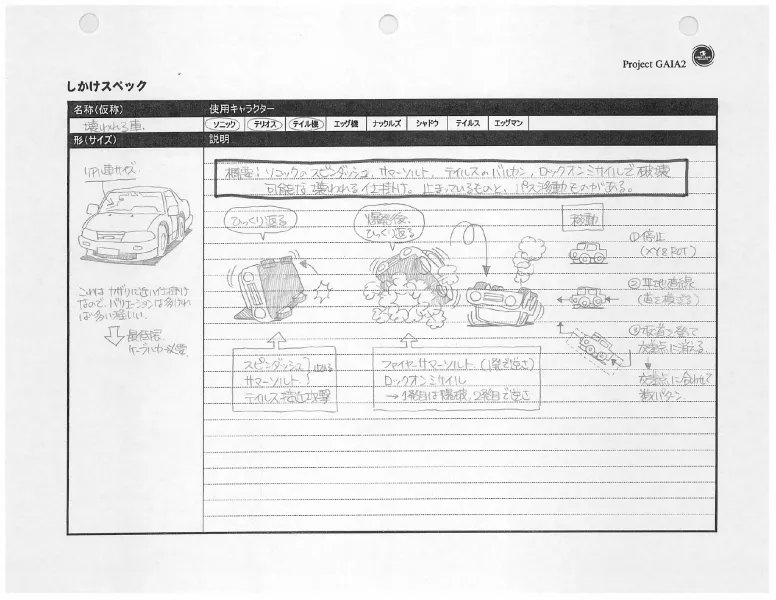
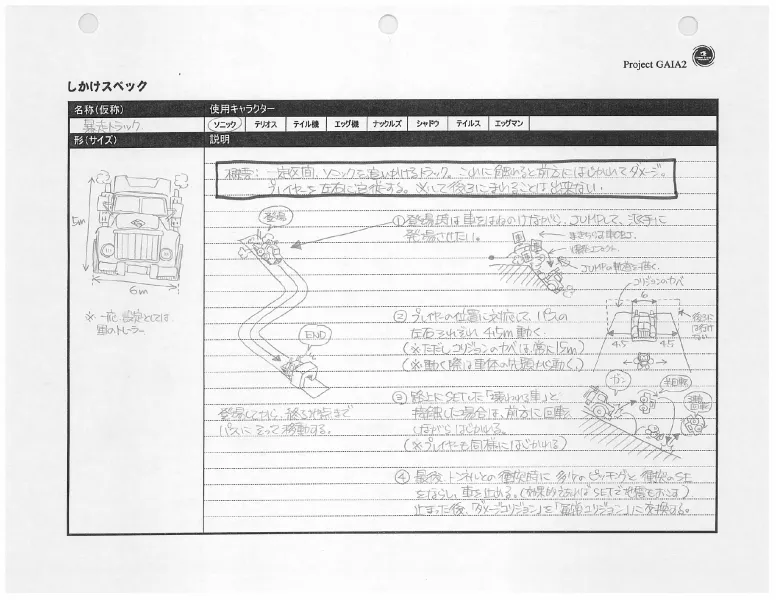
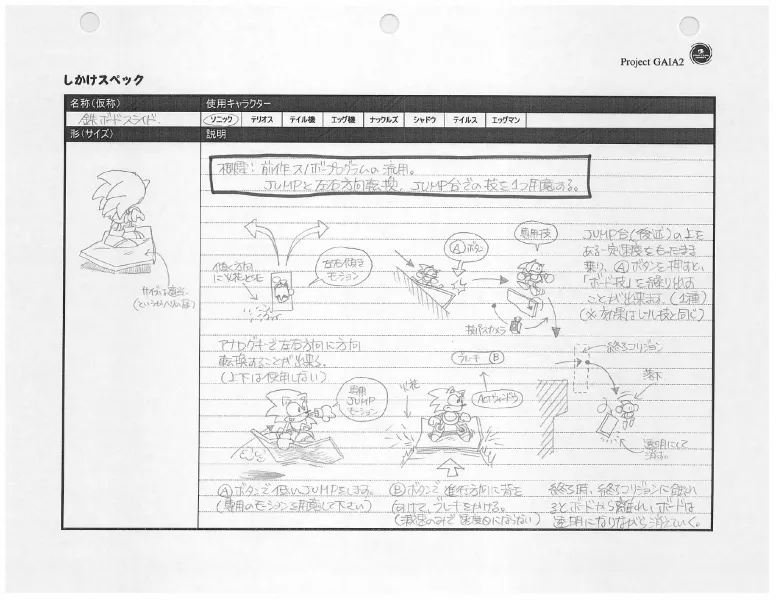
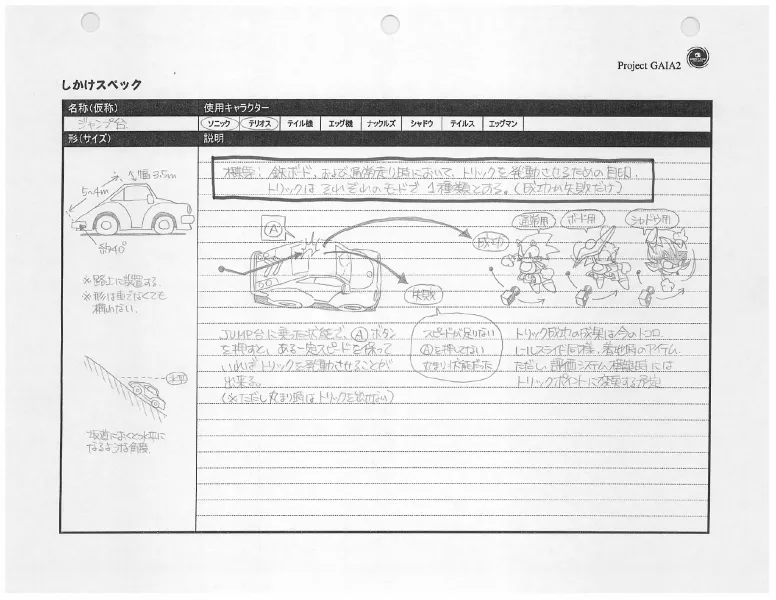
While Sonic Adventure 2 is often remembered primarily as the game that introduced the world to Shadow the Hedgehog and songs like “Live and Learn,” City Escape is up there as one of the most iconic elements of the popular title. The design document showcases various elements of the Hero Side’s opening mission, including the aforementioned snowboard sequence, plus the chase sequence involving the massive GUN truck.
You can check out the City Escape design document from Sonic Adventure 2 below, and if you need a little accompanying music as you flip through the pages, we recommend hitting play on the “Escape from the City” YouTube video above.
If you’re in the Los Angeles area the weekend of September 25, you’ll be able to see this in person, alongside other historical pieces of art from the Sonic franchise through the 35 Years of Speed: The Sonic Art Exhibit showcase at ARK/8. Admission is free, but attendees should register through Eventbrite. For more on the art of Sonic the Hedgehog, including how Sonic Team’s approach to making art has evolved over the last 35 years, check out our conversation with Kazuyuki Hoshino here.
Platform:
PlayStation 5, Xbox Series X/S, PlayStation 4, Xbox One, PC
Publisher:
Electronic Arts
Developer:
EA Vancouver, EA Romania
Release:
Rating:
Everyone
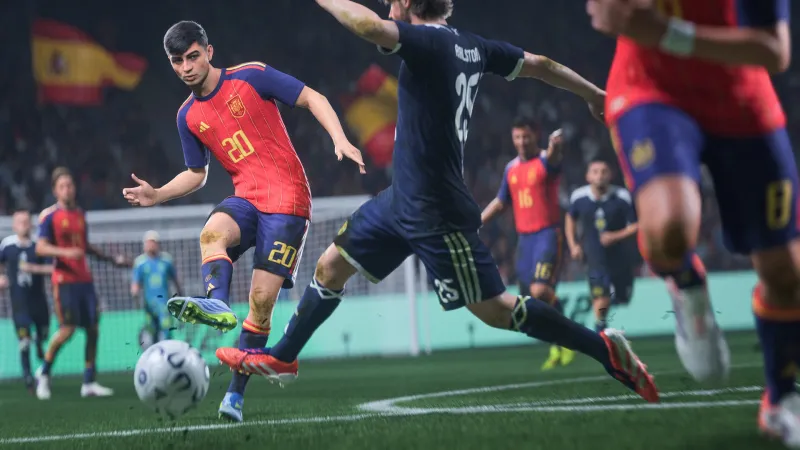
Sometimes it’s the small changes that make a difference. FC 27 has a headline-grabbing new open-world feature called The Grounds, but it is the tweaks to Ultimate Team that have me returning to the action on and off the pitch. Though the changes are welcome, they create a strong sense of familiarity, for better or worse.
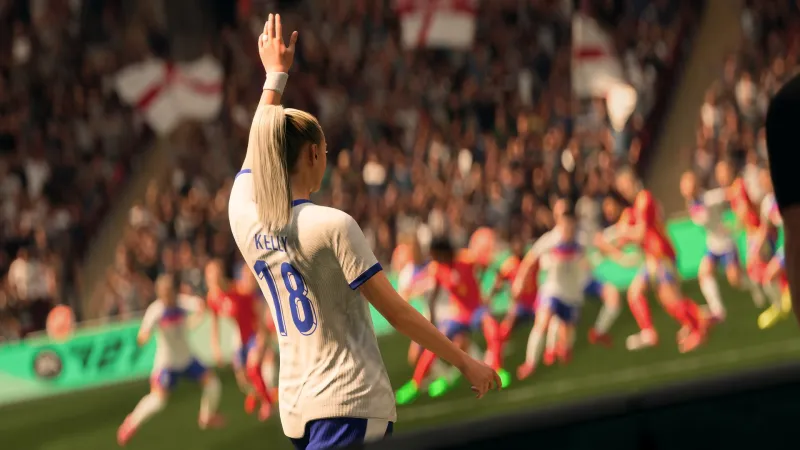
In many ways, FC 27’s gameplay is as fluid and dynamic as it has been, and this year demands an extra element of control when you’re on defense. CPU-assisted defense in Ultimate Team’s Competitive game setting has been nerfed, and manual control of your defenders is better rewarded. No matter where you play, there are also new teammate runs, more player control for corners, and through balls now require better aim, delivering a more authentic and exciting experience.
I haven’t totally mastered these techniques just yet, but I appreciate how they reward player skill. To read your opponent and cut out their pass or slice their defense open with a through ball feels great. I particularly like triggering the new curved runs to keep my forwards onside and put them in better attacking positions.
Nevertheless, the game’s weak points can still pop up. Frantic sequences with lots of player switching can leave you controlling a player you don’t want, and CPU teammates sometimes make dumb moves. At times like this, FC 27 can feel old as much as it feels new.
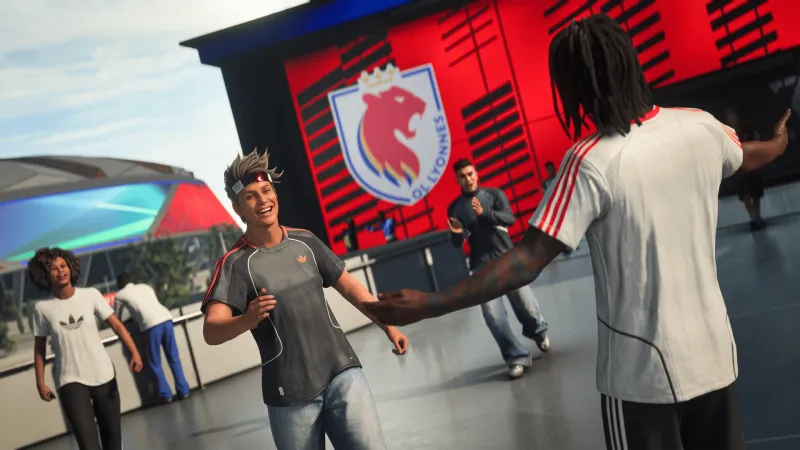
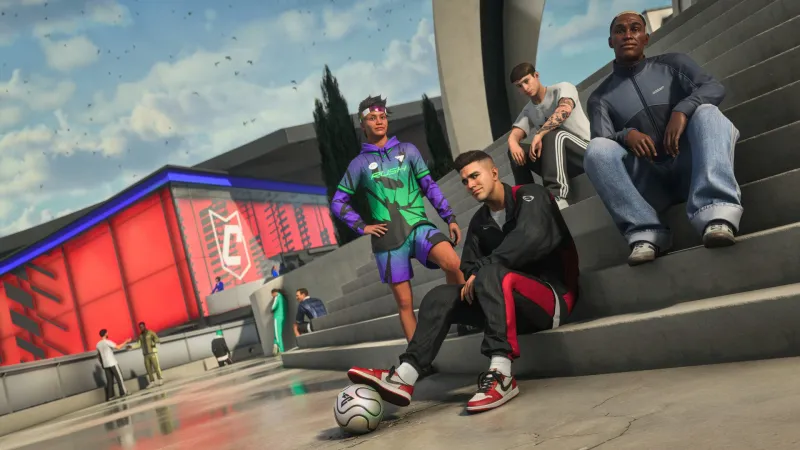
The Grounds – an instanced, small-sized (for now) open-world mode – also has a “new but old” vibe. Here, your customizable avatar can queue up at locations to play more variations of Rush, other small-side matches, and mini-games, and The Grounds now hosts Clubs play.
Unfortunately, The Grounds is not a destination mode. Its gameplay is not strong or interesting enough, and it’s not as all-encompassing as NBA 2K’s City – it is separate from your Player Career, which limits its ambition. Furthermore, casuals will struggle to find a place for themselves here; it’s where sweats are grinding for FC Season points to get Ultimate Team (UT) rewards.
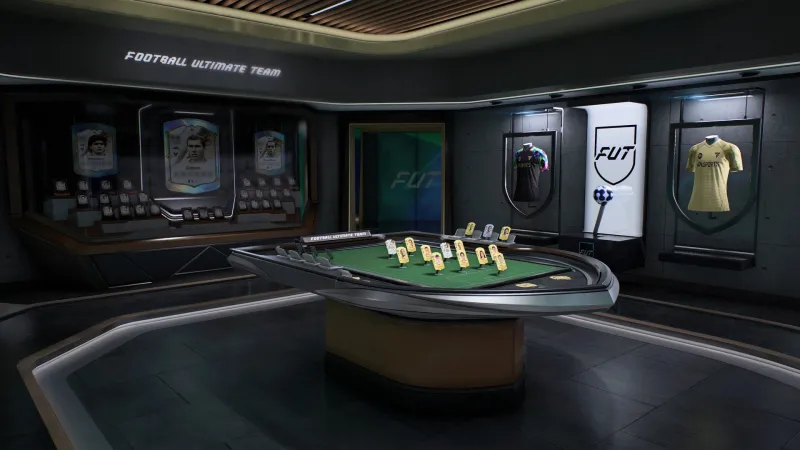
UT remains the main attraction for the series, and the new Gallery further adds fuel to its fire. Like a Squad Building Challenge (SBC), the Gallery delivers rewards for putting your club’s players into themed sets, and the fun part is getting sets re-graded as you put better cards into them and push for higher set scores and grades. You can even include players you once owned but have since sold. Perhaps in a related development, this year in UT you start with more coins and tradeable items, so that should jumpstart your Gallery. My small gripe with it is it’s presented like a trophy room, but you don’t actually interact with it in that way.
The changes to Manager and Player Career are both more granular and therefore less impactful, although guiding your team or create-a-player to glory is in some ways more intuitive. Training plans are gone, and Manager Career’s Dynamic OVR for players is easy to keep track of as their form, fitness, and morale change during the long seasons. I also like the back-and-forth of negotiations, which are backed by a handy “Tension” meter. My favorite addition is the unexpected events like being offered the chance to sign a player your rival is interested in. Unfortunately, the rivalry system in Player Career is too barebones to create similarly fun moments. It’s just a menu screen showing your stat progress versus another player without any fanfare and is just another way to generate Personality points.
These changes are welcome, but they can be undermined by sometimes shaky CPU determinations running in the background. I’ve seen players ask to be transferred at the first offer that comes in, even though I had no way to block it like in previous years and they weren’t even interested in the team making the offer. All told, EA continues to improve Career bit by bit, and it’s still a mode I enjoy spending time in.
I really liked playing FC 27 at times, even if I wished some things had improved to a greater degree and it was more ambitious. The experience is a familiar one that doesn’t change too much from its predecessor, but one that I’m going to continue to enjoy digging into.
Platform:
PlayStation 5, PlayStation 4, Switch, PC
Publisher:
Aniplex
Developer:
Meteorise, Type-Moon
Release:
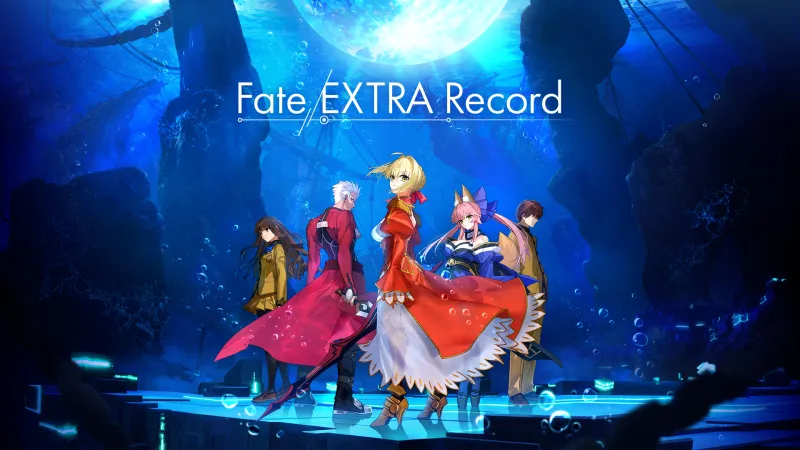
Fate/Extra hit the PSP in 2011 in North America, and while it wasn’t a massive hit, over the decade-plus since, it has become a cult favorite in the turn-based-plus-cards genre. I dabbled with it back in the day, but definitely didn’t see it through to the end – I was too busy putting spins on my Into The Blue UMD. However, as part of this gig and as a general fan of these types of games, I’m not wholly unaware of the community surrounding the Fate/Extra series, which was followed up with a Pokémon Crystal-esque alternate adventure in Fate/Extra CCC and then Fate/Extella: The Umbral Star in 2016. All of this is to say, I was excited for the opportunity to check out Fate/Extra Record, an expanded remaster of sorts, at Tokyo Game Show this year.
My demo takes place on the TGS show floor, right across from the Sega/Atlus Persona 4 Revival booth, which is arguably the largest of the convention and, without a doubt, the loudest. That I was still captivated by Fate/Extra Record, even while live renditions of “Heartbeat, Heartbreak” played just feet away from me, is a good sign for developer Type-Moon’s second go at this game. Publisher Xseed Games says the narrative of Fate/Extra has been “revised and vastly expanded, adding new layers of characterizations, enhancing one of the franchise’s core entries with even more depth and intrigue,” but I have to take its word on that for now because my two gameplay demos were focused on combat.
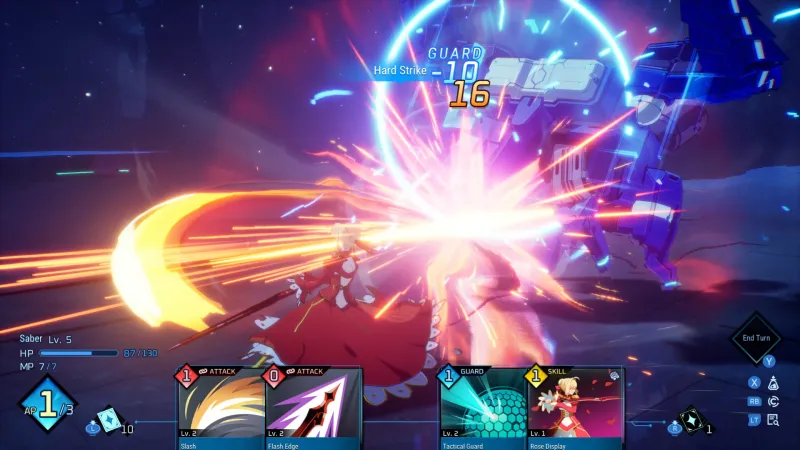
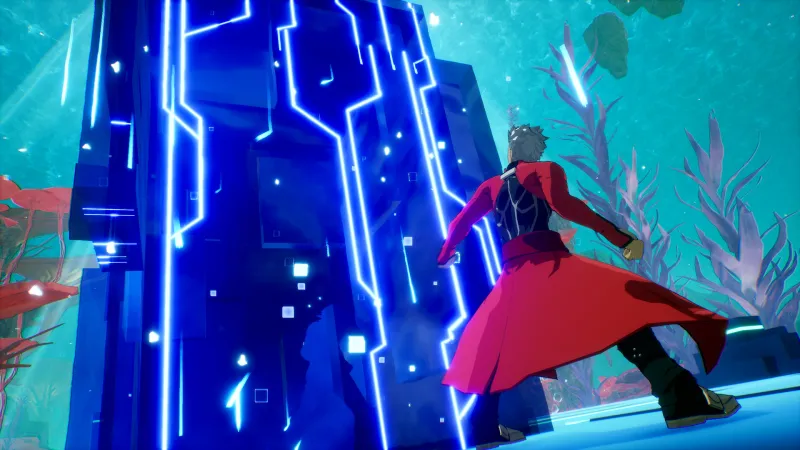
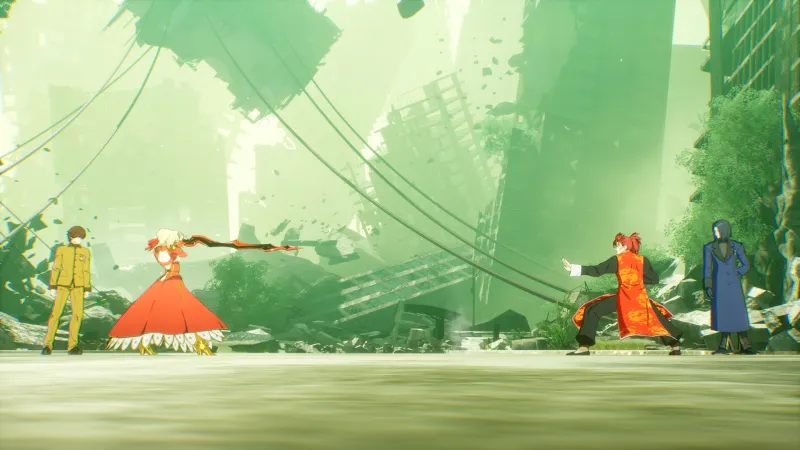
If you aren’t familiar, combat in Fate/Extra, and now Fate/Extra Record, is turn-based, but instead of selecting attacks and abilities from a typical RPG menu, you utilize cards that are added to your hand each turn, flowing in from your personal and customizable deck. Each card has a cost associated with it, and in this demo, I only have 3 AP to utilize each turn, so I have to strategize how I use my cards. I always start with a 0 cost card that not only damages an enemy but adds a special damage-boosting rose card to my hand (which also costs 0 to use). I use that rose card to boost my next attack, which costs 1, and then chain it right into the next card, which has a chain icon to indicate chaining is recommended. I utilize these chains to maximize my damage output, eventually finding a rhythm that makes using my entire hand in one turn a breeze. The result is massive damage against bosses and one-turn KOs against mob enemies in the underwater dungeon I’m exploring.
New to Fate/Extra Record is the ability to use both Servant – you select one of three classes for this character and they are your primary method for combat in the game – and Master, which is the playable character that can use pinch-hit moves when the cards don’t line up right.
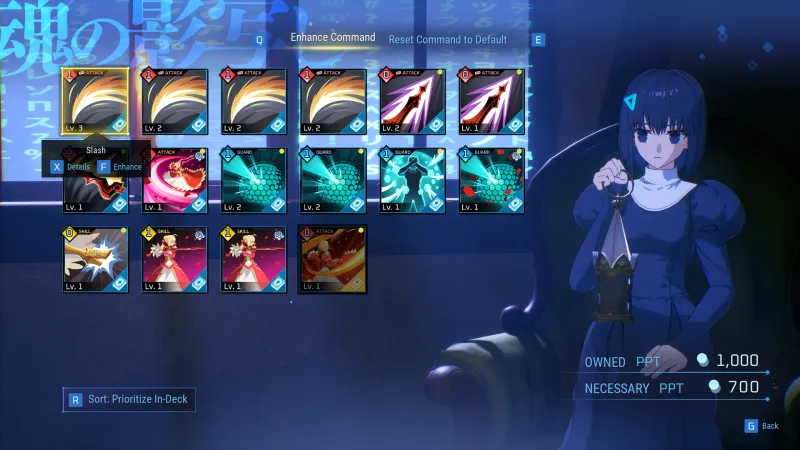
Combat is easy to pick up, but it’s clear there is a lot of depth waiting in the wings, with new cards to collect, deck builds, and more. As a Magic: the Gathering player, this demo felt like picking up a pre-con deck, knowing that after I open up some boosters, I’m going to make the deck three times stronger. Outside of combat, the rest of the Fate/Extra Record package has received a big glow-up, including revamped character designs, HD visuals, a new musical score, fully voiced Japanese voice-over, and more. It’s clear this is no longer a PSP game.
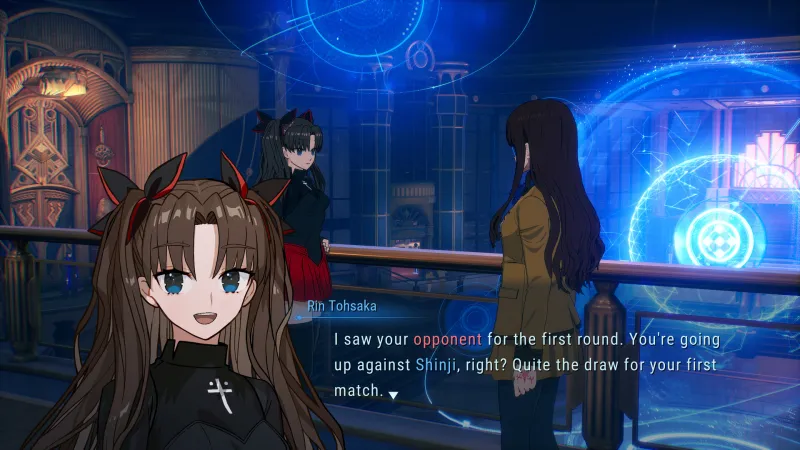
While I didn’t get to experience much narrative at all, here’s a taste of it from Type-Moon: “The ‘Moon Holy Grail War’ begins again… After humanity discovered a supercomputer hidden on the moon, everything changed. Known as the Moon Cell Automaton, this powerful computer created SE.RA.PH, a digital world where 128 combatants are pitted against each other for the ultimate prize, the Holy Grail. An omnipotent wish-granting device, the Holy Grail is capable of fulfilling any desire. Now in the role of Masters, these combatants form contracts with Servants, digital beings embodying historical figures and heroes, hoping to be the final victor in this life-or-death battle. Having lost all memories, unable to even recall why they’re trapped inside this virtual battlefield, one such combatant is thrust into the role of Master and must step into the grueling Moon Holy Grail War alongside a single Servant, driven solely by the will to survive.”
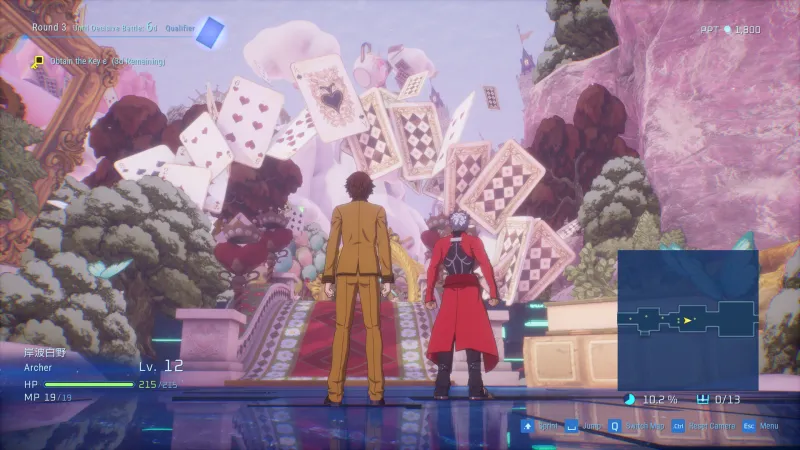
These two demos took place inside this supercomputer digital world, and that’s very clear from the visual design, which fuses underwater staples like crashed pirate ships and sea creatures with neon-lit computer structures and more. It’s clear the Master I’m playing as is after the Holy Grail, and as part of this tournament, he has seven days to prepare before his next bout with another combatant – defeat them, and you advance. I hope each bout brings with it a new setting or environment to explore, because this underwater dungeon grew stale quickly.
Thirty minutes with Fate/Extra Record isn’t enough time in this revamped remaster to tell whether it’s doing right by the original 2011 PSP game, but it is enough to know I want more. I’m a sucker for card battles; I’m a sucker for world-ending melodrama; and I’m a sucker for a tournament arc. That Fate/Extra Record bundles these three things with updated visuals, full voice-over, and plenty of secrets to discover means it’s an RPG I’ll be keeping an eye on as we close in on its January 28 release date.
Publisher Critical Reflex was founded six years ago and has since curated one of the most unique, strange, and interesting game catalogs. If I had to guess, the game that put Critical Reflex into your game publisher lexicon was probably 2024’s Mouthwashing, which launched the same year the publisher released other indie hits like Buckshot Roulette and Arctic Eggs. During Tokyo Game Show last week, I spent a couple of hours at the Critical Reflex booth, which was themed like an underground neon-punk bunker, and it was there I played four games that I immediately added to my Steam wishlist (even though one of them was so grody that it made me gag).
Below, I’ll be discussing my thoughts on the following four games after going hands-on with each for roughly 30 minutes: Tiny Chills – Not From Ear, Grobnopolis | Last Days, Sated, and Flawless Abbey. Enjoy!
Tiny Chills – Not From Ears
Tiny Chills – Not From Ear
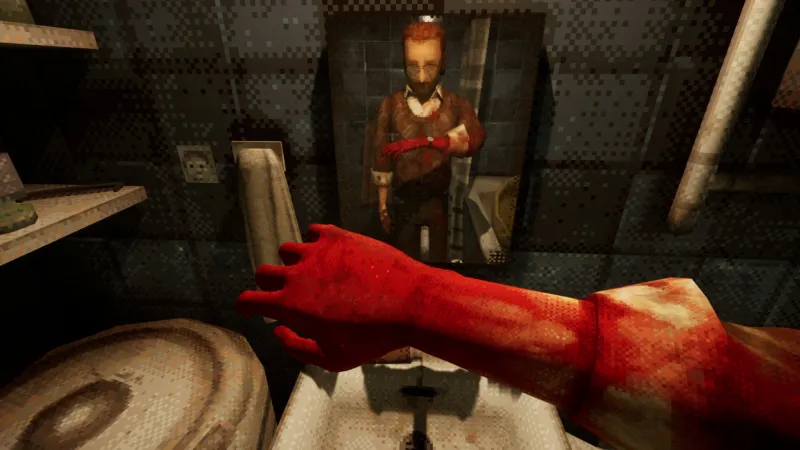
I don’t know if Tiny Chills – Not From Ear is my TGS game of the show, but it is certainly the only game I played there that made me gag… so that’s something. Don’t worry, though – that’s not a turn-off for me. In fact, I can’t wait for more. From developer Docktopus Games, Tiny Chills is a horror/freak game set in a small town where earthquakes don’t stop, and neither do the human disappearances. Nobody knows what’s going on, and it’s freaking everybody out, but that doesn’t stop you from getting in a fight at school and getting suspended. Stuck at home, you help your mom at her ear-cleaning clinic, using a variety of tools to dig through patients’ horrendous, wax-filled canals to clean out gunk, bugs, monsters (???), and more.
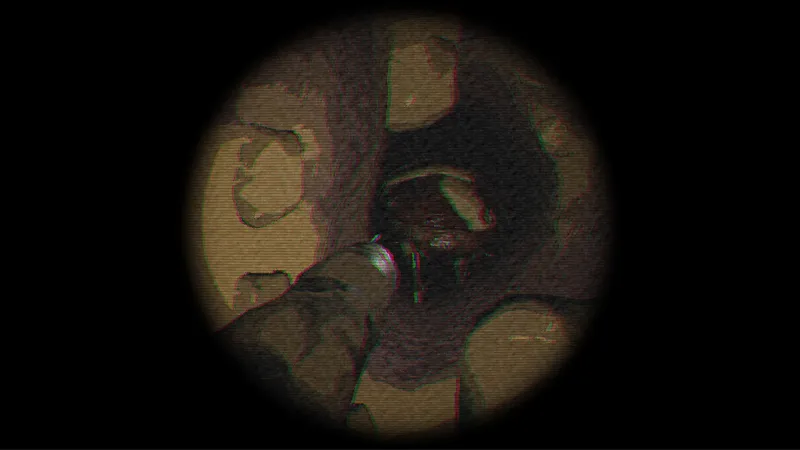
The world has an overall Coraline vibe: something is off about my parents and the way they treat me. And Tiny Chills’ grainy, shadow-filled, dreary lo-fi look sets it apart from other games in the ear-cleaning genre. At your mom’s decrepit and lonely clinic, patients bang on the door as if the world is ending (and it might be?) and they’re desperate for one last ear-cleaning before it all goes up in smoke. The knocks on the doors scared me every time – it was seriously so loud. Patients explain that something is itchy or ringing in their ears, and in no time at all, you’re looking through their canals from a first-person perspective, guiding tools to the eardrum.
You can use a suction tool to suck up clumps of wax and a hook-like instrument to latch onto bigger pieces, which you must then carefully drag out of the ear. There are other tools, but ultimately, your job is to clean up the ears and get whatever is clogging them out, and it is always. so. dang. nasty. Between the actual act of cleaning these ears, the squelchy, moist noises that accompany it, and the overall sickening vibe of Tiny Chills’ atmosphere, my tolerance for grodiness reached its threshold, and I couldn’t help but gag. It’s disgusting; it’s awesome.
Besides cleaning ears, you do some strange things in your house, like catching a pet crow that flies around and figuring out where your mom keeps disappearing to. Something/everything is off about this world, and I cannot wait to learn more about just what the heck is going on in Tiny Chills. In the meantime, I’m going to prepare my stomach for whatever else lurks in the ears of this game’s patients.
Grobnopolis | Last Days
Grobnopolis | Last Days
Grobnopolis | Last Days uses a word – Grobnopolis – that you will say out loud once and then say it out loud hundreds of times afterward because of how good it rolls off the tongue. After playing it for roughly 20 minutes, I think Grobnopolis is also a game you should keep on your radar if you’re into atmospheric horror games that have you asking yourself, “Just what the hell is going on here?”
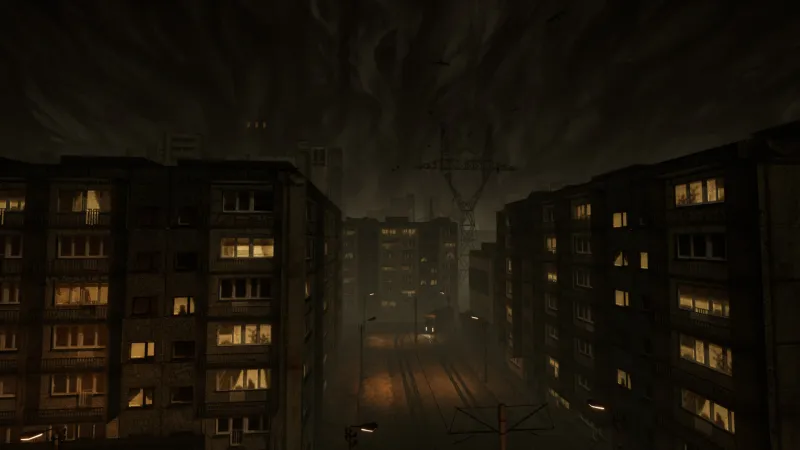
Set in Huta-Grobno in the year 1983, you are an apartment caretaker who’s just trying to do his job while the world outside becomes blurrier and blurrier with suffocating smoke, the result of something gone wrong in a mine somewhere in town. Inside my humble apartment, painted with drab browns and depressing greys, I interact with various objects to learn the lay of this oppressive land. I eventually reach a radio, and by scrolling through live stations, I hear strange opera music, workers mumbling as they piece together what’s gone wrong, and broadcasts warning of impending danger, a Church cult, and more. This radio seems key to Grobnopolis’s narrative, as I’m clearly listening to stations I shouldn’t have access to and learning things I shouldn’t know.
I interact with other people who call this apartment block home, and while none of them are outright sinister, something is definitely up, and they all freak me out. If I were this caretaker, you wouldn’t catch me leaving my apartment, but specific tasks, like finding cords and other objects in the hallways to connect up some equipment in my place, force me to. All the while, a large crack or hole in my kitchen keeps growing, whispering things I don’t yet understand.
“From the black veins of the old mines rises a thick, blood-red ichor the locals whisper of as ‘Soup,'” the game’s Steam description reads. “It climbs through foundations, stains stairwells, and pools in places that should not hold liquid. Some things should never be unearthed. Some things were meant to remain buried.”
As this mysterious “Soup” makes its way to more cracks and crevices in Huta-Grobno, the local Church gets involved, bussing certain civilians out of town and out of danger, while asserting its control to gain power in the decaying city. I genuinely have no idea where any of this is heading, but Grobnopolis has my attention, and I look forward to learning more about what’s going on here.
Sated
Sated
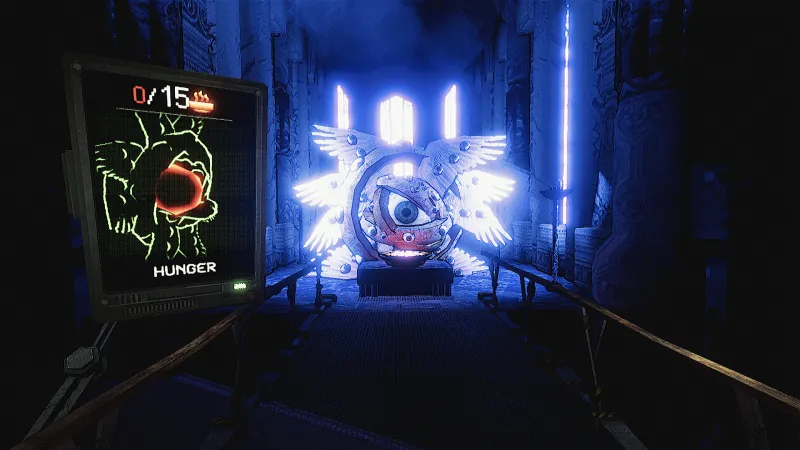
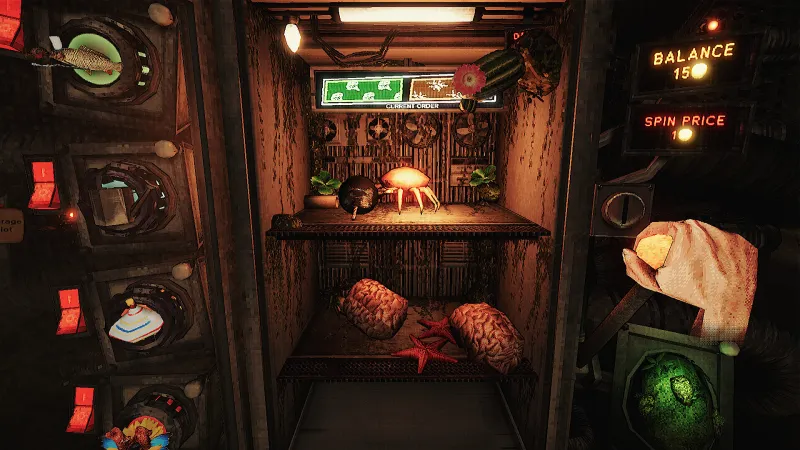
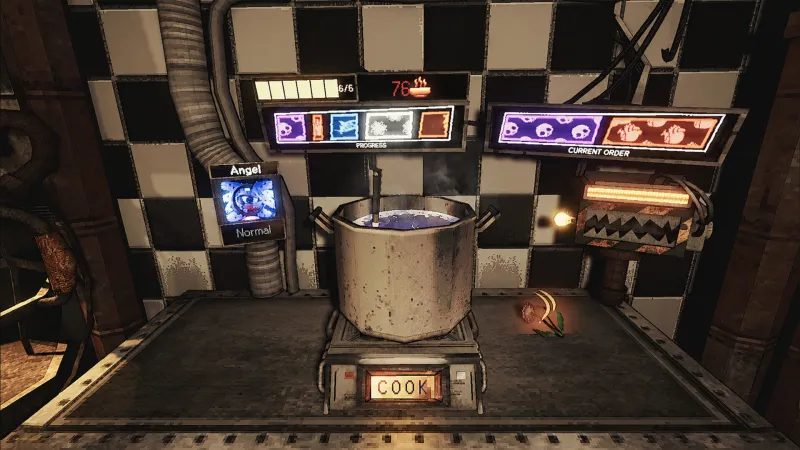
Of the four games I played during my Critical Reflex preview during TGS, I think Sated has the most potential to be the publisher’s next hit. It mixes something the indie space loves – roguelites – with monstrous horror fused with a little food-inspo by way of Cooking Mama. This demo wasted no time, putting me in front of a giant mechanical shark who hopped out of the water to hand me his hand/fin-written order. He requests some strange but not surprising ingredients, and though I don’t know exactly what each is, each has a symbol associated with it.
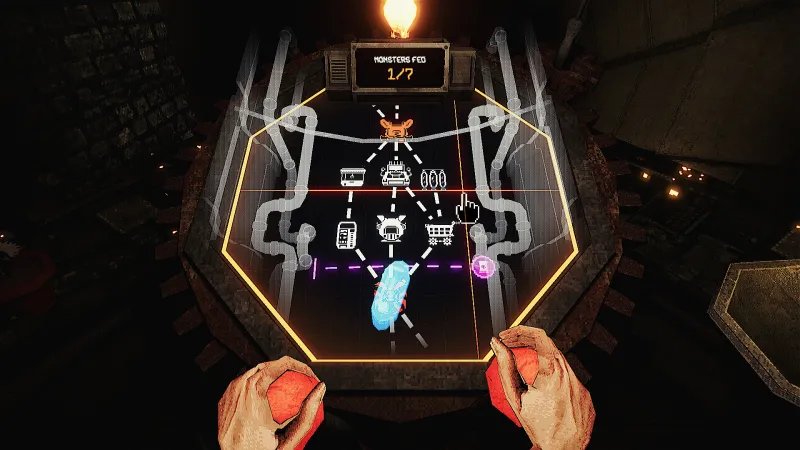
I take that order to my nearby fridge, which acts like a slot machine with a lever I can pull for another random drop of ingredients, and grab what I need based on those symbols. Sated smartly neglects to detail exactly how much of each ingredient is needed, instead giving you an ambiguous bar that shows how much of this or that ingredient should make up the entire recipe. This keeps you on your toes, because to make the most satisfying meal, you need to guesstimate as close as possible to what the hungry monster requires.
After feeding the monster, you’re given a score indicating how much they liked or disliked the meal you prepared. After that, you head to your underground train’s captain’s seat, select your next destination on a typical roguelite map/chart, and see what monster awaits their next meal there. Unfortunately, at the next stop, I fail to make a decent meal for the monster and, as a result, become the meal. I’m eaten alive, and my run is over. The hooks are there, and I’m ready for my next run; now I just need to know when that next feeding run will happen.
Flawless Abbey
Flawless Abbey
Flawless Abbey is both a surrealist, dreamlike kaleidoscope of colors and adventure, and a moody and oppressive mystery, and I’m interested in both pieces of its puzzle. In Flawless Abbey, you are a dreamseeker who lives inside a purple-and-grey facility where you hook yourself up to strange pods that allow you to explore an obelisk known as a dream-tower. While that sounds fantastical, it’s just another day on the job for you. I go from door to door, trying to find today’s pod of choice, only for it to break down when I finally find the one I’m tasked with sitting in. I walk to the IT person/being of consciousness who clearly loves the company it works for and is able to reboot the pod in question.
I make my way back there, plug in, and find myself aboard a mythical train soaring through the stars and swirling sky. Aboard this train, I solve typical environmental puzzles, like one that tasks me with opening a door using a special mechanism I can only understand after using a train ticket as a symbol key. Throughout Flawless Abbey, I answer questions by selecting dialogue choices that feel less like answers for this game’s world and more like ways for the game to learn more about me, the player. It’s odd and thought-provoking, even if I don’t really know what’s going on. Visually, though, I’m sold, and the painterly, patchwork-style art, coupled with a far-out score, has me intrigued enough to figure out exactly where this train is headed.
The game’s Steam page promises more, like corporate benefits and health insurance, a beast trying to tear down the dream-tower, a personal assistant who will guide me through dreams (even though they are also terrified about what’s going on), and other dreamseekers to meet. “Something isn’t right,” the game’s description reads, and I agree, but I’ll have to wait for the game’s launch to learn what’s wrong.