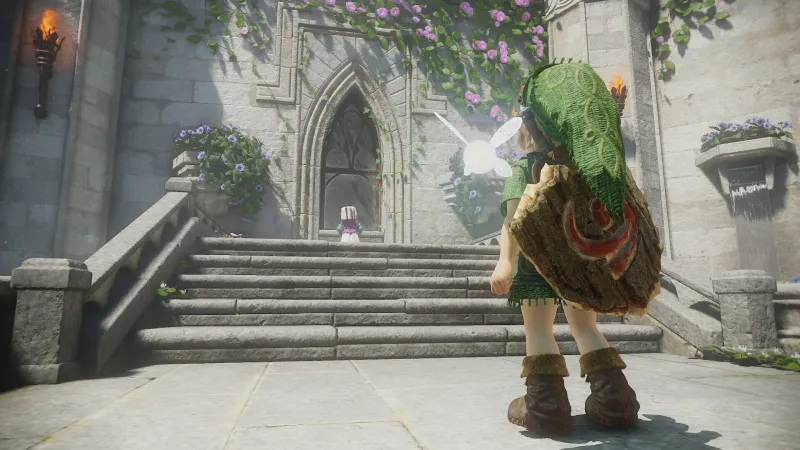
The Legend of Zelda: Ocarina of Time, Nintendo’s second remake of the original N64 game that first launched way back in 1998, is the fastest-selling Nintendo-published game on the Switch 2 ever. That accolade comes after the game sold more than 5.2 million copies in just four days following its November 5 launch last week.
This remake is already the Switch 2’s second-best-selling Nintendo game at 5.2 million units sold, behind Mario Kart World’s impressive 16.48 million copies sold to date. If The Legend of Zelda: Ocarina of Time keeps this pace up, it could one day overtake Mario Kart World, though the Mario Kart series typically holds onto that top spot. Mario Kart 8 Deluxe is still far and away the best-selling game on Switch.
Game Informer gave The Legend of Zelda: Ocarina of Time a 9.25 out of 10 in its review, with our reviewer Kyle Hilliard writing, “For many like me, the original Ocarina of Time is an impactful adventure that arrived at a time in their lives when magic still felt real. Playing the game 28 years later and appreciating the care taken to maintain and improve the original vision was the ultimate surprise of the whole experience: I didn’t expect to be so moved.”
The Legend of Zelda: Ocarina of Time launched last week exclusively on Nintendo Switch 2.
PlayStation has reportedly canceled Fairgames, the long-in-development live-service shooter being made by Haven Studios, which Jade Raymond founded in 2021. Sony acquired Haven in 2022, and in 2025, Raymond left the studio, though it remained dedicated to developing Fairgames without her. It seems the story of Fairgames is now over, according to a new Bloomberg report.
The publication reports that PlayStation will not enforce any job cuts or layoffs as a result of Fairgames’ cancellation, which comes as a surprise, and the studio will instead shift to support other first-party teams under the PlayStation umbrella. According to Bloomberg, this cancellation comes after a recent test of the game that allowed “thousands of players” to check it out did not deliver the results PlayStation wanted.
“While the test demonstrated strong operational excellence, live ops readiness and community engagement, player feedback and retention results were mixed and fell short of the goals we had set,” PlayStation executives Sean Decker and John Doyle wrote in an email to employees today, according to Bloomberg. “Combined with challenging market conditions in the PVP shooter genre, we have made the difficult decision to cease development on the game.”
Still, in an era where games are canceled and entire teams are laid off (sometimes even after releasing a successful game), it’s nice to see Haven employees are not facing layoffs.
Bandai Namco has announced it is shutting down Reflector Entertainment, the Montreal studio behind 2024’s Unknown 9: Awakening.
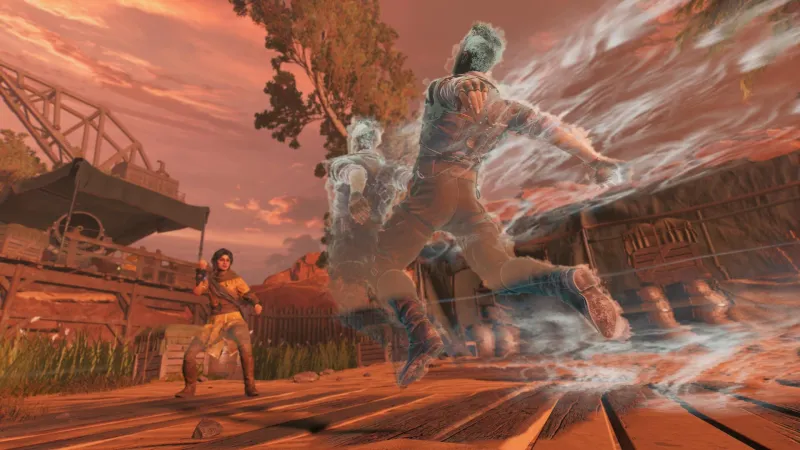
Reflector, founded in 2015, is a subsidiary of Bandai Namco that was acquired in 2020. Unknown 9: Awakening is the studio’s only released title, which was first revealed at Gamescom 2020 and released on October 17, 2024. The third-person action game is set within the broader Unknown 9 transmedia franchise, which includes a book trilogy, comics, and a web series, and stars Haroona, a woman able to traverse a separate dimension called the Fold. Haroona, played by The Witcher actress Anya Chalotra, uses this ability and other supernatural powers to battle a hostile secret society across India and other global locations.
Upon release, Unknown 9: Awakening didn’t make much of a critical splash; it currently has a 59 Metascore and “Mixed” Steam reviews. In November 2024, a month after Unknown 9’s launch, Reflector laid off 18 percent of its staff. More layoffs were announced in January 2025 as Reflector canned an unannounced project while confirming Unknown 9 failed to meet expectations. With Reflector’s dissolution, Bandai Namco expects to post “an extraordinary loss” of approximately €21 million on its Q3 financial results for the fiscal year ending March 31, 2027.
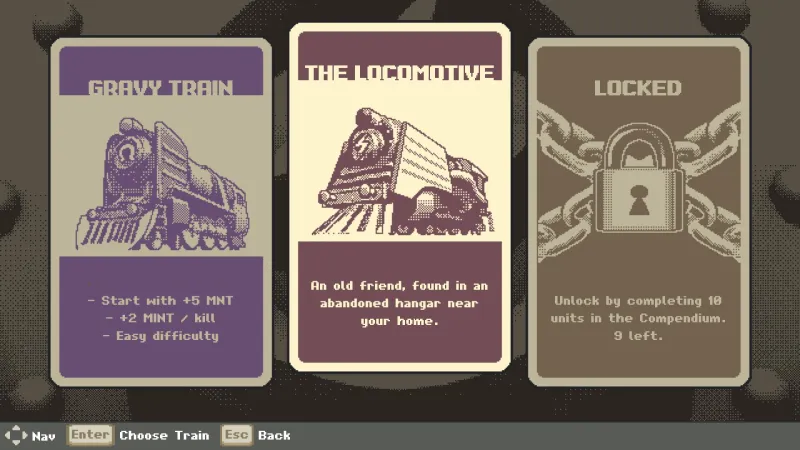
Australia Did It: End-of-the-world Railway Defense Business is a game I catch myself playing in my head long after I shut it off. Though it uses turn-based strategy as its base, it expands beyond the genre’s regular confines, blending elements from roguelikes, puzzle games, bullet-heaven titles, and the tower-defense genre. The result is an experience that demands wide-scale experimentation and rewards improvisation.
In a post-apocalyptic world where the Atlantic Ocean has dried up, you risk your life to ensure your shipment reaches its destination. Riding from station to station by train, you must build your team amid your many missions as various mutated creatures, malicious machines, and coordinated soldiers attack your convoy. Lore is doled out piecemeal and serves mostly as background dressing, but each time I learned more about the world, I became more curious.
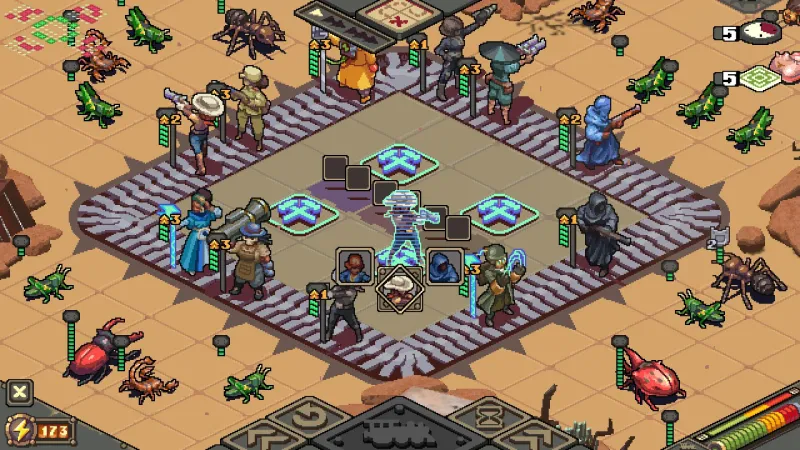
To survive the harshness of the wasteland, you must use cindermint, an in-game resource gained for surviving turns and killing enemies, to spawn defenders, with three base classes to choose from. The revolver-wielding Gunslinger is your primary damage dealer, while the Radshot applies corrosive radiation damage, and the Nomad offers a close-range shotgun blast with knockback.
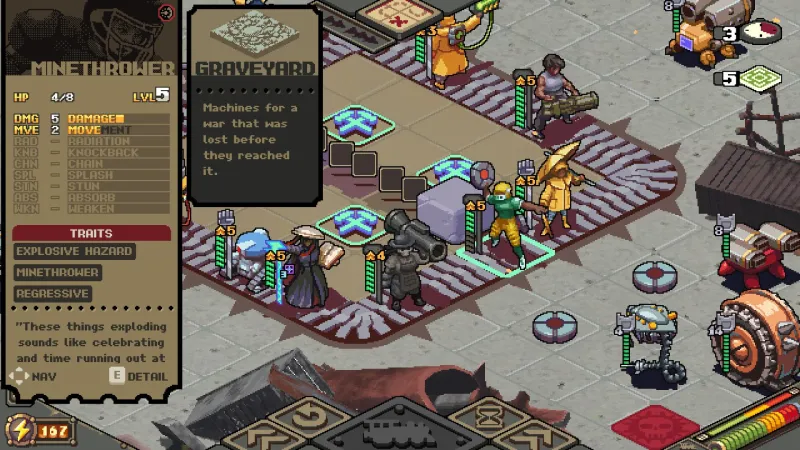
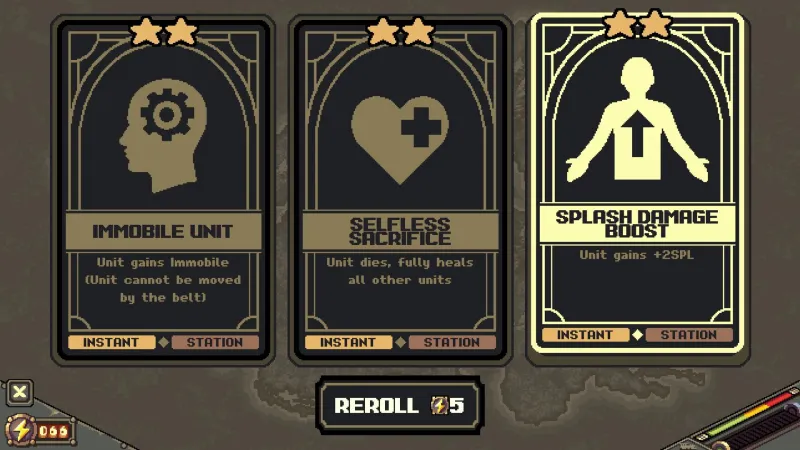
Those base-level characters offer solid variety upon which to build. And that’s where the main hook for Australia Did It comes in: experimentation through combination. In the midst of battle, you can merge two units of the same level to create new, more powerful defenders, influenced by the traits of those used in the merge. At the onset, you can merge two Nomads to create a level 2 Nomad with increased damage and knockback, but the real fun comes in combining disparate units to create completely new characters. Even now, more than 15 hours into my gameplay, I’m still concocting new combinations I want to try on my next run.
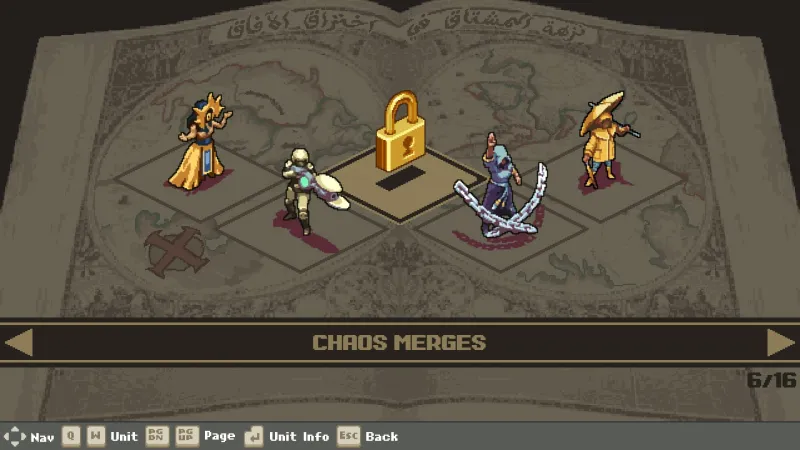
By the end of my first successful run, I had multiple level 6 characters, including a railgun-toting heavy, mages who steal health from enemies and redistribute it to nearby allies, a drone that can move beyond the walls of the station to attack enemies directly, and, my personal favorite, a dual-shotgun-wielding one-man wrecking crew. However, many of these higher-level units also possess drawbacks to consider, like the railgun scorching all adjacent tiles or the drone running out of battery if it’s outside the walls for too long. Though I started keeping notes in my head about which combinations led to my favorite results, I was grateful for a comprehensive compendium that tracked the tens of unit types I unlocked through this rewarding experimentation.
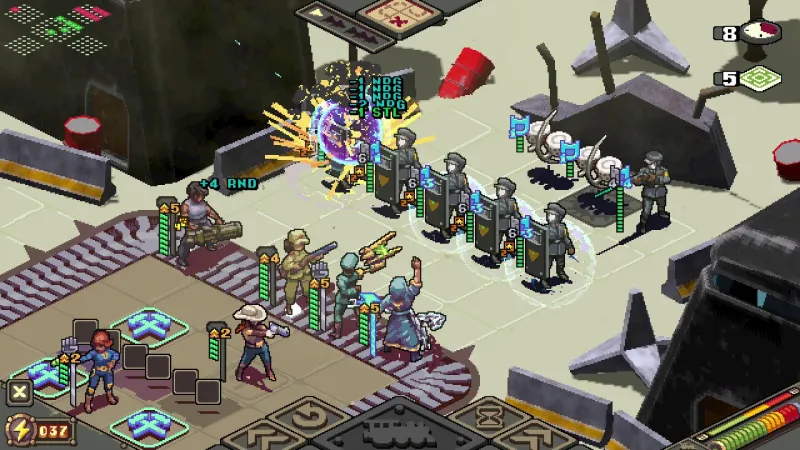
The meat of the experience places your squad on a 25-tile square board with enemies spawning from the four principal directions. Thoughtfulness and positioning are crucial, as each unit on your squad possesses different traits and movement efficiency, as do the encroaching enemies. Basic enemies often make a beeline toward the station, while others may take a weaving route or keep their distance and blast you at range. Improvising and adjusting your strategy on the fly is the most engaging part of Australia Did It, and when you perfectly adapt in the moment, or escape the scenario by the skin of your teeth, there are few better feelings I’ve experienced in a game this year.
Your goal in this phase is to simply defend the station and gather resources to strengthen your squad before evacuating and moving on to the next area. Considering each unit’s strengths, weaknesses, and capabilities while strategically positioning them around the station takes some getting used to, especially during the more chaotic stages. I fist-pumped as I watched the train pull out of a station that was about to crumble, and I lamented the loss of high-level units I had to leave behind to ensure the survival of the convoy. The process is ceaselessly thrilling, even as you begin to see how the gears work under the hood. I just wish I could say the same about the intervening train sections.
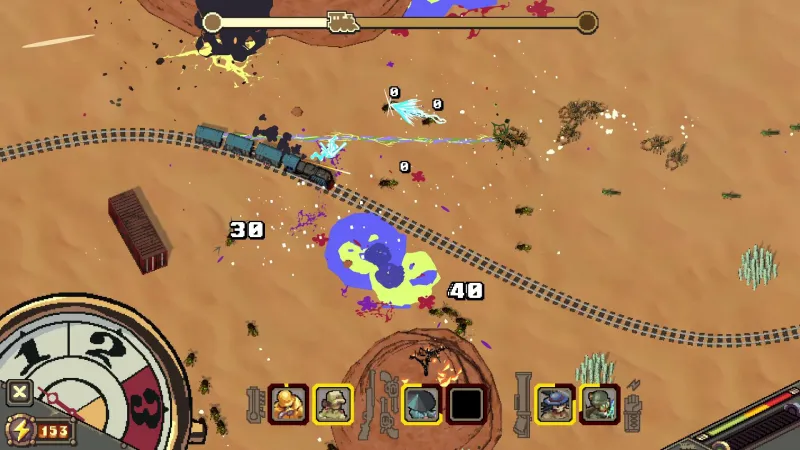
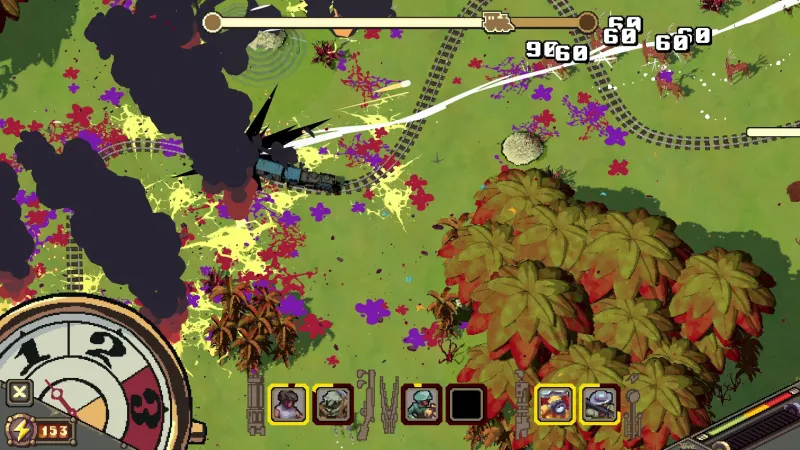
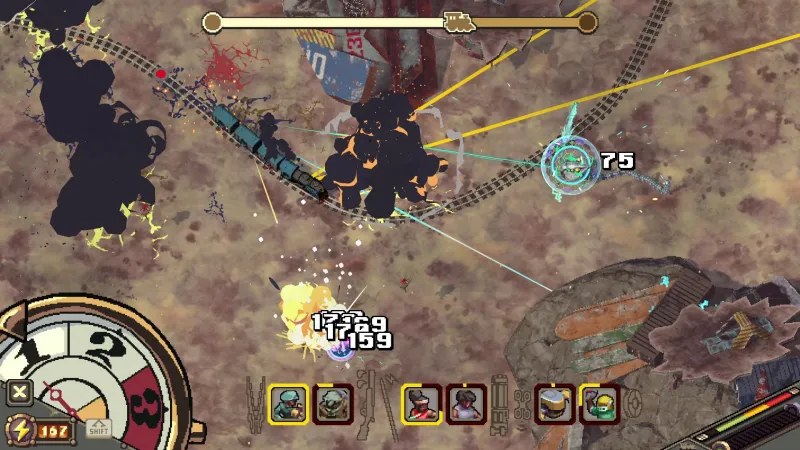
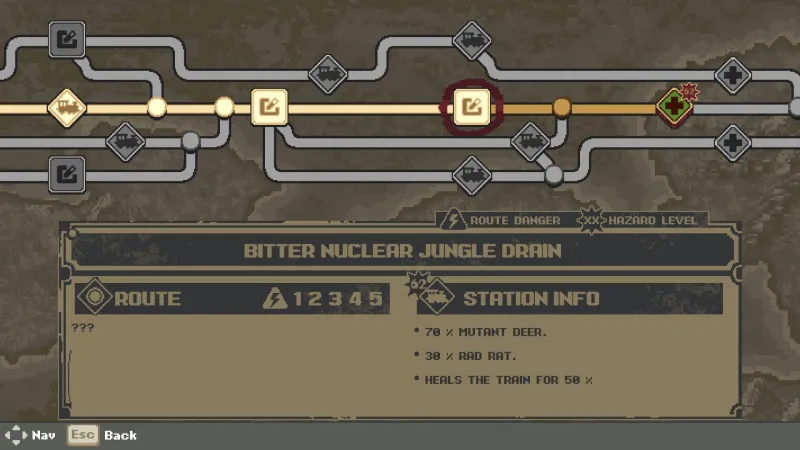
Once you escape the turn-based strategy portion, your surviving squad members hop aboard the train and chart their route. Using a basic map, you choose your next stop, with factors like enemy types and modifiers shown to you ahead of time. The top-down train segments between station-defense stages are largely passive; the units you evacuated from the previous station automatically attack swarming enemies with the same traits and perks they have in the main gameplay areas. You can aim a focus cone to instruct your units, but you’re at the mercy of the units you’ve brought. You can trigger an ultimate ability to send your defenders into overdrive, but I rarely needed it.
While I love the idea of intentionally crafting a team that’s good at both the turn-based strategy and bullet-heaven transport sections, I was never fully engaged getting from point A to point B. Instead, I often caught myself checking how much longer before my train arrived at the next station; these sections can be completed in a minute or two, but that doesn’t alleviate the feeling that it’s a step down from the other gameplay. These novel portions aren’t bad by any means; they’re merely an average part of an otherwise excellent experience.
Looking back on the hours I poured into Australia Did It, the forgettable train segments will occupy only a small part of my memories, just as they do in each run. Instead, what will stick with me for months to come are the creative combination mechanics, the outstanding turn-based defense system, and the thrill of uncovering the mysteries of this bleak, yet engaging world.
That’s not shocking – GTA VI is, by many metrics, the most anticipated game in history, with its predecessor, Grand Theft Auto V, selling nearly 235 million copies since its launch back in 2013. There’s also the fact that Rockstar Games is not releasing a physical edition of GTA VI, per se. Yes, you can go to a store to pick up a GTA VI box (and you can do so today, allowing you to preload the game), but inside that box will be a download code for a digital version of the game – you won’t find GTA VI on a physical disc. So, naturally, many players are opting to purchase the game on digital storefronts like the PlayStation and Xbox game stores.
“Grand Theft Auto VI, the most preordered title of all time on the Microsoft Store, launches November 19,” an Xbox blog post reads. “Considering the unprecedented demand, we encourage everyone to begin preloading as soon as possible to ensure you’re prepared for launch day.” PlayStation echoes this statement with a blog post of its own that reads, “Grand Theft Auto VI is now the most preordered game in the history of the PlayStation Store. Given this unprecedented demand, we’ve joined with Rockstar Games to allow players to start preloading the game nine days early, so they’re ready to play on launch day.”
There you have it: People are very excited about Grand Theft Auto VI.
Grand Theft Auto VI launches next week on November 19 on PlayStation 5 and Xbox Series X/S.
Bungie has detailed its upcoming Symbiosis update for Marathon, which introduces several significant modes next month. Chief among them is the new permanent PvE mode, which Bungie previously experimented with and promised earlier this year.
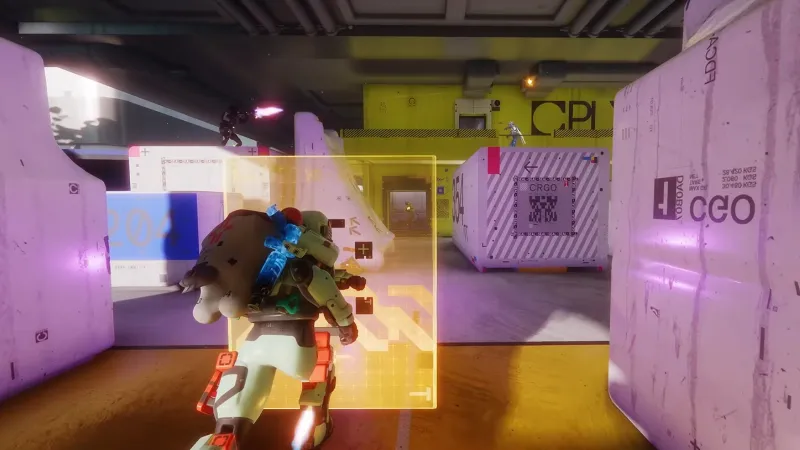
Symbiosis is headlined by Expedition, a co-op PvE destination with roguelite elements. Expedition pits teams of players against escalating challenges and offers randomized upgrades called Flash Boosts to increase their odds of success.
The Perimeter zone has also been expanded with the new Burrows and Reservoir areas. Another addition is Limbo, a new social hub for players to gather that features a firing range. You can also try out the new sword-wielding Bishop Runner Shell alongside new weapons and gear, such as the Maverick pistol, throwing knife, hack grenade, and V17 flamethrower. Lastly, you can test your skills against other players in the beta PvP Deathmatch mode.
Symbiosis arrives in Marathon on December 8. An open play week will kick off the same day, allowing new players to experience all of Marathon’s content for free until December 15.
The Symbiosis update marks Marathon’s evolution into a more co-op-friendly, PvE experience as its initial focus on PvP extraction has struggled to sustain a substantial audience since its March 5 launch. Bungie announced in September that it plans to spend the rest of 2026 improving Marathon’s core mechanics and features while giving players more agency for how they engage with it beyond competitive PvP.
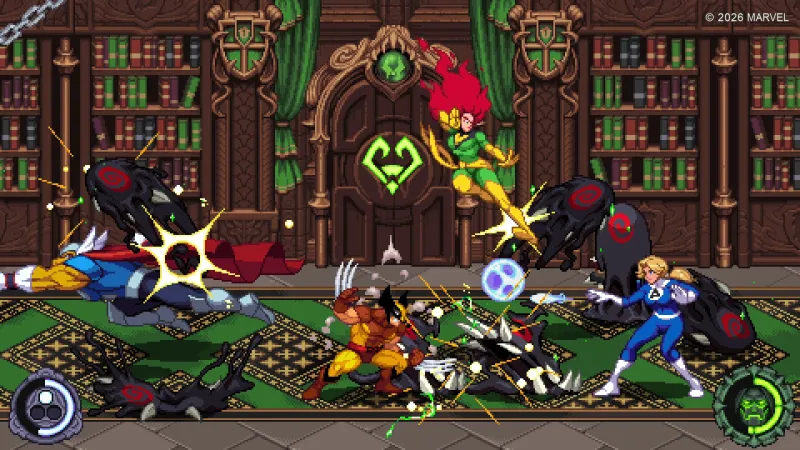
Marvel Cosmic Invasion was a bit of a dream game for me; I loved the X-Men arcade game in the ’90s, so when Tribute Games released the excellent Teenage Mutant Ninja Turtles: Shredder’s Revenge in 2022, I immediately hoped they’d revitalize other licensed brawler franchises released by Konami in the late ’80s and early ’90s. While we still haven’t heard any word of a new brawler starring The Simpsons, Tribute did follow up its Turtle triumph with Marvel Cosmic Invasion, another throwback side-scrolling beat ’em up, this time starring Marvel’s mightiest.
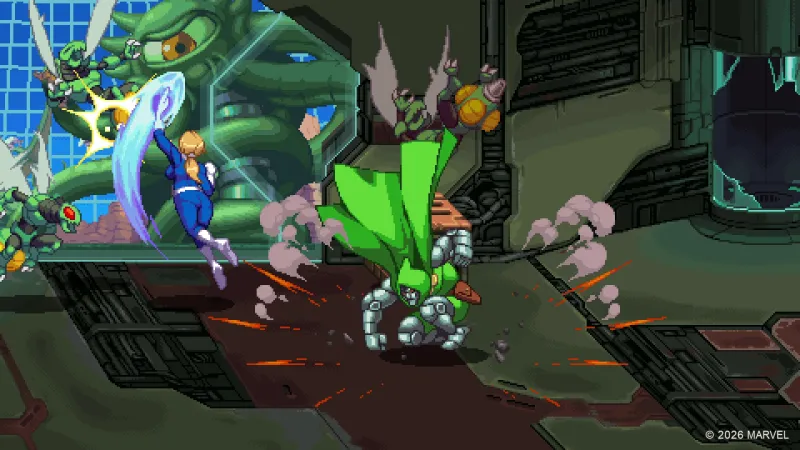
I played through Marvel Cosmic Invasion multiple times and had a blast, but I moved on quickly, as I didn’t feel the need to collect different palette-swaps of the many heroes on offer. Even after Cyclops and The Thing joined the roster as DLC in May, I still saw Cosmic Invasion as a game in the rearview. That changes this week, as The Siege of Castle Doom not only adds two additional playable characters (Invisible Woman and Doctor Doom), but also a mode that has the potential to bring me back for more runs for the foreseeable future.
Seeing that Annihilus is threatening the universe, Doom decides to take matters into his own hands. Unfortunately, much in the way that it seems that he may try to fix the multiversal incursions in the upcoming Avengers: Doomsday, Victor Von Doom’s solution in Marvel Cosmic Invasion – the Cosmic Inductor – would lead to untold death and destruction. In The Siege of Castle Doom, you select your team and fight your way through various floors of the stronghold belonging to the man who is perhaps Marvel’s greatest villain. Your goal is to fight through the winding, randomized hallways of Castle Doomstadt, charging Reed Richards’ Stabilizer and tactically bolstering your team along the way, before Doctor Doom can enact his plan.
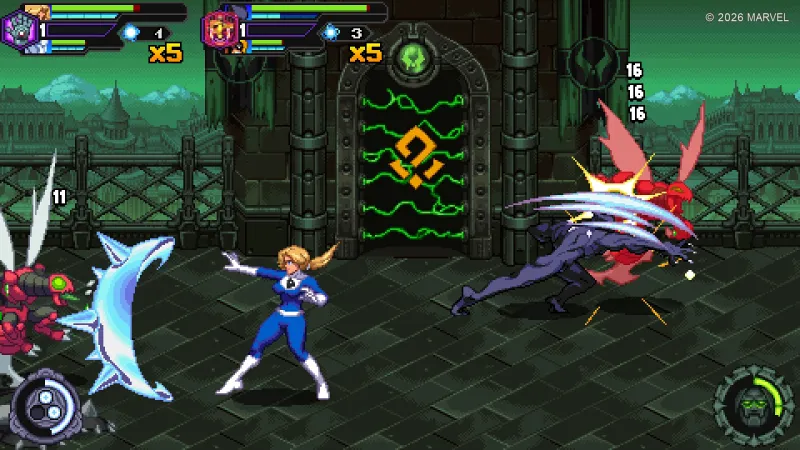
As for the new playable characters, Doctor Doom is less agile, but his attacks pack a whallop, while Invisible Woman’s force fields and speed make her the more versatile pick. I don’t know that I see either of them replacing my mains from the base game, but I had fun experimenting with them throughout this mode. Regardless of which character you choose from the expanding roster, you still must traverse Castle Doomstadt before Doom achieves his objective.
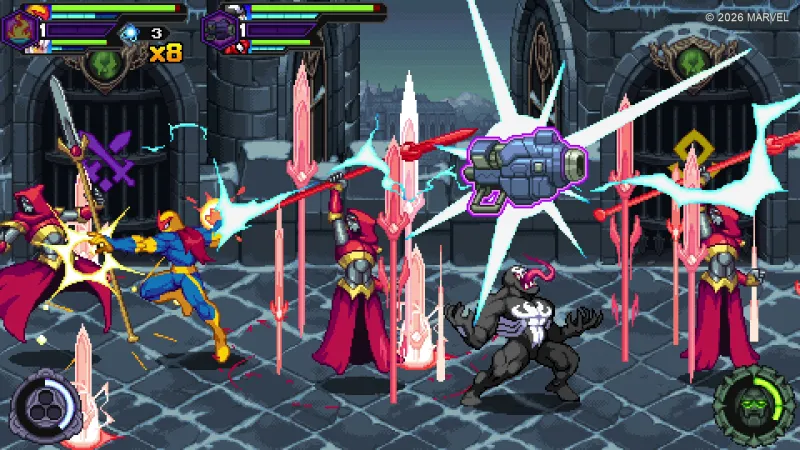
Fighting through waves of enemies across differently themed and booby-trapped rooms, you encounter all manner of foes from the base game, as well as new minion types from Doom. When you defeat enemies, they drop batteries that charge your Stabilizer, letting you even the odds and stop Doom. Conversely, each time an enemy hits your character, it charges Doom’s Cosmic Inductor, inching him closer to victory and making his minions faster and stronger in the process. As you might expect, the rooms get harder the deeper you go, and while each player starts with two characters to swap between, if a character completely depletes their health, they’re gone for good, making it even tougher. As such, you need to keep your eyes on each character’s health and swap them out when it makes sense.
As you complete each room, you can choose which path to take to augment your characters with new special abilities. True to the roguelite structure, as you complete rooms, you can also buff your characters’ stats within the run. Certain rooms offer extra batteries to help your Stabilizer charge, while others offer new and upgraded equipment. There’s also one that promises random events that can easily alter the trajectory of your run for better or worse. Though I often enjoyed boosting attack stats to make enemies less like damage sponges, I had to balance that against buffing their health to keep them alive and charging the Stabilizer to have a fighting chance.
Beyond the in-run upgrades and modifiers, you can also amp up the action run-over-run through upgrades in Reed’s Lab, which add to the pool of modifiers you can select from at the start of each run. The expansion also adds new palettes for existing heroes, plus new music by composer Tee Lopes. While I’ve only done a few runs of The Siege of Castle Doom (each taking between 45 and 90 minutes, depending on how successful you are), I feel a revitalized sense of excitement for Marvel Cosmic Invasion. Tribute claims completionists can spend upwards of 15 hours in this new mode, which has me champing at the bit to dive back into what will likely be my primary way of interacting with Marvel Cosmic Invasion going forward.
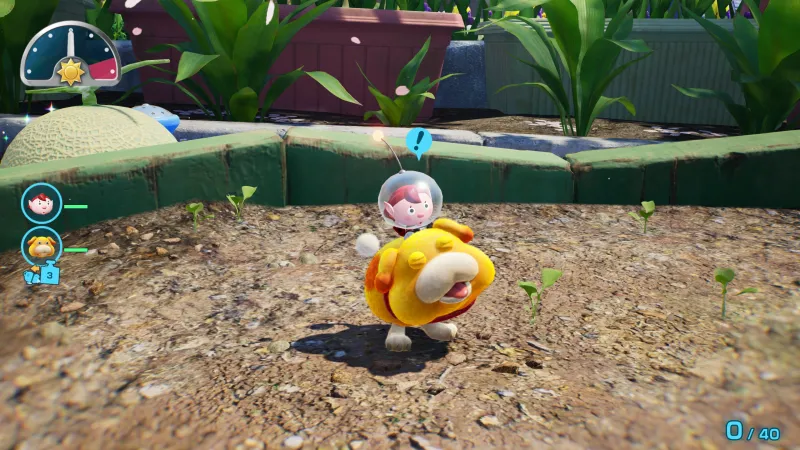
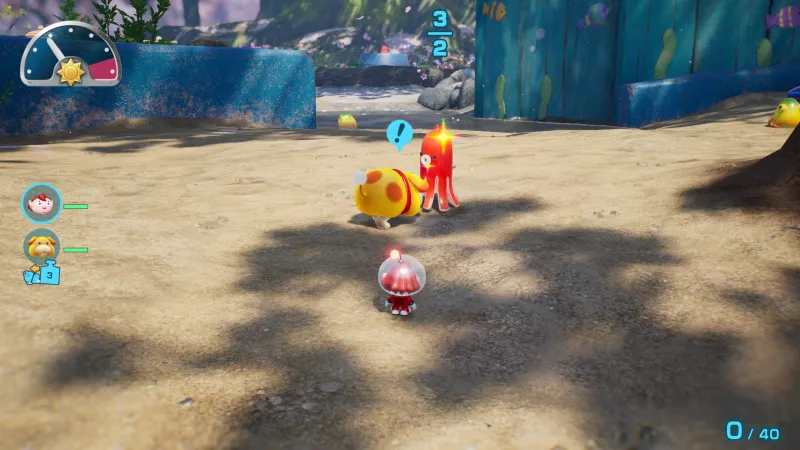
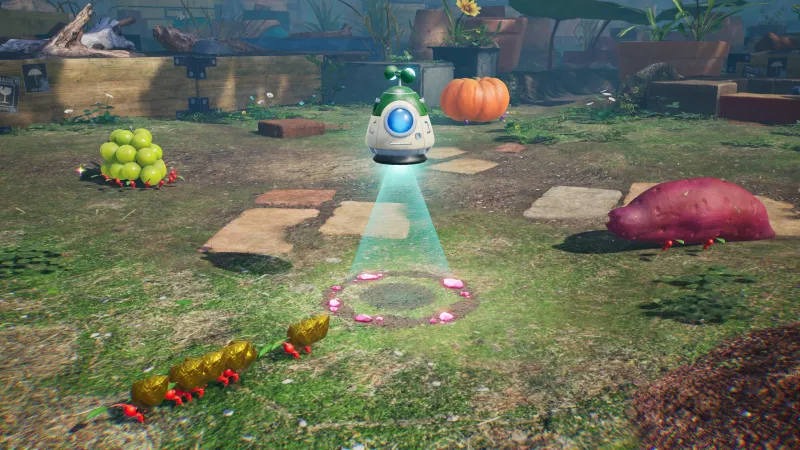
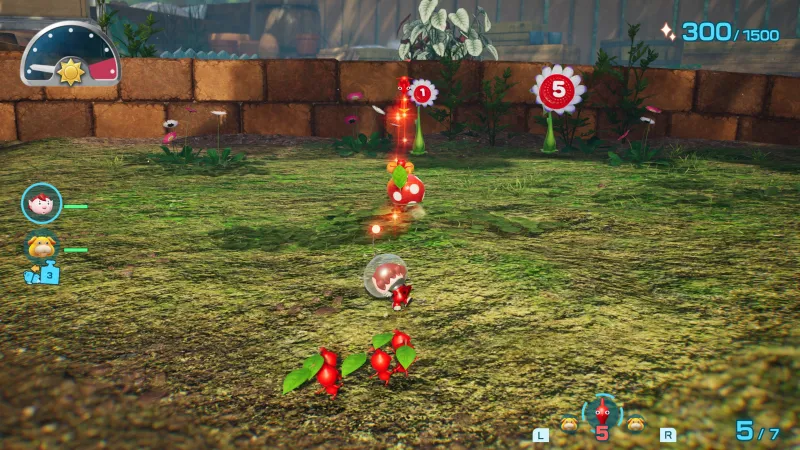
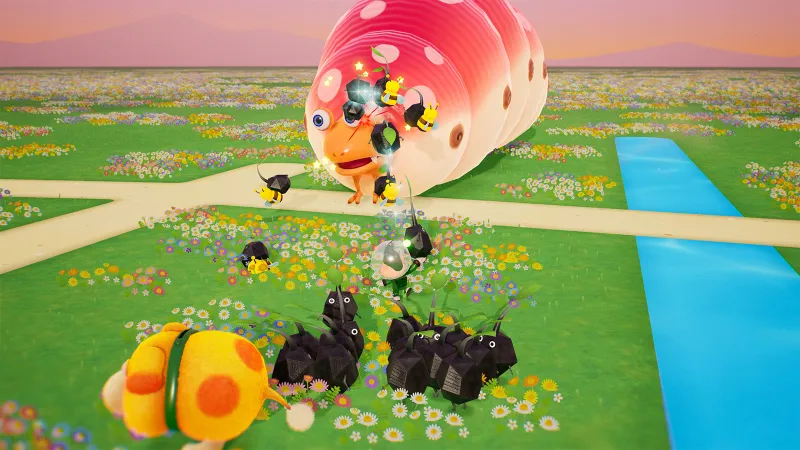
Pikmin 4 was released for the original Switch in 2023, and it ranks among my favorite games on the platform; I happily award it the honor of being the best Pikmin game. It looks and plays great, and Oatchi the dog makes the sometimes annoying process of managing a collection of little plant creatures willing to do your bidding much smoother.
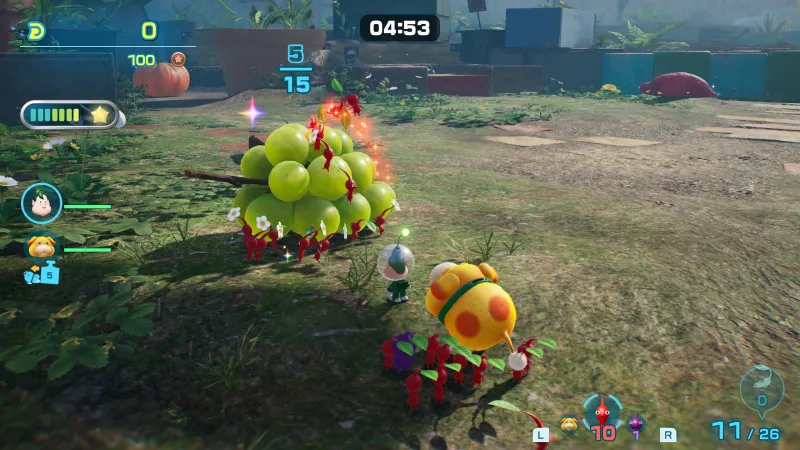
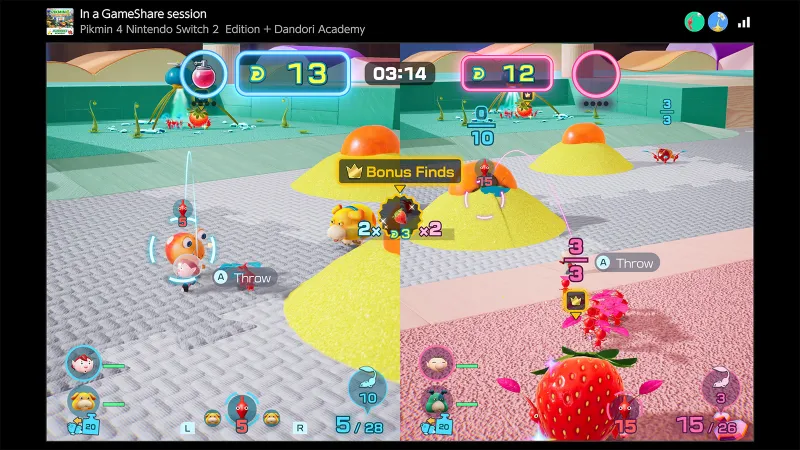
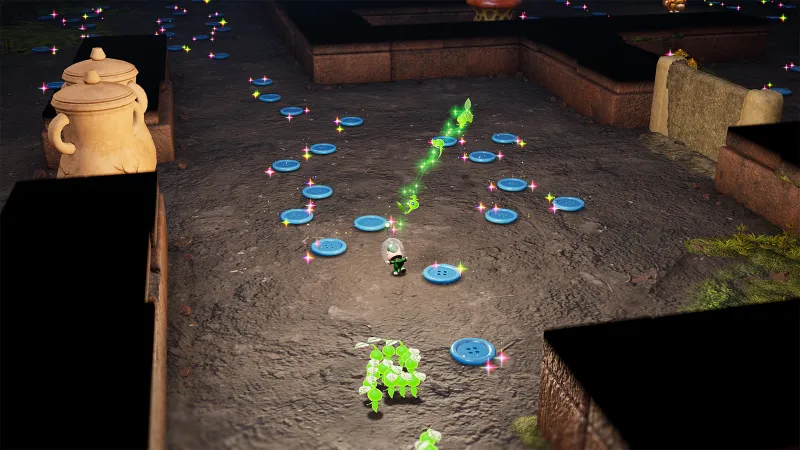
The over-titled Pikmin 4 – Nintendo Switch 2 Edition + Dandori Academy releases November 12, and much like other comparable Nintendo games that have been ported and improved for Switch 2 (like Kirby and Mario Party), the base game is as good as it was initially and looks even better. If you skipped Pikmin 4 on Switch for whatever reason (probably because it was day one of the Barbenheimer epidemic), I encourage you to play it now. You have about a week to beat it before… something else comes out. Who’s to say.
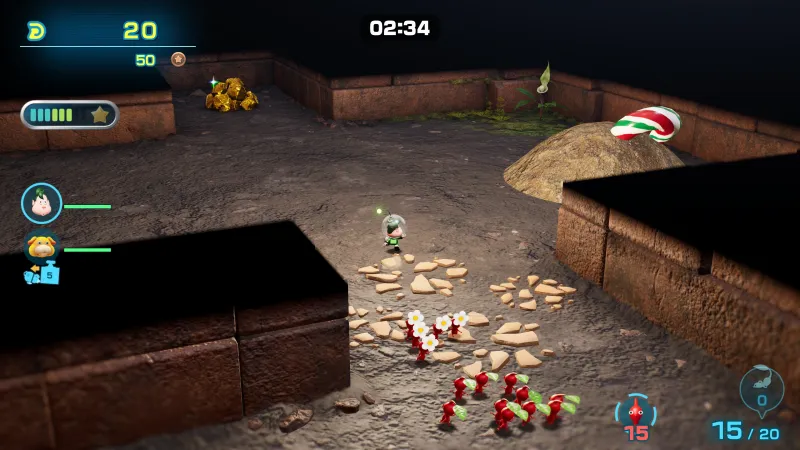
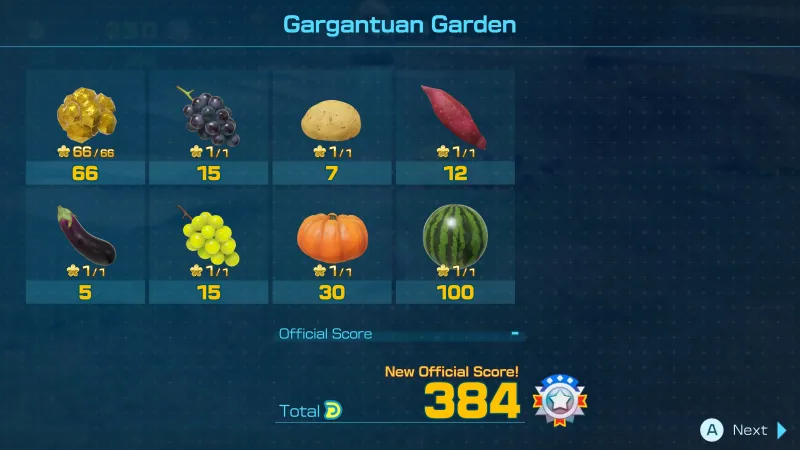
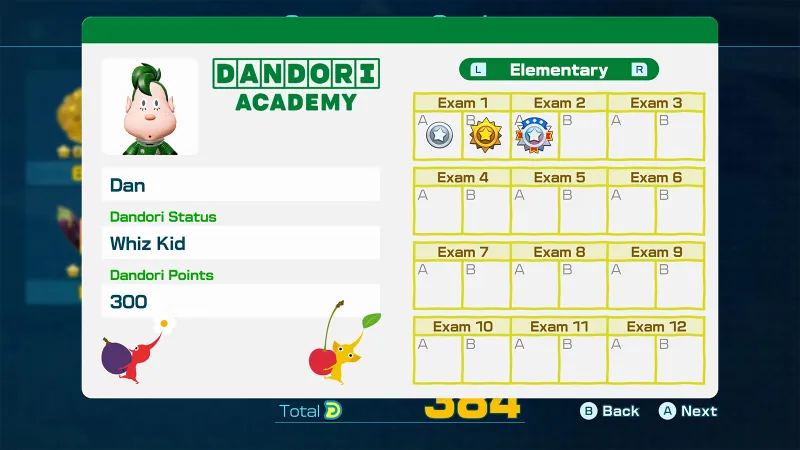
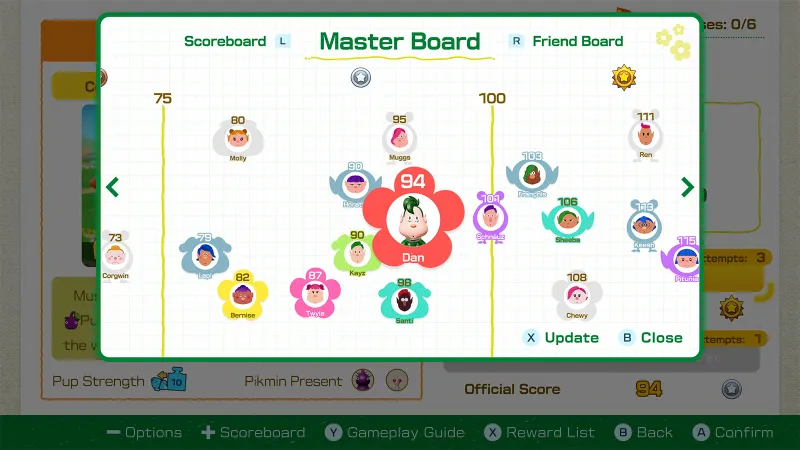
The “big” addition here for the Switch 2 version of the game, alongside improved performance and visuals and the ability to give Oatchi verbal commands, is Dandori Academy. The Academy is an expanded time trial mode that awards medals for practicing specific levels, which you can then play and upload your high scores on specific days. For example, I can play the Advanced B level, Rockaway Cellars, as much as I want, but it only really counts if I play it on November 12. And you only get one try (though you can unlock retry tickets).
In theory, I like the unique approach to high-score battling, and the limited timeframe adds fun intensity, but this isn’t what I am looking for from Pikmin. I recognize and acknowledge the design decision to place timers on your interactions in Pikmin, but it’s never been my favorite part. I like building my adorable little army and exploring, discovering, and retrieving as many unexpected items as possible. But I mostly get annoyed at the ticking clock, especially when I am watching my crew meander toward my spaceship holding a Game Boy Advance SP (or whatever they manage to find on the never-acknowledged, but potentially post-apocalyptic Earth you are exploring).
I also like having a list of missions to complete, and in Dandori Academy, there isn’t much acknowledgment of your success in practice. You can earn a platinum medal while practicing Rockaway Cellar, but it’s mainly to let you know that this is what you could earn when you play on the right day.
The main takeaway is that Pikmin 4 is still excellent, and I was grateful to transfer my save file from the Switch version (and I was tempted to start a new game + save), but Dandori Academy is not a strong incentive to return if you already played the game. It is a nice bonus and an interesting concept that reimagines the familiar time trial mode featured in plenty of video games, but the original campaign is still the main attraction.
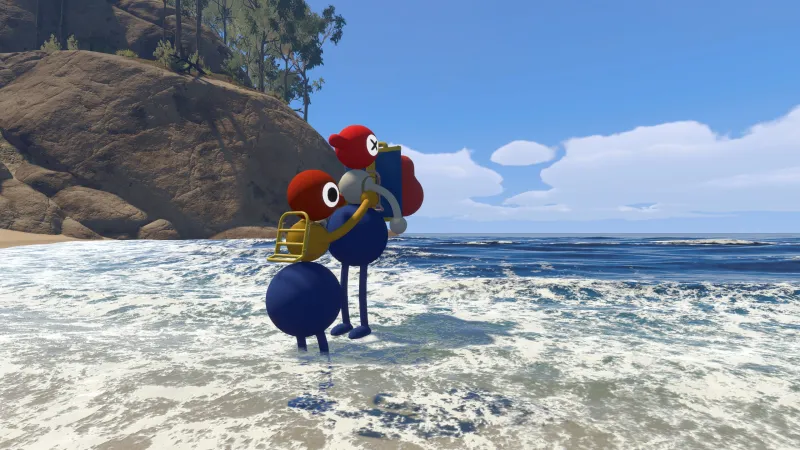
Big Walk developer House House has found itself at the center of a controversy over the upcoming Independent Games Festival on March 3, 2027, after a group of its jurors said they would not vote for any game that has used generative AI in any capacity. The jurors’ statement does not name House House or Big Walk, but the studio eventually updated its FAQ to explain how it used generative AI for coding after IGF discussions. After vaguely posting on social media, those associated with IGF made clear that a sticking point in the voting process was Big Walk.
Former games journalist and game developer Austin Walker posted the IGF jurors’ statement on Bluesky, explaining that voting has been difficult this year due to the “significant increase in the number of submitted games developed with generative AI tools.”
“This has set off some fairly intense discussion and disagreement across the judge and jury pools, and at this point there is no universal consensus on what (if anything) is to be done,” the statement reads. “The IGF has affirmed that we may cast our votes according to our own tastes and values. But we, as a contingent of IGF jurors, feel that this trend and the games embracing it deserve stronger pushback than a vote in silence.”
The statement continues, explaining that not all jurors are on board with the blanket statement, citing reasons including “their ability to safely sign without professional blowback.” It continues, “Above all: Our goal is to state solidarity with those who despair over the future of their art, their craft, and their industry – including those who have experimented with these tools, but who now believe they are not in our best interest.”
The statement continues with the jurors’ beliefs regarding gen-AI, including its negative effects, that any gen-AI used in any process of game development is not okay, noting specifically that “AI-generated code is not an exception to these harms,” and more.
“For those reasons, this year we are declining to vote for any game that uses generative AI in any capacity,” the statement says. “We urge the IGF to adopt a strong anti-AI policy for future years that disallows games containing any AI-generated work.” The statement then includes the names of the IGF jurors who signed it.
Big Walk isn’t specifically mentioned within that statement. However, Kyle LeClair, a four-time IGF judge and a juror for the upcoming IGF, tells Aftermath that “it got to the point where the most-discussed game this year almost entirely involved its AI usage, overshadowing pretty much everything else.” LeClair says it felt like a boiling point, adding, “Anyhow, strong props to the jurors for taking this stance and putting out this letter as well, even if some people believe that using AI for coding purposes is a more gray area, we’re at a point where the amount of AI slop clogging up the indie game scene means having to take hard stances such as this in order to discourage such an amount of recklessness.”
Again, no mention of Big Walk. However, game developer Bruno Diaz took to BlueSky to confirm the speculation: that most-discussed game was Big Walk. “Okay, because the cat is out of the f—ing bag, I might as well combat misinformation a bit: 1. The reason IGF judges are aware of the LLM use in the development of Big Walk is through a disclosure shared by House House. 2. This disclosure was required by IGF rules. 3. While some have characterized the LLM usage as just fixing one individual blocking bug, this is a bit inaccurate; the description given by House House mentioned there being several instances, though they did also say it was mostly ‘consultative’ use and not code gen or agents.”
Diaz notes that they believe that distinction is without a difference, adding that “to my knowledge, it is not the case that Big Walk is non-compliant with the former [Steam’s AI disclosure requirements].”
“Yes, there was a large discussion about this in internal IGF forums,” Diaz said. “Yes, a lot of people said things that I personally think were disingenuous, extremely disappointing, or just (frankly) dumb. No, I have no intention of talking about it in further detail or exposing anyone. […] Ultimately, it is extremely difficult for a group of over 100 people to keep a secret so I expected this to come out eventually. Shrug emoji. If you think something is reputationally damaging, consider not doing it.”
With discussion surrounding Big Walk happening during the IGF discussions, House House updated its FAQ to address, “Was AI used to make Big Walk?” Here’s what the FAQ reads, in full:
“In the final stretch of Big Walk’s development, LLMs were used sparingly by House House to help work through difficult technical challenges and bugs. In some cases, snippets from LLM responses were copied as a starting point to be modified into game code—we’d estimate that well under 0.1% of Big Walk’s code had anything to do with this usage, and generative AI was not used in any other context when making the game.
The primary use case for House House’s use of LLMs was to research, via chatbots, issues we encountered with third-party code. If you’re technically-minded, and curious, here’s an example. We needed to cull shadow casters by distance from the camera, but Unity URP only allows culling shadow casters by distance in camera forwards, so shadow casters behind the player were being rendered at an infinite distance. This made our game run 50% slower for around 20 seconds at sunrise and sunset. We researched the problem extensively, and we looked at the URP code ourselves, but we couldn’t find a way. Then, we were able to speak directly to an engineer at Unity, who asked around and ultimately concluded that what we wanted wasn’t possible. Finally, we posed the question to an LLM chatbot. After a few dead ends, it suggested a possible fix, and while we had to modify the suggestion extensively, it worked. This fix represented about 10 lines of code inside URP.
We originally wrote a version of the above disclosure as it was a suggested part of our IGF submission. We have not made any disclosure on Steam as the platform does not request disclosure of code or chatbot usage. We are posting this disclosure as it has become a matter of public interest.
This is not an endorsement of, or argument for, the use of AI tools, however minimal. We have some concern that voluntary disclosures like this might contribute to the normalisation of this technology, or its treatment as “inevitable”. We support the work of those who are trying to limit the harm generative AI is doing to videogames and our world, and apologise that Big Walk’s LLM usage may not meet their standards.
Big Walk was developed without an internal AI usage policy in place, and we consider that lack of policy a failure. We will work to have a more comprehensive policy going forwards.”
As you can see, House House did not disclose its use of AI-generated code because “Steam as a platform does not request disclosure of code or chatbot usage.” It says it is posting the disclosure now as “it has become a matter of public interest.”
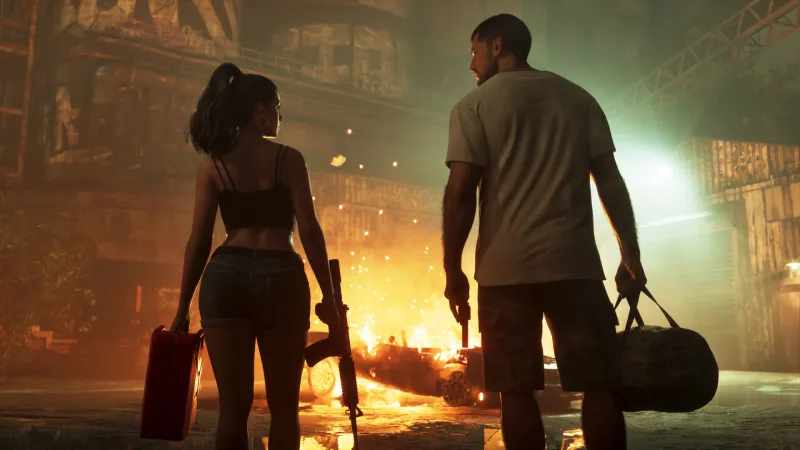
Grand Theft Auto VI launches next week on Thursday, November 19, and you can preload the game on your PlayStation 5 or Xbox Series X/S starting today, Rockstar Games has announced. The studio has also revealed what kind of visuals players can expect on their respective consoles, making clear that regardless of where you play, GTA VI targets 30 FPS gameplay.
“Grand Theft Auto VI has been fully developed from the ground up to provide the best possible experience for the current generation of consoles, targeting 30 frames per second while pushing both platforms to their absolute limits to bring the vast and rich world of Leonida to life – while maintaining the density and visual fidelity of all its environments and inhabitants,” Rockstar writes in a blog post.
Rockstar Games also breaks down the different graphical settings available on PlayStation and Xbox consoles. On PS5 Pro, GTA VI will feature “improved clarity through PlayStation Spectral Super Resolution (PSSR) and ray-traced shadows only available on PlayStation 5 Pro.” On PS5 and PS5 Pro, the game will include “high-fidelity haptic feedback” fully integrated into DualSense controllers and adjustable via accessibility settings, improved spatial rendering so all in-game sounds take full advantage of Tempest 3D audio, and improved load times, “making Grand Theft Auto VI play best on PlayStation 5 consoles.”
On Xbox consoles, Rockstar doesn’t dive into performance; instead, it focuses on Xbox Cloud Gaming on Xbox Series X/S and Xbox One consoles, noting this feature will use Xbox Series S graphics settings.
GTA VI will also fully support Remote Play on PlayStation and Xbox.
GTA VI launches November 19 on PS5 and Xbox Series X/S.