No Law Isn’t Just A Cyberpunk FPS, It’s An Incredibly Detailed Immersive Sim Too

No Law Krafton neon Giant cyberpunk immersive sim 2027

Platform:
PlayStation 5, Xbox Series X/S, PC

Publisher:
Krafton

Developer:
Neon Giant

Release:
2027

I’m a mark for cyberpunk games, so Neon Giant didn’t have to do much to sell me on No Law – you give me neon, corporate dystopia, and some inspired fashion choices, and I’m there. But I won’t deny that my initial impression of No Law when it was revealed during The Game Awards 2025 last December was something along the lines of a tepid “Oh cool, another cyberpunk game I’ll check out.” That impression stuck through every trailer Neon Giant and publisher Krafton released, including the latest shown during Gamescom Opening Night Light 2026 last week. However, I knew I had a preview of the game locked in for Gamescom and was looking forward to learning more. 

With that preview behind me, my impression has changed to something along the lines of, “Holy hell, this is so. much. more. than a cyberpunk FPS.” Though I don’t get to play it, the gameplay I watch, courtesy of Neon Giant co-founder and No Law co-creative director Tor Frick (with commentary from co-founder and co-creative director Arcade Berg), greatly impresses me – it might be my game of the show, and is certainly one of my most anticipated releases of 2027 now.

No Law takes place in the dense, Mediterranean-inspired Port Desire, with protagonist Gardener brought out of retirement to get something taken from him back; it’s very John Wick, and though Gardener is more of a 1980s action movie hero than Keanu Reeves’ assassin, I imagine their personalities would mesh well. Port Desire is a lawless city, as the game’s name implies, completely unregulated by government, making it a great place for criminal activity (that also happens to benefit corporations and neighboring nations). As a result, it’s the site of shady science experiments, black-market weapon development, and crime, though government-backed Peacekeepers stop too much chaos from ever occurring. 

“They don’t want it to be perfect and safe; they want it to have a bit of chaos and violence,” Berg said. “Port Desire is Las Vegas on steroids.” He tells me people even travel to the city for leisure and vacation, as well, “because it can provide absolutely anything and there’s nothing anyone can do about it.” 

Our demo begins shortly after the game’s intro, with Gardener searching for an informant. As we head out of our apartment and into the city proper, we stop to talk to Rosco, an NPC friend of Gardener, first. Here, I see how speaking to characters can yield Gardener information he can use later, but these conversations are optional, Berg says. “The story of the game is very simple: it’s a revenge story about retrieving your thing,” he tells me. “That’s all you need to know to shoot people in the face, but it’s opt-in. If you want a simpler shooting experience, we’ve got you covered; if you want an immersive sim, that’s there, too.” 
Game Informer

My ears perk up when he says “immersive sim” because I had no idea Neon Giant was taking No Law in that direction. It colors the conversations we have throughout the rest of this preview. Port Desire has a dynamic weather system, and if you need to enter a heavily guarded place, Frick says it might be smart to wait for it to rain – like real people, NPCs in this game don’t want to be outside stuck in the rain, and entering a secure compound is much easier when all of its security is inside. Nighttime and daytime play into this experience as well, from simpler features, like shops closing at night (making it harder to stock up on goods) to NPCs crawling into bed for the night (making it easier to kill a target). 

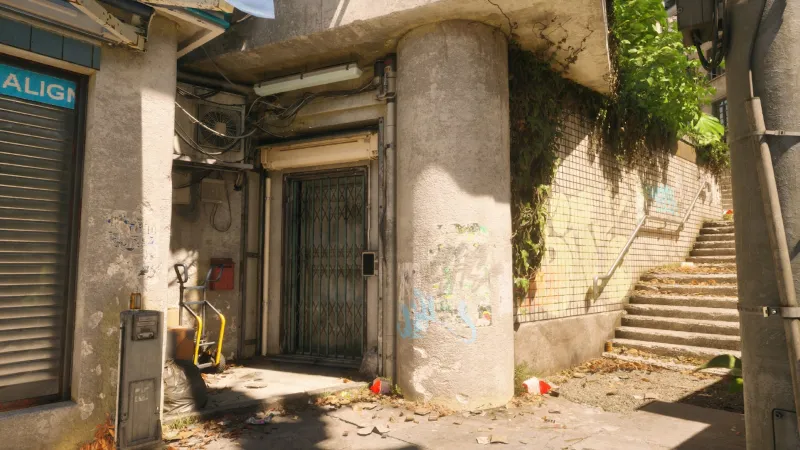
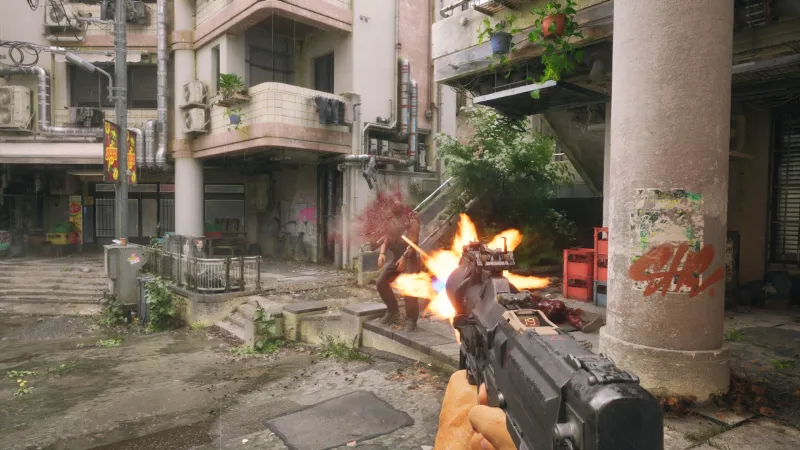
As we walk around Port Desire, it feels alive, and I know that’s a blase and cliché thing to say these days, but people have working habits, routes, and more. I see mechanics working on cars, sparks flying from their tools; I see a barista making coffee and serving it to patrons at tables; I see construction workers wearing VR headsets, controlling drones that repair a nearby storefront facade. Berg shows me that every street has an associated street sign, and that buildings have addresses, too; if you choose to turn on a special “immersive mode,” you’ll be required to use this information to get around. If you don’t opt in to that mode, however, a standard video game waypoint will help you get where you need to go. 

“You can never play the game wrong – that’s our core tenet,” Berg says. “It’s all up to you how you experience stuff.” 


Before heading to the informant’s location, we stop into a shop. Frick and Berg are delighted to show me that every item on the store’s shelves is hand-crafted, from the packaging to the logo to the on-item text and even the ingredients. We stock up on some healing items and bring them to the clerk to check out; if we walked out with these goods instead, we’d be committing theft, and the clerk (and maybe Peacekeepers) would likely be out to kill us. As we exit the store, Frick points out the anti-theft device near the shop’s doors. We later return to this store and steal the device to combine it with a grenade, creating a proximity grenade. They tell me there are all kinds of combo interactions like this to create new weapons, items, and more. 

As we make our way to the informant’s location, we head through an area overtaken by nature. Berg says nature is trying to take the city back and is more aggressive in this sunny-than-most-cyberpunk-games climate. Workers in the city can be spotted using chemicals to fight back against the greenery’s growth. 

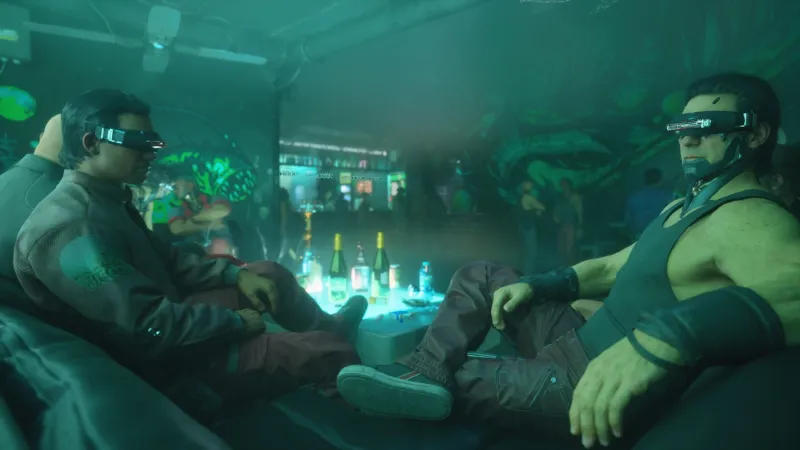
We head underground, and the bright sun of Port Desire disappears, surrounding us in shadows. It’s clear things are much shadier, literally and figuratively, down here, and the NPCs here match the vibe. We head into an apartment building at the behest of Tenna, the voice in our ear. Side note: I suspect Tenna’s VO is a placeholder; otherwise, Neon Giant should consider some changes because the performance sticks out like a sore thumb. 

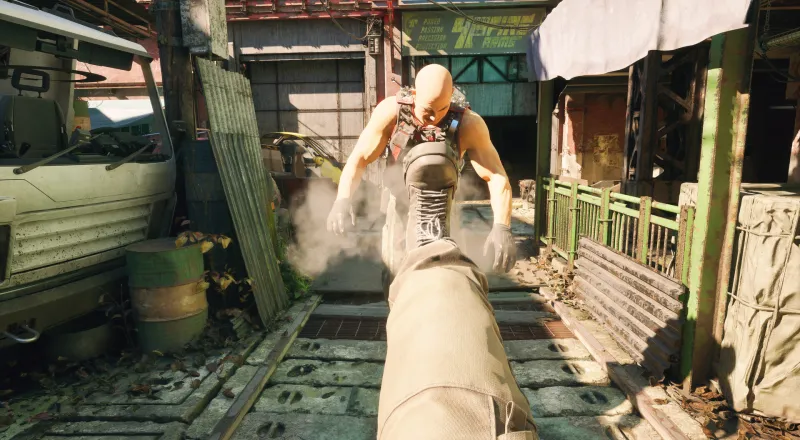
We could just barge in and kill everyone here. We could also climb the fence and sneak in, and Frick shows how you can stack nearby crates so that you can actually do so before joking that QA has stacked enough crates to climb three stories into an open window. “If it looks possible, it probably is,” Berg adds. The two explain that No Law is Neon Giant’s first immersive sim but that The Ascent had elements of the genre, too. It’s only natural for this team, he adds, with experience on games like Far Cry, Crysis, Chronicles of Riddick, and more in their employees’ tenures. 
Game Informer

Once inside the apartment building, the landlord Renn, inspired by organized crime in 1960s NYC and associated film noirs (with the attitude and accent making that clear), stops us from entering. We could kill him, but instead, we search a nearby room to find a document with a secret password that gets us in. 

Something interesting I learn here is that you only earn XP in No Law from completing objectives. You get XP for reaching the informant’s room, regardless of how you do it. “We always reward the ‘what,’ but never the ‘how,'” Berg says. “If I gave you XP for lockpicking [which we do to enter the room with the password], you’ll start lockpicking everywhere. The same with headshots – we don’t even give you XP for shooting enemies because you could sneak around them instead.” 

We eventually reach the informant’s room, but nobody’s there, so we search around like a detective. We search his computer, which doesn’t have a password (so we don’t need to hack it or search for one), and discover he’s en route to a secret meeting. However, his email details three possible meeting spots in conversation with whomever he’s linking up with, each with different levels of security. 

We head to the least secure location, presumably meaning fewer watchful eyes, which is an underground tunnel. Unfortunately, my preview ends before we actually reach the informant, and I use the rest of the preview time to learn more about the game. 

Berg tells me Neon Giant has doubled its employee count, up from 12 in 2021’s The Ascent to 24 today; the number blows my mind, considering what I just watched seems like a project made by 300 people. He also tells me the entire story is completely nonlinear, and you could theoretically complete it almost passively, though you will have to kill a few people by necessity because “it’s a revenge story, after all.” You will get different endings based on how you impact the world with your actions and the choices you make, and Berg and co. are excited to see where players land. 

Crucially, they say it’s impossible to unlock every skill and have every conversation in one playthrough. “We’re a small team and making content takes time and costs money, but we are okay with players not experiencing content,” Berg says. “We just want players to roll credits and say, ‘Damn, what a good game,’ but know that there’s more in the game left for them.” 

That said, Berg stresses the team is emphasizing the “first playthrough” experience and not necessarily asking players to replay the game and discover everything. “It’s not about replayability, though that’s there,” he tells me. “It’s about making that first playthrough feel significant and know it’s yours while knowing the city and the story are more than what you saw.” 

Everything I’ve seen about No Law prior to this preview told me it’s going to be a fine cyberpunk game I’ll check out; this preview has greatly increased my expectations and excitement. Neon Giant clearly loves this sci-fi genre, and they love immersive sims (and FPS games, too). I look forward to seeing the rest of it on full display next year. 

No Law is due out sometime in 2027 on PlayStation 5, Xbox Series X/S, and PC via Steam and the Epic Games Store. 

For more, check out our interview with Neon Giant about No Law from earlier this year. After that, read Game Informer’s review of The Ascent

Top 10 Roguelikes To Play Right Now

Game Informer

Whether they’re roguelikes, roguelites, or just rogue games, there’s no denying the popularity of the run-based genre that’s become ubiquitous in recent years. Whether you’re fighting your way out of hell, you’re trapped in a time loop, or you’re tasked to infinitely rebuild a deck of magical cards (this last one happens a lot), the category of games has absolutely earned its praises. It’s hard to beat the satisfaction of a good power crawl, the condensed structure, or the urge to play just one more run, even after the most devastating losses.

Still, that structure can take many forms, and an explosion of popularity can make it difficult to separate the trendsetters from the trend-chasers. What roguelike should you play today? Here are our 10 favorites, listed in alphabetical order. 

Game Informer

Absolum

PlayStation 5, Xbox Series X/S, Switch 2, PlayStation 4, Switch, PC

The beat ’em up genre has had a revival in recent years, and Absolum is one of the greatest examples of that renaissance, thanks to how it repurposes the classic combat style and slots it perfectly into a roguelike formula. It also does so with high-fantasy aesthetics, with characters seemingly plucked from the pages of a graphic novel, with all of them twisting familiar tropes just enough to feel and fight uniquely. Combat plays excellently as well. Elemental modifiers encourage players to switch up their playstyles each run, and the ability to parry enemies with your heavy attacks is a satisfying, dramatic inclusion we can’t get enough of. The world, characters, soundtrack, and animations are also absolutely beautiful, and it’s all even better with a friend by your side in co-op. | Our Review

Game Informer

Balatro

PlayStation 5, Xbox Series X/S, PlayStation 4, Xbox One, Switch, PC, Mac, iOS, Android

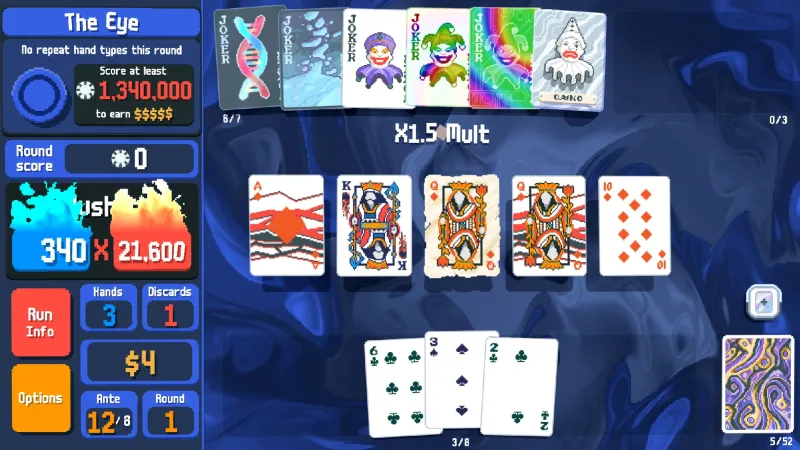
This poker-flavored card game is more than meets the eye. On the surface, especially in an early run, it might appear to be a simple poker simulator, complete with pairs, flushes, and straights, but it doesn’t take long to see just how quickly the gameplay devolves into card combo insanity. With 150 run-altering joker cards, tarot decks, planet cards, and more, what begins as a game to play the best hand becomes a strategic sandbox, enabling all sorts of synergies and loadouts to claw your way to victory. It’s also very approachable, as its turn-based nature and use of the standard 52-card deck allow for a wider audience to play at their own pace and start with a base understanding of the mechanics. Its mobile port is especially great for this reason, though there’s one downside: having Balatro in your pocket makes it tough to put down. | Our Review

Game Informer

Blue Prince

PlayStation 5, Xbox Series X/S, Switch 2, PC, Mac

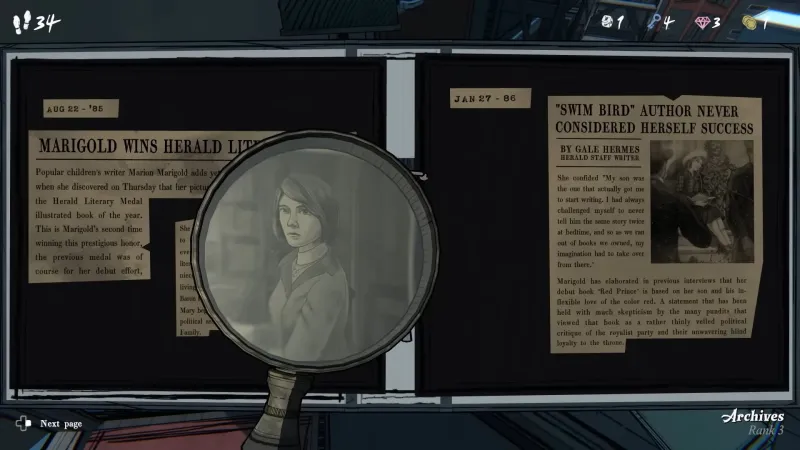
Blue Prince is undeniably a roguelike. You start each day with a fresh start, exploring your late great uncle’s manor of shifting rooms, picking the right floorplan to hopefully encounter the fated Room 46. That said, much of the game’s appeal comes from factors that are unusual for the genre. While the mansion’s layout doesn’t persist, your memory does, and there are many clues you can begin to piece together as you explore and keep your eyes peeled. The truth is that Room 46 is just the tip of the iceberg, as Blue Prince has a much deeper, compelling mystery to unravel. And both elements are exciting and unique in their own ways while still being complementary. Unveiling mysteries makes it easier for you to progress in future runs, and progressing through the mansion unlocks more pieces to the game’s overall puzzle. It’s a marvel of game design, and while I recommend going in blind, it’s packed with so many mysteries and puzzles that you’re bound to discover something new regardless. | Our Review

Game Informer

Hades II

PlayStation 5, Xbox Series X/S, Switch 2, Switch, PC

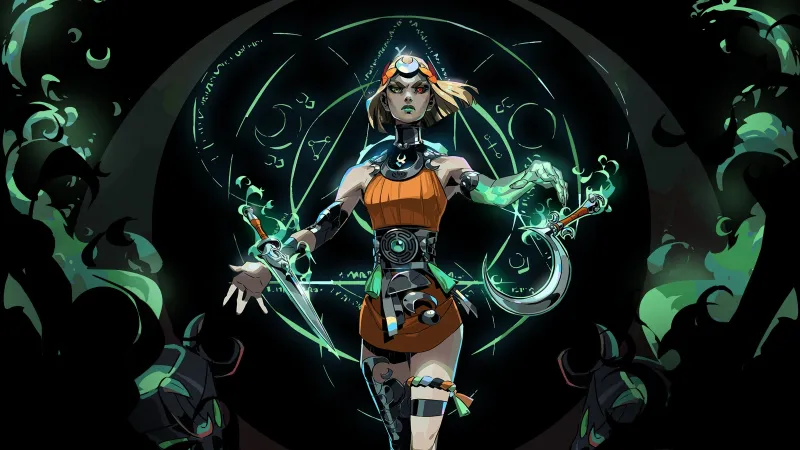
Given that it’s the only roguelike to score a 10 from Game Informer, it’s perhaps a no-brainer that Hades II would appear on this list. It’s an improvement on the original game in just about every way, with new weapons, multiple routes, and an intoxicating number of variables that keep each run feeling distinct, but exciting. With so many avenues to upgrade Melinoë and her allies, Hades II is consistently rewarding, either due to the satisfaction of victory or the thrill of unlocking yet another ability, weapon, arcana card, incantation, or something else. Its story also expands the world of the first game in compelling and interesting ways, and developer Supergiant even amended (and improved) the ending after some fans were dissatisfied with the outcome. It’s not just a fantastic roguelike, but one of our favorite games of all time. | Our Review

Game Informer

Monster Train 2

PlayStation 5, Xbox Series X/S, Switch, PC

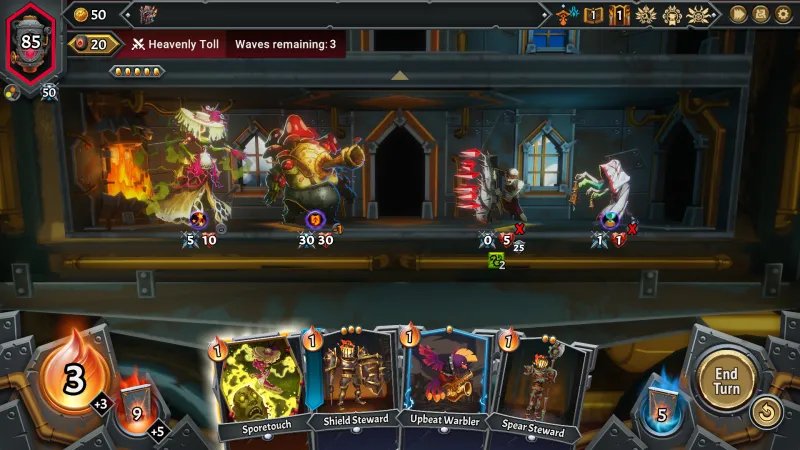
Fundamentally, Monster Train 2 doesn’t change much about the prior game’s formula. As the titular locomotive journeys through a hostile land, you still place friendly units in your train cars to keep enemies from advancing. What it does improve, however, is the sheer number of variables. Monster Train 2 has five completely new factions to unlock, new card types, and new enemies. Once you make it through the base unlocks, there are dozens of ways to start a run alone, and that’s before you even make decisions about upgrades, paths to take, and actions to perform in combat. Combine that with an excellent challenge mode, which adds custom runs with wacky rulesets, and Monster Train 2 is not only a blast, but it feels endlessly replayable. | Our Review

Game Informer

Returnal

PlayStation 5

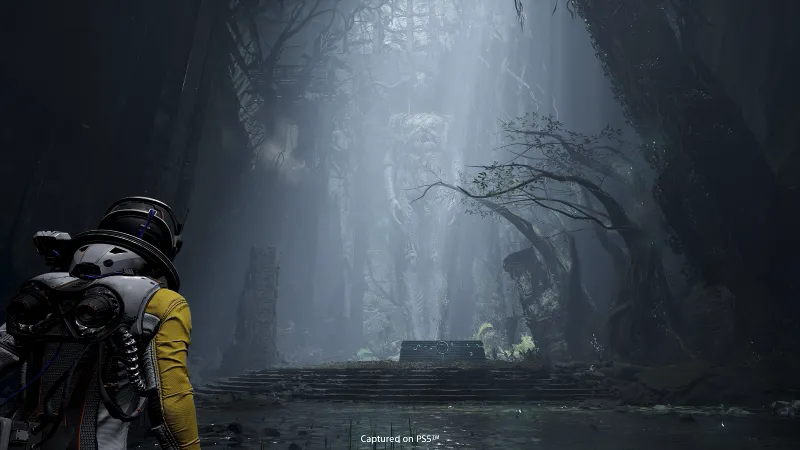
This PlayStation 5 exclusive is an atmospheric nightmare ride though sci-fi horror, and it’s enchanting and enthralling every step of the way. Returnal brilliantly veils much of the permanent progress that you’re making from run to run, ensuring that your tension levels stay taut and realized as you dive into majestic bullet-hell boss fights.

Prevail, and mysteries unravel as your weapons gain incredibly powerful bonuses and perks. If you have the means to play it, Returnal is a roguelike masterstroke that should be experienced. | Our Review

Game Informer

Saros

PlayStation 5

Housemarque’s follow-up to Returnal had huge shoes to fill, so it does something smart – it fundamentally alters combat by adding a shield, and tells an original story in an unrelated world. The resulting game is novel, but still comfortable to Returnal fans. Rahul Kohli gives a memorable performance as Arjun, the tortured soldier on an alien planet, and it’s generally a stunning game to look at. It’s also one of the few to make full use of the DualSense controller, and serves as a touchpoint for just how powerful the PlayStation 5 is. | Our Review

Game Informer

Slay the Spire

PlayStation 4, Xbox One, Switch, PC, iOS, Android

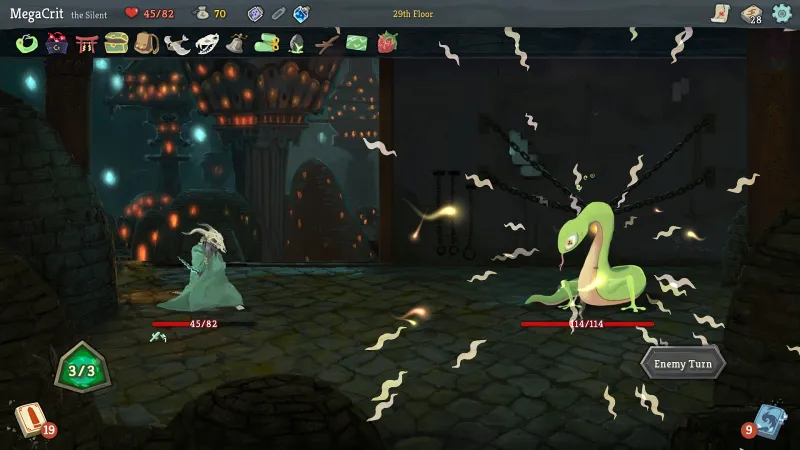
Within the roguelike genre, the deckbuilder has become an incredibly popular subgenre, bringing a deluge of titles to Steam (and other platforms!) with a dizzying frequency. Much of this can be attributed to Slay the Spire, a game that begins utterly simple – but delivers massive depth over time.

As you unlock new characters, new cards, and new possibilities, tinkering with each deck archetype and wild artifact combination becomes an obsession; a one-more-run compulsion that’s a ton of fun and difficult to put down. Do you want to try to cut your entire deck down to a single rotating hand? Do you want to bloat a titanic pile that gets bonuses from a large stack? Poison? Defense? Magical lightning ball blasts? Choices are yours and the journey is a blast. | Our Review

And while it’s still a work in progress, we heavily recommend Slay the Spire 2 as well. We prefer to wait for games to achieve a proper 1.0 launch before including them in our Best Of lists, but Slay the Spire 2 adds so many thoughtful mechanics and twists on the already fantastic formula that we’d be remiss not to endorse it.

Game Informer

Spelunky 2

PlayStation 4, Switch, PC

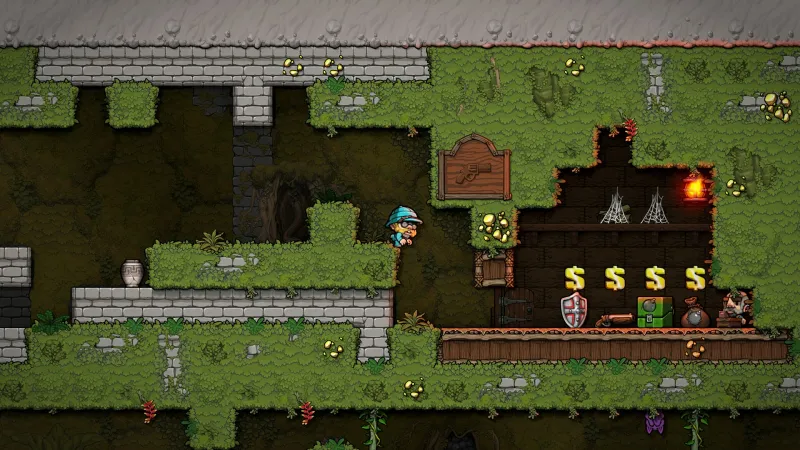
It’s like Indiana Jones, except you die a lot. Distinct biomes and secret treasures keep the adventure alive, death after death, run after run. Even if you get annihilated by some mistimed inputs, you’re back in the saddle within seconds and back on the next attempt.

The loop is engaging and you’re always looking to see what’s going to be discovered next in your dive down to danger and riches. Oh, and this one has mounts. | Our Review

Game Informer

Vampire Survivors

PlayStation 5, Xbox Series X/S, Quest 3, Quest 2, PlayStation 4, Xbox One, Switch, PC, iOS, Android

It is equal parts admirable, exciting, and terrifying how effectively developer poncle condensed the roguelike formula in Vampire Survivors. No run can be more than 10 minutes, so the power creep has to fit entirely within that time frame, and the feeling of having your power grow at an exponential rate is exhilarating. Players inhabit one of several gothic fantasy heroes (with some not-so-subtle inspiration from the Castlevania series) and use items like axes, whips, garlic, and magic crosses to automatically attack the surrounding, pixelated enemies.

The loop is short and simple, but there are tons of characters, maps, and upgrades to unlock. Plus, the game is very cheap – $4.99 at the time of writing – with many similarly priced DLC packs if you want to augment your game with even more content, including crossovers with Contra, Castlevania, and even Balatro. The height of a run borders on overstimulating, but that intensity is not only thrilling: it’s the secret sauce that makes Vampire Survivors so good. | Our Review

To keep this list updated and modern, we’ve replaced some classics with some more recent favorites. These are the games cut from the list, though they’ve still got a special place in our hearts: