Dreamscaper Developer Reveals New Sci-Fi Action Platformer, Elta: Defy All Gods

Game Informer

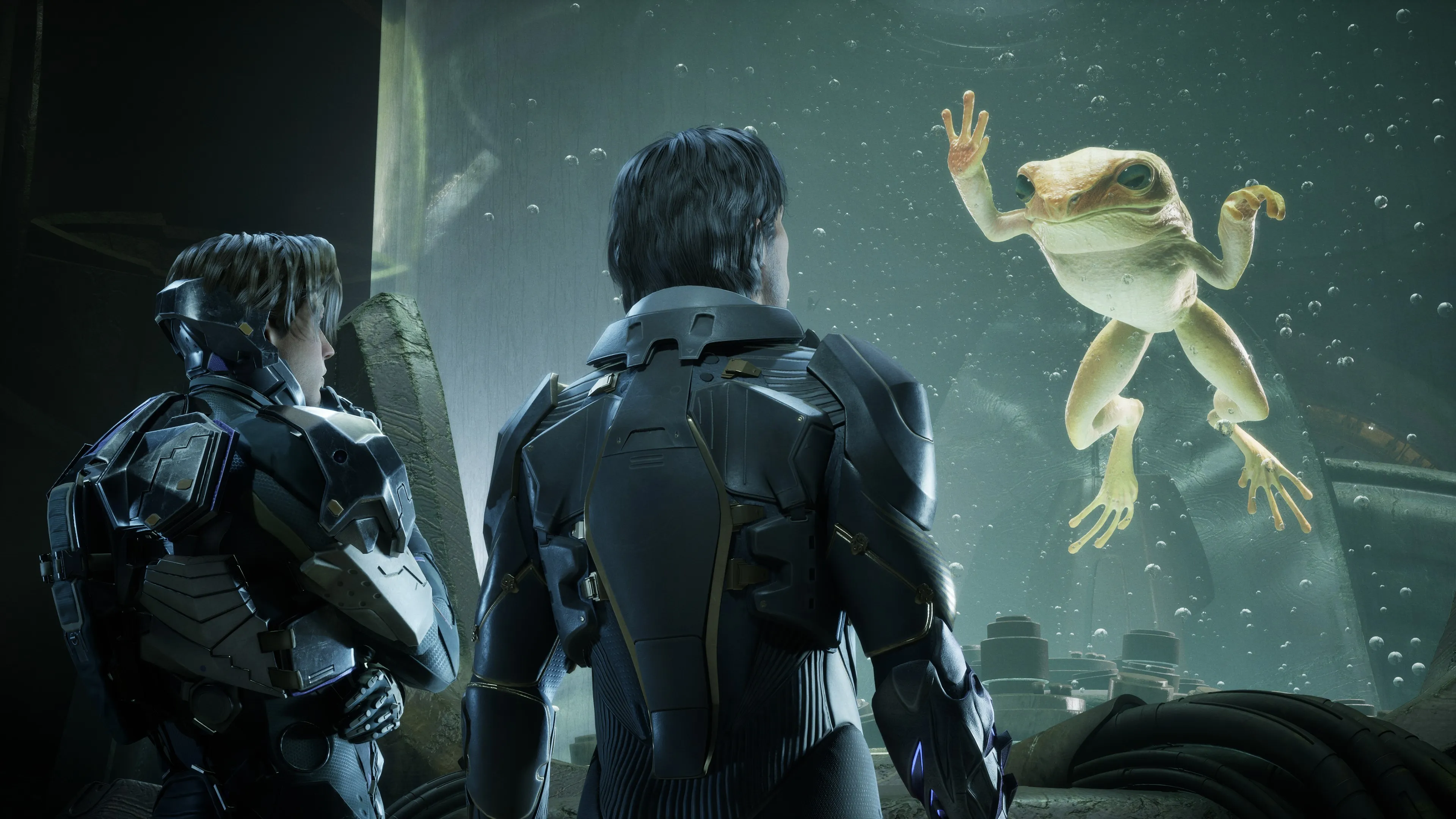
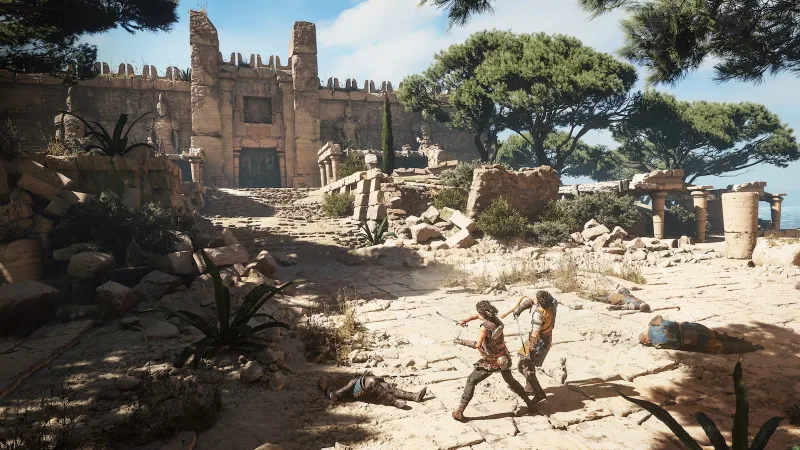
Afterburner Studios, developer of 2021’s Dreamscaper, and publisher Focus Entertainment revealed a new sci-fi action-platformer called Elta: Defy All Gods during Gamescom Opening Night Live. The game arrives next year and stars a warrior monk and a dragon partnering to save the world.

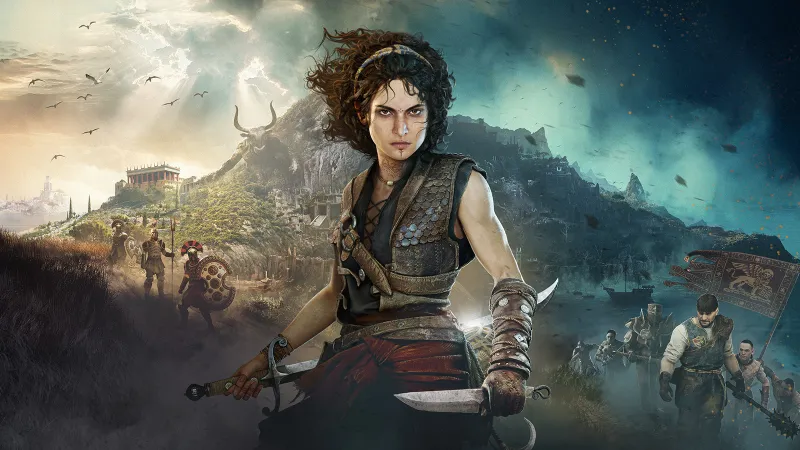
The reveal trailer kicks off by showcasing protagonist Victis, a warrior monk clad in high-tech armor, who seeks to find their lost god, Elta, to save civilization. Elta is a small dragon who has lost most of its power, and it’s up to Victis to help restore that strength. The reveal trailer begins in cinematic fashion, with the pair exploring a snowy cave and battling similarly frigid enemies. Despite Victis’ bulky appearance, the character appears surprisingly nimble, gracefully pummeling threats using martial arts while traversing precarious perches by wall-running, backflipping, and other parkour maneuvers.

The trailer’s second half features a montage of gameplay clips that appear true to this cinematic reveal, with the character using a wrist-mounted grapple line to cross gaps and ride rails. According to Afterburner Studios, Elta: Defy All Gods combat blends martial-arts-inspired melee with magic attacks. Elta, who sits perched on Victis’ shoulder, can shoot fireballs, for example. Taking a page from the Metroidvania playbook, progression involves finding new combat and traversal abilities to access new areas and hidden secrets. The game also sports a unique art direction that makes it resemble a living oil painting. 

You can try Elta: Defy Gods early thanks to a public demo arriving on October 1. The full game launches in early 2027 for PlayStation 5, Xbox Series X/S, and PC. 

The Talos Principle III’s Writers On Generative AI: ‘It’s Just A Plagiarism Machine That Makes People Lose Their Jobs’

Game Informer

In the upcoming issue of Game Informer magazine (subscribe here), we have a feature about the finale of the Talos Principle trilogy, The Talos Principle III. We got feedback from creative director Davor Hunski about what to expect in the final entry in the series, but we also spoke with writers and narrative designers Jonas Kyratzes and Verena Kyratzes, who had many thoughts on AI, both the fictional general intelligence kind and the modern generative AI kind.

Since the original Talos Principle in 2014, the series has thoughtfully considered the nature of what it means to have consciousness, to be a person, and how a genuine, sentient artificial intelligence might exist in the long term. Considering the two have been thinking about AI longer than most, I asked them for their thoughts. You can check out the interview excerpt below.

Game Informer

Do you feel like the rest of the world is almost late to the party in terms of thinking about AI and what it means to humanity? This is something you all have been percolating on for years now.

Jonas Kyratzes: It’s so complicated because the current AI conversation is kind of a bit strange in that some of the time we’re talking about something that we call AI, but it’s not artificial general intelligence. It’s LLMs or machine learning in various forms, which aren’t necessarily the same as artificial intelligence in the sense of conscious being. And Talos Principle…well, it’s not really about AI, in the sense that we use artificial intelligence as a way to talk about materialism. So there is, obviously, a relevance to AI in the sense that if we manage to create an actually thinking being out of technology, that obviously has vast philosophical implications. And those are the things that the game – the first game, and to some degree the later ones – are particularly concerned with, right? The material nature of consciousness. That’s what’s the most relevant to the game specifically.

The other applications that we are discussing nowadays in our world – which don’t actually have to do with intelligence – are not so relevant directly to the games, except then again when it comes to the question of technology in a bigger sense, where the second game is very concerned with how do we apply technology correctly and what does that mean for us as human beings? And how can we use it to liberate ourselves or destroy ourselves according to various perspectives? So, there is a relevance there in general, of course, to you know any kind of labor-saving technology or technology that expands our horizons, but not specifically to what we are calling AI now in our world. Kind of a complicated answer.

It’s a complicated topic. There have been AI –  LLMs genAI – CEOs who claim we’ve hit the singularity, which to me, that seems absurd. But I’m curious what you two think of a statement like that in 2026.

Jonas: I’m going to talk for myself. I think it’s largely ludicrous. I think the technology itself is very impressive, and I think machine learning has tremendous applications, most of which we’re currently not seeing or getting, I think, because in a profit-oriented system, a lot of the things that we needed to do, we’re just not going to use it for, because we’re going to use it for stupid things instead, for people to try and make vast amounts of money before their companies collapse. So, it’s complicated. The technology itself is clearly very, very impressive and has a number of very interesting applications. But at the same time, these excessive quasi-religious claims that are made for it are… they’re just not rooted in any kind of reality. And I think a lot of them are also mainly just meant to juice up the stock market.

Verena Kyratzes: I’m with Jonas in that the LLMs that we’re currently dealing with? They’re basically incredibly intelligent versions of the autocorrect that I have on my phone, and calling them actual AI, general AI, is just ludicrous.

The mission statement of Talos II was to talk about the use of technology, the ethical use of technology, and a bit breaking down this fear of technology that a lot of people have, and in that context, this current AI discussion – and there’s going to be a giant, “but,” at the end of what I’m saying, by the way – but this current AI discussion is very bothersome to me because I like to go into these Wikipedia deep dives and read like in the 1800s, the first passenger trains happened, and everybody was like, “Oh no, my God! It’s going to turn our brains into paste. And then the advent of cinema, and everybody’s like, “No, it’s going to give people psychosis!” And now we’re here, and suddenly everybody is treating AI the same, and I’m with them. And I don’t want to be with those people because I always want to approach every new technology with an open mind, and say, “You know… maybe it is good. Maybe we can use it.” But I think in the current system that we have, it’s just a plagiarism machine that makes people lose their jobs. But I want to have hope that it’s a good thing. It’s very troublesome to me.

I appreciate that answer. Plagiarism machine that destroys jobs is like a great summary. I assume over the course of development that Croteam probably doesn’t really engage with genAI in terms of creativity. Do you feel it hinders creativity?

Verena: Yes.

Jonas: I think when it is used, it hinders it because… okay, I have more complicated feelings about this because, like I said, I have tried it, I’ve used it, I’ve experimented with it to have an idea of what I’m talking about, and I do think that it has applications that are perfectly legitimate, and I will reach for it, for example, when I’m trying to find a rhyme or a particular word that I can’t remember. It works great as a thesaurus, and it has certain applications that are perfectly legitimate. But you have to really know what you’re doing already to use it safely.

It’s a bit like an actual thesaurus in that people who are not very good writers will reach for a thesaurus and then just try to replace every word with a word that has a similar meaning and create this monstrosity of a text. Whereas a thesaurus, of course, is actually for remembering words that you already knew the meaning of, and you’re just like, “What’s that synonym? God damn it!” And then you look it up in a thesaurus, and you find that’s the use of that thing.

In the same way, there are applications, but they take a skilled user, especially when it comes to something generative to even use. Most applications are very dangerous because, of course, as a writer, you need to be writing. And also as a writer, you need to be capable of evaluating the quality of what you’re producing. What we of course see with LLMs is a lot of people who know nothing about writing just being like, “No, no, I can replace all my writers with this.” And you can’t because it sucks.

That said, I’m not against any technology in and of itself. So, to me, a lot of the questions are not questions of the technology. For example, when a lot of jobs are being lost because of AI, I don’t think that that’s an AI issue. I think that’s a labor issue. That is, why is the power of labor relative to capital so weak? So low that we can’t defend ourselves against the owners just eliminating everyone? Like, what’s happened to, you know, militant labor, for example. Where is that?

A lot of the time, the question is not the technology in and of itself, but the social and political context in which the technology is applied. That’s a lot of what Talos II was about. Can we use technology safely? Is the technology inherently, somehow harmful or bad? Or is it the context of society? And can we build a better society where these things are used in a meaningful way? And I would say the same applies to machine learning. If we apply it for the benefit of humankind, then it will benefit us. And if we apply it so that five people can make a trillion dollars, then it will not end well. But we do have the choice of applying it one way or the other.

Game Informer

Verena, you had a very succinct answer when I asked if it hinders creativity.

Verena: It absolutely hinders creativity. What I have encountered in the wild, not at Croteam mind you, but I have encountered this in the wild that people were like, “Hey, I’ve written a rough draft of the text with AI, and then you can just fill in the gaps.” And I’m like, “No, that’s not helpful. Now I have those s*** sentences stuck in my head, and I can’t get them out.” So, it’s very dangerous because even if you just do placeholder text, the artifacts kind of… I mean, they remain. You can’t get rid of all of it, for me as a writer, at least. It’s incredibly hard when I see something. But that applies just as well… like we worked on a game ages ago where just the level designers were filling out temp text, and that’s just the same problem. It’s not specific to AI. It’s just very hard to get rid of those artifacts, so to speak.

And to recenter us, how are these thoughts that are swimming around your head feeding into Talos III? Is Talos III examining this modern version of AI? Or were you all already planning this story before it became such a hot topic?

Jonas: No, Talos III really looks beyond where Talos II ended. To a world of freedom. Freedom from necessity, as it says somewhere. A world where people have built a better world that is no longer driven by the same forces as our world. It does the opposite. It tries to imagine a world that’s much better than ours, in which people had much better lives than ours, and to give us the idea again that it is possible. That the world we live in now is not the only version of things, and it’s a world of abundance and equality and freedom for people.

Artificial intelligence is tied to it in the sense that obviously the characters from the first game were artificially intelligent beings that then continued into the second game, and then into the third, and have now expanded beyond Earth to the stars. But […] the second game has as its premise that the characters consider themselves human; they are robots, but they just consider themselves fully fledged human beings. They are the descendants of humanity. So, I guess you can say that that is an optimistic view of the possibilities of artificial intelligence because it’s not one where they become some sort of giant machine god that rules everything. They just become people, and you even see a number of characters in Talos III that just choose to remain essentially a humanoid shape, live relatively ordinary lives, even though they’re immortal and they live for billions of years. They don’t choose to become alien and strange. They choose to enjoy many of the things that we human beings enjoy because they are human beings, and those things are good things that should be enjoyed.

So, it’s about these artificial intelligences that, for example, in the DLC for Talos II, which is pretty important part of the story, Road to Elysium, you have them developing taste buds so they can taste stuff and just learning pleasure and happiness and finding out how to have children and just basically trying to live. And there’s a recurring idea, which is that they don’t want to be like post-human, but they want to be more human. They want to just have that which makes us human, more of it, enjoy life more than we could. So, that’s kind of the direction that we are heading in with that story. Now, obviously, that is a kind of commentary on technology and the possibilities of technology, but it’s not a commentary specifically on, “Oh, they used machine learning to do this or that.”

It’s almost coincidental to a certain degree.

Jonas: Right. It’s thematically relevant, but it’s not specifically about that.

For more on The Talos Principle III, check out the next issue of Game Informer magazine. You can subscribe right here.

Famed 1995 JRPG Terranigma Is Coming To Modern Consoles, Including Its First Official North American Release, Next Year

Game Informer

For North American RPG enthusiasts, Terranigma has been a white whale when it comes to getting an official release in the region. The 1995 JRPG was released only on the Super Nintendo in Japan and PAL territories, but it is finally making its way to North American shores next year.

Terranigma is being ported and enhanced for modern consoles in early 2027. The game, originally developed by Quintet and published by Enix (in Japan) and Nintendo (PAL), is an action RPG and the third entry in the developer’s unofficial “Soul Blazer trilogy”, following 1992’s Soul Blazer and 1993’s Illusion of Gaia. The story centers on a boy named Ark, and follows his generations-spanning quest to resurrect life on Earth after the planet’s decimation in an apocalyptic battle between divine forces.

Terranigma is often acclaimed as a masterpiece for its storytelling, soundtrack, and fast-paced gameplay. Developer Clear River Games helms this modern release and states in a press release that the re-release features “a host of upgrades, tweaks and bonus features, designed to make the best, better still and provide an ideal point of entry for modern gamers.” The studio does not specify what these upgrades are, but has enlisted the help of Terranigma’s original artist, Kamui Fujiwara, to create new in-game designs and key art, and to offer feedback on the re-release’s production.

“30 years ago, Terranigma was released on the SNES,” Fujiwara writes in a press release. “Now, at long last it will be available once again on console and PC, digital and physical. It may not be exactly the same as it was back then, but I’m sincerely delighted about it making its return to the current gaming environment. During the original’s development, I was involved with designing not only the characters, but the world too, and even some of the game settings as well. I hope the themes of god and humanity, creation and destruction, and the atmosphere of the world itself resonate with today’s players too. Not as a relic of the past, but as a living, breathing work. This moment has been long awaited and now it is finally here. I hope you will enjoy it with all your heart.”

Terranigma is coming to PlayStation 5, Xbox Series X/S, Switch 2, PlayStation 4, Xbox One, Switch, and PC in early 2027. 

We Are Celebrating 35 Years In Print

Game Informer

A lot can change in 35 years. In 1991, the Cold War was ending, Nirvana was rolling out Nevermind, the first website was launched, and Nintendo was introducing the SNES across North America. Around the same time, a small gaming magazine called Game Informer rolled out its debut issue, with a picture of Sonic the Hedgehog gracing its cover.

While the world has shifted a lot over those decades, I hope our magazine has remained a trusted and entertaining place to stay connected and engaged with your gaming. Game Informer has been along for the ride of gaming’s rise to prominence, celebrating the hobby of play and the industry of making interactive entertainment. 

I’d like to believe Game Informer played some small role in shaping that same hobby over the decades. Throughout its many years of publication and across dozens of unique editorial voices, we’ve continually striven to highlight some of the most important games that were defining the field.

Often, Game Informer covers have been a barometer for quality and success for many of the titles that would define a year, or even a decade. From Super Mario 64 and Final Fantasy VII to Grand Theft Auto: San Andreas and BioShock, and on through The Witcher 3: The Wild Hunt, Destiny, Elden Ring, and Hades II – in each of the 380 issues across our history, we’ve sought to tell the stories behind gaming’s most influential projects, and help our readers enjoy the games they’re playing more because they understand them better.

That’s why on this anniversary we’re putting a big focus on our covers and connected stories. Print subscribers can look forward to an amazing poster packed in with their next issue of the magazine, showcasing the full breadth of covers we’ve featured over the last 380 issues. 

Within the issue, you’ll also find a dedicated look at some of those covers, with commentary from current and former staffers who worked on the stories, alongside industry partners and developers who worked with us to bring those stories and cover images to your mailboxes, including the likes of Tony Hawk, Ken Levine, Sean Murray, and Yoshinori Kitase – among many others.

Beyond this issue, we’re also celebrating Game Informer’s 35 years with several major initiatives, including the debut of international print subscriptions, the impending launch of a dedicated app as an additional way to explore our content, and plans for a robust presence at Gamescom later this month. You can also look forward to special guests on The Game Informer Show in September, featuring faces and voices from our history. 

And while I can’t yet pull the curtain back on the specific titles we’ll be showcasing, that 35th anniversary celebration will continue throughout the year; it’s enough to say that the rest of 2026 is looking like it will feature cover stories that can proudly sit alongside the last 380 issues, with exclusive deep-dives into games that you won’t want to miss. 

Thanks to all of you for reading, watching, listening, and connecting with Game Informer over the years. Your support means the world to us. We’re thrilled to be pushing ahead into the next 35 years!

Play well. Be well. 

Matt Miller
Editor-in-Chief

Game Informer International Print Subscriptions Are Now Available In Canada, United Kingdom, Across Europe, And More!

Game Informer

Since we returned after a short… let’s call it a sabbatical in 2025, the most frequent question we’ve received from readers is, “Can I get the magazine outside of the United States?” Today, we are happy to announce that the answer is finally yes!

Game Informer print subscriptions are now available outside of the United States! The much-requested expansion is finally here. We’ve wanted this for a long time, and we can’t wait to get the magazine in the hands of more readers across the globe. Here is the full list of countries that can now order print subscriptions:

  • Australia
  • Austria
  • Belgium
  • Bulgaria
  • Canada
  • Croatia
  • Cyprus
  • Czechia
  • Denmark
  • Estonia
  • Finland
  • France
  • Germany
  • Greece
  • Hong Kong
  • Hungary
  • Iceland
  • Ireland
  • Italy
  • Japan
  • Latvia
  • Liechtenstein
  • Lithuania
  • Luxembourg
  • Malta
  • Netherlands
  • New Zealand
  • Norway
  • Poland
  • Portugal
  • Romania
  • Saudi Arabia
  • Slovakia
  • Slovenia
  • South Korea
  • Spain
  • Sweden
  • Switzerland
  • United Arab Emirates
  • United Kingdom
  • United States

We highly suggest you subscribe right away, because the next issue is our 35th anniversary issue. We have a feature highlighting many of our favorite covers from the years, with notes from the people who created the games, artists who drew the covers, and editors past and present who worked on the various issues. Each magazine will also include an exclusive 35th Anniversary Game Informer poster! There will also be a very cool game on the cover that we’re excited to reveal soon.

Subscribe now so you don’t miss out, wherever you are!

Subscribe now

Blood Dungeon Review – Skilled Ugly Chaos

Game Informer

Reviewed on:
PC

Platform:
PlayStation 5, Xbox Series X/S, Switch, PC

Publisher:
Messhof

Developer:
Messhof

Release:

Rating:
Mature

Talking about Blood Dungeon is impossible without making at least some reference to Vampire Survivors. Blood Dungeon is clearly born from Vampire Survivors’ undeniable loop and sense of progression, but developer Messhof addresses arguably the primary shortcoming of the 2022 Bullet Heaven game (I think that’s what we’ve agreed to call these, right?): movement. Moving in Blood Dungeon is fun and it sets the game apart within the genre and demands enjoyable skill from the player, but some balance annoyances keep the game from soaring.

Blood Dungeon is a functional platformer before you are even awarded the first upgrade to your starting weapon. The nine characters play similarly (though there are two that feel fairly different), and they leap with ease, can climb any wall or ceiling, clamber along fences, and even swim. If there weren’t sometimes hundreds of enemies on screen, I can confidently say that Blood Dungeon would probably work in the platformer genre.

Despite the quality platforming, however, Blood Dungeon is more about powering up and staying alive. Like Vampire Survivors, you defeat enemies, collect the titular blood, level up your weapons, acquire new ones, and choose between a series of passive upgrades that appear randomly. If you’ve played a game in this genre, you know what to expect, and it does the style well. Some upgrades feel useless, but many more are easy selections when they appear in the roulette. A few, however, feel required. I don’t know that I ever beat a final boss without the basketball (which sends a flurry of orange balls bouncing around the environment) or the upgrade that doubles everything. I hit a point where I was rerolling frequently to get those two upgrades, and when I couldn’t, it often led to disappointing failure. I would have preferred the weapons to feel similarly powerful, even if they all played differently, which I recognize is a difficult balancing act.

Blood Dungeon is also surprisingly challenging, which has its pros and cons. The genre is successful at rewarding players who make smart decisions more than their ability to dodge enemies. The power fantasy is staggering at the end of a great run in a Bullet Heaven game, but I never quite felt all-powerful here, even when I successfully defeated the three bosses of any given level (which is how you beat a level). That’s the con, but the pro is that Blood Dungeon is a much more active and intense game, and when your platforming skills are what save you more than randomly getting the basketball, that is rewarding.


Bones awarded at the end of each run can be used for permanent upgrades, which is great; I eagerly invested in the elements of my characters I wanted to improve, but I hit a wall earlier than I expected. I ran out of upgrades to buy, and the requirements to access the few unlockable upgrades were unclear. This led me to amass a large bank of unspent bones while I hoped I’d triggered something to unlock the other purchasable upgrades, which felt random rather than rewarding.

The final element of Blood Dungeon that sets it apart from comparable games is its art style, which I don’t love. The characters are purposefully ugly, and it all feels intentionally gross. The fart cloud, which casts a very useful periodic cloud of poison, for example, is an upgrade I would sometimes avoid just because I wasn’t eager to hear my character fart every few seconds. But all that said, it is undeniably unique and perfectly fits the game’s overall mood and tone. The style just isn’t going to work for everyone, and I happen to technically be an everyone.

Blood Dungeon is a refreshing take on the genre Vampire Survivors popularized only four years ago, and it effectively establishes its own identity both with its art style and platformer-focused mentality. It is fun to play, whereas many of these games are ultimately fun to experience passively – a build to the point where you can put the controller down and watch chaos blaze across the screen. You can’t ever put the controller down in Blood Dungeon, and that’s why it’s so easy to spend your bones (if you haven’t already purchased everything) and jump right back in for another run.

Score:
8

About Game Informer’s review system

The Witcher IV Launches In 2028, CD Projekt Red Joint-CEO Confirms

Game Informer

The Witcher 4 is officially launching in 2028. The news comes via a video posted to the official Witcher social media accounts, wherein  CD Projekt Red joint-CEO Michał Nowakowski gives an update on the gaming series ahead of Gamescom. The Witcher IV will not be present during Opening Night Live, nor will the RPG be playable on the show floor, but understanding fans’ hunger for an update on the highly-anticipated sequel, Nowakowski confirmed the launch window.

“While we’re not showing the Witcher 4 at the event, and we’re not ready to share an exact date, I can tell you this: The Witcher 4 is targeting a 2028 release window,” Nowakowski says. “I know it’s a bit of a wait, and you’d love to play it sooner, but let the team cook. It will be worth the wait.”

The reveal in the video is preceded by CD Projekt Red’s Gamescom plans, which center around showing off 2027’s The Witcher 3: Wild Hunt – Songs of the Past, new DLC for a game that initially launched nearly a decade ago. It’s confirmed by Geoff Keighley himself that it will be shown during Opening Night Live, and Nowakowski says it will also be showcased at CD Projekt Red’s Gamescom booth.

The Witcher IV was first shown off at The Game Awards 2024. It will star Ciri, Geralt’s daughter, after she’s grown into a seasoned Witcher in her own right. The upcoming DLC, Songs of the Past, will likely link the mainline entries together.

For more of The Witcher, check out our review for Wild Hunt here. For more news on games similar to The Witcher, you can check out the latest update from the developers of The Blood of Dawnwalker, a game being made by many former Witcher developers. For more CD Projekt Red, check out the trailer for season 2 of Cyberpunk: Edgerunners.

How To Watch Gamescom Opening Night Live 2026

Game Informer

Gamescom kicks off this week at the Koelnmesse convention center in Cologne, Germany, with its annual stage show, Opening Night Live. Taking place Tuesday, August 25, and hosted by Geoff Keighley, the event is the second of the three annual Keighley showcases (along with Summer Game Fest and The Game Awards) that will feature two hours of video game trailers. Expect to watch world premieres of new titles and updates for previously announced games. Here’s where and when to catch the event.

Opening Night Live kicks off at 8:00 p.m. CEST. For viewers watching in the U.S., that’s a start time of 11:00 a.m. PT/1:00 p.m. CT/2:00 p.m. ET. A 30-minute pre-show will air before the main show. You can catch the event streaming live on YouTube and Twitch

While the majority of the show’s line-up of games is a mystery, Geoff Keighley has confirmed that these eight titles will make an appearance: 

The Witcher 3: Songs of the Past
Final Fantasy VII Revelation
Gears of War: E-Day
Ananta
Tides of Annihilation 
Metro 2039
Game of Thrones: War for Westeros
Warlock: Dungeons & Dragons

What do you hope to see at Opening Night Live? Let us know in the comments!

A Day One Console Patch Will Make The Blood Of Dawnwalker Run At 60 FPS

Game Informer

Rebel Wolves, developers of The Blood of Dawnwalker, put out a trailer last week showing off console gameplay of their upcoming action role-playing adventure, but the new footage ended up backfiring. The video revealed that PS5 and Xbox Series X versions of the game would not be able to run at 60 frames per second, instead targeting 40, which frustrated many, as 60 frames is considered the standard for action games like this. Today, developer Rebel Wolves issued a new announcement: The Blood of Dawnwalker will run at 60 fps after all, thanks to a day one patch coming to consoles.

“Performance Mode was already in the works, but it was still being tested,” a post on the official Dawnwalker social media pages reads. “We simply weren’t ready to promise it yet. We heard your feedback. It was clear how much this mattered to many of you, so we focused on finishing the next round of tests. Those results gave us the confidence we needed to confirm Performance Mode for Day 1.”

The developers go on to state that the patch will now allow the PS5 and Xbox Series X versions of the game to target 60 fps in Performance Mode, 40 fps in Balanced Mode, and 30 FPS in Quality Mode. The PS5 Pro version of the game will include “overall visual enhancements,” though Rebel Wolves doesn’t elaborate exactly on what that means. Finally, the less-powerful Xbox Series S will be stuck at 30 FPS.

Personally, I hope Rebel Wolves succeeds on this day one patch, though I do find it surprising that it expects to turn this around by September 3, the game’s release date – it seems like a tall ask in a short window. Still, I (and most everyone else, I assume) would prefer to play The Blood of Dawnwalker at 60 FPS, so I’m looking forward to seeing the studio pull it off.

Rebel Wolves was founded by developers who formerly worked at CD Projekt Red on beloved games like The Witcher and Cyberpunk 2077, so the hype around its upcoming project is substantial, even alongside the fall’s other major releases. For more on The Blood of Dawnwalker, subscribers can check out our exclusive cover story from a few issues ago, and all readers can check out our suite of follow-up coverage.

The Duskbloods Preview | The Game Informer Show

Game Informer

It’s a new week on The Game Informer Show, and we’ve got a new FromSoftware game to sink our teeth into. The Duskbloods is a new multiplayer Switch 2 exclusive from the makers of the Souls series, and Marcus has some hands-on impressions to share on its elaborate multi-phase multiplayer mayhem.

Then, we dig into The Sinking City 2, another Lovecraftian mystery from Frogwares, and check in with Fields of Mistria’s 1.0 launch. Then, the trio answer some of our listeners’ most burning and pertinent questions. Grab a beverage and settle in.

The Game Informer Show is a weekly podcast covering the video game industry. Join us every Friday for chats about video game reviews, news, and exclusive reveals alongside Game Informer staff and special guests from around the industry. Support the show by subscribing to our physical video game magazine!

Watch or listen here:

Listen to “The Duskbloods Preview, Plus The Sinking City 2” on Spreaker.

Follow our hosts:

Jump ahead using the following timestamps:

  • 00:00 – Intro
  • 03:53 – The Duskbloods
  • 53:30 – The Sinking City 2
  • 1:09:42 – Fields of Mistria
  • 1:22:57 – Listener Questions