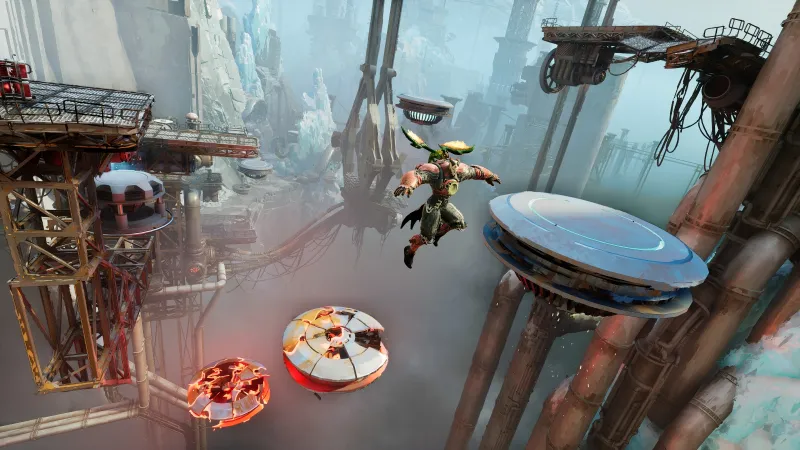
New Ghost Of Yōtei Story Content And Roguelike Mode Arriving In October

Game Informer

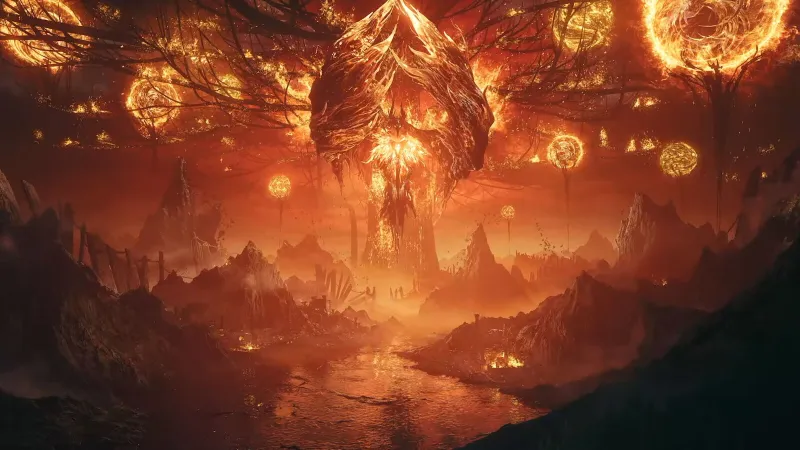
Ghost of Yōtei released in 2025 and was one of our favorites of the year. You can read Game Informer‘s Ghost of Yōtei review by following the link. Following its release, developer Sucker Punch added Legends, a cooperative online multiplayer mode, much like it did to Tsushima – Legends is free and available now if you own the base game. But now, the developer is also adding single-player story content and gathering everything into one package for Ghost of Yōtei Complete Edition. If you already own Ghost of Yōtei , you can upgrade to Complete Edition to get the new single-player content for $14.99 when it becomes available on October 1.

The single-player content is made of two pieces: Echoes of Sekigahara and Most Wanted.

Echoes of Sekigahara is a narrative expansion that takes place in the current Yōtei timeline but flashes back to detail Atsu’s relationship with a character named Nagato and spends more time with The Snake, the least-explored member of the Yōtei Six. You basically kill him in the tutorial of the base game. Atsu’s life after her childhood, but before the events of Ghost of Yōtei is ripe for exploration, so this is an exciting prospect narratively and mechanically.

Most Wanted is Sucker Punch’s “spin on a roguelike” according to a post on the PlayStation Blog covering all the new content. In the mode, “you’ll accept bounties in order to start new runs, where taking down enemies will earn you perks, as well as unlock additional characters to play as.”

God of War Ragnarök similarly added a roguelike mode called Valhalla following its release and it was an excellent addition to the game. I’m hopeful Yōtei’s Most Wanted mode will similarly be a worthy addition.

Along with the content outlined above, the October 1 update will also add new tracks for Watanabe Mode, photo mode upgrades, additional New Game+ cosmetics, the option to “keep an armor set’s appearance while using a different set’s stats,” and Beauty of Yōtei mode, which sounds like it will make the game showcase different environments from Ezo (where the game takes place) to function a bit like a screensaver.

For more on Ghost of Yōtei, you can read our Afterwords interview with Sucker Punch reflecting on the game’s story and development (watch out for spoilers), and you can read our interview here about the added Legends mode.

Finn Wolfhard Prefers Grass Type Pokémon And Classic SNES RPG Soundtracks

Game Informer

Finn Wolfhard is primarily known for his role as Mike Wheeler on Stranger Things, but with the popular Netflix show firmly behind him, he is now focused on his music career. But that doesn’t mean he is not performing and picking up smaller jobs that let him do fun, unexpected things like act out Lego Pokémon battle scenarios with Terry Crews. In promotion of the commercial and the new line of Lego Pokémon, we spoke with Wolfhard about his history with video games, Pokémon, Lego, and learned how video game music influences his own music.

Game Informer: What’s your history with Pokémon? Where’d you start?

Finn Wolfhard: The first game I played was Pokémon Pearl, and I loved that game. And my brother and I – my brother maybe even more so than me is a huge Pokémon fan. I’m a huge fan, as well. He, I think, has put a little more hours into the games, but I’ve definitely had my fair share of Pokémon and playing through FireRed. Last year, me and a few of the cast, actually, of Stranger Things were playing through FireRed on set to kind of pass the time, and that was really fun.

Were you trading Pokémon on set? Did you get that intense with it?

We didn’t. We weren’t trading, but we were comparing how each other’s journey was going.

Game Informer

Stranger Things, Season 5

Seen just out of frame, multiple copies of Pokémon FireRed (allegedly)

Pearl was your first. Who was your starter?

I don’t fully remember, actually, who it was. I remember playing Machamp a lot from that game. That was like my… that was obviously not my starter. But my memory is that I was playing the most when I was Machamp. I’m pretty sure it was Machamp. But yeah, that was definitely, I think grade two or three or something playing that game. From what I remember, it was Pearl. What was the other one that came out that year? It was Diamond?

Yeah, Diamond and Pearl were the two for DS.

Right. It was Diamond and Pearl. Do you remember what the starters were on both of those?

Readers will definitely want to know who your starter was. It was Piplup the penguin, Chimchar the flame monkey, and Turtwig the turtle.

It was Turtwig.

Game Informer

Good choice.

Yeah, and then my brother was playing Diamond at the time, so we both got best of both worlds.

Who was your FireRed starter? That one maybe you remember because you played it more recently.

Yeah, that one was Venusaur. [editor’s note: Bulbasaur] I love a grass Pokémon, for sure.

How about Lego? What’s your Lego connection?

Lego is a huge part of my childhood, and obviously I grew up with it just being scattered around our house. I think for years, my parents found Lego everywhere. But I remember we had a lot of Star Wars Lego. We had little Tie Fighters, and I remember having a Darth Maul. A little Darth Maul figure that we’d play with all the time. So we were definitely a Lego family.

Game Informer

I imagine this offer comes through, an ad/short film for Lego and Pokémon and it’s a pretty easy yes?

Yeah, I was kind of like, “Oh, these are two awesome things from my childhood. I have to do this.”

And what is it, exactly?

It’s […] keeping it maybe a little vague, but from what’s already come out for the teasers and stuff, I’m battling Terry Crews and I’m kind of like an undefeated Pokémon trainer, a Lego Pokémon trainer, who now has a new fighter or a new challenger.

Was that an easy role for you to play? Are you good at playing the Pokémon games?

Yeah, I’m pretty good at Pokémon. I think this was fun because this ad, the short film kind of takes inspiration from  – because it’s, you know, it’s not a video game. It’s tactile. It’s the figures and actually using the toy, so a lot of it was actually pretty physical. We actually had to do some choreography for it, and it was a little bit inspired by kung-fu films. Pretty fun stuff.

This is a loaded question, so I won’t ask for a singular choice, but can you tell me just some of your favorite Pokémon?

Ooh, Mewtwo is a huge one for me, just because it’s in my head – that design? That character design is so iconic. Ivysaur. I love Ivysaur. I love Pichu. I remember when I was little, I just thought Pichu was such a cool Pokémon. I’m trying to think of others. Geodude. Love Geodude.

Machamp is a favorite, I assume?

Machamp’s definitely a favorite. I definitely feel like I go between the grass Pokémons and like sometimes into the water Pokémon. But mostly grass type.

What is your general history with video games, even outside of Pokémon? What are some of your favorite games? What got you into video games?

The first games I remember seeing someone play was – and also the first games that I actually did play – a lot of it was Final Fantasy. Final Fantasy X was, I remember, one of the first games I played. I remember Jak II, like Jak & Daxter 2, was a big one. All those kind of early Naughty Dog games were definitely around in my house, and I played a lot.

Game Informer

Wolfhard with a Charizard, which is notably not his starter

What was it about Jak II you liked so much?

The hoverboard. The hoverboard was like… I spent a lot of time doing that. And honestly, that game is really hard. And so whenever it was too hard, that’s when my brother would kick in. And whenever there was anything that had to do with racing or you know any of the hoverboard stuff, that’s when I would come in, and so I love that.

And then I was also at a really young age collecting. I was really into collecting old consoles, so when I was like nine, I went with my dad and we found an NES. And so I played a lot of Super Mario Bros. 3, and was super into just collecting cartridges and Nintendo Power [magazines]. My uncle got me a Super Nintendo for Christmas and played Street Fighter II on that. So definitely, a lot of the older consoles, I was super into.

Is that still what you enjoy about video games? Or do you play modern video games as well?

I definitely play modern video games. Whenever I get the chance to play, you know, GameCube though? Or like anything on PS2? That’s my favorite. But nowadays, what I’ve been playing recently that has been just like “friendslop,” I think they call it.

Game Informer

Meccha Chameleon (2026)

What are you playing in the friendslop zone?

I definitely had a moment with Meccha Chameleon. That was super fun. This is not friendslop, but the thing I’ve been putting the most time into recently is they re-released Black Ops II onto PS5. I was big into Call of Duty, like when it was like Black Ops II specifically, and I had a clan. I was a sniper. Like I would go out and try to get Quad Feeds and 5ons [laughs]. So that’s been really fun, getting back into Call of Duty.

You are basically like a touring musician these days. Are you playing games on the road?

Yeah, we were literally on the bus last week. Me and my band play Call of Duty: Black Ops II Zombies together, which was really fun.

Game Informer

Call of Duty: Black Ops II (2012)

I was looking through some of the lyrics for your new album, and I see movie references. Boogie Nights, you have jokes about Avatar 3, and George Clooney, but I didn’t see any video game references. Do video games or video game music even serve as an inspiration for you in any way?

Oh yeah, for sure. I definitely love video game music, and some of the melodies definitely inspire me. Like Super Mario Galaxy? That’s like one of the best soundtracks of any game. All the Final Fantasy scores are unbelievable. Any Final Fantasy score, that’s like my favorite. But yeah, no video game references on this record. Maybe next. I definitely like to wear my favorite weird little pop culture video game references.

You know what game I was playing recently, too? Crazy Taxi. That was so fun.

There’s a new one on the way, actually.

Yeah, they’re making a new one. I’m stoked about that.

There’s a game called Truck-kun is Supporting Me from Another World?! that’s anime and Crazy Taxi-inspired, where you’re trying to hit people with a truck to send them to a fantasy universe. It’s very strange and funny. If you like Crazy Taxi.

It sounds like, in terms of like video game music inspiration, it’s more the musicality as opposed to like influencing like your lyrics.

For sure. I definitely get inspired by the score from movies, as well as score from video games. Any time I get to have any kind of string arrangement, or string anything, I go back and I’ll listen to the greats, like Chrono Trigger. I guess Chrono Trigger doesn’t really have… I guess it has some strings, but you know – I’ll go back and listen.

Game Informer

Chrono Trigger (1995)

It’s fun to hear you talk about games like Chrono Trigger. You’re younger than me, but it’s cool that those games have persisted and you found them. I love Chrono Trigger and the soundtrack, of course.

That soundtrack’s amazing. Also, EarthBound. That music is also unbelievable. There’s so much from older Japanese games. I feel like all those composers are just brilliant.

Is that something you were paying attention to even when you were young? When you first picked a guitar, were those tunes on your mind?

I never learned any of them because they were always so complicated. I would have friends, like nerdier friends growing up, that knew piano or something, and they would be able to play something on piano because they were classically trained, and I just… I wouldn’t even know where to start.

What We Learned About Shizuka, The Mysterious Woman Living In Musashi’s Oni Gauntlet In Onimusha: Way Of The Sword

Game Informer

Onimusha is finally returning to the action space next month after a 20-year hiatus at developer-publisher Capcom. Though a lot of the series’ trademarks are returning, like an intense focus on swordplay action, hordes of demons, a samurai protagonist, and the Oni Gauntlet, there’s plenty of new, too. There’s an “open-town” section of Kyoto, which is where this early Edo-period adventure takes place; there’s historical Japanese samurai Miyamoto Musashi as the protagonist this time, using the likeness of the late Toshirō Mifune; and there is also a mysterious woman living inside Musashi’s Oni Gauntlet.

That mysterious woman is named Shizuka, and despite her ethereal appearance, she often speaks with Musashi during this adventure. In case you missed it, Onimusha: Way of the Sword is the latest game to grace the cover of Game Informer, and for my cover story (which subscribers can read right here), I traveled to Capcom’s Osaka HQ to play hours of the game and interview the team making it. Naturally, I asked about Shizuka and her role in the story. 

Game Informer

Previous Onimusha heroes like Samanosuke Akechi and Jūbei Yagyu welcomed the powers of the Oni on their quests in Onimusha: Warlords and Onimusha 2: Samurai’s Destiny, respectively. Musashi, a warrior through and through who wishes to become the greatest swordsman in Japan on skill alone, despises the additional strength the Oni Gauntlet stuck on his arm yields to him. “Musashi is a hero who wants to rise to the top on his own strengths, so him being paired with the gauntlet – this power that he doesn’t want – we thought, provides an interesting contrast to the previous heroes we’ve had,” Way of the Sword director Satoru Nihei tells me. 

Though I don’t exactly know how Musashi comes upon the Oni Gauntlet, it’s very clear he wants it off and believes killing more Genma and collecting their souls will make that happen. “But, as the story progresses, and as he moves on, we kind of see some growth, and he starts to change his opinions on the gauntlet,” Nihei adds. 

Shizuka, somehow stuck inside the Oni Gauntlet, likely has something to do with that. I learn little of her motivations during my time playing the game, but I do note the soft simmering of something between them. Perhaps camaraderie, perhaps romance, perhaps something else entirely, but I suspect the generally solo-minded Musashi will come to appreciate her presence. And for what it’s worth, she’s sorry to have brought him into this mess, despite needing him to one day be freed from the gauntlet’s confines. 

As for how the idea of Shizuka came to be, Way of the Sword lead writer Hiroshi Yamashita tells me she’s there to help the global audience Capcom intends for the game to have. “On a game design level, with the setting of Kyoto, not everyone is familiar with the setting, especially a global audience,” Yamashita tells me. “So, when we were making the game, with Musashi coming to Kyoto on his own, we kind of wondered, ‘How are we going to convey a lot of that information to players?’ We thought we could just have Musashi walk in the streets, talking and mumbling to himself, […] but that would be very unnatural and strange. So that’s where the idea of having a support character […] like Shizuka came from, to explain to him what’s going on, tell him about the Genma, and teach these things.”

The team didn’t just want a companion inside the Oni Gauntlet there for functional game design reasons, though, so the story team integrated her into the narrative. “There is actually a reason,” Yamashita continues. “Something happens to her and she ends up escaping to the gauntlet, so she is in this position where she has something that she wants to achieve, she has a goal, but she doesn’t have a physical form, she can’t fight for herself, and so she’s having to entrust Musashi with this duty.”

Game Informer

Yamashita says Musashi and Shizuka are quite distant with each other in the beginning of Way of the Sword, butting heads often, but notes that “as the story progresses, we see that relationship change a bit as she is quite key to the story itself.” 

I did ask Yamashita about ensuring Shizuka doesn’t fall into the annoying companion trap, and he says the team was cautious about this, looking at other game companions to see where they go right and where they go wrong. I’ll have to take his word on her for now, but in my three hours of playing the game at Capcom HQ, she wasn’t annoying as a presence in the slightest. 

We’ll all soon learn more about her, though, because Way of the Sword launches in just a few weeks on September 4

I’ll continue diving deeper into Capcom’s return to Onimusha as part of Game Informer’s month of Way of the Sword coverage. We’ll be publishing exclusive gameplay and behind-the-scenes videos (including a Rapid-Fire Interview) on the Game Informer YouTube channel as well. Keep an eye on the Onimusha: Way of the Sword coverage hub so you don’t miss any of it.  

In the meantime, here’s some additional Onimusha: Way of the Sword reading for you:

What do you think Shizuka’s role is in Onimusha: Way of the Sword? Let us know in the comments below!

Wolverine-Themed PlayStation 5 Consoles And Controllers Drop In September

Game Informer

Marvel’s Wolverine, one of the biggest games of the year, comes out it a little over a month. Today we learned it’ll get the same treatment as PlayStation’s other beloved first-party IP and launch alongside a limited edition PS5 console and controller. A bundle with a PS5 digital edition (there’s no disc drive – more on that later), controller, and a game code for Marvel’s Wolverine will be available starting September 15, the same day as the game comes out. Check it out for yourself below.

The console and controller feature a slashing design caused by Wolverine’s iconic claws, and the console itself includes art of Wolverine’s face. For those who already have a PS5, PlayStation is also selling console covers, which you can swap out for the system’s base white plates (or whatever color you might have on there now). The covers will get an added color, Adamantium, which swaps out the yellow for silver, but while there are yellow covers for both the PS5 Slim and PS5 Pro, you can only get Adamantium for a PS5 pro. Controllers will come in both colors, however. 

The bundle and yellow controller will be available at “select retailers,” but the console covers and silver controller are exclusive to PlayStation’s online storefront. All of these products have, unsurprisingly, been affected by Sony’s recent string of price increases for its physical hardware and accessories. Here’s how much each item is going to cost:

  • PlayStation 5 Digital Edition – Marvel’s Wolverine Battle Yellow Limited Edition Bundle:
    • $649.99 US / £569.99 GBP/ €649.99 EUR / ¥96,980 JPY 
  • DualSense Wireless Controller – Marvel’s Wolverine Battle Yellow Limited Edition:
    • $84.99 US / £74.99 GBP/ €84.99 EUR / ¥12,480 JPY 
  • PlayStation 5 Console Covers – Battle Yellow Limited Edition:
    • $74.99 US / £64.99 GBP / €74.99 EUR / ¥9,980 JPY 
  • PlayStation 5 Pro Console Covers – Marvel’s Wolverine Battle Yellow Limited Edition:
    • $74.99 US / £64.99 GBP/ €74.99 EUR / ¥9,980 JPY 
  • PlayStation 5 Pro Console Covers –Marvel’s Wolverine Adamantium Limited Edition:
    • $74.99 US / £64.99 GBP / €74.99 EUR 
  • DualSense Wireless Controller – Marvel’s Wolverine Adamantium Limited Edition:
    • $84.99 US / £74.99 GBP/ €84.99 EUR 


Of course, this all comes during a controversial time for PlayStation. Its decision to phase out physical disc releases starting in 2028 has frustrated fans around the world, and the comments of the video linked above are flooded with people complaining about the company’s decision and the bundled console’s lack of a disc drive. Even unrelated videos on the channel, like trailers for third-party games coming to PS5 have their comments full of people standing up for physical discs. At the same time, physical media is undeniably becoming more expensive to produce, and PlayStation has raised the price of its consoles and accessories twice in the last year – first last August, then this March

For more Wolverine, you can check out this trailer showcasing Lady Deathstrike or this interview revealing the game takes place before the X-Men exist. For more on our frustrations around rising prices and our frustrations with gaming’s biggest companies, read executive editor Brian Shea’s opinion piece about why the most recent console generation has been a “race to the bottom.”

Until Dawn and Directive 8020 Developer Supermassive Games Will Lay Off “Up To 75” People

Game Informer

Supermassive Games, developers of games like Until Dawn, The Quarry, and The Dark Pictures Anthology, has announced it’s likely letting go of several of its employees. In an image shared to social media, the company made a statement that it has begun a “redundancy consultation process.” When it concludes. Supermassive expects to lay off “up to 75” of its employees. You can read the full message below.

Game Informer

“We have made the difficult decision to begin a redundancy consultation process, which we anticipate will result in the loss of up to 75 of our colleagues,” the statement reads. “This is a necessary step to help ensure the sustainability of the company. We know this will be an incredibly difficult time for everyone, and our priority throughout the process will be to provide support to all those impacted.”

Supermassive Games just launched its most recent project, Directive 8020, in May. That game was originally slated for last October, but Supermassive issued a similar statement in July of 2025, delaying Directive 8020 into 2026 and laying off 36 people. And back in February 2024, Bloomberg reported that the company underwent the same process, cutting roughly 90 jobs. That’s roughly 200 jobs in less than three years.

None of Supermassive’s most recent games, Directive 8020, Little Nightmares 3, or The Casting of Frank Stone, have been huge critical successes, sitting at 72, 71, and 68 on Metacritic, respectively. Meanwhile, Until Dawn 2 is being developed by a different studio

This is the latest in a years-long trend of mass layoffs in the video game industry. Other major examples from 2026 include Battlefield Studios laying people off, even though Battlefield 6 was the best-selling game of 2025, the decimation of Bungie’s Destiny 2 team (and the game’s final update), and Microsoft parting ways with several studios, laying off thousands.

Star Wars Zero Company Is XCOM Meets Star Wars In The Best Way Possible

Star Wars Zero Company

Platform:
PlayStation 5, Xbox Series X/S, PC

Publisher:
Electronic Arts, Lucasfilm Games

Developer:
Bit Reactor, Respawn Entertainment

Release:

Rating:
Teen

I still remember where I was when I heard that Firaxis was making a Marvel game. While the game I dreamt of – XCOM with the Marvel license – ended up differing pretty substantially from what we ultimately got with Marvel’s Midnight Suns, I still thoroughly enjoyed the unique deckbuilding and social mechanics layered on top of the turn-based tactics I had come to love about Firaxis. 

However, with many of the developers who created XCOM: Enemy Unknown, XCOM 2, and Marvel’s Midnight Suns departing Firaxis to form Bit Reactor, and that studio announcing its debut game to be a Star Wars title, it was safe to say I was excited at the prospects of the end result. And now that I’ve spent upwards of 10 hours exploring the Galaxy Far, Far Away in this turn-based tactics experience, I’m finally getting the licensed tactics game that hits many of the same notes that made me fall in love with XCOM back in 2012.

Back to Square Zero

The Maryland-based Bit Reactor was founded in 2021 by several former members of Civilization and XCOM developer Firaxis Games. Co-founder and director Greg Foertsch, who spent 22 years at Firaxis, was joined by several other former Firaxis developers, as well as team members from other studios with diverse backgrounds, which Foertsch says brings new spins and perspectives to that core group’s way of thinking. However, having that foundational group of Firaxis employees helped Bit Reactor hit the ground running, even though the studio was started during the COVID-19 remote work period.

“We were starting this up while people were remote, but we haven’t just shipped one game together… a lot of us have shipped four or five games together, and have been together for decades, not just a year or two,” Foertsch says. “We’re a weird company in that we’re a completely independent startup, and we have days where, from a business side, we’re a startup, but we’ve got the soul of a much older team, and we’ve got a shorthand with each other. We have trust. All those things are so important to building a game that if you don’t have them, they create hurdles. We were, out of the gate, able to sidestep some of the early startup stuff because of our experience together and, most importantly, our trust in each other.”

Game Informer

Bit Reactor was always going to make a turn-based tactics game for its debut title. However, it was the late Vince Zampella, former head of Respawn Entertainment, who pushed Bit Reactor to create a Star Wars game. “I wanted to work with existing IP to begin with; it’s a hurdle that’s taken care of for you, and you can focus on the game part of it and the studio part of it,” Foertsch says. “Vince ended up calling me and said, ‘Hey, can you talk to me about what you want to make?’ And I did, and I can’t say enough about Vince having the vision and conviction to let us pursue this. […] I was pitching a few other places before I talked to Vince, and then once I talked to Vince, I steered all of my attention toward Vince and Respawn because I felt that ideologically, we aligned. Vince believed in developers, and it’s not just about where your funding comes from, it’s about making sure that the people you’re working with understand game and understand that there’s a point where they don’t look good, and understand that there’s a point where, ‘Wow, why did I ever go on a journey to make this thing?’ But that if you have faith in the process, eventually you come out with something great, and you just have to stick with it. So that became pretty clear to me that we matched up well.”

Once that match was made, Electronic Arts signed on to publish the game, with Respawn helping Bit Reactor with development. Respawn’s Star Wars Jedi franchise takes place between the Prequel Trilogy and the Original Trilogy, telling the story of a Jedi taking on the Empire following the execution of Order 66. Bit Reactor decided to go a different route, telling a story during a well-trodden, but ripe part of Star Wars history: the Clone Wars. Despite having a long-running animated series devoted to explaining the events of the Clone Wars, Foertsch knew it was the right time period to tell the story he wants to tell. It turned out Lucasfilm agreed.

Game Informer

“The fact that there is so much stuff surrounding the Clone Wars allows us to put our story in that Clone Wars bubble, and it can kind of exist inside of this thing,” Foertsch says. “And so the edges of the Clone Wars kind of reach in and touch it a little bit, but you’ve got this little bubble that the player is in, and they’re playing a story that’s new and fresh and different, yet it’s got all the familiar stuff that we can pull in. So, if you’re a big Star Wars fan, you’re going to have lots of little things where you’re like, ‘Wow, that’s a deep cut! That’s really cool!’ If you’re not, you’ll learn about some of those things. It’s a way to position us to tell a really good story with enough familiar elements available to bind it.”

As someone who loves both XCOM and Star Wars, I couldn’t wait to dive into the pre-release preview build, which gave me unfettered access to the first several missions of the game, leading up to a climactic battle that gives a big nod to that broader Clone Wars era. That conclusion served as the exclamation point for my time with Star Wars Zero Company, but it was far from the only highlight.

Telling You The Odds

Star Wars Zero Company casts you as Hawks, the fully customizable leader of Zero Company, a ragtag group of mercenaries who start off working jobs for the Republic before slowly unraveling a mystery surrounding a fanatical cult. This cult, The Infinite Coil, is led by Kundri Fathom, who infects all members and initiates with a plague that improves their physical strength seemingly at the cost of their mind and free will. After the first couple of hours, The Infinite Coil establishes itself as insidious, capable, and relentless. Not only that, but it aligns itself with the Separatists and its army of battle droids.

At the start of the story, Hawks is on a mission with Zero Company, which consists of a Rodian named Aurelio, a Clone Trooper named Trick, and a retired Felshi boxer called Kabb Uppercut.  By the end of my time playing, I also added a Jedi and a Mandalorian bounty hunter. Each of these characters has an authored personality and signature look, which might lead you to think they’re irreplaceable. That would be a mistake. As you navigate the turn-based tactical combat, which makes up the bulk of the Star Wars Zero Company experience, there are various ways your play impacts the story and future battles. If you do everything great, leaning on your teammates and relying on assists, your characters will level up, earn focus points to upgrade their abilities, and even develop stat-boosting bonds that make your squad even more formidable. That happened the vast majority of the time. However, it wasn’t always cause for celebration.

Game Informer

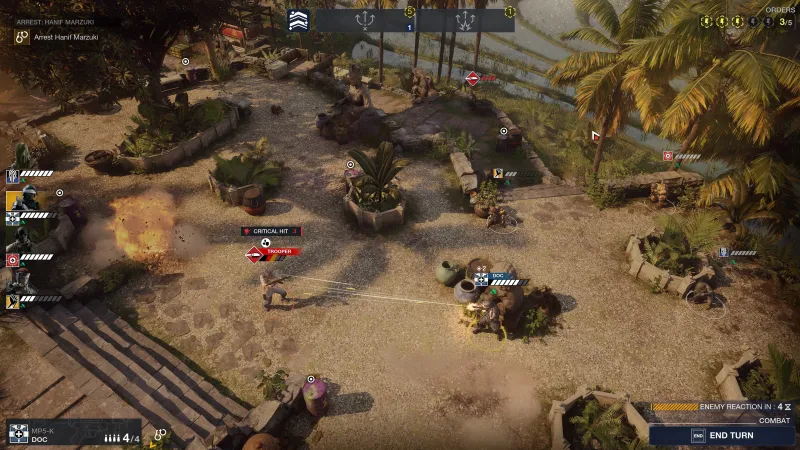
Star Wars Zero Company carries forward the common convention of permadeath, so while I was consistently recruiting new members of Zero Company, it wasn’t always due to expansion. In fact, this may be telling on myself for some of the boneheaded moves I made, but by the time I reached the end of my demo, only Hawks and one other Zero Company member from the start of the story remained alive. Sure, I could have reset the mission and tried again, but that feels disingenuous to the way it’s intended to be played. Not only that, but I appreciate the emergent stories that come out of just pushing forward in the game no matter how things go.

“The narrative team did an awesome job on that,” Foertsch says. “We wanted to make sure that the characters provided some archetypes for people to latch to and are familiar with, but weren’t so heavy that you couldn’t attach – like, they didn’t bring too much backstory. Trying to balance that amount of archetype and character and backstory that you bring with your ability to still be able to latch on to these authored heroes as much as the ones that you custom-make was a real big goal for us. I think we’ve threaded it pretty well for people.”

Outside of combat, you can use your intel points to undergo menu-based operations that earn you credits, regional reputation, new tactical missions, and other rewards. You can use your credits to upgrade your base with new modules, upgrade your squadmates with new skills and equipment, send teammates to the medbay for healing, and even purchase new weapons on the Black Market.

There are also gameplay areas where the camera abandons its typical isometric perspective in favor of swinging behind Hawks as he navigates various Star Wars environments. Often, these sequences are quick or inconsequential, but they do add a small touch of gameplay diversity and a heap of immersion you can’t get from a bird’s-eye view. This is especially true in your base, which you explore in the third-person perspective. Walking around the base, talking with teammates, and interacting with different base modules directly gave me Mass Effect vibes, which perfectly complements the kind of story Bit Reactor hopes to tell.

Game Informer

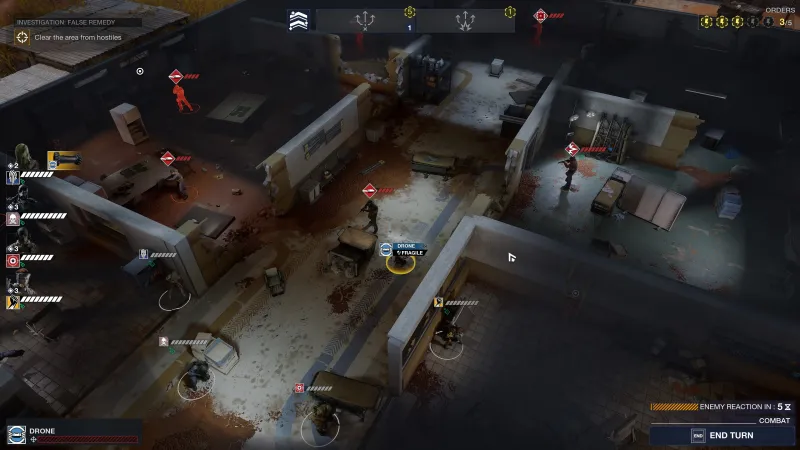
My only major concern from my time with Star Wars Zero Company is the seeming lack of mission variety. While the maps are all thoughtfully crafted, the missions often boil down to eliminating all enemies or reaching a point of interest before evacuating your squad while more enemies spawn in. While those are tried-and-true tactics classics, I was more excited when missions with more variety popped up. One of those had me rescue a downed ally, then blast our way out of the sticky situation alongside the rescued operative. Another broke up the tactical gameplay with a brief espionage sequence in which Hawks donned an officer’s outfit and infiltrated a restricted area to gather intelligence.

Fascinatingly, despite playing on my desktop PC, I only used keyboard and mouse for half of my time playing. I picked up my Xbox controller just to quickly see how it feels and never went back. That may seem sacrilegious for longtime tactics players, but for Bit Reactor, it was by design. “We’ve considered controller just as much as we’ve considered keyboard and mouse,” Foertsch says.

Star Wars Zero Company thoroughly impressed me from the time I started. I cherished each well-executed plan. I cursed my squadmates’ missed shots despite the 90-percent chance of hitting. I gripped my controller tight as the Coil and battle droids descended upon my injured team from multiple angles. I mourned those I lost along the way. I celebrated those who survived and leveled up. But the most telling aspect of my time with Bit Reactor’s debut game is that even after spending more than 10 hours with these characters, I can’t wait to reassume the role of Hawks and lead Zero Company to another hard-fought victory.

A Familiar Hope

I went into my demo expecting an experience that might lightly scratch the XCOM itch I perpetually have. I didn’t expect Star Wars Zero Company to scratch it with the intensity of a lightsaber. I came away from my time with Bit Reactor’s leap into the Star Wars galaxy not only excited to see where the story goes and who might show up, but also feeling incredibly compelled to jump back in for more tactical missions. The gameplay loop, the tactical combat, and the impactful choice and risk/reward mechanics all amount to a formula for something potentially special. Add in the Star Wars dressing, and the nostalgia factor amps the anticipation up even more.

Game Informer

As Foertsch looks ahead to the launch of Star Wars Zero Company in just two weeks, he understands that the gaming world is perhaps more ready to embrace the tactics genre than it was in 2012 when Firaxis retooled the XCOM series. “Our mission is to challenge that space, the thought that these games are niche; they’re not, and we’re about to bring the biggest franchise in the world to it, and hope that people come along for the ride on it and can understand and accept it,” Foertsch says. “A lot of the things that interfered with the genre coming over in the early 2000s are gone, and I think people are more open to, ‘It’s just a great game.’ Final Fantasy Tactics is a great game. I don’t think of it as a tactics game; it’s just a great game. I think we’re starting to see a gamer population that’s more open to, ‘It’s a good game, cool story, cool mechanics, it’s something different.'”

And with an IP like Star Wars, Zero Company may just have a noteworthy leg up over other titles in the tactics space, a feeling further amplified by the fact that it’s crafted by several masters of the genre. However, we won’t know for sure how far-reaching it is until Star Wars: Zero Company arrives on PS5, Xbox Series X/S, and PC on August 27.

Big Walk Sells One Million Copies In Less Than A Week

Game Informer

Big Walk, the recently released multiplayer puzzle game from House House, has officially sold one million copies. It’s a major milestone to hit for any game, but it’s especially significant for an indie developer.  Big Walk’s publisher Panic shared the news with a post on social media earlier today, with an image you can see below.

Game Informer

“In just six days, over one million of you have bought Big Walk, our co-op adventure all about talking and walking,” the post from Panic reads. “We are so grateful that so many of you are spending time with our game. And we deeply appreciate your fanart, your streams, your stories, and your moments. Thank you for playing.”

Big Walk is a game where a party of players explores a large open world to complete challenges that test their puzzle, platforming, and communication skills. It’s built around in-game communication systems, like proximity chat and non-verbal emotes, so using something like Discord is a no-go – half the fun is figuring out how to tell your friends what they need to do. It’s also multiplayer only (sorry, single-player fans) but supports groups from anywhere between two and 12 players.

We loved Big Walk, and our reviewer wrote, “In the nine hours it took my crew of three to see the end of Big Walk, though, it felt like we had made a real journey together. We laughed a lot and came up with many absurd puzzle solutions that still somehow worked. Big Walk’s excellent finale effectively brought the message home: more than anything, this was our shared walk.” You can read the full review here.

Big Walk is available now on PS5, Switch 2, and PC. For more on developer House House, check out our review of its last project, Untitled Goose Game.
Onimusha: Way Of The Sword Isn’t An Open World Game, And It Isn’t A Soulslike Either

Game Informer

Onimusha is almost back. The latest installment, Onimusha: Way of the Sword, launches next month after a 20-year hiatus within Capcom’s samurai action series. Way of the Sword is also the latest game to grace the cover of Game Informer, and to write that cover story (that subscribers can read right here), I traveled to Osaka, Japan, to visit Capcom HQ, play never-before-seen parts of the game, and interview the team making it. It was during this play session that I learned and confirmed Way of the Sword is not an open-world game, and it isn’t a Soulslike either, despite what you may think. 

If you’ve played the demo for Way of the Sword, which is available on PlayStation 5, Xbox Series X/S, and PC (but not Nintendo Switch 2, despite the game launching there next month as well), you already know this, but the game is definitely not a Soulslike, and director Satoru Nihei confirmed as much when I asked him; it is a character action game, through and through. 

Yes, there are challenging boss fights that will test your understanding of protagonist Miyamoto Musashi’s samurai combat kit. Yes, you will die a lot. But you don’t lose resources when you die that you then have to recover next time you’re alive. There is also nothing as challenging as what you’d expect in a Soulslike, both in terms of bosses and standard mob enemies, and you won’t find the treacherous exploration typically associated with the genre either. Instead, Way of the Sword is a game about mastering Musashi’s blade, using the environment around you to win, and slicing up demon after demon. 

Another thing the demo indicates to the player is that Way of the Sword is not an open-world game, and Nihei and the team at Capcom also confirmed as much. That said, they do describe a hub-like section of Kyoto, which is where the game is set, as an “open-town.” While not open world, this open-town section is wider than the standard stages you’ll play through during Way of the Sword, and it features plenty of side paths, secrets, hidden places, and more to discover through exploration. There are side quests to pick up, NPCs to interact with, items to find, vendors to interact with, and more. So, while there won’t be a massive map full of checklists to mark, typical of open-world games, the main hub of Way of the Sword will provide a scaled-down version of that feel with its open-town Kyoto. 

Game Informer

Fortunately, Way of the Sword is just weeks away, meaning we can all experience the full scope of the game’s action and open-town exploration soon. 

I’ll continue diving deeper into Capcom’s return to Onimusha as part of Game Informer’s month of Way of the Sword coverage. We’ll be publishing exclusive gameplay and behind-the-scenes videos (including a Rapid-Fire Interview) on the Game Informer YouTube channel as well. Keep an eye on the Onimusha: Way of the Sword coverage hub so you don’t miss any of it.  

In the meantime, here’s some additional Onimusha: Way of the Sword reading for you:

Are you glad Onimusha: Way of the Sword isn’t an open-world game or a Soulslike? Let us know in the comments below!

1666: Amsterdam – Hands-On With The Assassin’s Creed Creator’s Long-Awaited Passion Project

Game Informer

Platform:
PC

Publisher:
Panache Digital Games

Developer:
Panache Digital Games

Assassin’s Creed creator Patrice Désilets has moved mountains to bring his passion project 1666: Amsterdam to fruition. The witchcraft-focused action-adventure game was originally conceived over 15 years ago while Désilets was still at Ubisoft. Through a series of tumultuous events, the project has changed studios and been at the center of a years-long lawsuit over rights ownership between Ubisoft and Désilets. 

Now that 1666: Amsterdam will finally see the light of day, I traveled overseas to its namesake city to play an hour-long build Panache Digital Games prepared for media, which I do at the Amsterdam Dungeon, a local horror attraction that’s part Universal Halloween Horror Nights, part history lesson. Amid the muffled screams of guests enduring the dungeon’s creepy rooms and spirited live performers, it creates the perfect atmosphere to dive into Panache’s occult adventure. 

Game Informer

The demo begins immediately after the free prologue chapter that launched alongside the game’s re-reveal at Summer Game Fest. I control Noa Brooklyn, a young crimson-clad witch who has just completed her initiation into the Zaindaris, a magical faction that raised her to become a Collector. Noa’s primary purpose is to identify and eliminate entities called Originals, powerful beings who can assume human form to live amongst us, sometimes for centuries. The Zaindaris granted the Originals their power long ago by bestowing Nux, an ancient magic, upon chosen individuals in an attempt to elevate humanity; instead, the Nux corrupted many of them over time, and they now pose a danger to the world. The Zaindaris have since been engaged in a generations-long cycle of training a Collector to reclaim the Originals’ power to restore balance. Now, it’s Noa’s turn. 

Noa’s journey won’t be the only time period players will experience. In a fitting twist from the mind behind Assassin’s Creed, the game prominently features a more contemporary setting. It’s New Year’s Eve in 1999, and a young man named Aaron visits Amsterdam with his lover. Turns out his partner is secretly a Zaindaris. They engage in a sex ritual that somehow transports Aaron’s consciousness to 1666, where he awakens in the body of a cat during the night of Noa’s ritual; Noa chooses him as her familiar, or Union Cat. This begins a fascinating partnership between the steadfast Noa and reluctant Aaron as they must work to help one another. But there’s one more era at play. 

If you played the prologue, you met a woman named Clio, seemingly in the 2020s, investigating a letter from her father. Clio’s dad, it turns out, is Aaron, and his message recounting his and Noa’s adventure serves as the narration. Clio’s full role in 1666: Amsterdam is unclear, but given she was evidently conceived during the ritual that kicks off the game’s events, it’s clearly important. 

Game Informer

After completing the ritual, the gathering is interrupted by witch-hunting militia. Chaos ensues, giving me the first sample of combat. The right shoulder trigger unleashes a basic combo attack, with Noa pummeling foes using her staff. Stunning them at the brink of death triggers a flashy final blow. A dodge allows Noa to evade attacks from the often four or five enemies surrounding her, and she consumes potions to heal. The melee combat doesn’t pack much satisfying impact in this in-development build, but it gets the point across. The enemies also tend to take turns attacking, which feels disappointingly dated and reminds me of dealing with mobs in the early Assassin’s Creed games. Defeating a group paves the way for another mob to take their place, with dramatic camera zooms displaying their shouts such as “Don’t move” and “Blaggard.” It’s a stylish touch, but one I grew tired of after consecutive encounters. I’d rather they just take their lickings without the prerequisite introduction.

The only magic attack at my disposal lets me blow up objects such as barrels and crates. This proves much more satisfying, and can instantly kill or heavily damage nearby targets. However, Désilets later reveals in a separate hands-off demo other abilities Noa will gain. For example, she can unleash tendrils that ensnare and suspend foes, and temporarily petrify enemies, among other powers. Gathering Nux energy allows Noa to perform these feats, and they look fun to pull off. 

Noa also commands traversal abilities, such as the power to glide over water and warp across platforms to quickly get around a freely explorable Amsterdam that, while large, is denser than wide. This scale is partly due to Panache being a smaller team – 70 employees strong – and its goal of ensuring that every building has explorable interiors. This design choice plays into another key part of 1666: Amsterdam: investigating Originals. Finding them involves unearthing clues such as notes (often by scavenging homes and businesses), analyzing your surroundings for helpful details, and speaking with citizens to glean the required information: their appearance, seal, and original name. Investigations occur during the day. Once night falls, it’s time to confront the Original.

Game Informer

Another surprise is that missions have a roguelike element. After accepting a contract to hunt an Original, players choose one of three powers from a randomized pool. These can be stat buffs such as increased health or offensive powers like the aforementioned Petrify. Panache gives players the freedom to investigate Originals as they see fit, with many avenues for gathering information discreetly or more chaotically. Sadly, I only get to watch Désilets tackle a full investigation, but finding clever ways to track down Originals looks to be the bulk of 1666: Amsterdam’s gameplay. I hope it’s fleshed out well enough to remain consistently engaging. 

To explore more safely, Noa can freely shift between her witch and civilian appearances. The latter draws less attention and makes citizens more amenable towards you. This matters, as an attention meter builds whenever you do questionable things, such as peeking through windows in front of others or openly performing magical acts. A filled meter invites the full wrath of the militia, forcing you to either fight your way to safety or flee to one of many safehouses Noa can retreat to in order to extinguish the heat. These safehouses also allow her to craft potions using recipes and ingredients found by searching through spaces. If the militia defeats Noa, she’ll be sent to prison, where you’ll have to escape. However, Panache is still figuring out this particular element and how severely it will punish multiple incarcerations. 

As for Noa’s partner Aaron, you can switch control to him at any time. As a cat, he can access places Noa can’t. Panache has created buildings that can be accessed in multiple ways. Aaron can leap up and around buildings to enter them, bypassing locked doors and opening them for Noa. Like everything else in this shaky development build, platforming was rough and occasionally unresponsive, but it reminded me of Stray’s deliberate yet graceful traversal. 

Aaron can also distract certain guards eager to pet him. On the flip side, those fearful of black cats are vulnerable to possession. Approaching a frightened person and hitting R2 unleashes a hiss, followed by a timed minigame where Aaron pounces upon them and scratches their face. This act allows Aaron to hijack their bodies, useful for exploring and letting Noa into restricted spaces. Aaron can also transmute Lux into Nux. I enjoyed the dynamic of switching between Noa and Aaron to figure out how to combine their unique talents to access tricky locations. 

Game Informer

The game’s digital Amsterdam is impressively realized. Panache’s environmental level and art direction draw inspiration from 17th-century Dutch painter Johannes Vermeer (historically living during the game’s timeframe), famed for specializing in domestic interior scenes capturing everyday life of the period. 1666: Amsterdam’s visual presentation has a painterly flourish that adds flair to the 3D models. 

When 1666: Amsterdam becomes available in Early Access on August 25, players can only explore the game’s early chapters, but Désilets calls it a “pretty big chunk” of content. He confirms that the game’s story outline, lore, and rules are complete, with Panache polishing and expanding dialogue and gameplay mechanics. Désilets emphasizes Panache’s eagerness to build the game with the community, and says to expect it to remain in Early Access for at least one year. As a self-professed “old timer,” Désilets recalls the days when a game printed to disc was complete and unchanging, flaws and all. He’s excited for players to witness 1666: Amsterdam’s development and, hopefully, provide valuable feedback. Désilets also confirms the game’s reported AI placeholder assets have been removed and no such content is present in the Early Access launch.

My demo of 1666: Amsterdam was, as expected, rough around the edges, as an in-development build of a game launching in Early Access. The experience didn’t wow me from a polish standpoint, and I worry if the game will at least feel more stable and fun to play than the build I played when it arrives in a couple of weeks. But there are exciting gameplay and narrative ideas at play with Désilets leaning on some concepts from Assassin’s Creed but reworking them under a cool witchcraft premise. After over a decade of waiting and uncertainty, it’s tough not to feel happy for Désilets and even inspired by his persistence to will 1666: Amsterdam into existence. The project has a long road ahead, and although it could be off to a rocky start, here’s hoping it can eventually realize its enchanting potential.

Big Walk + Beast Of Reincarnation Reviews w/ Jesse Vitelli

Game Informer

It’s another week of The Game Informer Show, and we’ve got a spectacular guest to help us break down some releases, new and old! 

Jesse Vitelli joins Alex and Eric as the trio that walked through Big Walk together, and really enjoyed it. Then Wesley and Marcus discuss Game Freak’s new original IP, Beast of Reincarnation. Finally, Alex has been checking out Esoteric Ebb and wants to share a bit about it. 

The Game Informer Show is a weekly podcast covering the video game industry. Join us every Friday for chats about video game reviews, news, and exclusive reveals alongside Game Informer staff and special guests from around the industry. Support the show by subscribing to our physical video game magazine! 

Watch or listen here:

Listen to “779_audio” on Spreaker.

Follow the hosts and our guest:

Jump around using these timestamps: 

  • 00:00 – Intro 
  • 08:36 – Big Walk 
  • 37:45 – Beast of Reincarnation 
  • 1:11:42 – Esoteric Ebb