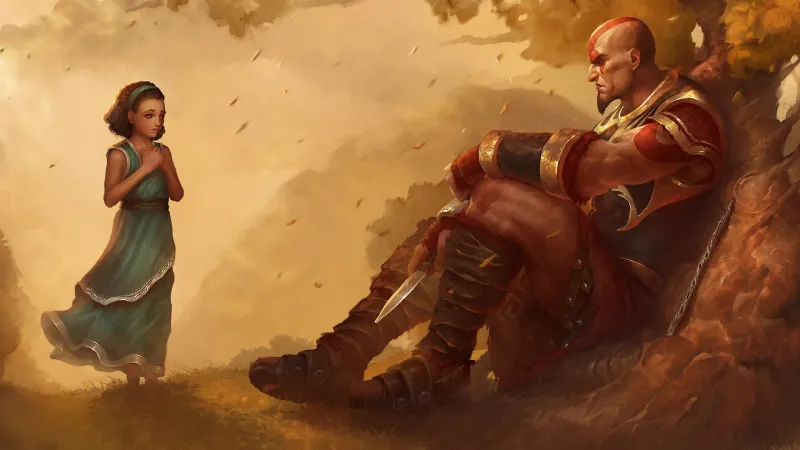
If you don’t remember, God of War Sons of Sparta is a prequel spin-off of the God of War series, showing protagonist Kratos as a 13-year-old soldier, long before his god-killing days. The game features 2D combat and a Metroidvania-style map, along with a fully voiced cast of characters including Scott Menville (who you might recognize as Robin in Teen Titans) as Kratos’ brother Deimos, Jack Quaid (who will voice a different character in God of War Laufey next year), and TC Carson, who returns from the original trilogy as the voice of adult Kratos.
Announced in a post on the PlayStation Blog today, Sons of Sparta is making the jump back to Sony’s previous console, which is now (brace yourself) 13 years old. Sons of Sparta’s 2D pixel art is far less demanding than the other God of War entries, though, so it’s no surprise this was possible – it’s mainly surprising that they’re doing it at all.
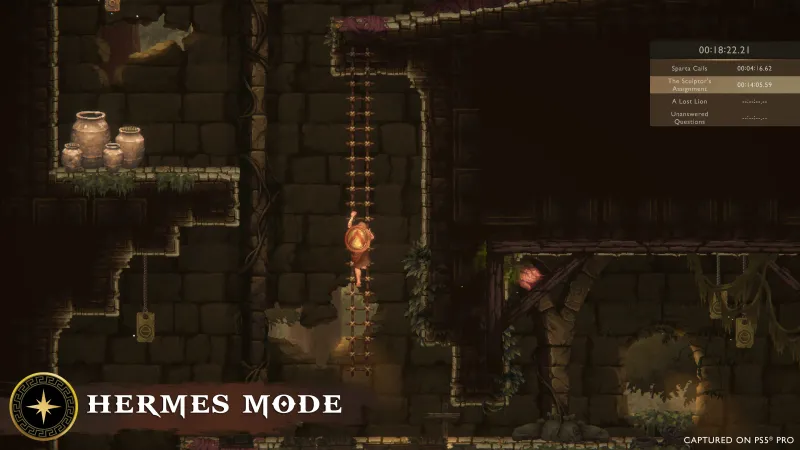
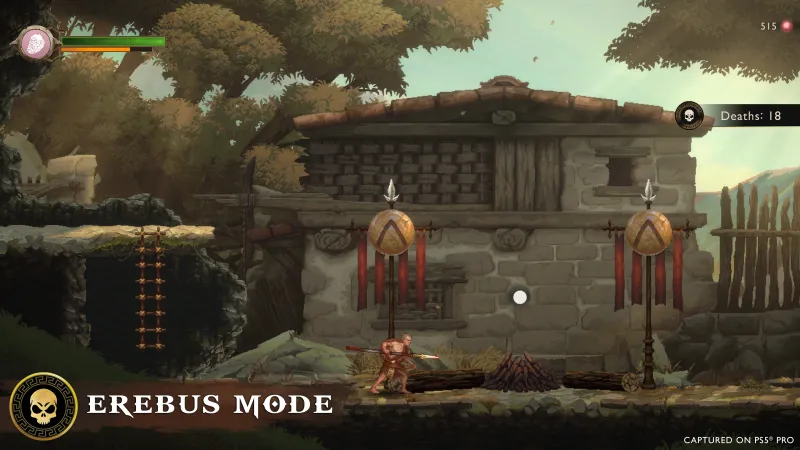
For PS5 players who already own the game, developer Mega Cat is also adding two new modes: Hermes Mode and Erebus Mode. Hermes Mode, named after the Greek god of wind, mail, and speed, is a speedrun mode that encourages you to beat the game as quickly as possible, complete with a split-based timer in the upper right-hand corner of the screen. Meanwhile, Erebus Mode, named after one of the domains of the underworld (you’ll be familiar with it if you’ve played the Hades games), makes the game far deadlier as Kratos and all his foes die in a single hit. You’ll have to wait until you beat the game once to unlock Erebus Mode, but you can access Hermes Mode from a fresh save by entering the following (and semi-familiar) code in the start menu: Up, Up, Down, Down, Left, Right, Left, Right, L1, R1, Touchpad.
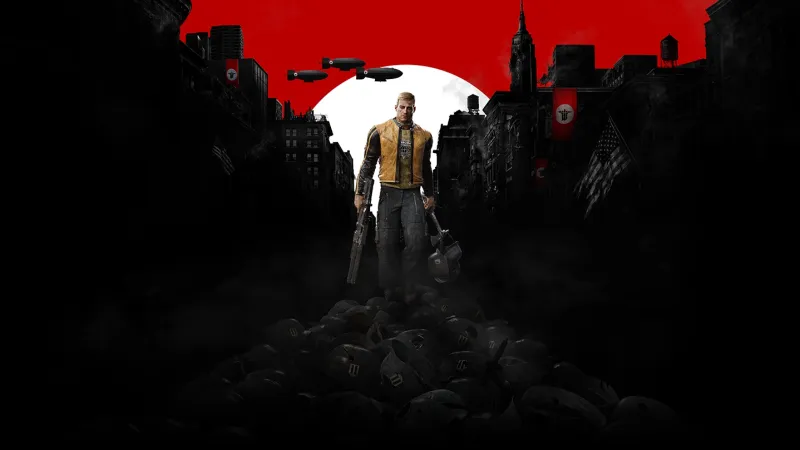
Wolfenstein 3 is officially underway at MachineGames, Xbox CEO Asha Sharma has announced.
The announcement of the third mainline Wolfenstein title in MachineGames’ trilogy comes over seven years after the launch of the fourth and most recent spin-off entry, Wolfenstein: Youngblood. Sharma’s announcement includes a teaser image of the script for Wolfenstein 3’s first chapter. MachineGames echoed this reveal with its own post, which includes a photo of a motion capture session featuring actress Debra Wilson, who plays Grace Walker in the series.
Wolfenstein 3 is officially in production at @MachineGames. One of gaming’s most important franchises, and a team that has done remarkable work bringing it forward. Looking forward to sharing more. https://t.co/YyX8LrbTvh
MachineGames’ last release was 2024’s well-received Indiana Jones and the Great Circle, but studio co-founder Jerk Gustafsson stated in a NoClip documentary last year that he hoped to finish BJ Blazkowicz’s story. Based on Gustafsson’s comment, it sounds like Wolfenstein 3 very recently started production, so we probably shouldn’t expect any substantial update for a good while.
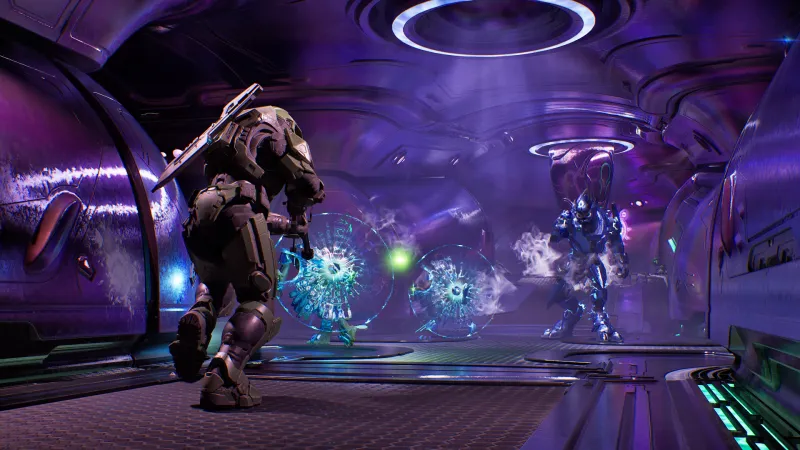
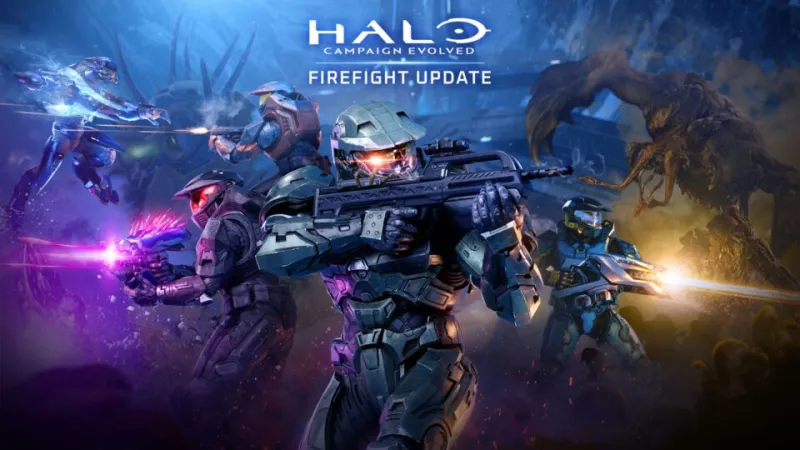
Halo: Campaign Evolved is getting the fan-favorite Firefight mode via a free update this winter, an Xbox Wire post announces. The update will allow players to team up in cooperative wave-based PvE.
Firefight, which debuted in Halo 3: ODST, lets up to four players team up to survive waves of enemies. The mode has become a popular staple and has appeared in multiple Halo games, but this will be the first time that it has been retroactively added to the original entry.
Xbox FanFest attendees, a global multi-city event, will be the first to go hands-on with Campaign Evolved’s take on Firefight. Additionally, more details about Firefight will be shared during Halo Fest in Seattle on December 12-13, where the mode will also be playable for attendees.
You can read our review of Halo: Campaign Evolved here. Subscribers can also learn about the game’s development by reading our cover story from this summer. Be sure to also read the recent Halo news that Microsoft is handing the franchise to Activision after gutting long-time developer Halo Studios.
Yesterday, a rumor emerged on X claiming that Marvel 1943: Rise of Hydra, the upcoming World War II-era superhero game led by Uncharted creator Amy Hennig, was being cancelled. After making the rounds on social media, new reports claim this is not the case, at least for now.
The rumor stemmed from a now-deleted X post from a fan account called Marvel 1943 Rise Of Hydra Countdown claiming, through supposed inside sources, that Skydance was preparing to announce the game’s cancellation. This rumor was quickly picked up and circulated by online gaming circles, gaining steam due to growing uncertainty around the game’s status.
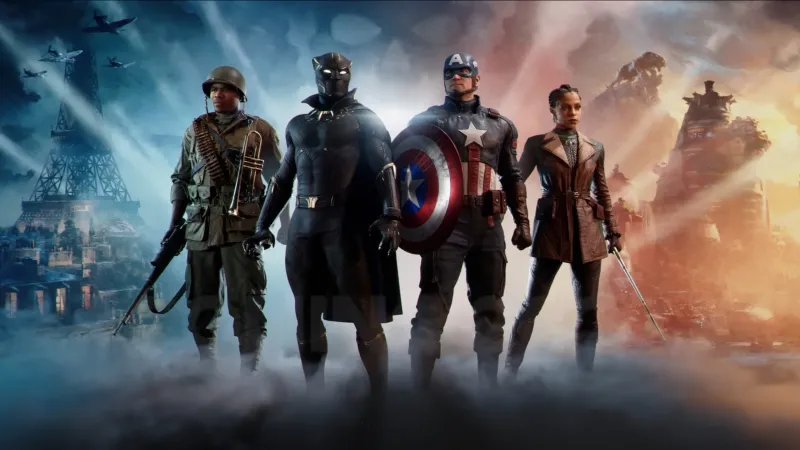
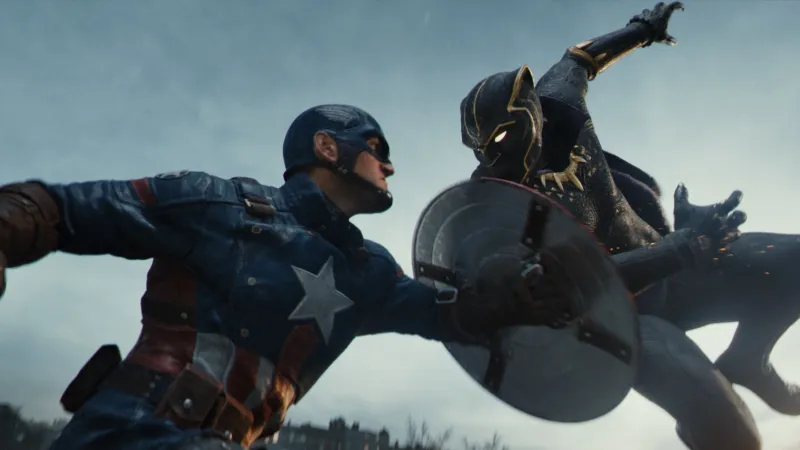
Marvel 1943: Rise of Hydra was revealed in 2022 and stars Captain America and Black Panther (Azurri, T’Challa’s grandfather), alongside Howling Commandos member Gabriel Jones and Wakandan Spy Network leader Nanali, as they battle Hydra during World War II. Developed by Skydance New Media, led by Amy Hennig, it’s been repeatedly delayed, and only cinematic footage has been released. This has understandably caused many to question the game’s fate.
However, a few hours after the cancellation rumor made the rounds, Bloomberg’s Jason Schreier reported on Bluesky that Skydance’s leadership addressed the rumor with the development team on Slack and assured them Marvel 1943 was not canceled. However, Schreier adds this could change due to the uncertainty caused by the recent merger between Warner Bros. Discovery and Paramount Skydance (Skydance New Media is a game development branch of the now-merged Skydance Corporation).
Skydance Games told the development team behind Marvel 1943: Rise of Hydra on Slack this afternoon that the game is not canceled, despite a widely circulated rumor on Twitter today claiming that it was.
Furthermore, Kotaku’s Rebekah Valentine clarified in her report that Marvel 1943 executive producer Lu Giglotti told staff in a Skydance Slack message he’d spoken directly with the executive leadership team to confirm Marvel 1943 is still alive, saying, “There is no truth to these claims.” According to Kotaku’s report, Giglotti informed the team that Marvel 1943 was approaching an Alpha milestone later this month. Giglotti also told staff not to let the rumor distract them and that Skydance was “monitoring the situation” to address in the future.
Kotaku’s report also sheds light on the game’s tumultuous development cycle. Marvel 1943 was originally pitched as a Netflix game before it was eventually turned into a console and PC title. This transition means the current iteration is “light on gameplay” and lacks substantial interactions, with players primarily using a single button to play it.
This isn’t a completely surprising revelation, as Marvel 1943 was billed as a narrative-driven, linear single-player experience when it was revealed, but the style of game has never been clear. The same reveal also saw Skydance promise the game boasted “intuitive controls and exhilarating second-to-second gameplay that captures the action and excitement of Marvel, inspired by landmark comics, television, and films, as they navigate this all-new globe-trotting adventure.” This disconnect may be attributed to Kotaku also reporting that Marvel 1943 is “well over budget,” and its overall scope has been heavily scaled back. Regardless, the outlet’s source claims the game is “close to done.”
Marvel 1943: Rise of Hydra was initially slated to launch in 2025. It was then delayed to early 2026 “to add more polish”, according to Skydance, before being pushed again to an undetermined launch window. The game has no announced platforms.
Although Marvel 1943: Rise of Hydra appears safe for now, other recent projects have not been as fortunate. Be sure to read our stories about the recent high-profile cancellations of Gang of Dragon and Fairgames.
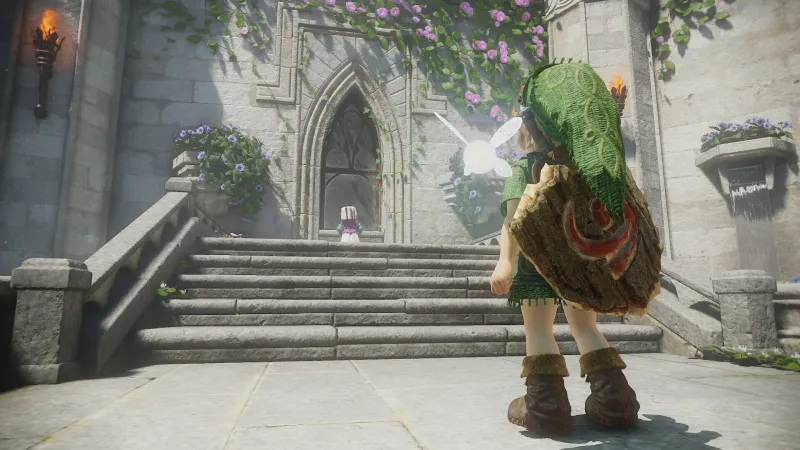
The Legend of Zelda: Ocarina of Time, Nintendo’s second remake of the original N64 game that first launched way back in 1998, is the fastest-selling Nintendo-published game on the Switch 2 ever. That accolade comes after the game sold more than 5.2 million copies in just four days following its November 5 launch last week.
This remake is already the Switch 2’s second-best-selling Nintendo game at 5.2 million units sold, behind Mario Kart World’s impressive 16.48 million copies sold to date. If The Legend of Zelda: Ocarina of Time keeps this pace up, it could one day overtake Mario Kart World, though the Mario Kart series typically holds onto that top spot. Mario Kart 8 Deluxe is still far and away the best-selling game on Switch.
Game Informer gave The Legend of Zelda: Ocarina of Time a 9.25 out of 10 in its review, with our reviewer Kyle Hilliard writing, “For many like me, the original Ocarina of Time is an impactful adventure that arrived at a time in their lives when magic still felt real. Playing the game 28 years later and appreciating the care taken to maintain and improve the original vision was the ultimate surprise of the whole experience: I didn’t expect to be so moved.”
The Legend of Zelda: Ocarina of Time launched last week exclusively on Nintendo Switch 2.
PlayStation has reportedly canceled Fairgames, the long-in-development live-service shooter being made by Haven Studios, which Jade Raymond founded in 2021. Sony acquired Haven in 2022, and in 2025, Raymond left the studio, though it remained dedicated to developing Fairgames without her. It seems the story of Fairgames is now over, according to a new Bloomberg report.
The publication reports that PlayStation will not enforce any job cuts or layoffs as a result of Fairgames’ cancellation, which comes as a surprise, and the studio will instead shift to support other first-party teams under the PlayStation umbrella. According to Bloomberg, this cancellation comes after a recent test of the game that allowed “thousands of players” to check it out did not deliver the results PlayStation wanted.
“While the test demonstrated strong operational excellence, live ops readiness and community engagement, player feedback and retention results were mixed and fell short of the goals we had set,” PlayStation executives Sean Decker and John Doyle wrote in an email to employees today, according to Bloomberg. “Combined with challenging market conditions in the PVP shooter genre, we have made the difficult decision to cease development on the game.”
Still, in an era where games are canceled and entire teams are laid off (sometimes even after releasing a successful game), it’s nice to see Haven employees are not facing layoffs.
Bandai Namco has announced it is shutting down Reflector Entertainment, the Montreal studio behind 2024’s Unknown 9: Awakening.
Reflector, founded in 2015, is a subsidiary of Bandai Namco that was acquired in 2020. Unknown 9: Awakening is the studio’s only released title, which was first revealed at Gamescom 2020 and released on October 17, 2024. The third-person action game is set within the broader Unknown 9 transmedia franchise, which includes a book trilogy, comics, and a web series, and stars Haroona, a woman able to traverse a separate dimension called the Fold. Haroona, played by The Witcher actress Anya Chalotra, uses this ability and other supernatural powers to battle a hostile secret society across India and other global locations.
Upon release, Unknown 9: Awakening didn’t make much of a critical splash; it currently has a 59 Metascore and “Mixed” Steam reviews. In November 2024, a month after Unknown 9’s launch, Reflector laid off 18 percent of its staff. More layoffs were announced in January 2025 as Reflector canned an unannounced project while confirming Unknown 9 failed to meet expectations. With Reflector’s dissolution, Bandai Namco expects to post “an extraordinary loss” of approximately €21 million on its Q3 financial results for the fiscal year ending March 31, 2027.
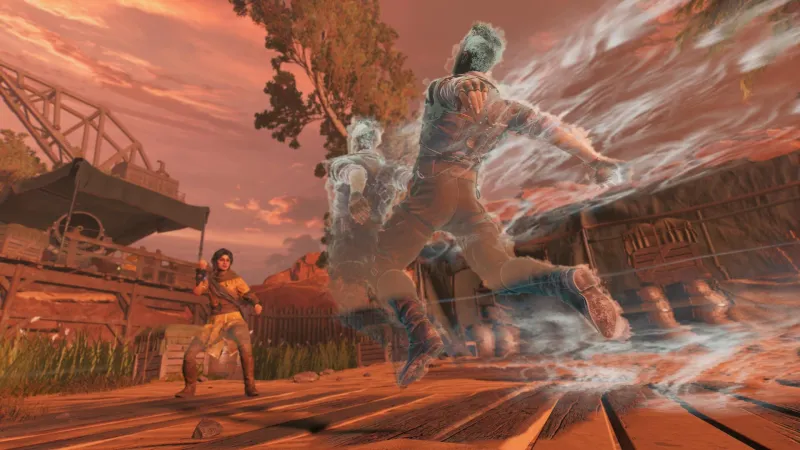
Australia Did It: End-of-the-world Railway Defense Business is a game I catch myself playing in my head long after I shut it off. Though it uses turn-based strategy as its base, it expands beyond the genre’s regular confines, blending elements from roguelikes, puzzle games, bullet-heaven titles, and the tower-defense genre. The result is an experience that demands wide-scale experimentation and rewards improvisation.
In a post-apocalyptic world where the Atlantic Ocean has dried up, you risk your life to ensure your shipment reaches its destination. Riding from station to station by train, you must build your team amid your many missions as various mutated creatures, malicious machines, and coordinated soldiers attack your convoy. Lore is doled out piecemeal and serves mostly as background dressing, but each time I learned more about the world, I became more curious.
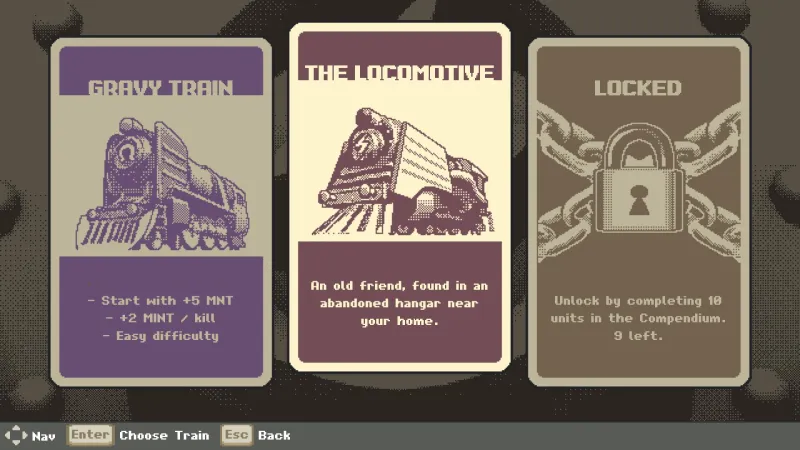
To survive the harshness of the wasteland, you must use cindermint, an in-game resource gained for surviving turns and killing enemies, to spawn defenders, with three base classes to choose from. The revolver-wielding Gunslinger is your primary damage dealer, while the Radshot applies corrosive radiation damage, and the Nomad offers a close-range shotgun blast with knockback.
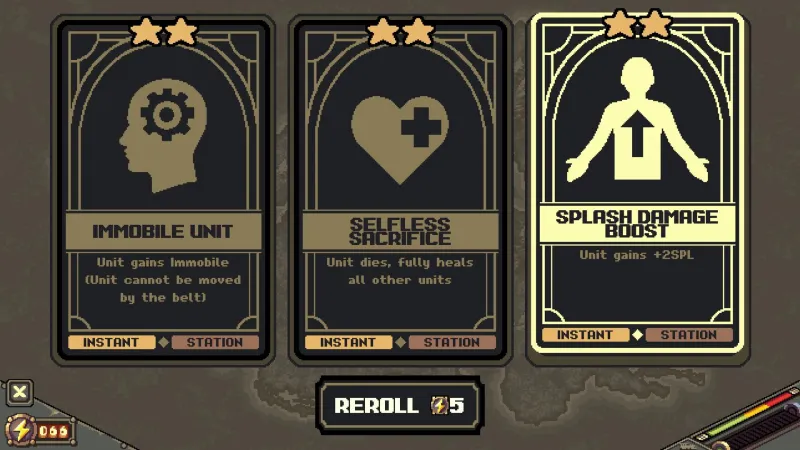
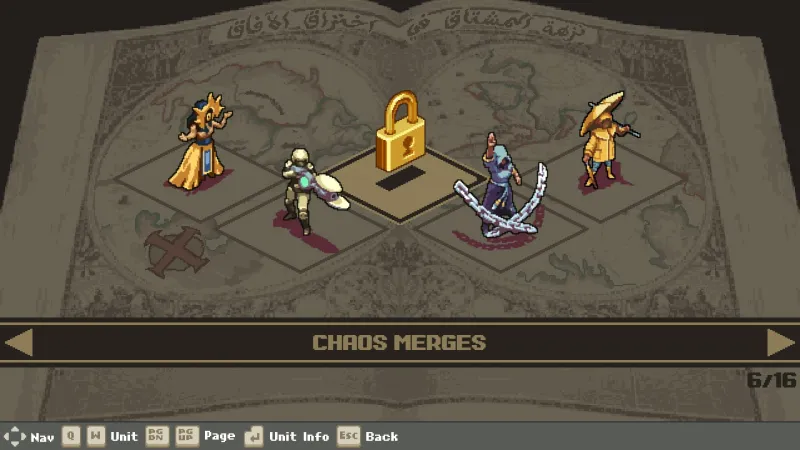
Those base-level characters offer solid variety upon which to build. And that’s where the main hook for Australia Did It comes in: experimentation through combination. In the midst of battle, you can merge two units of the same level to create new, more powerful defenders, influenced by the traits of those used in the merge. At the onset, you can merge two Nomads to create a level 2 Nomad with increased damage and knockback, but the real fun comes in combining disparate units to create completely new characters. Even now, more than 15 hours into my gameplay, I’m still concocting new combinations I want to try on my next run.
By the end of my first successful run, I had multiple level 6 characters, including a railgun-toting heavy, mages who steal health from enemies and redistribute it to nearby allies, a drone that can move beyond the walls of the station to attack enemies directly, and, my personal favorite, a dual-shotgun-wielding one-man wrecking crew. However, many of these higher-level units also possess drawbacks to consider, like the railgun scorching all adjacent tiles or the drone running out of battery if it’s outside the walls for too long. Though I started keeping notes in my head about which combinations led to my favorite results, I was grateful for a comprehensive compendium that tracked the tens of unit types I unlocked through this rewarding experimentation.
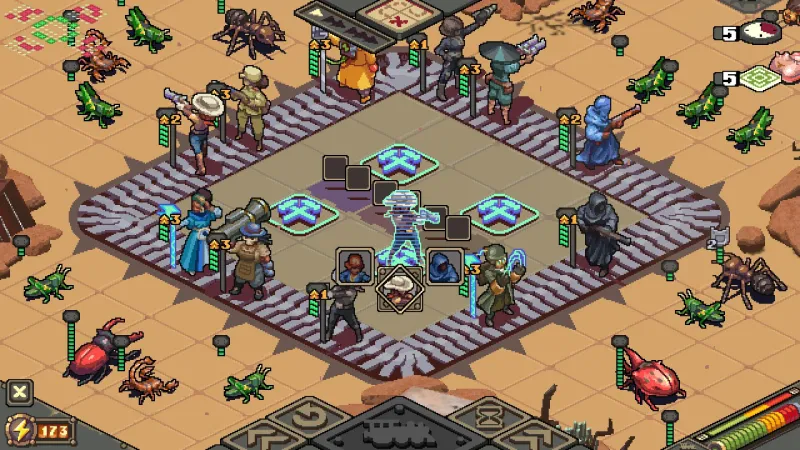
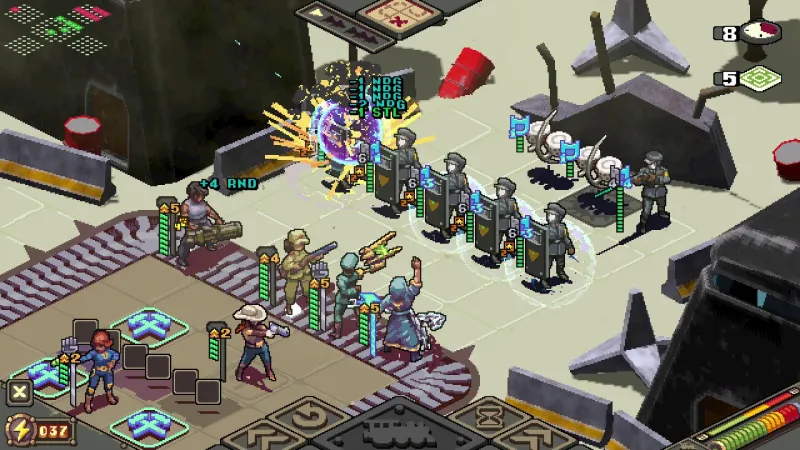
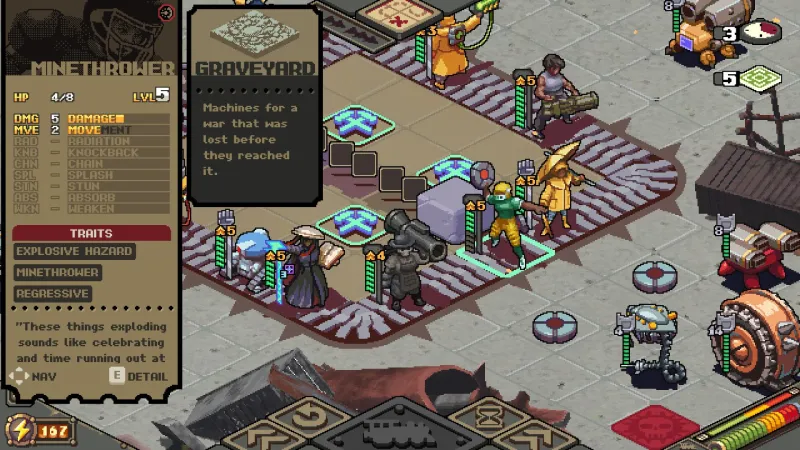
The meat of the experience places your squad on a 25-tile square board with enemies spawning from the four principal directions. Thoughtfulness and positioning are crucial, as each unit on your squad possesses different traits and movement efficiency, as do the encroaching enemies. Basic enemies often make a beeline toward the station, while others may take a weaving route or keep their distance and blast you at range. Improvising and adjusting your strategy on the fly is the most engaging part of Australia Did It, and when you perfectly adapt in the moment, or escape the scenario by the skin of your teeth, there are few better feelings I’ve experienced in a game this year.
Your goal in this phase is to simply defend the station and gather resources to strengthen your squad before evacuating and moving on to the next area. Considering each unit’s strengths, weaknesses, and capabilities while strategically positioning them around the station takes some getting used to, especially during the more chaotic stages. I fist-pumped as I watched the train pull out of a station that was about to crumble, and I lamented the loss of high-level units I had to leave behind to ensure the survival of the convoy. The process is ceaselessly thrilling, even as you begin to see how the gears work under the hood. I just wish I could say the same about the intervening train sections.
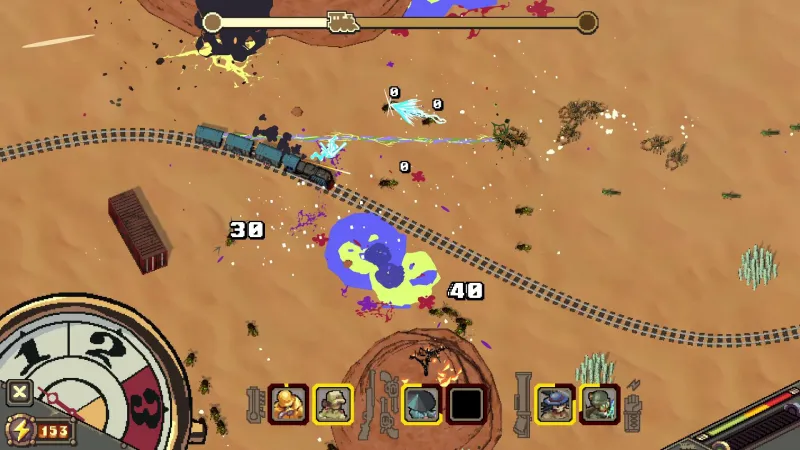
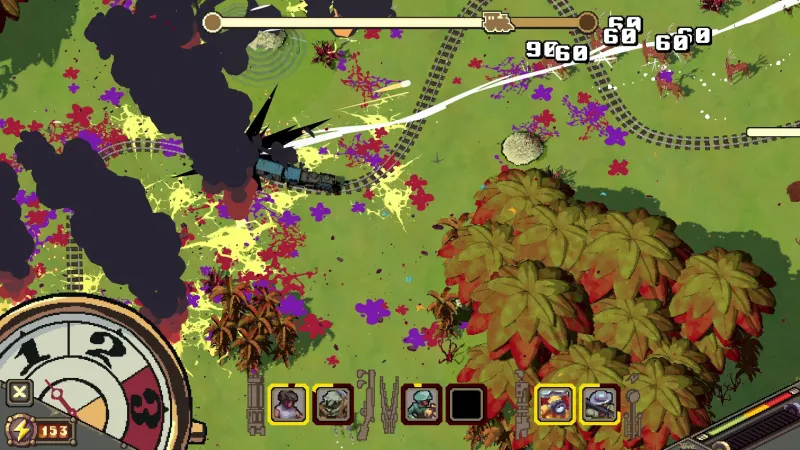
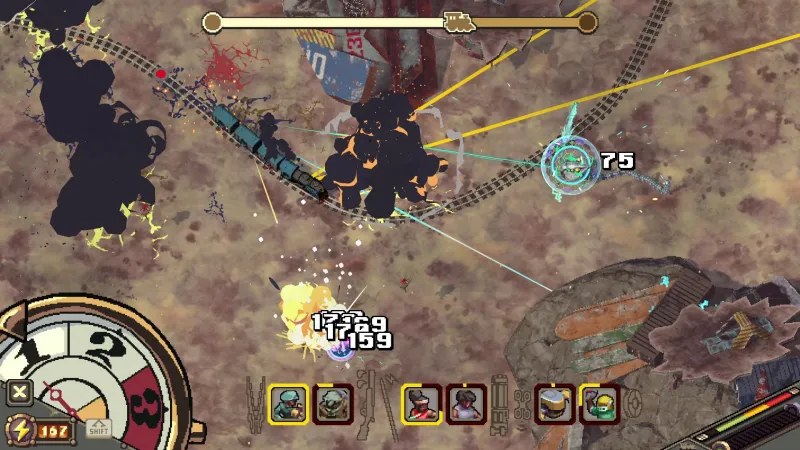
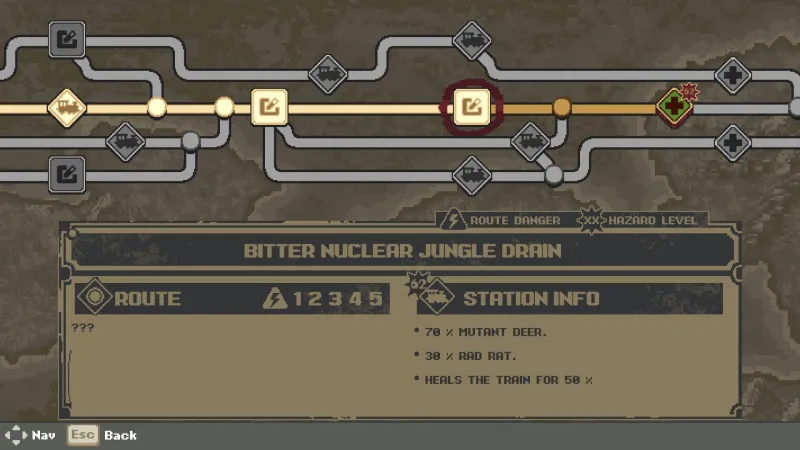
Once you escape the turn-based strategy portion, your surviving squad members hop aboard the train and chart their route. Using a basic map, you choose your next stop, with factors like enemy types and modifiers shown to you ahead of time. The top-down train segments between station-defense stages are largely passive; the units you evacuated from the previous station automatically attack swarming enemies with the same traits and perks they have in the main gameplay areas. You can aim a focus cone to instruct your units, but you’re at the mercy of the units you’ve brought. You can trigger an ultimate ability to send your defenders into overdrive, but I rarely needed it.
While I love the idea of intentionally crafting a team that’s good at both the turn-based strategy and bullet-heaven transport sections, I was never fully engaged getting from point A to point B. Instead, I often caught myself checking how much longer before my train arrived at the next station; these sections can be completed in a minute or two, but that doesn’t alleviate the feeling that it’s a step down from the other gameplay. These novel portions aren’t bad by any means; they’re merely an average part of an otherwise excellent experience.
Looking back on the hours I poured into Australia Did It, the forgettable train segments will occupy only a small part of my memories, just as they do in each run. Instead, what will stick with me for months to come are the creative combination mechanics, the outstanding turn-based defense system, and the thrill of uncovering the mysteries of this bleak, yet engaging world.
That’s not shocking – GTA VI is, by many metrics, the most anticipated game in history, with its predecessor, Grand Theft Auto V, selling nearly 235 million copies since its launch back in 2013. There’s also the fact that Rockstar Games is not releasing a physical edition of GTA VI, per se. Yes, you can go to a store to pick up a GTA VI box (and you can do so today, allowing you to preload the game), but inside that box will be a download code for a digital version of the game – you won’t find GTA VI on a physical disc. So, naturally, many players are opting to purchase the game on digital storefronts like the PlayStation and Xbox game stores.
“Grand Theft Auto VI, the most preordered title of all time on the Microsoft Store, launches November 19,” an Xbox blog post reads. “Considering the unprecedented demand, we encourage everyone to begin preloading as soon as possible to ensure you’re prepared for launch day.” PlayStation echoes this statement with a blog post of its own that reads, “Grand Theft Auto VI is now the most preordered game in the history of the PlayStation Store. Given this unprecedented demand, we’ve joined with Rockstar Games to allow players to start preloading the game nine days early, so they’re ready to play on launch day.”
There you have it: People are very excited about Grand Theft Auto VI.
Grand Theft Auto VI launches next week on November 19 on PlayStation 5 and Xbox Series X/S.
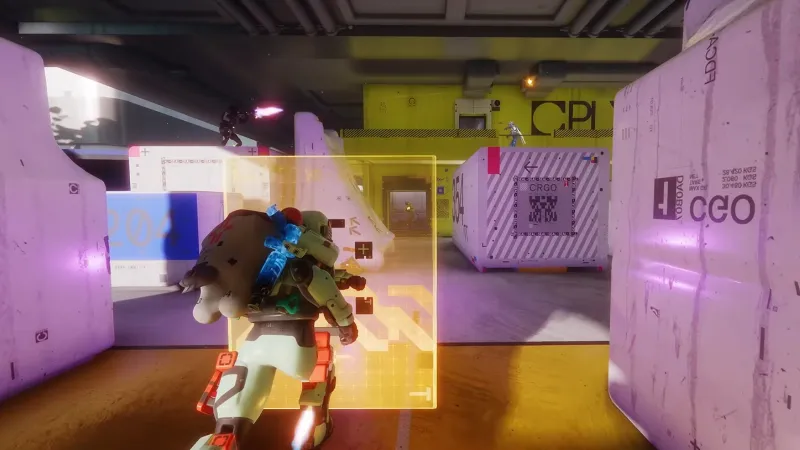
Bungie has detailed its upcoming Symbiosis update for Marathon, which introduces several significant modes next month. Chief among them is the new permanent PvE mode, which Bungie previously experimented with and promised earlier this year.
Symbiosis is headlined by Expedition, a co-op PvE destination with roguelite elements. Expedition pits teams of players against escalating challenges and offers randomized upgrades called Flash Boosts to increase their odds of success.
The Perimeter zone has also been expanded with the new Burrows and Reservoir areas. Another addition is Limbo, a new social hub for players to gather that features a firing range. You can also try out the new sword-wielding Bishop Runner Shell alongside new weapons and gear, such as the Maverick pistol, throwing knife, hack grenade, and V17 flamethrower. Lastly, you can test your skills against other players in the beta PvP Deathmatch mode.
Symbiosis arrives in Marathon on December 8. An open play week will kick off the same day, allowing new players to experience all of Marathon’s content for free until December 15.
The Symbiosis update marks Marathon’s evolution into a more co-op-friendly, PvE experience as its initial focus on PvP extraction has struggled to sustain a substantial audience since its March 5 launch. Bungie announced in September that it plans to spend the rest of 2026 improving Marathon’s core mechanics and features while giving players more agency for how they engage with it beyond competitive PvP.