Arc Systems Works revealed a new team and characters for its upcoming tag team fighter Marvel Tōkon: Fighting Souls during Evo 2026 this weekend. One hero, one villain, and one fourth-wall-breaking mercenary are joining the fight.
Blade, Loki, and Deadpool are the latest additions to the roster. Blade relies on his Muramasa blade to slice apart foes while relying on guns and throwing knives to keep them at bay from afar. Loki bashes enemies using a flaming sword, a staff similar to the one that housed the Mind Stone in The Avengers, and likely plenty of other tricks. An Asgard stage has also been revealed alongside the trickster god. Lastly, Deadpool looks as wacky as he did in Marvel vs. Capcom 3, with a moveset bursting with a barrage of comedic chatter and fighting game references (including his own rendition of Mortal Kombat’s “Toasty!”). Deadpool is also voiced by Nolan North, who reprises the role after voicing the character in his eponymous 2013 game.
The three, along with the previously announced Ghost Rider, form a team called the Samurai Outriders in the game’s narrative. They’ll battle rival factions such as the Fighting Avengers (Captain America, Iron Man, Hulk, Black Panther), the Knights of Doom (Doctor Doom, Magneto, Carnage, Green Goblin), Unbreakable X-Men (Wolverine, Magik, Storm, Danger), and the Amazing Guardians (Spider-Man, Star-Lord, Ms. Marvel, Peni Parker).
Marvel Tōkon: Fighting Souls launches on August 6 for PlayStation 5 and PC.
Star Fox is back! And by that, of course, I mean the 1997 Nintendo 64 game is literally back. Who knows how long we will be waiting for a proper, new Star Fox, but you know what? The remake, simply titled Star Fox, is pretty dang good. Turns out doing a faithful remake of a great game, even an old one, usually works out pretty well.
That’s the big game release this week, but there is plenty of other stuff happening across the industry. Check out some stories below before diving into our weekend recommendations.
I proudly proclaimed, “I don’t want another remake of Star Fox 64! We have that at home,” while pointing at my 3DS that has been dead for years and I don’t know where the charger is. But then I got my hands on the 2026 Switch 2 remake of Star Fox 64 from Velan Studios and remembered, “Oh yeah. This game is very important to me. And also this remake is well done.”
I don’t know if this remake, released for the Switch 2 yesterday, will inspire a new generation of Star Fox fans. But for those like me who played the Nintendo 64 game repeatedly, it’s a fun, nostalgic revisitation of a great game. The soundtrack is a particular highlight, but seeing every world with a 2026 coat of paint is also wonderful. And importantly, flying the Arwing feels right.
Also worth noting, a free demo for the game is available if you want to get a taste.
The Drifter was released on Steam in July of last year and is currently boasting “overwhelmingly positive” reviews; this week, it is available on both Switch and Switch 2. The game follows Mick Carter, who must solve a mystery surrounding his own death as his consciousness is repeatedly placed back into his body moments before he drowned in a reservoir by sci-fi soldiers. It’s a classic point-and-click adventure game with wonderful pixelated visuals, but it is designed to be played with a controller. It has a unique control system that lets you interact with the environment and characters without mousing around the screen with a thumbstick.
I missed the game on Steam, though I thought it looked awesome at the time. Though I have not made it far into the Switch 2 version, I am enjoying its look, the ease of play, and the story. I have been reviewing a lot of twitchy games like Star Fox and others you will see on the site soon, so I am in the mood for something a little slower-paced and thoughtful. Maybe you are, too.
Rhythm Heaven Groove Demo
Kyle Hilliard
I am a big fan of the Rhythm Heaven series and reviewed both Fever and Megamix. I remember looking up pre-YouTube videos of the Japan-only Rhythm Heaven for Game Boy Advance (Rhythm Tengoku) on the computers at my college library and pantomiming the button presses to remove the onion’s beard thinking, “Man. I wish I could actually play this.”
Thankfully, you don’t have to suffer like I did because there is a free demo featuring the first collection of rhythm minigames available to download on Switch, and I highly suggest you do. It’s a game that is hard to appreciate in trailer form, as it is all about the feeling of “playing” music. And it’s weird as hell.
Dark Scrolls
Marcus Stewart
The latest joint by Doinksoft, makers of fun, quirky titles like the Metroid 2-inspired Gato Roboto and action platformer Gunbrella, is back at it with this unexpectedly engrossing auto-scrolling action game. As one of three starting characters, you’ll blast through barrages of incoming enemies either as a wizard lobbing magic orbs, an axe-tossing barbarian, or a dagger-throwing rogue. Being forced to constantly move forward due to the auto-scrolling stages while dodging tricky enemy patterns makes survival challenging, especially since the run-based structure means starting from scratch after each failure.
However, unlocking various upgrades, such as imbuing weapons with elemental damage, faster attacks, or even shooting fire from your feet, helps extend runs. I wasn’t hot on Dark Scrolls during my first run; auto-scrollers don’t usually do it for me as a platforming fan. But after the third attempt, the hooks started to dig in. The itch to reach a castle at the end of the game, a path that splits along the way by fulfilling certain conditions, is real. I felt genuine excitement when I lasted longer than a previous run, and avoiding attacks while blowing away foes is satisfying. Thanks to its format, I’ve enjoyed fitting in a run or two of Dark Scrolls between bigger games and look forward to conquering my current roadblock: the second-level boss.
Tabletop Pick – Jungo
Matt Miller
For a fast-playing card game that can be slotted in after dinner, or between rounds of a more involved and bigger game, Happy Camper Games Jungo has become one of my go-to options. It’s a hand-building game where you’re trying to get rid of all your cards. The twist is that you can’t rearrange the cards in your hand once they’ve entered it, creating novel challenges for how to get closer to victory. Additionally, you can only play cards that all have the same numerical value, and if the cards played depict a higher number or it’s a larger number of cards than what is currently played onto the table. It’s simple to grasp once you start in, and even inexperienced or younger players can grasp the concept, but more experienced players will love the unique structure and flow of play.
Dead Or Alive 6 Last Round
Brian Shea
When it originally launched in 2019, Dead or Alive 6 didn’t exact rise to the top of our franchise ranking. While our 6.75 out of 10 review for the base version of the game was critical of the online suite and absolutely eviscerated the story, the core fighting mechanics remained strong, just as they have for much of the series. Dead or Alive 6 Last Round doesn’t reinvent the story, but it does make this the best place to experience the sixth mainline entry of the long-running franchise, and the mission-driven DOA Quest mode is still as fun today as it was back then. Optimized for current-generation hardware, Dead or Alive 6 Last Round includes 29 characters, including 5 DLC fighters. On top of that, a free-to-play “Core Fighters” edition allows players to sample the package with limited offerings. If you’ve ever been curious about the Dead or Alive series or are just looking for a good excuse to jump back into the fight with Kasumi, Ryu Hayabusa, Ayane, and the rest of the roster, DOA6 Last Round seems like a decent starting point.
Legendary boxer Marvin Hagler once said, “It’s difficult to get up and do roadwork at five in the morning when you’re sleeping in silk sheets.” While this refers to getting rich through combat sports and therefore losing the work ethic you once had, the notion could also be applied to EA Sports and its lack of competition. The Madden franchise, with its NFL exclusivity, has long drawn the ire of fans for a perceived lack of innovation due to its monopolization of the NFL video game space, and after spending many hours with EA Sports UFC 6, I’m starting to worry the same problem might have transposed to this franchise as well.
To be clear, the gameplay in UFC 6 is the best this franchise has seen. Thanks to new ways of differentiating the fighters, either via animations, movements, tendencies, or signature ways of attacking, EA Vancouver finally cracked the code on making combatants feel distinct. And those fighters largely look incredible; though your mileage will vary based on fighter popularity, the biggest stars’ likenesses are often dead-on in UFC 6. This permeates the experience, whether you’re playing a quick one-off fight in the game’s capable online suite or diving deeper into longer-tail modes.
UFC 6 carries forward the series’ pedigree of action-packed fights inside the cage; though grappling options are always available, in my experience, wrestling-heavy affairs are rare. That’s a good thing, as grappling continues to be a sore spot, straddling the line between being too cryptic and too mindless. Instead, fights often quickly develop into high-speed chess matches and violent car crashes. Thanks to improved blocking and more variance in striking, it pays to be strategic, particularly as you manage your stamina over the course of an extended bout. And thanks to an evident focus on approachability, anyone can ease into the action with optional features like slow-motion in-fight moments, beginner control schemes, and simplified grappling.
This entry also introduces a Flow State mechanic, which uses a charging meter and aims to emulate the feeling of a fighter being in the zone. Once you enter Flow State, activated with a push of the d-pad, the background noise fades away, and your fighter temporarily gains a performance boost. This addition effectively captures the momentum shift that can occur when everything starts clicking, but it also veers the action heavily to the arcade side of the fence.
However, like many UFC stars past and present, the in-Octagon performance isn’t the problem – it’s everything that happens outside of the fights. The M rating affords more blood in the cage, but it’s more often used to listen to (mostly) uncensored rap and nu metal songs on repeat in the poorly optimized menus. You still have access to all the modes of recent games; I enjoyed putting together my dream fight card, setting up a one-night tournament like the early days of the promotion, or pulling off fantasy matchups between two legends in their primes, but I’m always drawn to the longer-form experiences.
UFC 6 touts two distinct career modes, but unfortunately, both fall flat. The standard career mode features the same loop as past games: You sign to fight a specific opponent, then manage your week-by-week bandwidth by completing a combination of sparring and promotional activities. However, this quickly becomes repetitive, as you complete the same few activities multiple times per fight with a career spread across 30-plus fights. You can simulate some of the activities you’ve already completed, but you get fewer benefits, and with all the promotional activities simply being menu items you select, it doesn’t take long for the tedium to set in.
Even the new player-agency elements fall woefully short of expectations, giving you occasional binary choices that range from how you trash-talk to whether you want to fall for your coach’s get-rich-quick scheme. These feel inconsequential at best and outright annoying at worst; by the end of the first couple of years, I was hoping to change camps like in past games, but that is one area of player agency that’s missing. Normally, I’m glued to this mode with each new entry, but since I’ve played all previous UFC games, UFC 6’s career mode quickly gave me an unshakeable sensation of “been there, done that.”
It’s perhaps why I was so hopeful for The Legacy, a narrative-driven twist on career, where you take control of a fictional UFC prospect. This mode, with its M-rated story and promise of fights that spill outside of the Octagon, has a ton of potential, but once you get past the short, forgettable story, it’s just the standard career mode without your custom fighter. After seeing the story through to the end, you can continue playing career mode as the narrative’s protagonist, but I left The Legacy shortly after its narrative conclusion, likely never to return.
The one UFC 6 mode that impressed me is the Hall of Legends, a new interactive museum that highlights three current UFC fighters. Walking around a lovingly crafted museum themed after Max Holloway’s home of Hawaii or one that pays homage to Zhang Weili’s Chinese origin in third person delivers a cool immersive experience, giving you bite-sized documentaries of each fighter and tasking you with re-creating iconic moments from their careers in-game. It’s here that the dev team’s love of the sport really shines, but when there are only three fights to relive per fighter, and the documentary footage seems to be all repurposed from past UFC content, I was left wanting more.
Instead, the one area that feels completely excessive and largely unnecessary is perhaps the most baffling: The Gym. This area serves as a menu-based training system, where you navigate some of the laggiest and most unwieldy screens to assign trainers to fighters to arbitrarily unlock cosmetic items. It almost serves as a chart-your-own-path daily login bonus, with each new level for every fighter unlocking new items to equip, but it all feels so tiresome and unnecessary. In fact, the menus throughout the entire UFC 6 package are so laggy that they bring the menu-heavy experiences of The Gym and both career modes down in noticeable ways. In some cases, they’re so poorly optimized that the music even skips as the next screen loads.
UFC 6’s incremental gameplay improvements and bewildering stagnation fly in the face of the fact that it’s been three years since the last entry in the series. With annualized sports franchises, you almost expect iterative innovations year after year, but after such a long wait, I expected a bigger bump with UFC 6. The improved character models, graphics, and fighter distinctions are welcome improvements, but when almost everything else feels so familiar or inessential, I can’t help but wonder if EA Sports’ UFC franchise has experienced too much time uncontested at the top.
Somehow Star Fox returned. Yesterday. With the release of Velan Studios’ remake of Star Fox 64 for Switch 2. And it’s good! It is, expectedly, making us reflect on the larger Star Fox franchise. We originally published this list around the launch of Star Fox Zero back in 2016, but we’ve updated today with new games and have reconsidered our order.
You can check out our list below.
10
Star Fox Guard
Release Date: April 22, 2016 – Platform: Wii U
Its inclusion on this list is somewhat up for debate, as it shares little in common with any of the other Star Fox games in terms of mechanics, but it is called Star Fox and features Star Fox characters. It’s a bonus game included with Star Fox Zero and could also be purchased on the Wii U’s eShop, and there simply isn’t much there. The game stars Slippy and his uncle Grippy as they play tower defense with a series of turrets connected to security cameras. It’s a relatively shallow experience that can be skipped.
9
Star Fox 2
Release Date: September 29, 2017 – Platform: SNES Classic Edition
Nintendo can be a bizarre company, but the saga of Star Fox 2, its development, and eventual release, is arguably the strangest way Nintendo has ever released a video game. Following the success of the 1993 Star Fox, development on a sequel began fairly quickly. The game was reportedly 95 percent complete and nearly ready for release, but Nintendo decided to shelve the game and focus on the upcoming Star Fox 64. And it lived on that shelf for about 20 years until it was included in the SNES Classic Edition, the miniature Super Nintendo console that included a collection of beloved SNES games. And now the game is also available on Switch as part of the Nintendo Switch Online subscription service.
But how is the actual game, and how does it rank compared to the rest of the Star Fox series? Technically, it’s a very impressive game considering it was being created right before the transition into widespread 3D gameplay, but playing it today feels dated even when you put yourself in the headspace of the potential timeframe it would have released. As a point of reference, the PlayStation would have already launched before Star Fox 2 was released. We are glad it was finally released and wasn’t cursed to never officially exist.
8
Star Fox Zero
Release Date: April 22, 2016 – Platform: Wii U
Star Fox Zero is half remake of Star Fox 64 and half series reboot, but the pieces don’t quite fit together. There are moments where the awkward motion controls come together to create a compelling space-combat experience, but those moments are intermittent and difficult to consistently recreate. But even without the motion-control barrier, Zero often feels dated. It does fly closer to the true classic Star Fox experience fans want, however, than Star Fox Assault or Adventures’ entries in the franchise.
7
Star Fox: Assault
Release Date: February 15, 2005 – Platform: GameCube
Developed by Namco, Assault served as an almost-return-to-form Star Fox sequel after Star Fox Adventures. The game featured some on-rails Arwing sequences, but was pulled down drastically by its myriad on-foot segments. Those sections were hampered by loose controls, bad AI, and repetitive mission objectives. There was some fun to be found in the multiplayer, but overall, Assault ranks low in the Star Fox series.
6
Star Fox Command
Release Date: August 28, 2006 – Platform: DS
Directed by Dylan Cuthbert, who was instrumental in the creation of the original SNES Star Fox and its sort-of-cancelled sequel, Command is the Star Fox game that many often forget. It’s part strategy game, as you have to map out your Arwing’s routes turn-by-turn, and part standard Star Fox shooter, as all the encounters play out like all-range-mode fights of other Star Fox titles. The game features a hefty amount of story, with Slippy preparing to get married, Peppy’s daughter Lucy making an appearance, and a struggling romance between Fox McCloud and Krystal from Star Fox Adventures. The game uses touch-screen controls for the action, which was an understandable barrier for some, but it’s the Star Fox game many skipped that’s worth a look.
5
Star Fox Adventures
Release Date: September 23, 2002 – Platform: GameCube
Star Fox Adventures started its life as a different game called Dinosaur Planet before Team Star Fox injected themselves into Rare’s reptilian adventure. The Arwing moments are few and far between, but the Adventures portion of the game is a solid experience that holds up today. It shares some commonalities with the puzzle-solving and exploration of Zelda and offers the closest look at these characters and their world that the series has ever offered.
4
Star Fox
Release Date: March 23, 1993 – Platform: Super Nintendo
Seeing the original today may not impress those who didn’t grow up with it, but at the time of release, Star Fox was a mind-blowing powerhouse. No one knew the Super Nintendo was capable of rendering three-dimensional objects, but here was a whole game dedicated to the surprising technology. Today, the game’s framerate is laughable, often clocking in at the single digits, but it is still a highly playable and impressive game.
3
Star Fox 64 3D
Release Date: September 9, 2011 – Platform: 3DS
The 2011 3DS game, Star Fox 64 3D, is a remake of Star Fox 64, but it’s a good update that goes the extra mile to add new elements. The game received a complete visual overhaul, and its on-rails nature made it an excellent showcase of the stereoscopic 3D capabilities of the fairly new-at-the-time 3DS handheld. The game also included the option to use motion controls, but those could thankfully be turned off at any time.
2
Star Fox 64
Release Date: June 30, 1997 – Platform: Nintendo 64
After a teased Star Fox 2 that disappeared, and rumors of a Star Fox for the doomed Virtual Boy, 1997 finally saw the release of a new Star Fox game four years after the original. The game came about a year after the launch of the Nintendo 64 and proved to be well worth the wait with no reliance on gimmicks (though it did come included with a Rumble Pak), great controls, realized personalities with full voice acting (a rarity for Nintendo 64), and plenty of surprises down each of its assorted paths. The game continues to be fun to replay today as it relies fully on what Star Fox does best.
Star Fox (2026) is a great remake of a great game, and the result is that we’re happy to award it the number one spot on our Star Fox ranking list. When the re-orchestrated music kicks in while firing lasers that cast beautiful modern shadows against the giant spaceships that just can’t hit me, and the bad guys complain about how cool and good we are at flying a spaceship right before they blow up, we’d be lying if we said we weren’t having a great, nostalgic time.
We’re not including it on this ranking because, frankly, it is not a Star Fox game. But Starlink: Battle for Atlas is absolutely worth mentioning when it comes to discussing the Star Fox series. Playing the Switch version of the game contains much more than a Fox McCloud cameo – he is integrated into the game’s story in a big way. And, the game also included a physical Arwing toy. It was the most exciting thing we had from Star Fox between the release of Star Fox Zero and the release of Star Fox (2026).
To learn about the assorted gimmicks that have invaded the Star Fox franchise, head here. For our review of Star Fox Zero, head here. For our review of Star Fox (2026), head here.
In this week’s episode of The Game Informer Show podcast, special guest Patrick Susmilch joins the crew to discuss the remake of Star Fox 64, Steam Next Fest demos like Penguin Colony and Duskfade, Charles’ review of The Adventures of Elliot, Dark Scrolls (no, that’s not a typo), Saros, and more. Susmilch performed on Last Comic Standing (you’ll never guess which famous comedian liked his set), but is undeniably best known for his appearance here at Game Informer in 2014, where he discussed making terrible XNA games for Xbox with his friends. He also developed a narrative game about performing bad stand-up comedy, Open Mic Simulator.
Oh, also, everyone’s favorite Star Fox character, Yaru de Pon, is a guest for the duration of the show, but we don’t like to talk about it.
The Game Informer Show is a weekly podcast covering the video game industry. Join us every Friday for chats about video game reviews, news, and exclusive reveals alongside Game Informer staff and special guests from around the industry. Support the show by subscribing to our physical video game magazine!
Haunted Chocolatier is the highly, highly anticipated follow-up to Stardew Valley, one of the biggest indie games of all time. But while this chocolate-making spiritual successor was announced way back in 2021, we’ve seen very little of the project, save for a handful of blog posts on creator ConcernedApe’s website. The last update came in late January, and now, just under six months later, developer Eric Barone is checking back in with a new post to reassure fans he’s still working on the game and explain why he’s shown so little.
First, Barone thanks everyone for their patience, and gives some insight into why his development process is so time-consuming. “Lately, I’ve been revisiting the recipe book for making chocolates,” Barone writes. “As with many things in the game, I’ve iterated on this many times, each time bringing it closer to its final form. To me, it’s not a simple task, as I torture myself over every last detail. This is a UI you will be using fairly often, so it has to be perfect.”
While this recipe book is one of the core mechanics, he adds that he likes to “fuss over” his whole game this way. Ideally, the game will come out with a level of polish he’s satisfied with (like how Stardew Valley is now), but that also means the process will take a long time. On that note, he says that his eye for detail and refinement is also the reason there are so few screenshots or gameplay clips in the wild.
“Side note… please excuse me, but I don’t like to share too many screenshots, or even talk about the systems in too much detail, while the game is in development,” Barone’s blog reads. “Partly, it feels like I’m serving a half-baked bread. I would rather serve a fully baked bread. Also, I know that many parts of the game will likely evolve and change before release, so if I reveal them early, I risk disappointing players if the final product does not match their expectation.”
Haunted Chocolatier currently has no release window. While Barone said he hoped to release the game within five years back in 2025, he has since clarified that this isn’t a hard and fast date. “The bottom line is, I don’t want to give a release date,” his January update reads. “The game will come out when it’s done.”
Last November, FX announced that a limited Far Cry anthology series was in production. We already know the series is helmed by executive producers Noah Hawley (creator of FX’s Fargo and Alien: Earth) and Rob Mac (creator of It’s Always Sunny in Philadelphia), the latter of whom will also star in the show, but it’s been announced that Lizzy Caplan is joining the cast.
Caplan most recently starred in Netflix’s Zero Day and the FX limited series Fleishman Is In Trouble, earning an Emmy nomination for the latter. The actress’s extensive credits also include Now You See Me 2 and Now You See Me: Now You Don’t, the Paramount+ series Fatal Attraction, Showtime’s Masters of Sex, and the 2023 horror film Cobweb. Personally, we remember Caplan best as Janis Ian in Mean Girls, but that’s just us.
Far Cry has no premiere date, and it’s unknown if the anthology series, which means each episode features a new setting and cast, will adapt any of the existing games or tell original stories. Far Cry is set to air on FX, Hulu, and internationally on Disney+.
Ubisoft has another live-action series based on one of its IPs in the works. Netflix greenlit an Assassin’s Creed series last year, and you can read more about that here.
Capcom held one of its annual summer Spotlight showcases today. While it was light on major announcements, we did learn more about Dragon’s Dogma 2: Dark Arisen, the reveal of new story DLC for Monster Hunter Stories 3: Twisted Reflection, and smaller updates for Onimusha: Way of the Sword and Resident Evil Requiem. Here’s a summary of each notable announcement.
Monster Hunter Stories 3: Twisted Reflection
Additional Side Story: Rudy DLC is available today for $9.99 (free for Deluxe/Premium edition owners). The narrative explores the origin of Rudy, the Royal Feylne, and his ancestors.
Players can challenge the powerful elder dragon Nergigante
Downloading the update with a completed save file lets you challenge a harder version of the final battle. Winning this version of the fight turns all existing monsters into Royal Monsters in the field for stronger battles.
Resident Evil Requiem
The previously revealed Grace Ashcroft and Leon S. Kennedy Amiibo have a release date: June 30
Dragon’s Dogma 2: Dark Arisen
The expansion’s story takes place in the new northern region of Norgan and centers on the fallen dragon and a mysterious woman hunting it named Eir.
Introduces 12 unique dungeons
Adds an expanded character editor
Norgan features Relics players can find that can be appraised and forged into weapons/armor, which are stronger and can have special effects/skills
An August update is planned before Dark Arisen’s launch that will add additional save slots, improve performance, adjust the Dragonsplauge condition with more treatment methods, and raise weapon skill slots to six.
Onimusha: Way of the Sword
New gameplay footage shows off a battle against a newly revealed Genma, Dohatsu-ten.
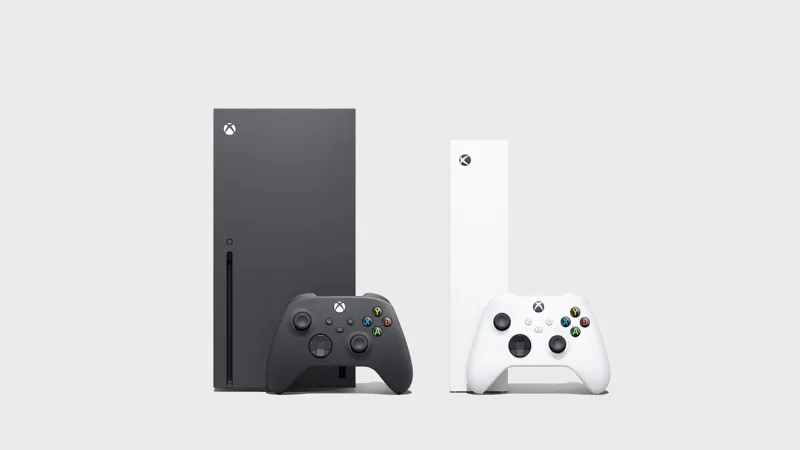
Xbox consoles are getting a third price increase in roughly 13 months. Effective August 1, the costs of certain Xbox models are being raised worldwide by no less than $100.
An Xbox Wire post states that the 512 GB models of Xbox will increase in price by $100 and the 1 TB models by $150 in the U.S. The 2 TB Xbox Series X model is also being discontinued.
Xbox does not list the new prices, but this update would indicate that the affected consoles will soon be sold at the following prices:
Xbox Series S 512 GB – $499.99 (currently $399.99)
Xbox Series S 1TB – $599.99 (currently $449.99)
Xbox Series X Digital 1 TB – $749.99 (currently $599.99)
Xbox Series X 1 TB – $799.99 (currently $649.99)
It’s worth noting that Xbox recently revealed a limited 25th anniversary edition of the Series X with 1 TB of storage, launching in November. The price of this console has not been revealed, but one would have to imagine it, too, will be priced at an even higher premium.
This most recent price adjustment follows previous price hikes in May and October of last year. Xbox appears to acknowledge the frustration these changes will likely create for consumers and cites the ongoing component crisis as the primary factor for the price adjustments. The company even says it expects this supply problem to worsen by the fall of 2027. Their message reads,
“Last October, we increased XBOX console price by $20-$70 in the U.S. We hoped another price increase would not be necessary, and we have spent the last several months working with suppliers on options. Unfortunately, console storage and memory prices have increased by more than 2.5x and we expect another doubling by the fall of 2027. The entire consumer electronics industry is struggling with the current components crisis, but the effects are particularly hard on consoles. Unlike phones, computers, speakers, and other consumer devices, consoles are typically not sold at a profit, but instead for less than they cost to make.”
The news is another unfortunate blow for Xbox, which has made headlines in recent weeks due to reports of significant layoffs set to hit the gaming division in the coming weeks, if not days. Following the announcement of an Xbox reset by CEO Asha Sharma and chief content officer Matt Booty, several Xbox-owned studios are reportedly at risk of being closed or spun off. Compulsion Games, Double Fine, and Ninja Theory have reportedly been negotiating their future, with further reports indicating Xbox unveiled Ninja Theory’s next game, Senua, during Summer Game Fest to attract a potential buyer for the studio.
Earlier this month, NBA The Run arrived on PS5, Xbox Series X/S, and PC to mixed reviews. Game Informer contributor Danreb Victorio gave it a 7.25 out of 10, summarizing his review by saying, “As it is, it’s too barebones to wholeheartedly recommend, but there’s a great game of basketball waiting for you if you don’t mind only playing online matches.” Today, developer Play By Play Studios announced plans to rectify that when it revealed its roadmap, which includes more content, including an campaign mode.
In a new blog post, Play By Play revealed what fans can expect in the coming weeks, months, and even next year. It all starts today, with a new patch that addresses some bugs and tweaks gameplay, but that’s the least consequential of the updates the studio laid out. Next month, players can expect new content and three new players, with a hint towards content surrounding the recent NBA Draft.
In August, the title’s seasons will kick off, starting with Summer Heat, which will reward an in-game championship belt that evolves over the course of the season. This update will bring a new drive camera to provide a more modern gameplay feel, as well as a comms wheel, practice mode, two new rulesets, new shop items, leaderboards, and another NYC court playable in both daytime and tournament variations. This August update will include updates to the player AI, HUD, and balancing. You can also expect more players, with Play By Play potentially hinting at this update including legends from the past.
Then, in the fall, new content will continue with new seasons arriving every two to three months, with the studio eyeing new features like Ranked and Ladders for its online play and voice chat. Then, finally, as the blog post says, the “big one:” campaign mode. The studio hesitates to provide full details, but the hope is that it can be played solo or with friends, and locally or online. The current timeline says “spring 2027,” but as the studio indicates, “to do this right, it’s going to take time.”
NBA The Run arrived on June 9. For more on the NBA Street spiritual successor, read our review.