In this exclusive cover story interview,Game Informer editor Marcus Stewart asks Mike Willette, the executive producer of Invincible VS, nearly a hunded rapid-fire questions about the upcoming fighting game based on Robert Kirkman and Corey Walker’s bloody comic book series. Our Rapid Fire format serves as a great primer for interested players and also gives us the chance to test our worst comedic material.
Battlefield Studios has unveiled what’s coming to Battlefield 6 and Redsec for the remainder of the year via its 2026 roadmap. The game will soon receive a brand-new map – its biggest yet – alongside other updates based on player feedback.
When Season 3 begins in May, it’s getting a reimagining of a classic Battlefield 4 map called Railway to Golmund. The map is the game’s largest yet and is set in Tajikistan after the events of Battlefield 6’s campaign. Later in the season, another legacy series map will arrive: Cairo Bazaar, an updated reimagining of Grand Bazaar from Battlefield 3. Season 3 will introduce ranked play to Redsec, Battlefield 6’s free-to-play battle royale mode that launched last October.
Season 4 launches this summer and will add Naval Warfare to Battlefield 6 and Redsec. This will include a naval-focused map called Tsuru Reef, which Battlefield Studios bills as the “biggest warground yet” thanks to its expansive air and sea spaces. The map also features new naval vehicles, aircraft carriers with operational flight decks, and a dynamic wave system to add intensity to naval battles. Additionally, Season 4 will bring players back to the fan-favorite map Wake Island.
Season 5 closes out the year, and Battlefield Studios teases that it will introduce a location wholly new to the Battlefield franchise. The team also plans to reward players with a “special holiday jackpot” of three maps arriving that season.
Throughout the year, Battlefield Studios promises to continue implementing quality-of-life improvements based on community feedback. Priority features include leaderboards, a spectator mode, proximity chat, and a server browser with persistent servers. Lastly, for the competitive scene, the Open and Elite series kick off this year.
It’s good to see Battlefield 6 continue to receive support from a team that has been put through the wringer over the past few months. Following Battlefield 6’s successful launch last October, the franchise’s head Vince Zampella was killed in a car accident that December. Last month, Battlefield Studios was hit with layoffs across its multiple development studios (despite Battlefield 6 being the best-selling game of 2025). All of this took place while EA is in the midst of being acquired by a consortium of investor groups, the biggest being Saudi Arabia’s Public Investment Fund.
For more on Battlefield 6, be sure to check out our review.
As video game hardware prices continue to rise due to component shortages and other economic factors, Meta has announced it will also increase the price of its Quest 3 VR headsets.
Effective this Sunday, April 19, the U.S. prices for the Meta Quest 3 and 3S headsets, which first launched in October 2023 and October 2024, respectively, will be as follows:
Meta Quest 3S (128 GB): $349.99 (currently $299.99) Meta Quest 3S (256 GB): $449.99 (currently $399.99) Meta Quest 3 (512 GB): $599.99 (currently $499.99)
Here’s the full chart that lists the updated international prices:
“We’re making this change because the cost of building high-performance VR hardware has risen significantly. The global surge in the price of critical components — specifically memory chips — is impacting almost every category of consumer electronics, including VR. To keep delivering the quality of hardware, software, and support you expect from the Quest platform, we need to adjust our pricing,” reads Meta’s message.
Meta also states that these price updates will also apply to Meta Quest refurbished units. Meta Quest accessories will remain at their current prices, however.
The price of video game hardware (and tech in general) has ballooned over the last year due to a variety of factors, including US tariffs on imports and component shortages driven by the surge in AI development. Last month, Sony raised the price of the PlayStation 5 and PlayStation Portal for the second time in less than a year. The Xbox Series X/S also saw not one, but two price increases in 2025. Nintendo raised the price of original Switch models last year as well. The PC market, such as internal parts, desktops, and gaming handhelds, has also been heavily affected.
Street Fighter, the upcoming live-action film based on Capcom’s tentpole franchise, has a lengthy new trailer ahead of its October 16 premiere. Although the entire cast gets a spotlight, this new look shines a particuarly larger light on Ryu and Ken.
The film shows Chun-Li’s quest to find champions for the tournament, seeking out Ryu and Ken, who both appear to be down on their luck. It doesn’t take long to see them unleash their signature moves alongside the rest of the roster as Street Fighter continues to look equal parts faithful to the source material and absolutely ridiculous (in a good way).
Street Fighter’s massive ensemble features Andrew Koji (Ryu), Noah Centineo (Ken), Callina Liang (Chun-Li), Jason Momoa (Blanka), David Dastmalchian (M. Bison), Cody Rhodes (Guile), 50 Cent (Balrog), Roman Reigns (Akuma), Mel Jarnson (Cammy), Olivier Richters (Zangief), Orville Peck (Vega), Hirooki Goto (E.Honda), Andrew Schulz (Dan Hibiki), Vidyut Jammwal (Dhalsim), and Eric André (Don Sauvage). The film is being directed by Kitao Sakurai, whose credits include episodes of Beef, Twisted Metal, and The Eric Andre Show.
The Ukrainian-based 4A Games, developer of the Metro series, has been through hell since releasing Metro Exodus in 2019. Like all of us, it endured the hardships of the 2020 COVID-19 pandemic. But unlike most of us, it had an unfortunate front row seat to watch its country become embroiled in a brutal – and still ongoing – war with Russia. These experiences have profoundly affected the direction of Metro 2039, the fourth mainline entry in the post-apocalyptic first-person shooter franchise.
If you’re new to Metro, the universe is inspired by the Metro series of novels by Dmitry Glukhovsky. The games largely take place in a post-apocalyptic Moscow, which, along with the rest of the world, has been destroyed by a nuclear war. Because of the nuclear fallout, much of humanity was forced to live in the city’s underground metro tunnels as dangerous mutated creatures inherited the irradiated surface. The series has been tonally heavy, but describing Metro 2039’s reveal cinematic as “dark” would be an understatement.
As shown during a special developer presentation today, the trailer begins with a soldier, his face hidden by an oxygen mask, exploring a dark forest as an authoritative voice from a nearby megaphone commands him to wake up, promising clean air and a bright future. Children’s crayon drawings litter the ground, and as he picks one up, a small, red-headed girl appears in front of him. The soldier suddenly finds himself bound in a sea of chains; he sinks into them like quicksand as the girl watches unfazed.
The soldier then arrives near a train, as other soldiers pack lines of chained children into its cars. Horrified, the soldier chases the train as it begins to disembark, the panicked cries of its young passengers spurring him forward before a chain around his ankle pulls him to the ground. The man awakens in a subway tunnel to find an old woman who tells him that everything is always about him; the man vehemently refutes this while demanding to know the children’s location. The sky lights up as Moscow burns from the nuclear war that creates Metro’s wasteland. A destroyed classroom filled with rows of faceless, brainwashed children chanting “the enemy must be destroyed,” as blood seeps from what would be their eyes. The arrival of the Dark Ones, the mutated foes from previous games, prompts the man to open fire, but his target winds up being one of the kids he was trying to save.
4A Games states that Metro 2039 will be a hand-crafted single-player story-focused experience. The protagonist is known only as The Stranger, a reclusive soldier plagued by violent nightmares, and who 4A Games confirms will be fully voiced. He must embark on a journey to a place he swore never to return: the Metro, the underground network of subway tunnels most of humanity calls home. Why The Stranger must do this, and what made him promise never to go back to the Metro in the first place, is still a mystery.
Previous Metro games explored humanity before and after the world collapsed, and the lengths people will go to survive one more day. Although Metro has always been a bleak window into the consequences of humanity’s shortsighted actions as a form of anti-war commentary, 2039’s tone is perhaps most informed by the real-life horrors 4A experienced during the Russia/Ukraine war. “Everything we had planned for the next Metro changed in 2020, and more significantly in 2022,” says executive producer Jon Bloch. Creative director Andriy Mls Shevchenko adds that the war with Russia shifted Metro 2039’s thematic direction to focus more on “the cost of silence, the horrors of tyranny, the price of freedom.” The team is doubling down on making choice and consequence matter. “We will go where the worst of humanity will be on full display,” says Schevchenko.
Despite this direction, Ulmer clarifies that 4A does not want to romanticize or “make a theme park” out of the post-apocalypse. While the studio’s unique first-hand perspective of enduring the hardships of a real war – including the developer relying on battery generators for electricity and sheltering from rocket and drone attacks – will be reflected in 2039’s narrative, Shevchenko adds that this is still a Metro story. The game will mark a return to the tunnels of earlier games, though we don’t know if it will retain the more open exploration of Metro Exodus.
A snippet of gameplay shows The Stranger exploring a richly detailed, bombed-out laundromat. Metro staples, like wiping grime off your protective visor, monitoring your wristwatch that displays your remaining oxygen, and listening to the familiar radiation ticker, are all present. An opening in the wall has allowed snow to partially blanket the room, burying the skeletal remains of humans and other creatures. As The Stranger goes to inspect a fresh body, he’s interrupted by the arrival of large mutants resembling werewolf-like moles.
The Stranger bolts down an escalator, turning back only to take a single shot at his pursuer; like previous games, ammo must be scarce. The bullet barely registers as pain to the creature. It pounces on top of The Stranger, who must wrestle it to avoid getting his head ripped off by its gnashing, protruding teeth. The Stranger’s punch is reciprocated with a debilitating swipe by the mutant, and he manages a kick that provides just enough breathing room to lodge his knife through the mutant’s skull, killing it. The Stranger turns around to reveal he was at the doorstep of an underground shelter; soldiers pull him through the heavy doors, which close right before the other mutants can avenge their comrade.
This brief gameplay section was impressively rendered and definitely has the hallmarks of what fans would likely want in a new Metro game. We’re excited to see this somewhat underappreciated series make a comeback, and while the subject matter won’t be for the faint of heart, we can’t wait to survive the horrors of its fallen world one more time.
Love it or hate it, the word “soul” is quite synonymous with From Software, whether that’s Demon’s Souls, Dark Souls, its other challenging action games like Bloodborne or Elden Ring, or the Soulslike genre the studio inspired. So it’s no surprise that some players expected “Soulframe” to feature gameplay reminiscent of a Soulslike.
After playing the game for several hours myself – and if you’re a Game Informer subscriber, you will be receiving a Soulframe Preludes code to check it out for yourself, too – I can confidently say that while there is a slight tinge of that Soulslike feel, I wouldn’t place it in the Soulslike subgenre of action games. Digital Extremes doesn’t admonish anybody who sees its slower, more deliberate fantasy RPG action game with “Soul” in the title and assumes it’s in the ilk of From Software games, though.
“We made the idiot decision to put ‘Soul’ in the title, right?” Digital Extremes CEO Steve Sinclair tells me in the studio’s DevStream recording space during my visit for the Soulframe cover story in the May issue of Game Informer. “Yeah, it’s stupid. We invited that criticism, absolutely, but the ‘Soul’ is supposed to be more about the literal soul [of these characters and the world].”
That criticism Sinclair is referencing is the initial response to Soulframe’s combat when players first jumped into Preludes. He says the team used too much of the Warframe system for Soulframe’s combat, a smart and iterative idea in theory, but one that doesn’t work as well because the latter is a much slower system than the former. “[So] when an enemy is lasting 15 to 20 seconds on screen, instead of one [like in Warframe], you see everything,” Sinclair says. “‘That foot slid there, the character doesn’t have a good hit reaction, when he falls, his head clips through the geometry,’ and all this stuff.”
The team responded by reworking combat and believes the community would agree it’s in a much better place today. “People definitely love the vibes […] and the stories we were telling, but yes, mechanically, we just missed the mark, and I think it was a lesson learned and a failure in our messaging because we probably didn’t elaborate enough on the title of the game,” Soulframe creative director and former Warframe art and animation director Geoff Crookes says.
Today, Soulframe is more responsive to your real-time inputs, in stark contrast to the typical animation frame-based combat of Soulslikes. “All this stuff, which From Software has been working on for two decades, we were trying to do in two years […] and it didn’t work,” Sinclair adds.
Speaking to Soulframe lead designer Scott McGregor in a different interview, he tells me the first iteration of early access combat for the game “wasn’t good enough,” but notes the Preludes and Founders programs are about finding out what works and what doesn’t, and addressing it alongside the community actually playing the game. “Warframe’s combat, from where it started to where it is today, is radically different, and I think Soulframe will be a continuing evolution of that core loop,” McGregor says. “We’ll be continually refining it and making it tighter, and I think you can already see that almost on the daily.”
Soulframe level designer Penny Shannon, seated beside McGregor, says, “I think it’s really down to being okay with the fact that you’re going to have to change something that you’ve done and are really proud of and be okay with that.”
With Soulframe Preludes continuing today, the game will continue to evolve based on the intersection of Digital Extremes’ vision and the desires of its active playerbase. And, if you’re a subscriber to Game Informer before April 22, you can be a part of that because you will receive a Soulframe Preludes code to check out the game. More information about codes can be found here.
For more exclusive Soulframe insight, head to our hub here.
The 3DS release of the charming Tomodachi Life exceeded my expectations. The Nintendo-developed product provided a fun sandbox life-sim experience where things often ended up at their silliest and strangest possible outcomes. It felt like a fun one-off experiment for Nintendo, but I always held out hope for a new entry. Tomodachi Life: Living the Dream revives the franchise, and though the technology is vastly improved and it doubles down on the weirdness, Nintendo strips any meaningful social element from the game, creating a massive void for what should be one of its most viral games.
After the initial setup, the Tomodachi Life series is a largely passive experience. You populate a small town full of Mii characters, including face, body, voice, and personality customization. They can be friends, coworkers, family members, fictional characters, or even celebrities – whoever your imagination comes up with. The weirder, the better. And all the dialogue is voiced by a slightly unsettling but undeniably hilarious text-to-voice system that brings their personalities to life. The truly magical part of Tomodachi Life: Living the Dream is that everyone’s island will be different.
I started by creating myself and a stable of Mario and Zelda characters as Miis before moving on to famous Nintendo developers, and, eventually, celebrities. A typical day might feature my personal Mii hanging out with Waluigi, seeing Shigeru Miyamoto eating dinner with Pedro Pascal, while Rosalina shouts at the sea and Shaquille O’Neal suffers from a terrible case of hiccups. And then, there are the unexpected drop-ins, when you catch two Miis interacting in hilarious ways, or you eavesdrop on a sleeping Mii’s dream. It’s as goofy and quirky as it sounds. I looked forward to seeing what shenanigans were unfolding on my island.
Unfortunately, while I was still surprised and delighted by some of the interactions and cutscenes even 30 hours in, the situations I found my Miis in quickly became repeats. A Mii getting frozen in place and requiring assistance was a mildly humorous bit the first time, but by the 15th time, I was rolling my eyes. This constant repetition quickly took me from eagerly checking in on my Miis every day to doing so out of obligation.
Thanks to custom text fields, you can influence the conversations your Miis have with one another, creating an ever-growing island lingo database that further customizes the experience. After I responded “John Cena” to one Mii asking me to name a celebrity, I would later overhear other Miis talking about the wrestler-turned-actor in a completely different conversation. While this doesn’t cut down on the repetitive nature of the conversations, it does create a fun Mad Lib-style experience. Miis will often interact with each other largely independent of you, but your job, outside of creating them, is to make them happy while socially engineering the community.
This can be done by giving them food and gifts they like (discovered through trial and error), fulfilling requests they have for the island, or playing a handful of microgames. These games range from a first-person take on Red Light, Green Light and naming foods without repeating to a literal flip of the coin. These serve as microdoses of fun gameplay interspersed within the broader passive experience and provide solid rewards, but don’t hang your hat on these mounting to anything meaningful.
As your Miis’ happiness rises, so, too, does your island level. Each time you level up, you unlock more amenities, situational sayings, quirks, and activities for your Miis. I loved spending time creating custom designs for my Miis’ shirts, pants, houses, and more; this came in handy when I was creating a specific character with an iconic look, like Link or Donkey Kong. You can also send your Miis on trips, which allows for fun photo opportunities with real-world backdrops. The more Miis you have and situations you set up for them, the more entertaining the scenarios that play out become. There’s just one problem: Nintendo prohibits you from sharing any of it.
Tomodachi Life: Living the Dream provides you with the constant feeling of seeing something really funny happen, but not being able to tell anyone about it. Not only has Nintendo removed the ability to share Miis via QR codes, but the developer also blocks players from sharing screenshots and videos you take from the game using the native Switch capture functionality. This is a game that is built on its oddball moments, and not having an official way to share those is massively shortsighted. I understand that, since Nintendo doesn’t censor your custom field inputs, the company might be worried about inappropriate or explicit screenshots and videos making the rounds (which they will no matter what is done to try and prevent it), but there has to be a better solution when this feels like a game designed to be shared on modern social media platforms.
Everyone will approach Tomodachi Life differently, and that is what makes it such a unique experiment. However, if you don’t have the time or creativity to imagine and engineer unique dynamics between tens of Miis, Living the Dream’s removal of the social features cannot serve as a safety net as it did with the 3DS release. And sadly, outside of the daily dose of comedy, there isn’t much more to buoy this release.
Pokémon has persisted for decades for many reasons – cute characters, a popular anime, lucrative trading cards – but chief among them is the game series’ consistently satisfying turn-based battles. Pokémon Champions captures this highly refined system, cuts out much of the grinding necessary to train a viable team, and puts a thrilling competitive battling system in the hands of players around the world. The features around those battles, however, are often confusing and uneven, and despite a solid core, Pokémon Champions fails to reach its full potential.
As a longtime observer of the competitive Pokémon scene, I am glad to play a game that sidesteps the dozens of hours of legwork necessary to even participate in ranked play. Mainline games require you to catch, level up, evolve, and EV train monsters, sometimes even sourcing them from past games in the series. In Champions, there are no levels, and swapping natures, abilities, movesets, and stat spreads is as easy as clicking menu options. After years of watching, I’m finally able to participate, and that alone is worth commending.
Champions includes single and double battles, each in ranked and unranked modes. There is not much content on the surface, but for a free-to-play game, infinitely playable multiplayer is plenty to satisfy me. Each format includes its own strategies, and building teams catered to either style is one of my favorite parts. Champions sees the return of mega evolutions, which allows one Pokémon per team to become more powerful for the battle’s duration. Recent competitions have centered around Scarlet and Violet’s terastallization mechanic, so the return of mega evolutions shifts the meta in a fun, fresh direction.
Series veterans can import their favorite companions from Pokémon Home, a cloud-based Pokémon storage system, but the available options are shockingly limited. The series has over 1,000 creatures, but only around 190 are available in Champions. Held items are also severely limited, with many major items like the choice band, assault vest, or life orb nowhere to be seen. For a game billed as the new future of competitive Pokémon, it’s surprisingly restrictive.
A limited spread of options is more appealing to newcomers, however. Even then, the onboarding process for someone completely fresh is lacking. In true Pokémon fashion, the tutorial explains the most basic concepts, with instructions aimed at true beginners. Past that tutorial, however, it’s a little overwhelming. How do you build a team? Which items are best with which Pokémon? Which Pokémon are even good? Anyone seriously interested in answering these questions can access plenty of vast, free resources on the internet, but Champions teaches such basic building blocks that it implies it can be played in a vacuum. That is not the case.
The microtransactions also disproportionately affect new players. VP, the game’s currency, is needed for just about everything. Cosmetics understandably cost VP, but so does unlocking held items and mega stones. Collecting Pokémon is free once a day, but keeping them permanently costs VP. Training them to have different moves or stats costs VP. You gain VP by playing battles (winning gets you bonus VP), and Champions is generous in the opening hours. Still, for a game so seemingly focused on pulling new players in, it’s hard to shake the feeling that you should have been buying and playing the main series games this whole time.
It’s never been easier to get into the competitive Pokémon scene, and playing Pokémon Champions has been a highlight of my last week. Champions seems to be designed for people like me, who are familiar with competitive battles and want an easier way to participate. However, it also makes moves to cater to completely new players and extremely seasoned players, and by trying to satisfy all three audiences, it fails to properly serve either. With minimal content and a pressure to collect Pokémon in mainline games, it works best as an additional mode for the main series. As a standalone product, it’s a game confused about its own goals. And much like the in-game status condition, that confusion only hurts it in the long run.
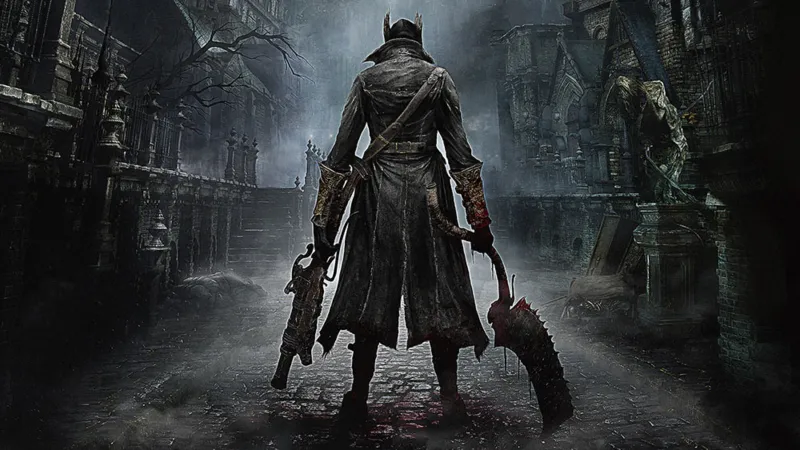
Announced during Cinemacon 2026, a trade show related to the motion picture industry primarily focused around building excitement for theatres, Sony announced its intentions for a R-rated Bloodborne animated movie.
A press release for the announcement reads, “Sony Pictures and PlayStation Productions are developing Bloodborne, the acclaimed PlayStation horror-action game, as an R-rated animated feature.” The film is being animated by Lyrical Productions. Lyrical has not yet released any animated films, but it is working on an adaptation of the 2022 young adult novel, Hell Followed with Us, and it is also making the Death Stranding animated movie, subtitled Mosquito, though that name may change.
No art assets or trailer of any kind are yet available for the Bloodborne movie, but there is a teaser trailer for Death Stranding: Mosquito, which may indicate the Bloodborne movie’s potential visual direction.
The Bloodborne movie is being executive-produced by streamer and Dispatch performer Seán “Jacksepticeye” McLoughlin. In a post on Reddit, McLoughlin wrote, “I am producing this project and you have no idea how incredibly excited I am to finally be able to talk about it!! I am going to do everything in my power to make this the BEST Bloodborne adaptation possible. Not only is it my favourite game ever made but I know how truly passionate the fans of this game are and how much hunger they have for more of it.”
A release date, director, performers, and other details about the movie have not yet been revealed. You can read Game Informer’s 9.75 Bloodborne review by following the link.
Platform:
PlayStation 5, Xbox Series X/S, Switch, PC
Publisher:
PlaySide Studios
Developer:
Fumi Games
Release:
Rating:
Teen
With its black-and-white rubber hose animation, lively jazz soundtrack, and gripping detective noir setting, Mouse: P.I. For Hire serves up a refreshing 1930s-inspired experience in the seedy city of Mouseburg – a name that makes perfect sense given its population of anthropomorphic mice. Here, players control a gumshoe named Jack Pepper (voiced by Troy Baker), as he unravels an increasingly complex missing persons case sporting all the usual suspects from crooked cops and slippery politicians to charming socialites and tenacious reporters. This tale’s smart, humorous writing and enigmatic characters play into hardboiled fiction cliches in amusing ways that kept me hooked throughout the dozen or so hours it took to reach its high-stakes finale.
Despite casting you as a detective, Mouse shies away from letting you use your intuition to crack these cases yourself. It’s a largely guided experience wherein Jack automatically places clues where they belong on a board in his office and quests update with where to go and who to talk to next. I would’ve loved to do more of my own sleuthing to get to the bottom of things, but the game is primarily interested in its stylish action, for better and worse, so it keeps you consistently moving along to new, visually distinct locations.
Mouse: P.I. For Hire Video Review:
Levels range from opera houses to swamps to production studios, each overflowing with classic slapstick comedy. I frequently chuckled when glimpsing a web in a corner featuring a drooling, derby hat-wearing spider rubbing its knife and fork together while eyeing its catch, or when an enemy killed with an explosive barrel would break into a hilariously exaggerated death animation before crumbling into a pile of ash with eyeballs. None of it is presented as parody, either – it’s a sincere tribute to century-old cartoons like Steamboat Willie, albeit with more adult themes spread throughout.
Exploration is a blast, too, thanks to cool unlockable traversal abilities and plenty of secret areas with money and collectibles, as well as items or photographs needed to complete side quests you receive from the denizens of Mouseburg. These optional requests are worth seeing through, as they do a good job of expanding upon Jack’s various personal relationships and feature some of the funniest dialogue in the game. Still, my primary reason for checking every nook and cranny was to find extra baseball cards to use in an fun turn-based card game at the bar downtown. I lost a few hours and some in-game money on these strategic clashes, but I don’t regret a second of it.
The action combat lacks depth, however. The gunplay and movement feel fantastic, but too many enemies fall into one of two categories: “Guy with a blunt weapon who charges at you with reckless abandon,” or “guy with a gun who stands still and shoots at you.” As a result, most encounters lack the dynamism of other fast-paced shooters by which Mouse is clearly influenced (namely, Doom). Even with my growing arsenal of comical weaponry, a bit of fatigue eventually set in by the last third of the game.
Conversely, boss battles are the highlight, offering delightfully wacky and challenging showdowns that test all of your skills at once. One of my favorites featured a fellow who cycled between windows on various floors of a house, forcing me to line up timely cannon shots while simultaneously fending off his lackeys outside. Another required using a flashlight to deal damage to an apparition that flew around a graveyard before splitting into multiple copies to disorient me.
These moments, combined with the fascinating vintage visuals and music, make it easy to overlook the areas where Mouse wastes some potential. Sure, I’d have liked more meaningful investigative mechanics and fewer reskinned baddies, but I was often too busy tapping my toes to jazz tunes and laughing at the riotous cartoon antics to be too bummed about it.