Saros Review – At The Mountains Of Magnificence

Saros Housemarque Returnal Sequel PlayStation Studios First Party PS5 Game DualSense Preview

Reviewed on:
PlayStation 5

Platform:
PlayStation 5

Publisher:
PlayStation Studios

Developer:
Housemarque

Release:

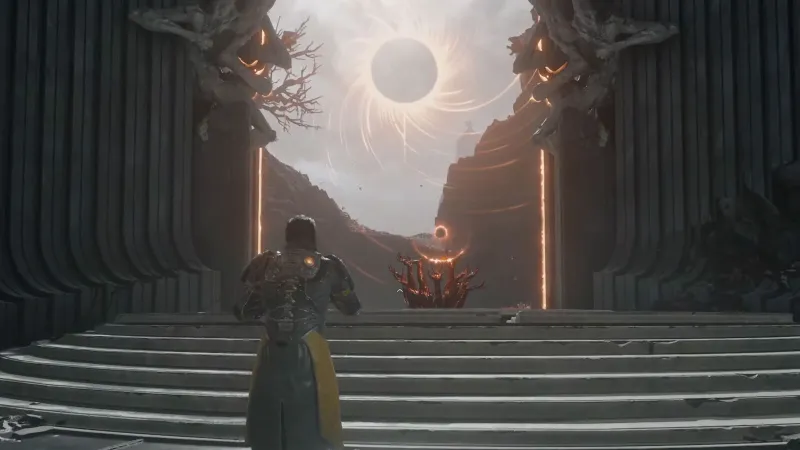
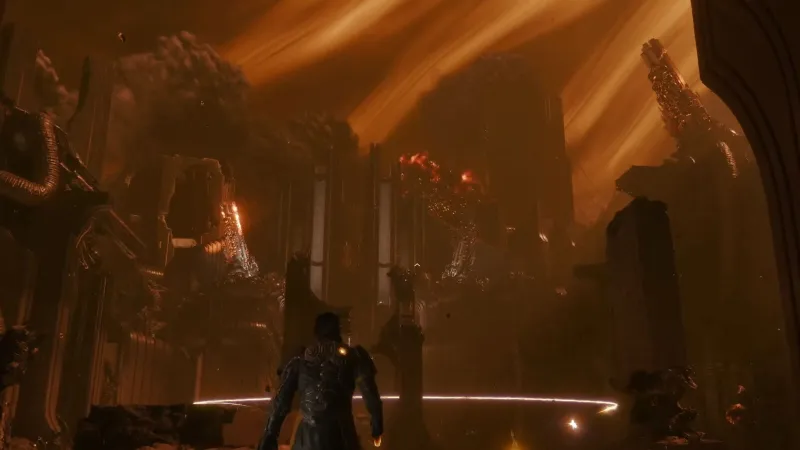
Discovering a powerful (and profitable) new element on a faraway planet is a sci-fi staple that is especially prevalent in modern media, but Saros embraces this trope by making Lucenite’s home planet, Carcosa, the stuff of inescapable but wholly engaging nightmares. Protagonist Arjun fights to maintain his sanity, find a lost love, and stay alive (failing often) against an onslaught of lasers and monsters while the people around him descend into vague madness. All this while your AI-driven corporate overlords demand results. The premise is strong and surprisingly relatable in the modern landscape, while the action is dangerous, joyful, and demanding of your attention in a way few games can compete.

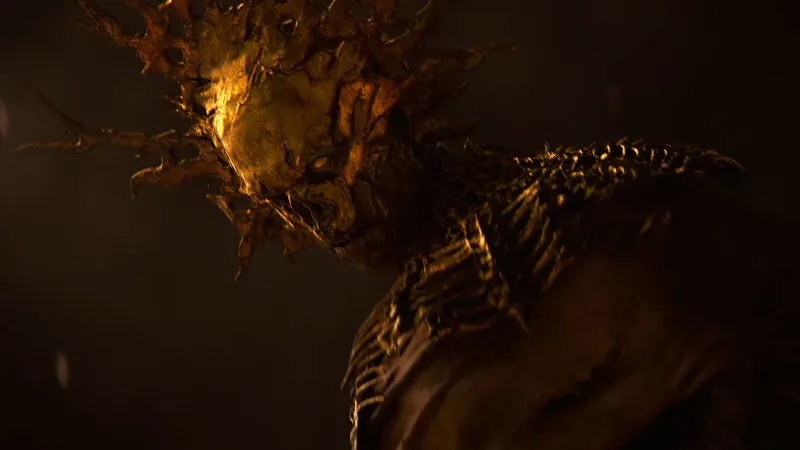
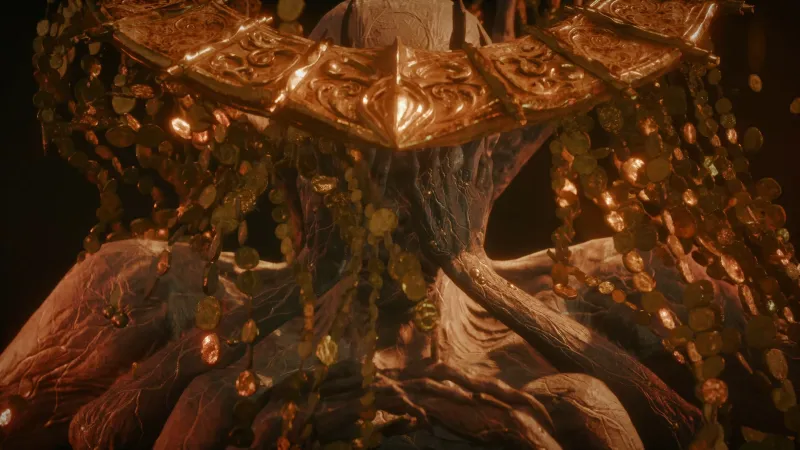
Tonally and sometimes directly inspired by Robert W. Chambers’ Lovecraft-adjacent short story collection, The King in Yellow (which I can confirm through experience is not required reading), Saros follows a collection of astronauts on a one-way trip to an alien planet that is, to be blunt, a no-good place. Arjun is a soldier among scientists there to save lives, but is perhaps selfishly focused on saving one in particular. The opaque nature of the story is sometimes unsatisfying, and though there are plenty of literal threats Arjun must dodge, counter, absorb, and defeat, the narrative is mainly focused on an existential danger. The result is that the cast feels mostly disposable, which is perhaps intentional, but I wanted to know more about them before their recorded monologues found throughout Carcosa descended into borderline incoherent ramblings about The Yellow Shore. The larger story leaves you with much to think about in a way I appreciate, and I eagerly continued the game after seeing credits to learn more, even if I wasn’t completely emotionally invested.

But frankly, even if the story was a complete dud, I would have struggled to put down Saros as its action is impeccable and challenging without ever bordering on the overwhelming. Saros is not a sequel to Housemarque’s excellent 2021 game, Returnal, but it does use its gameplay as the baseline and re-examines it to foster a more welcoming and rewarding system. The shield, which allows you to take in the energy of certain projectiles to power strong weapons, creates myriad worthwhile options in how you approach staying alive in the chaos.

Game Informer

Controlling Arjun is flawless. He leaps and dodges with precision that should make Mario take notes. Firing off all of Saros’ weapons feels powerful and exciting, though you will quickly gravitate towards a personal favorite (shout out to the Smart Rifle). The Power Weapons, which are managed with the shield, are completely satisfying and available when you need them most.

Outside of the action, another of Saros’ primary strengths is the Armor Matrix. Attempting runs is a familiar process for rogue genre fans in that you will quickly gain temporary strength as you explore and fight, but between attempts is a massive skill tree where you can drop your collected Lucenite and Halcyon for permanent upgrades. Plenty of rogue games offer permanent upgrades, but Saros is particularly satisfying as its upgrades offer worthwhile improvement choices that cater to specific playstyles. Even just one solid run unlocks dozens of upgrades at once. The process feels fast and less incremental making the good attempts feel even better and the abysmal failures not feel like wastes of time. Saros is a challenging game, but the Armor Matrix makes the whole experience much more approachable. If you are intimidated by the genre or were scared off by Returnal, know that Saros is much more welcoming.


The structure of Saros, which is much friendlier to shorter sessions and allows you to leave and pick up a run later, is also thoughtful in a way that makes it all feel much more doable in the face of challenge. At the expense of being less powerful (but still very strong), you can teleport to specific locations. I love this feature as it eliminates two of my primary ongoing personal frustrations with the genre: replaying the same areas over and over and refighting the same bosses. Of course, you can attempt runs from the starting line and fight the bosses again, and there are incentives for doing so, but I want the option to skip the bosses and areas I already beat in every rogue game. I am an impatient gamer, and Saros is okay with that.

Saros’ biggest shortcoming is that I was not as emotionally invested in its narrative and characters as I hoped to be. The plight of team Echelon IV did not move me, but I was fascinated by the abrasive world, the heartless Soltari corporation, and I was intentionally and successfully left wanting more from its engaging mysteries. I don’t share this sentiment for the gameplay, however. Moving, shooting, improving (both in stats and skill), winning, and even losing is an unequivocal joy, and I only wish I could write this final sentence faster so I can hurry up and get back to planet Carcosa and attempt another run.

GI Must Play

Score:
9.25

About Game Informer’s review system

Here Are The Assassin’s Creed Black Flag Resynced PC Specs And Requirements

Assassin's Creed Black Flag Resynced Reveal Screenshots

Assassin’s Creed Black Flag Resynced, Ubisoft’s worst-kept secret, has finally been revealed, and it’s hitting PlayStation 5, Xbox Series X/S, and PC on July 9. You can read all kinds of new details about the from-the-ground-up remake in our coverage here, but if you’re planning to check out Black Flag Resynced on PC, we have the system specification details you need.

There will be four presets for Black Flag Resynced, according to Ubisoft: Minimum, Recommended, High, and Extreme. There will likely be a custom option to mix and match settings as you wish, but below we’ll break down the PC specifications you need for each of the aforementioned presets. 

Here Are The PC Specs And Requirements For Black Flag Resynced

Game Informer

Below, we’ll list each preset and the required specs for them: 

Minimum

  • Resolution/FPS (using dynamic resolution and upscaling): 1920x1080p at 30 FPS
  • Visual Preset: Low
  • Lighting Mode: Standard Raytracing
  • Upscaler Preset: Balanced
  • CPU: Intel Core i7-8700K 3.7 GHZ, AMD Ryzen 5 3600 3.6 GHz
  • GPU: Nvidia GeForce GTX 1660 (6GB), AMD Radeon RX5500XT 98GB), Intel Arc A580 (8GB)[REBAR ON]
  • RAM: 16GB (Dual-channel setup)
  • OS: Windows 10 (64-bit only), Windows 11
  • Storage: 65 GB (SSD required)

Recommended

  • Resolution/FPS (using dynamic resolution and upscaling): 1920x1080p at 60 FPS
  • Visual Preset: Medium
  • Lighting Mode: Standard Raytracing
  • Upscaler Preset: Balanced
  • CPU: Intel Core i5-10600K 4.1 GHz, AMD Ryzen 5 3600 3.6 GHz
  • GPU: Nvidia GeForce RTX 3060 (12 GB), AMD Radeon RX 6600XT (8GB), Intel Arc B580 (12GB)[REBAR ON]
  • RAM: 16GB (Dual-channel setup)
  • OS: Windows 10 (64-bit only), Windows 11
  • Storage: 65 GB (SSD required)

High

  • Resolution/FPS (using dynamic resolution and upscaling): 2560x1440p at 60 FPS
  • Visual Preset: High
  • Lighting Mode: Standard Raytracing
  • Upscaler Preset: Quality
  • CPU: Intel Core i5-11600K 3.9 GHZ, AMD Ryzen 5 5600X 3.7 GHz
  • GPU: Nvidia GeForce RTX 3080 (10GB), AMD Radeon RX6800XT (16GB)
  • RAM: 16GB (Dual-channel setup)
  • OS: Windows 10 (64-bit only), Windows 11
  • Storage: 65 GB (SSD required)

Extreme

  • Resolution/FPS (using dynamic resolution and upscaling): 3840x2160p at 60 FPS
  • Visual Preset: Ultra
  • Lighting Mode: Extended Raytracing
  • Upscaler Preset: Quality
  • CPU: Intel Core i7-12700K 3.6 GHz, AMD Ryzen 7 5700X3D 3 GHz
  • GPU: Nvidia GeForce RTX 4090 (24 GB), AMD Radeon RX7900XTX (24 GB)
  • RAM: 16GB (Dual-channel setup)
  • OS: Windows 10 (64-bit only), Windows 11
  • Storage: 65 GB (SSD required)

Game Informer

Assassin’s Creed Black Flag Resynced launches on PlayStation 5, Xbox Series X/S, and PC on July 9. While waiting for its release, read Game Informer’s review of the original Assassin’s Creed IV: Black Flag

Are you going to be playing Black Flag Resynced on console or PC? Let us know in the comments below!

Assassin's Creed Black Flag Resynced Preview – Long-Lost Treasure

Assassin's Creed Black Flag Resynced Reveal Screenshots

Publisher:
Ubisoft

Developer:
Ubisoft

Of the many Assassin’s Creed games released over the past 18 years, few are as revered as Black Flag, a pirate-centric entry that put players in the boots of Edward Kenway. In addition to being a great Assassin’s Creed story, it’s a fantastic pirate game, and over a decade later, there aren’t many (some might say there are none) that live up to the example Black Flag set. It’s a fitting choice for the series’s first true remake, and after seeing footage of the game in action, we’re eager to helm the Jackdaw once more.

Game Informer

Resynced is a from-the-ground-up remake, meaning Ubisoft recreated all of the game’s elements in its latest engine, Anvil, to make it look and feel as good as possible. Character models have been refreshed, environments have more detail, and modern lighting and environment systems (like newly realistic, dynamic weather) tie the whole thing together. That said, I’m very familiar with the original game, and I’m pleased to report that the world’s fundamental structure and design seem unchanged. As far as visuals go, the game is refreshed but faithful, which is exactly what I hoped for.

The story is largely the same, though there are some additions. Edward’s story and the overall plot will remain, with lines being re-recorded by returning cast members. It was the first Assassin’s Creed game to de-emphasize the Assassin/Templar conflict in a major way, which benefited the story overall by focusing on Assassin-aligned pirates and outlaws to put the larger struggle in context. Resynced doubles down on this, adding three new contacts with side quests that Edward can experience, as well as adding more content around Blackbeard and Stede Bonnet. (After watching Our Flag Means Death, I’m excited to revisit both of those characters, though I expect Ubisoft’s take to be less romantic.)

Game Informer

These side quests will tie into the improved naval combat and sailing mechanics. Each ship weapon type will now have a secondary firing option, allowing for more flexibility in open-sea battles, and some of these are unlocked by doing quests with these new contacts. One example of a reward was a double-shot option for broadside cannons, meaning the Jackdaw (Edward’s ship) could fire twice in rapid succession, skipping the reload time. When you’re out of combat, sea shanties sung by your crew will not only return, but Ubisoft is adding new tunes to discover. Outside these new options, however, the naval sections seem largely unchanged, which is good, as they were among the original’s biggest highlights.

Melee combat in Resynced will be much different. While the animations of many of Edward’s moves have been preserved, the mechanics of each fight have been overhauled from Black Flag’s simpler approach. Now, there are more advanced combos, tools like the rope dart are quicker (making them easier to use in combat), and instead of simple counters, Edward can now parry with his dual swords. The developers at Ubisoft were clear, however, that this remake would not be an RPG, like more recent games. It remains a single-player, action-focused experience without skill trees or XP.


To that end, stealth has also been improved in one major way as well; Edward can crouch now. Earlier Assassin’s Creed titles would only allow the player to crouch in designated stealth areas, like bushes or tall grass. While it might not seem like much, the ability to just crouch behind waist-high obstacles is absolutely a welcome one. Black Flag, notoriously, also had a lot of annoying eavesdropping/tailing missions. Players would have to stealthily remain within range of a conversation between two enemy characters, and being detected would force you to start over. Resynced is reducing the number of those missions present and making them more flexible. Being detected now triggers a fight, rather than an instant desynchronization.

Thanks to repeated leaks, we’ve known that Black Flag: Resynced has been in the works for years, but thankfully, we don’t have to wait too long after its official reveal to actually play it. Ubisoft announced that the game will drop on July 9, just a few months away – a great time of year for a sunny, seafaring adventure.

In the meantime, check out the contents of the Deluxe Edition and the Collector’s Edition in the images below: 


5 Annapurna Published Games Are Getting Switch 2 Versions, And 2 Are Available Now

Game Informer

Annapurna Interactive is bringing five well-received games from its catalog to Switch 2. Best of all, two are available to purchase right now.

Today, you can pick up developer Simogo’s high-speed rhythm game Sayonara Wild Hearts and its acclaimed puzzle adventure Lorelei and the Laser Eyes on Switch 2 (digital only). Both games now support 120Hz and 4K resolution. Sayonara Wild Hearts also includes its Remix Arcade Mode (originally excluded from the Switch 1 version) and is being sold for $12.99; Lorelei runs for $24.99. However, if you already own the Switch versions of these games, the Switch 2 upgrade is free. 

On May 28, Stray, the 2022 adventure about a stray cat exploring a decaying world inhabited by robots, will come to Switch 2 digitally for $29.99. This version boasts upgraded visuals, an improved framerate, 4K, and supports Joy-Con 2 mouse controls.

In June, To a T and Wanderstop will make the jump. To a T, the latest game from Katamari creator Keita Takahashi about a child who lives life stuck in a T-pose, will come to Switch 2 digitally on June 11 for $19.99. Wanderstop, a narrative-focused cozy shop simulator by the creator of The Stanley Parable, is coming to Switch 2 and Switch on June 23 for $24.99.

To read more about upcoming Annapurna Interactive-published games arriving this year, subscribers can check out our in-depth preview of the narrative music adventure game Mixtape. You can also check out the debut trailer for Silent Hill: Townfall

The Blood Of Dawnwalker’s Release Date And Other New Details Will Be Revealed Next Week

Game Informer

Developer Rebel Wolves has announced a special livestream for its upcoming action RPG The Blood of Dawnwalker. Airing next week on April 28, the stream will reveal new details about the game, including its release date.

The “Road to Launch” livestream airs at 9 a.m. PT/12 p.m. ET and will showcase new gameplay footage “with a particular focus on activities tied to the game’s open world,” explains game director Konrad Tomaszkiewicz in a press release. The presentation will also debut a new story trailer, feature developer insights into the game’s storytelling, and share the system requirements, among other announcements. 

The Blood of Dawnwalker was first teased in 2022, and it is an open-world action RPG set in 14th-century Europe during the Black Death. Vampires terrorize the continent, and players control Coen, a warrior who becomes a vampire-esque creature called a Dawnwalker. To save his family from a powerful vampire lord, he must utilize his vampiric abilities to battle nightmarish creatures. The game also places a heavy emphasis on choice-driven gameplay, such as forming uneasy alliances with other characters. The developer, Rebel Wolves, was formed by ex-CD Projekt Red developers who previously worked on The Witcher 3: Wild Hunt and Cyberpunk 2077.

For more on The Blood of Dawnwalker, check out our Gamescom 2025 preview, where we learned the game is more than just “The Witcher with vampires.” 

Xbox Drops Prices For Game Pass Ultimate And PC Game Pass But New Call Of Duty Games Will No Longer Join The Library At Launch

Game Informer

Seven months after introducing new, more expensive tiers for Xbox Game Pass, Microsoft has announced it is cutting the price of Game Pass Ultimate for console and PC. Furthermore, new Call of Duty titles will no longer be included in the library at launch.

Xbox CEO Asha Sharma announced on X that “Game Pass Ultimate has become too expensive for too many players,” and that the price of Xbox Game Pass Ultimate has dropped from $29.99 a month to $22.99. PC Game Pass, previously $16.49 a month, will now cost $13.99. Sharma states the price change takes effect today, and after checking ourselves, this is indeed the case. 

“We’ll keep learning and evolving Game Pass to better match what matters to players,” Sharma says in her post.

The perks for Game Pass Ultimate will not change, as an Xbox Wire post states, “Xbox Game Pass Ultimate subscribers will continue to have access to hundreds of games on Xbox console and PC, including current Call of Duty titles, in-game benefits, online console multiplayer, and major day one releases.”

Game Informer

The other side of this coin is that starting this year, Call of Duty games will no longer join Game Pass at launch. Instead, new Call of Duty games will be added to Game Pass roughly a year later, during the next holiday season. Existing Call of Duty titles will remain available on Game Pass, however.

Although the cheaper Game Pass tiers, Essential and Premium, will remain at their current prices ($9.99 and $14.99 a month, respectively), this is welcome news for Ultimate and PC Game Pass subscribers. Gaming has rapidly become more expensive over the past year, so it’s nice to hear something going down in price instead of the opposite for a change.

What do you think of these new Game Pass Ultimate and PC subscription prices? Let us know in the comments. 

Diablo IV: Lord of Hatred Review – Embrace The Hate

Game Informer

Reviewed on:
PlayStation 5

Platform:
PlayStation 5, Xbox Series X/S, PlayStation 4, Xbox One, PC

Publisher:
Blizzard Entertainment

Developer:
Blizzard Entertainment

Release:

Rating:
Mature

Lord of Hatred offers a grim, emotional, and satisfying conclusion to the Age of Hatred saga that began in Diablo IV’s original campaign. A gripping narrative paves a perfect playground to explore the newly introduced Skovos region as the expansion’s entertaining new classes: Warlock and Paladin. Tack on new endgame systems designed to simplify and further incentivize post-story activities, and Diablo IV has another strong argument to dive back into Hell.

Picking up directly after Vessel of Hatred’s cliffhanger ending, Lord of Hatred wastes no time raising the stakes, often to heart-wrenching degrees. The race to prevent Mephisto, who takes the guise of a benevolent Jesus-like leader to corrupt the hearts of Skovos’ citizens, from plunging Sanctuary into an age of hatred is a dark and captivating adventure with some fun twists, namely the return of Lilith. Delving deeper into what makes the Daughter of Hatred tick is among my favorite parts of the narrative, and a strong supporting cast of familiar friends and new allies bolsters the adventure. If this is it for Diablo IV’s story, it sticks the landing well.

Whether you’re summoning hellspawn demons to sic at foes as a Warlock or shield-bashing them and unleashing divine fury as a Paladin, both classes are entertaining additions. Regardless of the class, though, the skill trees have been expanded with new unlockable perks that deepen an ability’s capabilities, such as reducing cooldown times, unleashing more projectiles, or inflicting a status effect. I like how these new options let me further tinker with unlocked abilities and provide even more room for experimentation.

Skovos offers a beautiful new region to explore, thanks to its scenic Mediterranean-inspired main city and seaside ports that feel distinct from the rest of Sanctuary. In addition to cutting down thousands of new demonic and human threats,  you can complete a fresh batch of fun sidequests, explore new dungeons, and engage in the new but inconsequential fishing minigame. Those looking for meaningful progression, though, can equip new Talismans that allow for further specialization. Up to six of these charms can be worn (though slots must be unlocked), and range from small perks, like x-percent more healing or attack power, to multifaceted improvements, especially when matching sets are equipped. Though I can’t say I always noticed significant improvements in how my already-powerful characters performed while wearing Talismans, I like having a new factor to consider when tailoring my loadouts.

Game Informer

After rolling credits on Lord of Hatred’s story, War Plans provide a quick and enjoyable avenue to engage with the existing endgame content. War Plans essentially allows players to create a playlist of randomly selected activities, be it Nightmare Dungeons, Helltides, the Pit, Infernal Hordes, and more, to play one after another with no barrier to entry for increased rewards (on top of what you normally earn from the activity itself). Best of all, War Plans warp you to the queued activity, saving you from searching the large map to see where the specified activity is taking place. As a more casual player who only revisits Diablo IV when a big expansion drops, War Plans takes the hassle out of figuring out what activity to play and how to access it by spoon-feeding me this content without overwhelming me.

Additionally, War Plans add progression trees to each piece of endgame content; complete an activity enough times, and you’ll unlock modifiers that alter how that activity unfolds going forward. For example, you can change the type of rewards earned, add specific objectives, or spawn certain enemy types. Completing endgame stuff just for loot doesn’t always hold my interest for long. Adding progression meters to the activities themselves, however, is a compelling argument to keep playing just to see how many wacky stipulations I can unlock and add to them.


Echoing Hatred is another fun, if simple diversion that tasks players with surviving increasingly difficult and dense enemy waves for as long as possible. There’s not much to this challenge, but I’ll always enjoy slaughtering a bunch of monsters. However, Echoing Hatred is, by design, an exceedingly rare and difficult-to-access activity; I only got to play it once and only because of a press-exclusive shortcut. This is ultimately a smaller addition compared to the other new offerings, but one that still provides some fun.

Lord of Hatred accomplishes what a good expansion should. A strong story puts the likable cast through the wringer, and I was hooked to see it to its eventual conclusion. The new classes are fun, and a raised level cap (70), expanded skill trees, and more Torment Tiers (up to 12 now) provide more room for growth and replayability. War Plans provide a streamlined avenue to engaging with the already dense endgame content in a way I greatly appreciate. Lord of Hatred is an exceptional cherry on top of Diablo IV, further cementing the entire package as among the best action RPGs of the generation. 

GI Must Play

Score:
8.5

About Game Informer’s review system

Splatoon Raiders, A Single-Player Adventure, Gets New Trailer And July Launch Date

Game Informer

Last summer, Nintendo revealed a single-player spin-off of its popular multiplayer team shooter Splatoon called Splatoon Raiders. After nearly a year of relative silence, the game has a new trailer that reveals a July 23 launch date.

The Switch 2 exclusive adventure sees players controlling a customizable Inkling mechanic who travels to Spirhalite Islands alongside Deep Cut, the trio of musicians from Splatoon 3. The island is also inhabited by villainous Salmonids, whom the players must battle using the familiar paint guns and brushes. In addition to combat, the trailer shows the character gradually discovering more of what appears to be a large open world while finding treasure and crafting new custom weapons, like an axe and a paint turret.

Today’s trailer also revealed a new set of Amiibos of Deep Cut members Shiver, Big Man, and Frye. These figures will be available the same day Splatoon Raiders launches. Check them out below. 

Game Informer

As fun as Splatoon’s main multiplayer modes are, I’ve always found its single-player modes to be very entertaining and somewhat underrated. I’m excited to see how this dedicated solo adventure pans out. Until then, be sure to check out our review of Splatoon 3

Tides of Tomorrow Review – An Effective Ripple Effect

Game Informer

Reviewed on:
PlayStation 5

Platform:
PlayStation 5, Xbox Series X/S, PC

Publisher:
THQ Nordic

Developer:
DigixArt

Release:

Rating:
Mature

Science fiction is often at its best when translating modern-day matters into futuristic allegories, heightening everyday issues into dramatic circumstances to reveal truths about humanity. Tides of Tomorrow executes this principle to great effect in both its narrative and mechanics, and I greatly enjoyed how its themes were so neatly communicated across each moment of gameplay. The unique way the story is conveyed is more impressive than the story itself, but it’s still a great time for fans of choice-driven games.

Game Informer

Tides of Tomorrow is a first-person, narrative-driven experience, and while it has some stealth, platforming, nautical combat, and puzzle challenges, the main mechanical hook is that you play the entire game on another player’s heels. Before each mission, you select the name of a player who’s already played that level (and can enter specific seed codes if you want to follow a friend or streamer), and the world will be altered as if they recently left the area. If the previous player angers someone powerful, the guards will be more hostile towards you, but if they were charming, people might revere you as a good omen. It’s not just a quick gimmick; this previous player becomes a significant character in your world, which I adored. It also makes the whole world feel very alive – you always show up in the middle of a problem, or right after a significant conflict.

You’re associated with this other player because you’re both Tidewalkers, a mysterious people with no memory of your early life, but the ability to see the recent memories of other Tidewalkers in the area. You can see their conversations with NPCs and learn how those characters got their current attitudes, but you can also see them solve puzzles and use their movements as a guideline. The game also has an emote system you can use to stamp strong emotions at almost any point in the world for your followers to see. You can celebrate after winning a race, make rude gestures at characters you don’t like, or point to a nearby secret. There are also special chests you can use to stow resources for later players, or recover spoils others have left for you.

Game Informer

It’s a great mechanic that I frequently engaged with, partially because I appreciated the players I followed so much. It also ties into the game’s message about climate change and preserving the world for future generations. By donating to future players, I effectively threw away many important items – I would never get to use those resources and likely will never see other players use them, but because I knew someone would appreciate the gesture, it felt great. Games often give you opportunities to dominate or trick strangers online, but it’s nice to have one that lets you be nice for a change.

The aforementioned resources are scarce. Tides of Tomorrow takes place on a flooded Earth, populated only by a few hundred thousand humans, hearty sea creatures called mereids, and tons and tons of plastic waste. Plastic bobs in the ocean, floats through the air, and is even used to construct buildings and islands. I really loved the world-building and how quickly Digixart thrusts the player into it. Tides of Tomorrow doesn’t waste much time on exposition, which I always appreciate. 

Game Informer

The prevalence of plastic has led to a disease called Plastemia, which turns one’s body into colorful plastic over time. Players are all afflicted with this illness, but the symptoms can be subdued by regularly consuming an inhalant called Ozen. Unfortunately, most of the world has the same sickness, so you often have to choose between giving Ozen to others or keeping it for yourself, making for a lot of tough choices. It is the only way for you to heal, and you will die if you don’t consume enough of it, but it’s also crucial for story moments. I enjoy that the game uses the health bar to force the player to stay invested in the world; it’s an effective way to blend story tension into the game mechanics.

The story itself is enjoyable, but unremarkable. I enjoyed the dialogue, and the major beats are entertaining, but Tides of Tomorrow is more impressive for its storytelling method than for the narrative itself. I had a blast twisting the plot with my choices, but I was never heavily emotionally invested. The same is true for the first-person gameplay. In addition to dialogue trees, you’ll engage with simple stealth mechanics, some chase sequences, and basic platforming and puzzle solving. You also pilot a boat (and engage in some light combat) as well as a submarine later on. Thanks to an overall structure keeping players from doing one thing for too long, I never got sick of any gameplay elements, but they were still nothing to write home about.

Game Informer

I am most impressed by how well Tides of Tomorrow focuses on its themes around conservationism. I see the value of preserving the land for those who come after me because I constantly see visions of my predecessors preserving the world for me. I value my resources because I can see how scarce they are; each bottle of Ozen I gift to a character or a future Tidewalker is one I won’t get to have for myself, and I came very close to dying because of that. The multiplayer element in particular is a clever take on consequences in narrative games, expanding their influence from one player to anyone who follows in their footsteps. Tides of Tomorrow reminds me why video games are so uniquely suited to tell stories. Like a Tidewalker leaving gifts for subsequent followers, the game makes me optimistic for future projects that might follow in its footsteps.

Score:
8

About Game Informer’s review system

The Assassin’s Creed 4: Black Flag Remake Will Be Revealed This Week

Game Informer

Ubisoft has announced a special livestream airing this week that will reveal the long-rumored remake of Assassin’s Creed IV: Black Flag. Fans will get their first look at the rechristened Assassin’s Creed Black Flag Resynced on Thursday, April 23.

The presentation will air on YouTube at 9 a.m. PT/12 p.m. ET. Black Flag Resynced has been one of the worst-kept secrets in gaming, with hints of its existence unearthed by industry insiders and fans as far back as 2023. Ubisoft only recently confirmed the project in March, posting artwork bearing the game’s title/logo while stating “…some whispers have a little more wind in their sails. Keep your spyglass on the horizon.”

Assassin’s Creed IV: Black Flag was originally released in 2013 as a cross-generation title for the newly launched PlayStation 4 and Xbox One (as well as Wii U, PlayStation 3, and Xbox 360). Set between 1715 and 1722 during the Golden Age of Piracy,  the game stars Edward Kenway, a pirate who becomes caught up in the Assassin/Templar struggle. Kenway will meet several historical pirates along the way in an adventure that also serves as a prequel to Assassin’s Creed III. In addition to traditional Assassin’s Creed stealth and parkour gameplay, Black Flag is notable for its heavy emphasis on sailing open oceans and engaging in naval battles.

Black Flag is generally considered one of the most beloved entries in the franchise, and given that it’s now a 13-year-old game, a remake makes sense. We’re excited and curious to see what the scope of this facelift will be; is it merely a graphical upgrade, or a more substantial reworking to its mechanics, mission design, and story? 

Until we learn more, you can read our original review of Assassin’s Creed IV: Black Flag here.  You can also read about Ubisoft’s broader plans for the Assassin’s Creed franchise here