Hot off the heels of Nintendo announcing a Switch 2 remake of Star Fox 64, now is a good time to revisit the original Nintendo 64 adventure from start to finish. Join us today live on Twitch and YouTube starting at 12 p.m. PT/3 p.m. ET as we revisit Fox McCloud’s most celebrated adventure.
First released in the US on June 30, 1997, to critical acclaim, Star Fox 64 is the second entry in the Star Fox series that sees Fox and his crew battle t defend the Lylat system from the villain Andross. Star Fox 64 is also kind of a reboot of the original Star Fox, and that’s only the beginning of this game’s strange trajectory. It has been remade for the 3DS, was remixed and reimagined for Wii U as Star Fox Zero, and is being remade again for Switch 2. Why makes Star Fox 64 worthy of so many reiterations? We’re going to find out.
Join me, Marcus Stewart, alongside editor Brian Shea as we soar through a complete playthrough of Star Fox 64.
Developer IO Interactive has released the PC specs and requirements for its upcoming James Bond game, 007 First Light, which launches on May 27. As you might expect, in order to play the game at the highest resolution and frame rate, you’re going to need a beefy PC, but the minimum required specs don’t ask for too much power.
Alongside the PC specs, which will be detailed below, IO Interactive has highlighted exclusive PC features like uncapped framerate, Nvidia DLSS 4.5 dynamic multi-frame generation and super resolution, path tracing, and DLSS Ray Reconstruction (though this isn’t coming until sometime this Summer), and additional in-depth customization options. Plus, the studio has detailed the global accessibility options for 007 First Light, and the options will include different audio profiles, subtitled with customization options, input remapping, input adjustments (sensitivity, deadone, invert), audio output options, menu narration, input activation options, and autocomplete for certain actions and quick-time events.
Below, we’ll list the various PC specs and requirements needed to play 007 First Light:
Sony Interactive Entertainment/PlayStation CEO Hideaki Nishino has called AI a “powerful tool” in the company’s aim to make PlayStation “the best place to play” and “the best place to publish” during Sony’s latest earnings call. Throughout the call, both Nishino and Sony Group president and CEO Totoki Hiroki discussed the various ways the company is using AI in film, music, and gaming.
Despite evidence from various entertainment industries showing that the use of generative AI and related technologies has led to layoffs, Hiroki said, “human creativity must remain at the center,” while adding that “AI is a powerful tool, [but not] a replacement for artists or creators.” He instead called it an amplifier for human imagination and a catalyst for new possibilities, as noted by Variety.
Sony Pictures (movies) has invested more than $50 million in AI across production planning, content protection, enterprise productivity, data analytics, innovation, and 3D conversion, while Sony Music has invested in pursuing industry-wide labeling of AI-generated content across platforms. Sony’s video arm is collaborating with Elden Ring publisher Bandai Namco to research how generative AI can help creators in video production.
After Hiroki’s portion of the earnings call, Nishino explained how PlayStation is using AI. He said, “Our goal is always to be the best place to play and the best place to publish,” adding, “We see AI as a powerful tool to help us in this mission.”
As noted by Kotaku, Nishino explained how first-party studios are using generative AI and related technologies in game development today, including a proprietary generative AI program called Mockingbird, which “quickly [animates] 3D facial models based on performance capture.” Studios like Intergalactic: The Heretic Prophet developer Naughty Dog, San Diego Studio, and others are using Mockingbird and other tools, according to Nishino.
“Importantly, we are not replacing human performers, but rather optimizing how we process the data from these live captures,” Nishino said. “With Mockingbird, animation work that would have taken hours can now be completed in a fraction of a second.” Nishino pointed out another example in a tool PlayStation built for animating hair, stating, “This is often a labor-intensive process given the volume of strands that must be created.
“Our teams have accelerated this process by taking videos of real hairstyles and having an AI tool output a 3D model with hundreds of strand models. These practical applications allow our teams to spend less time on manual, high-effort tasks, and to instead reinvest their time into building richer worlds and gameplay for our players.”
Of course, Nishino is the PlayStation CEO and at this moment in time, investors across various entertainment mediums love to hear executives state companies are using AI; it’s not surprising Nishino waxed poetic about how (apparently) beneficial generative AI and other AI-based programs have been for first-party studios, but there are a lot of questions around the use of AI like this: Whose work are the models trained on? Will humans actually retain their jobs in the long term? Are developers happy to use these tools, or are they doing so because of mandates from above?
During the call, Nishino continued to explain that AI-powered payment routing tools have generated more than $700 million in revenue over the past few years. He said Sony is creating machine-learning programs aimed at personalization for consumers, systems that could one day recommend a player’s next game, subscription, accessory purchase, or merchandise buy based on their interests – yippee, who needs a brain?
AI is also responsible for memory product shortages around the world, but Totoki said during the call that he expects PlayStation’s hardware business to contain the cost impact within the current fiscal year due to ongoing (seemingly positive?) supplier negotiations, as noted by Variety.
Capcom has revealed Leon Must Die Forever, a brand-new minigame challenge that’s now available in Resident Evil Requiem, which launched on PlayStation 5, Xbox Series X/S, Switch 2, and PC on February 27. The mode unlocks after you beat Resident Evil Requiem and will take players through various areas they visited during the campaign to work against the clock as they battle through hordes of zombies and more.
“Fight your way through areas you’ve visited previously throughout the game and defeat the final boss, all with stronger enemy variants, five increasingly difficulty ranks, and a race against the clock,” a press release reads. “Fill your enhancement gauge by defeating enemies in order to unlock Leon’s ‘enhancer abilities’ exclusive to this game mode.” The order and progression of each area, as well as the options for Leon’s enhancer abilities, differ from each run, making each play-through of Leon Must Die Forever unique.
Get a look at Leon Must Die Forever in the trailer below:
Alongside the addition of Leon Must Die Forever to Resident Evil Requiem, Capcom has added PC support for the PlayStation DualSense controller’s adaptive triggers, haptic feedback, and motion sensor features. It has also deployed various bug fixes across platforms where the game is playable.
Resident Evil Requiem hit PlayStation 5, Xbox Series X/S, Switch 2, and PC on February 27, and the Leon Must Die Forever minigame is available in-game right now. In case you forgot, Capcom is working on story DLC for Resident Evil Requiem, too.
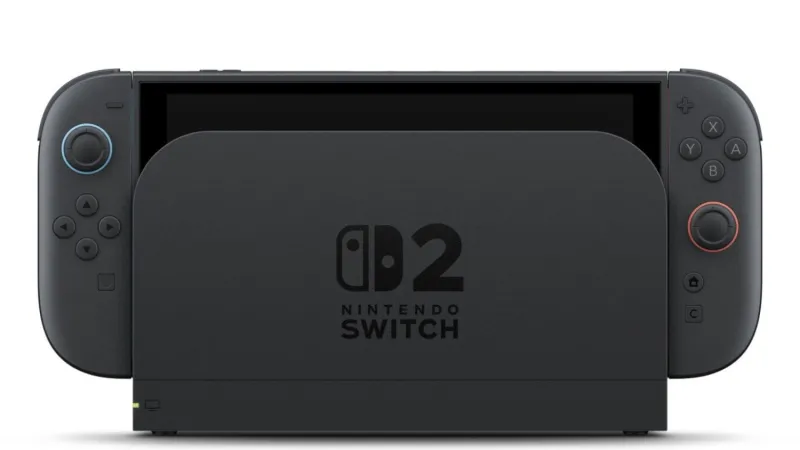
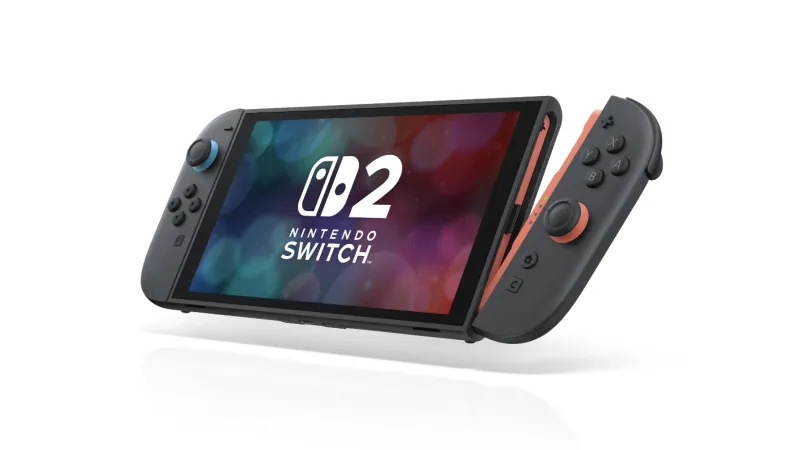
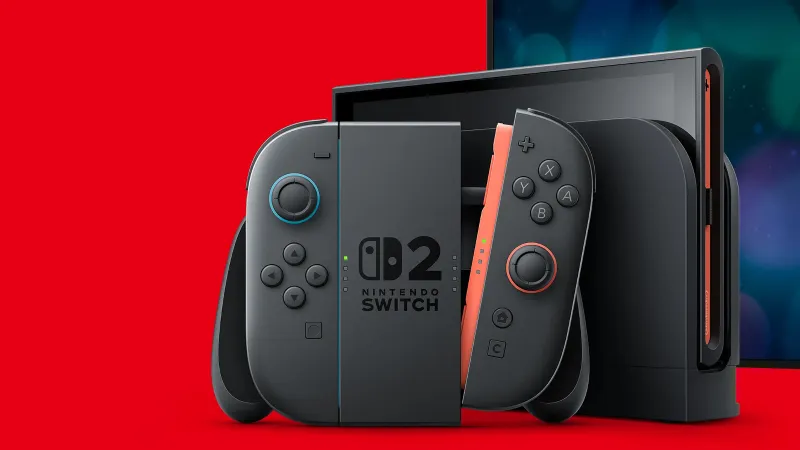
Nintendo has announced it will be raising the price of the Switch 2, citing “changes in market conditions.” The new prices will take effect in Japan first, then extend to other regions in the coming months.
Japan
On May 25, the new prices for the Switch 2 and models of the original Switch will be as follows:
Nintendo Switch 2: ¥59,980 (currently ¥49,980) *The price of the Nintendo Switch 2 Multi-Language System available from My Nintendo Store will remain unchanged.
Nintendo Switch (OLED): ¥47,980 (currently ¥37,980)
Nintendo Switch: ¥43,980 (currently ¥32,978)
Nintendo Switch Lite: ¥29,980 (currently ¥21,978)
On July 1, the price of Nintendo Switch Online subscriptions will increase in Japan. Nintendo is planning to do the same in South Korea at an unknown date, but has not announced that these new price tiers will extend to other regions. You can read more about these pricing changes on Nintendo’s website.
US, Canada, And Europe
In the US, Canada, and Europe, only the Switch 2 is going up in price, effective September 1.
US: $499.99 (currently $449.99)
Canada: $679.99 (currently $629.99)
Europe: €499.99 (currently €469.99)
It’s worth noting that the new price of the standalone Switch 2 in the US is now the same as the Mario Kart World bundle, which Nintendo stopped making last December and is now available in limited quantities (if at all). Nintendo also states that price revisions are planned for other non-specified regions, but has not confirmed details. Today’s news comes after Nintendo announced Switch 2 sales are nearing 20 million units sold, though the company expects sales to decline in the next fiscal year.
Given that the Switch 2 launched globally on June 5, 2025, Japanese players will have to contend with a more expensive console less than a year into its lifecycle, with other regions following suit a few months later. If you’re an American, Canadian, or European who has been planning to purchase a Switch 2 but hasn’t pulled the trigger, you now have roughly four months to grab the system at its current price.
The Switch 2 was the last holdout in the wave of video game hardware price raises occurring over the last year. The PlayStation 5 and Xbox Series X/S have risen in price more than once over the last 8-10 months, and the original Switch became more expensive in the US last year. PC players have had to contend with price hikes and shortages for RAM and other components, which have been some of the primary culprits for video game hardware going up in price across the board, among other economic factors.
Nintendo has released its latest financial report for Fiscal Year 2026, revealing that it has sold through nearly 20 million Switch 2 units. Despite what Nintendo calls a launch year where “sales reached a level we had not experienced with any of our previous hardware systems” (due to high interest in the Switch console), it expects a decline in year-over-year sales for Fiscal Year 2027, which ends in March of next year.
Officially, 19.86 million Switch 2 units have been sold in the console’s first fiscal year, but for its second fiscal year, Nintendo is forecasting 16.5 million units sold. “For our hardware systems to date, sales units have generally tended to be higher in the second fiscal year after launch than in the launch year,” the fiscal report notes read. “Nintendo Switch 2, however, launched at a time when many consumers were continuing to enjoy Nintendo Switch. Against this backdrop and amid many other factors [Editor’s Note: likely an allusion to rising memory costs resulting from AI buy-up worldwide, alongside tariffs enacted by the U.S. President], launch-year sales reached a level we had not seen with any of our previous hardware systems.
“In light of strong sales performance in the first year following launch and price adjustments, we expect unit sales for the fiscal year ending March 2027 to decline year over year. That said, we view this as a healthy level of sales for Nintendo Switch 2 in its second year after launch, and we continue to anticipate further growth in the installed base.”
As you can see, despite the expected decline in Switch 2 sales, Nintendo still views the console’s growth as healthy. If you look back at how the Switch performed in a similar time frame, Switch 2 outpaces it. Switch 2 sales have exceeded the fiscal-year sales of the Switch’s March 2018 and March 2019 fiscal years, the two full-year periods immediately following the Switch’s launch. In other words, the Switch 2 is performing better than the Switch so far. Today’s news comes alongside the announcement that Nintendo plans to increase the price of the Switch 2 in various regions, including the US, due to “changes in market conditions.”
Elsewhere in the fiscal report, Nintendo has detailed the sales numbers for various games released this fiscal year. They are as follows:
Mario Kart World: 14.7 million units
Donkey Kong Bananza: 4.52 million units
Pokémon Legends: Z-A – Nintendo Switch 2 Edition: 3.94 million units
Pokémon Pokopia: 2.41 million units
Kirby Air Riders: 1.87 million units
Pokémon FireRed and Pokémon LeafGreen: 4 million units
Tomodachi Life: Living the Dream: 3.8 million units
Takashi Tezuka, the storied director behind games like The Legend of Zelda and Super Mario World, is retiring from Nintendo, the company has revealed. In Nintendo’s latest fiscal report, there is a note titled “Announcement of Personnel Changes of Company Officers,” and within it, news that Tezuka, an executive officer at the company, is retiring on June 26.
Tezuka, who co-created Yoshi and also directed The Legend of Zelda: A Link to the Past and Super Mario World 2: Yoshi’s Island, most recently served as the producer for Super Mario Bros. Wonder, but at age 65, he’s moving on from game development at the Kyoto-based company. He worked at Nintendo for more than four decades, having joined in 1984 at age 23. Over his 40-plus years at Nintendo, he has worked as a longtime collaborator with Super Mario Bros. and The Legend of Zelda creator Shigeru Miyamoto, who serves as a representative director overseeing various projects there. Alongside Miyamoto, Tezuka has worked not only on The Legend of Zelda and Mario franchises but also on other Nintendo staples like Pikmin, Animal Crossing, and more.
Game Informer did a rapid-fire interview with Tezuka back in 2019, and if you haven’t seen it yet, it’s a must-watch:
Valve’s much-anticipated Steam Controller went on sale on Monday, May 4, and quickly sold out amid what many consider a chaotic launch. Payment processing errors at checkout prevented many customers from buying the controller before it went out of stock (which occurred in minutes), leaving frustrated players empty-handed. Valve has acknowledged this rough start and is going back to the drawing board to ensure the next wave of orders goes more smoothly.
In a Steam post, Valve announced it will open reservations for the Steam Controller tomorrow, May 8, starting at 10 am PT/1 pm ET. Once you reserve your controller (limited to 1 per customer), your place in line will be saved. After making your reservation, you will receive an order email stating you will have three days (72 hours) to complete your purchase, or you will lose your reserved controller. Those who bought a Steam Controller the first go around will not be eligible to reserve another one during this second wave.
Additionally, there are two other prerequisites users must meet to purchase a Steam Controller at this juncture:
Your account must be in good standing on Steam
You must have made a purchase on Steam prior to April 27, 2026
“Replenishment of inventory will vary from region to region,” reads Valve’s Steam post. “We will start fulfilling reservations next week in the US / Canada, and UK / EU / AU in the following weeks.”
The Steam Controller is priced at $99 and launches ahead of the Steam Machine console that was announced last November. Although the Controller is designed to be compatible with the upcoming console, which is coming this year but has been delayed due to ongoing RAM shortages, it can be used independently as a dedicated PC gamepad. Reviews of the Steam Controller have been largely positive, which has contributed to its hype, so hopefully those looking to reserve one tomorrow have a much smoother time than what customers endured on Monday.
This year marks 30 years of Persona, and to celebrate the occasion, developer Atlus has revealed a new addition to its Persona vinyl collection with the Persona 30th Anniversary Jazz Album. It’s available to stream on Spotify, Apple Music, and elsewhere today, and vinyl preorders are live as well.
This collection of jazz covers, which includes songs like “Last Surprise,” “Heaven,” and “Aria of the Soul,” comes from iam8bit’s in-house jazz group, Blueshift Big Band. You can preorder the iam8bit-exclusive “Blue Butterfly” variant of the vinyl today through June 1, with shipping expected to start in Q4 of 2026. Other variants include a standard 180-gram Black Vinyl Edition at select retailers and an FYE-exclusive “Translucent Purple” vinyl.
Here’s a look at the Blue Butterfly variant, the cover, and the included slip art:
Aliens: Fireteam Elite 2, a sequel to 2021’s PvE shooter Aliens: Fireteam Elite, has been announced, and it’s launching this summer on PlayStation 5, Xbox Series X/S, and PC. Developers Cold Iron Studios and Daybreak Game Company revealed the news with an exclusive trailer over at IGN, which reveals returning Xenomorphs, weapons, and more, with one big new addition: a fourth party member.
Unlike its predecessor, Aliens: Fireteam Elite 2 is not a trio-based third-person shooter but instead, a four-player party shooter. The game will support crossplay across all playable platforms and feature new Xenomorph types, player classes (including the Specialist, which IGN describes as a “fully customizable class that lets you mix and match abilities from any class”), and more. The publication writes that Aliens: Fireteam Elite 2 will include a Horde mode, too.
Check out the Aliens: Fireteam Elite 2 trailer for yourself below:
Aliens: Fireteam Elite 2 launches on PlayStation 5, Xbox Series X/S, and PC (via Steam and the Epic Games Store) sometime this summer.