Clive Barker’s Hellraiser: Revival Review – An Angel To Few, A Buggy Demon To Many

Game Informer

Reviewed on:
PlayStation 5

Platform:
PlayStation 5, Xbox Series X/S, PC

Publisher:
Saber Interactive

Developer:
Saber Interactive

Release:

Rating:
Mature

Clive Barker’s Hellraiser: Revival lives up to the horror franchise’s name by delivering indescribable suffering. Unfortunately, it’s inflicted on the players, and there’s no ecstasy to be found in what’s often a miserable experience. Despite boasting an alluringly dark, faithfully gore-filled presentation and borrowing from a successful first-person survival horror blueprint, the game stumbles both intentionally and functionally thanks to a litany of bugs.

Aiden Lynch is the uninteresting lead at the center of this tale. He must rescue his girlfriend, Sunny, after she unlocks the series’ dreaded puzzle box and is whisked away into the hellish Labyrinth by the Cenobites, led by the iconic Pinhead (with Doug Bradley reprising the role and unsurprisingly killing it). To restore Sunny’s mortal body, Lynch must navigate the Labyrinth’s dangers while battling a Cenobite-obsessed cult in the human world. This decent story is one in which the bland protagonist is the least memorable part, and has interesting things happen to and around him; he reminds me of an edgier version of Resident Evil’s Ethan Winters. 

The story is propped up by a few solid scares and plenty of unsettling moments, plus neat callbacks for fans while remaining an accessible entry point for newcomers. Hellraiser: Revival commendably doesn’t skimp on the franchise’s disturbing gore and sexual content while never crossing a truly problematic line for the latter. Unfortunately, any entertainment the story elicits is hampered by cinematic and in-game cutscenes that frequently suffer from poor lip syncing, subpar audio mixing that muffles quieter voice lines, and subtitles that sometimes don’t match the dialogue or fail to appear at all.
Game Informer

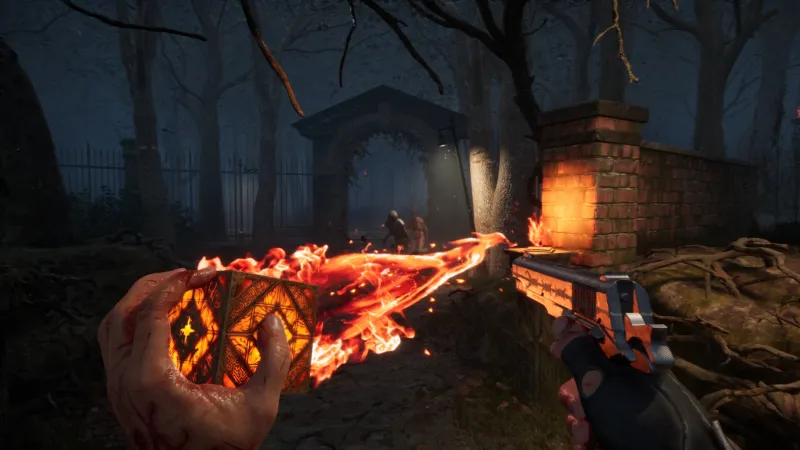
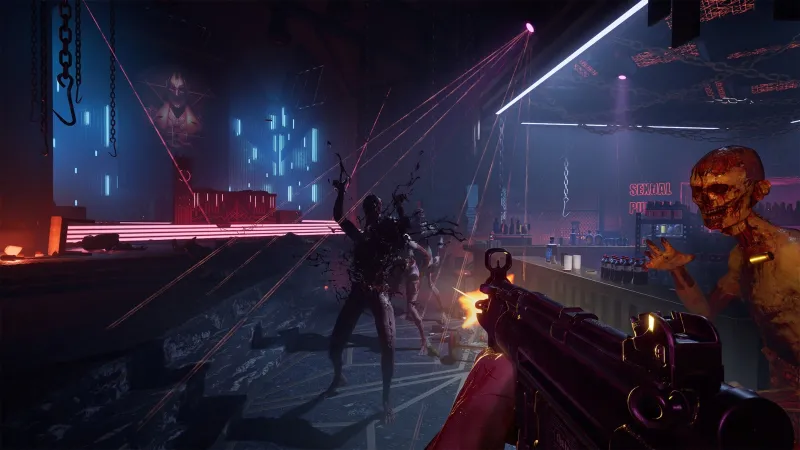
The first-person blend of gunplay and melee lacks weight, with shooting feeling particularly bad thanks to unwieldy aiming. While basic combat is unremarkable, weaponizing the puzzle box adds some cooler wrinkles, like using telekinesis to grab and toss environmental objects (like dismembering foes with saw blades) or absorbing torchfire to lob at targets like I was X-Men’s Pyro. Quick-turning by pressing the left stick downward is awful because it’s so easy to trigger accidentally while sprinting. Many times I’d run to or from something only to whip around in the opposite direction because my thumb slipped, and there’s no option to remap the input.

Combat and stealth can be an uninteresting breeze since the sadomasochistic cultists have more sex drive than brain cells. They shoot at walls, occasionally blow themselves up with their own grenades, take cover infrequently, barely pursue when I flee, and lack any real tactics. I know they get off on experiencing pain, but they should have some sense of urgency or self-preservation. Other encounters are often nightmarish due to the game’s habit of flooding players with mobs of aggressive, mutated humans called Unworthy while frequently providing insufficient resources to survive. The resource economy is completely off. I found abundant ingredients to craft certain items, like basic bandages, that suddenly became nigh impossible to find/craft in the later hours despite searching just as thoroughly. Surviving by the skin of your teeth is a pillar of the genre, but I’d go long stretches unable to craft anything.
Game Informer

Money to purchase goods is just as limited, so I was ill-prepared for several battles. The store also frustrates, as certain items are on sale one moment and randomly unavailable the next. I have no idea why that is or what it adds. Saving up for an AK-47 before a big fight, only for the store to not sell it when I need it, is flat-out dumb. Things have a habit of being absent when you need them most, whether battling armored enemies without the blunt melee weapons ideal for fighting them or entering boss fights with a sliver of health. These instances didn’t make me think, “What a fun challenge!” Instead, I would groan, “Seriously, what do you want from me here?”

A lack of polish further spoils the experience. I once beat one of the primary antagonists by routing him around a table and filling him with bullets as he slowly chased me around without any deviation from his doomed strategy. Enemies trap themselves in geometry; the biggest example was witnessing a major boss get completely stuck and glitch out on a car it climbed onto in what I can only assume was supposed to be a scripted moment.

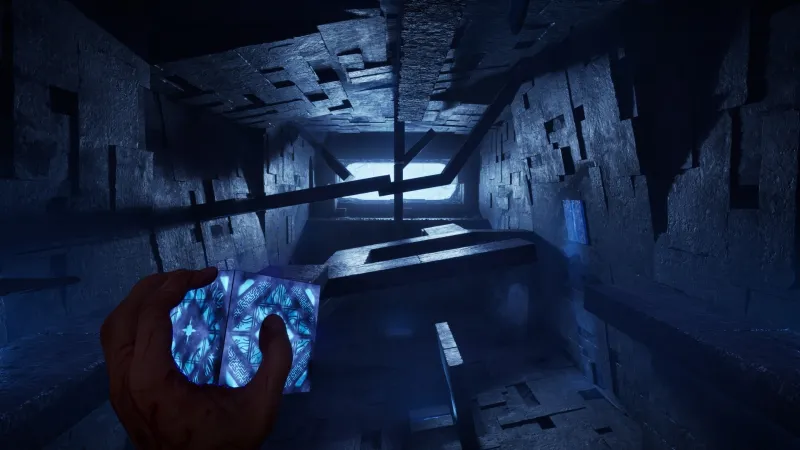
The only relative reprieve from combat is exploration-focused segments in the Labyrinth, where you dodge traps or awkwardly guide blocks to solve navigation problems using the sometimes finicky telekinesis. The Labyrinth areas have the strongest art direction and mood of Hellraiser: Revival; the macabre visuals look great. Since they lack combat, trips to the Labyrinth are consistently decent, but even these segments aren’t bug-free. A chase sequence with the Chatterer lost all of its tension when he became stuck behind what I guess is the Cenobites’ greatest weakness: a stone block. To “reset” him, I had to turn around, walk under the suspended block he was stuck on, and backtrack a good distance before the sequence fixed itself and we resumed our chase. It felt like going through a shoddy haunted house where the animatronics keep breaking down, and the lights come on to reveal the rusted machinery running everything.


There’s no way around it; Hellraiser: Revival is a technical mess, and it falls apart more and more as the roughly 10-hour adventure progresses. The most recurring issues are bad environmental pop-in and characters and objects constantly flickering in and out of existence, as if the game itself is prepared to collapse at any moment. I often fell through floors when knocked down, giving me glimpses of the hidden skybox below it before I stood up. I once hit an enemy through a solid wall, robbing me of any potential loot. Audio sometimes drops out completely, such as when I executed a large threat in silence when it should have sounded like a mess of gore. A subtitle once lingered on screen long after a conversation finished. The healing animation froze midway during a fight, leaving me vulnerable to enemies and leading to a cheap death. A combat encounter while waiting for an elevator to arrive failed to recognize that I killed everyone, forcing me to reload a save and do it again.

After watching Hellraiser: Revival’s finale stumble through the same visual and audio potholes plaguing the rest of the journey, I was angry. But upon taking time to cool down and reflect, my ire shifted to disappointment and relief that I didn’t have to play more. During the rare moments Hellraiser: Revival isn’t on fire in some way, it’s a halfway respectable take on the popular horror franchise. I just wish playing it didn’t so often feel like enduring the twisted machinations of Pinhead himself.

Score:
4.5

About Game Informer’s review system

Muramasa: Revenant Blades Preview – The Best Way To Experience One Of Vanillaware’s Best

Muramasa Revenant Blades Marvelous Games Hands On Preview Remaster Remake Vanillware

Platform:
PlayStation 5, Switch, PC

Publisher:
XSEED Games, Marvelous Games

Developer:
Vanillaware

Release:

Muramasa: The Demon Blade is a Nintendo Wii exclusive and a beloved title among fans of developer Vanillaware, later enhanced with a PlayStation Vita remaster in Muramasa Rebirth in 2013. Rebirth also brought Genroku Legends, a standalone DLC with new stories and playable characters to the game’s gorgeous, painterly side-scrolling action. In a touch of painful irony, Rebirth has remained locked to the Vita, just as The Demon Blade was to the Wii before. Finally, though, Vanillaware is teaming up with publisher Marvelous to bring all of Muramasa’s history to modern consoles. 

Dubbed Muramasa: Revenant Blades, this 4K remaster combines Rebirth and its Genroku Legends DLC into one cohesive package – you can lay that Wii and dusty Vita to rest now. I played roughly an hour of it in a quiet Marvelous office space in Tokyo’s Shinagawa district, and have been staring at my Switch 2 ever since, doing my best to manifest its immediate existence on the console. I haven’t touched the Muramasa series in well over a decade, but I didn’t miss a beat, slicing my way through the game’s first two acts on the Moral (see: hard) difficulty. It was tough, but that challenge only pushed me to pay even closer attention to what I was doing in this classic Vanillaware action-platformer beat ‘em up. I already can’t wait for more. 

Game Informer

Muramasa has always been a looker of a series, but in this renewed 4K presentation, completely redrawn by Vanillaware’s artists, it is especially beautiful. Set during Japan’s Edo period, under the reign of shogun Tokugawa Tsunayoshi (who was in office from 1680 to 1709), it features the feudal Japanese visuals you’re imagining. But Muramasa mixes Japanese folklore, demons, and more to give Vanillaware’s trademark art some fantastical substance. As you move from left to right, or right to left, or up and down, or some combination of these directions, parsing through different screens within a given level, massive mountains hover in the background; trees bend and rotate as you walk through the forest, giving way to a labyrinthine vibe that protagonist Kisuke is likely also feeling; Machiya-style houses stack atop and beside Nagaya homes in cities, creating an endless puzzle of buildings you can enter to search or fight outside. 

Combat remains as fun as always. Though it plays like a beat ‘em up, you use swords, so the result is a frenetic hack-and-slash experience that’s easy to understand, with plenty of depth to master. This Revenant Blades package promises over 100 swords to forge and dozens of skills to upgrade and master for your kit. Upgraded controls make all of it feel better to play, too, and the resulting combat reminds me of 2D fighters as I juggle ninjas and samurai in the air, countering their counters, and clashing blades to ensure I’m not hit – it’s intense, requiring all my focus to not die. 


My learnings are put to the test against the two bosses I face in my hour-long preview: Kurozaru, a hulking menace that’s fast and uses shurikens and AOE attacks to stop me from getting too close for too long, and some giant centipedes, which crawl around the entire level and require me to slash away at different bits of their bodies to finally kill them. 

There’s plenty more in the game I don’t get to see, like the other five stories to play through, each with new localization and English voiceover, additional skills and katanas to unlock, and the ways unseen parts look in this 4K remaster. But what I did get to see and play is enough to ensure I’ll be working my way through the rest next year. Until then, I’ll keep staring at my Switch 2. 

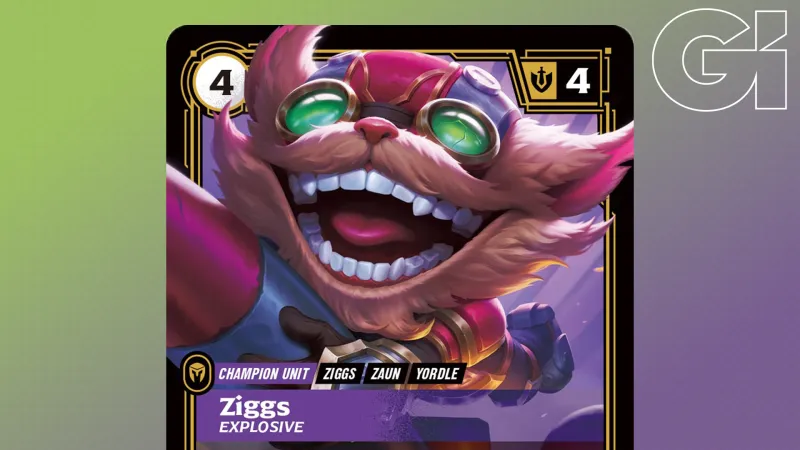
Exclusive Riftbound Radiance Reveal – Ziggs, Explosive

Game Informer

It seems like just yesterday that Riftbound, the League of Legends card game, was bursting onto the scene with Origins. On October 23, its Radiance set will arrive with numerous new cards for deckbuilders to dig into, and today Game Informer is showcasing one of them: Ziggs, Explosive.

Long-time League players know Ziggs as the mid-lane artillerist and demolitions expert, flinging long-range explosives all around to maneuver, destroy, and cause general chaos and mayhem. Ziggs, Explosive makes good on both that vision of the League champion and his moniker, deploying special Bomb gear tokens on battlefields to tilt the scales in his player’s favor.


Coming in at 4 Might and 4 cost under the purple “Chaos” color scheme, Ziggs can exhaust resources to deploy a Bomb gear token. The Bomb itself has a Deathknell: deal 2 to an enemy unit here, and kill all other Bombs you control here. Consequently, when Ziggs defends, he may kill a friendly gear to give himself an additional 2 Might this turn.

You can see the synergy, then: plant the Bomb, hold the battlefield. Setting Ziggs up with a Bomb on a battlefield means you can guarantee a pretty hefty swing in your favor when an opponent tries to take the field. Little combat effects like this fit the “Chaos” moniker, letting Ziggs keep a few variables up when opponents want to press in on his turf.

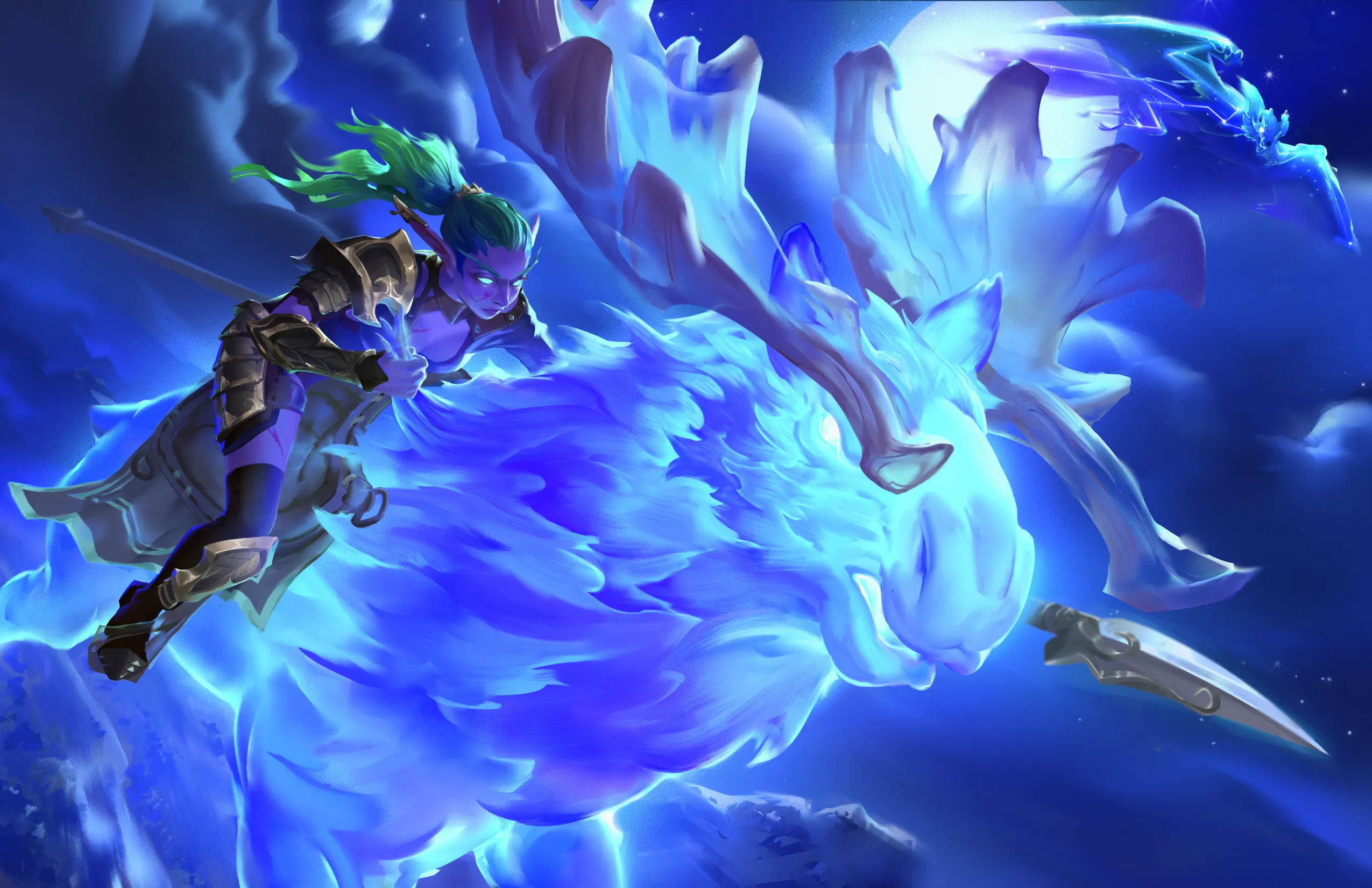
Additionally, we got a look at an alternative art for Ziggs, his BZZZiggs skin from League of Legends. My favorite part is the flavor text. If someone at Riot Games accurately assessed me as someone who enjoys a good Bee Movie joke, well, good job.

Riftbound’s Radiance set officially goes live on October 23, 2026, with Pre-Rift events leading up to the release. If you want to keep up with all the card previews, head over to the Riftbound Radiance card gallery here.

Bobby Kotick, Former Activision CEO, Joins Skydance Board Of Directors

Game Informer

Bobby Kotick, the controversial former CEO of Call of Duty publisher Activision-Blizzard, is entering a surprising new role. As film companies Warner Bros. and Paramount complete their massive $111 billion merger, a new board of directors is being appointed to lead the new parent company, Skydance. According to The Hollywood Reporter, Kotick, alongside investor and philanthropist Laurene Powell Jobs, will join the board.

As of yesterday, Paramount officially completed its takeover of Warner Bros. This has massive ramifications for the film and tv industry, but it affects video games as well – WB Games publishes the Batman: Arkham series, Hogwarts Legacy, TT Games’ Lego series, and Mortal Kombat, to name a few. 

David Ellison, Skydance Chairman and CEO, released a statement alongside the announcement. With regards to Kotick, Ellison said the following:

Bobby led a global entertainment company through three decades of sustained growth, and he brings real perspective on building enduring franchises and connecting with fans. His record of pairing bold strategic moves with disciplined capital allocation is exactly the experience we need as we bring our businesses together. Tony has led at the highest levels of government, respected for his intellect, strategic vision and ability to bring people together around bold, forward-looking ideas. His global perspective and insight will be invaluable as we turn ambition into results.

Kotick was the head of Activision-Blizzard during the very public lawsuits alleging the company had fostered a toxic work culture rampant with sexual harassment. You can read about the details here, but be warned that some of the allegations are disturbing. While the case was ultimately settled in 2023 for $54 million (and with no admission of wrongdoing), employees’ negative feelings around the company’s management is well-documented, with thousands of employees signing an open letter demanding change and organizing a walkout in 2021. Kotick, in particular, was accused of dismissing harassment claims and allowing the behavior to continue. Despite that, Kotick led Activision-Blizzard until the end of 2023, when its acquisition by Microsoft was complete.

That Microsoft merger brought major Activision-Blizzard games to Game Pass, but it more notoriously led to thousands and thousands of layoffs, with the latest wave coming just last month, when Xbox handed the Halo series over to Activision. While there are no announcements just yet, it would not be surprising to see Paramount and Warner Bros. – including WB Games – facing similar fates in the coming years.

[Source: The Hollywood Reporter]

Pokémon TCG: 30th Celebration | The Coolest Cards We Pulled

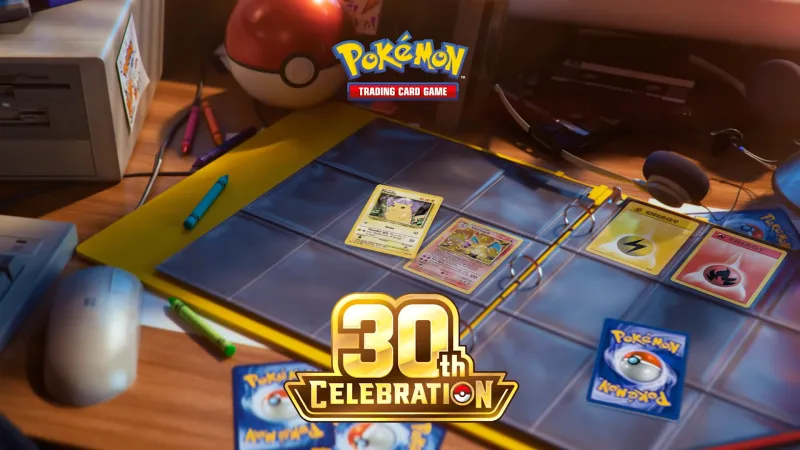
Pokémon TCG 30th Celebration

The Pokémon franchise turned 30 years old this past February, but the celebration has continued on throughout the entirety of 2026. We’re still eagerly awaiting new details on Pokémon Winds & Waves, but 2026 has brought us a ton of really great Pokémon merchandise. Of all that merchandise, I’ve been squarely focused on the recently released Pokémon Trading Card Game: 30th Celebration expansion. Thankfully, my most-anticipated Pokémon release of 2026 is now out, and The Pokémon Company sent over some of the items so we could see what we can pull.

Pokémon TCG: 30th Celebration is all about celebrating the three decades leading up to this moment. As such, in addition to several all-new cards, collectors can grab some of the 30 classic cards that are reissued with the 30th anniversary logo printed on them. Additionally, every single card you get from the 30th Celebration expansion is a foil card, with many of them featuring special art. On top of that, this set introduces a new rarity: Futuristic rare. These special cards include new art illustrated by Japanese artist Yoshirotten. 

Sadly, you can’t just buy booster packs for this special collection. Instead, you must purchase bigger sets, such as the Elite Trainer Box, the 30th Celebration Poster Collection, the Tech Sticker Collection, the Pokémon ex Box, or the Knock Out Collection. I loved seeing the Legendary birds from Gen I have a starring role in this pack, but I’m particularly fond of the rare special illustration Mewtwo that I grabbed. 

You can see my favorite cards I pulled below.


But that’s not all, as each and every booster pack in the 30th Celebration expansion includes one of 30 unique Pikachu cards, each from a different artist. Much like the other cards in this set, the Pikachu all prominently feature the Pokémon 30th anniversary logo to help differentiate them. You can see the Pikachu cards I pulled from the various packs I opened in the gallery below.


Pokémon Trading Card Game: 30th Celebration is available now. For more on the Pokémon Trading Card game, be sure to visit our hub through the image right beneath this article! 

Gears of War: E-Day Review – A Grand Reemergence

Gears of War: E-Day

Reviewed on:
Xbox Series X/S

Platform:
Xbox Series X/S, PC

Publisher:
Xbox Game Studios

Developer:
The Coalition, People Can Fly

Release:

Rating:
Mature

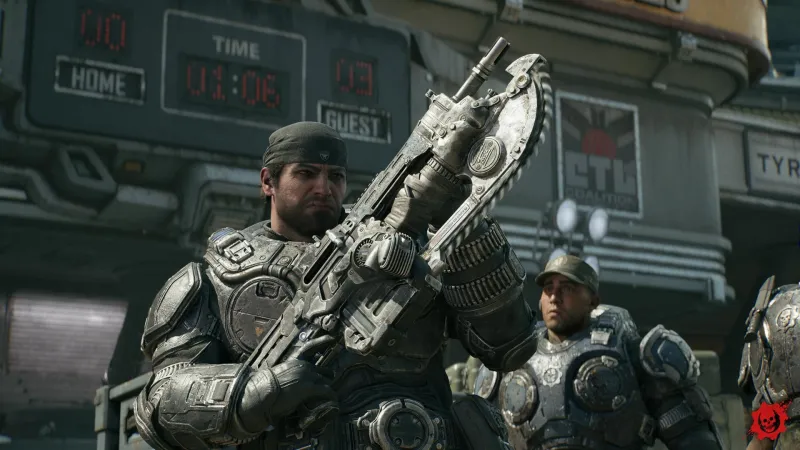
It’s been nearly seven years since the last mainline Gears of War game, and you’d be forgiven for thinking the franchise is little more than a past-expiration relic from the Xbox 360 era. Gears of War: E-Day may take the series back to its early days, but it is far from The Coalition compromising on innovation. Instead, the studio delivers its finest work since taking over the franchise, giving fans ample reason to be excited for the chainsaw-riddled cover shooter once again.

Reprising their roles as the leads, Marcus and Dom visit the city of Kalona to be honored as heroes of the recently concluded Pendulum Wars. Unfortunately, the peace is short-lived, as an unknown threat known as the Locusts emerge from beneath the surface, wreaking havoc and introducing a new threat to humanity. Emergence Day is perhaps the most pivotal moment in Gears of War lore, and watching it play out is nothing short of horrifying and awe-inspiring. 

Right off the bat, Gears of War: E-Day feels like a horror game; monsters of all shapes and sizes rise from the ground, tearing fleeing civilians apart and decimating humanity’s militaristic response. Over the course of three days, you watch the human race scramble to respond to the surprise attack, completely overwhelmed by the ferocity and abundance of the Locust forces. Watching the city of Kalona fall in real time, as each of humanity’s Hail Mary attempts is thwarted by the invading force, establishes the Locusts as a true threat. Nothing can be done to save the city; no matter how many enemies I mow down, Kalona’s fate is sealed. That feeling of helplessness flies in the face of the fact that you’re controlling characters who are essentially armed-to-the-teeth walking tanks, but it works extraordinarily well.


Marcus and Dom are joined by newcomers Mags and Lucas, who remain your squadmates throughout the entire game, whether you play solo or co-op. Despite their utility in combat, they’re even more important to the story. Marcus and Dom are dealing with the loss of Dom’s brother Carlos, while Mags is a strong-willed former soldier who reluctantly gets sucked back into service the moment the Locusts emerge. Lucas stakes his personality on being the by-the-book new guy who knows a lot of useless facts. For too much of the story, Lucas is underdeveloped, but a late-game story involving the newbie elevated him to stand shoulder-to-shoulder with Marcus, Dom, and Mags; I just wish it happened sooner.

Gears of War: E-Day delivers an astonishing collection of shootouts, supported by improved traversal and tactical abilities, masterfully arranged battlefields, stunning visuals, and a strong, diverse arsenal of weapons and equipment. E-Day smartly evolves how Gears of War missions play out; rather than the straightforward shooting galleries of the early games or the wide-open areas of Gears 5, Kalona presents city streets full of collectibles, upgrades, and side missions. I delighted in scouring each abandoned side street, debris-filled alleyway, or burnt-out corner shop for collectibles, and I actively went out of my way to take on side missions to help wayward survivors and find hard cases full of weapon mods. 

Those mods let you customize each gun (as well as your armor and tactical ability) to fully suit your playstyle. I loved popping heads with a Longshot sniper rifle with a mod that instantly reloads on headshots, and I relished melting those who dared to rush me with the Incinerator shotgun, modded to narrow its spread in favor of distance and damage. Then, stacking an armor mod that rewards perfect reloads with added damage and close-range kills with healing, plus tactical abilities that heal your teammates or mark enemies, made me feel unstoppable, even against insurmountable odds.

After wrapping E-Day’s incredible campaign, I couldn’t help but want more. Thankfully, the multiplayer suite will undoubtedly provide plenty of enjoyment going forward. Versus remains fairly loyal to the franchise’s pedigree; whether playing team deathmatch, zone control, or the new power core-delivery Crucible mode, it aptly brings the same level of chaos fans have come to expect. I enjoy jumping into the currently available social playlists to test my skills against players worldwide, but the matchmaking too often disregards player and class levels; I lost count of how many times I was outmatched by players way above my level. Hopefully, as player counts fill out and ranked play begins, the matchmaking improves.

Horde Siege is where I plan to spend most of my time going forward. In this fresh evolution of the classic wave-based defense mode, Gears of War: E-Day borrows liberally from the extraction shooter genre. You use the open streets of Kalona to complete PvE objectives as a squad. You can beeline toward your main objective and call for extraction, but I more often enjoyed completing side objectives with my squad to earn upgrade points for my character class. With friendly squads in the same session, Horde Siege takes the formula to new heights, opening the door for emergent storytelling as you push back against the Locust threat through distinct missions that sometimes intersect. At times, I miss the more intricate, strategic wave-based Horde iterations of past Gears games, but a standard 10-wave Horde mode is enough to whet my appetite.

Gears of War: E-Day is as close to a complete package as it gets, effectively rivaling the series’ heyday. Minor quibbles with the story or matchmaking pale in comparison to the frightening tale of humanity’s darkest hours and the intense fallout of the all-out invasion. Seeing Marcus and Dom back in action and in their prime is an exciting prospect for a longtime fan like me, but it would be meaningless if it were just a nostalgia play; instead, Gears of War: E-Day innovates in all the right ways while keeping the core and heart of the franchise intact, stamping the series’ return with one of, if not its best, entries to date.

GI Must Play

Score:
9.5

About Game Informer’s review system

Nintendo Switch Sports Resort Preview – A Return Visit To Wuhu Island

Nintendo Switch Sports Resort

Platform:

Publisher:
Nintendo

Developer:
Nintendo

Release:

Rating:
Everyone 10+

The 2006 release of Wii Sports was a cultural phenomenon. People fought each other in the aisles of Best Buy to secure their Wii consoles before the holidays, primarily because of the Wii’s pack-in motion-control tech demo. Family gatherings often devolved into bowling or tennis matches, regardless of whose house we were at since everyone owned a Wii. Three years later, Wii Sports Resort didn’t have the same cultural impact, but it introduced the Wii Motion Plus, giving fans a reason to upgrade. 

With Nintendo Switch Sports in 2022, the novelty came from the series’ long absence and the franchise arriving on the wildly popular and far more advanced Nintendo Switch. But with this month’s release of Nintendo Switch Sports Resort, the cultural significance has faded substantially with each and every entry. However, after spending an hour touring the newly renovated Wuhu Island, I’m not concerned much with how much of a mainstream impact it will have. Instead, I’m more focused on the several hours of lighthearted fun it will deliver to my friends and me. 

Game Informer

Nintendo Switch Sports Resort delivers a heavily upgraded version of Wuhu Island, which most famously appeared in Wii Sports Resort. The resort island is explorable on land via Skateboard, air via Prop Plane, and sea via Power Cruiser. I had the opportunity explore by all three of these extremely intuitive methods. 

Gliding across the ground on your Skateboard is as simple as holding one Joy-Con in Mouse Mode and mimicking the kick-push motion, with tilting the Joy-Con to steer and lifting it off the surface (in my case, my leg) to jump and perform tricks. The Prop Plane has you hold the Joy-Con like a paper airplane you’re ready to throw, with tilt controls and the gyroscope controlling your pitch and speed. Power Cruising has you jump into the seat of a jet ski by holding two Joy-Cons like handle bars, tilting to steer and twisting to rev the engine faster. Exploring the island is enjoyable, as you search for touristy photo areas that explain a bit about the history of Wuhu Island, as well as abundant collectibles that reward you with points to customize your Mii or avatar.

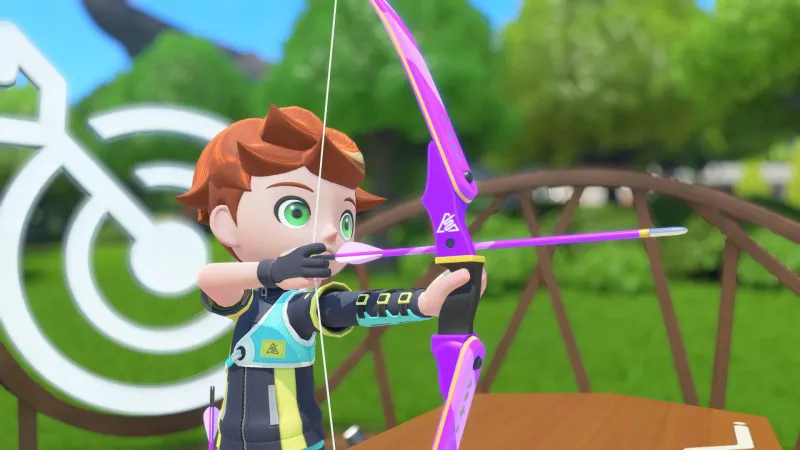
I enjoyed the exploration element of Nintendo Switch Sports Resort, and it will almost certainly add a new layer of replayability to the overall package, but the main attraction is the individual sports. Thumb Wrestling is a goofy minigame where you hold the Joy-Con upright and try to pin your opponent’s thumb, while they furiously shake their Joy-Con to escape your grasp. The Archery game’s special mode using two upright Joy-Cons lets four people aim at different parts of the same target simultaneously (with points given to your opponent if you accidentally hit their section). 

Game Informer

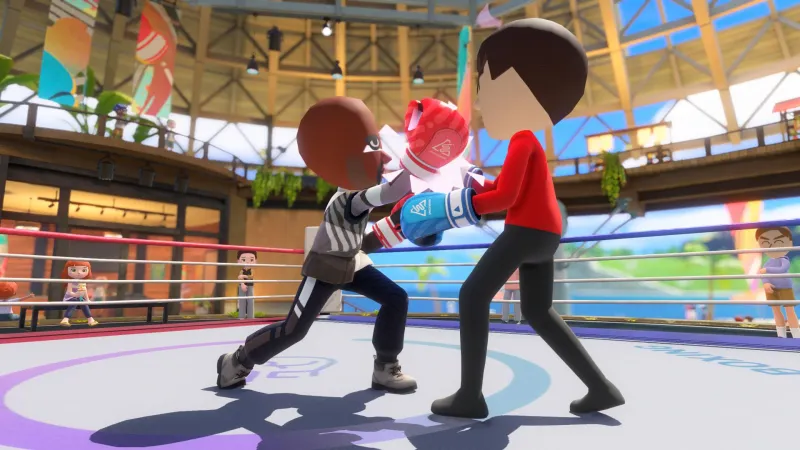
Boxing has you defending from incoming attacks and then picking your shots when you see an opening. Table Tennis has you holding the Joy-Con like a paddle and trying to get your opponent to make a mistake so they either miss the table or you smash their weak return shot. And, of course, bowling is still as fun and straightforward as ever; if you haven’t played since Wii Sports, you’ll notice it’s no longer about release timing and more about spin and aim. 

Each sport I played controlled well, even if the Boxing motion controls struggled if I threw a punch the correct way and I miss being able to cheese the release timing of the Wii Sports iteration of Bowling. You can play them in a variety of different formats, including special variants, like Bowling with a hundred pins, as well as the Island Crown mode, where you compete against 20 CPU characters in nine sports with the mission to climb the ranks and take on the Island Legend boss of that sport. Island Crown, in particular, sounds like a mode that will steal away hours of my time when the final game arrives.

Game Informer

Regardless of how big a splash Nintendo Switch Sports Resort is poised to make, I got what I needed from the hour I spent wailing and waggling my Joy-Cons: a fun, casual sports experience full of bite-sized minigames that will deliver enjoyment whether I’m alone or in a party setting. Thankfully, it won’t be long before I can have Nintendo Switch Sports Resort on my personal console, as it arrives on Switch 2 on October 22.

We Got A Deep-Dive On The Dungeons And Monsters Coming To D&D: World of Warcraft

Game Informer

Dungeons & Dragons and World of Warcraft are two of the biggest fantasy games around, even though they exist in completely different mediums. As such, a crossover between the two is a natural fit (I bet there are plenty of D&D groups who also run raids in World of Warcraft together), but the form of that collaboration is less certain. In a private presentation breaking down the upcoming Dungeons & Dragons: World of Warcraft project, the designers made their approach clear: this book is a toybox.


“This book is absolutely a toolbox or toybox that you can use to fill your D&D game with these sorts of adventures, and I think the dungeons represent that really well,” senior game designer Joey Haeck said. “There are a lot of tools at your disposal that I think make it really easy for a DM to explore the world of Azeroth with their players.”

This isn’t a linear, pre-written campaign, but a set of curated crossover locations, character options, magic items, and monsters for players to build their own version of events. Of course, as Haeck mentions, the book also includes some of the most iconic dungeons from World of Warcraft’s history, and if your DM isn’t interested in coming up with a narrative framework to tie everything together, you’re welcome to just storm some castles together. The book also includes advice on building campaigns around World of Warcraft villains, many of which have stat blocks included.

Each dungeon is designed for parties of a certain level, defined in D&D as tiers of play. You can venture into the Deadmines and Shadowfang Keep at levels 1-4; Blackfathom Deeps at levels 5-10; Dire Maul at levels 11-16; and Azjol-Nerub at levels 17-20. There’s also the Scarlet Monastery, which is designed for levels 5-10 or 11-16 depending on which wing you’re exploring, and Onyxia’s Lair, designed for characters level 17-20 and centered around a boss fight with the dragon who dwells within. Yes, this is a dungeon with a dragon; as I said, the crossover is a natural fit.


Dungeon layouts are pretty loyal to their MMO counterparts, though Haeck mentions they’ve added new secrets and shortcuts to some, which will be a surprise even to players intimately familiar with the maps. And while most problems in World of Warcraft are solved with combat, the D&D adaptation allows for alternate solutions, like stealth and negotiation, where it makes sense. Still, if you want to go in guns blazing, you’re more than welcome to. Some dungeons include random combat encounter tables for that very purpose.

The foes on those tables are a mixture of newly designed Warcraft monsters and existing D&D monsters, some of which are re-skinned to fit the Warcraft universe. For example, there’s already a stat block for a water elemental in the 2025 Monster Manual, but if you want players to face off against a Murloc, the book includes rules to convert a table of humanoid stat blocks by adding the Amphibious trait and a swim speed.

Game Informer

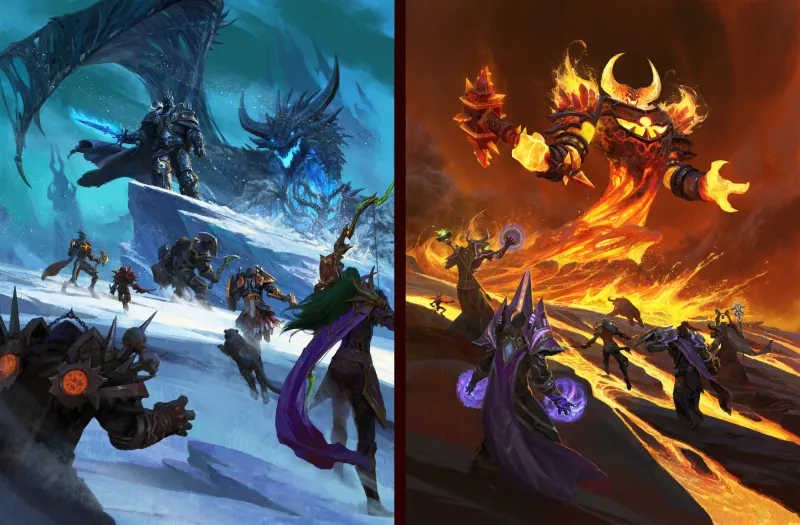
Meanwhile, characters like Jaina Proudmoore, Sylvanas Windrunner, and the Lich King Arthas each get their own unique stats, rated at a challenge rating of 22, 23, and 25, respectively. And while there are plenty of dragons in D&D, their abilities don’t line up one-to-one with those in the Warcraft universe, so the crossover will include Green, Blue, Red, Black, and Bronze Dragonflight Dragons to square up against.

While the presentation was more DM-focused, it ended with some player-centric mechanics. Tool proficiencies (which can fall to the wayside in many D&D games) are repurposed to correspond to World of Warcraft’s professions. There’s guidance on how gathering professions can be used to collect resources and how production professions can be used to craft new items.

Finally, we saw some of the game’s factions, which parties can gain affinity with using D&D’s existing Renown system, found in the Dungeon Master’s Guide. There’s the Alliance and the Horde, of course, but the book includes “more than 20” factions total, including the Argent Dawn, the Cenarion Circle, the Earthen Ring, the Explorer’s League and Reliquary, the Kirin Tor, the Steamwheedle Cartel, and the Valdrakken Accord. Raising your Renown brings mechanical advantages – allies of the Earthen Ring can use the faction’s portals, and the closest allies of the Valdrakken Accord are granted a wish.

Game Informer

It’s a toybox with plenty of options, and I’m excited to see it all laid out, but it’s a pretty daunting project. World of Warcraft has decades of history crafted with a fundamentally different design philosophy than Dungeons & Dragons. Because of that, you could never fit it all into one book, and it could never feel the same as the experience on a PC. The design team knows this, however, and has structured the book accordingly.

“I’ve been trying to shift my thinking to talking about [paraphrasing],” project lead designer James Wyatt said in the presentation. “Because we’re not doing like a word-for-word translation of any WoW game mechanics. The game you’re sitting down at the table to play is still D&D in the setting of World of Warcraft, and with a lot of the trappings of World of Warcraft […] So the goal is to try to evoke the feeling of playing WoW and let you interact with the characters and creatures and abilities that you have as a WoW character, while also opening up the world for you to explore in a whole new way, because you can talk to anybody that you meet, you can interact with anything you see. Which is the beauty of a tabletop game.”

For more on the new books coming to Dungeons & Dragons, check out our recap of the publisher’s massive Gen Con presentation.

The Video Games And More You Should Play This Weekend – October 2, 2026

Game Informer

Welcome to October, or as the world of video games and movies (and all other entertainment media, if we’re being honest) refer to it: spooky season. It’s getting a little chilly; a little overcast. And that means it’s time to play video games where you count bullets. Or, alternatively, you fly a super fast jet airplane.

Before we get to our list of recommended weekend games, however, I want to share some of our most popular stories of the week. We officially unleashed our Grand Theft Auto VI cover story on the masses (subscribe here to get your copy in the mail very soon!), but I promise we offered more than just that this week.

But we are very proud of it and we hope you enjoy it.

Game Informer

Ace Combat 8: Wings Of Theve

Eric Van Allen

Bandai’s Aces team returns to the skies this weekend with Ace Combat 8: Wings of Theve, the latest entry in its arcade-oriented action-shooter series. Riding high on a tailwind of success from 7: Skies Unknown, Ace Combat 8 is a little bit more of everything: bigger battles, more intense dogfights, and a story that puts you right in the boots of a little-known pilot, thrust into a folk hero title as the new “Wings of Theve” after the current Wings is shot down. In the effort to take back your country from invading forces, you fly varied and dangerous missions alongside a charismatic crew. It’s the drama that’s really stuck with me, though. The Aces team is digging deep into ideas around the horrors of war, the losses inflicted and sacrifices made, and the intense aerial ballets you have with rival Shadow squadrons. This new Ace Combat is shaping up to be one of the better ones in the series, and anyone eager for some open air and azure skies should consider giving this entry a try.

Game Informer

End Of Abyss

Kyle Hilliard

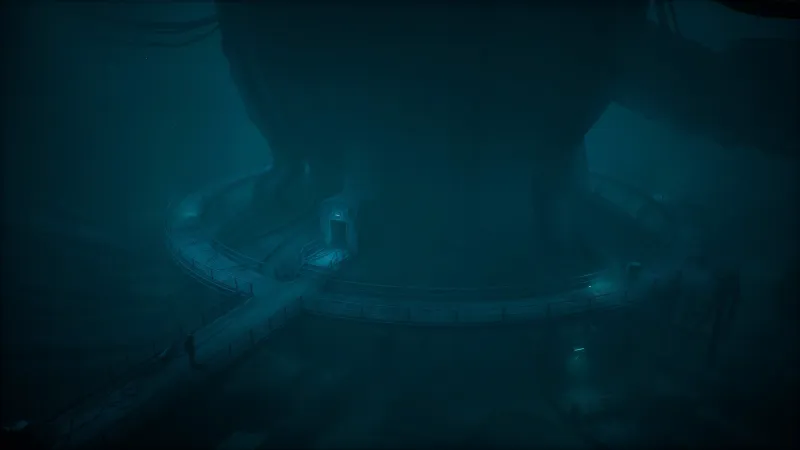
End of Abyss is built by former Little Nightmare developers, and the lineage shows. The game has a mood that I would favorably compare to Little Nightmares (obviously), but also Playdead’s Inside. Mechanically, however, the game is much closer to Metroid with a large alien (at least I think it’s alien – it is intentionally unclear) map to explore and ability unlocks that let you get to new areas. You can check out some gameplay below.


I also spoke extensively with the developers back in May, which you can read here if you’re a subscriber. Charles Harte’s review should be online soon if it is not already, but I have been enjoying the game so far. The bosses have been more challenging than I expected and I have hit a few troublesome bugs, but it has been my go-to game to play in my leisure time, which is a big compliment considering how full my hard drive is with good games so far this year.

Game Informer

Minecraft Dungeons II

Kyle Hilliard

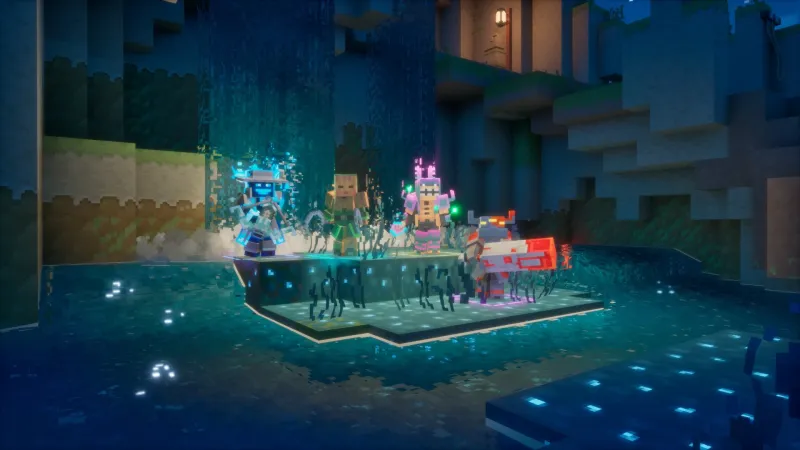
The original Minecraft Dungeons felt a bit like a family-friendly Diablo that blessedly featured local couch co-op – a rarity in the modern gaming age. The sequel keeps the train on the tracks offering more of what worked in that first game with iterative improvements. In their review, freelancer Tomas Franzese writes, “Minecraft Dungeons II proves this spin-off franchise can stand on its own and improve with subsequent entries at a time when Xbox is refocusing on its biggest IP. There’s plenty of room to expand, improve, and let me reach that endgame feeling of satisfaction much sooner, though. Right now, Minecraft Dungeons II is simply a straightforward, entry-level action-RPG.” You can read Game Informer‘s full Minecraft Dungeons II review at the link.

Game Informer

Toem 2

Marcus Stewart

Toem’s laid-back but stimulating blend of puzzle-solving and photography charmed me in 2021, so I’ve been low-key excited for the sequel ever since. I’m a couple of chapters in, and while I’m not a great photographer in real life, I love a good puzzle game, and Toem 2 is hitting the right notes. Solving scavenger hunt-style tasks like finding missing lawn gnomes or spotting peculiar cloud shapes by snapping pics is easy and enjoyable. New camera tools allow more unconventional interactions, such as cutting objects by lining them up in a shot. Cutting down fruit from a tree to make jars of jam for a hungry bear or slicing pieces of fabric as a seamstress frantically tosses them mid-air is good, silly fun. I’m excited to see what other tools I unlock. As my list of tasks expands with every chat with the quirky characters, I get more excited to capture every photo op, find every secret and hidden path, and fill my book with more stamps indicating a job well done. After playing so many tonally mature, violent games recently, Toem 2 is the palate cleanser I desperately need and shouldn’t be overlooked if you like cozier puzzle experiences.

Game Informer

Fallen Tear: The Ascension

Matt Miller

This lovely new Metroidvania from CMD Studios is likely to surprise you with its breadth and size. It’s a massive adventure characterized by a beautiful, vibrant visual style and an heroic story that is refreshingly free of pretension. While the game draws primarily on the classics of gear- and ability-gated advancement in the style of Metroid or Castlevania, its other chief inspiration is classic JRPGs. As such, the storytelling has an innocent, almost fairy-tale-like vibe, and you spend a lot of time recruiting new “Fated Bonds” that manifest as new party members that can step in during the action to lend a helping hand. Fallen Tear features gorgeous music and a surprisingly robust voiced script that carries the narrative forward. If these sorts of exploration games are your jam, you’d be remiss to not investigate if this one might be your next deep dive.

Game Informer

Blades & Battle

Matt Miller

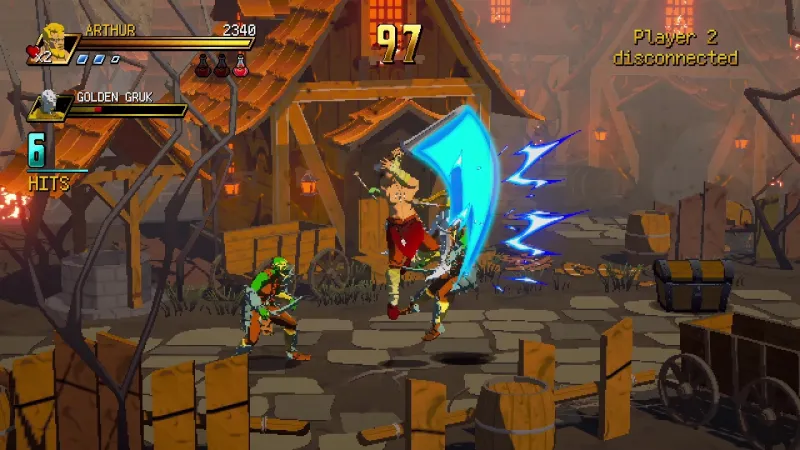
Blades and Battles wears its inspirations on its sleeve. This is a pretty clear love letter to the medieval and fantasy hack ‘n’ slash brawlers of the late 80s and early 90s, like Golden Axe and Knights of the Round. Players choose to play as Arthur or Lancelot as they sword-slash their way through armies of enemy soldiers and monsters in local cooperative battles. The visuals are stylized and retro, and reminiscent of those early days of the genre. In line with its source material, the action is (likely intentionally) a bit stiff and unforgiving, but it’s great fun to line up big combo juggles that send your foes bouncing around the screen.

This is the kind of game I especially like to surface in a weekend recommendation like this, as it’s the perfect fit for a satisfying evening with a buddy, when you can’t decide what else you’re going to do with your game time. It may not have a ton of surprises, but it’s a fun and satisfying time that nails precisely what it’s aiming to do.

Game Informer

Heartworm

Kyle Hilliard

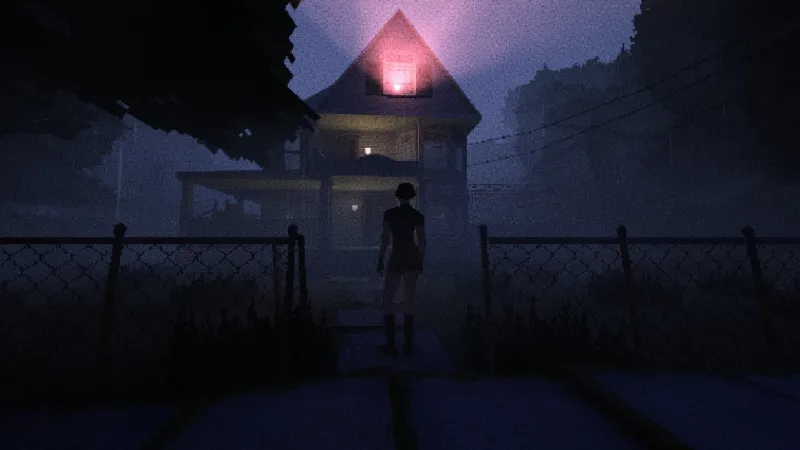
Heartworm released on Steam in July of last year to “very positive” reviews and this week it arrives on consoles. It’s a Resident Evil-inspired survival horror throwback with 32-bit visuals and fixed camera angles. I have been playing it on PlayStation 5 and despite having just played Silent Hill: Townfall and being in the middle of End of Abyss (see above), I am enjoying it. Today is the second day of October, after all, so it is spooky season.

One standout mechanic I like is instead of the typical video game flashlight to light up dark areas, protagonist Sam uses the flash from her camera, which leaves a lingering brightness for a few seconds. The mechanic lends to the scariness well and also just feels different from typical survival horror games. If you’re looking for something scary and nostalgic, take a look at Heartworm.

Game Informer

Ghost Of Yōtei Complete Edition

Kyle Hilliard

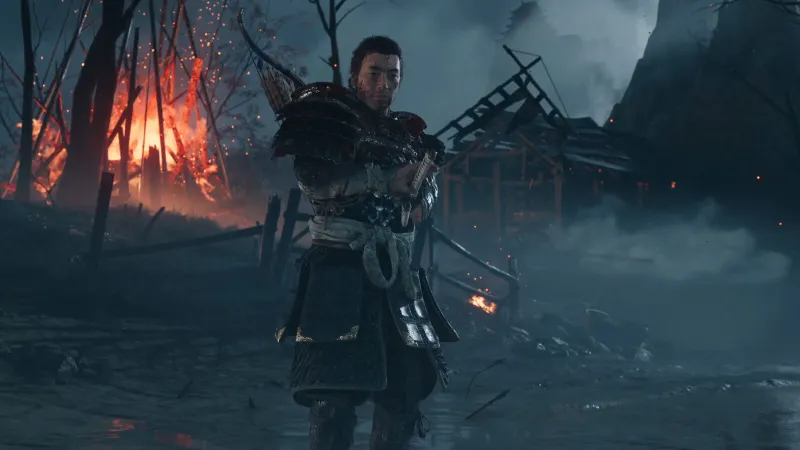
Ghost of Yōtei is one of 2025’s best games and yesterday saw the release of the game’s Complete Edition, which adds a single-player Echoes of Sekigahara DLC campaign and the new rogue comabt mode called Most Wanted (which features Ghost of Tsushima’s Jin as a playable character). You can buy Complete Edition for $69.99 and it features the full original game and the Echoes of Sekigahara and Most Wanted expansions. If you already own the game, you can add the Echoes of Sekigahara and Most Wanted expansion for $14.99.

I have not had a chance to dive into these new modes yet, but am particularly eager to check out Echoes of Sekigahara. I am protagonist Atsu’s biggest fan and very invested in her story so I will take more of that please. You can read Game Informer‘s Ghost of Yōtei review at the link.

Game Informer

Octopath Traveler 1 And 2 On Switch 2

Eric Van Allen

If you need more RPG hours than can fit into this weekend—literally—then Octopath will have enough for that, and many more weekends after. Both games are a love-letter to classic pixel-art, turn-based RPGs, where you hop between the stories of eight different travelers on their eight paths. Broadly, the HD-2D art is already a draw for the series, with absolutely gorgeous boss fights and locales throughout both journeys. The turn-based battles are tense, and building up your Travelers path over path is enjoyable. If you have to only pick one, play Octopath Traveler 2; the first game is good, but the second is easily one of my favorite RPGs Square Enix has produced in the last decade. Brilliant writing, an incredible score, and a very memorable cast of characters ensures you’ll always have something to go back to when the weekend comes around.

Game Informer

Tabletop Pick – Cozy Stickerville

Matt Miller

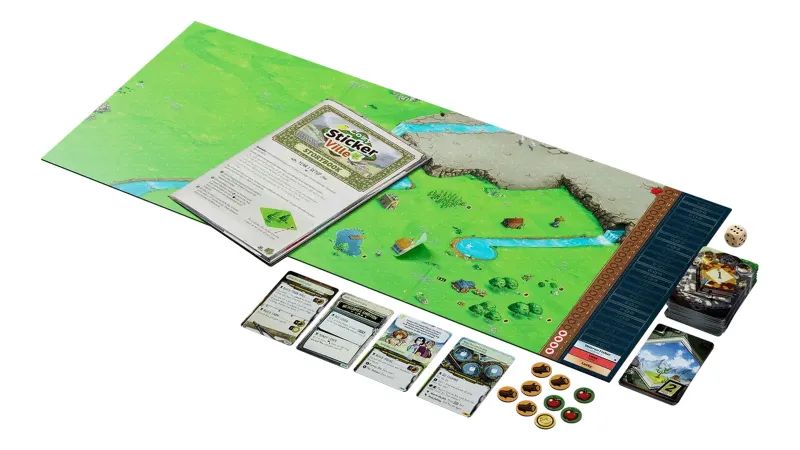
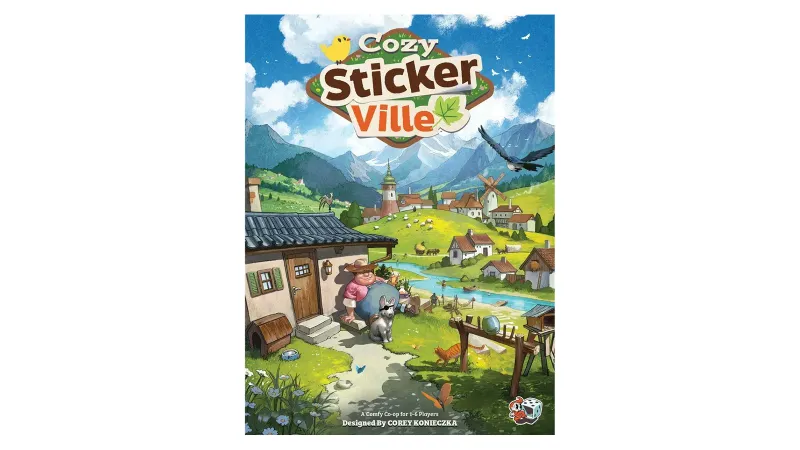
The “cozy” phenomenon we’ve all seen in the video game world is certainly not isolated to that corner of gaming. If anything, the concept might even have a longer pedigree in the tabletop world, and we continue to see more success stories that tap into a low-stakes, relaxing, non-violent play loops. One of the best board game releases of 2026 so far fits squarely into this camp: Cozy Stickerville tasks you with growing a small town by placing stickers out onto the board. Players work together cooperatively over the course of multiple sessions to add new elements to the village. Alongside adding in farms, shops, and other important features, you’re also managing events that form the story of the town as it plays out over years of in-game time.

Game Informer

You can’t really lose Cozy Stickerville; it’s more about seeing the story of your hamlet play out over time, resulting in one of several unique endings. But it’s a lovely way to enjoy crafting an interactive story together with friends or family; the whole thing is low-stakes, easy to pick up and learn, and great fun to enjoy together.

For all of our recurring weekend recommendations, head here.

End of Abyss Review – Samus-Inspired Survival Success

Game Informer

Reviewed on:
PlayStation 5

Platform:
PlayStation 5, Xbox Series X/S, PC

Publisher:
Epic Games

Developer:
Section 9

Release:

Rating:
Teen

I first played End of Abyss at a Summer Game Fest demo in 2024, and I haven’t stopped thinking about it since. The full release is about as good as I hoped it would be, blending Metroid’s familiar formula with a survival horror flair, making it stand out even amongst an oversaturated crowd of indies. My playthrough was unfortunately infested with some major bugs, but I enjoyed the rest of the experience enough to largely brush those aside.

Game Informer

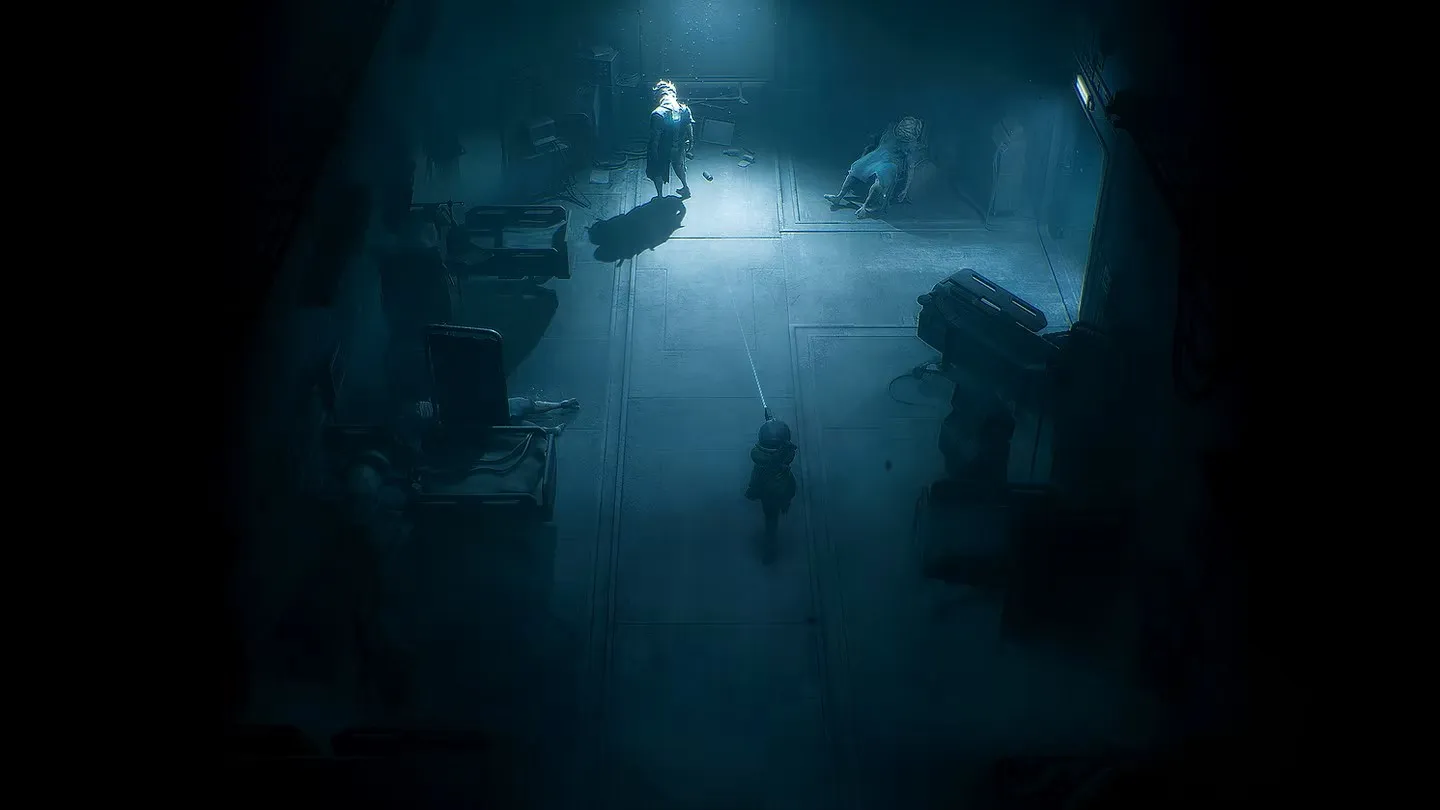
In End of Abyss, you play as a technician who ventures into an abandoned facility alongside soldiers and their captain. The setting is liminal and mysterious – fitting for a survival horror game – where you must seek out old notes and item descriptions if you want narrative context. The atmosphere is cold and lonely, and even your armed companions seem disinterested in helping you complete your tasks. For a game so light on plot, I found myself instantly sucked into its worldbuilding, cautiously curious to know what was around every corner.

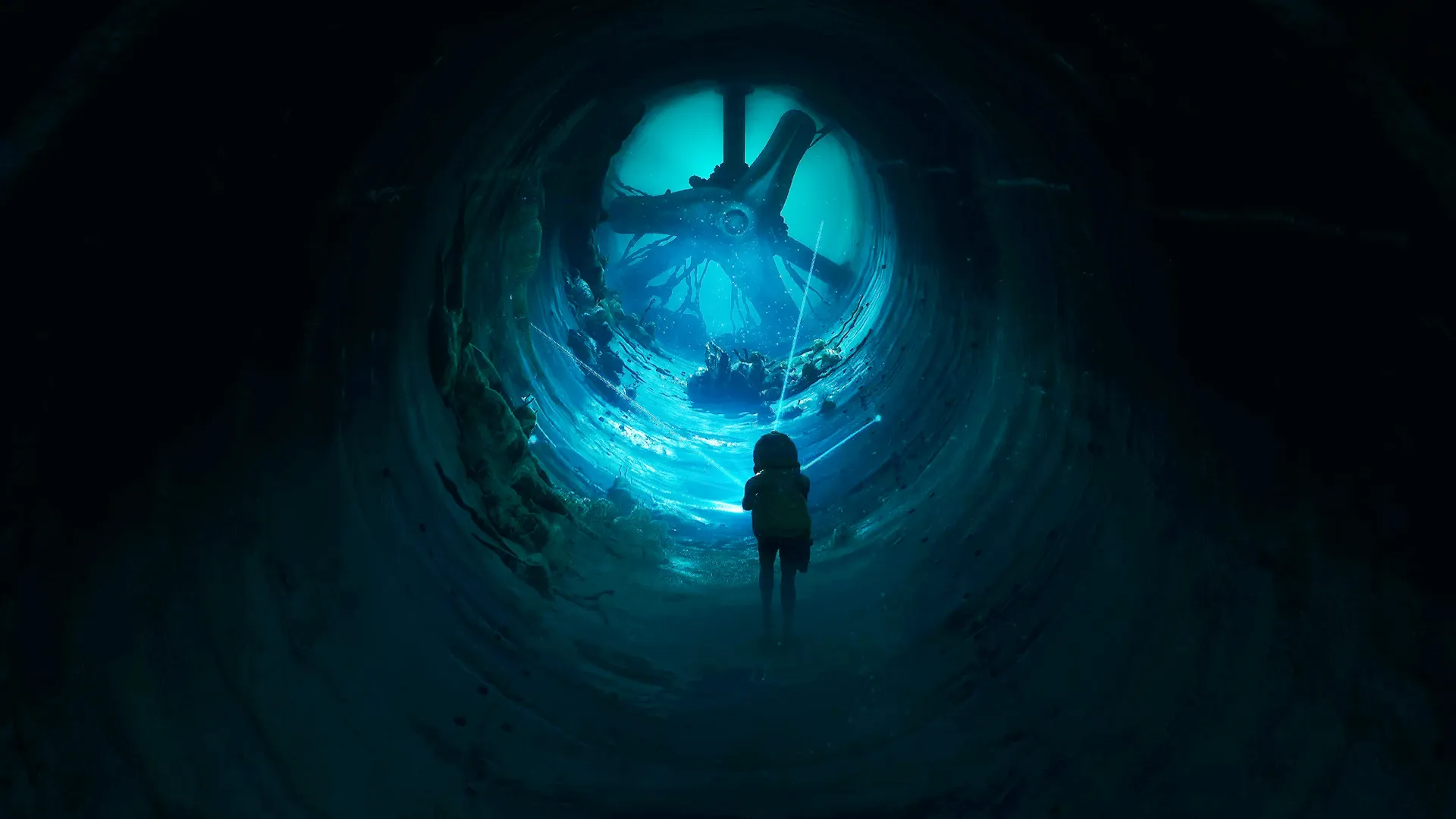
It helps that the complex is a joy to explore. End of Abyss is clearly inspired by the Metroid series and borrows some of its best traits. The map constantly winds in on itself, and you’re just as likely to discover a shortcut back to a previous area as you are to find a rare resource. Even in the sea of similar indie games, I was consistently impressed by End of Abyss’ large-scale level design. There’s also a scanner (à la Metroid Prime) that allows you to analyze enemies and search the environment for ways to progress. I don’t know what the facility is called, and even after rolling credits, I’m not quite sure what purpose it served, but the setting is one of End of Abyss’ most memorable highlights.

Game Informer

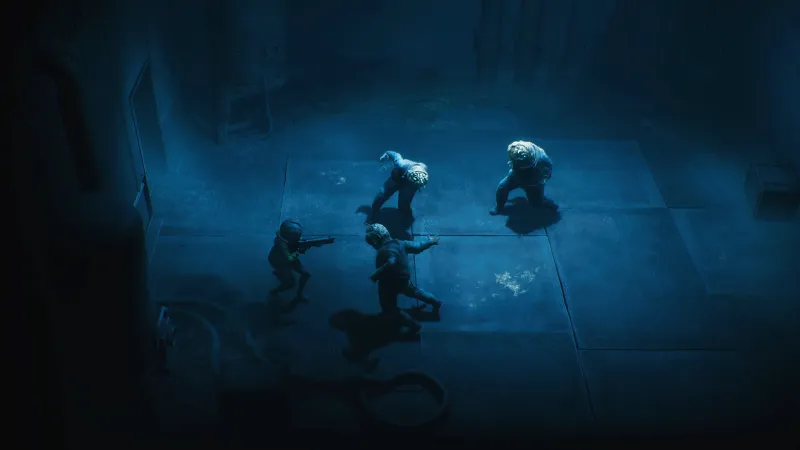
While End of Abyss is structurally similar to Metroid, it’s also a survival horror game with twin-stick shooting. Your pistol has infinite ammo, but you need to craft bullets for other weapons you find (most of which are optional). Every conflict is tense, making my narrow victories satisfying, and the game has just enough enemy variety to keep things interesting, including zombies, bugs, and robots. Different enemy types also have their own weaknesses, so you’re encouraged to use your full arsenal of weapons.

Bosses, on the other hand, weren’t always as fun to encounter. These tough showdowns are balanced well from a combat perspective, but repeated attempts drain your valuable ammo and grenades quickly. On more than one occasion, I had to grind for bullets and bombs before returning. The alternative is to rely on your starting pistol, but most health bars are so large that it’s too tedious to rely on the handgun alone. This became less of an issue in the late game, when I had more weapons and therefore more types of ammo in stock.

Finally, there’s the elephant in the room; my time with End of Abyss was rife with bugs. I got stuck in walls, encountered invisible walls, and even fell out of bounds at one point. The map would also have glitches, marking unlocked doors as locked or omitting certain landmarks, making backtracking confusing. And perhaps most frustrating of all, some doors would fail to prompt me with the “open” button, leaving me unable to enter until I quit and reloaded. The bright side is you save frequently to heal, so resets don’t erase much progress. End of Abyss has also already received multiple patches during my playtime, and some issues have been resolved, but it affected my experience nonetheless.

Despite the glitches, I loved snooping through the cold, industrial hallways of End of Abyss, and the bugs did surprisingly little to affect my overall opinion. I’ve been looking forward to End of Abyss for quite some time, and I’m pleased that it mostly lived up to those expectations. 

Score:
8

About Game Informer’s review system