In this week’s episode of The Game Informer Show, we dive deep into our Grand Theft Auto VI cover story and extract the coolest details for your enjoyment. Marcus, Alex, Charles, and Kyle discuss how Leonida compares to Florida, the game’s updated weather system and how it may compare to Red Dead Redemption 2, and speculate on what may happen to players who prey on endangered species.
The Game Informer Show is a weekly podcast covering the video game industry. Join us every Friday for chats about video game reviews, news, and exclusive reveals alongside Game Informer staff and special guests from around the industry. Support the show by subscribing to our physical video game magazine!
Sponsored: Before ink met page, Super Heroes rose from American ideals. Now, these virtues take on a powerful new form in America’s Comic Art Coin and Medal Program – a historic collaboration between the United States Mint and DC! Collect Superman, Batman and Wonder Woman coins and medals with limited-edition designs in 24K gold and fine silver. Explore the collection at the US Mint site here.
For generations, comic art has done more than entertain. It gave American culture some of its most enduring icons and its clearest visual language for hope, courage, justice, and equality. Panel by panel, it shaped how generations understood their own values.
In 2025, the United States Mint made that art form part of its own legacy. Partnering with DC, the Mint launched the Comic Art Coin & Medal Program, the first time in its 230-plus-year history that Super Heroes have appeared on official U.S. coinage. Rather than reproducing images from familiar comic panels, every design is original artwork created specifically for the collection, sculpted by hand and struck in precious metal.
Superman, Batman, and Wonder Woman launched the series in 2025. Supergirl, Robin, and Green Lantern, continue the story in 2026, with three additional Super Heroes coming in 2027 to complete a nine-hero lineup.
These aren’t just character traits. They’re the values that turned comic art into something bigger than the page, and the same values the Mint has spent over two centuries striking into American coinage.
Each release comes to life through Mint Chief Engraver Joseph Menna, who designs and sculpts every obverse, with the Mint’s Medallic Artists creating the reverses under his artistic direction. Available in 24-karat gold coins, 99.9% fine silver medals, and three medal sets pairing a trio of DC legends together.
Two American traditions. One extraordinary collection.
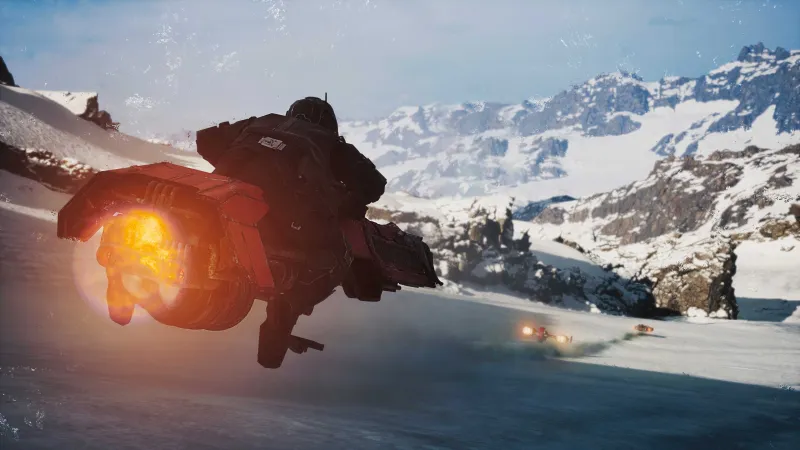
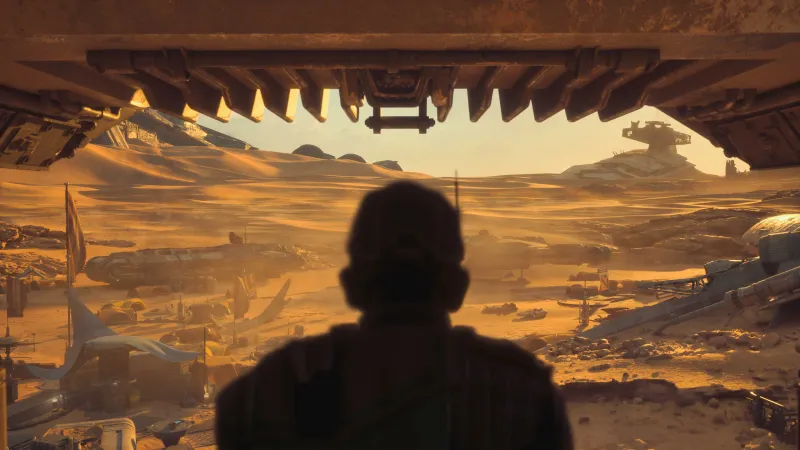
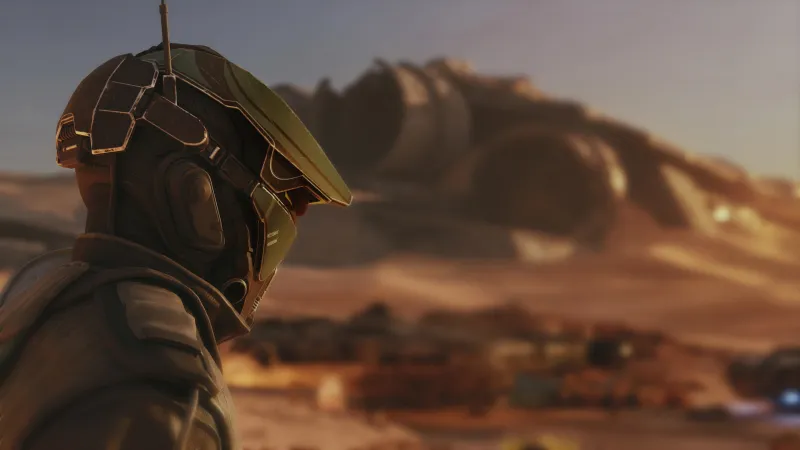
Star Wars: Galactic Racer is absolutely a Star Wars game, and familiar locations, musical motifs, and characters will delight fans. But mentioning Star Wars these days feels like someone playing a song I’ve heard too many times. Fortunately, “Star Wars” is the least interesting aspect of Galactic Racer. Developer Fuse Games crafted an excellent racing roguelite that’s enthralling, challenging, and hard to put down, even when minor frustrations choke its engines. This fun spills over into the game’s various other modes, too, making for a robust package with no shortage of tournaments to speed through.
Star Wars: Galactic Racer – Video Review:
Galactic Racer’s campaign is the foundation of Fuse’s revival of the Star Wars racer. You first compete to join the Galactic League to thwart champion Kestar Bool, an alien responsible for your prior imprisonment. Once in, you compete in a multi-planetary tournament and hopefully defeat him, bringing shame and embarrassment to Kestar and the treacherous Bool family. Fun twists and turns make for a story that goes above and beyond what’s typical of the genre. Great voice performances sell the stakes, and getting to know this game’s cast of allies and villains remained interesting throughout; it helps that they have no problem ribbing me via mid-race comms or outright mocking my mistakes on the track.
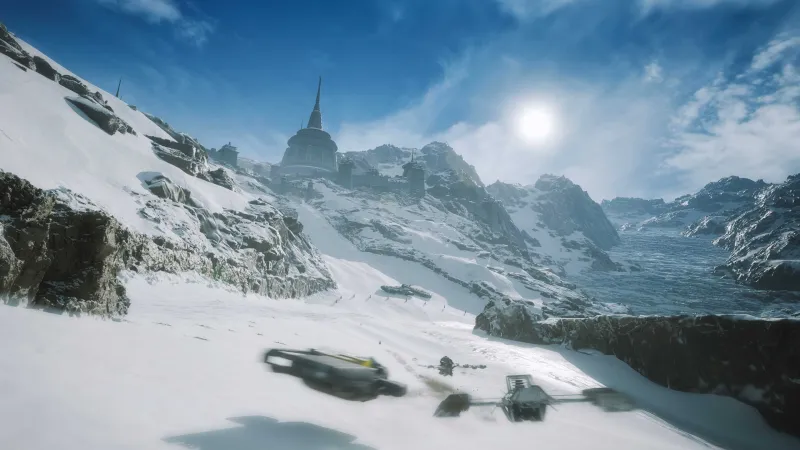
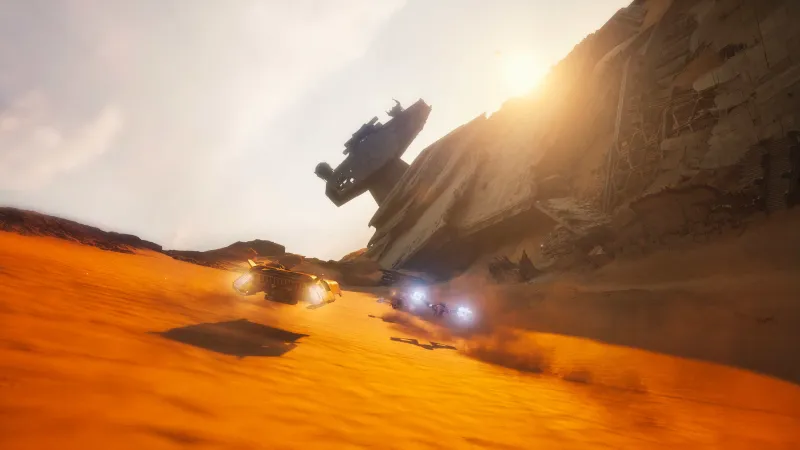
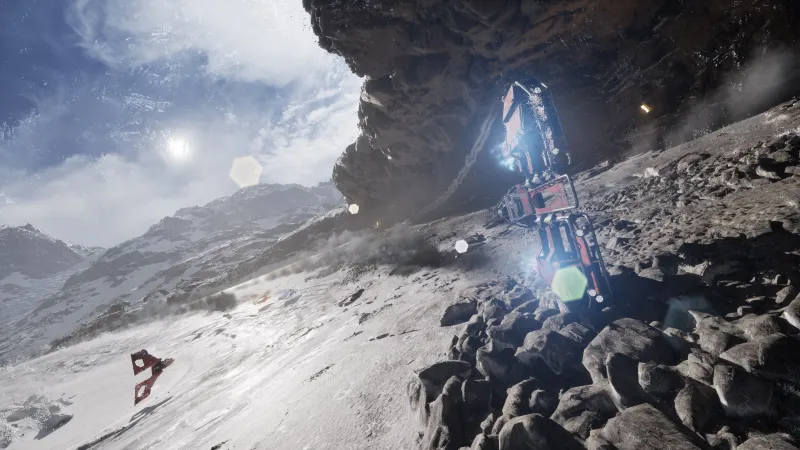
Across multiple planets, including beautifully rendered movie highlights like Jakku and Crait, with various tracks on each (with reverse alternatives for added range), I raced so fast that familiar sights blurred into uncharted territory. This was a turn-off at first; it’s downright hard to get a grip on where you are and where you’re going, and the lack of a minimap accentuates the feeling. I respect Fuse’s commitment to tracks feeling like part of this galaxy, using materials and environmental terrain to create each one, but it’s sometimes hard to tell whether a crashed Star Destroyer’s docking bay is something I should enter or avoid on Jakku, doubly so when at top speed. But this campaign is a roguelite: Accrue too many losses and you’re dropped from the tournament. Losing is part of the gig, however, and in time, confusion on the track gave way to confidence as I blitzed through razor-thin hallways and drifted around tight corners to first place. I wouldn’t blame anyone for dropping early, though, because the initial hump is tall, and Galactic Racer does little to guide you toward success.
Each planet brings a new pitstop to talk with characters, engage with rivalries, fix damaged parts, purchase new abilities and parts, upgrade your vehicle, and renew objective-based contracts. Currency comes generously, as do upgrades and new parts earned after winning races, and crafting a new engine type each run keeps roguelite repetition from getting boring. Abilities like auto-pilot gave me moments to breathe in tougher stretches, while lock-on ion blasts, corrosion vents, and shockwaves gave me an edge against some of the more dangerous racers on the circuit. Because these racers stay the same in each tournament run, I learned how each raced, whether they were offensive or defensive, and the abilities they typically use, which adds a real sense of athleticism to the campaign.
Upgrading stats like your afterburner, drifting capability, or battery – which lets you equip more abilities – enabled me to craft an engine that works best for my playstyle. As someone all about speed, my upgrades went into the ramjet, which is a powerful but dangerous redlining turbo; the afterburner to increase my overall speed; and the battery, so I could use additional speed-granting abilities like Surge more often. But there’s room to build a vehicle focused on offensive maneuvers, great for elimination events, or countering environmental hazards like acid or ice, and I’m still finding weird but surprisingly effective builds.
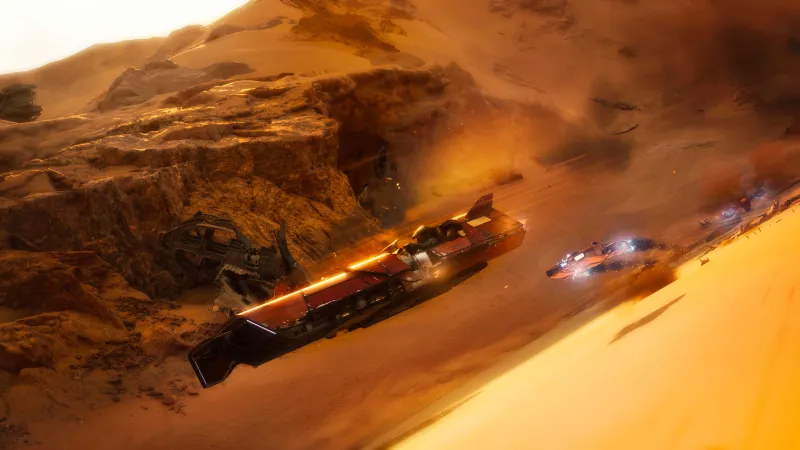
Galactic Racer focuses its racing on drifting landspeeders, speeder bikes that can stop on a dime and burst forward with extra speed, and skim speeders, which can cut through corners using a “knife’s edge” turn style. Though landspeeders brought me the most success, speeder bikes and skim speeders bring their own amusement to the course. The Arcade mode, with time trials, advanced races, and more, and the Scenario mode, with quick, curated six-race campaigns where you play as other pre-crafted characters/vehicles, forced me to leave the comfort of my campaign-crafted cockpit and try something new. In turn, I discovered even more avenues of racing fun. The same goes for the multiplayer, which smartly brings over most of the roguelite upgrade offerings and places them within quick six-race tournaments, complete with pre-race bets against other racers to raise the personal stakes. Single quick races, an XP leveling system, and cosmetic unlocks round out the multiplayer suite with enough to chase after for dozens more hours.
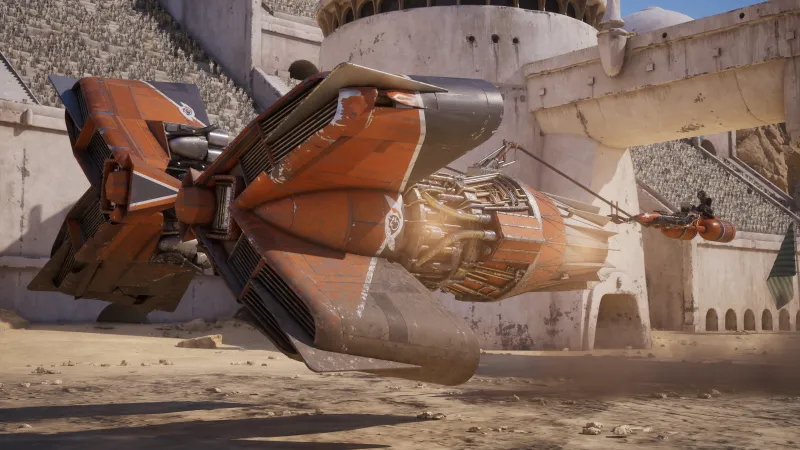
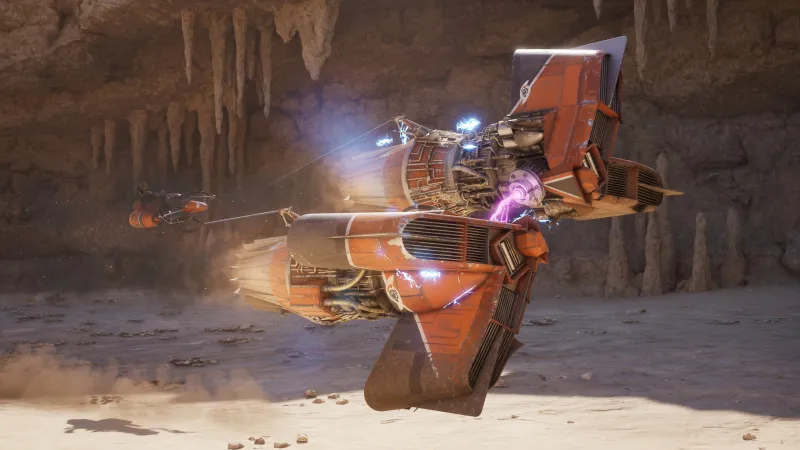
There’s a fourth vehicle type too, though: the podracer. Fuse clearly delights in infusing this legendary racing engine into the game’s narrative, and there’s a lot of pomp and circumstance around just how dangerous and fast podracers are compared to the other three. The thing is, however, is that they simply are too fast and dangerous, and being forced to use them in specific campaign events at the risk of ruining an entire run remained a frustration throughout. Going from the comfort of my own vehicle for five to six races, only to be forced to use a podracer with the risk of my run ending should I lose, was the wrong kind of left turn.
Podracing is exciting, as the associated speed and unruliness make races unpredictable. But it’s nice that it’s available in other modes, including multiplayer where you can race exclusively against other podracers. I get that a Star Wars racing game without the canon’s most popular vehicle might be a miss, but I would have preferred them to stay relegated to a bonus style of racing in other modes, not an irritating, unavoidable core of the campaign.
Twenty hours later, with the campaign behind me and plenty more time sunk into the other offerings, there’s still so much Galactic Racer left. I spent 45 minutes on one track yesterday not for the gold medal, which I already had, but for the chance to beat a fellow reviewer’s time on the leaderboard, and I don’t regret a minute. Galactic Racer is a Star Wars game, and that might be enough for some, but not for me. Fortunately, it’s an even better racing game, one filled to the brim with courses, vehicle builds, and characters that keep me coming back to the track for one more race.
One of the big highlights of the PlayStation 5 Pro, now priced at $899.99, is PlayStation Spectral Super Resolution (PSSR), which analyzes game images pixel by pixel and uses proprietary AI upscaling to deliver more detailed, stable gameplay, according to the company. Now, PlayStation is bringing that PS5 Pro-exclusive feature to base PS5 models, kind of.
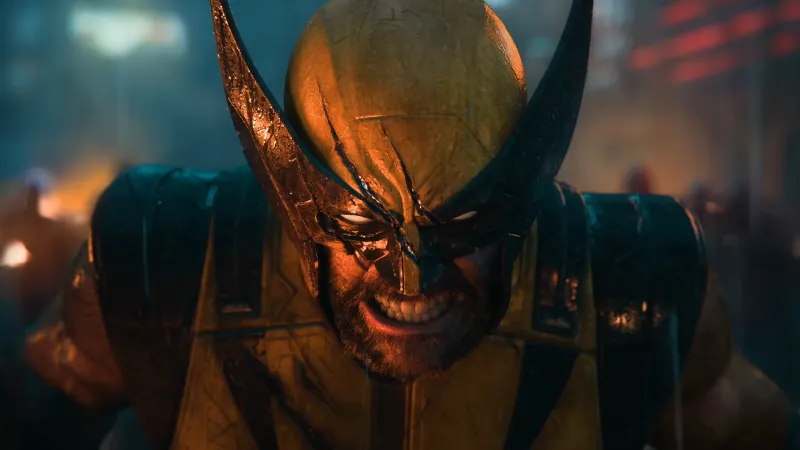
Revealed today, Quick Spectral Super Resolution (QSSR), “a new performance tier of AI upscaling,” is coming to PS5 starting today with Marvel’s Wolverine and Ghost of Yōtei. PlayStation says QSSR is born out of Project Amethyst, its AI graphics collaboration with AMD, and uses a “streamlined neural network architecture” and “hand-tuned implementation that maximizes performance on PS5” to bring AI-guided upscaling to the console. PlayStation says PSSR on the PS5 Pro remains the “gold standard,” but QSSR provides notable improvements in both image detail and stability on PS5.
Two new videos – one for Marvel’s Wolverine and one for Ghost of Yōtei – showcase the effects of QSSR, and while there’s some improvement to see, it’s not the most obvious… but you can be the judge for yourself:
PlayStation says it will offer QSSR broadly to all PlayStation developers. It remains to be seen which games already released, or which games releasing in the future, will implement QSSR.
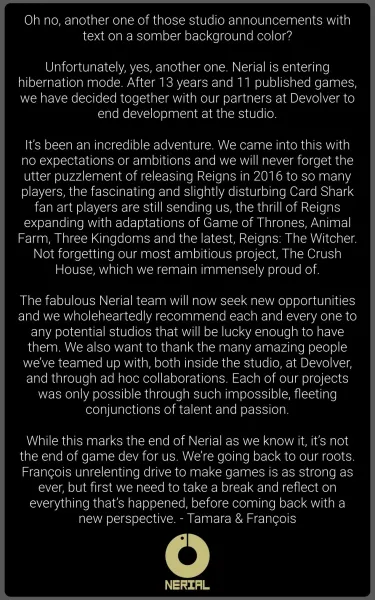
Nerial, the developer of the Reigns series and other games, has announced plans to shut down. This marks the end of a 13-year run. The London-based studio posted a lengthy message on social media announcing it was entering “hibernation mode” after discussing plans to end active development with its publishing partners at Devolver Digital.
“It’s been an incredible adventure. We came into this with no expectations or ambitions and we will never forget the utter puzzlement of releasing Reigns in 2016 to so many players, the fascinating and slightly disturbed Card Shark fan art players are still sending us, the thrill of Reigns expanding with adaptations of Game of Thrones, Animal Farm, Three Kingdoms, and the latest, Reigns: The Witcher. Not forgetting our most ambitious project, The Crush House, which we remain immensely proud of.”
Nerial does not provide specific reasons for the closure, but states that while the studio may be closing, the employees will remain working in game development following a break to “reflect on everything that’s happened before coming back with a new perspective.”
You can read Nerial’s full post below (click to enlarge):
Nerial burst onto the scene with Reigns in 2016, a card-based role-playing game where players assume the role of a monarch to rule and manage a kingdom. Reigns’ popularity spawned a series of sequels, such as Reigns: Her Majesty, and licensed spin-offs Reigns: Game of Thrones and Reigns: The Witcher (which launched this year and will be Nerial’s final release). Nerial also developed titles such as The Crush House and Card Shark.
Nerial’s demise is the latest in what’s unfortunately becoming a long list of developer closures in 2026. Meta shuttered three of its VR developers: Twisted Pixel (‘Splosion Man), Sanzaru Games (Asgard’s Wrath), and Armature Studio (ReCore). Other studios to close their doors this year include Bluepoint Games (Demon’s Souls remake), Ivy Road (Wanderstop), Intrepid Studios (Ashes of Creation), Spiders (Greedfall), Night School (Oxenfree), and Polyarc (Moss).
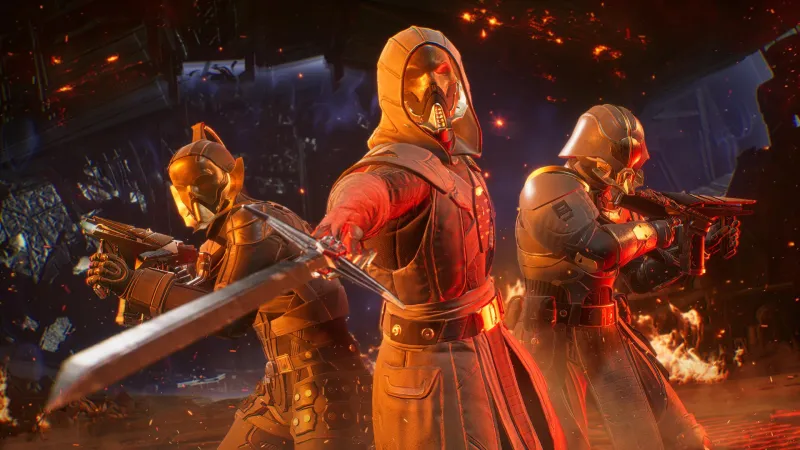
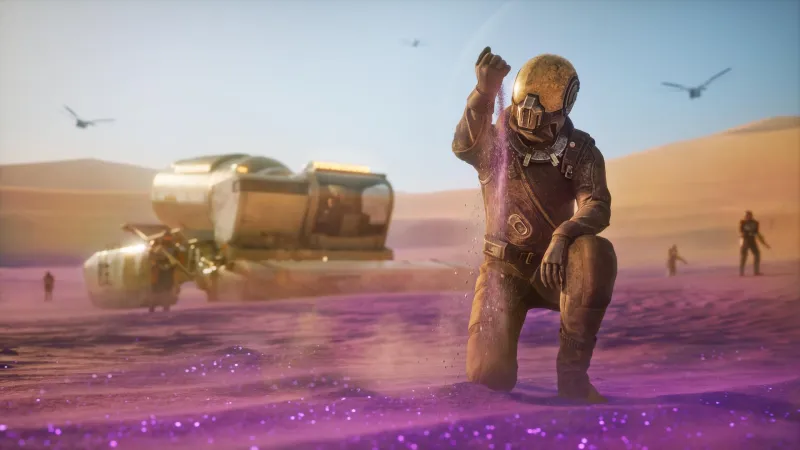
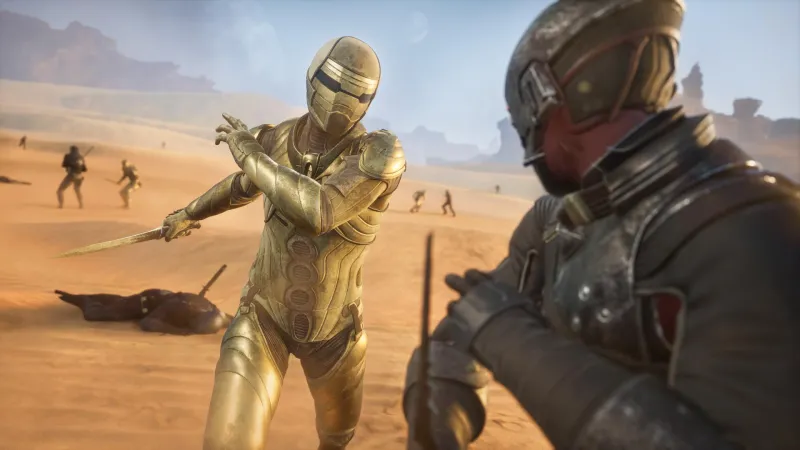
As much as Dune: Awakening guides you around Arrakis, it can be a hot and unforgiving place. Almost everything around you is trying to kill you, and if not, then you’re being used as a pawn to further someone’s agenda. Awakening succeeds in making players feel like everyone is out to get them, all while encouraging you to rise to the occasion and come out the other end stronger.
Dune: Awakening is set in its own timeline. Here, things play out very differently than in the films and books. Paul Atreides’ mother gives birth to a daughter, as she was supposed to. Because of this, House Atreides never falls, and a War of Assassins between House Harkonnen and House Atreides begins. As a result, the Fremen are all but dead.
Awakening takes time to explain the ins and outs of the game. With a planet known for being as hot as it is, it only makes sense that the sun’s rays are one of the constant threats. Learning how to survive never felt like a chore; it was a necessary sequence to learn. By the end, I truly felt like I was setting myself up to succeed.
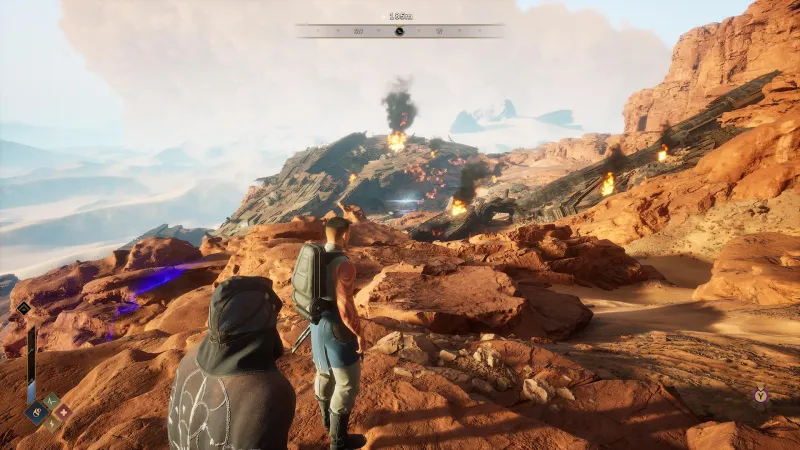
Exploring the map is a lot of fun. Whenever I saw a crashed ship or a small camp in the distance, I knew there would either be minerals worth mining or a dungeon to run. I never felt I wasted my time whenever I went off the beaten path. You’re always encouraged to explore new areas and see what mysteries await you as you get into the desert.
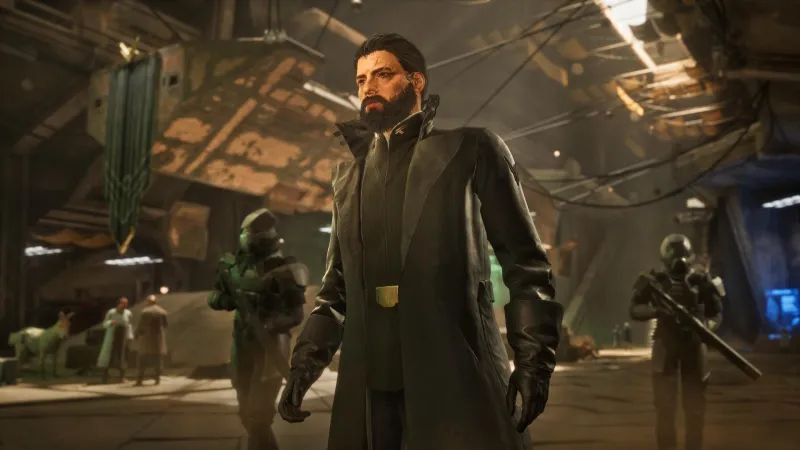
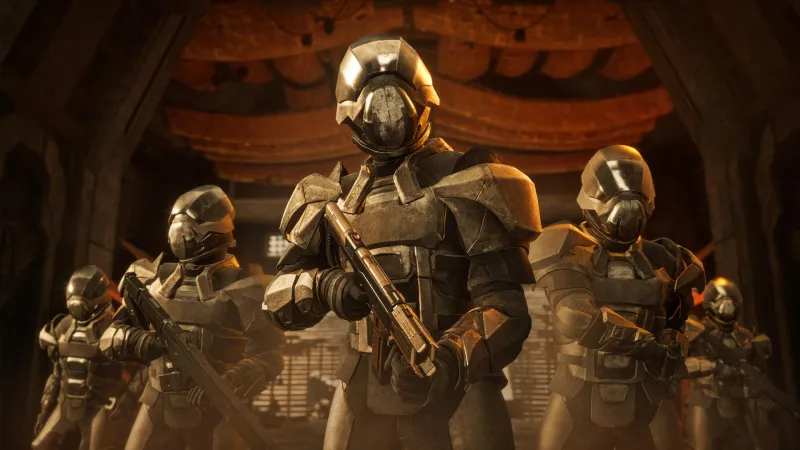
If it’s by accident or on purpose, one of the best things you can stumble across is the feud between House Harkonnen and House Atreides. Here is where Awakening really starts to home in on the idea of never trusting anyone. As you align yourself with one house or the other, you’re always encouraged and given the option to betray the one you’ve sided with to help the other. Even though it’s such a prominent part of the overall story, it never really affects your character’s personal journey.
Having no real consequences is a missed opportunity when you consider that both Houses have areas you can visit throughout the world. There was never any danger when I walked into Harkonnen territory well after I sided with Atreides. The only hostilities I faced were a few rude remarks and higher prices on certain items.
Combat, on the other hand, never falls short, thanks in large part to classes that grant you ample agency in how you approach the game. Throughout most of my playthrough, I prioritized the Mentat, which gave me the ability to drop a turret anywhere, and the Trooper, which allowed me to use a grappling hook and grenades. Combat played out in several different ways for me. If multiple people rushed me, I’d throw a grenade and drop my turret. If there was a sniper off in the distance, I’d use my hook to close the gap. The freedom I had with whatever threat was in front of me made going into combat a joy. If I got bored of one playstyle, I could invest in another skill and try out something new altogether. Each class has its own set of perks and benefits that keep combat fresh and fun.
Being able to handle whatever was thrown at me was vital when exploring Awakening’s main questline. The first half of the main story does a fantastic job of showcasing the importance of the Fremen while also serving as an extended tutorial. The way the game romanticizes the Fremen is a breath of fresh air compared with the harsh realities of living on Arrakis. By the end of the opening act, you’ll feel you learned a lot about how the world used to be before the war began.
This contrasts sharply with the game’s second half. It serves as a reminder of the daily horrors people endure on the planet, all while making you question your humanity and whether you even have a say in what’s going on around you. The end of the base game left me in awe of everything thrown at me and of how far they took an original idea.
Another aspect of the story I appreciate is how approachable it was for solo players. Even though there’s a single-player option, I chose a multiplayer server and experienced most of the game alone. I never felt like I hit a wall because I didn’t have the manpower to deal with whatever was in front of me. If there was, it was simply because I wasn’t playing smart. The few times I did play with someone else only made the game more enjoyable.
Even though I haven’t fully explored the post-game, the time I’ve spent in the Deep Desert was what I’d hoped it would be. This area can only be reached by Orentogether, which you unlock toward the endgame, and can be experienced in PvE or PvP. Regardless of how you tackle it, the Deep Desert seems to go on forever and resets once a week, so fully exploring it is a task in itself. However, Deep Desert also boasts some of the best loot and dungeons the game has to offer.
If you want to take it a step further, you can also try the Landsraad. This feature pits both Houses against one another and tasks them with completing a specific goal. Whichever side comes out on top is rewarded with loot on par with what you’d get in the Deep Desert. While it doesn’t add much to the story, it aptly supports the fantasy of truly being part of the ongoing conflict.
Even if you know nothing about Dune, the game does a great job of explaining the significance of each house and why you should care about everything around you. Dune: Awakening has everything it needs to remain true to the franchise: endless deserts, war and espionage on all fronts, and of course giant sand worms. It takes a lot of creative freedom and hits many of the important marks, all while reminding you of the brutal reality of living on Arrakis.
Bungie co-founder Jason Jones, who helped create Halo and directed Destiny, has opened Stone Kite, a new Los Angeles-based studio alongside Beautiful Creatures author Margaret Stohl, who has also worked on film, TV, comics, and games (such as Destiny 2: The Edge of Fate). The studio’s first project is called One Zero One and is set in a future where humanity faces rogue, AI-driven robotic soldiers.
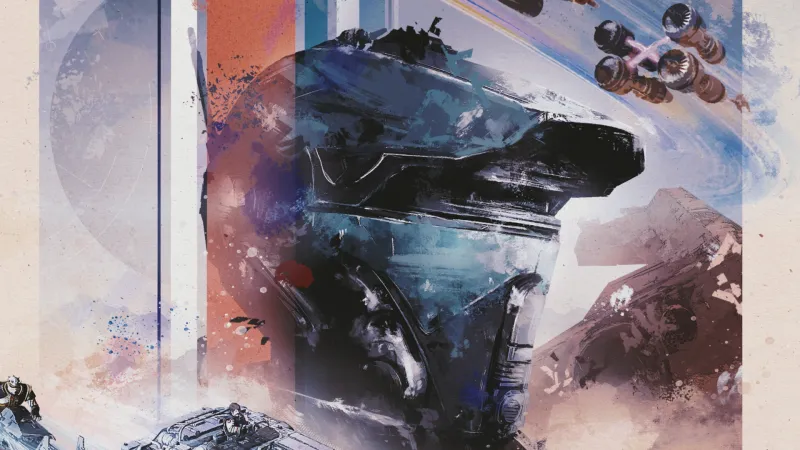
One Zero One kicks off with Part One of a four-part limited comic series of the same name, and you can read the first issue here. This comic speaks to the studio’s aim to develop stories across all kinds of mediums, not just games.
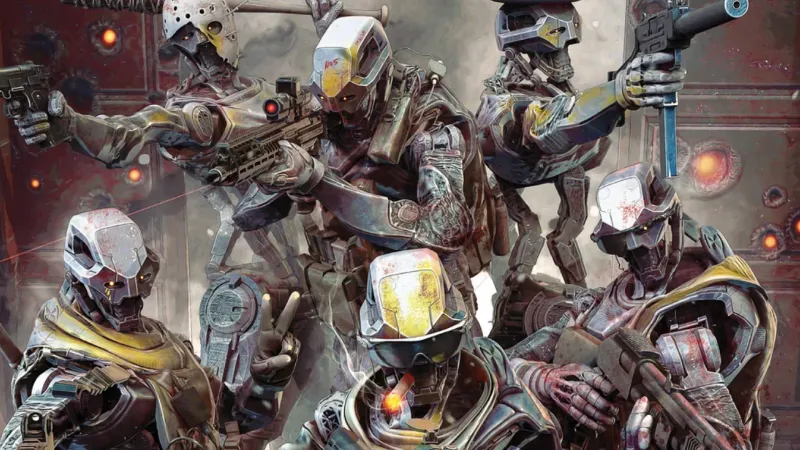
A cropped screenshot of the One Zero One Issue #1 cover
“Stone Kite was founded around a single premise: audiences no longer experience stories through a single dominant medium, and the creative process should reflect that reality,” a press release reads. Stohl adds that Stone Kite is about breaking down old media silos. She writes, “Instead of starting in one medium and adapting outward, we bring the best global creators from different disciplines into the room from day one to shape the world together. We change the conversation. We never say that’s how it’s traditionally done. We build communities, and we listen to them. That’s how we’re creating worlds that people can explore for decades, in whatever ways they want.”
Issue #1 of One Zero One debuts today, and includes “never-before-seen excerpts from Jason’s manuscript.” New issues will be released through early 2027 and will grow with “prose, audio, and screen projects” to further expand the world of One Zero One throughout the year, the press release says. “I’ve spent my whole life making games, but I’ve always wanted to write,” Jones writes in the press release. “I used to bike fifteen miles along Lake Michigan to the used bookstores in North Chicago, and bike home again with a backpack full of sci-fi paperbacks. Margie [Stohl] was the first person to believe I could write a book of my own, the first person to read it, and the one person I trusted to help me develop it into epic entertainment that leaves the world a better place.”
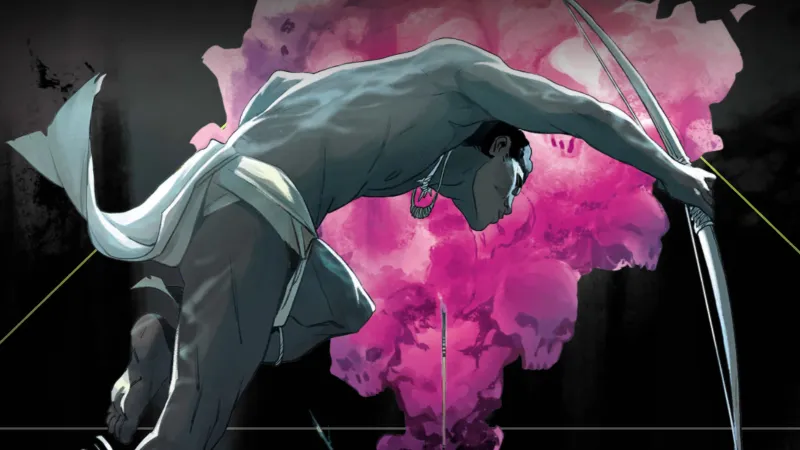
A piece of art from the Stone Kite website
One Zero One universe contributors include Eric Heisserer (screenwriter of Arrival, Bird Box, Shadow and Bone); Christina Strain (comic book writer and screenwriter of Shadow and Bone, The Magicians); Kris Anka (character and concept designer for Spider-Man: Across the Spider-Verse); and artists including Dan Panosian (Batman), Ramón Pérez (Hawkeye), Alitha Martinez (Wonder Woman), Raúl Allén (Dune: The Graphic Novel), and Hyeonjin Kim (Power Rangers).
Stone Kite’s multimedia plan is ambitious, but not unheard of in games. Developer Reflector Entertainment intended the same for its Unknown 9 universe, but plans were put on pause after the first game, Unknown 9: Awakening, failed to meet expectations, leading to layoffs at the studio. Time will tell if Jones and Stohl’s plans play out.
Kena: Scars of Kosmora was revealed in February as a direct sequel to 2021’s Kena: Bridge of Spirits. It was announced with a 2026 launch window, but as we entered a very packed autumn with no updates, that seemed less and less likely. Developer Ember Lab has now confirmed the game will be pushed into next year.
“Since our announcement trailer in February, we’ve been heads down bringing Kena: Scars of Kosmora to the finish line,” Ember Lab writes in a PlayStation Blog post. “It’s been exciting to see all the anticipation and passion from fans. We can’t wait to share a new installment of Kena’s story with you!
“At the same time, we want to deliver a top-notch game that exceeds the quality we achieved with our 2021 debut, Bridge of Spirits, and at a much bigger scale. To do that, we need just a bit more time. Pushing our release into 2027 gives us the ability to really polish the expanded game experience we want to deliver.”
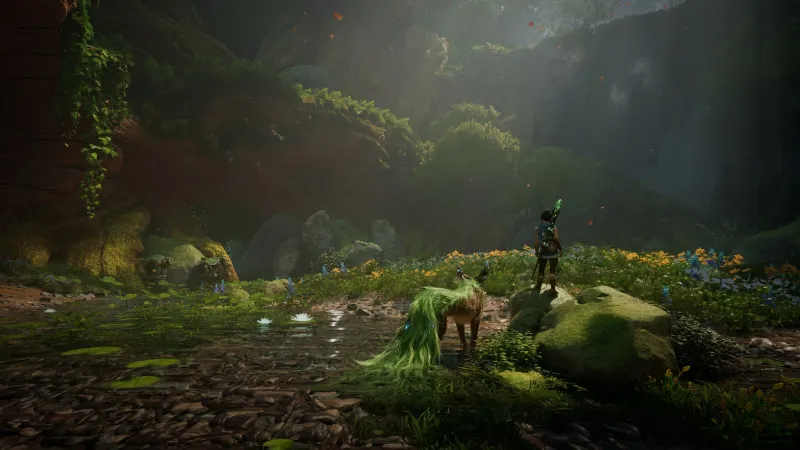
Ember Lab also elaborates on some of Scars of Kosmora’s known elements. The adventure is set some time after the events of Bridge of Spirits and sees an older Kena travel to the island of Kosmora. Kena seeks a cure for a mysterious affliction threatening her life, but after her spirit guide staff is shattered, she must master Kosmora’s forgotten form of spirit guiding that lets her wield new alchemy-based elemental powers. She must not only cleanse herself, but rescue Kosmora from a corruption overtaking the land.
“The ancient Spirit Guides of Kosmora developed their own unique approach involving the four elements and Alchemystic Temples,” says Ember Lab. “Four interconnected cultures once thrived across Kosmora, each with a guiding Element that fueled its society – before a mysterious cataclysm destroyed one of them.”
Ember Lab describes Kosmora as a large, multi-region map that “would take some time” to explore on foot. Thus, Kena has a giant wolf companion she can ride. “This ancient spirit not only serves as an exciting mount, but aids Kena in combat, both mounted and on foot, as well as solving Alchemystic puzzles,” says Ember Lab.
Kena: Scars of Kosmora is slated to launch for PlayStation 5 and PC sometime in 2027. Until then, be sure to read our review of Kena: Bridge of Spirits.
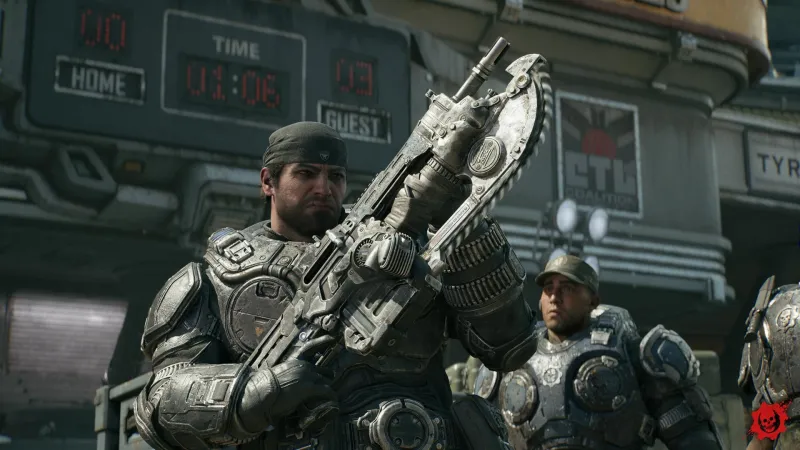
The last time we played through a new mainline Gears of War game was 2019, which feels like a lifetime ago. In that time, The Coalition has been churning away at Gears of War: E-Day, a prequel story to the original Gears of War games. Marcus Fenix and Dom Santiago stepping back into the spotlight after serving as the anchors for the original trilogy may feel like developer The Coalition waving the white flag on trying to innovate on the franchise following the division surrounding Gears of War 4 and Gears 5, but once you play through the campaign, it’s apparent the studio hardly rested on its laurels.
Gears of War: E-Day tells the story of perhaps the most pivotal event in the Gears of War universe. Following the conclusion of the Pendulum Wars, Marcus and Dom are in the city of Kalona when the ground shakes and opens to reveal the Locust horde. Watching civilians futilely run for their lives as Locusts rip them apart adds an immediate horror vibe to the overall tone. And even as you are essentially a walking tank of a soldier, that vibe never lets up. Watching the city of Kalona fall in real time as each of humanity’s Hail Mary attempts is thwarted by the invading force establishes the Locusts as a true threat. Even as an armored-and-armed-to-the-teeth COG, an overwhelming sense of helplessness colors the entire experience; no matter how many waves of enemies I mow down, there is no end in sight and no salvation for humanity.
The action set-pieces are impressive and frequent; one sequence on an airstrip stands out as one of my favorite shootouts this decade, while some less-curated areas that involve traversing Kalona’s city streets break up the nonstop action with minor exploration elements and sidequests. Most of the campaign takes place in downtown Kalona, and when you’re in the streets, you’re free to make your way as directly or circuitously as you see fit. I couldn’t help but stop and help stranded platoons or look for nearby collectibles. Uncovering hard cases became my favorite side activity, as they reward mods for your weapons. I did my best to collect every mod I could for each individual in-game weapon; tinkering with the arsenal to match my playstyle became my preferred pastime in between shootouts.
Blasting through the relentless hordes is as enjoyable and intense as ever. Whether I was chainsawing enemies to bits with my Lancer, picking them off from afar with my Hammerburst, or outright melting them with an acid-blasting Incinerator, I actively sought out even the optional conflicts. But you don’t just fight standard grubs; Gears of War: E-Day throws so many special minibosses that can completely disrupt your best-laid strategies at a moment’s notice that you’re almost trained to expect the unexpected. Thankfully, you can use new tactical abilities, like a healing injection or an enemy-tagging drone, as well as new traversal and cover mechanics to level the playing field. And though they may stop following you out of nowhere, occasionally get in the way, and yell out cringeworthy one-liners, you always have your squad of four with you even while playing solo; if you’re downed, you can be revived by a squadmate a limited number of times per conflict.
Those squadmates are compelling components of the overall narrative. Marcus and Dom are dealing with the loss of Carlos, Dom’s brother and Marcus’ best friend. Mags is a strong-willed former soldier who reluctantly gets sucked into the fray when the Locusts attack. The weak link is Lucas, a newly enlisted soldier who spouts random facts and likes to follow the COG handbook. For too much of the story, Lucas is underdeveloped, but a late-game story involving the newbie really elevated him to stand shoulder-to-shoulder with Marcus, Dom, and Mags; I just wish it happened sooner.
Gears of War: E-Day’s campaign is one of my favorites of 2026. The characters, action, and story coalesce into something I won’t soon forget, thanks in large part to The Coalition’s smart utilization of Kalona. Unfortunately, the multiplayer servers weren’t turned on before the embargo lift, but if I get as much enjoyment from the PvP and PvE modes on offer, Gears of War: E-Day could easily jump up near the top of my list of favorite games in the series.