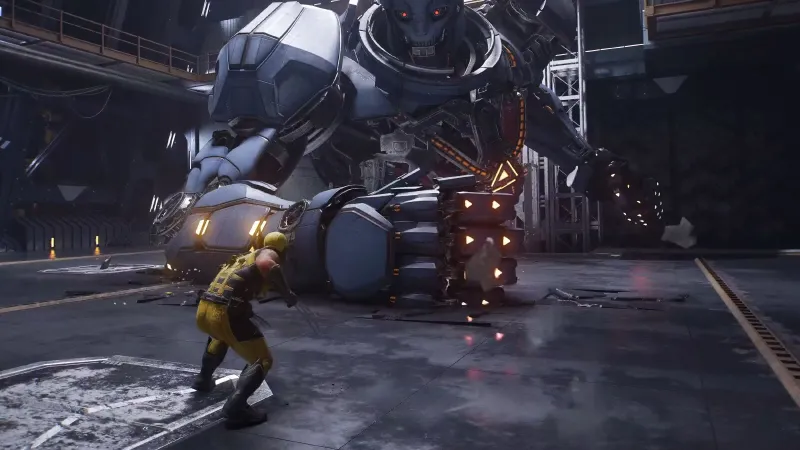
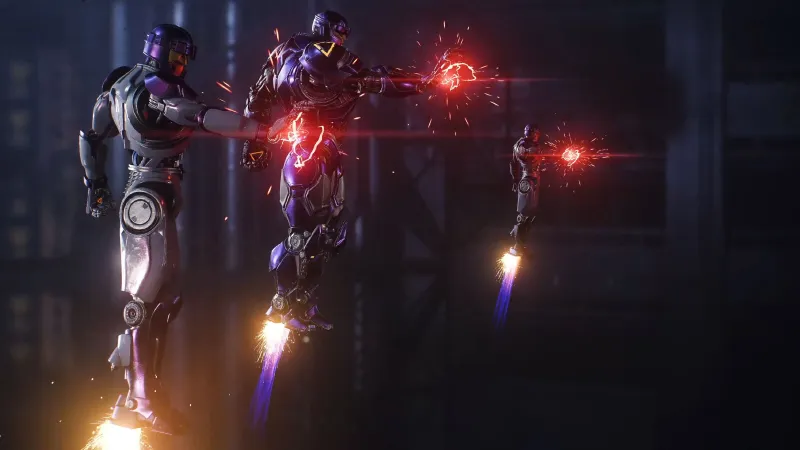
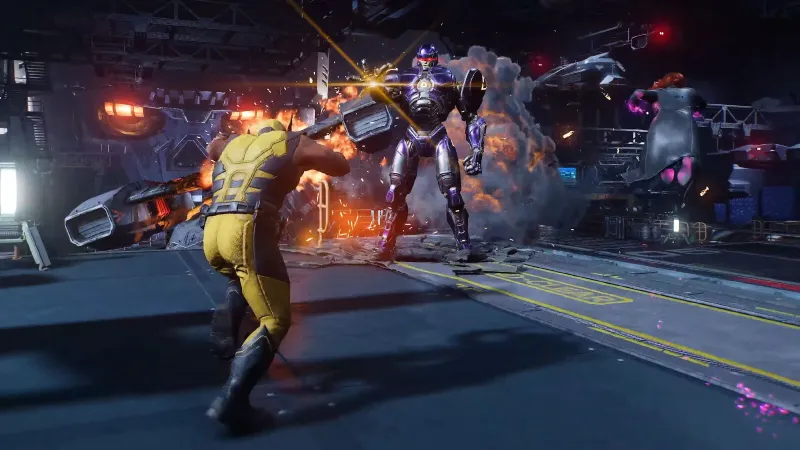
Insomniac’s Wolverine is coming very soon and ahead of its release, Sony has offered up one final trailer. The footage shows Marvel’s short king slicing up bad guys on airplanes, fighting giant robots in various outfits, and hanging out with various recognizable Marvel characters.
Insomniac’s Marvel’s Wolverine is coming to PlayStation 5 on September 15. Our review of Wolverine posts September 10, so keep an eye out.
We will post our review of Wolverine on Thursday, September 10 at 10:00 a.m. CT. See you then. gameinformer.com/reviews
Join Us made a splash when it debuted during Xbox’s June 2026 Showcase. The zany cult-leader simulator puts you in charge of your own chapter of a widespread doomsday cult, tasking you with establishing your compound and wreaking havoc in the small town in which you establish your home. I spent about 45 minutes learning the ropes and toying around with the strange sandbox title and now, I’m excited to start my own chapter.
After customizing my cult with a logo, color scheme, uniform, and naming convention (I opted to have my members named after inanimate objects rather than numbers or Roman-inspired designations), it’s time to get underway. Join Us starts out with a brief tutorial, showing you the ropes under the tutelage of the overarching cult leader. I learned how to swing a baseball bat, crouch, shoot guns, and… blast a pig with a rocket launcher (the leader assures you that the pig is a “real piece of s—“). After spinning a wheel to determine your job, you land a coveted spot in the business branch, which means it’s your duty to expand to new regions. Assigning jobs that way is obviously dumb, but the game is very self-aware, peppering in self-referential humor like, “Maybe it was a mistake to assign jobs by spinning a big wheel.”
After an opening cutscene, it’s time to get to work. Driving through Bedford County, your assigned territory, you get a sense for the small-town vibes this game is going for. If you think that means they’re going to leave you be, however, you’d be mistaken. As soon as I arrive at the soon-to-be compound, I come to the realization that we’re being robbed. After dispatching the armed burglars, it’s time to get to work.
Using a fax machine, I receive directives from the cult mothership. First, I need to gather resources, then build a conference table from which I will conduct business (AKA start missions). My first mission is to gather some food; you can hunt nearby wildlife, steal from the locals, or grow your own. I opt to do all of the above, taking down a bear, storming a nearby campsite, and planting some strawberries.
Next, I need some actual members in my cult. The home base airdrops some propaganda for me to hand out and tasks me with recruiting locals to my cause. To do this, I go to a nearby outpost of outcasts and pass out the paperwork. Each local has a level of susceptibility to your propaganda and recruitment techniques, depicted by a recruitment-chance percentage. Once you have someone in your stable, you can swap to play as them whenever you want, but be warned: They may not be as good at some of the tasks as you are. For instance, when I swapped to my first member, her ability to recruit a nearby vagrant was only 68 percent, whereas the leader’s recruitment chance was a whopping 98 percent.
Once you have members under your belt and beds built for them, the real cult simulation begins. My members immediately start tending to the strawberries I planted, and working on any other projects I need to assign. Unfortunately, I shot an innocent bystander on the way back to the compound, so my members also had some police to fight off once we returned.
From my time with the early hours of Join Us, I’m already excited to experience the various emergent stories at play, as well as see just how over-the-top the story can get. The loose narrative elements, the recruitment options, and the zaniness make it feel like a strange combination of Goat Simulator and State of Decay, which the studio is completely embracing. The team tells me what I played is just the start, as things get even wilder as the world goes through different phases and the doomsday cult’s prophecies may turn out to be true. I’m enticed to see how much more the studio pushes the envelope when Join Us arrives in March 2027.
A new expansion is on the way for Monster Hunter Wilds. While you’ll have to wait until next year to ascend, we did get a trailer at today’s Sony State of Play for the upcoming Monster Hunter Wilds: Ascendance.
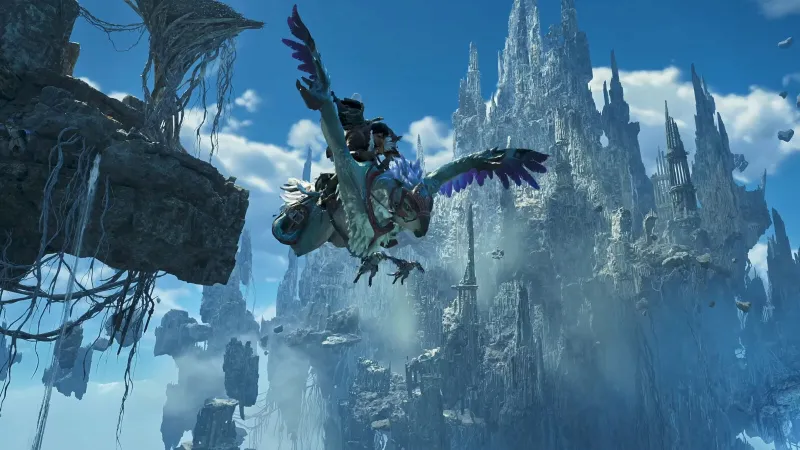
Today’s trailer started with our Wilds crew encountering some new danger and arriving in a stronghold camp. A great dragon has arrived, clearing away the mists and revealing a constellation of islands above for our intrepid monster-hunting crew to explore.
It’s a Monster Hunter expansion, so naturally, new fights await, as do new versions of the weapons we’ve become accustomed to. These new tools, plus whatever new mobility we have access to thanks to the aerial setting of Ascendance, should hopefully add some fresh variety to our arsenal.
The cover monster for Monster Hunter Wilds: Ascendance looks to be a giant swirling sky dragon, which can twist the winds to its command. It all looks pretty exciting, and honestly, I’m happy to have a reason to get back to my Monster Hunter Wilds file sometime next year.
We visited Capcom to ask 75 rapid-fire interview questions to the developers behind Onimusha: Way of the Sword, the first entry in the samurai action game series in several decades. Join us for another Game Informer Rapid Fire segment with two of the creative leads behind Onimusha: director Satoru Nihei and producer Akihito Kadowaki.
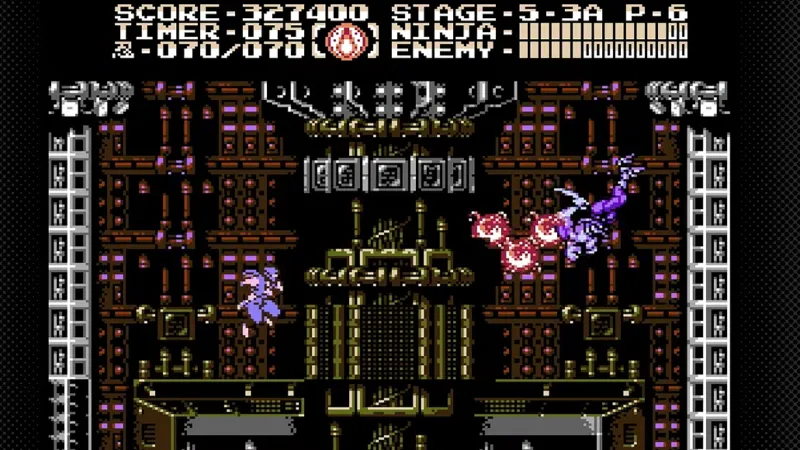
The NES library of the Nintendo Switch Online Classics has three new titles: Ninja Gaiden III: The Ancient Ship of Doom, Ikari Warriors, and R.C. Pro-Am II. Each title is available now to subscribers.
Ninja Gaiden III: The Ancient Ship of Doom was released in 1991 as the final NES entry for the series. Its inclusion means the entire classic Ninja Gaiden trilogy is now available to Switch Online subscribers. The same is true of the R.C. Pro-Am racing series, with its 1992 sequel now joining the original (which has been available on Switch Online since February 2024).
The run-and-gun action game Ikari Warriors is the oldest of today’s additions, launching in arcades in 1986 before being ported to NES in the U.S. in 1987. Ikari Warriors is historically significant as one of the highest-grossing arcade games of its time and helped developer/publisher SNK break through in the West.
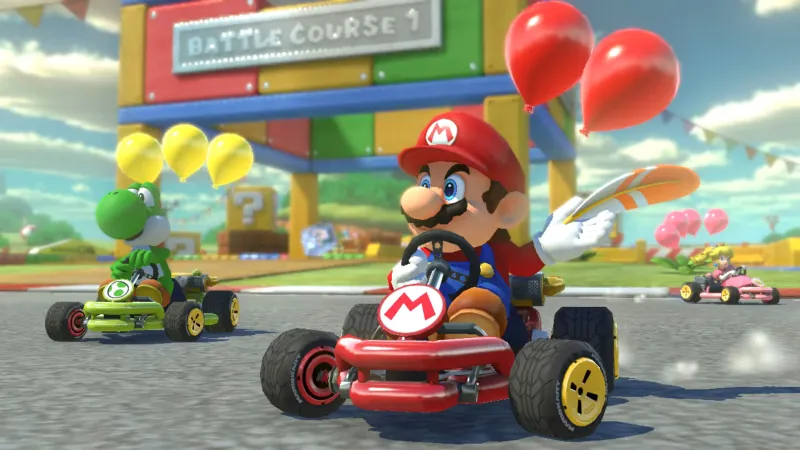
Mario Kart World was the Switch 2’s big launch title, finally providing a sequel to the biggest Mario Kart game of all time. However, today Nintendo updated Mario Kart 8 Deluxe, originally released in 2017, enhancing its Switch 2 support with some added features. It’s a surprising move, as one might assume Nintendo would have fully moved on to the newer game, but 8 Deluxe is the best-selling Switch game of all time, and many still prefer it to World, so it’s a welcome improvement.
The most impactful change for most is the addition of more players to local multiplayer. Previously, the mode was capped at four racers, but now it supports up to eight. It makes for a cramped screen, but it’s nice to have the option. It’s also worth noting that you can only connect seven Switch 1 controllers to a Switch 2, so at least one of the eight controllers has to be a Switch 2 Pro Controller or Joy-Con 2.
The Switch 2 version of the game will now have shorter load times and higher resolution as well, on both the Switch 2 display and connected TVs. And for all you fans of CameraPlay (I’ve never met you, but I’m sure you exist), you can now use a USB camera in Online Play and local Multiplayer. That said, the latter is capped at 4 players – you can’t have eight players with cameras.
There are also some minor updates that also apply to the Switch 1 version of the game. All player speeds have been increased “by the equivalent of one coin,” the Boo power-up will now make you immune to slowing down, even when offroading, and players with the Booster Course DLC can now do VS Races with up to 96 courses.
Released in 2002 for the PlayStation 2, the original Stuntman was a great concept that, for me anyway, proved far too challenging to be fun. Perfection was demanded, and extreme specificity was required for progress. It took all the fun out of controlling a car in a video game, which I imagine is how movie stunt drivers probably really feel after the fifth take of the same sequence, so in that way maybe it was a perfect simulation of the stunt driving experience.
But I have always remained enamored with the fun concept. Who wouldn’t want to drive a stunt car in a Hollywood movie without the need to sign personal injury waivers and the danger of bodily harm?
I played through four levels of Stuntman: Hollywood at Gamescom, including, perhaps most notably, the recently announced Jurassic World level. The team building the game at Saber Interactive, I believe, took away the same opinion I had back in 2002: if this game were more forgiving, it would be a lot more fun. That isn’t to say Stuntman: Hollywood is a total breeze. With the exception of the opening tutorial level, I had to retry each level at least once, but the challenge doesn’t feel as insurmountable as it did 24 years ago. Perfection is encouraged but not demanded, and specificity is only required in certain places.
In practice, the game almost feels like a slowed-down rhythm game crossed with Simon Says. As you’re driving through the sets – perhaps the biggest sets ever constructed for any movie ever – a director shouts instructions in your ear: drift here, get close to that obstacle there, hit that ramp, drive through that other obstacle there. Along with the director’s voice, there are also plenty of on-screen indicators directing you where to go and telling you what to do. The first run through a level is frantic as you try to quickly respond to every directive, and it can be overwhelming, but there is a joy to being successful, and I maybe had the most fun replaying a level after completing it at least once.
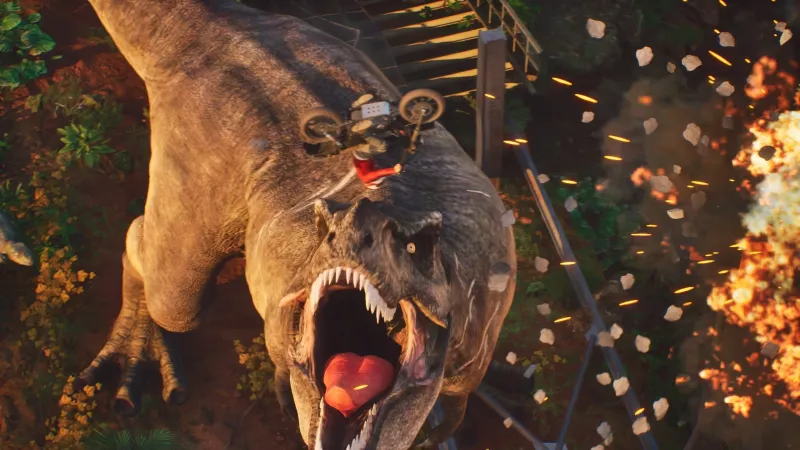
I played two levels that drove me through cities, one where I was trying to escape a collapsing factory during an earthquake, and finally the Jurassic World level. In that level, I drove a motorcycle away from an angry volcano while dinosaurs ran beside me, ramp-jumping over an angry Tyrannosaurus rex and sliding under the occasional obstacle. I haven’t been on many movie sets, but I can confirm from visiting the film set of Detective Pikachu that the animated monsters are not usually there when filming. My understanding is that they’re usually added later in something called “post”. But what do I know, and who cares? I would rather have the dinosaurs there to race with me and jump over, accuracy be damned.
Despite all the bombastic action happening on screen, one of the most notable elements of the Jurassic World level was the fast-paced, percussive remix of the classic Jurassic Park theme. It was bizarre, and you would never catch me listening to it outside of the game, but in context the absurd arrangement worked pretty well.
My big takeaway from Stuntman: Hollywood is that the two-decade-old video game concept might have finally found its footing. For those who want to pull off an undeniable take and nail every moment perfectly, I believe that still exists here. But for those like me who just want to participate in an admittedly hyperbolic simulation of being a stunt driver on a movie set, Stuntman: Hollywood is the most welcoming version of the experience the franchise has offered to date.
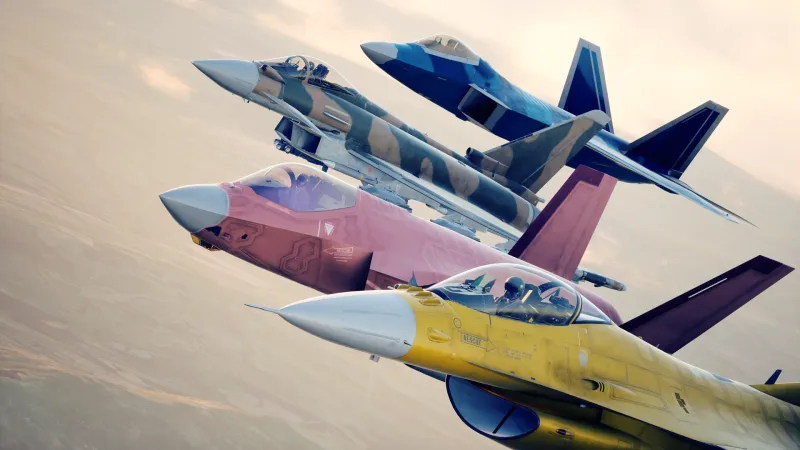
The Ace Combat series is riding high on the tailwind of its seventh entry’s success, and October will see Ace Combat 8: Wings of Theve take off. So far, we’ve seen quite a bit about its single-player campaign, but now, the Project Aces team is unveiling its multiplayer side.
For players like myself, Ace Combat has frequently been a single-player affair, centered on the campaign and missions. The options to play with friends were always there, but I rarely spent much time exploring them. Ace Combat 8: Wings of Theve is trying to change that. Speaking to the developers at Gamescom 2026, they cited the response to Ace Combat 7: Skies Unknown as a reason why they wanted to enhance the multiplayer offering this time around.
“Because Ace Combat 7 was really successful and became a long-tail title, we also identified that it’s really critical for the players to be able to play for the long term,” said producer Manabu Shimomoto, via translator. “So for that, to enable that, the online mode and environmental platform needs to be very solid.”
Ace Combat 8: Wings of Theve is planning 100-player online lobbies where you can customize a pilot avatar and walk around, hanging out with other fliers. More options will open up as you complete missions and build up your hangar. I’m both cautious and curious about the cosmetic aspect. Bandai Namco confirms there will be a battle pass – Ace Pass – with free and premium options, and there’s also a supply shop where you can obtain items that have a crate-opening aesthetic.
Of course, the main attraction is actually flying and fighting. Co-Op Assault and Co-Op Warfare are the two big pillars of Ace Combat 8’s multiplayer, allowing players to dip into PvE or PvP, respectively. Co-Op Assault will launch two teams of four into missions competing for the highest score, with live players as your wingmen.
In Co-Op Warfare, teams of four battle against each other alongside allied land, air, and sea units. Once again, you compete for high scores, with escalating scores increasing threat level and netting you a score multiplier. Higher threat also means the enemy gets more points for shooting you down, though, so big swings can happen in the middle of a match.
“There are some players who are not really big fans of playing against people, so PvE is really critical for those players,” Shimomoto tells me. “Whereas some players really enjoy a competitive environment, so [options for both players] is really critical.”
Both modes will allow several aircraft roles as well, ranging from Fighters and Attackers to Multirole all-rounders and support-driven Electronic Warfare aircraft. You’ll be able to progress along tracks for your chosen aircraft, building them up as you would within the single-player campaign. There are also online-exclusive options and visual customization.
Additionally, Project Aces has some special modes, dubbed Scramble and Emergency Sortie, that can pop up in the multiplayer lobby. Scramble pits teams of four against a tough rival NPC squad, while Emergency Sortie hosts special fights against iconic Ace Combat bosses and superweapons.
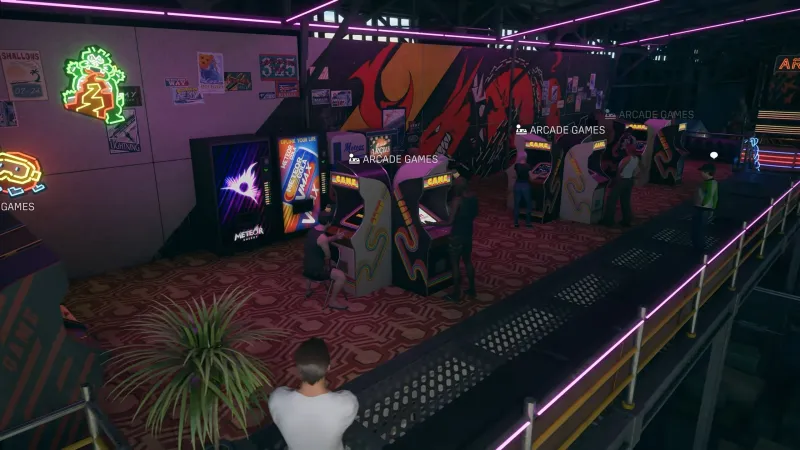
All of this circles back to the lobby, where a jukebox with music from past games and an arcade with a selection of Namco classics awaits as well. The team wouldn’t confirm which games are being selected for inclusion outside of Pac-Man, which you can see in the reveal trailer, but did say we’ll see some games from Namco’s history in there.
It’s certainly exciting to see the Aces team build out such a large multiplayer offering. The PvPvE and special sorties look like cool reasons to revisit Ace Combat and to get other friends into the series as well. Hopefully this adds to an already impressive-looking Ace Combat.
Back at E3 2018, I was invited to play a licensed game based on the old-at-the-time movie and even-older-at-the-time book, World War Z. I thought the movie was alright, I enjoyed the book, and I figured an unexpected licensed game might attract some traffic online. I took the appointment, but my expectations for the actual game were rock bottom. I was surprised, however, to play a few rounds of a game that played great and made dramatic gameplay use of the visually defining zombie masses from the film, where they would climb on top of each other to create a gruesome pile. I was impressed at the time, and when I reviewed the game the following year, I gave it a strong 8.25 and often cite it as my favorite of the Left 4 Dead-inspired games that followed Valve’s lead. It made me take notice of Saber, a developer I have been consistently impressed by over the years whose output is multitudinous and often strong, even if it has never quite released an undeniable, massive hit.
Recently, Saber CEO Matthew Karch publicly stated, “I would frankly in retrospect have been happy to replace her with AI,” in response to former Saber writer and narrative designer Stella Sacco saying that is exactly what had happened – she had been replaced by AI for the game Rideshare “Stimulator” (source: thisweekinvideogames.com). Karch’s troubling statement was part of a denial saying that is not what happened; he later privately apologized to Sacco for the comments and said, “For some like me, fighting my urges is one of the hardest things I have to deal with.” He did not, however, deny the use of generative AI in Rideshare “Stimulator”. The game currently outlines how generative AI is being used on its Steam page in a content disclosure.
The debacle and open use of generative AI in Rideshare “Stimulator” took me back to my 2018 expectations. I similarly went into a demo for a Saber game with them low, unsure of what to expect with Turok: Origins (which, by the way, does not currently feature any kind of AI disclosure on its Steam page, and I optimistically have no reason to believe it uses the technology).
Then there is the Turok of it all. The original Nintendo 64 debut was an early staple for the console, but I don’t know that I have ever met a rabid Turok fan in my life. I am sure they exist somewhere. I played the original game’s opening level a number of times and was impressed by it being an early example of a functional first-person shooter on a controller. But once GoldenEye arrived, I forgot about it and never made any time for its sequels. Turok, as a result, is a franchise I, and I am sure many others, are aware of, but I don’t know that there is a frothing demand for a new entry or sequel.
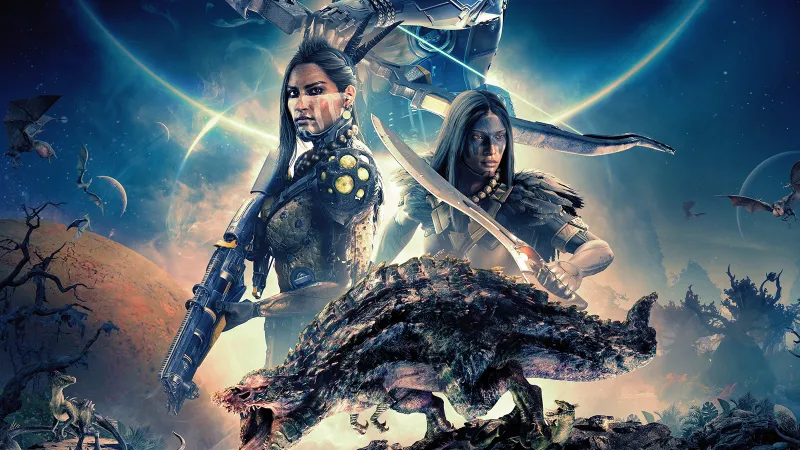
All of that is set up to actually playing the game. Turok: Origins, according to the team, is not a sequel but rather a new entry point for Turok, which I learned is an achievable title and not a person. You can be a “Turok”. You are not a person named “Turok”.
The demo starts with an impressive cutscene detailing invading dinosaur-like aliens using portal technology to ravage a solar system of various planets and how you are the force established to stop them. A commander unable to fight due to injury complains that his daughter, Iscah, is not ready to lead, but his AI robot/hologram companion (the sci-fi kind, not the plagiarism machine that makes people lose their jobs kind) reminds him that he wasn’t ready to lead either until he was placed in the position. From there, he starts the process of training recruits – new members ready to prove they are Turok.
I chose from a surprisingly large collection (I didn’t count them, but there were about a dozen) of playable characters with small backstories and different weapon and class options. I was transported to the Lost Lands to prove my abilities and fight dinosaurs with two other players. This is where I finally recall the headline of this article, which you have probably forgotten about by now. Playing the game reminded me of a live-service game like Destiny, with me and two other players working our way through a linear level shooting dinosaurs and using our various super abilities, each relying on a cooldown.
The soundtrack stood out, with a percussive rhythm narrating our dinosaur fights. I also appreciated a neat reload animation which let steam out of my gun instead of requesting more bullets. Picking up ammo and health from the planet’s fauna creates an attractive bright trail of light signifying your pickup as you sprint past. It looks cool and also lets you know when co-op partners are grabbing what they need. You can also switch between first and third-person at any time, which is a nice touch.
Importantly, the game also feels good. Shooting guns and arrows is responsive, and pulling off a fatality animation on a low-health dinosaur instead of just finishing it off with a few more shots is satisfying. The mechanic doesn’t seem to function exactly as it does in Doom, rewarding you with health and more for successful finale melee kills, but it seems at least inspired by it, which is a good thing.
I also played a little bit of the Switch 2 version of the game alone. Though it didn’t run at the framerate of the console/PC versions, I was impressed with how it felt and looked. The Switch 2 continues to be an impressive option for games like this, even if they are admittedly not quite as smooth as their cousin platforms.
On the way out of my demo, I asked if this was meant to be a live-service game; a game where you are expected to get on a treadmill to play the same levels repeatedly to unlock different materials and weapons. The team available at Gamescom plainly said no, that was not the genre they are aiming for. The entire game can be played as a single-player campaign with a narrative, and though there are incentives for replaying the levels, it is not being designed with that in mind. Considering the opening cutscene made efforts to establish named characters and specific interpersonal dynamics and outline a sci-fi story, I am inclined to believe them, even if there are elements like character classes, cooldown abilities, and encouraged three-player co-op.
I ended the demo fighting an armored Tyrannosaurus – we had to shoot the armor off its face before we could do any real damage. The fight was big and impressive, and it took us two tries to fell the beast and enter a portal to return. At that point we had officially achieved the titles of Turok.
Overall, I was impressed with Turok: Origins. I know this may not be considered a compliment by everyone considering the strange reception the films have garnered over the years (they’re huge hits, but no one likes them or remembers them?), but I got strong Avatar vibes from the tone and action. From me, an Avatar fan, Turok: Origins should take that as a compliment. I just hope it has not quietly morphed into a live-service game upon release. I am looking for experiences, not obligations.
No Rest for the Wicked, the action RPG by Ori and the Blind Forest/Will of the Wisp developer Moon Studios, has been delayed. After launching in PC early access a couple of years ago, its 1.0 launch was recently confirmed for this October. This will no longer be the case.
Moon Studios has decided to push the 1.0 launch to March 2027. Creative director Thomas Mahler explains in a video update that after extensive playtesting, the team felt the game was “not quite there yet.” Specifically, it wants to further polish gameplay performance and the class system, among other general improvements.
Another closed beta test will take place in December (the final one planned before launch) to let players take the No Rest for the Wicked through its paces and provide additional feedback ahead of its launch a few months later. Moon Studios is also extending the cut-off date for receiving the Founder’s Pack containing special in-game items. Originally expired on July 1, Early Access players now have until January 1, 2027 to purchase it. PlayStation 5 players can get the Founder’s Pack when console pre-orders begin in January.
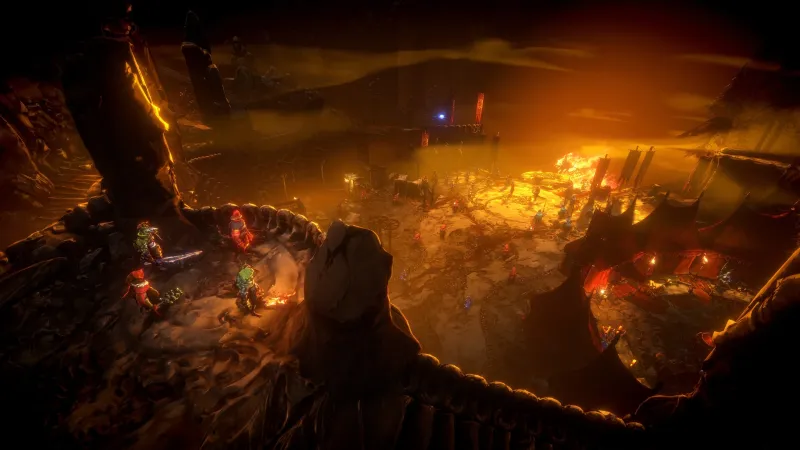
No Rest for the Wicked was first revealed at The Game Awards in 2023 and launched into PC early access in April 2024. It also appeared on the March 2024 cover of Game Informer magazine. The dark fantasy RPG centers on players fighting to rescue an island plagued by a supernatural pestilence, and its gameplay design draws inspiration from Diablo, Dark Souls, and town-building games, as players restore a settlement between slaying monsters and dungeon crawling. No Rest for the Wicked can be played alone or with up to three other players in co-op set within a shared instance of the world.
When No Rest for the Wicked launches in March, it will first hit PS5 and PC. The game is also coming to Xbox Series X/S and Switch 2 at an unconfirmed date. You can read multiple behind-the-scenes features in the game by visiting our cover story hub.