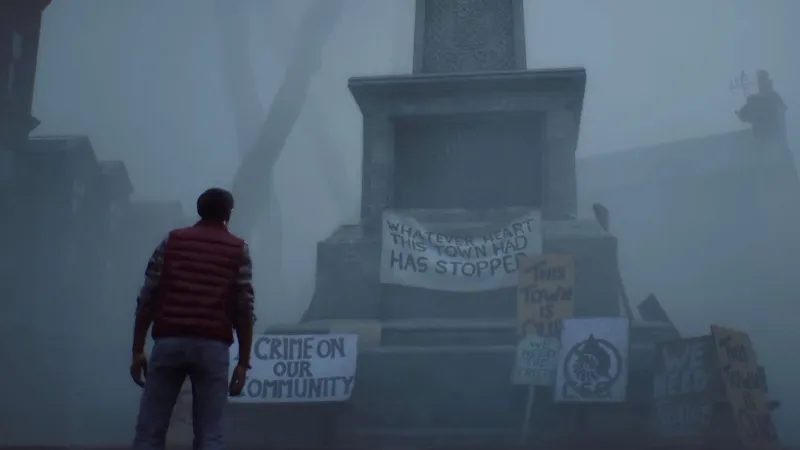
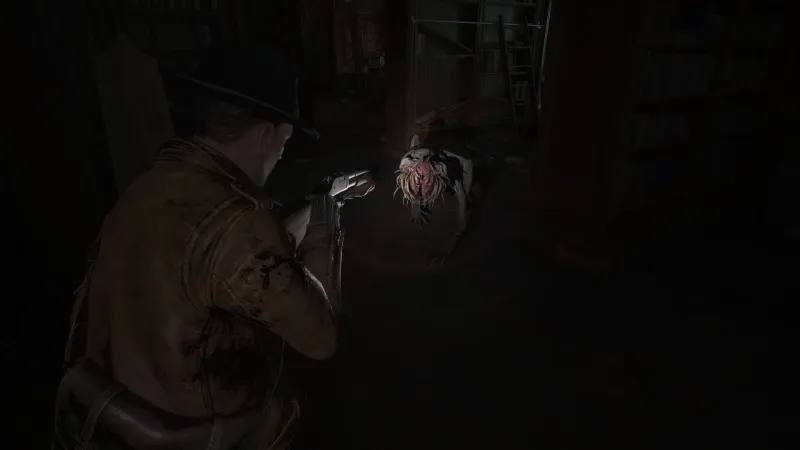
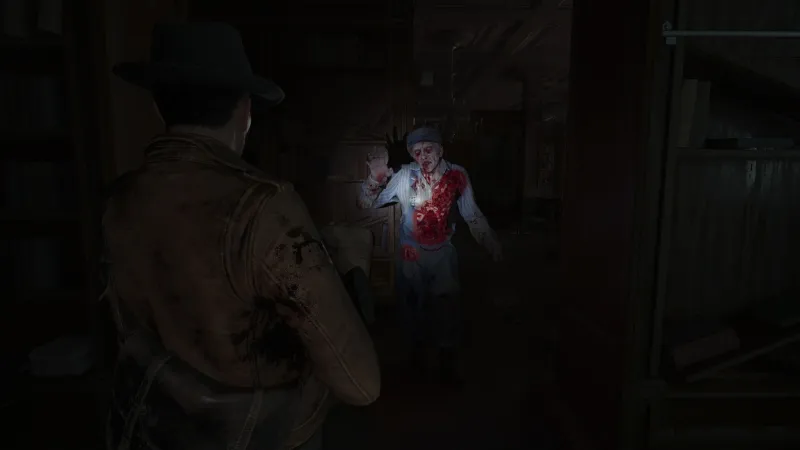
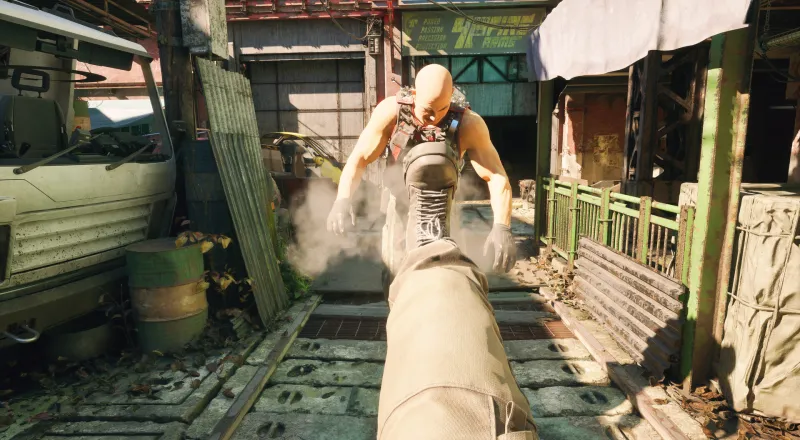
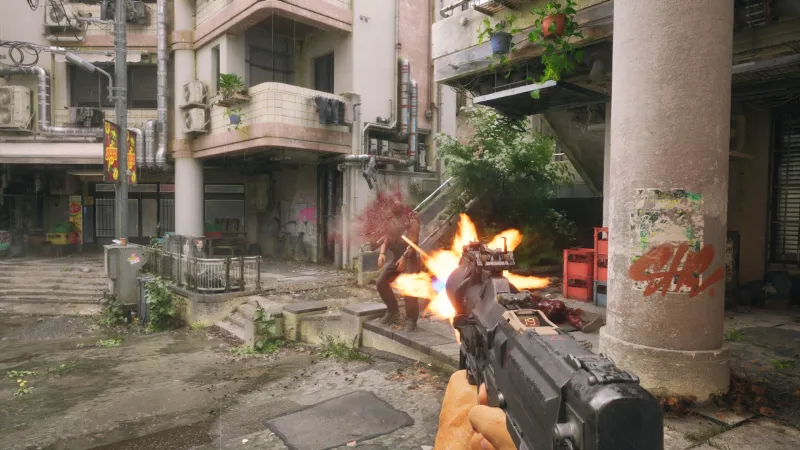
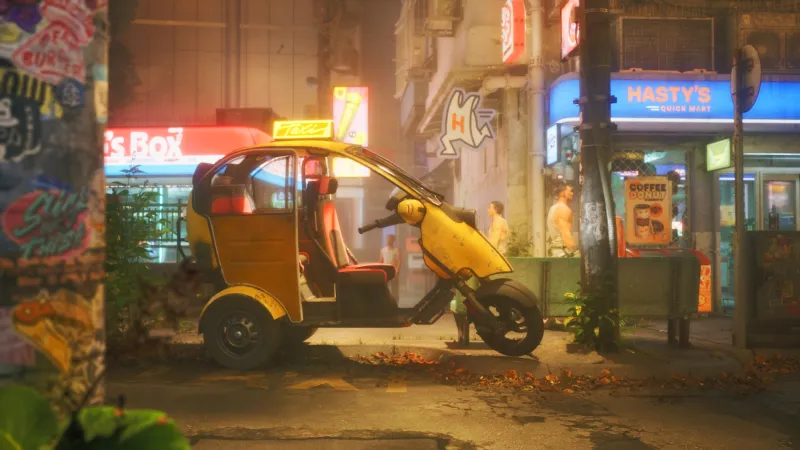
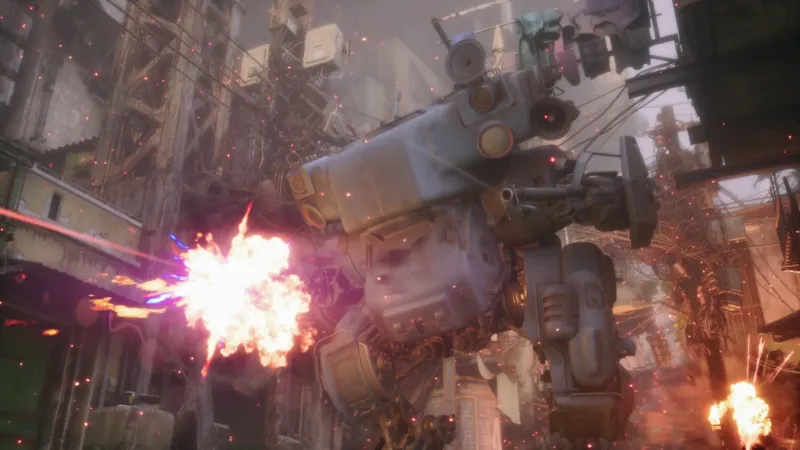
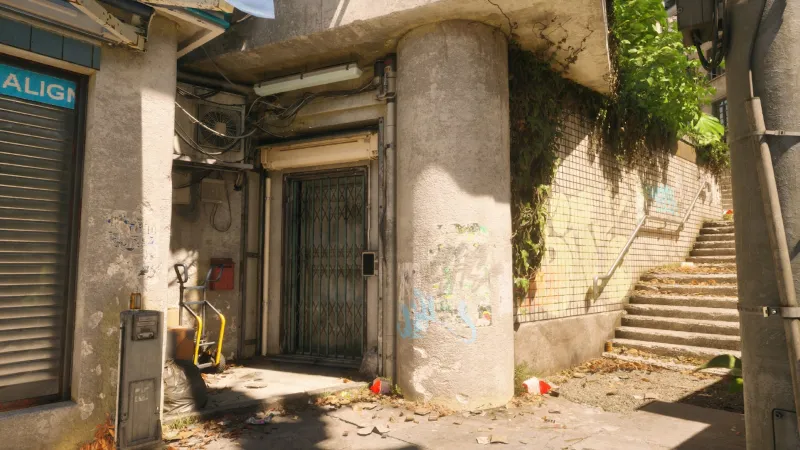
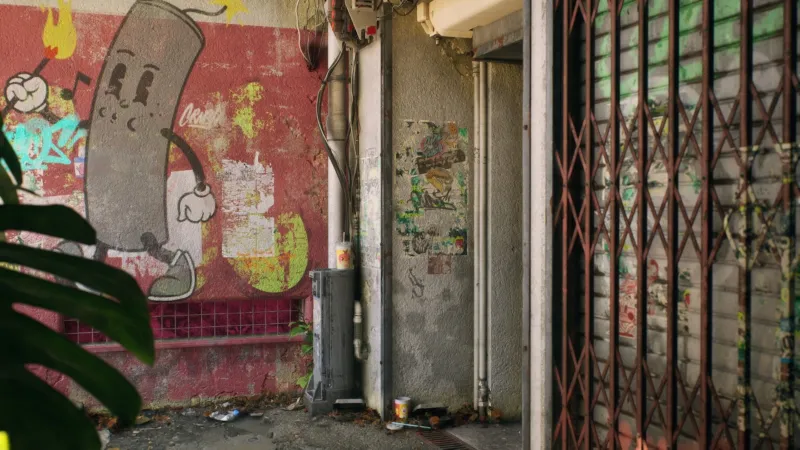
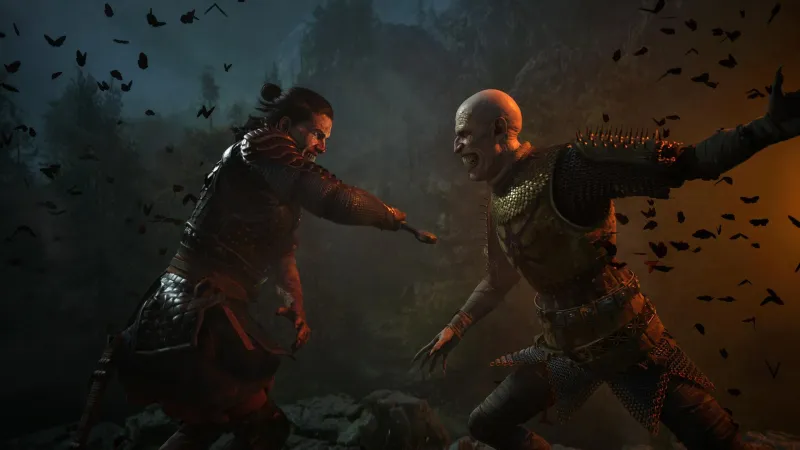
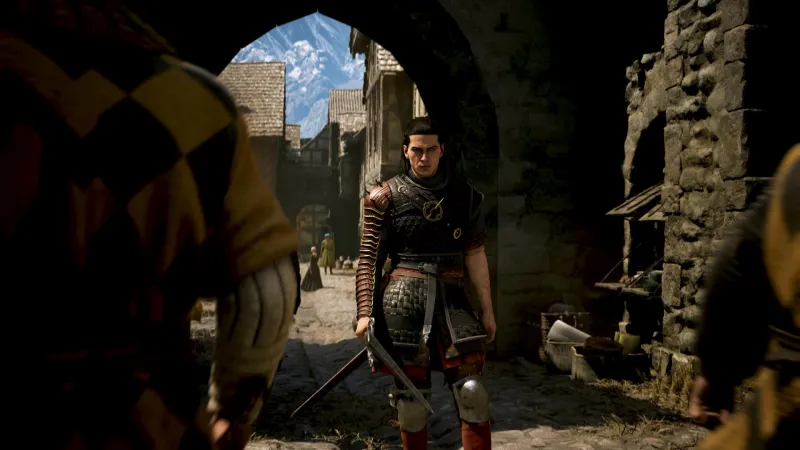
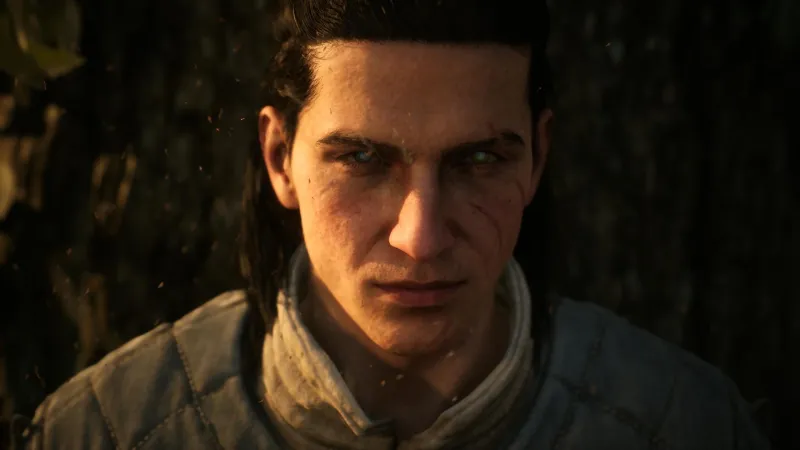
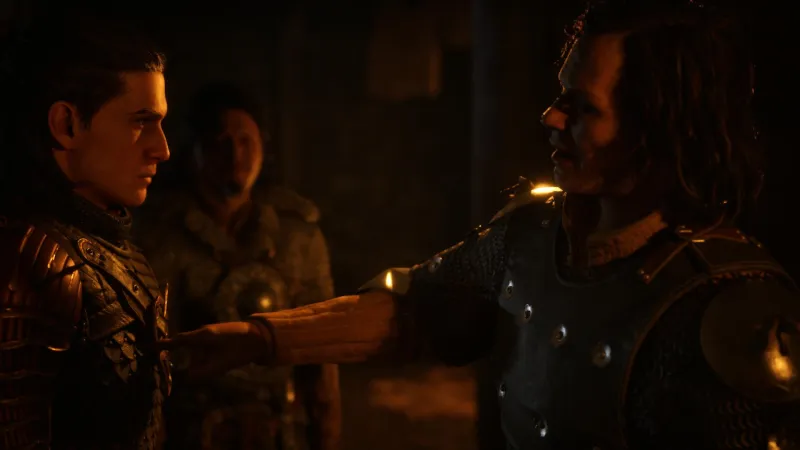
The showcase begins at 8 a.m. PT/11 a.m. ET and will air on Konami’s YouTube and Twitch channels. A press release states, “In this broadcast, Konami will present information on its latest lineup—including Silent Hill: Townfall (releasing Sept. 24), Castlevania: Belmont’s Curse (releasing October 15), and the recently announced RPG Rev. Noir—interspersed with new gameplay footage and video messages from the developers.”
It appears Konami Press Start will only feature the three advertised titles based on the verbiage. The press release specifically clarifies that there will be no announcements regarding the remake of the original Silent Hill, which is currently in production by Bloober Team.
Silent Hill: Townfall releases later this month and is a first-person adventure by Screenburn, the developer of Observation. You can learn more about the game in our extended preview from Summer Game Fest. Castlevania: Belmont’s Curse is a new side-scrolling entry by Dead Cells developer Evil Empire, and it launches next month. We played it at a recent hands-on event, and you can read our impressions here. Rev. Noir is an action RPG that was revealed during a PlayStation State of Play in February, and it’s the title we know the least about. It’s currently slated as a PlayStation 5 exclusive and has no release window, so perhaps Konami will narrow that launch timing on Thursday.
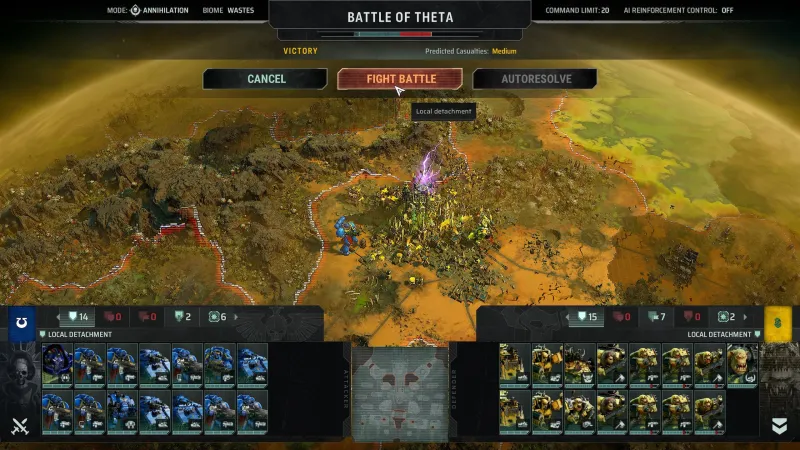
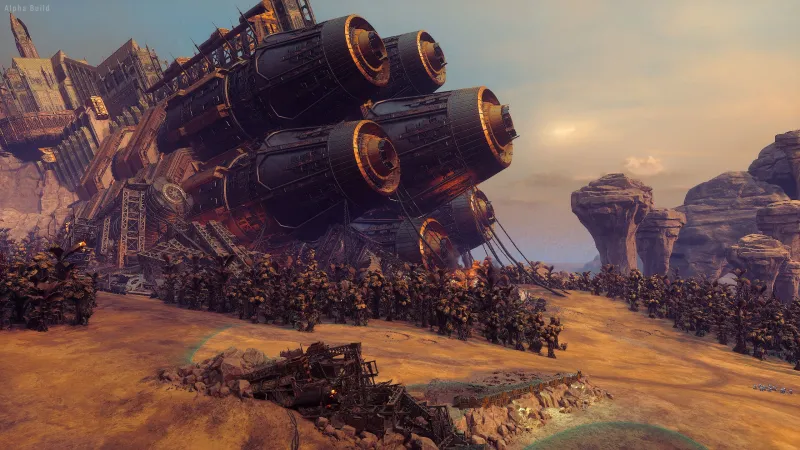
The Total War series has portrayed numerous conflicts, both historical and fantastical, but with Warhammer 40,000, the series launches into a new frontier with space, bolters and psykers in tow. It means a lot of changes for what Total War is, but its sense of scale remains intact, alongside a little bit of carnage.
I played a three-part hands-on demo of Total War: Warhammer 40,000 at Gamescom 2026, which stair-stepped me up through the layers of strategy. My personal experience with the Total War series has been frequent toe-dipping and experimenting, but never committing full-time. I love the chaos of a Warhammer 40,000 video game, though, whether that means directing my forces in Dawn of War or tearing through swarms of Tyranids in Space Marine.
So, while I’m reluctant to speak to the changes for this series, I can absolutely confirm Total War: Warhammer 40,000 can sate a thirst for explosions and declarations of loyalty to the Emperor. Four factions are currently planned for the game, and they’re the ones you likely expect: Orks, Aeldari, the billions of humans in the Imperium forces, and of course, Space Marines.
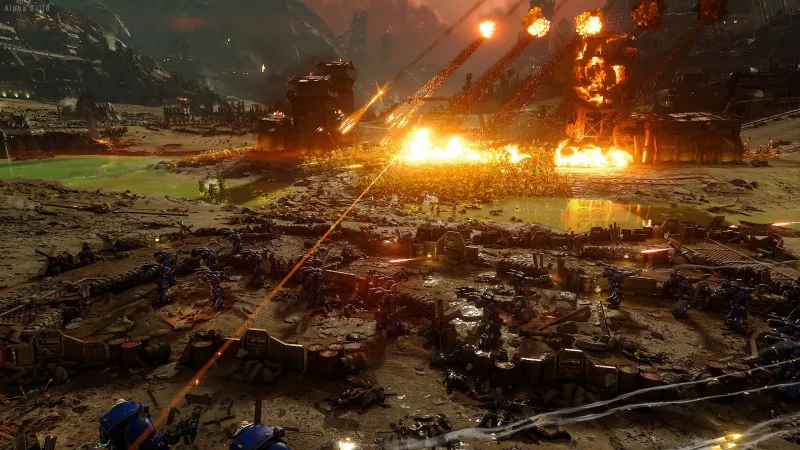
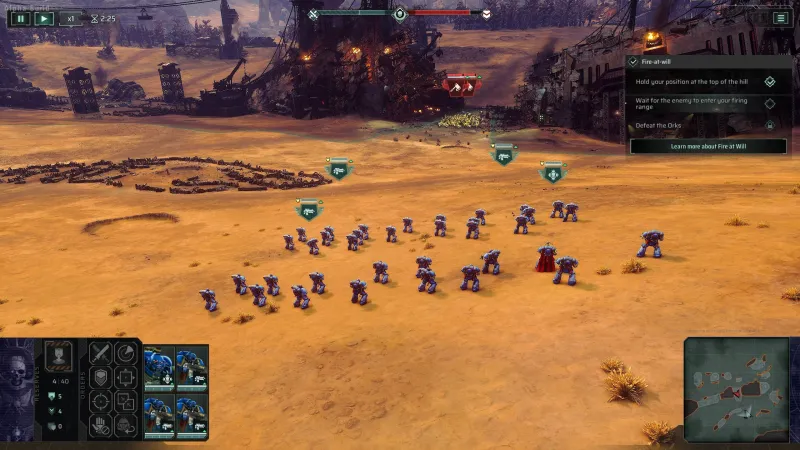
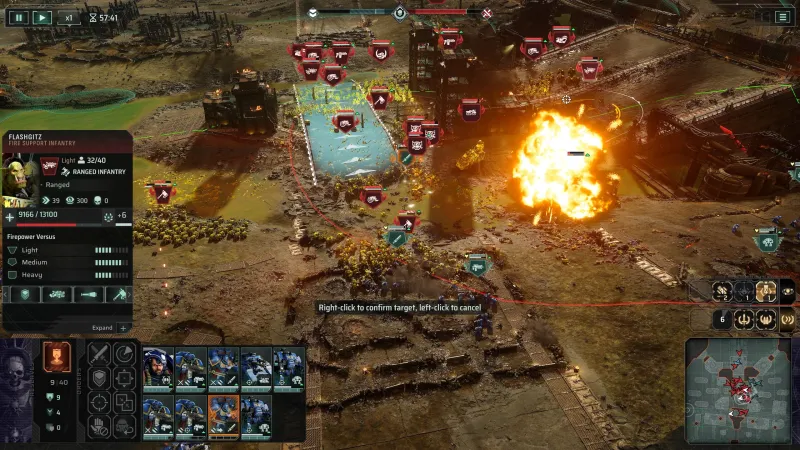
Part one of my demo put me through a small skirmish, pitting my small Space Marine detachment against a raging warband of Orks. Gradually, the tutorial walked me through the basics: units can be deployed behind a line, and then once battles commence, I can order them around, pausing or speeding up whenever I wish.
My Space Marines may have been outnumbered, but their powerful bolters mixed with a good position – on top of a hill and in cover – saw waves of Orks dashed against the proverbial rocks. With enough time – and bombing runs I could call in on a cooldown – it didn’t take long for me to route my foes.
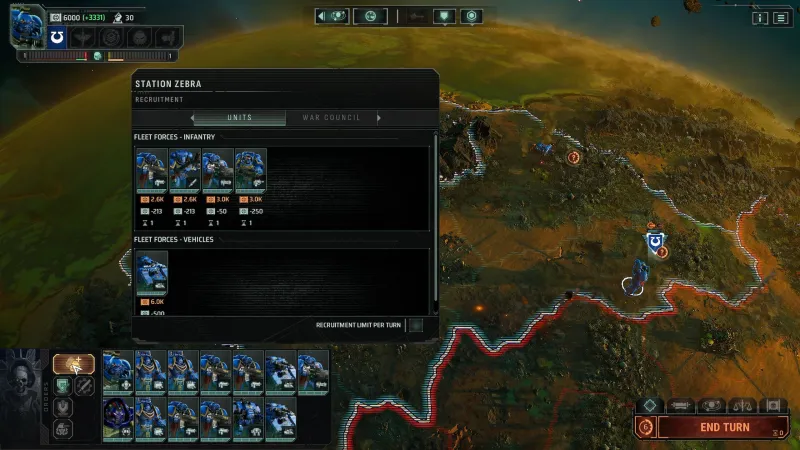
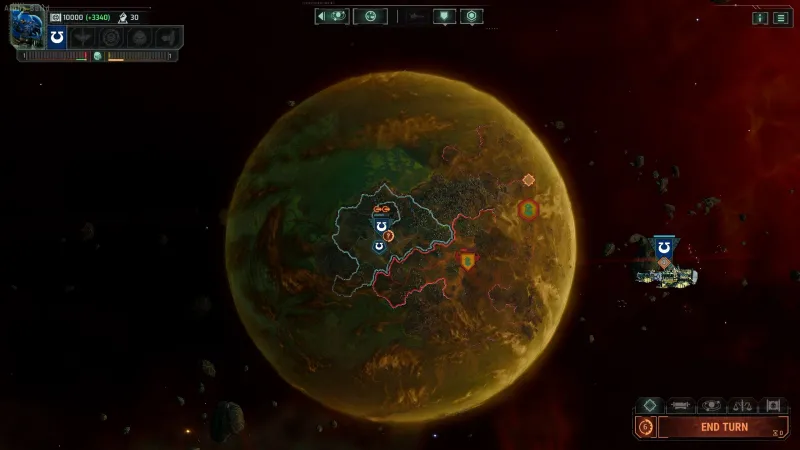
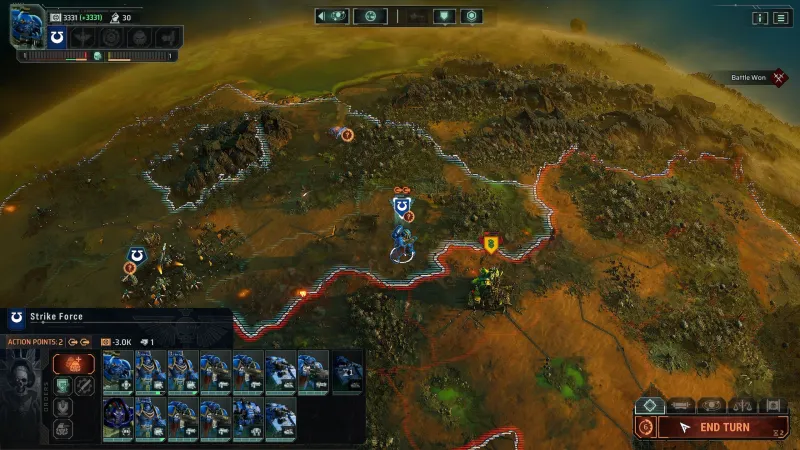
In the second section, I zoomed out to the larger map and commanded forces around the planet I’d found myself on, working my way towards a nearby Ork army. I made the mistake of sending a smaller force in first, rather than my larger outfit nearby, but it was fun to suddenly find myself in a position where I had to hold out for backup.
Did I add unnecessary tension because of my own bad decision-making? Absolutely. But that seems like a fun way to enjoy this kind of game: trying to snatch victory from the encroaching jaws of defeat.
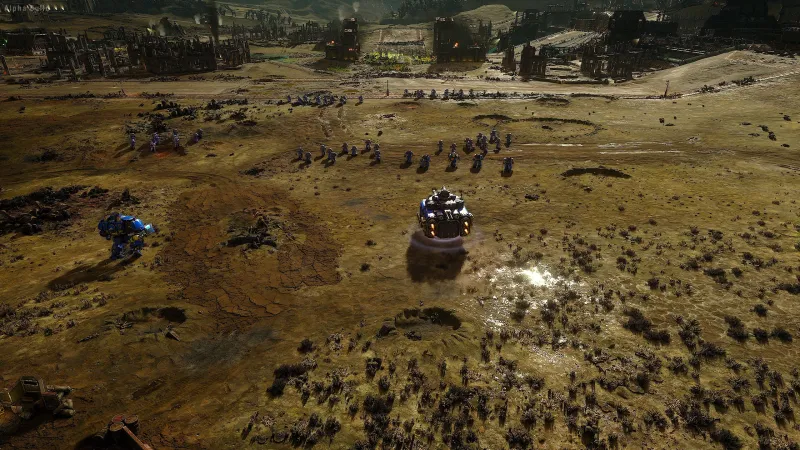
My final section, as a Creative Assembly team member described it, was a battle on the scale of something we’d likely see in the mid-to-late stages of a campaign. I had a sizeable set of units available: some assault units and basic bolter-wielding Space Marines, a number of specialty units like psykers and heavy gunners, and even a few vehicles.
I was warned very few demo players emerged victorious from that battle, and I was not able to best expectations either. Despite carefully planning a strategy to hold a small but defensible line and then pincer from opposing flanks after the enemy closed in, it all fell to ruins fast. Partly because my units weren’t fast enough to swing around and close in while my core still held, but also because I didn’t notice my right flank was blocked off from a faster route by a parked train.
Afterwards, I confirmed with a Creative Assembly developer that I could have blown up the train and punched through to the side of my foes, but a simple “move” command sent my right-side units swinging the long way around instead. I chalk it up to user error, though it does highlight a level of destruction and ingenuity players might need to get used to having, in this far-flung future.
Getting a sense of the breadth of Total War: Warhammer 40,000’s deeper systems and scope in the time I had allotted was difficult. For other games, an hour slice might be enough of a toothpick to see if the cake’s baked well, but for something as big as a Total War game, it felt like just a taste.
I’d certainly like to see how the other factions and races fare against the Orks and Space Marines, and get deeper into the longer-term progression systems. What I’ve seen so far confirms to me that Creative Assembly isn’t holding back on its first foray into the 40,000 universe.
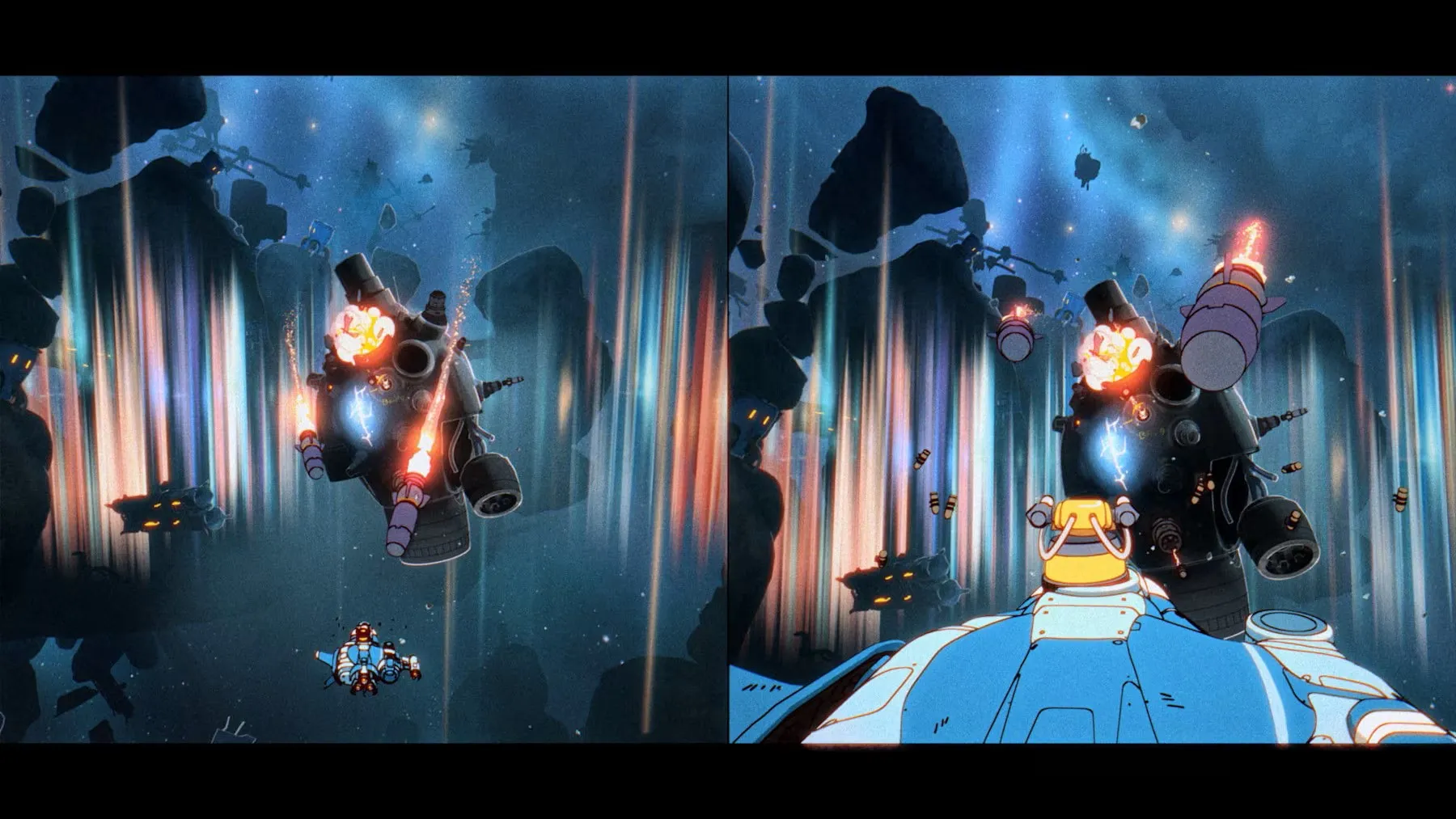
The first time I saw footage of Orbitals, the anime-themed co-op game from Shapefarm, it was love at first sight. But the more I got to know it, the more I realized good relationships are built on more than appearances. Orbitals is a stunningly beautiful sci-fi adventure with decent gameplay and a disappointing story. Despite my criticisms, Orbitals is kind of like a misbehaving puppy; any gripe I have is immediately softened by its charming appearance, and I left the experience more positive than negative.
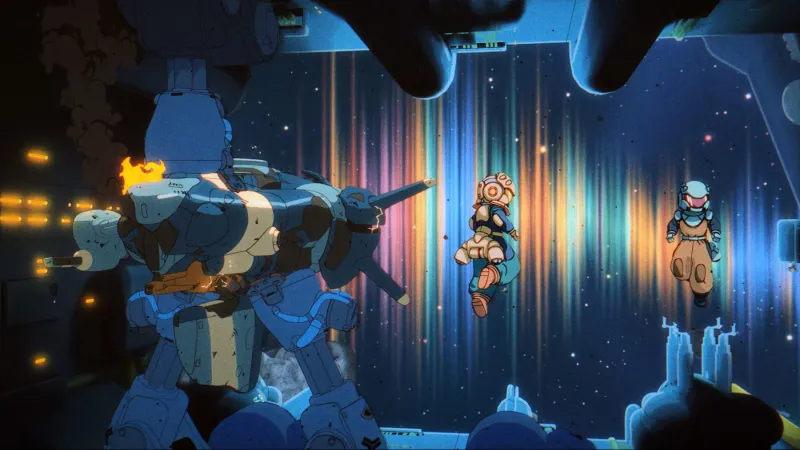
By far, Orbitals’ greatest feature is its presentation. Cutscenes are animated in a gorgeous retro anime style, gameplay has a similarly pleasing 3D-rendered aesthetic, and the soundtrack (especially the title theme) is an electrifying throwback. Whimsy is off the charts, with fun banter, animal-like aliens to interact with in each level, and inspired cassette futurism environmental designs.
Players control Maki and Omura, two young adults living in an isolated space station. Their home is in danger of being overrun by a deadly storm, and the only way to protect the community is to gather three reactor cassettes. The duo ventures out in their ship to explore abandoned and run-down space stations in hopes of finding the parts they need. The premise is decent enough to propel most of the game, which prioritizes gameplay over the overarching narrative.
That focus shifts in the last half hour or so, however, dumping a ton of story content on the player all at once. The resulting finale is rushed and unsatisfying, and snuck up on me after Orbitals’ mostly slow pace. Ultimately, the story concludes with moments that lacked enough setup to make the emotional payoff worthwhile. Because of this, I wish the game focused more specifically on Maki and Omura’s connections to their community rather than a MacGuffin-motivated mission. While I conceptually understood the duo loved the people back home, those relationships were talked about more than I experienced them in-game, and I never cared about most characters the way the protagonists did.
Maki and Omura, on the other hand, are (inter)stellar leads. While it’s never properly established, they have a fun sibling dynamic, and clearly enjoy each other’s company, speaking in sync, making puns, and singing silly songs. It’s oddly refreshing after playing similar games where the player characters are constantly butting heads – I like the person I’m playing this game with, and it’s nice to have our respective avatars feel the same way.
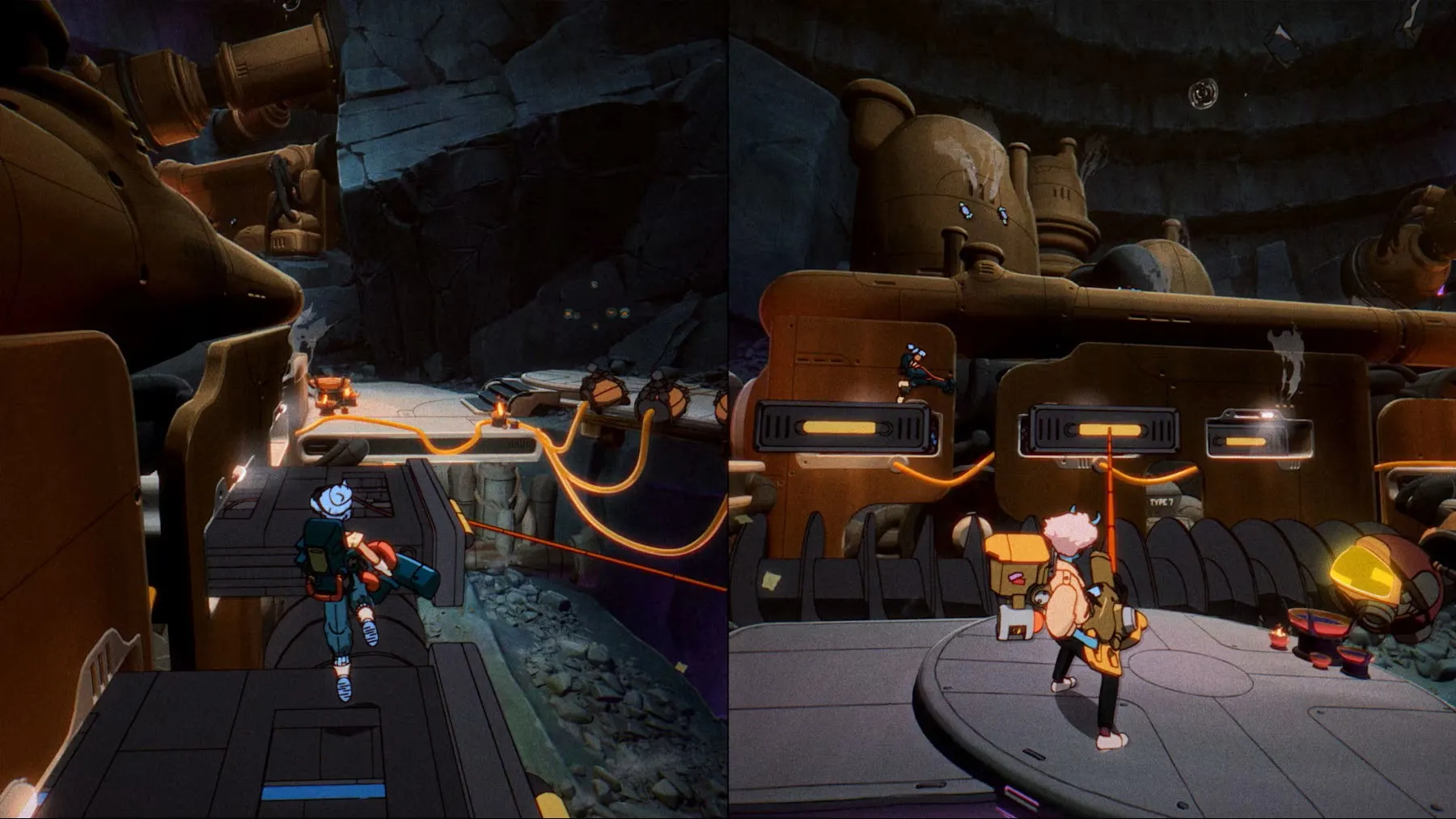
Gameplay is co-op only, and almost always asymmetrical, save for some minigames and occasions when Maki and Omura don’t have tools equipped. The bulk of the gameplay has each player wield a different piece of tech – usually some combination of a laser, grappling hook, and water cannon – and work together to solve puzzles. No two sections felt the same, and I was impressed by Orbitals’ sheer puzzle variety, finding new ways to use each tool.
Some felt unsatisfying and too simple; solutions were reduced to “player 1 uses a tool, then player 2 uses a tool, and vice versa until the level is complete,” with little critical thinking or coordination required. That said, the whimsical vibes help a lot, elevating middling gameplay with fun concepts. Shooting platforms at a wall for my partner to jump on wasn’t particularly exciting or novel, but when those platforms are bright blooming flower petals I’m blasting into a wall of soil, I don’t mind as much.
To travel between stations, you team up to pilot a home base spaceship that evolves over the course of the game with new critters and minigames. When you’re ready to take off, one player sits in the pilot’s chair and the other controls the guns. It’s an engaging way to solve puzzles, with one of us moving obstacles and flipping switches and the other maneuvering, but I was regularly frustrated by the space combat. Dodging fast homing missiles was a consistently uncomfortable affair, and one late-game sequence was downright overwhelming.
Orbitals doesn’t quite crash and burn, but its execution leaves a bit to be desired. That said, even after a lukewarm ending, returning to the game to hear the title theme and see the smiling protagonists once more makes me undeniably sentimental. I wish I connected more to Orbitals’ story and systems, but I can’t deny its playful, cozy vibes.
The first time I saw footage of Orbitals, the anime-themed co-op game from Shapefarm, it was love at first sight. But the more I got to know it, the more I realized good relationships are built on more than appearances. Orbitals is a stunningly beautiful sci-fi adventure with decent gameplay and a disappointing story. Despite my criticisms, Orbitals is kind of like a misbehaving puppy; any gripe I have is immediately softened by its charming appearance, and I left the experience more positive than negative.
By far, Orbitals’ greatest feature is its presentation. Cutscenes are animated in a gorgeous retro anime style, gameplay has a similarly pleasing 3D-rendered aesthetic, and the soundtrack (especially the title theme) is an electrifying throwback. Whimsy is off the charts, with fun banter, animal-like aliens to interact with in each level, and inspired cassette futurism environmental designs.
Players control Maki and Omura, two young adults living in an isolated space station. Their home is in danger of being overrun by a deadly storm, and the only way to protect the community is to gather three reactor cassettes. The duo ventures out in their ship to explore abandoned and run-down space stations in hopes of finding the parts they need. The premise is decent enough to propel most of the game, which prioritizes gameplay over the overarching narrative.
That focus shifts in the last half hour or so, however, dumping a ton of story content on the player all at once. The resulting finale is rushed and unsatisfying, and snuck up on me after Orbitals’ mostly slow pace. Ultimately, the story concludes with moments that lacked enough setup to make the emotional payoff worthwhile. Because of this, I wish the game focused more specifically on Maki and Omura’s connections to their community rather than a MacGuffin-motivated mission. While I conceptually understood the duo loved the people back home, those relationships were talked about more than I experienced them in-game, and I never cared about most characters the way the protagonists did.
Maki and Omura, on the other hand, are (inter)stellar leads. While it’s never properly established, they have a fun sibling dynamic, and clearly enjoy each other’s company, speaking in sync, making puns, and singing silly songs. It’s oddly refreshing after playing similar games where the player characters are constantly butting heads – I like the person I’m playing this game with, and it’s nice to have our respective avatars feel the same way.
Gameplay is co-op only, and almost always asymmetrical, save for some minigames and occasions when Maki and Omura don’t have tools equipped. The bulk of the gameplay has each player wield a different piece of tech – usually some combination of a laser, grappling hook, and water cannon – and work together to solve puzzles. No two sections felt the same, and I was impressed by Orbitals’ sheer puzzle variety, finding new ways to use each tool.
Some felt unsatisfying and too simple; solutions were reduced to “player 1 uses a tool, then player 2 uses a tool, and vice versa until the level is complete,” with little critical thinking or coordination required. That said, the whimsical vibes help a lot, elevating middling gameplay with fun concepts. Shooting platforms at a wall for my partner to jump on wasn’t particularly exciting or novel, but when those platforms are bright blooming flower petals I’m blasting into a wall of soil, I don’t mind as much.
To travel between stations, you team up to pilot a home base spaceship that evolves over the course of the game with new critters and minigames. When you’re ready to take off, one player sits in the pilot’s chair and the other controls the guns. It’s an engaging way to solve puzzles, with one of us moving obstacles and flipping switches and the other maneuvering, but I was regularly frustrated by the space combat. Dodging fast homing missiles was a consistently uncomfortable affair, and one late-game sequence was downright overwhelming.
Orbitals doesn’t quite crash and burn, but its execution leaves a bit to be desired. That said, even after a lukewarm ending, returning to the game to hear the title theme and see the smiling protagonists once more makes me undeniably sentimental. I wish I connected more to Orbitals’ story and systems, but I can’t deny its playful, cozy vibes.
(PlayStation 5, Xbox Series X/S, PC), 2027 (Switch 2)
The Sinking City 2 excels at delivering a captivating and eerie atmosphere, artistically alluring visuals, and jump-inducing sound design. However, much like the shambling reanimated corpses players confront, it tends to stumble as it walks the same well-paved road laid by Resident Evil 4. This long-awaited sequel aligns with its predecessor’s reception; a respectable scare fest with entertaining puzzle-solving, but middling combat, flawed progression, and an underwhelming narrative hold it back from reaching the horrific heights of its more celebrated contemporaries.
Despite the number 2 in its title, this follow-up to 2019’s The Sinking City is a standalone story starring a new protagonist (though he is aesthetically identical to former lead, Charles Reed), making it a newcomer-friendly adventure. Calvin Rafferty is an adventurer trying to revive Faye, his lover and a university professor, who has fallen into a supernatural sleep. Early events separate Faye’s soul from her physical form, allowing her to accompany Calvin literally in spirit as the duo tag-teams the horrors lurking in the flooded city of Arkham to retrieve her stolen body from the clutches of a Lovecraftian cosmic horror.
Despite solid performances for both leads, their characters never develop much beyond the fact that they really love each other (as Calvin constantly reminds the player), making Calvin himself an uninteresting lead beyond his love life. The intriguing supporting cast is similarly underdeveloped; I hoped to spend more time getting to know an unsettling doctor with worms for eyes or a sassy fish-woman who has shackled herself to her office for everyone else’s sake (her ominous words). This lack of substantial character development makes the overall plot, while a decent mystery, tough to fully invest in. The story also feels rushed, with its final act abruptly arriving sooner than the story’s methodical pacing led me to expect.
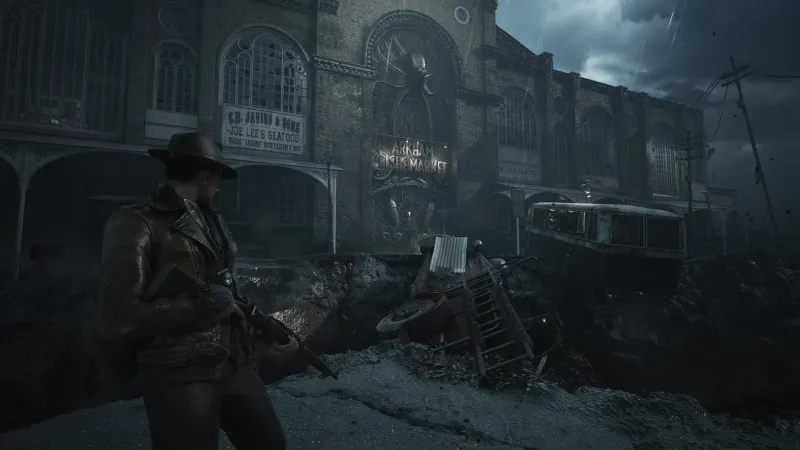
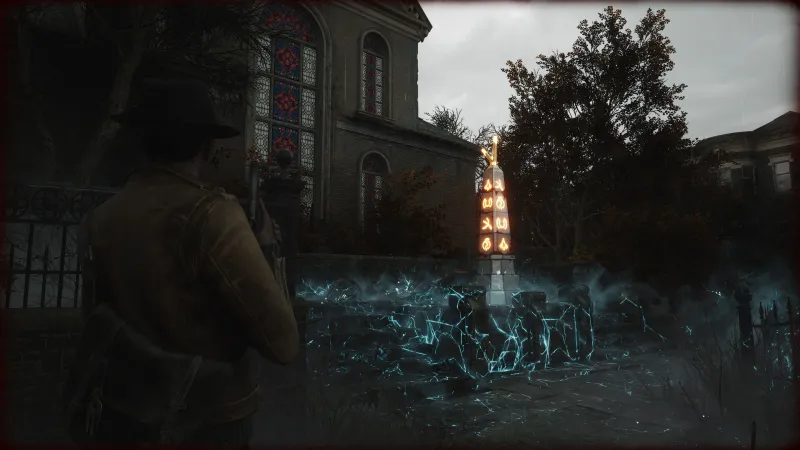
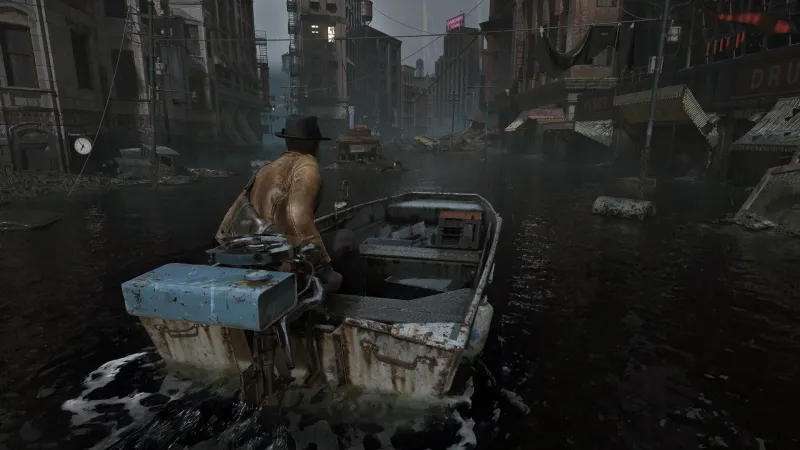
The Sinking City 2’s flooded Arkham boasts a killer atmosphere and art direction that makes it tough to look away from even its most grotesque sights. When I wasn’t admiring the sights while cruising Arkham’s flooded streets aboard a motorboat or trudging through my two favorite locations, a hospital and a fish market, I blasted enemies in over-the-shoulder gunplay that reads from Resident Evil’s familiar playbook. Although combat is competent, firing weapons doesn’t pack as much punch as I’d like, even with powerful guns like the shotgun and rifle. The same is true of exploding gas canisters, which don’t feel satisfying to ignite due to the disappointing explosion effect and blast radius. Despite bolstering weapon effectiveness by equipping collectible attachments, the damage upgrades feel negligible as enemies are annoyingly bullet-spongy, even when you target their bulbous, glowing weak points.
Tetris-esque inventory management, a regularly updating map, and resource crafting are all present and well-replicated, but one element I wish The Sinking City 2 borrowed from Resident Evil is the ability to perform a 180-degree quick-turn. Calvin moves comparatively slower and more deliberately than his sometimes quicker, at times nimble adversaries who have a habit of striking from behind, occasionally to a cheap extent. The Sinking City 2 often surrounds players with multiple enemies, at times in confined spaces, and between dodging foes who spit deadly goo with the accuracy of a Tom Brady pass and annoying leaping, spider-like critters, encounters are often a fight for breathing room since you spend so much time manually turning around to keep targets in your sights since you’re getting flanked so often. Arkham may be flooded, but the enemy pool is disappointingly shallow; the small handful of creature types means combat encounters become overly familiar by the halfway point of this roughly 13-hour journey.
Thankfully, the locations and level design do a better job of switching things up. You’ll go from piloting a speedboat to derelict locations in the submerged open city hub to sinking your teeth into unraveling the labyrinthine hospital and fish market. The latter locations best scratched my survival-horror itch as I engaged in the well-worn but still entertaining exercise of finding keys to unlock doors, trinkets to solve puzzles, and clues to stitch together solutions on an investigation board. Puzzle-solving as a whole is more consistently enjoyable thanks to its balanced-yet-stimulating challenge and variety, and I was always excited to encounter a new riddle to unravel. I also enjoyed reading the fascinating lore notes and listening to a radio DJ share bizarre Twilight Zone-esque tales of this world.
Solving puzzles, among other feats, rewards Dream Essence, but the progression system is bafflingly steep. You can either spend a couple of these points to earn a single perk such as damage reduction or faster reloading, or spend 10 points to unlock one of three slots to hold said upgrades. I opted to invest in the latter, assuming the large number of locked perks signaled enough Dream Essence is available to unlock a reasonably diverse pool of perks to fit into my three slots. Despite solving most of the optional mysteries and finding many special chests rewarding Dream Essence (among other upgrades like increased inventory slots or weapon attachments), I was barely able to unlock the six perks in the first tier (out of four). This strange scarcity of Dream Essence means you have a choice between unlocking many perks that can only be equipped one at a time or equipping three perks from a minuscule pool. This imbalanced progression severely limits crafting varied builds, something The Sinking City 2 seemingly encourages. Ultimately, however, the perks don’t make much of a difference. I was still able to finish The Sinking City 2 on the standard difficulty without feeling underpowered.
The Sinking City 2 offers a decent take on a familiar formula if you’re itching for survival horror. But with so many better options, it’s hard to recommend it over similar titles that nail the style more consistently and evenly. Though I did find some fun within the madness, its shortcomings keep its potential from fully breaking the surface.
(PlayStation 5, Xbox Series X/S, PC), 2027 (Switch 2)
The Sinking City 2 excels at delivering a captivating and eerie atmosphere, artistically alluring visuals, and jump-inducing sound design. However, much like the shambling reanimated corpses players confront, it tends to stumble as it walks the same well-paved road laid by Resident Evil 4. This long-awaited sequel aligns with its predecessor’s reception; a respectable scare fest with entertaining puzzle-solving, but middling combat, flawed progression, and an underwhelming narrative hold it back from reaching the horrific heights of its more celebrated contemporaries.
Despite the number 2 in its title, this follow-up to 2019’s The Sinking City is a standalone story starring a new protagonist (though he is aesthetically identical to former lead, Charles Reed), making it a newcomer-friendly adventure. Calvin Rafferty is an adventurer trying to revive Faye, his lover and a university professor, who has fallen into a supernatural sleep. Early events separate Faye’s soul from her physical form, allowing her to accompany Calvin literally in spirit as the duo tag-teams the horrors lurking in the flooded city of Arkham to retrieve her stolen body from the clutches of a Lovecraftian cosmic horror.
Despite solid performances for both leads, their characters never develop much beyond the fact that they really love each other (as Calvin constantly reminds the player), making Calvin himself an uninteresting lead beyond his love life. The intriguing supporting cast is similarly underdeveloped; I hoped to spend more time getting to know an unsettling doctor with worms for eyes or a sassy fish-woman who has shackled herself to her office for everyone else’s sake (her ominous words). This lack of substantial character development makes the overall plot, while a decent mystery, tough to fully invest in. The story also feels rushed, with its final act abruptly arriving sooner than the story’s methodical pacing led me to expect.
The Sinking City 2’s flooded Arkham boasts a killer atmosphere and art direction that makes it tough to look away from even its most grotesque sights. When I wasn’t admiring the sights while cruising Arkham’s flooded streets aboard a motorboat or trudging through my two favorite locations, a hospital and a fish market, I blasted enemies in over-the-shoulder gunplay that reads from Resident Evil’s familiar playbook. Although combat is competent, firing weapons doesn’t pack as much punch as I’d like, even with powerful guns like the shotgun and rifle. The same is true of exploding gas canisters, which don’t feel satisfying to ignite due to the disappointing explosion effect and blast radius. Despite bolstering weapon effectiveness by equipping collectible attachments, the damage upgrades feel negligible as enemies are annoyingly bullet-spongy, even when you target their bulbous, glowing weak points.
Tetris-esque inventory management, a regularly updating map, and resource crafting are all present and well-replicated, but one element I wish The Sinking City 2 borrowed from Resident Evil is the ability to perform a quick 360-degree turn. Calvin moves comparatively slower and more deliberately than his sometimes quicker, at times nimble adversaries who have a habit of striking from behind, occasionally to a cheap extent. The Sinking City 2 often surrounds players with multiple enemies, at times in confined spaces, and between dodging foes who spit deadly goo with the accuracy of a Tom Brady pass and annoying leaping, spider-like critters, encounters are often a fight for breathing room since you spend so much time manually turning around to keep targets in your sights since you’re getting flanked so often. Arkham may be flooded, but the enemy pool is disappointingly shallow; the small handful of creature types means combat encounters become overly familiar by the halfway point of this roughly 13-hour journey.
Thankfully, the locations and level design do a better job of switching things up. You’ll go from piloting a speedboat to derelict locations in the submerged open city hub to sinking your teeth into unraveling the labyrinthine hospital and fish market. The latter locations best scratched my survival-horror itch as I engaged in the well-worn but still entertaining exercise of finding keys to unlock doors, trinkets to solve puzzles, and clues to stitch together solutions on an investigation board. Puzzle-solving as a whole is more consistently enjoyable thanks to its balanced-yet-stimulating challenge and variety, and I was always excited to encounter a new riddle to unravel. I also enjoyed reading the fascinating lore notes and listening to a radio DJ share bizarre Twilight Zone-esque tales of this world.
Solving puzzles, among other feats, rewards Dream Essence, but the progression system is bafflingly steep. You can either spend a couple of these points to earn a single perk such as damage reduction or faster reloading, or spend 10 points to unlock one of three slots to hold said upgrades. I opted to invest in the latter, assuming the large number of locked perks signaled enough Dream Essence is available to unlock a reasonably diverse pool of perks to fit into my three slots. Despite solving most of the optional mysteries and finding many special chests rewarding Dream Essence (among other upgrades like increased inventory slots or weapon attachments), I was barely able to unlock the six perks in the first tier (out of four). This strange scarcity of Dream Essence means you have a choice between unlocking many perks that can only be equipped one at a time or equipping three perks from a minuscule pool. This imbalanced progression severely limits crafting varied builds, something The Sinking City 2 seemingly encourages. Ultimately, however, the perks don’t make much of a difference. I was still able to finish The Sinking City 2 on the standard difficulty without feeling underpowered.
The Sinking City 2 offers a decent take on a familiar formula if you’re itching for survival horror. But with so many better options, it’s hard to recommend it over similar titles that nail the style more consistently and evenly. Though I did find some fun within the madness, its shortcomings keep its potential from fully breaking the surface.
I’m a mark for cyberpunk games, so Neon Giant didn’t have to do much to sell me on No Law – you give me neon, corporate dystopia, and some inspired fashion choices, and I’m there. But I won’t deny that my initial impression of No Law when it was revealed during The Game Awards 2025 last December was something along the lines of a tepid “Oh cool, another cyberpunk game I’ll check out.” That impression stuck through every trailer Neon Giant and publisher Krafton released, including the latest shown during Gamescom Opening Night Light 2026 last week. However, I knew I had a preview of the game locked in for Gamescom and was looking forward to learning more.
With that preview behind me, my impression has changed to something along the lines of, “Holy hell, this is so. much. more. than a cyberpunk FPS.” Though I don’t get to play it, the gameplay I watch, courtesy of Neon Giant co-founder and No Law co-creative director Tor Frick (with commentary from co-founder and co-creative director Arcade Berg), greatly impresses me – it might be my game of the show, and is certainly one of my most anticipated releases of 2027 now.
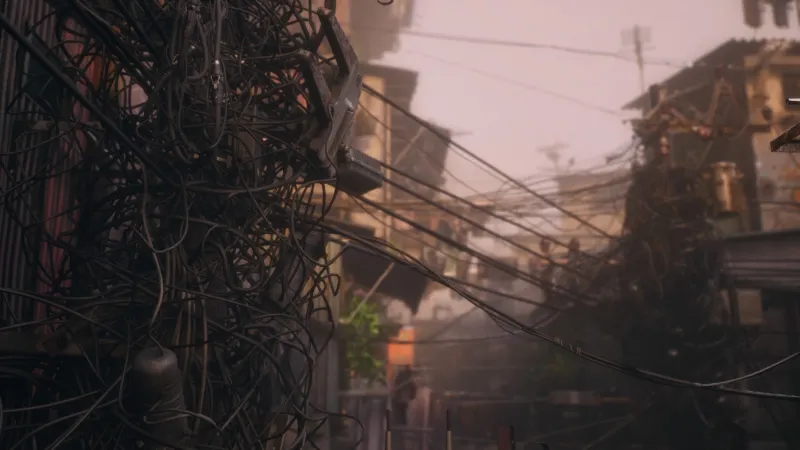
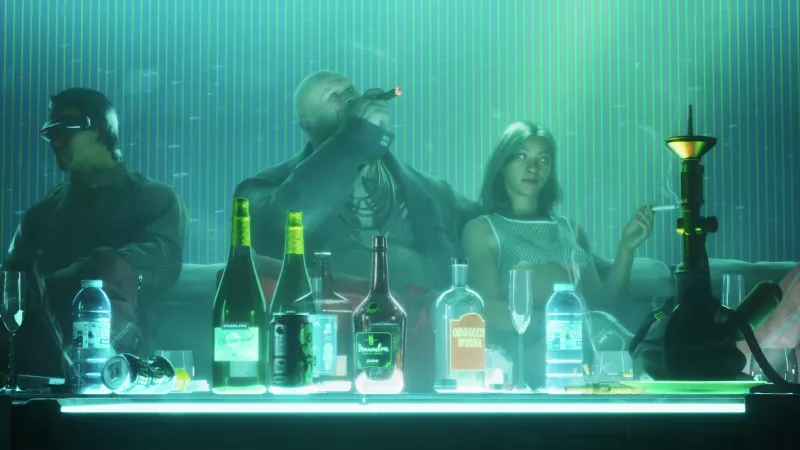
No Law takes place in the dense, Mediterranean-inspired Port Desire, with protagonist Gardener brought out of retirement to get something taken from him back; it’s very John Wick, and though Gardener is more of a 1980s action movie hero than Keanu Reeves’ assassin, I imagine their personalities would mesh well. Port Desire is a lawless city, as the game’s name implies, completely unregulated by government, making it a great place for criminal activity (that also happens to benefit corporations and neighboring nations). As a result, it’s the site of shady science experiments, black-market weapon development, and crime, though government-backed Peacekeepers stop too much chaos from occurring.
“They don’t want it to be perfect and safe; they want it to have a bit of chaos and violence,” Berg said. “Port Desire is Las Vegas on steroids.” He tells me people even travel to the city for leisure and vacation, as well, “because it can provide absolutely anything and there’s nothing anyone can do about it.”
Our demo begins shortly after the game’s intro, with Gardener searching for an informant. As we head out of our apartment and into the city proper, we stop to talk to Rosco, an NPC friend of Gardener, first. Here, I see how speaking to characters can yield Gardener information he can use later, but these conversations are optional, Berg says. “The story of the game is very simple: it’s a revenge story about retrieving your thing,” he tells me. “That’s all you need to know to shoot people in the face, but it’s opt-in. If you want a simpler shooting experience, we’ve got you covered; if you want an immersive sim, that’s there, too.”
My ears perk up when he says “immersive sim” because I had no idea Neon Giant was taking No Law in that direction. It colors the conversations we have throughout the rest of this preview. Port Desire has a dynamic weather system, and if you need to enter a heavily guarded place, Frick says it might be smart to wait for it to rain – like real people, NPCs in this game don’t want to be outside stuck in the rain, and entering a secure compound is much easier when all of its security is inside. Nighttime and daytime play into this experience as well, from simpler features, like shops closing at night (making it harder to stock up on goods) to NPCs crawling into bed for the night (making it easier to kill a target).
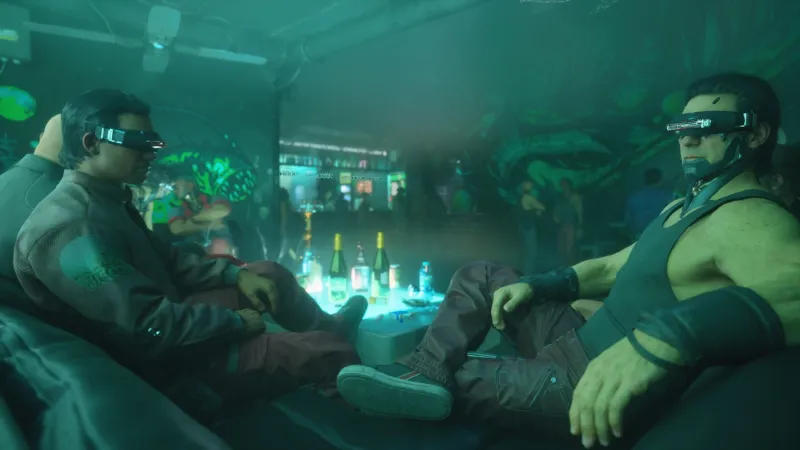
As we walk around Port Desire, it feels alive, and I know that’s a blasé and cliché thing to say these days, but people have working habits, routes, and more. I see mechanics working on cars, sparks flying from their tools; I see a barista making coffee and serving it to patrons at tables; I see construction workers wearing VR headsets, controlling drones that repair a nearby storefront façade. Berg shows me that every street has an associated street sign, and that buildings have addresses, too; if you choose to turn on a special “immersive mode,” you’ll be required to use this information to get around. If you don’t opt in to that mode, however, a standard video game waypoint will help you get where you need to go.
“You can never play the game wrong – that’s our core tenet,” Berg says. “It’s all up to you how you experience stuff.”
Before heading to the informant’s location, we stop into a shop. Frick and Berg are delighted to show me that every item on the store’s shelves is hand-crafted, from the packaging to the logo to the on-item text and even the ingredients. We stock up on some healing items and bring them to the clerk to check out; if we walked out with these goods instead, we’d be committing theft, and the clerk (and maybe Peacekeepers) would likely be out to kill us. As we exit the store, Frick points out the anti-theft device near the shop’s doors. We later return to this store and steal the device to combine it with a grenade, creating a proximity grenade. They tell me there are all kinds of combo interactions like this to create new weapons, items, and more.
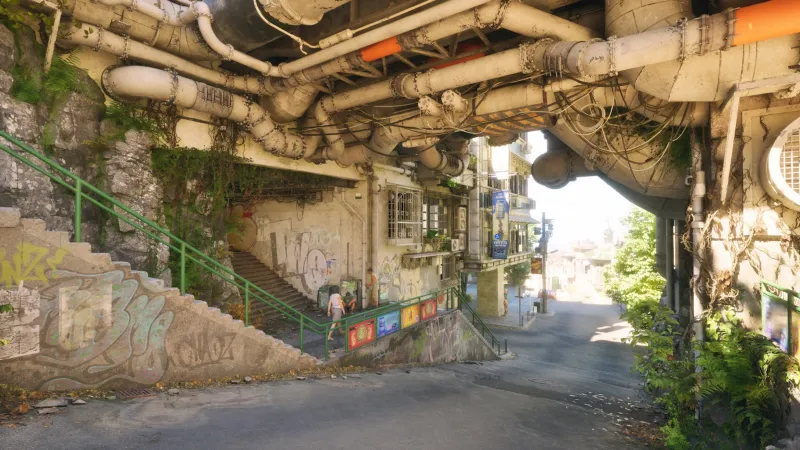
As we make our way to the informant’s location, we head through an area overtaken by nature. Berg says nature is trying to take the city back and is more aggressive in this sunny-than-most-cyberpunk-games climate. Workers in the city can be spotted using chemicals to fight back against the greenery’s growth.
We head underground, and the bright sun of Port Desire disappears, surrounding us in shadows. It’s clear things are much shadier, literally and figuratively, down here, and the NPCs here match the vibe. We head into an apartment building at the behest of Tenna, the voice in our ear. Side note: I suspect Tenna’s VO is a placeholder; otherwise, Neon Giant should consider some changes, because the performance sticks out like a sore thumb.
We could just barge in and kill everyone here. We could also climb the fence and sneak in, and Frick shows how you can stack nearby crates so that you can actually do so before joking that QA has stacked enough crates to climb three stories into an open window. “If it looks possible, it probably is,” Berg adds. The two explain that No Law is Neon Giant’s first immersive sim but that The Ascent had elements of the genre, too. It’s only natural for this team, he adds, with experience on games like Far Cry, Crysis, Chronicles of Riddick, and more in their employees’ tenures.
Once inside the apartment building, the landlord Renn, inspired by organized crime in 1960s NYC and associated film noirs (with the attitude and accent making that clear), stops us from entering. We could kill him, but instead, we search a nearby room to find a document with a secret password that gets us in.
Something interesting I learn here is that you only earn XP in No Law from completing objectives. You get XP for reaching the informant’s room, regardless of how you do it. “We always reward the ‘what,’ but never the ‘how,'” Berg says. “If I gave you XP for lockpicking [which we do to enter the room with the password], you’ll start lockpicking everywhere. The same with headshots – we don’t even give you XP for shooting enemies because you could sneak around them instead.”
We eventually reach the informant’s room, but nobody’s there, so we search around like a detective. We search his computer and discover he’s en route to a secret meeting. However, his email details three possible meeting spots in conversation with whomever he’s linking up with, each with different levels of security.
We head to the least secure location, presumably meaning fewer watchful eyes, which is an underground tunnel. Unfortunately, my preview ends before we actually reach the informant, and I use the rest of the preview time to learn more about the game.
Berg tells me Neon Giant has doubled its employee count, up from 12 in 2021’s The Ascent to 24 today; the number blows my mind, considering what I just watched seems like a project made by 300 people. He also tells me the story is completely nonlinear, and you could theoretically complete it almost passively, though you will have to kill a few people by necessity because “it’s a revenge story, after all.” You will get different endings based on how you impact the world with your actions and the choices you make, and Berg and co. are excited to see where players land.
Crucially, they say it’s impossible to unlock every skill and have every conversation in one playthrough. “We’re a small team and making content takes time and costs money, but we are okay with players not experiencing content,” Berg says. “We just want players to roll credits and say, ‘Damn, what a good game,’ but know that there’s more in the game left for them.”
That said, Berg stresses the team is emphasizing the “first playthrough” experience and not necessarily asking players to replay the game and discover everything. “It’s not about replayability, though that’s there,” he tells me. “It’s about making that first playthrough feel significant and know it’s yours while knowing the city and the story are more than what you saw.”
Everything I’ve seen about No Law prior to this preview told me it’s going to be a fine cyberpunk game I’ll check out; this preview has greatly increased my expectations and excitement. Neon Giant clearly loves this sci-fi genre, and they love immersive sims (and FPS games, too). I look forward to seeing the rest of it on full display next year.
No Law is due out sometime in 2027 on PlayStation 5, Xbox Series X/S, and PC via Steam and the Epic Games Store.
I’m a mark for cyberpunk games, so Neon Giant didn’t have to do much to sell me on No Law – you give me neon, corporate dystopia, and some inspired fashion choices, and I’m there. But I won’t deny that my initial impression of No Law when it was revealed during The Game Awards 2025 last December was something along the lines of a tepid “Oh cool, another cyberpunk game I’ll check out.” That impression stuck through every trailer Neon Giant and publisher Krafton released, including the latest shown during Gamescom Opening Night Light 2026 last week. However, I knew I had a preview of the game locked in for Gamescom and was looking forward to learning more.
With that preview behind me, my impression has changed to something along the lines of, “Holy hell, this is so. much. more. than a cyberpunk FPS.” Though I don’t get to play it, the gameplay I watch, courtesy of Neon Giant co-founder and No Law co-creative director Tor Frick (with commentary from co-founder and co-creative director Arcade Berg), greatly impresses me – it might be my game of the show, and is certainly one of my most anticipated releases of 2027 now.
No Law takes place in the dense, Mediterranean-inspired Port Desire, with protagonist Gardener brought out of retirement to get something taken from him back; it’s very John Wick, and though Gardener is more of a 1980s action movie hero than Keanu Reeves’ assassin, I imagine their personalities would mesh well. Port Desire is a lawless city, as the game’s name implies, completely unregulated by government, making it a great place for criminal activity (that also happens to benefit corporations and neighboring nations). As a result, it’s the site of shady science experiments, black-market weapon development, and crime, though government-backed Peacekeepers stop too much chaos from ever occurring.
“They don’t want it to be perfect and safe; they want it to have a bit of chaos and violence,” Berg said. “Port Desire is Las Vegas on steroids.” He tells me people even travel to the city for leisure and vacation, as well, “because it can provide absolutely anything and there’s nothing anyone can do about it.”
Our demo begins shortly after the game’s intro, with Gardener searching for an informant. As we head out of our apartment and into the city proper, we stop to talk to Rosco, an NPC friend of Gardener, first. Here, I see how speaking to characters can yield Gardener information he can use later, but these conversations are optional, Berg says. “The story of the game is very simple: it’s a revenge story about retrieving your thing,” he tells me. “That’s all you need to know to shoot people in the face, but it’s opt-in. If you want a simpler shooting experience, we’ve got you covered; if you want an immersive sim, that’s there, too.”
My ears perk up when he says “immersive sim” because I had no idea Neon Giant was taking No Law in that direction. It colors the conversations we have throughout the rest of this preview. Port Desire has a dynamic weather system, and if you need to enter a heavily guarded place, Frick says it might be smart to wait for it to rain – like real people, NPCs in this game don’t want to be outside stuck in the rain, and entering a secure compound is much easier when all of its security is inside. Nighttime and daytime play into this experience as well, from simpler features, like shops closing at night (making it harder to stock up on goods) to NPCs crawling into bed for the night (making it easier to kill a target).
As we walk around Port Desire, it feels alive, and I know that’s a blase and cliché thing to say these days, but people have working habits, routes, and more. I see mechanics working on cars, sparks flying from their tools; I see a barista making coffee and serving it to patrons at tables; I see construction workers wearing VR headsets, controlling drones that repair a nearby storefront facade. Berg shows me that every street has an associated street sign, and that buildings have addresses, too; if you choose to turn on a special “immersive mode,” you’ll be required to use this information to get around. If you don’t opt in to that mode, however, a standard video game waypoint will help you get where you need to go.
“You can never play the game wrong – that’s our core tenet,” Berg says. “It’s all up to you how you experience stuff.”
Before heading to the informant’s location, we stop into a shop. Frick and Berg are delighted to show me that every item on the store’s shelves is hand-crafted, from the packaging to the logo to the on-item text and even the ingredients. We stock up on some healing items and bring them to the clerk to check out; if we walked out with these goods instead, we’d be committing theft, and the clerk (and maybe Peacekeepers) would likely be out to kill us. As we exit the store, Frick points out the anti-theft device near the shop’s doors. We later return to this store and steal the device to combine it with a grenade, creating a proximity grenade. They tell me there are all kinds of combo interactions like this to create new weapons, items, and more.
As we make our way to the informant’s location, we head through an area overtaken by nature. Berg says nature is trying to take the city back and is more aggressive in this sunny-than-most-cyberpunk-games climate. Workers in the city can be spotted using chemicals to fight back against the greenery’s growth.
We head underground, and the bright sun of Port Desire disappears, surrounding us in shadows. It’s clear things are much shadier, literally and figuratively, down here, and the NPCs here match the vibe. We head into an apartment building at the behest of Tenna, the voice in our ear. Side note: I suspect Tenna’s VO is a placeholder; otherwise, Neon Giant should consider some changes because the performance sticks out like a sore thumb.
We could just barge in and kill everyone here. We could also climb the fence and sneak in, and Frick shows how you can stack nearby crates so that you can actually do so before joking that QA has stacked enough crates to climb three stories into an open window. “If it looks possible, it probably is,” Berg adds. The two explain that No Law is Neon Giant’s first immersive sim but that The Ascent had elements of the genre, too. It’s only natural for this team, he adds, with experience on games like Far Cry, Crysis, Chronicles of Riddick, and more in their employees’ tenures.
Once inside the apartment building, the landlord Renn, inspired by organized crime in 1960s NYC and associated film noirs (with the attitude and accent making that clear), stops us from entering. We could kill him, but instead, we search a nearby room to find a document with a secret password that gets us in.
Something interesting I learn here is that you only earn XP in No Law from completing objectives. You get XP for reaching the informant’s room, regardless of how you do it. “We always reward the ‘what,’ but never the ‘how,'” Berg says. “If I gave you XP for lockpicking [which we do to enter the room with the password], you’ll start lockpicking everywhere. The same with headshots – we don’t even give you XP for shooting enemies because you could sneak around them instead.”
We eventually reach the informant’s room, but nobody’s there, so we search around like a detective. We search his computer, which doesn’t have a password (so we don’t need to hack it or search for one), and discover he’s en route to a secret meeting. However, his email details three possible meeting spots in conversation with whomever he’s linking up with, each with different levels of security.
We head to the least secure location, presumably meaning fewer watchful eyes, which is an underground tunnel. Unfortunately, my preview ends before we actually reach the informant, and I use the rest of the preview time to learn more about the game.
Berg tells me Neon Giant has doubled its employee count, up from 12 in 2021’s The Ascent to 24 today; the number blows my mind, considering what I just watched seems like a project made by 300 people. He also tells me the entire story is completely nonlinear, and you could theoretically complete it almost passively, though you will have to kill a few people by necessity because “it’s a revenge story, after all.” You will get different endings based on how you impact the world with your actions and the choices you make, and Berg and co. are excited to see where players land.
Crucially, they say it’s impossible to unlock every skill and have every conversation in one playthrough. “We’re a small team and making content takes time and costs money, but we are okay with players not experiencing content,” Berg says. “We just want players to roll credits and say, ‘Damn, what a good game,’ but know that there’s more in the game left for them.”
That said, Berg stresses the team is emphasizing the “first playthrough” experience and not necessarily asking players to replay the game and discover everything. “It’s not about replayability, though that’s there,” he tells me. “It’s about making that first playthrough feel significant and know it’s yours while knowing the city and the story are more than what you saw.”
Everything I’ve seen about No Law prior to this preview told me it’s going to be a fine cyberpunk game I’ll check out; this preview has greatly increased my expectations and excitement. Neon Giant clearly loves this sci-fi genre, and they love immersive sims (and FPS games, too). I look forward to seeing the rest of it on full display next year.
No Law is due out sometime in 2027 on PlayStation 5, Xbox Series X/S, and PC via Steam and the Epic Games Store.
In an age of overconsumption, The Blood of Dawnwalker shows the potential of limitation. You’re given 30 days to rescue your family from the fangs of a vampiric court. Growing stronger for the final fight, either by improving your skills or helping others to forge alliances, ticks the clock onwards. As uneven as this mechanic (and others) can be, it brings a breath of fresh air to an often excessive genre.
After an arresting prologue, the open-world RPG by Rebel Wolves gives you free rein to tame it however you see fit. The studio was formed by CD Projekt Red veterans, which shows; almost every element carries the fingerprint of The Witcher 3: Wild Hunt. If you’ve played Geralt of Rivia’s epic, the adventure of Coen of Laslea will feel overly familiar. The dialogue structure, the tone of the quests, conceptually novel combat that falls short in practice, and how you plunge into the myriad question mark icons on the map all make it impossible to avoid comparisons.
Thankfully, as much as the studio draws from the acclaimed formula previously established by its founders, it does make attempts to subvert it. The time mechanic is a big example. Rather than having an always-ticking clock, time is dictated by your actions. With Coen being a Dawnwalker – a human by day and vampire by night – you have access to both day and night slots. Digging a treasure buried underground can take one slot. Playing tag with your siblings or looking for missing scouts can take three slots. The promise of this mechanic at first feels limitless, as you must carefully consider how you approach each cycle and decide what is actually worth your time.
At first, it’s quite effective in conditioning your choices. During an early optional mission, I tracked down a grave robber who had desecrated a young man’s tomb in order to steal his silver necklace to make arrows, an effective weapon against vampires in this world. Sadly, I ran out of time before I could return it to the grieving mother. Later finding I still had the necklace in my inventory is surprisingly heartbreaking for what was technically a simple fetch quest.
Confronting the main vampire in The Blood of Dawnwalker is a tantalizing endeavor, as the quest is available from the jump. You can literally exit the prologue and attempt to fight him. This would prove absurdly difficult, which is why you have 30 in-game days to grow your character and find people who are willing to lend you a hand in the final showdown. You can also hunt down the other three members of the vampire court to further turn the tide in your favor. However, the time pressure progressively eroded the closer I got to the end of the 30-day period. For reference, I was warned about the point of no return if I accepted a character’s help with 13 days to spare.
Up until then, I was being overly cautious about how I spent my time. Obtaining skills and their respective upgrades requires points, but the action itself also uses time slots. Doing so made Coen stronger, but it was time that I could have spent aiding more people. The moment I saw the point of no return sign, the pressure wore off entirely. It doesn’t help that I unlocked three additional routes to tackle it shortly after the first, as if the story was urging me to put an end to it.
Coen’s own vampirism is similarly frictionless. Its concept has strong potential, as magic can only be used during the day, with the entire skill set replaced by vampiric abilities at night. Some activities and quests are specific to each cycle, and you get to mix-and-match two armor builds, as equipment often has bonuses for each Coen persona.
Of course, once the sun sets, you also need to satiate your blood craving by feeding from animals or humans. Fail to do so, and you run the risk of giving into hunger during conversations, potentially killing important characters. The prospect of killing outside of your control is terrifying, yet one that I never saw in action, as blood is tied to your health. I never ran low on healing items, and while you can feed during combat, there was never any shortage of targets to feed from outside of it either.
The standout features of The Blood of Dawnwalker never quite come together. The combat backbone also falters. It starts off with a similar promise, with blocking requiring you to follow directional cues to effectively riposte attacks. Yet, enemies tend to repeat movesets. Aside from the main boss fights, confrontations are repetitive Simon Says sequences. Nonetheless, I was enthralled by the gritty world on display, especially when learning more about the corrosive nature of the vampire court on the townsfolk. They are not only killing hundreds, but also corrupting aspects like faith and turning themselves into religious iconography in churches and running baptisms with blood instead of holy water.
Despite my mechanical gripes, I remained invested in Coen’s story to the end. The final confrontation encapsulated the many decisions and paths I took and had me face their ramifications one after the other. I may have been unfazed by the time mechanic’s pressure, but the limitation did shape my adventure. The Blood of Dawnwalker shows that curating a massive RPG rather than pursuing every single quest holds immense potential. The ending made me realize that having all the time in the world would have prevented inner ambitions to finally come to broad daylight.
In an age of overconsumption, The Blood of Dawnwalker shows the potential of limitation. You’re given 30 days to rescue your family from the fangs of a vampiric court. Growing stronger for the final fight, either by improving your skills or helping others to forge alliances, ticks the clock onwards. As uneven as this mechanic (and others) can be, it brings a breath of fresh air to an often excessive genre.
After an arresting prologue, the open-world RPG by Rebel Wolves gives you free rein to tame it however you see fit. The studio was formed by CD Projekt Red veterans, which shows; almost every element carries the fingerprint of The Witcher 3: Wild Hunt. If you’ve played Geralt of Rivia’s epic, the adventure of Coen of Laslea will feel overly familiar. The dialogue structure, the tone of the quests, conceptually novel combat that falls short in practice, and how you plunge into the myriad question mark icons on the map all make it impossible to avoid comparisons.
Thankfully, as much as the studio draws from the acclaimed formula previously established by its founders, it does make attempts to subvert it. The time mechanic is a big example. Rather than having an always-ticking clock, time is dictated by your actions. With Coen being a Dawnwalker – a human by day and vampire by night – you have access to both day and night slots. Digging a treasure buried underground can take one slot. Playing tag with your siblings or looking for missing scouts can take three slots. The promise of this mechanic at first feels limitless, as you must carefully consider how you approach each cycle and decide what is actually worth your time.
At first, it’s quite effective in conditioning your choices. During an early optional mission, I tracked down a grave robber who had desecrated a young man’s tomb in order to steal his silver necklace to make arrows, an effective weapon against vampires in this world. Sadly, I ran out of time before I could return it to the grieving mother. Later finding I still had the necklace in my inventory is surprisingly heartbreaking for what was technically a simple fetch quest.
Confronting the main vampire in The Blood of Dawnwalker is a tantalizing endeavor, as the quest is available from the jump. You can literally exit the prologue and attempt to fight him. This would prove absurdly difficult, which is why you have 30 in-game days to grow your character and find people who are willing to lend you a hand in the final showdown. You can also hunt down the other three members of the vampire court to further turn the tide in your favor. However, the time pressure progressively eroded the closer I got to the end of the 30-day period. For reference, I was warned about the point of no return if I accepted a character’s help with 13 days to spare.
Up until then, I was being overly cautious about how I spent my time. Obtaining skills and their respective upgrades requires points, but the action itself also uses time slots. Doing so made Coen stronger, but it was time that I could have spent aiding more people. The moment I saw the point of no return sign, the pressure wore off entirely. It doesn’t help that I unlocked three additional routes to tackle it shortly after the first, as if the story was urging me to put an end to it.
Coen’s own vampirism is similarly frictionless. Its concept has strong potential, as magic can only be used during the day, with the entire skill set replaced by vampiric abilities at night. Some activities and quests are specific to each cycle, and you get to mix-and-match two armor builds, as equipment often has bonuses for each Coen persona.
Of course, once the sun sets, you also need to satiate your blood craving by feeding from animals or humans. Fail to do so, and you run the risk of giving into hunger during conversations, potentially killing important characters. The prospect of killing outside of your control is terrifying, yet one that I never saw in action, as blood is tied to your health. I never ran low on healing items, and while you can feed during combat, there was never any shortage of targets to feed from outside of it either.
The standout features of The Blood of Dawnwalker never quite come together. The combat backbone also falters. It starts off with a similar promise, with blocking requiring you to follow directional cues to effectively riposte attacks. Yet, enemies tend to repeat movesets. Aside from the main boss fights, confrontations are repetitive Simon Says sequences. Nonetheless, I was enthralled by the gritty world on display, especially when learning more about the corrosive nature of the vampire court on the townsfolk. They are not only killing hundreds, but also corrupting aspects like faith and turning themselves into religious iconography in churches and running baptisms with blood instead of holy water.
Despite my mechanical gripes, I remained invested in Coen’s story to the end. The final confrontation encapsulated the many decisions and paths I took and had me face their ramifications one after the other. I may have been unfazed by the time mechanic’s pressure, but the limitation did shape my adventure. The Blood of Dawnwalker shows that curating a massive RPG rather than pursuing every single quest holds immense potential. The ending made me realize that having all the time in the world would have prevented inner ambitions to finally come to broad daylight.