PlayStation Is Reportedly Overhauling Live-Service Horizon Spin-Off Hunters Gathering Following Poor Playtest Feedback

Game Informer

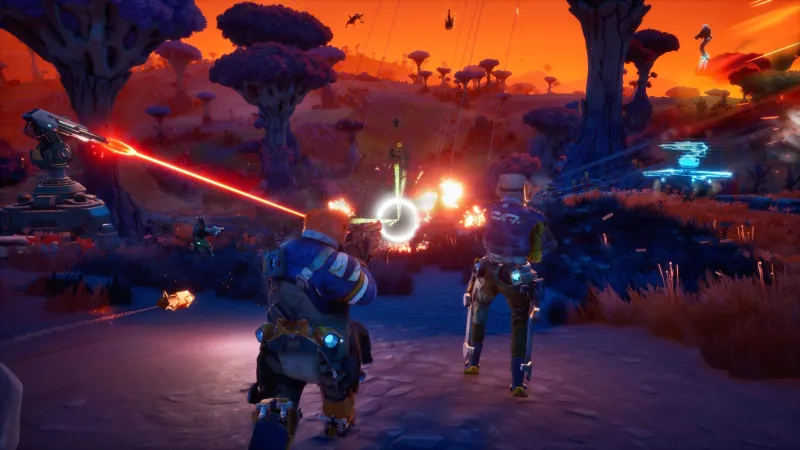
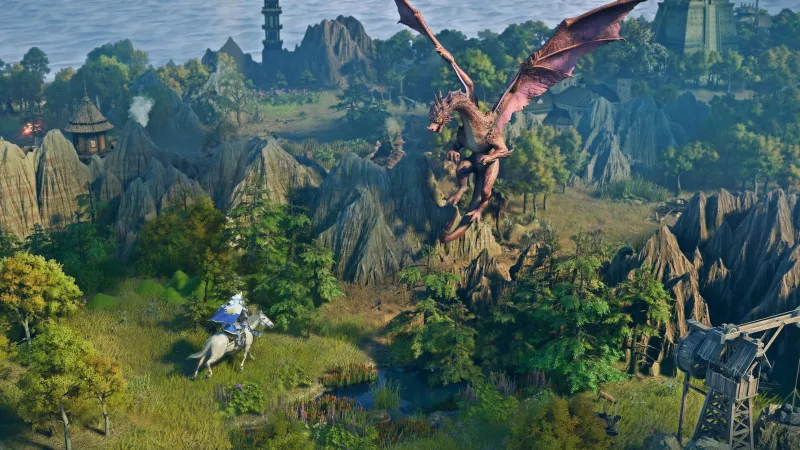
Horizon Hunters Gathering, a live-service spin-off of Guerilla Games’ Horizon series, was announced earlier this year to mixed reception. While it retains worldbuilding elements from Horizon Zero Dawn and Forbidden West, the genre and art style are completely changed, and anecdotally, it seemed to alienate more than it attracted. That was before anyone had played the game, however. According to a report from Bloomberg, playtest feedback has caused the developer to take a step back and reevaluate what the game should look like.

The report comes from Jason Schreier, a seasoned reporter in the video game space. He cites anonymous sources familiar with Hunters Gathering’s development, but who are not authorized to speak about it publicly. While Schreier’s reporting has a very strong track record for accuracy, PlayStation has yet to confirm or deny the facts in his article and declined to comment. Game Informer has also reached out for comment, and this article will be updated should we receive a reply. 

“Following poor feedback in private testing earlier this year, the plan now is to strip out the live-service component and turn it into more of a traditional cooperative multiplayer game with a story mode and a far smaller scope,” the Bloomberg article reads. While the game is not yet cancelled, Schreier’s sources indicate that the team has “through December to impress executives on their next milestone.” Many of the game’s developers are also being reassigned to a different project, to be evaluated at the end of the year.
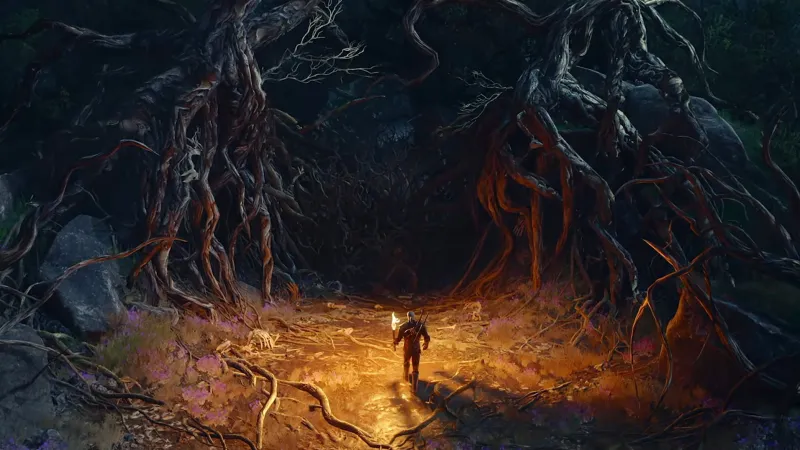
This rework of Hunters Gathering is a kinder fate than other multiplayer PlayStation projects have received. Best known for its critically acclaimed single-player experiences, the Japanese gaming giant has spent the 2020s trying to expand into the online live-service market to little success. Multiplayer spin-offs of God of War, Spider-Man, and The Last of Us were all canned before their proper reveals. Destiny 2 got its final update this year. Most infamously, Concord was shut down less than a week after its launch. 

While PlayStation’s single-player games have fared better, fans of the Horizon series unfortunately have to wait a while for their next single-player outing as Aloy. According to Bloomberg, most of the Horizon Forbidden West team is working on Hunters Gathering, not the next mainline entry. “A tiny team has been plotting out the next single-player Horizon game but it remains years away from completion, according to the people familiar with the studio’s plans,” Schreier writes.

[Source: Bloomberg]

Dishonored Director Harvey Smith Announces New Immersive Sim Studio

Game Informer

Harvey Smith, best known for his tenure at Arkane Studios from 2008 until 2024, has announced a new game studio called Black Pony Immersive. Smith is joined by co-founder and executive producer Ben Horne, who worked with Smith for more than eight years, most recently on Redfall at Arkane Austin. Black Pony Immersive is founded with the goal to continue delivering the kinds of game experiences Smith has been known for over the course of his more than 30 years working in the industry.

The immersive-sim subgenre is defined by player choice, vast series of interconnected game systems, and emergent moments that are likely to vary from player to player. This categorization is where Smith etched his legacy. Though he is perhaps best known for his work as co-creative director on 2012’s Dishonored and creative director on 2016’s Dishonored 2, he also served as lead game designer on 2000’s Deus Ex, one of the most acclaimed and influential immersive sims of all time. He also worked on the quality assurance teams for System Shock and Ultima VIII: Pagan, as well as helping out on 2017’s Prey.

Smith takes on the role as CEO and creative director, while Horne joins as COO and executive producer. “During a time of industry volatility, I’m proud to announce the next step in my video game journey with the reveal of a new studio,” Smith said in a press release. “This effort reflects everything we’ve learned, and all we hold dear. My favorite gaming memories come from seeing players approach challenges with creativity, deep-diving into our world building. We try to reward players for their curiosity and exploration. At our new studio, we’re building exactly the kind of single-player games we’re most passionate about.”

Black Pony Immersive CEO and creative director Harvey Smith

Black Pony Immersive CEO and creative director Harvey Smith

Though Smith and Horne are the co-founders and are based in Austin, Texas, the rest of the studio is filled out by remote veteran talent from around the United States. Black Pony Immersive features developers previously employed by Arkane Studios, Insomniac Games, Epic Games, Avalanche Studios, and Volition. Among those workers is Richard Bare, with whom Smith worked closely during their more than 15 years together at Arkane and their time working together on Deus Ex. 

“This group has worked together for years, decades in some cases, and is purpose-built to make the ambitious games we love – immersive sims,” Horne said in that same press release. “We share a vision for crafting games that push the limits of player immersion. We can’t wait to reveal more soon.”

While we don’t know what Black Pony is working on, we at least know it’s an immersive sim, which is news sure to delight fans of Smith’s previous work. While we wait for the announcement of the studio’s debut game, you can learn more by heading to the official website of Black Pony Immersive.

We Played Tides Of Annihilation For Two Hours And Came Away Stunned By Its Spectacle Action | New Gameplay Today

Game Informer

Tides of Annihilation is an upcoming character action game from China-based studio Eclipse Glow Games. Though the studio was formed just two years ago, its developers have experience working on series like Assassin’s Creed, For Honor, Persona, Yakuza/Like a Dragon, and more. That pedigree showed in the game when I went hands-on with it in Chengdu, China, last week to experience roughly two hours of protagonist Gwendolyn’s time-spanning adventure. 

Though modern London is the primary setting of Gwendolyn’s adventure, the Arthurian legend is quite literally crashing into her world, creating a strange but intriguing mix of one of Europe’s top tourist destinations and the fantasy realm of Avalon.I explored the Great Russell Museum (which is presumably the non-copyright version of London’s Great British Museum) to search for a Holy Grail Shard. This museum is home to Egyptian, Japanese, Chinese exhibits, and more, and Tides of Annihilation transforms based on each exhibit, imbuing its suite of enemies and music with inspiration from a given exhibit’s culture. 

You can get a taste of that, and the fast-paced, high-spectacle action in Game Informer’s latest New Gameplay Today below: 

Join Game Informer Senior Associate Editors Wesley LeBlanc and Marcus Stewart as they break down roughly 20 minutes of all-new Tides of Annihilation gameplay, discussing boss fights, the game’s unique knight-based combat action, its King Arthur-inspired characters, and more. 

For more about the game, read Game Informer’s Tides of Annihilation preview, and then check out this story about how Jennifer English’s departure from Tides of Annihilation was an unexpected turn of events for the team. 

Subscribe to Game Informer‘s YouTube channel for more episodes of New Gameplay Today, as well as video reviews, The Game Informer Show Podcast, and more.

Tides Of Annihilation: Jennifer English Stepping Away From Protagonist Role Was ‘Quite An Unexpected Turn Of Events’

Tides of Annihilation Eclipse Glow Games Chengdu China PlayStation 5 PS5 Xbox Series X/S PC

Last month, China-based developer Eclipse Glow Games revealed that Baldur’s Gate 3 and Clair Obscur: Expedition 33 voice actor Jennifer English was stepping away from the protagonist role of Gwendolyn in Tides of Annihilation. Admittedly, English’s involvement was one of the more exciting aspects of Tides of Annihilation. However, after roughly two hours of actually playing it, I’m happy to report that the game is shaping up to be a great character action game filled with impressive spectacle, and English’s absence isn’t necessarily felt. 

Sure, the specter of the news loomed over my two-hour gameplay preview of Tides of Annihilation when I played it last week in Chengdu, China, but the new voice actor does a great job filling the role. Unfortunately, I don’t have any information on who is now voicing Gwendolyn, but the new voice seems to be aiming to match English’s performance from earlier trailers, and she’s doing well so far. 

After my time playing the game, I spoke with Tides of Annihilation director Ary Chen and producer Kun Fu about English’s departure to learn more about the changes, how much work English had done, and more. Chen tells me the news of English needing to step down due to mental health concerns was “quite an unexpected turn of events,” but notes the team “had a great time working with her.”

“We deeply respect her decision,” Chen says. “For us, health also comes first. That said, we had a great time working with her, and she did help us find a new voice actress for the role. And not only that, but she also helped us to go through the process [with the new voice actress], giving us tips and everything on how to do the voice acting.”

Chen tells me that, up to this point in Tides of Annihilation’s development, not enough work has been done to say English has already recorded everything, “because the game is still in development,” in response to my question about whether English’s work was complete before her departure. English is still the “voice-over director” as well, Chen says. 

Tides of Annihilation is due out on PlayStation 5, Xbox Series X/S, and PC sometime in the future. 

For more, check out this gameplay trailer that highlights one of the many Tides of Annihilation boss fights. 

Who do you think would be a good fit for the role of Gwendolyn? Let us know in the comments below!

Deus Ex, Epic Mickey Creator Warren Spector Retires From Game Development After Over 40 Years

Game Informer

Warren Spector has announced that his 40+ year game development career has come to an end. The designer, known as one of the pioneers of the immersive sim genre thanks to his work on series such as System Shock, Deus Ex, and Thief, is stepping away from the industry. 

In a LinkedIn post, Spector is direct in stating his intention to retire, reflecting on his lengthy career while stating the reasons behind the decision. “I’m a month away from my 44th year as a developer…With all that behind me and with age and health (my business) catching up with me I’m feeling like I’ve done what I set out to do. It’s time to write some books, do a lot of reading, do some lecturing, maybe do some consulting. (Feel free to get in touch about those last two.) Also there’s a keyboard here just waiting for me to get my piano chops back,” Specter writes.

Specter also states that he has mixed feelings about the decision due to having three game ideas he’d like to pursue “(One is very big… one is very small… and one I don’t know how to make which scares me.)”, he writes. He also adds the current video game business is not “as much fun for me anymore.” 

Game Informer

Deus Ex (2000)

“To all of you reading this I want you to remember that games are not a solved problem yet – there is, I hope, plenty of experimentation and innovation to come,” Specter writes. “And to all you young developers out there, I’ve said it before and I’ll say it again, your job is to make people forget people like me ever existed.

Will I come back? Never say never. But I think it’s time to ride off into the sunset.”

Specter’s career began at Origin, where he worked on games such as System Shock, Wing Commander, and the Ultima series before leaving to helm Looking Glass Studios Austin. There, he briefly worked on Thief: The Dark Project before joining John Romero’s Ion Storm to create Deus Ex and its sequel Deux: Ex Invisible War, as well as work on Thief: Deadly Shadows. 

In 2005, Spector founded Junction Point Studios, which partnered with Disney to create Epic Mickey (with Spector playing an instrumental role in resurrecting Disney’s pre-Mickey cartoon character, Oswald the Lucky Rabbit, after decades in obscurity). Spector joined Otherside Entertainment in 2016 to work on System Shock 3, which was later canceled with Tencent acquiring the IP, before working on the cooperative heist immersive sim Thick As Thieves, which launched in May. 

To read more about Warren Spector’s career, check out our June interview where he discussed his career and status as the self-proclaimed “oldest man in game development.” You can also read another recent feature where Spector shed some light on his involvement in the long-lost System Shock 3

Order Of The Sinking Star Launches In October

Game Informer

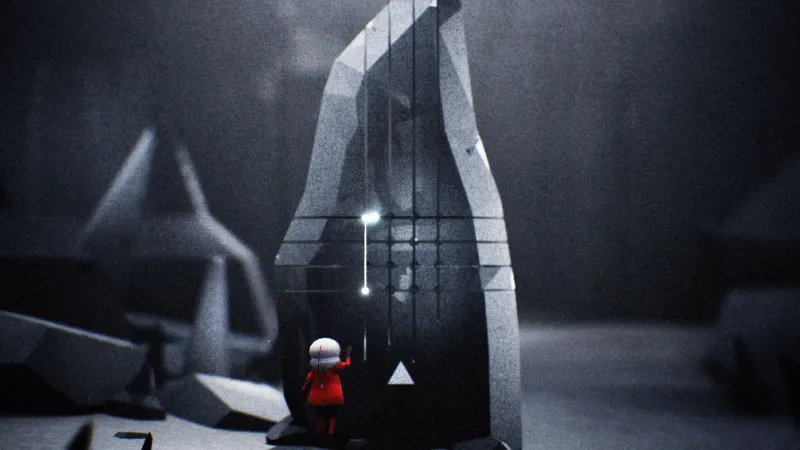
Order of the Sinking Star, the next puzzle game by Braid/The Witness creator Jonathan Blow and his team at Thekla, has a release date. The massive adventure arrives on October 8.

First revealed at The Game Awards 2025, Order of the Sinking Star unfolds in a fantasy world boasting over 1,000 unique, interconnected puzzles.  Players control a princess transported to another world made up of four biomes, each filled with bespoke characters and puzzles that, eventually, converge to blend their mechanics in increasingly complex ways. 

Because of the game’s immense size, Thekla also enlisted design help from other game designers such as Alan Hazelden (Skipping Stones to Lonely Homes, Mirror Isles), Sean Barrett (Promesst), Jonah Ostroff (Heroes of Sokoban), Zach Polansky (Enigmash), Patrick Traynor (Patrick’s Parabox), and Marc ten Bosch (Miegakure), among others. 

“Order of the Sinking Star simply wouldn’t exist without the incredible designers who helped work on it over the years,” said Jonathan Blow in a press release. “By creating a kind of game design supercollider, we were able to bring together ideas from some of the most brilliant puzzle designers in the industry. I’m grateful to everyone who contributed to help us push the limits of what’s possible in a puzzle adventure. We can’t wait for players to step into this world and discover just how deep and complex it really is.

Order of the Sinking Star will launch for PlayStation 5, Switch 2, and PC. 

Team Ninja Answers Our Burning Questions About Nioh 3’s First Story Expansion, Hell Rising

Game Informer

Nioh 3 was one of our favorite games from the early months of 2026, and the jumbo-sized adventure is getting a substantial story expansion called Hell Rising this week, August 19. Hell Rising introduces a new map set in the Keian era in 1651 following the death of shogun Takechiyo, as well as new enemies, weapons, equipment, and more. 

Following the expansion’s reveal, we had several questions about Hell Rising’s story (is protagonist Takechiyo really dead?), its overall size, and how its new systems complement the existing features. To elaborate on what Hell Rising brings to the table, we asked Team Ninja project manager Kohei Shibata, Nioh 3 game director Masaki Fujita, and level designer Atsushi Takahashi over email, who provided further details on what players can expect. 

Game Informer

Game Informer: How did you feel about the reception to Nioh 3, particularly how its “open field” design was received?

Kohei Shibata: We feel that many players have responded positively to the great synergy between Nioh and the open-field format. Crafting level designs that captured the signature tension and intensity of Nioh’s combat was a major challenge during development, but we packed in a wide range of ideas, and I am genuinely happy to see that effort bear fruit.

Was Hell Rising designed to address any specific player feedback from Nioh 3’s base campaign, and how does it, if so?

Masaki Fujita: Yes, the feedback we received for the base game of Nioh 3 has been incorporated into the DLC. For example, we’ve added pistol-based combat —which many players requested — as a new ninjutsu technique. On the loot-hunting front, high-value special effects will now be randomly applied to gear, allowing players to enjoy a deeper level of gear curation. In terms of the story experience, the DLC features documents such as letters and notes that can be discovered throughout the field. Reading these allows you to learn more about the characters, uncover the backstory behind events, and get a sense of the culture and customs of the people of that era.


Why did you set Hell Rising during the Keian Era? What are some key historical events or locations from the time that will be represented in-game?

Fujita: When it was decided that the theme would be “Shogun” and that Takechiyo, the grandson of Tokugawa Ieyasu, would be the protagonist, we also broadly determined what the main story and the DLC would cover. The main story is “the story of the protagonist becoming shogun,” while the DLC is “the story of what the protagonist accomplishes after becoming shogun.” When we think of historical figures who actually served as shogun, we tend to think about what they did. We felt that only by addressing what the protagonist accomplished as shogun could we properly bring a story centered on the theme of the shogun to a conclusion.

The Keian era is the period immediately following the rule of the protagonist Takechiyo as the Shogun. The incidents that occurred during that time were strongly influenced by Takechiyo’s rule. In this title, he travels through time into the future, where he comes to witness both the light and darkness of his own rule. We hope players will see how that experience is ultimately put to use in the conclusion encompassing both DLC 1 and DLC 2.

A pivotal historical event of the Keian era is the attempted rebellion led by Yui Shosetsu and his faction. While the historical plot was suppressed before the rebels could mobilize, the game depicts a scenario where they harness the power of Hell to summon yokai and launch an uprising; this results in widespread destruction across Edo and an assault on Edo Castle, the Shogun’s stronghold. Both Edo Castle and the city of Edo serve as the playable areas for this DLC.

Game Informer

I did a double take when I saw that Takechiyo dies; is that accurate? If so, who will players control in Hell Rising and why did you decide to kill off the protagonist?

Fujita: The year 1651 CE — the setting of Hell Rising — was a time of political instability, marked by the death of the Shogun and the recent ascension of a young successor to the shogunate. In other words, the story takes place after Takechiyo’s death, following a journey across time. Since the character the player controls is a version of Takechiyo who has traveled forward from the past, the protagonist of the main story does not, strictly speaking, meet his end.

Does Hell Rising require starting with a fresh character, or do our loot/abilities from the base campaign carry over?

Fujita: As mentioned above, the character players control is Takechiyo, who has traveled through time from the past; therefore, players will play using data carried over from the main game.

Can you name some specific benefits the Hundred Demon Realms Picture Scrolls provide, and how do they complement the already dense list of abilities?

Fujita: As the “Hundred Demon Realms Picture Scroll” will be added as a new category of equipment, players will equip a scroll in addition to their existing gear, further strengthening their character through the special effects it provides. Some of the special effects found on scrolls are similar to those available on existing equipment, but there are also several unique special effects that can only be found on scrolls. These include a group of special effects that require specific attributes, such as Valor or Heart, to reach a certain value before they can be activated, as well as a special effect that allows multiple Mastery Skills — which normally can only be activated one at a time — to be active simultaneously. These will have a significant impact on character builds. In addition, scrolls of Divine rarity will come with a Grace. This will allow players to gain one additional tier of a Grace’s set bonus, meaning that scrolls will also have a major impact on builds in this regard.

Game Informer

How big is Hell Rising, both in the size of the map compared to the current maps and the estimated length to complete?

Atsushi Takahashi: In terms of scale, it is comparable to the Heian section of the main game. It will take more than 10 hours to complete “Edo-Keian,” while “Hell Rising” as a whole offers over 30 hours of content when including additional replay elements such as the newly added third playthrough. The open-field of “Edo-Keian” also features familiar locations such as Kanda and Ueno, as well as several distinct areas, including a massive aqueduct from which a local place name is derived, a multi-layered network of underground waterways, and a volcanic region where powerful enemies await. In addition to the level of challenge expected from a soulslike game, players can also enjoy the visual variety offered by these locations.

How does using the Hoko and Shield differ between the Samurai and Ninja styles?

Takahashi: The defining feature of the “Hoko and Shield” is its integration of offense and defense. Conventional combat involves guarding against or evading an enemy’s attack, then striking during the opening that follows. Unlike a parry, which deflects an attack by carefully judging the enemy’s timing, the Hoko and Shield allows players to block the attack and immediately drive their own attack into the enemy.

The samurai’s “Hoko and Shield” is a weapon that seamlessly combines offense and defense. By unleashing a strong attack or certain Active Skills in time with an enemy’s attack, players can deflect the blow with the shield while striking with the hoko. This allows them to engage even the most formidable foes head-on, outmaneuver them in a direct exchange, and drive them into a corner.

By contrast, the ninja’s “Ninja Hoko and Shield” is a highly versatile weapon. The shield can not only be used to deflect enemy attacks, but also thrown or even ridden, while being combined with attacks from the hoko. Players can move freely in every direction and bewilder their enemies by, for example, leaping into the air while performing techniques and hurling the shield down from above.

Can you elaborate on what the divine-rarity Grace set bonuses are and the benefits they provide?

Fujita: “Graces” are set bonuses randomly assigned to equipment of Divine rarity. By equipping multiple pieces of equipment bearing the same Grace, players can activate up to six special effects depending on the number of pieces equipped. In “Enlightened One’s Journey,” the third-playthrough difficulty level added in the DLC, new Graces that did not appear within the scope of the main game will be introduced. These are primarily designed to strengthen builds that have previously been unable to demonstrate their full potential, such as builds specializing in a particular element, Onmyo, or Living Artifact. Powerful set bonuses have been prepared to encourage players to reconsider the builds they used through their second playthrough.

Hell Rising will be available for Nioh 3 on August 19 for PlayStation 5 and PC. 

Team Ninja Answers Our Burning Questions About Nioh 3’s First Story Expansion, Hell Rising

Game Informer

Nioh 3 was one of our favorite games from the early months of 2026, and the jumbo-sized adventure is getting a substantial story expansion called Hell Rising this week, August 19. Hell Rising introduces a new map set in the Keian era in 1651 following the death of shogun Takechiyo, as well as new enemies, weapons, equipment, and more. 

Following the expansion’s reveal, we had several questions about Hell Rising’s story (is protagonist Takechiyo really dead?), its overall size, and how its new systems complement the existing features. To elaborate on what Hell Rising brings to the table, we asked Team Ninja project manager Kohei Shibata, Nioh 3 game director Masaki Fujita, and level designer Atsushi Takahashi over email, who provided further details on what players can expect. 

Game Informer

Game Informer: How did you feel about the reception to Nioh 3, particularly how its “open field” design was received?

Kohei Shibata: We feel that many players have responded positively to the great synergy between Nioh and the open-field format. Crafting level designs that captured the signature tension and intensity of Nioh’s combat was a major challenge during development, but we packed in a wide range of ideas, and I am genuinely happy to see that effort bear fruit.

Was Hell Rising designed to address any specific player feedback from Nioh 3’s base campaign, and how does it, if so?

Masaki Fujita: Yes, the feedback we received for the base game of Nioh 3 has been incorporated into the DLC. For example, we’ve added pistol-based combat —which many players requested — as a new ninjutsu technique. On the loot-hunting front, high-value special effects will now be randomly applied to gear, allowing players to enjoy a deeper level of gear curation. In terms of the story experience, the DLC features documents such as letters and notes that can be discovered throughout the field. Reading these allows you to learn more about the characters, uncover the backstory behind events, and get a sense of the culture and customs of the people of that era.


Why did you set Hell Rising during the Keian Era? What are some key historical events or locations from the time that will be represented in-game?

Fujita: When it was decided that the theme would be “Shogun” and that Takechiyo, the grandson of Tokugawa Ieyasu, would be the protagonist, we also broadly determined what the main story and the DLC would cover. The main story is “the story of the protagonist becoming shogun,” while the DLC is “the story of what the protagonist accomplishes after becoming shogun.” When we think of historical figures who actually served as shogun, we tend to think about what they did. We felt that only by addressing what the protagonist accomplished as shogun could we properly bring a story centered on the theme of the shogun to a conclusion.

The Keian era is the period immediately following the rule of the protagonist Takechiyo as the Shogun. The incidents that occurred during that time were strongly influenced by Takechiyo’s rule. In this title, he travels through time into the future, where he comes to witness both the light and darkness of his own rule. We hope players will see how that experience is ultimately put to use in the conclusion encompassing both DLC 1 and DLC 2.

A pivotal historical event of the Keian era is the attempted rebellion led by Yui Shosetsu and his faction. While the historical plot was suppressed before the rebels could mobilize, the game depicts a scenario where they harness the power of Hell to summon yokai and launch an uprising; this results in widespread destruction across Edo and an assault on Edo Castle, the Shogun’s stronghold. Both Edo Castle and the city of Edo serve as the playable areas for this DLC.

Game Informer

I did a double take when I saw that Takechiyo dies; is that accurate? If so, who will players control in Hell Rising and why did you decide to kill off the protagonist?

Fujita: The year 1651 CE — the setting of Hell Rising — was a time of political instability, marked by the death of the Shogun and the recent ascension of a young successor to the shogunate. In other words, the story takes place after Takechiyo’s death, following a journey across time. Since the character the player controls is a version of Takechiyo who has traveled forward from the past, the protagonist of the main story does not, strictly speaking, meet his end.

Does Hell Rising require starting with a fresh character, or do our loot/abilities from the base campaign carry over?

Fujita: As mentioned above, the character players control is Takechiyo, who has traveled through time from the past; therefore, players will play using data carried over from the main game.

Can you name some specific benefits the Hundred Demon Realms Picture Scrolls provide, and how do they complement the already dense list of abilities?

Fujita: As the “Hundred Demon Realms Picture Scroll” will be added as a new category of equipment, players will equip a scroll in addition to their existing gear, further strengthening their character through the special effects it provides. Some of the special effects found on scrolls are similar to those available on existing equipment, but there are also several unique special effects that can only be found on scrolls. These include a group of special effects that require specific attributes, such as Valor or Heart, to reach a certain value before they can be activated, as well as a special effect that allows multiple Mastery Skills — which normally can only be activated one at a time — to be active simultaneously. These will have a significant impact on character builds. In addition, scrolls of Divine rarity will come with a Grace. This will allow players to gain one additional tier of a Grace’s set bonus, meaning that scrolls will also have a major impact on builds in this regard.

Game Informer

How big is Hell Rising, both in the size of the map compared to the current maps and the estimated length to complete?

Atsushi Takahashi: In terms of scale, it is comparable to the Heian section of the main game. It will take more than 10 hours to complete “Edo-Keian,” while “Hell Rising” as a whole offers over 30 hours of content when including additional replay elements such as the newly added third playthrough. The open-field of “Edo-Keian” also features familiar locations such as Kanda and Ueno, as well as several distinct areas, including a massive aqueduct from which a local place name is derived, a multi-layered network of underground waterways, and a volcanic region where powerful enemies await. In addition to the level of challenge expected from a soulslike game, players can also enjoy the visual variety offered by these locations.

How does using the Hoko and Shield differ between the Samurai and Ninja styles?

Takahashi: The defining feature of the “Hoko and Shield” is its integration of offense and defense. Conventional combat involves guarding against or evading an enemy’s attack, then striking during the opening that follows. Unlike a parry, which deflects an attack by carefully judging the enemy’s timing, the Hoko and Shield allows players to block the attack and immediately drive their own attack into the enemy.

The samurai’s “Hoko and Shield” is a weapon that seamlessly combines offense and defense. By unleashing a strong attack or certain Active Skills in time with an enemy’s attack, players can deflect the blow with the shield while striking with the hoko. This allows them to engage even the most formidable foes head-on, outmaneuver them in a direct exchange, and drive them into a corner.

By contrast, the ninja’s “Ninja Hoko and Shield” is a highly versatile weapon. The shield can not only be used to deflect enemy attacks, but also thrown or even ridden, while being combined with attacks from the hoko. Players can move freely in every direction and bewilder their enemies by, for example, leaping into the air while performing techniques and hurling the shield down from above.

Can you elaborate on what the divine-rarity Grace set bonuses are and the benefits they provide?

Fujita: “Graces” are set bonuses randomly assigned to equipment of Divine rarity. By equipping multiple pieces of equipment bearing the same Grace, players can activate up to six special effects depending on the number of pieces equipped. In “Enlightened One’s Journey,” the third-playthrough difficulty level added in the DLC, new Graces that did not appear within the scope of the main game will be introduced. These are primarily designed to strengthen builds that have previously been unable to demonstrate their full potential, such as builds specializing in a particular element, Onmyo, or Living Artifact. Powerful set bonuses have been prepared to encourage players to reconsider the builds they used through their second playthrough.

Hell Rising will be available for Nioh 3 on August 19 for PlayStation 5 and PC. 

Exclusive Hands-On Preview: Exploring A Japanese Ghost House-Inspired Underground Lab In Onimusha: Way Of The Sword

Game Informer

Back in June, I traveled to Osaka, Japan, to visit Capcom’s HQ and play never-before-seen parts of Onimusha: Way of the Sword for hours, interview the team making it, and more. I did so to write Game Informer’s latest cover story (that subscribers can read right here), and as part of my coverage, I’ve been posting all kinds of exclusive behind-the-scenes features, interviews, news breakouts, and more; all of it can be viewed at Game Informer’s Onimusha: Way of the Sword hub

One of the most exciting parts of this cover story trip was playing through a stage set in the mysterious and terrifying underground lab that’s home to Dokyo, one of the more standout Genma players will encounter in the game when it launches next month. Below is an edited version of my preview thoughts on this section from my cover story, highlighting what I thought of Dokyo’s classic Japanese ghost house-inspired lab alongside developer commentary I received from interviewing the Onimusha: Way of the Sword team at Capcom. 

Director Satoru Nihei introduced this stage as one of the more horrific in Way of the Sword’s dark-fantasy action experience, likening it to a “classic Japanese ghost house.” Somewhat familiar with this subgenre of Japanese horror, it’s clear in what ways: shadows on the lab’s shoji highlight horrific body mutations and animal experiments gone wrong. All the while, the halls of this lab are dripping with blood that shines in the soft orange light of torches that illuminate an otherwise dark space; once-beautiful kimonos hang from the rafters above, and I can only assume they belong to the subjects of Dokyo’s experiments.

Dokyo is a shrill, petulant, and evil Genma, though more advanced than the mindless hordes hungry for souls I slice through by the dozen. Dokyo is hiding in plain sight in this underground lab, right beneath the imperial castle of Kyoto, doing unholy things to humans and animals alike in an effort to create even more terrifying Genma. She’s quite the scene-stealer, with a terrifying charisma that makes her the standout character of my time playing Way of the Sword. She’s twisted but determined, and that makes her a compelling voice to listen to as it echoes through this dungeon between my bouts with demons.

It’s this dungeon where I’m freed from the shackles of tutorialization, and it feels like protagonist Miyamoto Musashi has removed weights from his arms – I feel like the master history says this samurai was.

Game Informer

Though I love the action genre, I have admittedly grown bored with a lot of it, at least in the triple-A space. I’m rarely surprised mechanically, and tutorials seldom teach me anything new. I know what the buttons do just minutes into the experience. Way of the Sword is a refreshing change of pace in that regard, as a single playthrough of the game’s demo will see your time paused by a multitude of tutorials. The Issen returns – press one of the attack buttons just before an enemy’s hit lands to perform the deadly counter that’s been in Onimusha since the first game. Don’t worry, it’s still the hardest move to pull off in Way of the Sword, just like in older titles, as it requires the strictest timing.

But there’s also the standard Parry, which fills your Blazing Gauge that automatically lights Musashi’s sword up with blue flames for increased damage, and the Reflex Dodge, which fills your Reflex Gauge and sets Musashi up for a massive blow to an enemy’s back or side. The Break Issen attack can be performed when you have exhausted an enemy’s stamina enough, and you can significantly deplete that stamina with a deflection – swords, arrows, you name it, you can deflect it. You can also perform Chain Issen attacks to slice through multiple enemies in an otherworldly flash, and you can backstab unaware enemies for stealth insta-kills.

Are you following?

When you and an enemy perform the same type of attack, a Blade Barrage occurs, and to win, you need to use a sword attack other than the one you used before it to end the stalemate and damage the enemy. There are grab reversals, too, and Oni Armaments, which are powered-up bumper attacks that do a variety of things depending on which you have equipped – the Two Celestials, for example, do straight damage, while the Earth-Shaker hammers I utilize in the underground lab hit an enemy’s stamina bar heavily.

Within this multifaceted combat system, there are additional layers of complexity. I especially like that the sparks that fly from your blade and the associated sounds change depending on how early or late your parry attempt is. It is both a helpful notification of my parry timing and a diegetic gauge for improvement. When fighting bigger enemies like bosses, you can even choose where to place a Break Issen. For example, against Rasho-gan, I can target his head for extra damage or his torso for additional yellow health-granting souls.

Game Informer

It’s a level of expression contemporary action games have forgotten, but in hindsight, it’s exactly what I expect of the latest Onimusha game. After all, that combative creativity dates back to Onimusha: Warlords.

“Obviously, in the previous titles, Issen does feel great to use and pull off, but it happened so fast […] it’s hard to tell exactly what’s going on in that moment and so one of the things that Nihei-san approached me about with this title was trying to make the Issen a little more realistic and a little more grounded – like what would that look like, what would it feel like?” animation team lead Hiroshi Yugen tells me. He adds that there are around 10 different variations that Musashi can pull off depending on attacks coming from different angles and more.

Yugen’s biggest goal with Way of the Sword’s combat was to take the larger-than-life moments present in the cutscenes of previous Onimusha games and imbue the gameplay with that feeling. What was once only possible in Onimusha cutscenes is how Way of the Sword plays. That’s highlighted best in this underground lab, as I slash through dozens of Genma, splitting their fleshy corpses and watching as two distinct halves slide to the wooden slats below. Yugen calls it the “Dynamic Dismemberment System,” and I can already imagine the ways the Resident Evil developers in nearby offices might use this technology in new games.

“[This dismemberment] is not something that’s existed in any other title before, and it’s something that, on a technical level, needed to be added to the RE Engine [by Capcom’s engineers],” Yugen says. “Adding this feature was quite difficult because we wanted to combine it with the enemy deaths. In a lot of samurai dramas, they have a very exaggerated classic death where they are on screen for an extra five or six seconds and then slowly fall to the ground. To have that together with this dynamic dismemberment system on a technical level is quite tricky, so it’s something we really had to ask the programmers to introduce.”


The result is a satisfying death animation for every single Genma in the game, assuming you deplete their stamina like a proper samurai and enact the Break Issen or one of Musashi’s various other finishing moves. Between this cover story and multiple playthroughs of the demo, I’ve played probably four hours of Way of the Sword, and the dismemberments remain a delightful, if grotesque, visual to see on screen at the hands of my blade.

Yugen teases the behind-the-scenes motion-capture videos, bragging like a proud father about how the various swordsmen who performed the actions for this game went to great lengths to sell the effect in the studio. Motion capture is one of the ways Yugen and Nihei hope to make Way of the Sword feel like a modern action title. There are exaggerated elements but Yugen stresses that real-life samurai experts and choreographers performed the actions of Musashi as well as the larger-than-life movements of bosses like the eight-armed Rasho-gan and Dokyo, with her extended neck and uncanny appendages.

These technical, visual, and mechanical achievements are on display in the two boss fights of the underground lab. While searching for a girl trapped somewhere within, Musashi comes face to face with Byakue – Hundred Defilements, a boss that grows stronger the more you damage it. While I’m one to rush into combat swinging left and right, Byakue forces me to adjust my playstyle on the fly. I stay back, watch his wide-swinging moves and lunges, and look for entry points to do the most damage. My eyes widen as I deflect one of his spinning blade attacks, metal sparks showering the stage – it’s yet another moment where I just feel cool. This sentiment is present throughout my time playing Way of the Sword, and I appreciate that the Onimusha series hasn’t lost its touch in the 20-year absence.

Defeating Byakue yields me the aforementioned Earth-Shaker hammers, which become critical to defeating a dual-chimera boss at the end of the stage. These Chimera, called Nue in this fight, are a pair of mythical beasts inspired by various animals, one red and one blue, with electric tails that, yet again, force me to adjust my playstyle on the fly. Rushing in with slashes and swings only ends in Game Over screens. Instead, a defensive approach is required, as the only path to success is one of parries, Reflex Dodges, and Issens. While I’m wary of even bringing up a Soulslike comparison – and don’t worry, Nihei and the team stress to me that Onimusha is absolutely not a Soulslike, and I concur – I am reminded of moments in FromSoftware games where the best strategy is to learn the boss’ attacks and simply counter them all.

Game Informer

That’s what I do against the Nue, and after the umpteenth Break Issen, I am successful (and scared, because Yugen teases that a larger chimera boss awaits me later in the game). A closing cutscene of Dokyo’s bloody labyrinth is my reward, and though I won’t spoil what I see, I’ll reaffirm that Dokyo is the most compelling character on screen in Way of the Sword so far.

I’ll continue diving deeper into Capcom’s return to Onimusha as part of Game Informer’s month of Way of the Sword coverage. We’ll be publishing exclusive gameplay and behind-the-scenes videos (including a Rapid-Fire Interview) on the Game Informer YouTube channel as well. Keep an eye on the Onimusha: Way of the Sword coverage hub so you don’t miss any of it.

In the meantime, here’s some additional Onimusha: Way of the Sword reading for you:

Are you playing Onimusha: Way of the Sword next month? Let us know in the comments below!

Exclusive Hands-On Preview: Exploring A Japanese Ghost House-Inspired Underground Lab In Onimusha: Way Of The Sword

Game Informer

Back in June, I traveled to Osaka, Japan, to visit Capcom’s HQ and play never-before-seen parts of Onimusha: Way of the Sword for hours, interview the team making it, and more. I did so to write Game Informer’s latest cover story (that subscribers can read right here), and as part of my coverage, I’ve been posting all kinds of exclusive behind-the-scenes features, interviews, news breakouts, and more; all of it can be viewed at Game Informer’s Onimusha: Way of the Sword hub

One of the most exciting parts of this cover story trip was playing through a stage set in the mysterious and terrifying underground lab that’s home to Dokyo, one of the more standout Genma players will encounter in the game when it launches next month. Below is an edited version of my preview thoughts on this section from my cover story, highlighting what I thought of Dokyo’s classic Japanese ghost house-inspired lab alongside developer commentary I received from interviewing the Onimusha: Way of the Sword team at Capcom. 

Director Satoru Nihei introduced this stage as one of the more horrific in Way of the Sword’s dark-fantasy action experience, likening it to a “classic Japanese ghost house.” Somewhat familiar with this subgenre of Japanese horror, it’s clear in what ways: shadows on the lab’s shoji highlight horrific body mutations and animal experiments gone wrong. All the while, the halls of this lab are dripping with blood that shines in the soft orange light of torches that illuminate an otherwise dark space; once-beautiful kimonos hang from the rafters above, and I can only assume they belong to the subjects of Dokyo’s experiments.

Dokyo is a shrill, petulant, and evil Genma, though more advanced than the mindless hordes hungry for souls I slice through by the dozen. Dokyo is hiding in plain sight in this underground lab, right beneath the imperial castle of Kyoto, doing unholy things to humans and animals alike in an effort to create even more terrifying Genma. She’s quite the scene-stealer, with a terrifying charisma that makes her the standout character of my time playing Way of the Sword. She’s twisted but determined, and that makes her a compelling voice to listen to as it echoes through this dungeon between my bouts with demons.

It’s this dungeon where I’m freed from the shackles of tutorialization, and it feels like protagonist Miyamoto Musashi has removed weights from his arms – I feel like the master history says this samurai was.

Game Informer

Though I love the action genre, I have admittedly grown bored with a lot of it, at least in the triple-A space. I’m rarely surprised mechanically, and tutorials seldom teach me anything new. I know what the buttons do just minutes into the experience. Way of the Sword is a refreshing change of pace in that regard, as a single playthrough of the game’s demo will see your time paused by a multitude of tutorials. The Issen returns – press one of the attack buttons just before an enemy’s hit lands to perform the deadly counter that’s been in Onimusha since the first game. Don’t worry, it’s still the hardest move to pull off in Way of the Sword, just like in older titles, as it requires the strictest timing.

But there’s also the standard Parry, which fills your Blazing Gauge that automatically lights Musashi’s sword up with blue flames for increased damage, and the Reflex Dodge, which fills your Reflex Gauge and sets Musashi up for a massive blow to an enemy’s back or side. The Break Issen attack can be performed when you have exhausted an enemy’s stamina enough, and you can significantly deplete that stamina with a deflection – swords, arrows, you name it, you can deflect it. You can also perform Chain Issen attacks to slice through multiple enemies in an otherworldly flash, and you can backstab unaware enemies for stealth insta-kills.

Are you following?

When you and an enemy perform the same type of attack, a Blade Barrage occurs, and to win, you need to use a sword attack other than the one you used before it to end the stalemate and damage the enemy. There are grab reversals, too, and Oni Armaments, which are powered-up bumper attacks that do a variety of things depending on which you have equipped – the Two Celestials, for example, do straight damage, while the Earth-Shaker hammers I utilize in the underground lab hit an enemy’s stamina bar heavily.

Within this multifaceted combat system, there are additional layers of complexity. I especially like that the sparks that fly from your blade and the associated sounds change depending on how early or late your parry attempt is. It is both a helpful notification of my parry timing and a diegetic gauge for improvement. When fighting bigger enemies like bosses, you can even choose where to place a Break Issen. For example, against Rasho-gan, I can target his head for extra damage or his torso for additional yellow health-granting souls.

Game Informer

It’s a level of expression contemporary action games have forgotten, but in hindsight, it’s exactly what I expect of the latest Onimusha game. After all, that combative creativity dates back to Onimusha: Warlords.

“Obviously, in the previous titles, Issen does feel great to use and pull off, but it happened so fast […] it’s hard to tell exactly what’s going on in that moment and so one of the things that Nihei-san approached me about with this title was trying to make the Issen a little more realistic and a little more grounded – like what would that look like, what would it feel like?” animation team lead Hiroshi Yugen tells me. He adds that there are around 10 different variations that Musashi can pull off depending on attacks coming from different angles and more.

Yugen’s biggest goal with Way of the Sword’s combat was to take the larger-than-life moments present in the cutscenes of previous Onimusha games and imbue the gameplay with that feeling. What was once only possible in Onimusha cutscenes is how Way of the Sword plays. That’s highlighted best in this underground lab, as I slash through dozens of Genma, splitting their fleshy corpses and watching as two distinct halves slide to the wooden slats below. Yugen calls it the “Dynamic Dismemberment System,” and I can already imagine the ways the Resident Evil developers in nearby offices might use this technology in new games.

“[This dismemberment] is not something that’s existed in any other title before, and it’s something that, on a technical level, needed to be added to the RE Engine [by Capcom’s engineers],” Yugen says. “Adding this feature was quite difficult because we wanted to combine it with the enemy deaths. In a lot of samurai dramas, they have a very exaggerated classic death where they are on screen for an extra five or six seconds and then slowly fall to the ground. To have that together with this dynamic dismemberment system on a technical level is quite tricky, so it’s something we really had to ask the programmers to introduce.”


The result is a satisfying death animation for every single Genma in the game, assuming you deplete their stamina like a proper samurai and enact the Break Issen or one of Musashi’s various other finishing moves. Between this cover story and multiple playthroughs of the demo, I’ve played probably four hours of Way of the Sword, and the dismemberments remain a delightful, if grotesque, visual to see on screen at the hands of my blade.

Yugen teases the behind-the-scenes motion-capture videos, bragging like a proud father about how the various swordsmen who performed the actions for this game went to great lengths to sell the effect in the studio. Motion capture is one of the ways Yugen and Nihei hope to make Way of the Sword feel like a modern action title. There are exaggerated elements but Yugen stresses that real-life samurai experts and choreographers performed the actions of Musashi as well as the larger-than-life movements of bosses like the eight-armed Rasho-gan and Dokyo, with her extended neck and uncanny appendages.

These technical, visual, and mechanical achievements are on display in the two boss fights of the underground lab. While searching for a girl trapped somewhere within, Musashi comes face to face with Byakue – Hundred Defilements, a boss that grows stronger the more you damage it. While I’m one to rush into combat swinging left and right, Byakue forces me to adjust my playstyle on the fly. I stay back, watch his wide-swinging moves and lunges, and look for entry points to do the most damage. My eyes widen as I deflect one of his spinning blade attacks, metal sparks showering the stage – it’s yet another moment where I just feel cool. This sentiment is present throughout my time playing Way of the Sword, and I appreciate that the Onimusha series hasn’t lost its touch in the 20-year absence.

Defeating Byakue yields me the aforementioned Earth-Shaker hammers, which become critical to defeating a dual-chimera boss at the end of the stage. These Chimera, called Nue in this fight, are a pair of mythical beasts inspired by various animals, one red and one blue, with electric tails that, yet again, force me to adjust my playstyle on the fly. Rushing in with slashes and swings only ends in Game Over screens. Instead, a defensive approach is required, as the only path to success is one of parries, Reflex Dodges, and Issens. While I’m wary of even bringing up a Soulslike comparison – and don’t worry, Nihei and the team stress to me that Onimusha is absolutely not a Soulslike, and I concur – I am reminded of moments in FromSoftware games where the best strategy is to learn the boss’ attacks and simply counter them all.

Game Informer

That’s what I do against the Nue, and after the umpteenth Break Issen, I am successful (and scared, because Yugen teases that a larger chimera boss awaits me later in the game). A closing cutscene of Dokyo’s bloody labyrinth is my reward, and though I won’t spoil what I see, I’ll reaffirm that Dokyo is the most compelling character on screen in Way of the Sword so far.

I’ll continue diving deeper into Capcom’s return to Onimusha as part of Game Informer’s month of Way of the Sword coverage. We’ll be publishing exclusive gameplay and behind-the-scenes videos (including a Rapid-Fire Interview) on the Game Informer YouTube channel as well. Keep an eye on the Onimusha: Way of the Sword coverage hub so you don’t miss any of it.

In the meantime, here’s some additional Onimusha: Way of the Sword reading for you:

Are you playing Onimusha: Way of the Sword next month? Let us know in the comments below!