Exclusive Hands-On Preview: Exploring A Japanese Ghost House-Inspired Underground Lab In Onimusha: Way Of The Sword

Game Informer

Back in June, I traveled to Osaka, Japan, to visit Capcom’s HQ and play never-before-seen parts of Onimusha: Way of the Sword for hours, interview the team making it, and more. I did so to write Game Informer’s latest cover story (that subscribers can read right here), and as part of my coverage, I’ve been posting all kinds of exclusive behind-the-scenes features, interviews, news breakouts, and more; all of it can be viewed at Game Informer’s Onimusha: Way of the Sword hub

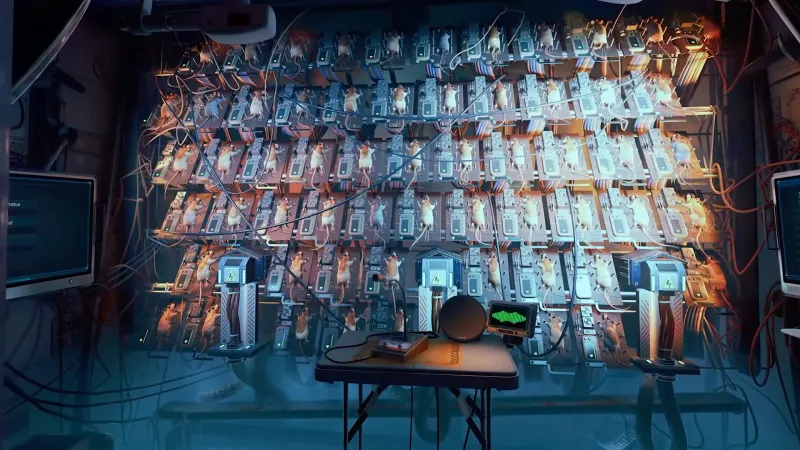
One of the most exciting parts of this cover story trip was playing through a stage set in the mysterious and terrifying underground lab that’s home to Dokyo, one of the more standout Genma players will encounter in the game when it launches next month. Below is an edited version of my preview thoughts on this section from my cover story, highlighting what I thought of Dokyo’s classic Japanese ghost house-inspired lab alongside developer commentary I received from interviewing the Onimusha: Way of the Sword team at Capcom. 

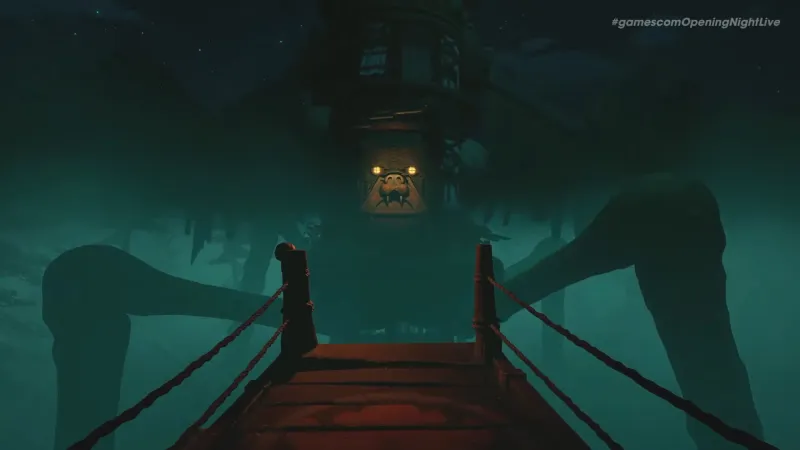
Director Satoru Nihei introduced this stage as one of the more horrific in Way of the Sword’s dark-fantasy action experience, likening it to a “classic Japanese ghost house.” Somewhat familiar with this subgenre of Japanese horror, it’s clear in what ways: shadows on the lab’s shoji highlight horrific body mutations and animal experiments gone wrong. All the while, the halls of this lab are dripping with blood that shines in the soft orange light of torches that illuminate an otherwise dark space; once-beautiful kimonos hang from the rafters above, and I can only assume they belong to the subjects of Dokyo’s experiments.

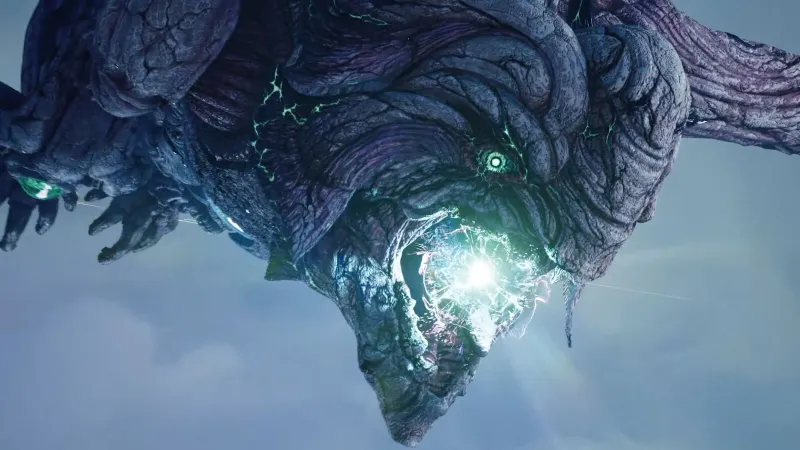
Dokyo is a shrill, petulant, and evil Genma, though more advanced than the mindless hordes hungry for souls I slice through by the dozen. Dokyo is hiding in plain sight in this underground lab, right beneath the imperial castle of Kyoto, doing unholy things to humans and animals alike in an effort to create even more terrifying Genma. She’s quite the scene-stealer, with a terrifying charisma that makes her the standout character of my time playing Way of the Sword. She’s twisted but determined, and that makes her a compelling voice to listen to as it echoes through this dungeon between my bouts with demons.

It’s this dungeon where I’m freed from the shackles of tutorialization, and it feels like protagonist Miyamoto Musashi has removed weights from his arms – I feel like the master history says this samurai was.

Game Informer

Though I love the action genre, I have admittedly grown bored with a lot of it, at least in the triple-A space. I’m rarely surprised mechanically, and tutorials seldom teach me anything new. I know what the buttons do just minutes into the experience. Way of the Sword is a refreshing change of pace in that regard, as a single playthrough of the game’s demo will see your time paused by a multitude of tutorials. The Issen returns – press one of the attack buttons just before an enemy’s hit lands to perform the deadly counter that’s been in Onimusha since the first game. Don’t worry, it’s still the hardest move to pull off in Way of the Sword, just like in older titles, as it requires the strictest timing.

But there’s also the standard Parry, which fills your Blazing Gauge that automatically lights Musashi’s sword up with blue flames for increased damage, and the Reflex Dodge, which fills your Reflex Gauge and sets Musashi up for a massive blow to an enemy’s back or side. The Break Issen attack can be performed when you have exhausted an enemy’s stamina enough, and you can significantly deplete that stamina with a deflection – swords, arrows, you name it, you can deflect it. You can also perform Chain Issen attacks to slice through multiple enemies in an otherworldly flash, and you can backstab unaware enemies for stealth insta-kills.

Are you following?

When you and an enemy perform the same type of attack, a Blade Barrage occurs, and to win, you need to use a sword attack other than the one you used before it to end the stalemate and damage the enemy. There are grab reversals, too, and Oni Armaments, which are powered-up bumper attacks that do a variety of things depending on which you have equipped – the Two Celestials, for example, do straight damage, while the Earth-Shaker hammers I utilize in the underground lab hit an enemy’s stamina bar heavily.

Within this multifaceted combat system, there are additional layers of complexity. I especially like that the sparks that fly from your blade and the associated sounds change depending on how early or late your parry attempt is. It is both a helpful notification of my parry timing and a diegetic gauge for improvement. When fighting bigger enemies like bosses, you can even choose where to place a Break Issen. For example, against Rasho-gan, I can target his head for extra damage or his torso for additional yellow health-granting souls.

Game Informer

It’s a level of expression contemporary action games have forgotten, but in hindsight, it’s exactly what I expect of the latest Onimusha game. After all, that combative creativity dates back to Onimusha: Warlords.

“Obviously, in the previous titles, Issen does feel great to use and pull off, but it happened so fast […] it’s hard to tell exactly what’s going on in that moment and so one of the things that Nihei-san approached me about with this title was trying to make the Issen a little more realistic and a little more grounded – like what would that look like, what would it feel like?” animation team lead Hiroshi Yugen tells me. He adds that there are around 10 different variations that Musashi can pull off depending on attacks coming from different angles and more.

Yugen’s biggest goal with Way of the Sword’s combat was to take the larger-than-life moments present in the cutscenes of previous Onimusha games and imbue the gameplay with that feeling. What was once only possible in Onimusha cutscenes is how Way of the Sword plays. That’s highlighted best in this underground lab, as I slash through dozens of Genma, splitting their fleshy corpses and watching as two distinct halves slide to the wooden slats below. Yugen calls it the “Dynamic Dismemberment System,” and I can already imagine the ways the Resident Evil developers in nearby offices might use this technology in new games.

“[This dismemberment] is not something that’s existed in any other title before, and it’s something that, on a technical level, needed to be added to the RE Engine [by Capcom’s engineers],” Yugen says. “Adding this feature was quite difficult because we wanted to combine it with the enemy deaths. In a lot of samurai dramas, they have a very exaggerated classic death where they are on screen for an extra five or six seconds and then slowly fall to the ground. To have that together with this dynamic dismemberment system on a technical level is quite tricky, so it’s something we really had to ask the programmers to introduce.”


The result is a satisfying death animation for every single Genma in the game, assuming you deplete their stamina like a proper samurai and enact the Break Issen or one of Musashi’s various other finishing moves. Between this cover story and multiple playthroughs of the demo, I’ve played probably four hours of Way of the Sword, and the dismemberments remain a delightful, if grotesque, visual to see on screen at the hands of my blade.

Yugen teases the behind-the-scenes motion-capture videos, bragging like a proud father about how the various swordsmen who performed the actions for this game went to great lengths to sell the effect in the studio. Motion capture is one of the ways Yugen and Nihei hope to make Way of the Sword feel like a modern action title. There are exaggerated elements but Yugen stresses that real-life samurai experts and choreographers performed the actions of Musashi as well as the larger-than-life movements of bosses like the eight-armed Rasho-gan and Dokyo, with her extended neck and uncanny appendages.

These technical, visual, and mechanical achievements are on display in the two boss fights of the underground lab. While searching for a girl trapped somewhere within, Musashi comes face to face with Byakue – Hundred Defilements, a boss that grows stronger the more you damage it. While I’m one to rush into combat swinging left and right, Byakue forces me to adjust my playstyle on the fly. I stay back, watch his wide-swinging moves and lunges, and look for entry points to do the most damage. My eyes widen as I deflect one of his spinning blade attacks, metal sparks showering the stage – it’s yet another moment where I just feel cool. This sentiment is present throughout my time playing Way of the Sword, and I appreciate that the Onimusha series hasn’t lost its touch in the 20-year absence.

Defeating Byakue yields me the aforementioned Earth-Shaker hammers, which become critical to defeating a dual-chimera boss at the end of the stage. These Chimera, called Nue in this fight, are a pair of mythical beasts inspired by various animals, one red and one blue, with electric tails that, yet again, force me to adjust my playstyle on the fly. Rushing in with slashes and swings only ends in Game Over screens. Instead, a defensive approach is required, as the only path to success is one of parries, Reflex Dodges, and Issens. While I’m wary of even bringing up a Soulslike comparison – and don’t worry, Nihei and the team stress to me that Onimusha is absolutely not a Soulslike, and I concur – I am reminded of moments in FromSoftware games where the best strategy is to learn the boss’ attacks and simply counter them all.

Game Informer

That’s what I do against the Nue, and after the umpteenth Break Issen, I am successful (and scared, because Yugen teases that a larger chimera boss awaits me later in the game). A closing cutscene of Dokyo’s bloody labyrinth is my reward, and though I won’t spoil what I see, I’ll reaffirm that Dokyo is the most compelling character on screen in Way of the Sword so far.

I’ll continue diving deeper into Capcom’s return to Onimusha as part of Game Informer’s month of Way of the Sword coverage. We’ll be publishing exclusive gameplay and behind-the-scenes videos (including a Rapid-Fire Interview) on the Game Informer YouTube channel as well. Keep an eye on the Onimusha: Way of the Sword coverage hub so you don’t miss any of it.

In the meantime, here’s some additional Onimusha: Way of the Sword reading for you:

Are you playing Onimusha: Way of the Sword next month? Let us know in the comments below!

Check Out The Final Pre-Launch Trailer For Star Wars Zero Company

Game Informer

Star Wars Zero Company is out next week, and if you couldn’t tell from our preview impressions, we’re pretty excited about it. But speaking as a person who didn’t get to play that preview build, I’m clinging to every new piece of footage I get, and today’s trailer is no different. Labeled as the “final trailer,” it shows how the game’s main cast of characters comes together to face off against Fathom, Zero Company’s main antagonist. You can watch for yourself below.

Fathom is the leader of a cult called the Infinite Coil, which the party is tasked with taking down. Her militarized influence on the galaxy and ability to unite such a diverse coalition against her make it pretty clear that she’s bad news, but this trailer also shows her saying things like, “My plague will show you the truth,” which is textbook villain dialogue. The trailer shines a spotlight on the game’s cast one-by-one, giving the surprisingly stacked voice cast a chance to shine, though it looks like we only see the male version of Hawks, the protagonist. The trailer concludes with a shot of a ship flying right into the nose of a Venator, a move as cool as it is reckless.


Star Wars Zero Company is out a week from Thursday, on August 27, on PS5, Xbox Series X/S, and PC. For more on promising upcoming tactics games, check out our hands-on preview for Fire Emblem: Fortune’s Weave. For more video games set in that galaxy far, far away, check out our episode of New Gameplay Today on Star Wars: Galactic Racer.

Marvel Cosmic Invasion Gets Doctor Doom DLC This Fall

Game Informer

Marvel Cosmic Invasion is getting a new story expansion centered on Fantastic Four nemesis and Avengers: Doomsday poster boy, Doctor Doom. The Siege of Castle Doom arrives in the retro-inspired cooperative beat ‘em up this fall.

The Siege of Castle Doom is a paid DLC described as a new game mode that places Doctor Doom front and center, but with no trailer or screenshots, there’s no word on what he’s up to. We do know that the DLC will introduce two new playable characters. The last characters to be added to Marvel Cosmic Invasion were Cyclops and The Thing (who, funny enough, both appear in Avengers: Doomsday) in May, so could we see more X-Men/Fantastic Four members? Perhaps characters unaffliated with either team? We’ll have to wait and see.

The Siege of Castle Doom will be available for all versions of Marvel Cosmic Invasion: PlayStation 5, Xbox Series X/S, Switch 2, PlayStation 4, Switch, and PC. For more on the game, be sure to read our review

Fortnite’s Upcoming Season Includes Crossovers With Iconic Games Like Sonic, Mega Man, Persona, and Kingdom Hearts

Game Informer

Fortnite’s newest season, Override, begins on August 20, and yesterday’s trailer confirmed the new map and battle pass will be centered on a wide range of video game crossovers. The most notable inclusion is Sonic the Hedgehog; he’ll be playable as a skin (stretched to fit Fortnite’s standard proportions), and elements of Green Hill Zone will appear on the map. The new footage shows Jonesy running fast enough to go upside-down on one of the series’ staple gravity-defying loops.

However, Sonic is just the tip of the iceberg in Chapter 7, Season 4 of Fortnite. In addition to other characters from his universe, including Tails, Dr. Eggman, and Shadow, the trailer also includes glimpses of Mega Man, Crash Bandicoot, Spyro the Dragon, Joker from Persona 5, and giant Tetris blocks that fall from the sky. Key art released by the official Fortnite account also shows glimpses of Pac-Man and Sora from Kingdom Hearts (who we recently saw a lot of in the new D23 footage). Meanwhile, it looks like other characters who have appeared as skins in past seasons, like Master Chief, Geralt, Ryu, and Lara Croft, are also returning (to the battle shop).

Game Informer

Gameplay-wise, the trailer also shows a backpack-based power-up system, where wearing items associated with characters like Sonic or Tails gives you the powers of speed or flight, respectively. We also see weapons like Mega Man’s arm cannon and the 8-bit shotgun, the latter of which seems to track the player’s score. The trailer concludes with a glimpse of Geno, a major villain in Fortnite’s lore who will presumably be appearing as a boss for players to battle.

You can check out the full trailer below:

Fortnite’s Chapter 7, Season 4 Override begins on August 20, and you can play it on basically every platform you can think of: PS5, Xbox Series X/S, Switch 2, PS4, Xbox One, Switch, PC, iOS, and Android.

Hayden Panettiere, Actor Of Nashville, Heroes, And Voice Of Kingdom Hearts’ Kairi, Has Passed Away

Game Informer

Hayden Panettiere, the actor known for TV series such as Nashville and Heroes, and the former voice performer for Kairi in the Kingdom Hearts series, has passed away. She was 36.

Panettiere’s extensive credits include roles in films such as Remember the Titans, I Love You, Beth Cooper, Scream 4, and, most recently, Sleepwalker. She portrayed Juliette Barnes in the CMT series Nashville and Claire Bennet in Heroes and Heroes Reborn.

Video game fans will recognize Panettiere as the original English voice of Kairi in multiple Kingdom Hearts games. She played Kairi in Kingdom Hearts, Kingdom Hearts II, Kingdom Hearts: Birth by Sleep, and Kingdom Hearts 3D: Dream Drop Distance. Panettiere did not return in Kingdom Hearts III, as Alyson Stoner took over Kairi’s role. Panettiere also appeared in the 2015 horror game Until Dawn (and its 2024 remake) as Samantha “Sam” Giddings, one of the primary characters for which she lent her likeness and performed motion capture. 

Game Informer

Hayden Panettiere in Until Dawn (2024)

Game Informer extends its condolences to the family and loved ones of Hayden Panettiere. 

A Hogwarts Legacy Sequel Is Officially In Development

Game Informer

Warner Bros. Interactive has confirmed that a sequel to Hogwarts Legacy, the 2023 Harry Potter game that has sold more than 22 million copies, is in development in its latest financial earnings report. The company refers to it as the “second installment” of Hogwarts Legacy, stopping short of giving it an official title. Developer Avalanche, which made the first game, is presumably the primary studio behind this sequel. 

It’s not surprising that a Hogwarts Legacy sequel is happening, considering it was the best-selling game of 2023, beating out the usual top-spot holder, Call of Duty, which received a new sequel that year in the form of Call of Duty: Modern Warfare III.  The first game unfolds in the 1890s, a century before Harry’s saga, with players controlling a new Hogwarts student who wields a mysterious form of ancient magic, takes classes, learns spells, and unravels a conspiracy threatening the wizarding world. 

Game Informer

Hogwarts Legacy was the top trending game search on Google in 2023. Despite the excitement the game garnered from fans, it also courted controversy due to Harry Potter series author J.K. Rowling’s inflammatory statements and actions towards and about the trans community. In 2019, Rowling began to reveal her anti-trans sentiment, expressing support for a tax specialist who made anti-trans tweets, as noted by GLAAD. In the years since, her support for anti-trans groups and anti-trans lawmaking has continued and been amplified, funded by her Harry Potter earnings. She has even created an organization dedicated to removing trans people’s rights “in the workplace, in public life, and in protected female spaces,” according to Advocate’s reporting. Last year, Rowling tweeted that she loves “when a plan comes together,” in response to a U.K. Supreme Court ruling considered an anti-trans win (and loss for the trans community).  Notably, Rowling was a financial backer of the group that sued the Scottish National Parliament, resulting in this U.K. Supreme Court ruling. 

All of this is to say that Rowling uses the funds she makes from the Harry Potter franchise to fund anti-trans groups and target the trans community, which makes up roughly 1% of the world’s population.  Though Warner Bros. Interactive said Rowling was not involved in the creation of Hogwarts Legacy, she undoubtedly made money off of it. It remains to be seen if she’ll have any involvement with the in-development Hogwarts Legacy sequel. 

Hogwarts Legacy launched on PlayStation 5, Xbox Series X/S, and PC in February 2023, with PlayStation 4, Xbox One, and Nintendo Switch versions later that year. A Nintendo Switch 2 version was released last year. 

How do you feel about a Hogwarts Legacy sequel? Let us know in the comments below!

Kingdom Hearts IV Gets 2027 Launch Window, Coco World Reveal, Kingdom Hearts Anime Announced

Game Informer

This weekend’s D23, Disney’s annual fan convention where it announces a slate of upcoming film, TV, and video game projects, hosted a substantial update on Kingdom Hearts IV. We now know the game, first announced in 2022, is coming next year. Square Enix also announced Pixar’s Coco as the game’s first world.

A new trailer shows Sora making his way to Coco’s Land of the Dead, where he meets the film’s protagonist, Miguel, and his late great-great-grandfather Héctor. Like previous Disney-inspired worlds in other Kingdom Hearts titles, players will seemingly relive the events of the acclaimed 2017 film with a twist (it’s unclear if any of the actors are reprising their roles), and we even get to see Sora slay Heartless using a Day of the Dead-inspired Keyblade. 

Outside of the Coco world, the trailer provides new looks at Kingdom Hearts IV’s primary setting, Quadratum, the modern-day city previously seen in previous trailers, and two new characters. We also see gameplay segments featuring Mickey, Donald, and Goofy as they seek to uncover Sora’s whereabouts.  The trailer concludes with the reveal of Kingdom Hearts IV’s launch window: late 2027. Check out a batch of new screenshots in the gallery below. 


Alongside this announcement, Square Enix revealed a Kingdom Hearts anime is in the works. Kingdom Hearts (working title) is coming to Disney Channel and Disney+ with series mastermind Tetsuya Nomura and the game’s creative team involved in production. There was no trailer or release window, but Disney did share the graphic posted below.

Game Informer

Kingdom Hearts IV is launching in late 2027 for PlayStation 5, Xbox Series X/S, Switch 2, and PC. 

How Is Capcom’s RE Engine So Versatile?

Game Informer

Exoprimal was built using Capcom’s proprietary RE Engine, which is surprising considering the other Capcom games that have used the engine are quite different. The first game to publicly use it was Resident Evil 7: Biohazard, which caused many to dub the engine the Resident Evil engine, which is not what the ‘RE’ stands for. Instead, the acronym is confusingly shorthand for Reach for the Moon. In Japan, the Resident Evil series is called Biohazard, which is why Exoprimal technical director Kazuki Abe is surprised that anyone ever thought the engine was named after the survivor horror series . “It’s really just a matter of coincidence that Resident Evil games are also developed using this engine.”

Game Informer

Exoprimal

Since Resident Evil 7, RE Engine has been used to develop Resident Evil Village, the Resident Evil 2, 3, and 4 remakes, Devil May Cry 5, Ghosts’ n Goblins Resurrection, Monster Hunter Rise, Capcom Arcade 2nd Stadium, Street Fighter 6, and the multiplayer Resident Evil Re:Verse. It is also the engine used to develop Pragmata, Dragon’s Dogma II, and Onimusha: Way of the Sword.

Game Informer

Ghosts ‘n Goblins Resurrection

Its versatility and flexibility are impressive, thanks to the RE Engine team being in-house at Capcom. It means that if a Capcom game needs the engine to do something specific for the game being made, the team can go directly to the source and have it added. For example, the Onimusha team needed a Dynamic Dismemberment System, so they put in a request to the internal engineers at Capcom. Rather than putting a game in an engine, the RE Engine can pivot and mold around the game based on needs. “If certain components for the game don’t exist in our engine already, the RE Engine team can work to implement those features to allow those things to become possible,” Abe says.

Game Informer

Resident Evil Village

The Exoprimal team was less confident about where the RE Engine logo came from, which features a creepy, slightly misshapen hand reaching for the sky, silhouetted in front of the moon. “The idea of the orientation logo with the hand reaching up is the idea that as an engine, the game that you envision, creating the dream that you have for game development, is just within reach,” Abe says. “And by reaching out with this engine, you can grab it, reach it, and make it happen. This is entirely hearsay. Not entirely sure if this is true, but that is the idea behind the visual for the art engine logo.”

The Video Games And More You Should Play This Weekend – August 14, 2026

Game Informer

This weekend we are suggesting a lot of new games that are heavily inspired by specific old games. Agent 64 and Wild Blue Skies are GoldeEye/Perfect Dark and Star Fox 64 throwbacks respectively. Even Duskfade has some real original Kingdom Hearts energy to it, though it is more of an action platformer than an action-RPG.

But we also have a new Madden, which I suppose you could make an argument is technically a remake of an old game. It’s just one they’ve been remaking for a really long time. You can read our Madden review here, which has an exciting byline if you’ve been a fan of Game Informer for many years. We’re happy to have new words on the site from Matthew Kato!

Before we get to our weekend suggestions, here are some of the biggest stories we posted this week.

Game Informer

Madden NFL 27

Brian Shea

Each year, EA Sports puts out a new Madden around this time, and, like clockwork, here we are with Madden NFL 27. This year’s entry continues building on the longstanding gameplay of the franchise, giving you the rush of driving your team down the field or stopping your opponents from getting in the endzone. New additions include timing-based gameplay mechanics, more in-depth contract negotiations, and more fleshed out customization in Ultimate Team. The NFL season is right around the corner, so if you’re looking for ways to start getting excited about your team’s campaign (or try and chart a better path than your real-world team’s current trajectory), Madden NFL 27 is a fine way to do just that.

Game Informer

Super Mario Sunshine

Charles Harte

It goes without saying that Mario games are some of the most beloved in the entire hobby, so it’s always been surprising to learn just how difficult some of them have been to acquire legitimately. Super Mario Sunshine, which got added to the Nintendo Switch Online library this week, is probably the best example. While it was first released on GameCube in 2002, it wasn’t ported to any other console for nearly two decades, making copies difficult to find. In 2020, Nintendo finally released the Super Mario 3D All-Stars collection for the Switch, including Super Mario 64, Super Mario Sunshine, and Super Mario Galaxy, but for reasons none of us can quite understand, the game was only available to buy for roughly six months, from September 2020 to March 2021. So while Super Mario Sunshine is likely neither the best nor most popular game in the series, it is maybe the most sought after. Whether you’re revisiting it or checking it out for the first time, its addition to the NSO library means it’s easily accessible for the first time in years.

Game Informer

Duskfade

Matt Miller

If you’ve longed for the glory days of 3D action/platformers with cartoony characters, and you also can never shake that feeling that you wish Kingdom Hearts would just have another entry for you to play, then, wow, is this a good week for you. Duskfade wears its inspirations on its sleeve, offering a generally lighthearted romp through a colorful world, and plenty of pretty vistas to catch they eye.

The story is trite and simple, and the action sometimes feels a little floaty by modern standards. But it’s all pretty much in line with expectations you might have if these sort of platformers were the games you enjoyed years ago. Set expectations accordingly, and it could be a wonderfully nostalgic ride to fill your weekend.

Game Informer

Wild Blue Skies

Kyle Hilliard

I admit that Wild Blue Skies did ultimately disappoint me. You can read my review right here where I wrote, “Bowie and pals’ adventure successfully impersonates the Star Fox 64 experience, but it’s an underwhelming impression. Nostalgic moments and satisfying action appear occasionally, but it pays homage to a fault and doesn’t find space to present its own personality. It has the unfortunate timing of releasing and being compared to this year’s Star Fox on Switch 2 – an excellent remake of Star Fox 64. But even if I did not have that game in my immediate memory, I would be hard-pressed to identify anywhere that it has improved on the genre with design lessons learned since 1997, or even risen to meet the ones that already existed even 30 years ago.”

Now with all that said, I never want to turn someone away from a game that might apeal to their sensibilities. There is some real Star Fox 64 energy and flavors here and unlike the Switch 2 Star Fox remake from earlier this year, it is all new levels, characters, and story. It may look a lot like the Star Fox universe, but it is undeniably its own thing.

Game Informer

Agent 64: Spies Never Die

Kyle Hilliard

Released earlier this week, August 11, Agent 64: Spies Never Die is a transparent throwback to the Nintendo 64 Rare first-person shooter. If you love GoldenEye or Perfect Dark, take a look at Agent 64. It has low-poly graphics, the ability to hold all the guns you can carry, secret agent stuff, and enemies that roll into your line of fire, get shot while standing up, and then immediately fall over – all the hits basically. It even zooms into the back of the player’s head at the start of each level. It’s wonderfully nostalgic and doesn’t concern itself too much with modern quality of life upgrades (though you do play with both control sticks).

Game Informer

Tabletop Pick – Dragon Eclipse

Matt Miller

The tabletop world has seen no recent shortage of impressively large and robust board, miniature, and card games that carry a high price tag, but also deliver many hours of premium gameplay and storytelling. It’s somewhat less common to find games of that caliber that are also relatively easy to learn and play, even for slightly less experienced players. One of my recent favorites in this regard is Dragon Eclipse, from the prolific team over at Awaken Realms. It’s a cooperative campaign game specifically built to be played solo or with a partner.

Game Informer

You tame magical elemental creatures and set out to save your town while gradually unfolding a narrative, exploring a fascinating world, and confronting tactical combat scenarios. It’s a gorgeous game laid out on the table, featuring evocative card art, incredibly detailed models/miniatures, and it’s one of those games in which you always feel like you’re making interesting decisions to push things forward. Beyond the campaign, it also includes modes of play for both competitive action and an interesting roguelite mode. Dragon Eclipse can be tricky to track down, but as of this writing, I’ve still found several stores carrying copies. It could easily become a new favorite if you’re ready for diving deep into something new.

For more weekend gaming recommendations, follow the link!

Madden NFL 27 Review – Third And Long

Madden NFL 27

Reviewed on:
PlayStation 5

Platform:
PlayStation 5, Xbox Series X/S, PC

Publisher:
Electronic Arts

Developer:
EA Orlando

Release:

Rating:
Everyone

This year, the Madden franchise is hunting down the field for a quick strike to jumpstart itself and excite fans. In recent iterations, progress has come in fits and starts, so this year’s game is taking some big swings in its Franchise and Ultimate Team modes. Unfortunately, despite having all the tools on paper, not all of the game’s attempts pay off. 

Gameplay remains a strong component of the series, delivering a satisfying feeling on the sticks in the running game and animations that often look realistic. This is bolstered by the addition of the optional catch meter from College Football. It – along with more interplay between receivers and defensive backs – creates some satisfying moments when you get the timing correct and haul in or break up a pass. CPU defenses can be nice and aggressive, but hopefully play-action passes are soon tweaked, because right now your QB gets blasted too often.

The big addition to Franchise mode is the Persona Engine, which tries to add some personality to how CPU players, and thus their teams, act. This is paired with increased options that produce a more involved back-and-forth between teams and players for contracts and free agency.

Game Informer

However, players’ DNA tags change as you progress through the negotiation rounds. One second the total salary amount is “critical” to them, the next it’s not; it feels like you’re getting the runaround. Each round, you have five different pitches you can deliver, but they are deployed in a similar pattern, so it can be frustrating when you want to bump up their bonus, for example, but it’s arbitrarily not an option in this particular round.

The worst thing is that the mode’s underlying logic is still confusing. CPU teams can’t manage their salary cap or draft properly, and simmed stats get wonky. The new Free Agent Frenzy fizzles out quickly as the process feels like a black box where players inexplicably sign with other teams no matter what contract you offer.

Even with more player-centric events to react to and news flashes to keep you up on what’s happening in the wider league, the mode still doesn’t capture the drama of the NFL. That the most exciting thing that happened during my multiple Franchise runthroughs was I talked a player out of retirement is a testament to how uneventful the mode often is. You can see that the mode can be fun and is taking steps in the right direction with this year’s changes, but it’s also clear it isn’t delivering on its potential, which is a shame.

Game Informer

The career-focused Superstar mode does not have as many new features. You can now play as a tight end, safety, and edge rusher, but the experience is still best as a QB or running back. There’s also a battle pass, which is optional, but adds frustrating monetization and multiple in-game currencies to a completely offline mode in a full-priced title.

As your standing with your team balloons, so too does your influence; I enjoyed being able to eventually influence who my team signed in free agency. But what’s really needed is the feeling that you’re living the life of an NFL player. Even the ups and downs of playing your position isn’t fully captured because objectives don’t evolve as your career progresses. This means any sense of storytelling stops as soon as you complete that game’s objectives.

Ultimate Team arguably contains the largest change for this year’s Madden. Similar to EA FC, you can improve players by purchasing Evolutions. You can also choose your own captains to upgrade, and certain players get better when you complete their objectives. The rub is that which attributes are actually upgraded when you spend a skill point is randomized within specific buckets.

Game Informer

You can re-roll upgrades at the cost of the free, in-game UT Coin currency, but this will act as a Coin sink as players inevitably chase upgrades for the most desired attributes like speed. While this year’s additions undoubtedly increase your ability to customize your roster and should make the cards you choose more useful compared to the progression curve for longer, it will also further the grind and meta chase.

Adding features to a game is about more than simply making it different from last year; it should be about tweaking and improving upon previous years’ entries with the aim toward creating an unmissable experience. In Madden NFL 27, that can happen on the field itself via gameplay, but when it comes to being the coach/GM of a team or its superstar, it doesn’t fully deliver. 

Score:
6.75

About Game Informer’s review system