The Witcher IV and Cyberpunk 2077 developer CD Projekt Red has announced a new DLC expansion for The Witcher 3: Wild Hunt. Yes, you read that right – it’s for the game that launched in 2015. It’s called Songs of the Past, stars Geralt of Rivia, and launches on PlayStation 5, Xbox Series X/S, and PC in 2027.
There’s no word on what to expect in this expansion, as the only thing CDPR has revealed is the title and the key art (see header image), but given the name, it might see Geralt battling something from his past. CDPR is developing the expansion with Fools Theory, the studio that is developing a remake of the first Witcher game. The teams will reveal more information about Songs of the Past in “late Summer 2026.”
Songs of the Past will be a nice return/finale for Geralt, considering the next mainline Witcher game, The Witcher IV, will see you play as Ciri, the Witcher-in-training who tagged along with Geralt in The Witcher 3. You can get a new look at Ciri (and her horse companion Kelpie) in the latest Unreal Engine technical showcase here.
With a new expansion coming in 2027, it’s likely that even more new players will check out The Witcher 3, which has already surpassed 60 million copies sold since its 2015 launch.
Platform:
PlayStation 5, Xbox Series X/S, Switch, PC
Publisher:
Yacht Club Games
Developer:
Yacht Club Games
Release:
Despite Shovel Knight’s myriad spin-offs and continued ubiquity in the indie game space, it’s been more than a decade since developer Yacht Club Games delivered something wholly new. And maybe calling Mina the Hollower entirely “new” is a misnomer, as it is a reverential showcase of beloved game design and visual ideas from the past and present, all arranged into something that manages to be unique and nostalgic at the same time. Mina is not without its frustrations, but its density of discoveries, sense of place, and heartfelt story and characters all deliver an experience I was thinking about often whenever I wasn’t playing.
Mechanically and visually, Mina is inspired by The Legend of Zelda, specifically Link’s Game Boy adventures. Zooming out, however, the structure and challenge are much closer to Dark Souls. At a screenshot glance, you would be forgiven for assuming you are collecting new items and abilities to solve puzzles, but the reward of progress in Mina is making it through challenging sequences with your experience points (Bones) intact and burrowing underground to checkpoint your progress and refill your health vials to take on the next gauntlet. The cathartic emotion of success is delivered frequently in Mina, and I was always eager to tackle the next one.
The classic Zelda-inspired movement, however, is not without its shortcomings. Frustrating defeats from overlapping with enemies are frequent, and falling into a hole from a bump or a misaligned jump is a constant war. Mina’s titular hollowing ability, where she can go underground to move quickly, leap from the ground, and avoid some attacks, is the game’s most compelling and novel mechanic, but learning to control it well takes time; I still had annoyances related to it even through the final challenges leading to the end boss.
With that said, however, many valuable equippable Trinkets exist that make radical differences in your playstyle. Finding the Trinket that helps you overcome your personal struggles with combat or platforming is incredibly exciting, and I found many that I kept equipped for the full adventure, like the Proto Spark that lets you come back from death once before it needs to be reset at a checkpoint.
Beyond the Mina-versus-enemies challenge gauntlets, the world is dense with discoveries and secrets (like new Trinkets), and you are shockingly equipped to find almost all of them from the opening moments. I would pass by a small puzzle in the Ossex hub area, for example, dozens of times before having an epiphany about what I needed to do all along. These moments are joyful, and I encountered them all over the world.
Wrapping up all of these wonderful (if challenging) mechanics is a soundtrack, world, and story that grabbed my attention quickly and kept me engaged throughout without wasting time on excessive exposition. Sure, I could basically see where the story was going from early on, but the way the narrative subtly discusses politics, misguided public opinion, environmentalism, and wealth disparity while remaining playful and acknowledging players’ actions is impressive and absorbing.
Mina the Hollower looks like a nostalgic throwback, and it undeniably is, but its thoughtful design and larger sensibilities make it play and feel like a contemporary video game – one that has taken the right lessons from the medium’s history.
(PlayStation 5, Xbox Series X/S, PC), 2026 (Switch 2)
Rating:
Teen
James Bond has a long history in video games, but his quality missions are far fewer and farther between. I’m happy to report that 007 First Light can join the ranks of successful outings, offering a new and original take on the character that is both fresh and rooted in a deep understanding of the man and the fiction. While the game mostly features enjoyable interactive ideas, its mechanics occasionally threaten to dampen the excellent cinematic flow. But even then, the charm of this spy thriller carries it forward with a can’t-put-down quality that Bond movie makers would be wise to learn from.
In this origin story, we witness Bond’s rise into his vaunted numerical designation from the relative beginning. Laying that storytelling groundwork, along with a hefty selection of player skills, takes time and makes the opening hours feel elongated. Between stealth, melee, gun combat, gadget use, driving, puzzle-solving, social encounters, and environmental traversal, there are a lot of moving parts here, and a lot of tutorials to memorize.
Thankfully, those early, slower hours also lay the groundwork for excellent storytelling. IO Interactive gets what works in the Bond mythology and nails a pitch-perfect reimagining that captures the character’s suave wit, endless double entendres with the ladies, and his uncompromising moral compass. The surrounding cast keeps pace, turning in consistently standout performances aided by a dependably clever script. It’s one of the most fun Bond narratives in memory – games or otherwise.
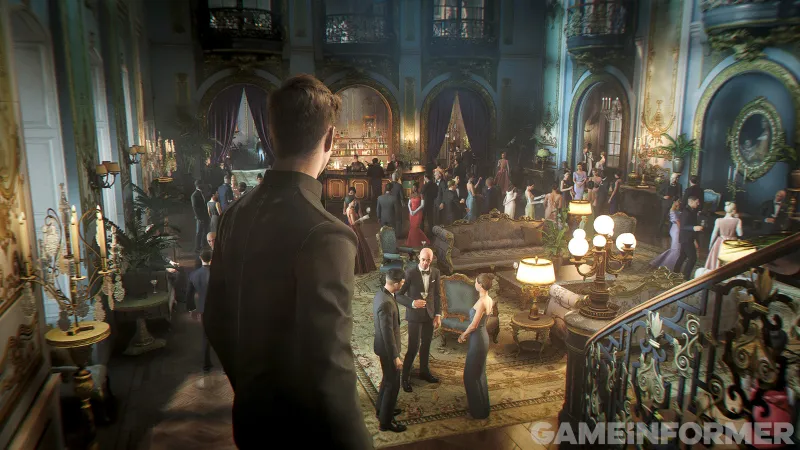
Gameplay rolls back and forth between slow-paced infiltration play and punctuated moments of explosive action and set-piece bombast. Many of the slower-paced sequences are a lot of fun, especially those that see Bond navigating complex social scenes with dozens of people, carefully piecing together clues or sneaking into places he shouldn’t be. Over the impressive variety of missions, some of these slower sequences feel exceedingly so, with puzzles that feel overly prescriptive, or lengthy stretches where the sense of tense spy shenanigans becomes mundane. Yet again, it’s the great performances, gorgeous visual presentation, and highly listenable music and vocal work that carry the player through and keep things moving along.
It took me some time to warm to the frenetic pacing of the faster action sequences. Whether in punchouts, in a pitched gun battle, or even in occasional driving sequences, everything is focused on constant mobility, changing tactics, and quick reactions. With time, I reveled in the speed demanded while switching weapons and charging headlong into danger. I also enjoy the increasing variety of amazing gadgets from Q that might blind foes with a laser, fire a micro-missile from a pen, or poison an unsuspecting target with a toxic phone dart. Like the best films from the canon, First Light features several memorable (if sometimes outlandish) moments of wild action; I love the way the game consistently one-ups itself as Bond’s seeming indestructibility carries him from one harrowing situation to the next.
Like many of the best spy adventures, 007 First Light keeps you guessing as you roll inexorably forward; more than once, it feels like everything is wrapping up, only for the game to unveil new twists that keep the story hurtling in a new direction. When it all finally wrapped up, the campaign left me satisfied. Players can tackle many encounters using alternative tactics or routes, adding replayability to a second playthrough. A robust selection of challenges further enhances that replayability, as does an entirely separate tactical simulation game mode. Aspiring spies shouldn’t skip that menu option, as TacSim lays out some rewarding scenarios of escalating difficulty, and an impressive array of cosmetic unlocks for your trouble.
IO Interactive swung for the fences with 007 First Light, stuffing in a ton of ideas, mechanics, and systems. And while I encountered a few notable moments of frustration navigating Bond’s new escapade, the takeaway was one of deep satisfaction; this team knows why and how this setting can be fun, and they absolutely nail the execution of that vision. First Light presents a take on James Bond that works in all the ways that matter, setting up strong potential for more sneaky infiltrations, amorous encounters, pitched battles, and world-saving fun in the future.
Destruction AllStars, the multiplayer vehicular arena combat game, was among the PlayStation 5’s first exclusive titles, and now it’s time to bid it farewell. The game is shutting down this Fall and has already been removed from sale.
Players are receiving emails from PlayStation notifying them that, as of today, Destruction AllStars has been delisted from the PlayStation Store along with its Destruction Points virtual currency. Additionally, the game’s multiplayer services have been disabled for good.
However, owners can still play the game’s single-player modes until November 25, when, at 11:00 a.m. ET, all server support will cease. After this date, Arcade Mode single-player challenges will remain playable, though PlayStation warns that its functionality and the overall experience may be impacted by the server shutdown. Remaining Destruction Points owned by players can be redeemed in the available single-player modes until November 25.
Destruction AllStars launched on February 2, 2021, and was developed by Lucid Games. The game lets players step into the driver’s seats of wacky vehicles to battle other drivers in over-the-top destruction derby matches. In addition to using the car as a weapon, the driver could exit vehicles to roam freely and even steal an opponent’s car. It was pretty nuts, and we liked it enough to score it an 8 out of 10 when it launched, with reviewer and former GI editor Jeff Cork writing, “Even if the novelty of vehicular mayhem isn’t enough to sustain my interest for many more long-haul sessions, I’m looking forward to taking it for a quick spin every now and again.”
I don’t like video game tutorials. They’re important, don’t get me wrong – I’d rather be told how to play a game than stumble through a complex control scheme – but it always feels like a chore. It is remarkable, then, that I can’t stop thinking about a tutorial montage in the early moments of 007 First Light. It’s one of the most engaging and effective tutorials I’ve ever played, and it’s all thanks to what it pulls from popular action movies.
The scene in question comes when Bond is thrust into training camp with other trainees in the 00 program. For reasons I won’t spoil, Bond joins late, skipping the earlier parts of the training that others had to suffer through. To catch him up to speed (and as a sort of punishment), the leader of the program tells two other recruits that they’ve only got two weeks to get Bond ready for his basic tests. It’s a trial by fire, a movie trope I quite enjoy, and by taking cues from a different medium, IO Interactive makes a surprisingly exciting sequence.
Bond learns to climb, drive, shoot, and fight in rapid succession, with each tutorial quickly cutting to the next. A fellow trainee hands you a gun and challenges you to shoot three targets. The second your bullet hits the third, the game jumps forward in time. Now, you’re in a car speeding through a training course. The second you cross the finish line, the camera cuts over to a push-up sequence, then an obstacle course, and then a wrestling ring, where you learn to counter punches. The montage continues bouncing around until you’ve learned all the controls for each of these sections, which takes about nine minutes.
There are a few reasons why this works so well. First, chopping up activities you’ve done a million times in other games keeps them feeling novel. You don’t learn every part of the driving control scheme at once, instead returning to that section every fourth tutorial or so, implying that time has passed and Bond, like you, is improving. And the pace is refreshingly relentless. I know how to aim a gun in a video game, so I don’t need a tutorial on shooting, but it’s still exciting to drop into a scene, hit five targets in rapid succession, and immediately jump out.
It helps that the tutorial is also diegetic, meaning the montage is real to both the player and the character. I often prefer a non-diegetic tutorial, typically communicated by on-screen text when you first take control of a character. Most games have this – when you come out of a cutscene, you’ll get a pop-up that says “use the left stick to move,” and when you get to a gap, it says, “press A to jump.” On the other hand, diegetic tutorials usually happen when another character tells you what to do, often disguised with in-world lingo. I usually like this less, because threading the instructions into dialogue takes a bit more work and makes the whole process take longer. 007 First Light is a great exception, however, and presents the speed of the former method with the narrative justification of the latter.
Most importantly, the diegetic approach puts the player in James Bond’s shoes. It’s ultimately why we want to play games based on our favorite characters – it’s fun to do the things they do, to feel like we’ve accomplished the over-the-top stunts they pull off. This is the moment in the game I’ve felt the most like Bond, because we were both learning and trying to prove ourselves to the other people in the camp in near-equal measure.
The final reason it’s so cool is that it’s the exact sort of training montage you’d find in an action movie, but that begs another question: why are training montages so fun in action movies? It’s simple: because it condenses the buildup to make room for the most exciting moments.
Action movies, like 007 First Light, have priorities. As much as I need character development and moving performances, I come to action movies for the huge set pieces and explosions you see in the trailers. Everything else in the screenplay functions to make those big moments as fun, intense, and satisfying as possible. For example, it’s important that we see what happens to John Wick’s dog at the start of the story, but in the realm of the action movie, it’s all about getting audiences emotionally invested for the next few hours, when he mows down enemies with fast-paced gun fu.
IO Interactive understands that I, the player, need to be told which buttons allow me to counter a punch or throw an opponent. It also understands that I didn’t boot up the game to learn: I booted it up to play. It wants to literally cut to the chase – to cut away from the training and head right to the high-octane car chases. 007 First Light respects my time and knows what I want in a way I’ve never seen a game do before. And after playing it, I hope to see other developers follow suit.
For more 007 First Light, stay tuned for our review of the game, which will drop in the coming days. In the meantime, you can learn about the game’s development by reading our exclusive cover story coverage from earlier this year right here.
This weekend, Unreal Engine 6 was unexpectedly revealed during the Rocket League Paris Major. The announcement coincided with a teaser for what was described as the future of Rocket League.
The teaser trailer showed off real-time footage of Rocket League cars rendered in Unreal Engine 6. Whether this gameplay represents a wholly new Rocket League title or an update to the existing 2015 game (built in Unreal 3) is unclear. The teaser does not provide any more details for Unreal 6, and Epic’s website has not elaborated either.
The reveal of Unreal Engine 6 comes six years after Unreal Engine 5’s initial 2020 reveal and four years after its 2022 launch. The current engine has essentially become the de facto engine for many games, especially in the AAA space. It’s unknown when Unreal Engine 6 is expected to launch, but if its build-up is anything like Unreal 5’s, expect more, hopefully lengthier tech demos in the coming year or so.
PlayStation has revealed the Plus games lineup for June, and it includes Xbox’s Grounded, Warhammer 40,000: Darktide, and Nickelodeon’s All-Star Brawl 2. All three of these games will be available to download for PlayStation Plus Essential, Extra, and Premium subscribers starting Tuesday, June 2, and you have until Monday, July 6, to do so.
Alongside these three games, PlayStation has extended the download duration for EA Sports FC 26 on PlayStation Plus. It is available to download today and will remain available for subscribers until June 16. You can read Game Informer’s EA Sports FC 26 review here.
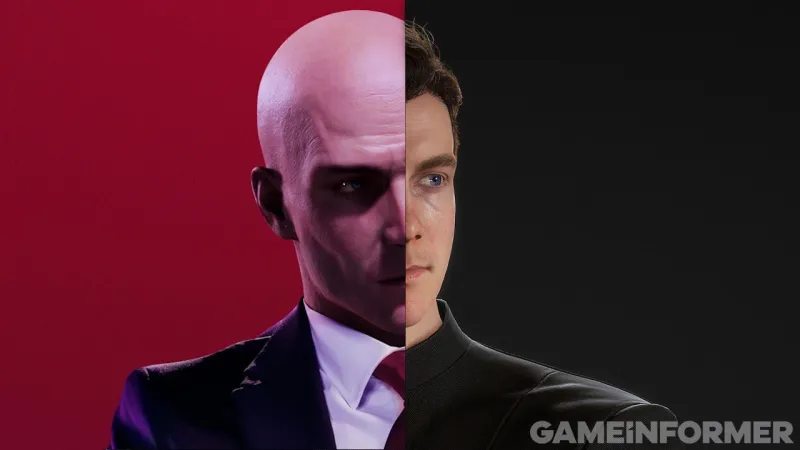
For the last 25 years, developer IO Interactive has been known primarily for the lauded Hitman franchise. In that series, players take control of Agent 47, a blank-slate killing machine who travels the world to hunt down targets and take them out in ways that either look like an accident or are untraceable back to him. The series, particularly the World of Assassination trilogy, saw IO Interactive reach new heights, delivering some of the most engaging sandbox stealth experiences the medium has ever seen.
Though markedly different experiences, many of the skills that IO developed transferred to the development of 007 First Light. However, IO Interactive CEO and 007 First Light game director Hakan Abrak credits Hitman with helping to establish the studio’s identity. “It’s defined many things for us throughout the years, from the technology we’ve been doing to the communities we’ve built,” IO Interactive CEO and 007 First Light game director Hakan Abrak says. “When it comes to creating a spy or agent fantasy that travels the world – the globetrotting, contemporary world fantasy – we have spent a lot of hours traversing in that area, which, I think, has given us a certain expertise and know-how over the years.”
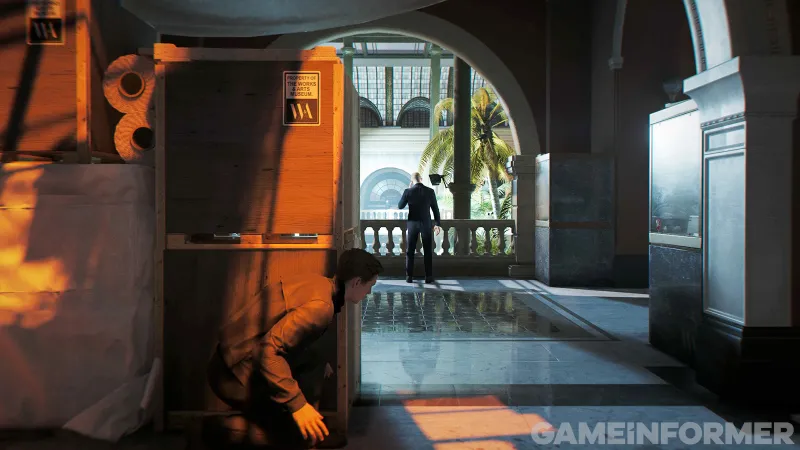
That very DNA influenced the direction IO Interactive took with 007 First Light, informing the studio’s approach to the more open-ended sequences of the game. “Whenever we can, we try to open it up; in the gameplay trailer, you have to infiltrate this chateau,” narrative and cinematic director Martin Emborg says. “This is where we try to bring that IOI DNA that we have from Hitman, where you represent it as a way where there are different paths into this chateau, and then you have to go from here. And then, we have the Kensington level, where we have several segments, especially going through the trespassing segments where combat is involved, where you have a much wider range of choice: You can go stealthy or you can go combat, or anything in between. It’s actually up to you, and all these routes or play-style choices should all be viable and fun to use.”
However, even with Hitman’s influence and DNA permeating 007 First Light, they still look, flow, and play completely different. “Obviously, we’ve had a lot of learnings from our Hitman titles, especially because we knew we also wanted to have some kind of stealth in this game,” gameplay director Andreas Krogh says. “It was very obvious for us to just say, ‘Okay, we have a stealth loop in Hitman, and a way of approaching that with environment interactions and the moment-to-moment, second-to-second gameplay that we like and saw users like.’ It was obvious for us to bring that to the table. But on the other hand, we knew we had a new game here, with a new protagonist that we knew we had to do some of the areas we weren’t good at in Hitman.”
In addition to the structure being much more linear, with a combination of set-piece action moments and sandbox creativity sequences, in the Hitman games, there is no driving, and combat is often a last resort if you’re made by the enemies. In 007 First Light, you’ll be expected to embody all parts of Bond’s persona, including his expert driving ability and skilled bravery within the chaos of a firefight.
“There’s obviously experience from [Kane & Lynch and Freedom Fighters], but there are certain things where, you know, new blood, new talent to IO from the outside,” Abrak says. “There are things that we’re really, really good at, and there are things where we had to get new expertise that helped develop our engine, our technology, and our game features to deliver above the benchmark for an action game, because Hitman does give you the freedom to go guns blazing. However, even though we give you that freedom, […] the full experience in Hitman is premeditated; you’re planning, you’re observing, it’s not impulsive, necessarily. It’s very thoughtful with pre-planning that goes into that, understanding the wants and motivations, the patrolling patterns, and where the different opportunities are before you make your move for a perfect execution and getaway. Bond is different.”
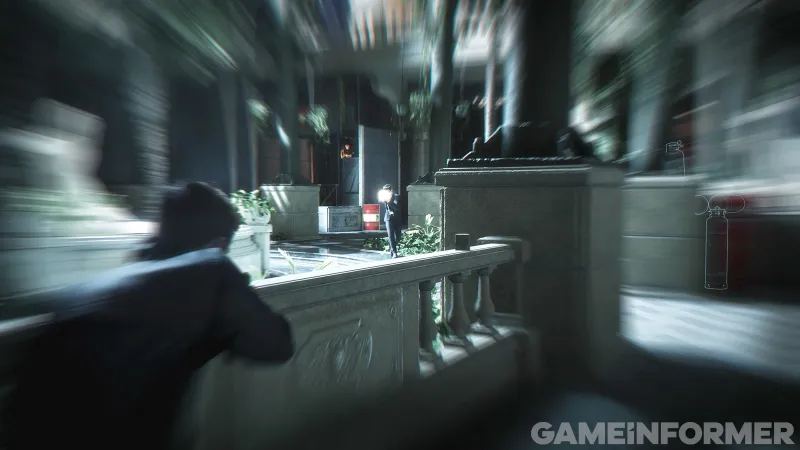
For 007 First Light, IO Interactive wanted to establish a consistent forward momentum for players. “An important difference is that in Bond, we are striving to do forward momentum gameplay all the time, both in combat and in stealth,” Krogh says. “Where in Hitman, we had some setups where we wanted you to use some time to stake out the situation and maybe poke a little bit at it to see what happens. In Bond, you can use time to observe a situation, but it’s very evident there are options you can use right away, and you can just use them and see what happens and come forward. We want to reduce that decision-making time to always keep moving forward and be a little bit faster.”
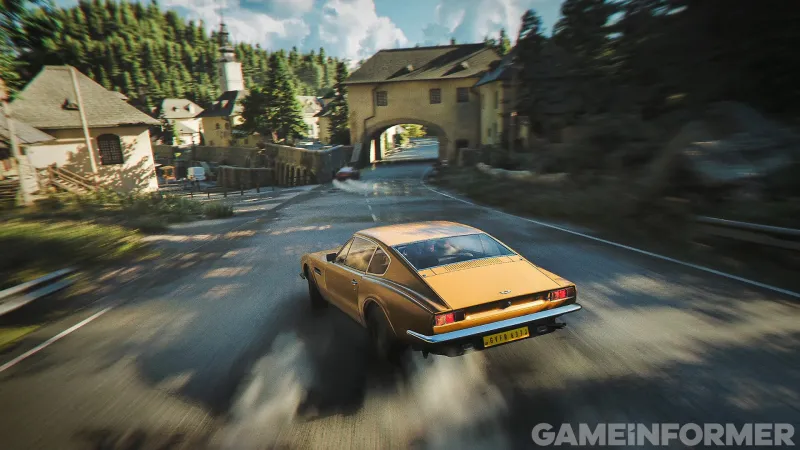
And then there’s the driving sequences, which are unlike anything IO Interactive has ever released. In my time watching a live demo of an intense driving sequence, I was surprised by how smooth the controls look – way more smooth than you might expect from a studio with seemingly no experience with driving mechanics. “It’s true that we haven’t released any game with driving and vehicles,” Abrak says. ‘However, we’ve done numerous IPs, and luckily, a lot of them saw the light of day. Some of them haven’t, and some of the prototypes… we always have incubation going on in IO Interactive, and in some of the incubation groups we’ve done vehicles and driving. With that said, getting that from prototype into a fully finished game, it’s a long journey. We also spent almost six and a half years on 007 now, so it’s a great amount of effort going into creating these vehicles, their behavior, their physics.”
On top of that, Bond has a much more prominent personality, which, from what I saw, is performed admirably by actor Patrick Gibson. “There are a lot of good things going for us, going from Hitman, but I will say in the same breath that retraining your brain creatively from doing an agent that is an antihero, Agent 47, to create a fantasy that is a hero, and is a charming, talkative one, to the audience, to the player, that has a completely different demeanor and way about him. That has been the creative challenge that we had to crack.”
From everything I’ve seen, IO Interactive has risen to the occasion with its transition from the Hitman: World of Assassination trilogy to the superspy action of a James Bond game. However, we won’t know for sure until we get ahold of the final product when it arrives on PlayStation 5, Xbox Series X/S, Switch 2, and PC on May 27.
Whether they’re roguelikes, roguelites, or just rogue games, there’s no denying the popularity of the run-based genre that’s become ubiquitous in recent years. Whether you’re fighting your way out of hell, you’re trapped in a time loop, or you’re tasked to infinitely rebuild a deck of magical cards (this last one happens a lot), the category of games has absolutely earned its praises. It’s hard to beat the satisfaction of a good power crawl, the condensed structure, or the urge to play just one more run, even after the most devastating losses.
Still, that structure can take many forms, and an explosion of popularity can make it difficult to separate the trendsetters from the trend-chasers. What roguelike should you play today? Here are our 10 favorites, listed in alphabetical order.
Absolum
PlayStation 5, Xbox Series X/S, Switch 2, PlayStation 4, Switch, PC
The beat ’em up genre has had a revival in recent years, and Absolum is one of the greatest examples of that renaissance, thanks to how it repurposes the classic combat style and slots it perfectly into a roguelike formula. It also does so with high-fantasy aesthetics, with characters seemingly plucked from the pages of a graphic novel, with all of them twisting familiar tropes just enough to feel and fight uniquely. Combat plays excellently as well. Elemental modifiers encourage players to switch up their playstyles each run, and the ability to parry enemies with your heavy attacks is a satisfying, dramatic inclusion we can’t get enough of. The world, characters, soundtrack, and animations are also absolutely beautiful, and it’s all even better with a friend by your side in co-op. | Our Review
Balatro
PlayStation 5, Xbox Series X/S, PlayStation 4, Xbox One, Switch, PC, Mac, iOS, Android
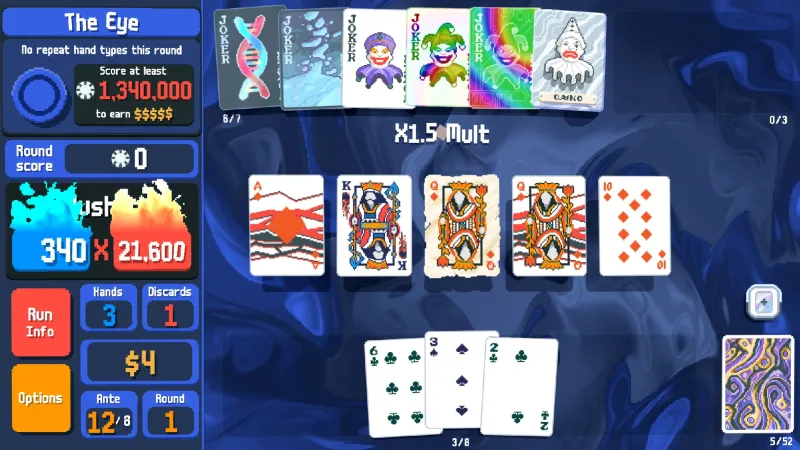
This poker-flavored card game is more than meets the eye. On the surface, especially in an early run, it might appear to be a simple poker simulator, complete with pairs, flushes, and straights, but it doesn’t take long to see just how quickly the gameplay devolves into card combo insanity. With 150 run-altering joker cards, tarot decks, planet cards, and more, what begins as a game to play the best hand becomes a strategic sandbox, enabling all sorts of synergies and loadouts to claw your way to victory. It’s also very approachable, as its turn-based nature and use of the standard 52-card deck allow for a wider audience to play at their own pace and start with a base understanding of the mechanics. Its mobile port is especially great for this reason, though there’s one downside: having Balatro in your pocket makes it tough to put down. | Our Review
Blue Prince
PlayStation 5, Xbox Series X/S, Switch 2, PC, Mac
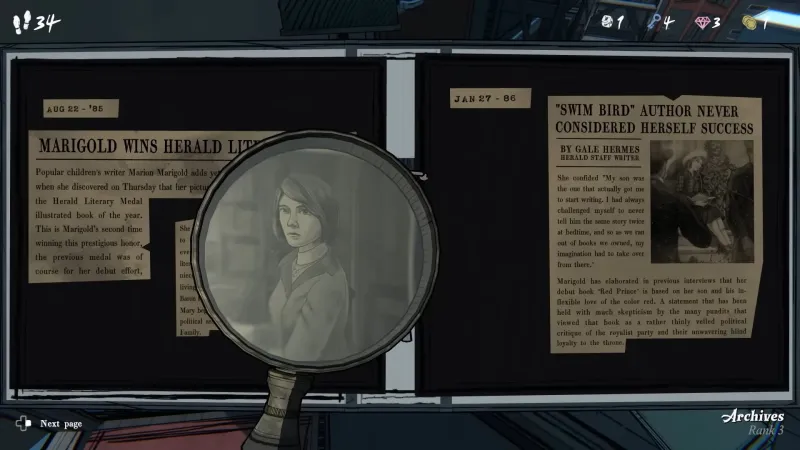
Blue Prince is undeniably a roguelike. You start each day with a fresh start, exploring your late great uncle’s manor of shifting rooms, picking the right floorplan to hopefully encounter the fated Room 46. That said, much of the game’s appeal comes from factors that are unusual for the genre. While the mansion’s layout doesn’t persist, your memory does, and there are many clues you can begin to piece together as you explore and keep your eyes peeled. The truth is that Room 46 is just the tip of the iceberg, as Blue Prince has a much deeper, compelling mystery to unravel. And both elements are exciting and unique in their own ways while still being complementary. Unveiling mysteries makes it easier for you to progress in future runs, and progressing through the mansion unlocks more pieces to the game’s overall puzzle. It’s a marvel of game design, and while I recommend going in blind, it’s packed with so many mysteries and puzzles that you’re bound to discover something new regardless. | Our Review
Hades II
PlayStation 5, Xbox Series X/S, Switch 2, Switch, PC
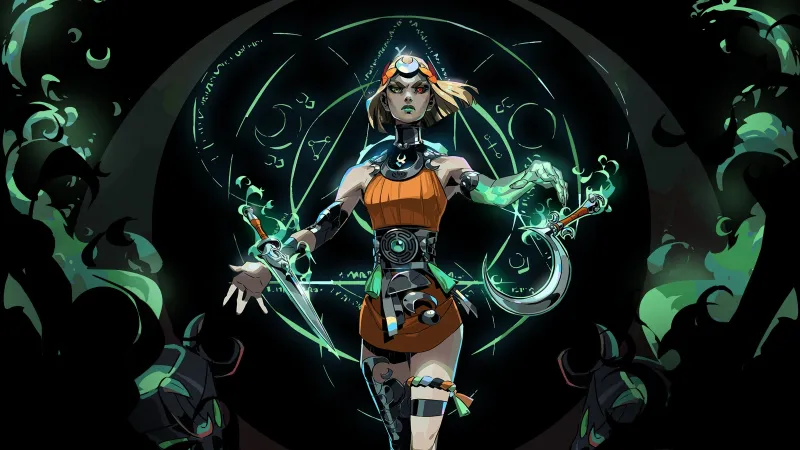
Given that it’s the only roguelike to score a 10 from Game Informer, it’s perhaps a no-brainer that Hades II would appear on this list. It’s an improvement on the original game in just about every way, with new weapons, multiple routes, and an intoxicating number of variables that keep each run feeling distinct, but exciting. With so many avenues to upgrade Melinoë and her allies, Hades II is consistently rewarding, either due to the satisfaction of victory or the thrill of unlocking yet another ability, weapon, arcana card, incantation, or something else. Its story also expands the world of the first game in compelling and interesting ways, and developer Supergiant even amended (and improved) the ending after some fans were dissatisfied with the outcome. It’s not just a fantastic roguelike, but one of our favorite games of all time. | Our Review
Monster Train 2
PlayStation 5, Xbox Series X/S, Switch, PC
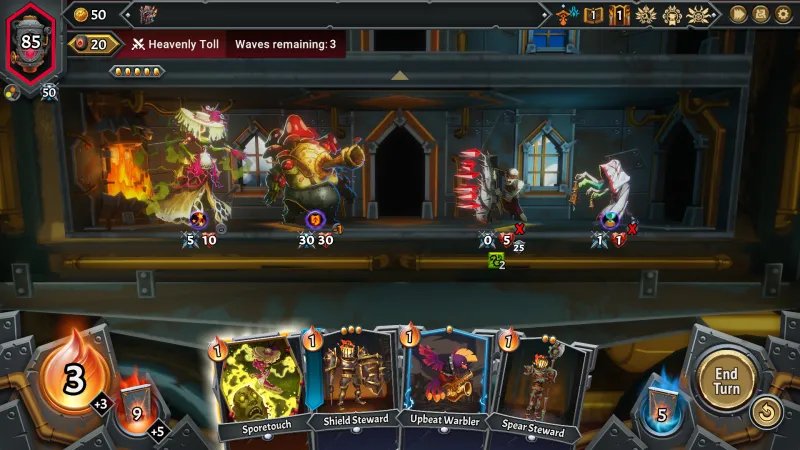
Fundamentally, Monster Train 2 doesn’t change much about the prior game’s formula. As the titular locomotive journeys through a hostile land, you still place friendly units in your train cars to keep enemies from advancing. What it does improve, however, is the sheer number of variables. Monster Train 2 has five completely new factions to unlock, new card types, and new enemies. Once you make it through the base unlocks, there are dozens of ways to start a run alone, and that’s before you even make decisions about upgrades, paths to take, and actions to perform in combat. Combine that with an excellent challenge mode, which adds custom runs with wacky rulesets, and Monster Train 2 is not only a blast, but it feels endlessly replayable. | Our Review
Returnal
PlayStation 5
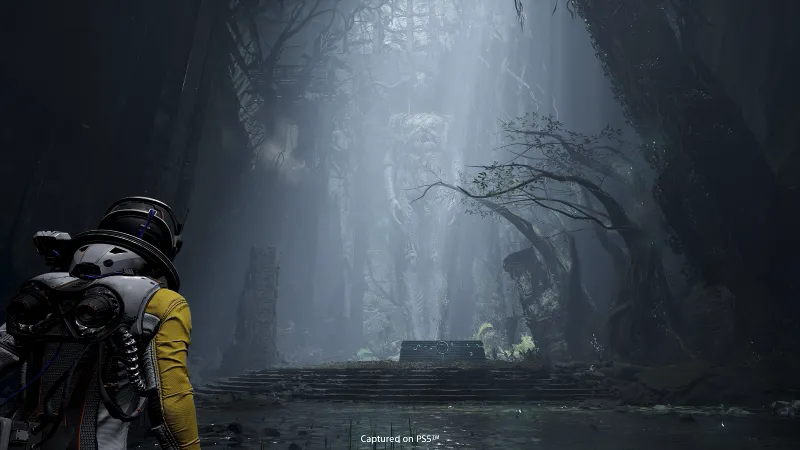
This PlayStation 5 exclusive is an atmospheric nightmare ride though sci-fi horror, and it’s enchanting and enthralling every step of the way. Returnal brilliantly veils much of the permanent progress that you’re making from run to run, ensuring that your tension levels stay taut and realized as you dive into majestic bullet-hell boss fights.
Prevail, and mysteries unravel as your weapons gain incredibly powerful bonuses and perks. If you have the means to play it, Returnal is a roguelike masterstroke that should be experienced. | Our Review
Saros
PlayStation 5
Housemarque’s follow-up to Returnal had huge shoes to fill, so it does something smart – it fundamentally alters combat by adding a shield, and tells an original story in an unrelated world. The resulting game is novel, but still comfortable to Returnal fans. Rahul Kohli gives a memorable performance as Arjun, the tortured soldier on an alien planet, and it’s generally a stunning game to look at. It’s also one of the few to make full use of the DualSense controller, and serves as a touchpoint for just how powerful the PlayStation 5 is. | Our Review
Slay the Spire
PlayStation 4, Xbox One, Switch, PC, iOS, Android
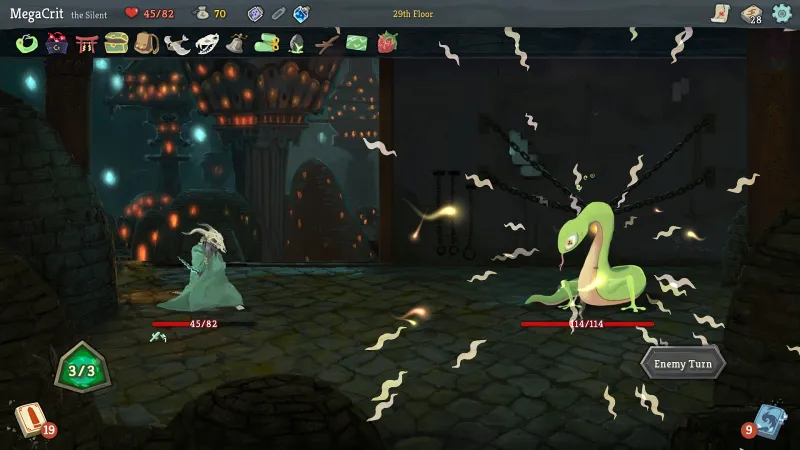
Within the roguelike genre, the deckbuilder has become an incredibly popular subgenre, bringing a deluge of titles to Steam (and other platforms!) with a dizzying frequency. Much of this can be attributed to Slay the Spire, a game that begins utterly simple – but delivers massive depth over time.
As you unlock new characters, new cards, and new possibilities, tinkering with each deck archetype and wild artifact combination becomes an obsession; a one-more-run compulsion that’s a ton of fun and difficult to put down. Do you want to try to cut your entire deck down to a single rotating hand? Do you want to bloat a titanic pile that gets bonuses from a large stack? Poison? Defense? Magical lightning ball blasts? Choices are yours and the journey is a blast. |Our Review
And while it’s still a work in progress, we heavily recommend Slay the Spire 2 as well. We prefer to wait for games to achieve a proper 1.0 launch before including them in our Best Of lists, but Slay the Spire 2 adds so many thoughtful mechanics and twists on the already fantastic formula that we’d be remiss not to endorse it.
Spelunky 2
PlayStation 4, Switch, PC
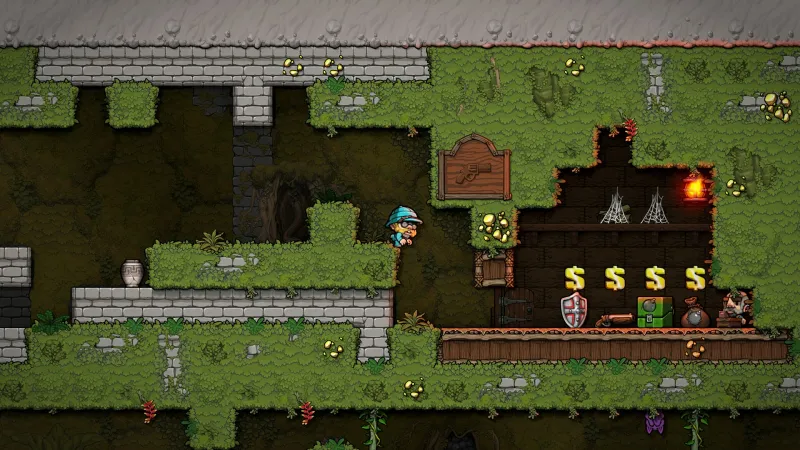
It’s like Indiana Jones, except you die a lot. Distinct biomes and secret treasures keep the adventure alive, death after death, run after run. Even if you get annihilated by some mistimed inputs, you’re back in the saddle within seconds and back on the next attempt.
The loop is engaging and you’re always looking to see what’s going to be discovered next in your dive down to danger and riches. Oh, and this one has mounts. | Our Review
Vampire Survivors
PlayStation 5, Xbox Series X/S, Quest 3, Quest 2, PlayStation 4, Xbox One, Switch, PC, iOS, Android
It is equal parts admirable, exciting, and terrifying how effectively developer poncle condensed the roguelike formula in Vampire Survivors. No run can be more than 10 minutes, so the power creep has to fit entirely within that time frame, and the feeling of having your power grow at an exponential rate is exhilarating. Players inhabit one of several gothic fantasy heroes (with some not-so-subtle inspiration from the Castlevania series) and use items like axes, whips, garlic, and magic crosses to automatically attack the surrounding, pixelated enemies.
The loop is short and simple, but there are tons of characters, maps, and upgrades to unlock. Plus, the game is very cheap – $4.99 at the time of writing – with many similarly priced DLC packs if you want to augment your game with even more content, including crossovers with Contra, Castlevania, and even Balatro. The height of a run borders on overstimulating, but that intensity is not only thrilling: it’s the secret sauce that makes Vampire Survivors so good. | Our Review
To keep this list updated and modern, we’ve replaced some classics with some more recent favorites. These are the games cut from the list, though they’ve still got a special place in our hearts:
For this Game Informer issue cover story, we traveled to Warsaw, Poland, to visit Rebel Wolves, a studio co-founded by The Witcher 3 director Konrad Tomaszkiewicz, to learn all about the company’s debut game, The Blood of Dawnwalker. During the trip, we spent plenty of time drilling into how the team is capitalizing on the choice-driven style of gameplay that various members of the studio delivered with masterpieces like The Witcher 3: Wild Hunt and Cyberpunk 2077. As it turns out, Rebel Wolves may be taking the concept of player choice even further than those landmark games.
For Tomaszkiewicz, after leaving CD Projekt Red following the release of Cyberpunk 2077 and founding Rebel Wolves in 2021, he knew exactly the type of game he wanted to make. As a fan of vampire media like Dracula, True Blood, Vampire: The Masquerade – Bloodlines, and Legacy of Kain, Tomaszkiewicz saw an opportunity to capitalize on the immortality facet of the bloodsuckers and tell a saga that could expand over the course of different time periods. However, he also knew that player choice needed to be a massive part of whatever he and his new team at Rebel Wolves did.
In examining his previous work, Tomaszkiewicz realized how integral into the overall experience and impactful seemingly optional content ended up being for players. The Witcher 3 masterfully folded sidequests into the main storyline, allowing players to chart their own path through an overarching narrative. Fast forwarding 11 years from the release of The Witcher 3, Tomaszkiewicz wanted to take that concept to the next level.
“We felt in the past that the sidequests are more rewarding and better than the main quest,” he says. “When we talked about it, we decided that we want to step in another direction with our game, and we want to create the structure of it differently. We don’t have the main story, which is quest after quest leading us to the end; we created it differently. We call it narrative samples. What it means is you have one goal, and all the quests around it are satellites, and you can do them in any order you want to, and you can build you own idea of how you want to beat the game and achieve the main goal: You can do that by playing the quests to gather allies, you can build yourself and do it by yourself. You have a lot of other options in the game.”
Rebel Wolves re-examined the way it approached designing quests for The Blood of Dawnwalker. “Almost every quest in the game is like a sidequest, and they are meaningful,” Tomaszkiewicz says. “They are creating one whole experience for the player, but we are closer to a pen-and-paper RPG where the Game Master is deciding how he wants to lead you and deciding what he wants to do. In our game, you create this choice to achieve your goal by yourself.”
Though The Blood of Dawnwalker takes place over the course of 30 days and 30 nights, similar to games like The Legend of Zelda: Breath of the Wild, one of the choices you can make is to skip all the game’s quests and opt to just storm the antagonist’s castle. It won’t be easy, particularly with no allies and being under-leveled, but you can try.
“To finish The Blood of Dawnwalker, all you need to do is storm the antagonist’s castle, face them in combat, and rescue the family,” lead quest designer Rafał Jankowski says. “There are no additional requirements or prerequisites that you need to tick off, which means that all the stories that we prepared for the players are somewhat optional. Of course, we do encourage the players to follow these narrative threads, to explore the world, to learn all these stories, to experience what we prepared for them, which will make the attack on the castle much, much more approachable.”
Rebel Wolves pulled heavy inspiration for implementing choice from pen-and-paper RPGs, as well as CRPGs like the original Fallout games. Despite not having a custom character like most CRPGs, players take control of Coen at a very young age, during an extremely pivotal moment in his life, as he transitions from human to Dawnwalker. Because of this, player agency plays a massive role in how Coen’s story progresses.
“It inspires a lot of choices in how much freedom we allow you to make Coen your own Coen,” creative director Mateusz Tomaszkiewicz says. “There is plenty of wiggle room for you to shape him in the way you want him to be. You can choose how far he goes in terms of the vampire corruption. You can choose to make choices that kind of desensitize him to violence, for example. Or, you can stay true to, ‘No, I want this to be a character that stays true to the human side. I want to do good things. I want to avoid delving into this darker side of things.'”
But it even goes deeper, as it also tracks how you interact with characters, whether something seemingly low-stakes as dialogue options you choose or high-stakes as attacking them. The Blood of Dawnwalker tracks your interactions through an infamy system, as well as individual relationships based your actions and dialogue towards characters. You can read more on infamy, relationships, and romance here.
“We have a number of systems around this; some of them are kind of exposed to you as a player,” Mateusz Tomaszkiewicz says. “The system we have in place for that, we call ‘infamy.’ And this system tracks your actions throughout the game and how known you become to the vampiric court and to the people of Vale Sangora in this negative way. This can be done in multiple ways: If you go on rampages, if you just kill people, if you steal things and people catch you, you, of course, get this bad rep. But also, like, quest choices and just choosing to go after Brencis, his retinue, and their organization will definitely bump you up on their ‘bad people’ list. There are consequences to this, negative and positive.”
“We track your choices individually on a more detailed level,” Mateusz Tomaszkiewicz continues. “Because of that, we have a lot of reactivity to your choices in the quests. NPCs might remember certain things you do and react to it in other places.”
In extreme cases, you can kill NPCs (on purpose or accidentally, either through the consequences of your action or inaction, or through not managing Coen’s hunger and losing control) resulting in entire questlines being cut off. Your choices and actions truly sound as though they impact not only the trajectory of the story and the characters therein, but the very state of the world.
“We have this narrative sandbox structure of the game where we let you out into the world, you have the main goal, and then you have all these different quests and activities – on purpose, we don’t call them main or side quests, just quests – some of them are bigger, some of them are smaller, and they can chain together, or not,” Mateusz Tomaszkiewicz says. “If you don’t watch for Coen’s hunger, you might cut off some stuff or kill off some NPC that you actually care about. It can be controversial, but at the same time, what’s really important to us is to make you feel like you actually have to deal with this vampiric hunger all the time. It’s always present with him, and I feel, without it, you’re basically kind of just a superhero with some special traits. I think it adds an additional layer of weight and darkness to his adventure.”
It all looks and sounds wildly ambitious, particularly for a debut game from a fledgling studio. However, with the pedigree of the talent present at the studio, as well as the hours of gameplay I’ve seen, Rebel Wolves appears poised to pull it off.
For Konrad Tomaszkiewicz, there’s really no other way for him at this point in his career; it’s basically second nature. “The philosophy of consequences and choices is something we’ve created – or co-created – a lot of times,” he says. “We just know how to do that; I don’t know how to explain that. There is no recipe, like for cake, how you should approach, step by step, to achieve that. I think you need to think about every choice and about every consequence separately and be really aware what you want to achieve with this. You cannot copy this scheme, because if you do more than once, people will be aware of that, and then they start to feel artificial when they’re doing the choices. It’s also important to sometimes surprise players with the consequences of some choices, because I think, with life, you’re doing some choices every day – smaller, bigger – and not always can you predict the outcome.”
Everything I’ve seen of The Blood of Dawnwalker has led us to be more and more excited about it. I can’t wait to get my hands on the final product and see all the ways I can craft a vampire story all my own when it comes to PlayStation 5, Xbox Series X/S, and PC on September 3.