Fire Emblem: Fortune's Weave Preview – There And Back And There Again

Game Informer

Platform:

Publisher:
Nintendo

Developer:
Intelligent Systems

Release:

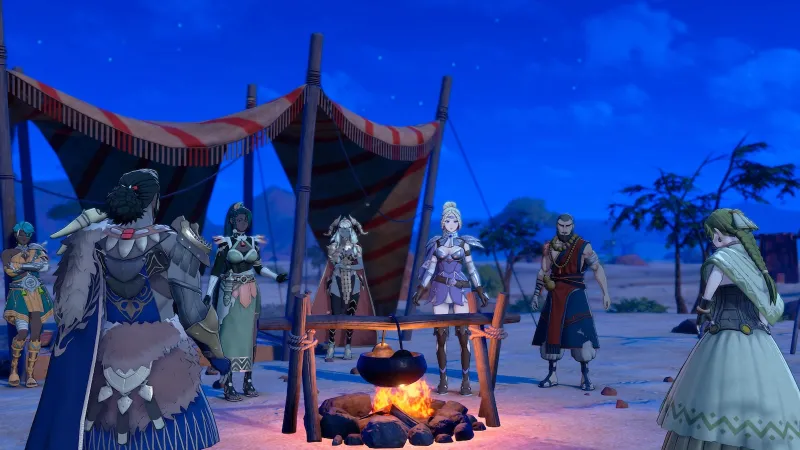
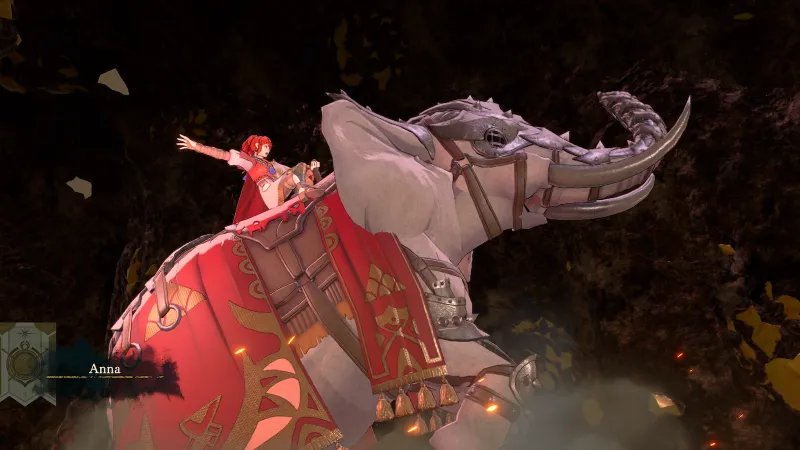
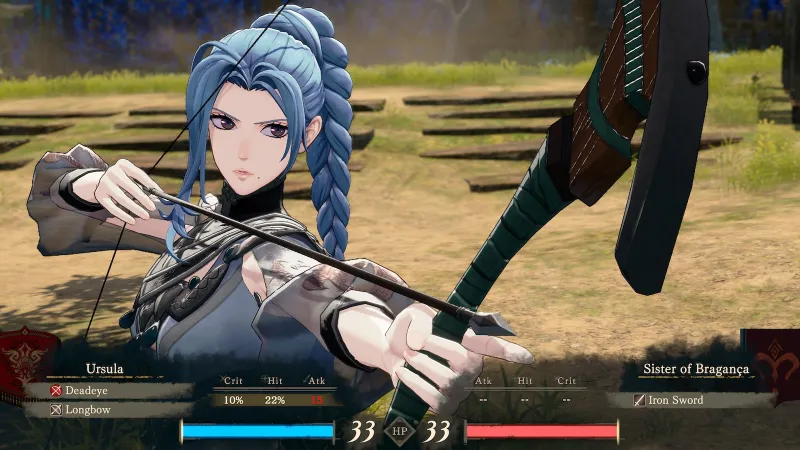
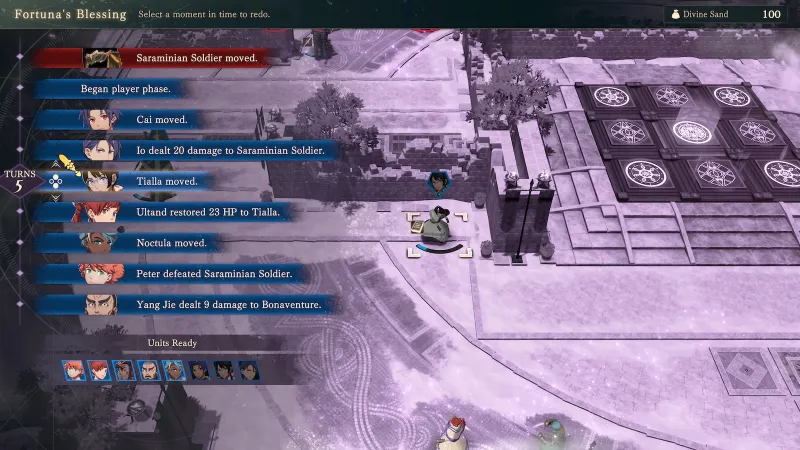
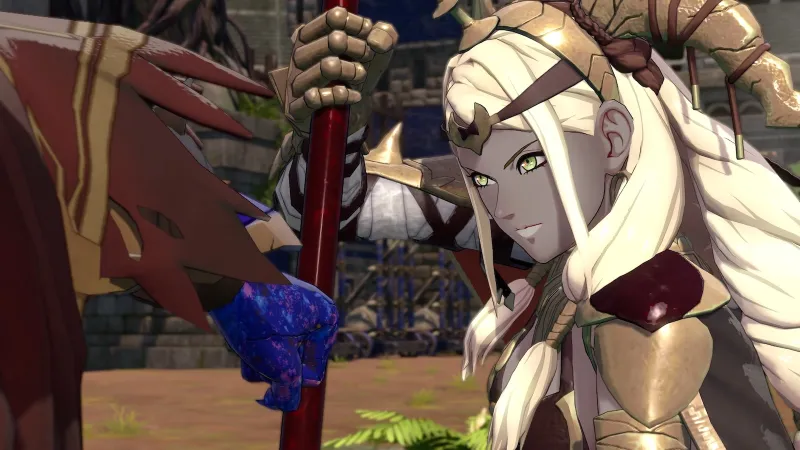
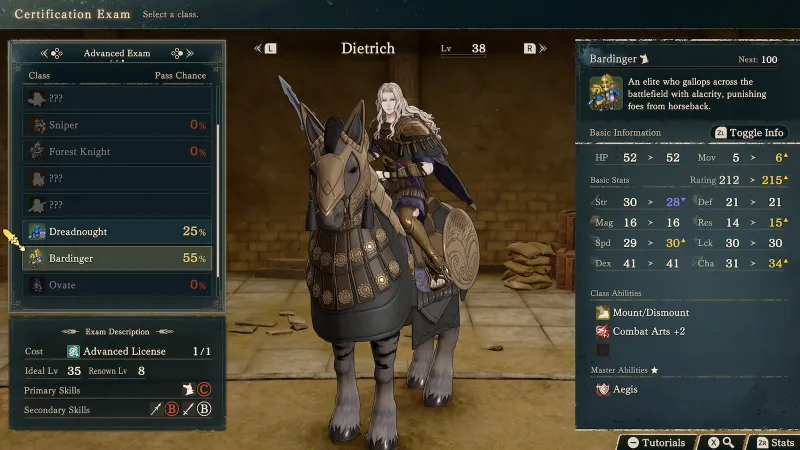
I went into the opening chapters of Fire Emblem: Fortune’s Weave with close to zero expectations. I knew there was a colosseum and that fights would happen there… and that’s about it. Now, hours into the game, I never could have expected what’s played out thus far. Fortune’s Weave looks back at the series, bringing forward systems from the past like Fire Emblem Gaiden’s dungeon crawling (which Japanese players experienced in 1992 before it was remade in 2017’s Fire Emblem Echoes: Shadows of Valentia); but it also looks forward, literally, with a sci-fi future where magic can be shot out of guns and flashback plotlines make up the primary narrative. It hasn’t quite coalesced into the gripping marriage of strategy gameplay and war and political intrigue typical of the series, but its early hooks have me searching for my Switch 2 any second of game time I can carve into my daily schedule. 

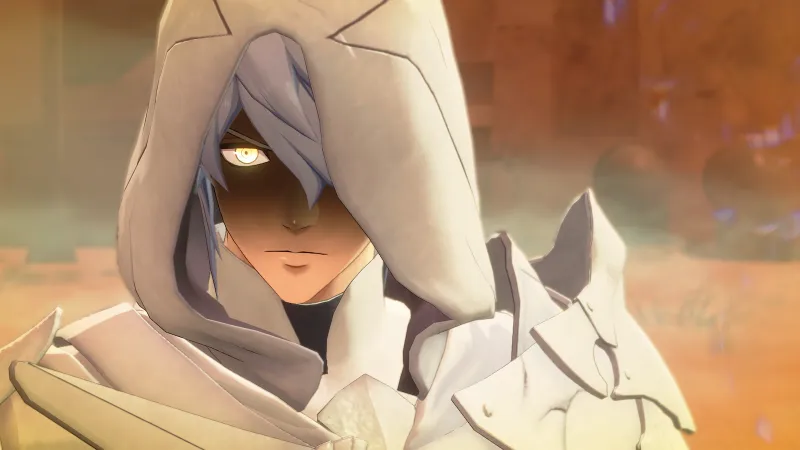
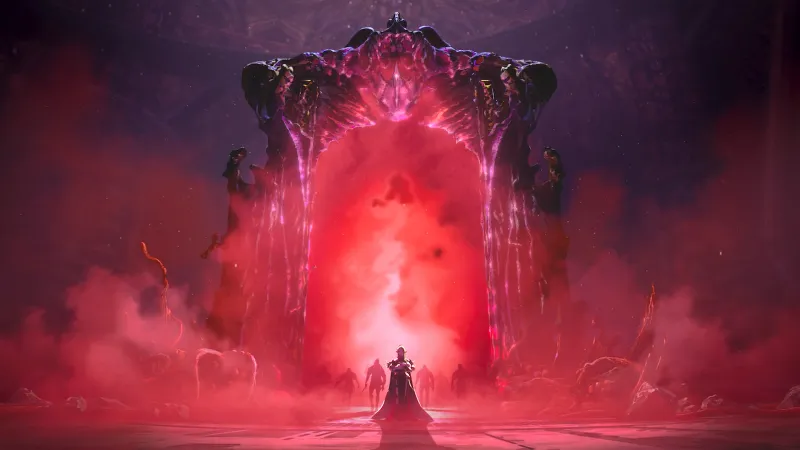
Fortune’s Weave wastes no time, throwing you right into a scenario I’m not sure I can entirely explain. But the hero you create using simple, to-the-point character customization options is playable only for a moment. Eventually, after seeing medieval-dressed characters interact with advanced computer systems and magic guns ripped from the future, you will reach an Obelisk Chamber, and a bright-colored goddess (I think?) named Fortuna who speaks on behalf of Sothis, the young goddess from Fire Emblem: Three Houses. Sothis urges you to dive back into the past and rewrite the histories of fabled heroes so that they might help you in the seemingly apocalyptic present. Again, I think. A lot is going on, and what I’ve played in this preview-designated section is clearly just the placing of Fortune’s Weave’s first few chess pieces on the board. 

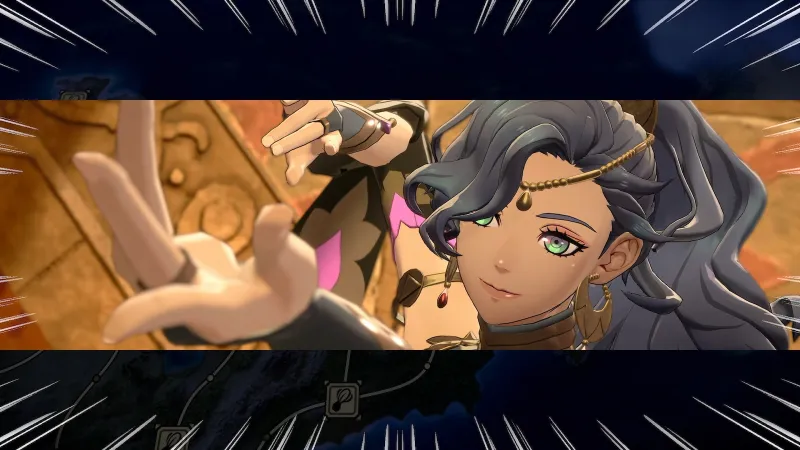
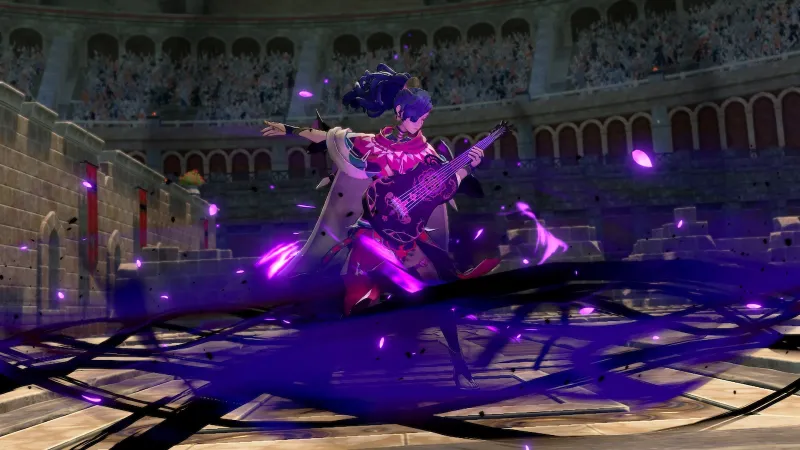
There are four obelisks to choose from, each with an associated hero-turned-fallen-warrior-who-has-now-become-an-evil-flame-lord from the past. After selecting one of the four, you’re thrust into a narrative that leads to Dagsion, the Dagdan Empire’s capital. The Heroic Games, Fire Emblem’s spin on ancient Roman colosseum fights and gladiator tournaments, take place here and it is where each obelisk hero plays a special role. Though I’m not privy to those roles yet, it’s been fun seeing how Leda, a magical bard with a bloodlust for her father’s murderer, arrives there. 
Game Informer

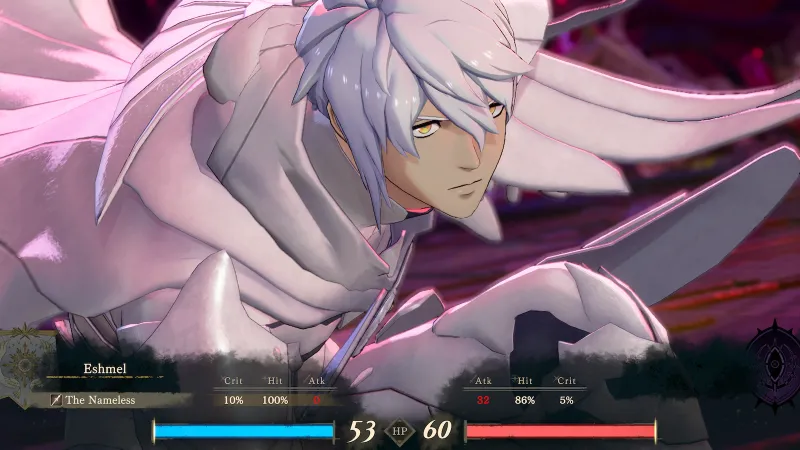
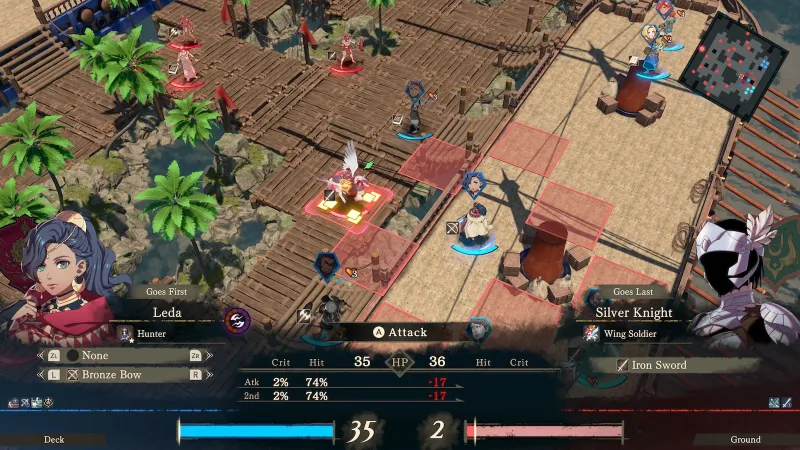
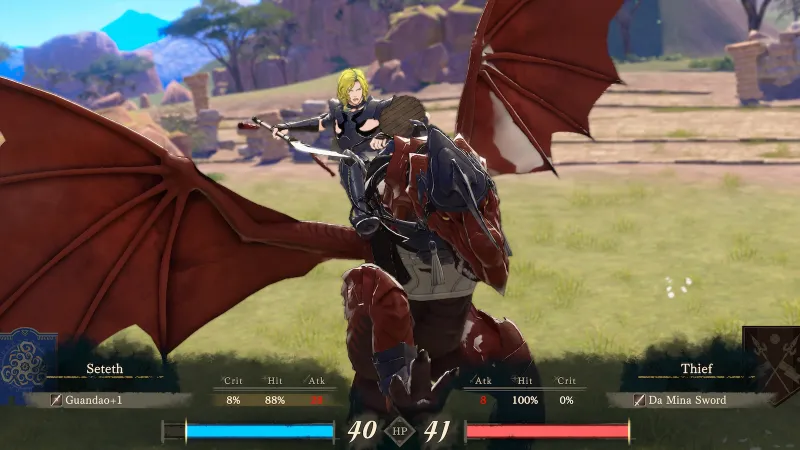
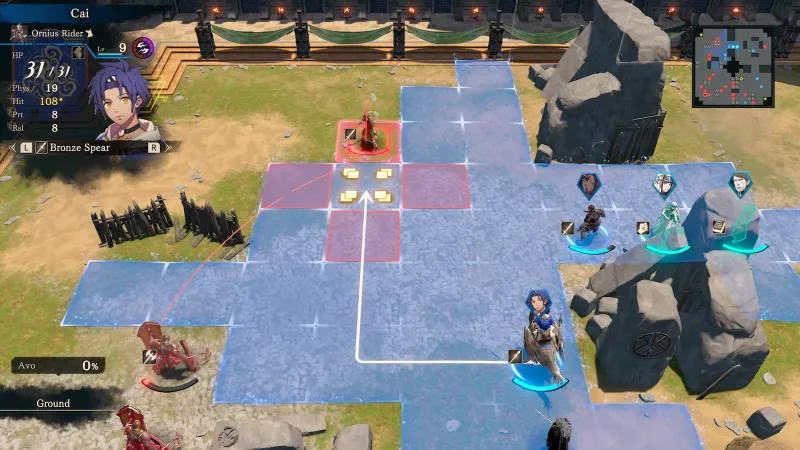
Leda’s life is ripped away from her as a girl – with her eyes set on revenge, she travels the world in search of clues and her next coin, wowing alehouse patrons with song and dance. I suspect each hero’s story flows into combat the way I’ve experienced it with Leda, who uses melodies from her mystical vihuela to buff nearby allies on the battlefield. That’s exactly what her Blaze Art does, a character-specific move that turns the tide when used correctly. But because it saps HP to do so, when and how you use it in the series’ trademark strategy grid-based battles matters. The same can be said for Combat Arts, which power up specific weapons but chip away at their durability. These two systems create new strings of tension on familiar grids, which is where the classic rock-paper-scissors style of turn-based strategy gameplay returns. 

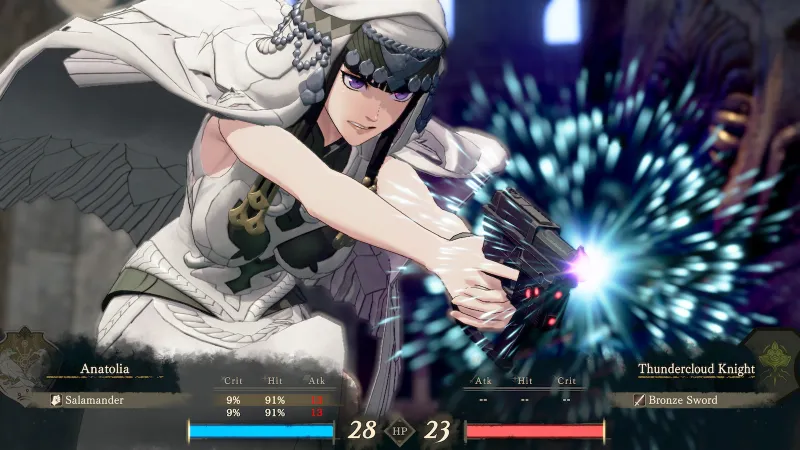
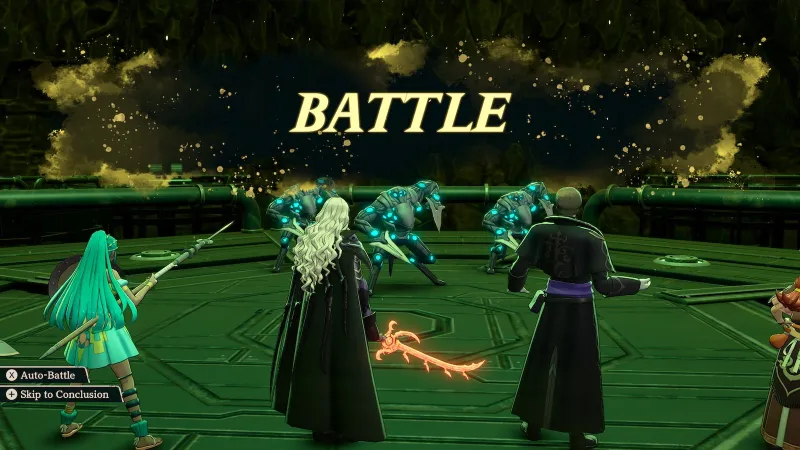
It remains satisfying to create forward pushes, flanks, and the like with intentional advances, and the accompanying battle animations are the best they’ve ever looked; the same can be said for all of Fortune’s Weave, which highlights Intelligent Systems’ commanding artistic vision with the boon of power that comes from developing exclusively for Switch 2. While I’m happy to see dungeon crawling return, the associated turn-based combat (notably not grid-based battles) is so far underwhelming – a button to fast forward through these fights or skip to the conclusion screen entirely suggests a lack of confidence in these systems. 


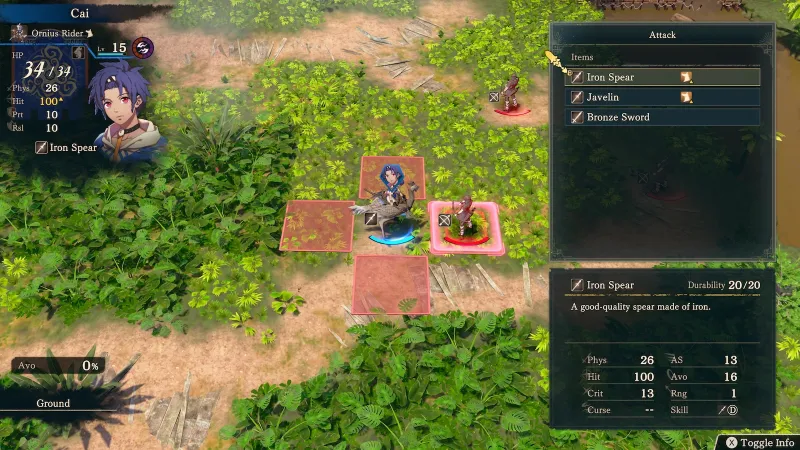
Game Informer video editor Eric Van Allen deliberately chose a different obelisk when prompted, instead peeking into the history of Cai, a teenager in search of a better life.

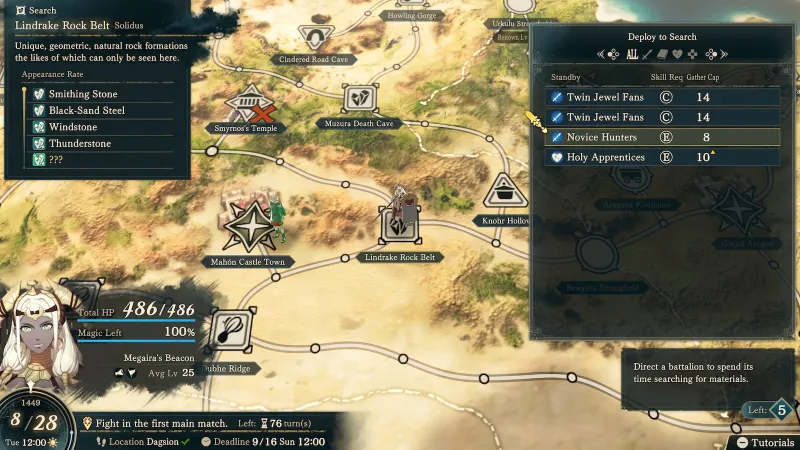
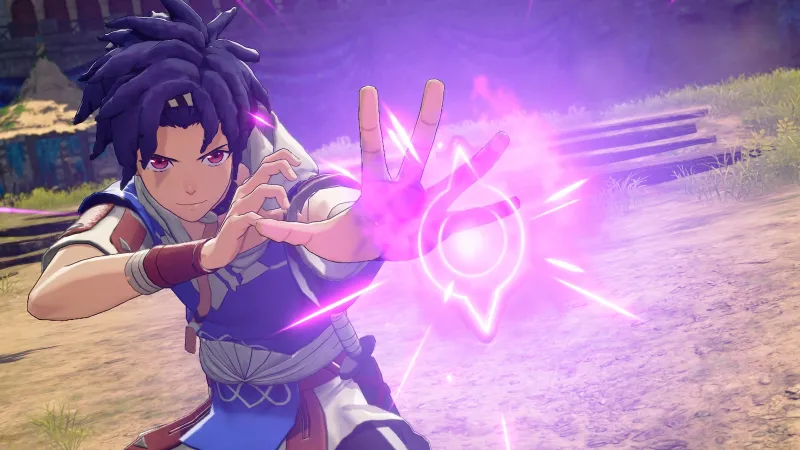
Cai is an optimistic, Shonen-esque hero who’s stumbled into a greater lot in life than he realizes. It seems clear that he and his childhood pals’ path through the Heroic Games will probably not be as lighthearted as they hope. Going on excursions outside Dagsion to build up their renown is enjoyable. Quests, hunts for useful resources, or just a quick trip out to see more of the outlying country net some good returns and spur on the idea of Cai slowly becoming as recognizable and formidable as the other lords.

There is still so much Fortune’s Weave left to go for both of us, but the hooks are in – it’s time to see where these obelisks take us, and I’m happy to say I have no idea where that will be. 
Marvel Tōkon: Fighting Souls Review – The Fighting-Game Comeback Marvel Deserves

Marvel Tōkon: Fighting Souls

Reviewed on:
PlayStation 5

Platform:
PlayStation 5, PC

Publisher:
PlayStation Studios

Developer:
Arc System Works

Release:

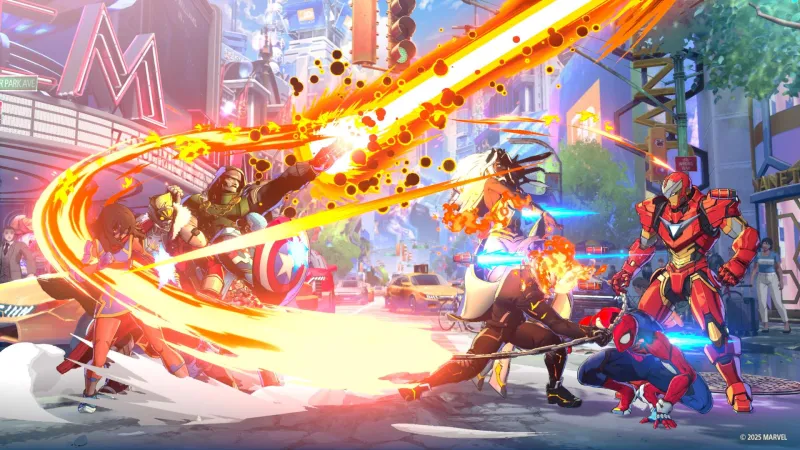
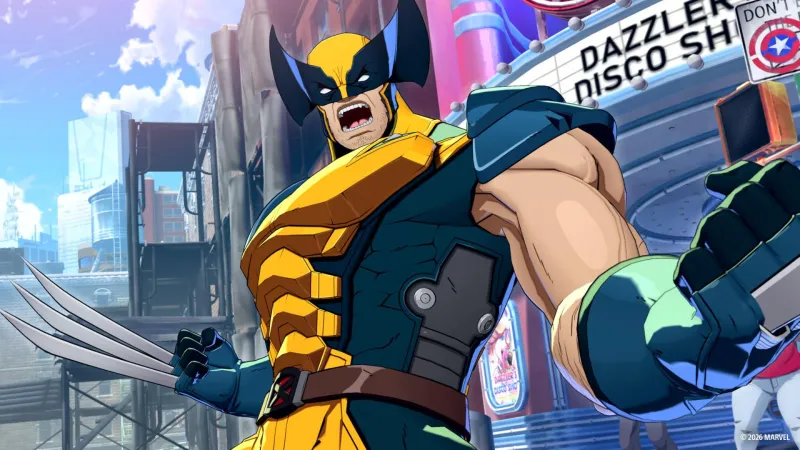
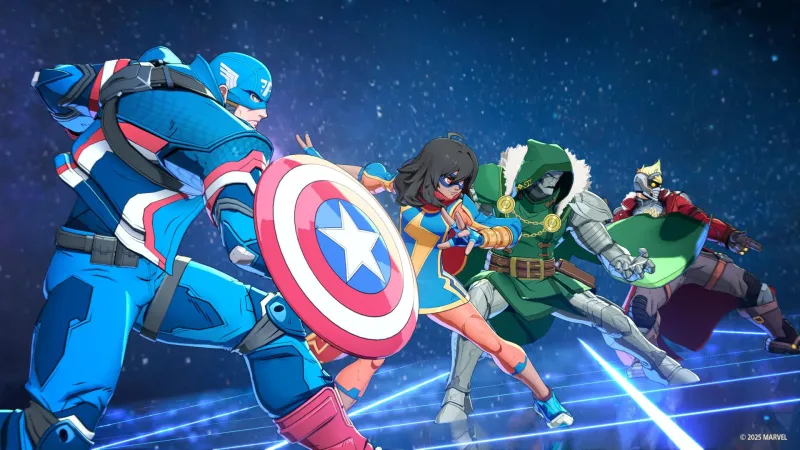
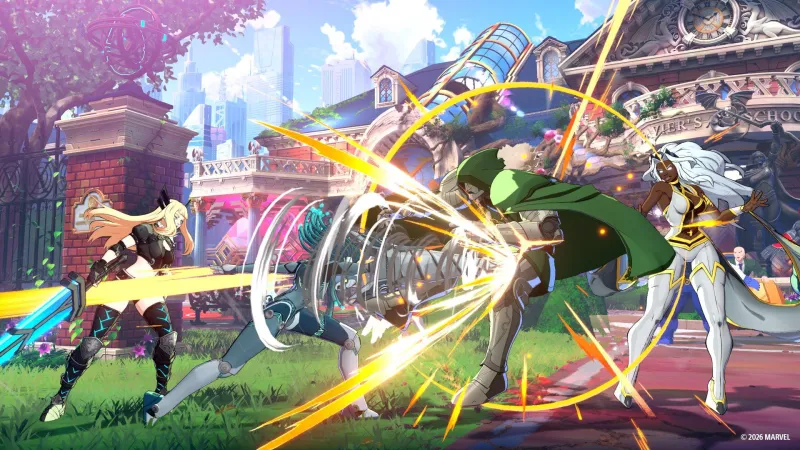
Despite its origins as a comic book publisher, Marvel is fighting game royalty on par with the likes of Mortal Kombat and The King of Fighters. But after the disappointing Marvel vs. Capcom Infinite fell massively short of expectations, and with the release of Arc System Works’ Dragon Ball FighterZ giving hyper tag-team fighting game fans a new home, Marvel’s reign in the fighting game world felt at its end. Just shy of a decade since Infinite, however, Arc System Works delivers Marvel Tōkon: Fighting Souls, a fighter that is as much of an advancement to the genre as it is an homage to the Marvel vs. Capcom era.

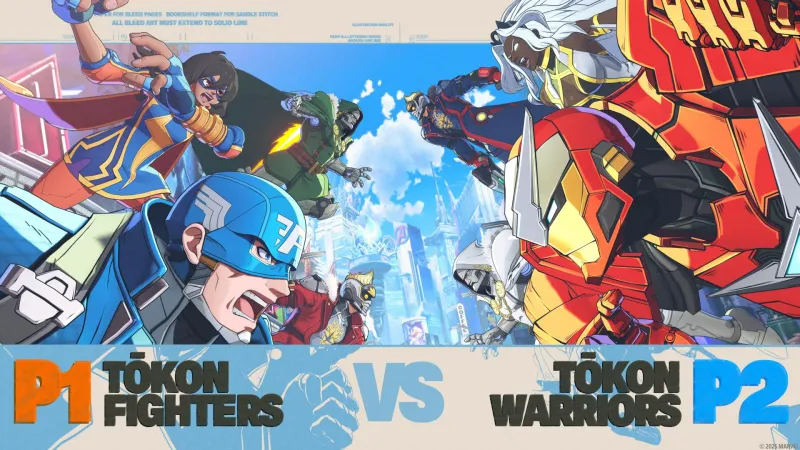
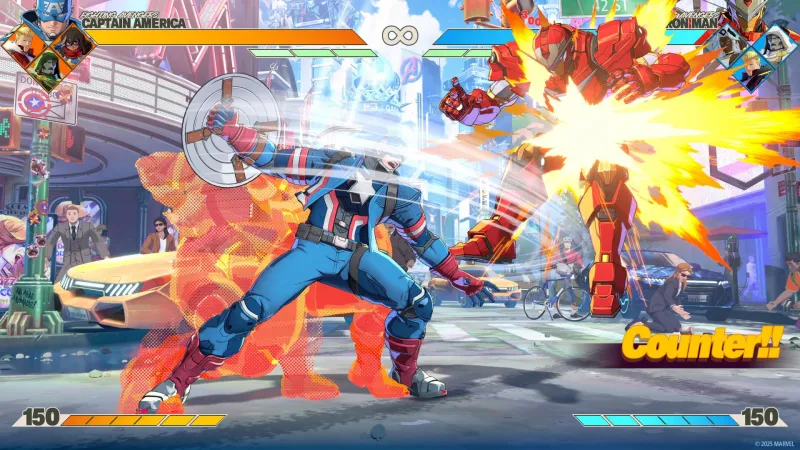
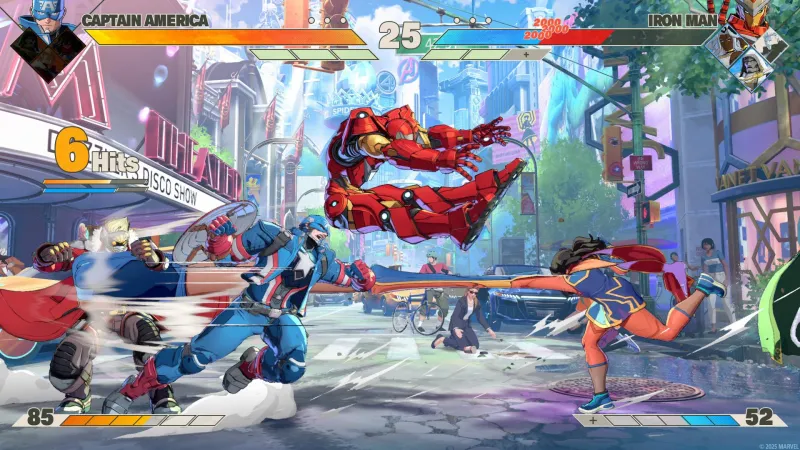
Marvel Tōkon is a 4v4 fighting game, but it’s no ordinary tag fighter. Each team shares a single health bar, but you can effectively play this as a 1v1 fighting game where your team’s only purpose is to come in for assists. This helps retain the high-octane fighting fans are accustomed to without the need to memorize four entire movesets. Super and special moves are also assigned to simple button presses alongside more standard fighting game inputs, making it easier to pick up any fighter.

Matches have a unique rhythm as they start with your main character and one assist, then you gradually gain access to your additional teammates. Not only does this style allow drastic momentum shifts, but it encourages you to be on the attack to gain control of your entire arsenal as soon as possible, making matches exhilarating at times. 

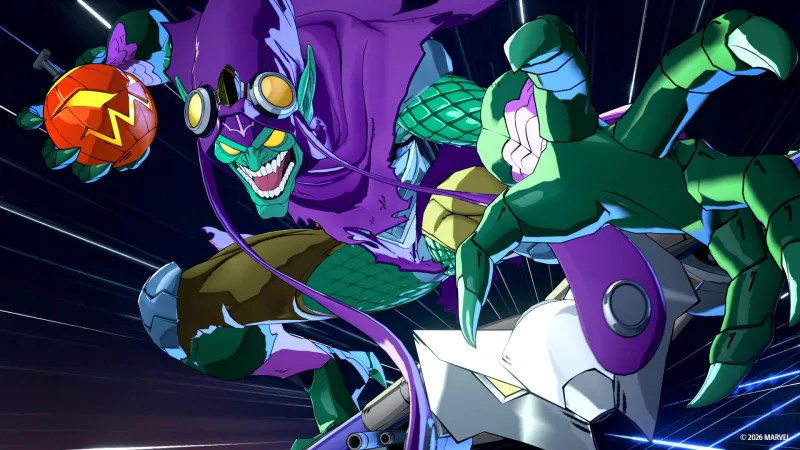
While the hard-fought matches I played online aptly demonstrate the combo system’s depth, it’s still approachable. Despite my typical struggles with longer combos, Marvel Tōkon’s character-agnostic control uniformity helps keep the combat approachable for a wider audience. The characters are instead differentiated by unique traits and dedicated specials, which range from Doctor Doom creating barriers to Green Goblin summoning his glider.

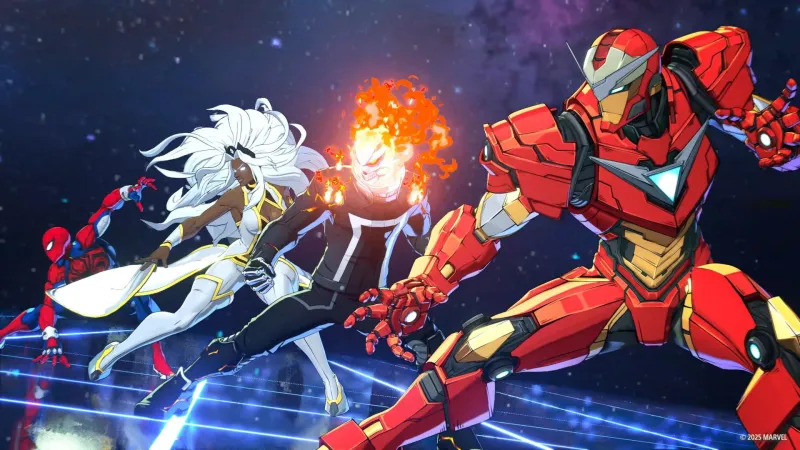
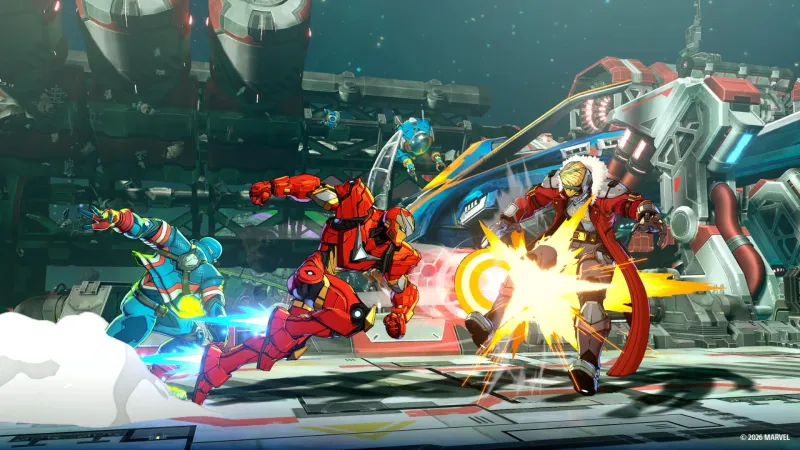
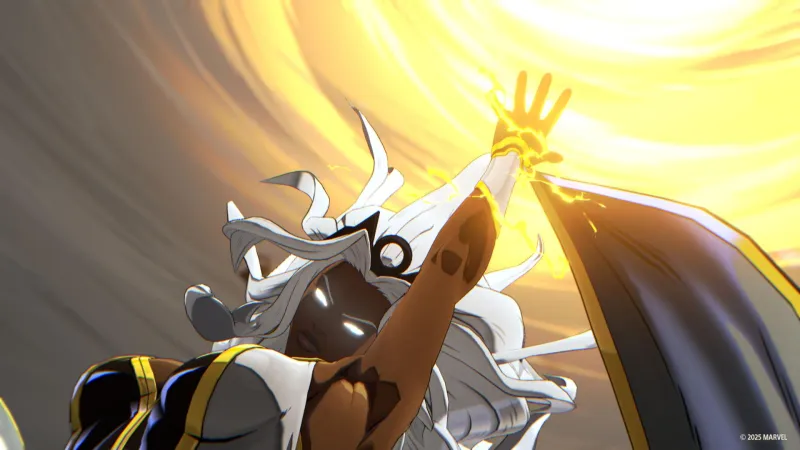
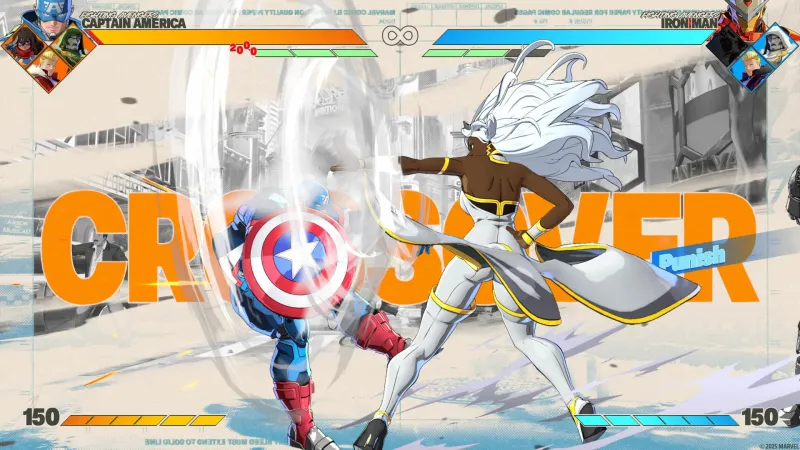
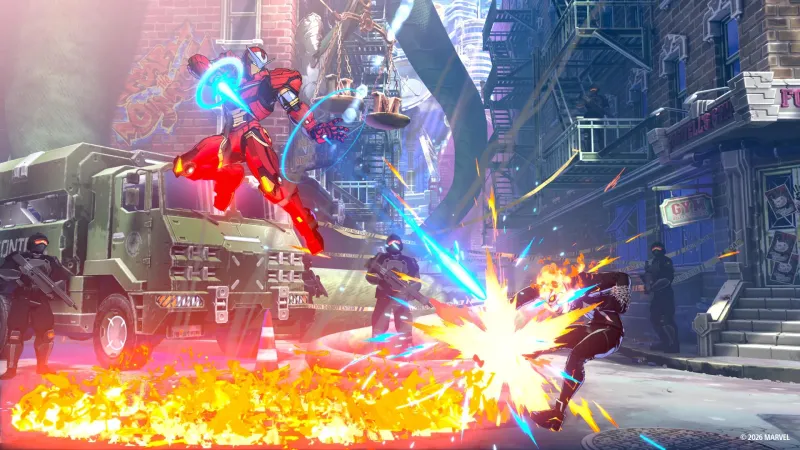
Arc System Works is known for over-the-top fighting and absolutely gorgeous visuals, and Marvel Tōkon sits alongside Guilty Gear Strive as one of the best-looking fighting games to date. Arc’s signature 3D models that look like 2D drawings remain as impressive as they were back when we first saw Guilty Gear Xrd. Just as Dragon Ball FighterZ advanced on what Xrd did, Tōkon feels like another visual jump.

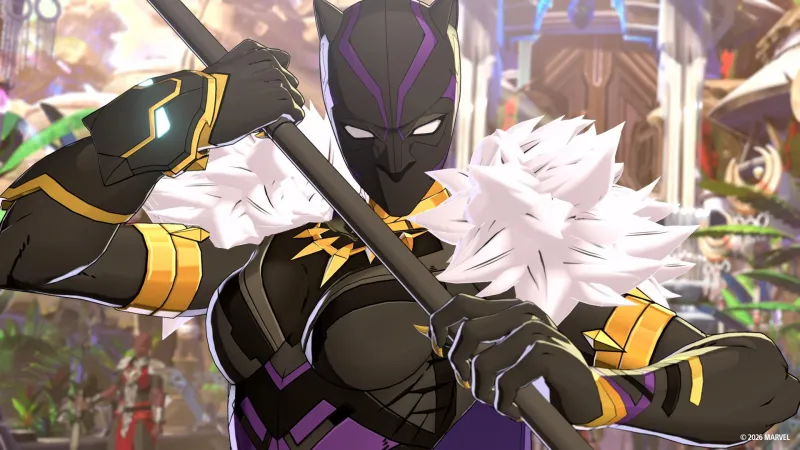
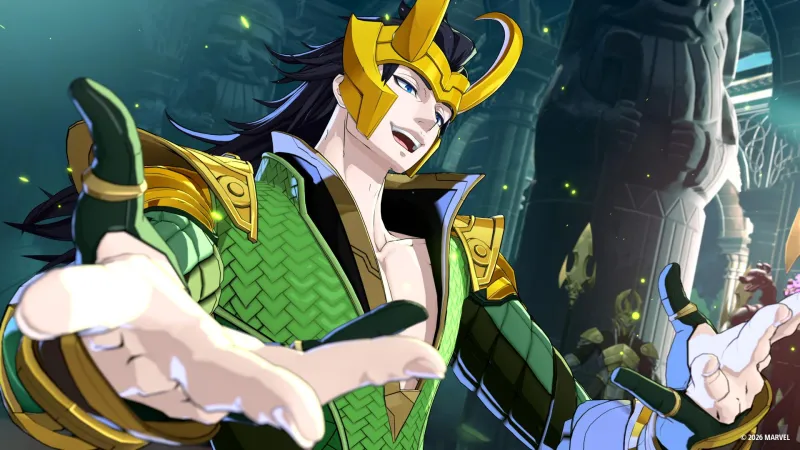
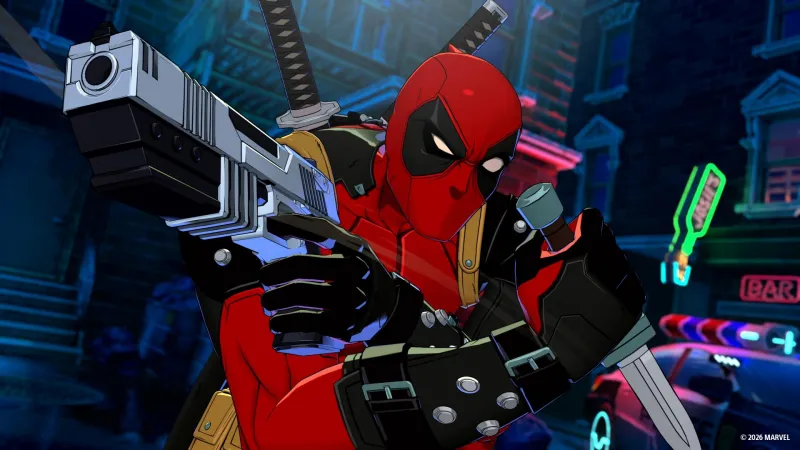
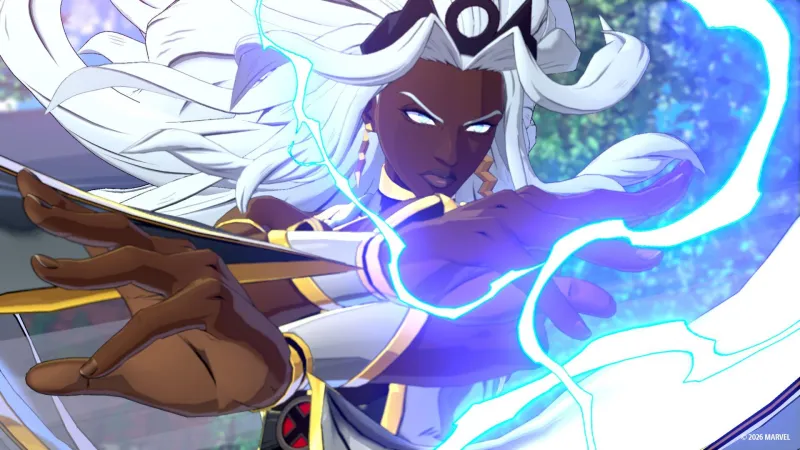
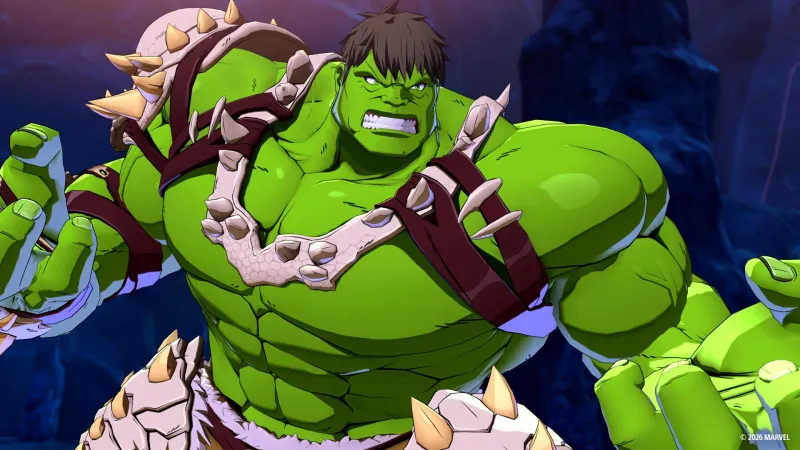
A major part of the visual praise belongs to the character designs, which are all unique, fantastic, and tasteful. The anime-inspired style just works for this game; Iron Man, for example, has armor that looks ripped out of a Mecha anime, while Hulk’s exaggerated proportions and armor make him as huge and intimidating as he deserves to be. 
Story mode comes in the form of Episodes about teams in a worldwide tournament to take on a cosmic entity, The Champion, who has been travelling the universe and ending planets he deems unworthy. These narratives are told through visual novel scenes featuring the pre-set teams interspersed with fights. Each Episode takes around an hour to beat, and they’re all basic and predictable. Most stories follow the same format aside from a few differences in the Knights of Doom’s path. 
 

Episodes also don’t serve as a tutorial in the same way story modes in fighting games sometimes do, with only very basic introductions to each character. Tōkon does have fairly in-depth training and tutorial options, but the character-specific tutorials are little more than some combo trials. They are useful, but don’t really teach you the full mentality and gameplans behind each character. 

Online is standard for Arc games: lobbies, ranked and casual matches, plus a silly eight-player side mode called Arcadia Rumble. The netcode is great, with barely any noticeable issues when I’ve played, even over Wi-Fi. 

A fighting game’s impact is difficult to determine at launch due to balancing updates and the community’s approach to it. Given the package Arc has delivered here, though, Marvel Tōkon is a more than worthy successor to Marvel vs. Capcom and Dragon Ball FighterZ. I believe it has the potential to become a fighting game mainstay for years to come.

GI Must Play

Score:
8.5

About Game Informer’s review system

Here’s What The Genma Are Up To This Time In Onimusha: Way Of The Sword

Game Informer

After a 20-year hiatus, Capcom’s samurai action series Onimusha is back. Well, almost – the next installment, Onimusha: Way of the Sword, launches next month. Ahead of its release, I traveled to Capcom’s Osaka HQ in Japan to play never-before-seen parts of the game and interview the team making it for Game Informer’s latest cover (and you can read the cover story right here). I’ve been writing exclusive features, interviews, and more from my time with Capcom, and you can read them all in the Onimusha: Way of the Sword hub

Despite having played the demo a few times and playing through roughly three hours of the game within Capcom’s main development building in Japan, I still wasn’t quite sure what the Genma, the demonic enemies that plague early Edo-period Kyoto, were up to in Way of the Sword. So, I asked lead writer Hiroshi Yamashita. 

Game Informer

“To set the scene, we obviously have the Genma in [this game’s] Japan, but we have the other realm in Hell, which is ruled by the Oni,” Yamashita says. “And within that space, the Genma also exist, and the Oni have kept them in place, but in the living world, from people killing each other and committing crimes, it generates this negative energy, this malice that you see in the game, and [that attracts] the Genma to the living world.”

Yamashita says the Oni are meant to contain the Genma, but because of the growing malice happening on Earth, “and for certain reasons” he didn’t share due to spoilers, mysterious rifts appear in Kyoto that allow the Genma to seep into the real world and invade. 

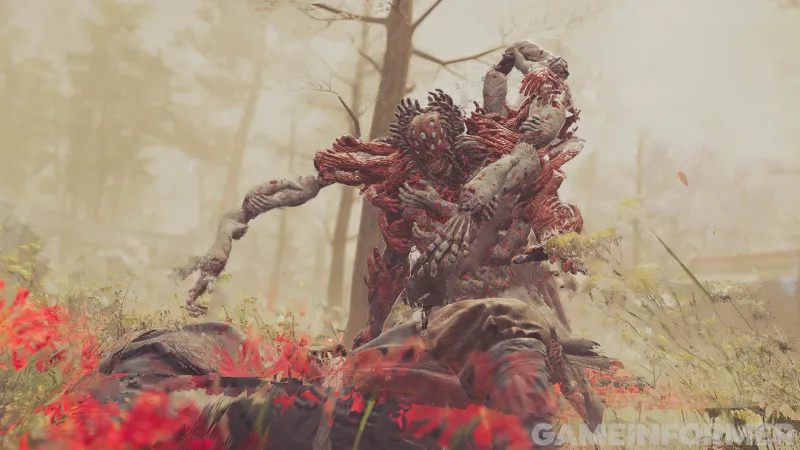
“So, for the Genma, at a very basic level, their objective, their motives are pretty much just killing and eating – that’s what drives them,” Yamashita continues. “They’re these menacing invaders, but they’re only thinking on instinct. Within the Genma ranks, though, there are specific Genma who are maybe a little different and do have their own motivations and objectives. So, whilst the main Genma might not really have a specific objective because they’re just killing and spreading chaos, those others are more like scheming Genma. 

Game Informer

“What do they get out of the Genma invading and doing all this chaos? Killing does create more malice, and as the malice builds up, it’s building toward allowing these specific Genma to do something. That’s going to be the main driving force for Musashi – working to try and stop them from completing this objective.” 

Unfortunately, Yamashita wouldn’t spill any more on what that objective might be, but I did learn on this trip that Nobunaga, a recurring villainous figure, is not returning… so it’s safe to say the Genma aren’t trying to resurrect him (again). 

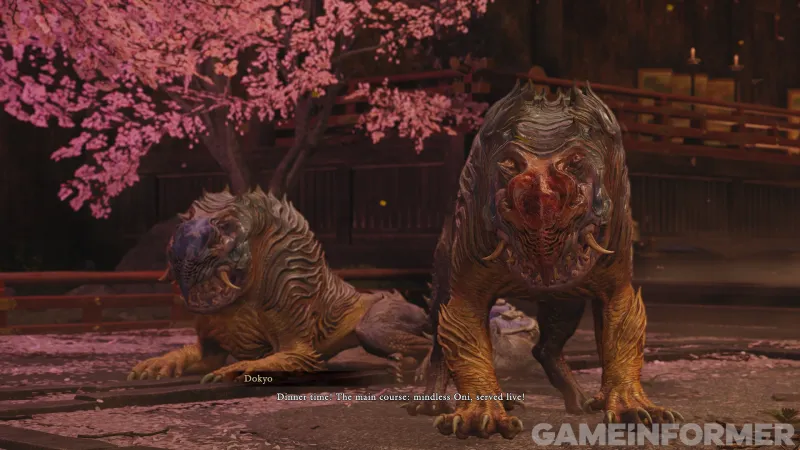
Previously showcased Genma that rank higher than the standard killers include Dokyo and Rasho-Gan, pictured below. Dokyo, especially, is in a Genma league of her own. Not only does she have a terrifying screen presence backed by a standout voice performance (from what I’ve heard so far), but she has a “special” and “unique” place in the wider story of Way of the Sword. But Yamashita says we’ll have to wait until the game’s launch next month to learn more. 


I’ll continue diving deeper into Capcom’s return to Onimusha as part of Game Informer’s month of Way of the Sword coverage. We’ll be publishing exclusive gameplay and behind-the-scenes videos (including a Rapid-Fire Interview) on the Game Informer YouTube channel as well. Keep an eye on the Onimusha: Way of the Sword coverage hub so you don’t miss any of it.  

In the meantime, here’s some additional Onimusha: Way of the Sword reading for you:

What do you think the Genma are up to in Onimusha: Way of the Sword? Let us know in the comments below!

New Phantom Blade Zero Trailer Reveals Donnie Yen And An Upcoming State of Play

Game Informer

Yesterday, Phantom Blade Zero developer S-Game released a new look at its upcoming high-speed action game. At 11 minutes long, it’s packed to the brim with flashy combat, uniquely designed enemies, and new story details (which have been scarce so far). The trailer ends with the reveal that Donnie Yen, an actor (John Wick 4, Rogue One) and martial artist, will appear in the game as Mó Yuan, providing the voice, face model, and motion capture. Yen is also listed as a creative consultant. You can view the trailer below.

These set pieces are intense to an almost comical degree, reminding me of an animated show or even some of Resident Evil’s zaniest action sequences. That said, it sounds like the trailer’s opening encounter isn’t even that far into the game. An accompanying post on the PlayStation blog from S-Game founder and CEO Soulframe Liang adds that, “Battling enemies atop a speeding wagon and crossing blades with former comrades like The Hunt are just the opening moments of Soul’s journey.”

The post continues to detail a special Phantom Blade Zero State of Play. The livestream airs next week on Monday, August 17 at 7 p.m. PT/ 10 p.m. ET/ 10 a.m. CST (note: that last start time technically takes place on Tuesday, August 18), and “will introduce never-before-seen characters central to our story while showing just how expressive players can be with their individual builds.”

If you missed it in the trailer’s title, Phantom Blade Zero is available to pre-order now. Doing so will unlock the Treasure Basin accessory and Legacy outfit early, though Liang says both items can also be obtained through regular gameplay.

Game Informer

Phantom Blade Zero launches on October 29 on PS5 and PC. For more on the game, check out our preview from last year, when we traveled to China to see its motion-capture studio in person.

New Ghost Of Yōtei Story Content And Roguelike Mode Arriving In October

Game Informer

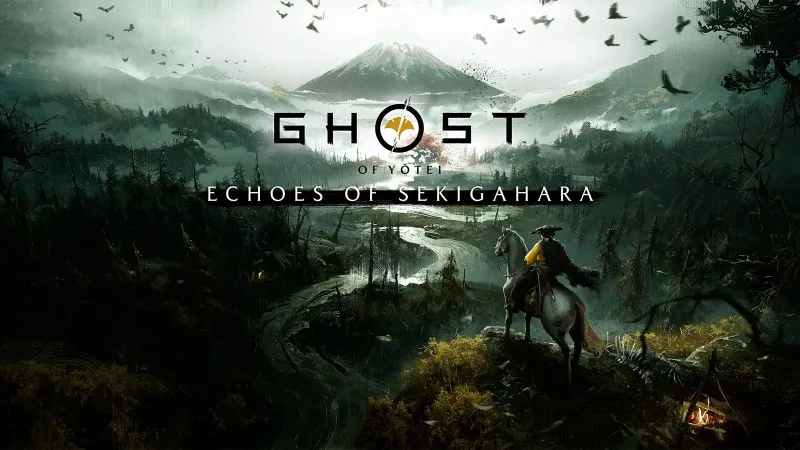
Ghost of Yōtei released in 2025 and was one of our favorites of the year. You can read Game Informer‘s Ghost of Yōtei review by following the link. Following its release, developer Sucker Punch added Legends, a cooperative online multiplayer mode, much like it did to Tsushima – Legends is free and available now if you own the base game. But now, the developer is also adding single-player story content and gathering everything into one package for Ghost of Yōtei Complete Edition. If you already own Ghost of Yōtei , you can upgrade to Complete Edition to get the new single-player content for $14.99 when it becomes available on October 1.

The single-player content is made of two pieces: Echoes of Sekigahara and Most Wanted.

Echoes of Sekigahara is a narrative expansion that takes place in the current Yōtei timeline but flashes back to detail Atsu’s relationship with a character named Nagato and spends more time with The Snake, the least-explored member of the Yōtei Six. You basically kill him in the tutorial of the base game. Atsu’s life after her childhood, but before the events of Ghost of Yōtei is ripe for exploration, so this is an exciting prospect narratively and mechanically.

Most Wanted is Sucker Punch’s “spin on a roguelike” according to a post on the PlayStation Blog covering all the new content. In the mode, “you’ll accept bounties in order to start new runs, where taking down enemies will earn you perks, as well as unlock additional characters to play as.”

God of War Ragnarök similarly added a roguelike mode called Valhalla following its release and it was an excellent addition to the game. I’m hopeful Yōtei’s Most Wanted mode will similarly be a worthy addition.

Along with the content outlined above, the October 1 update will also add new tracks for Watanabe Mode, photo mode upgrades, additional New Game+ cosmetics, the option to “keep an armor set’s appearance while using a different set’s stats,” and Beauty of Yōtei mode, which sounds like it will make the game showcase different environments from Ezo (where the game takes place) to function a bit like a screensaver.

For more on Ghost of Yōtei, you can read our Afterwords interview with Sucker Punch reflecting on the game’s story and development (watch out for spoilers), and you can read our interview here about the added Legends mode.

Finn Wolfhard Prefers Grass Type Pokémon And Classic SNES RPG Soundtracks

Game Informer

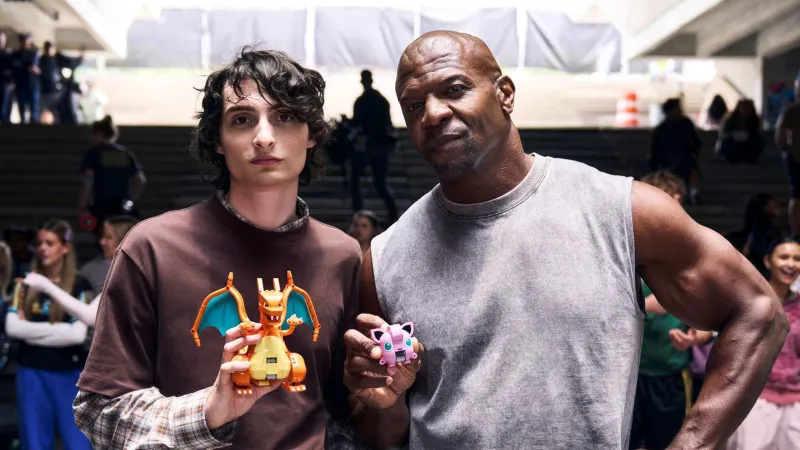
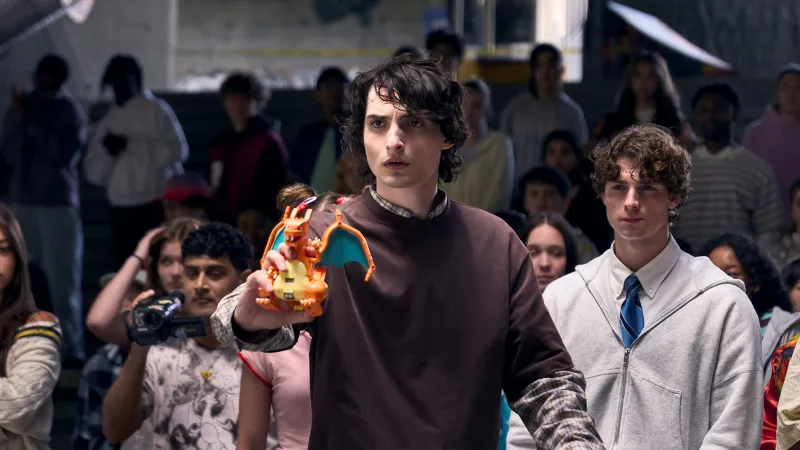
Finn Wolfhard is primarily known for his role as Mike Wheeler on Stranger Things, but with the popular Netflix show firmly behind him, he is now focused on his music career. But that doesn’t mean he is not performing and picking up smaller jobs that let him do fun, unexpected things like act out Lego Pokémon battle scenarios with Terry Crews. In promotion of the commercial and the new line of Lego Pokémon, we spoke with Wolfhard about his history with video games, Pokémon, Lego, and learned how video game music influences his own music.

Game Informer: What’s your history with Pokémon? Where’d you start?

Finn Wolfhard: The first game I played was Pokémon Pearl, and I loved that game. And my brother and I – my brother maybe even more so than me is a huge Pokémon fan. I’m a huge fan, as well. He, I think, has put a little more hours into the games, but I’ve definitely had my fair share of Pokémon and playing through FireRed. Last year, me and a few of the cast, actually, of Stranger Things were playing through FireRed on set to kind of pass the time, and that was really fun.

Were you trading Pokémon on set? Did you get that intense with it?

We didn’t. We weren’t trading, but we were comparing how each other’s journey was going.

Game Informer

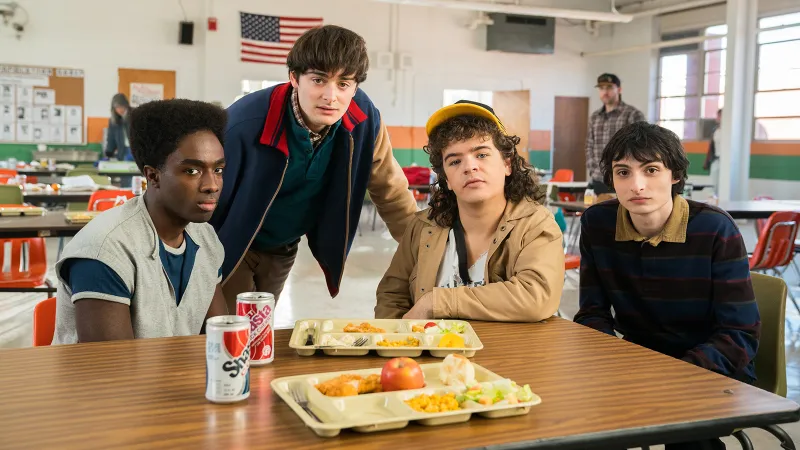
Stranger Things, Season 5

Seen just out of frame, multiple copies of Pokémon FireRed (allegedly)

Pearl was your first. Who was your starter?

I don’t fully remember, actually, who it was. I remember playing Machamp a lot from that game. That was like my… that was obviously not my starter. But my memory is that I was playing the most when I was Machamp. I’m pretty sure it was Machamp. But yeah, that was definitely, I think grade two or three or something playing that game. From what I remember, it was Pearl. What was the other one that came out that year? It was Diamond?

Yeah, Diamond and Pearl were the two for DS.

Right. It was Diamond and Pearl. Do you remember what the starters were on both of those?

Readers will definitely want to know who your starter was. It was Piplup the penguin, Chimchar the flame monkey, and Turtwig the turtle.

It was Turtwig.

Game Informer

Good choice.

Yeah, and then my brother was playing Diamond at the time, so we both got best of both worlds.

Who was your FireRed starter? That one maybe you remember because you played it more recently.

Yeah, that one was Venusaur. [editor’s note: Bulbasaur] I love a grass Pokémon, for sure.

How about Lego? What’s your Lego connection?

Lego is a huge part of my childhood, and obviously I grew up with it just being scattered around our house. I think for years, my parents found Lego everywhere. But I remember we had a lot of Star Wars Lego. We had little Tie Fighters, and I remember having a Darth Maul. A little Darth Maul figure that we’d play with all the time. So we were definitely a Lego family.

Game Informer

I imagine this offer comes through, an ad/short film for Lego and Pokémon and it’s a pretty easy yes?

Yeah, I was kind of like, “Oh, these are two awesome things from my childhood. I have to do this.”

And what is it, exactly?

It’s […] keeping it maybe a little vague, but from what’s already come out for the teasers and stuff, I’m battling Terry Crews and I’m kind of like an undefeated Pokémon trainer, a Lego Pokémon trainer, who now has a new fighter or a new challenger.

Was that an easy role for you to play? Are you good at playing the Pokémon games?

Yeah, I’m pretty good at Pokémon. I think this was fun because this ad, the short film kind of takes inspiration from  – because it’s, you know, it’s not a video game. It’s tactile. It’s the figures and actually using the toy, so a lot of it was actually pretty physical. We actually had to do some choreography for it, and it was a little bit inspired by kung-fu films. Pretty fun stuff.

This is a loaded question, so I won’t ask for a singular choice, but can you tell me just some of your favorite Pokémon?

Ooh, Mewtwo is a huge one for me, just because it’s in my head – that design? That character design is so iconic. Ivysaur. I love Ivysaur. I love Pichu. I remember when I was little, I just thought Pichu was such a cool Pokémon. I’m trying to think of others. Geodude. Love Geodude.

Machamp is a favorite, I assume?

Machamp’s definitely a favorite. I definitely feel like I go between the grass Pokémons and like sometimes into the water Pokémon. But mostly grass type.

What is your general history with video games, even outside of Pokémon? What are some of your favorite games? What got you into video games?

The first games I remember seeing someone play was – and also the first games that I actually did play – a lot of it was Final Fantasy. Final Fantasy X was, I remember, one of the first games I played. I remember Jak II, like Jak & Daxter 2, was a big one. All those kind of early Naughty Dog games were definitely around in my house, and I played a lot.

Game Informer

Wolfhard with a Charizard, which is notably not his starter

What was it about Jak II you liked so much?

The hoverboard. The hoverboard was like… I spent a lot of time doing that. And honestly, that game is really hard. And so whenever it was too hard, that’s when my brother would kick in. And whenever there was anything that had to do with racing or you know any of the hoverboard stuff, that’s when I would come in, and so I love that.

And then I was also at a really young age collecting. I was really into collecting old consoles, so when I was like nine, I went with my dad and we found an NES. And so I played a lot of Super Mario Bros. 3, and was super into just collecting cartridges and Nintendo Power [magazines]. My uncle got me a Super Nintendo for Christmas and played Street Fighter II on that. So definitely, a lot of the older consoles, I was super into.

Is that still what you enjoy about video games? Or do you play modern video games as well?

I definitely play modern video games. Whenever I get the chance to play, you know, GameCube though? Or like anything on PS2? That’s my favorite. But nowadays, what I’ve been playing recently that has been just like “friendslop,” I think they call it.

Game Informer

Meccha Chameleon (2026)

What are you playing in the friendslop zone?

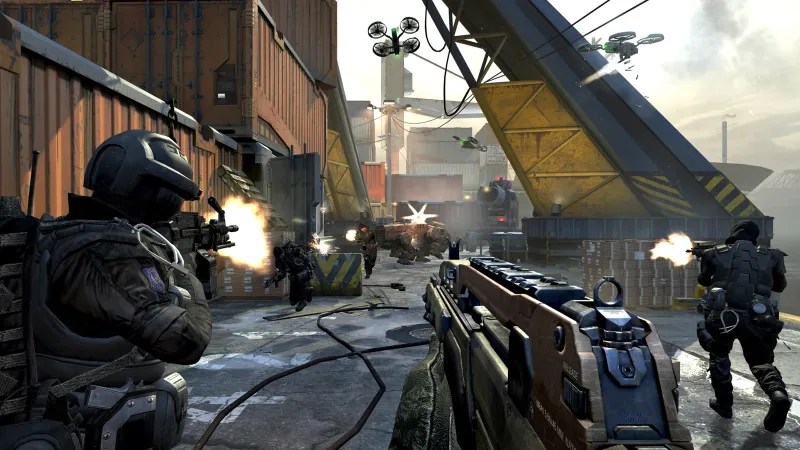
I definitely had a moment with Meccha Chameleon. That was super fun. This is not friendslop, but the thing I’ve been putting the most time into recently is they re-released Black Ops II onto PS5. I was big into Call of Duty, like when it was like Black Ops II specifically, and I had a clan. I was a sniper. Like I would go out and try to get Quad Feeds and 5ons [laughs]. So that’s been really fun, getting back into Call of Duty.

You are basically like a touring musician these days. Are you playing games on the road?

Yeah, we were literally on the bus last week. Me and my band play Call of Duty: Black Ops II Zombies together, which was really fun.

Game Informer

Call of Duty: Black Ops II (2012)

I was looking through some of the lyrics for your new album, and I see movie references. Boogie Nights, you have jokes about Avatar 3, and George Clooney, but I didn’t see any video game references. Do video games or video game music even serve as an inspiration for you in any way?

Oh yeah, for sure. I definitely love video game music, and some of the melodies definitely inspire me. Like Super Mario Galaxy? That’s like one of the best soundtracks of any game. All the Final Fantasy scores are unbelievable. Any Final Fantasy score, that’s like my favorite. But yeah, no video game references on this record. Maybe next. I definitely like to wear my favorite weird little pop culture video game references.

You know what game I was playing recently, too? Crazy Taxi. That was so fun.

There’s a new one on the way, actually.

Yeah, they’re making a new one. I’m stoked about that.

There’s a game called Truck-kun is Supporting Me from Another World?! that’s anime and Crazy Taxi-inspired, where you’re trying to hit people with a truck to send them to a fantasy universe. It’s very strange and funny. If you like Crazy Taxi.

It sounds like, in terms of like video game music inspiration, it’s more the musicality as opposed to like influencing like your lyrics.

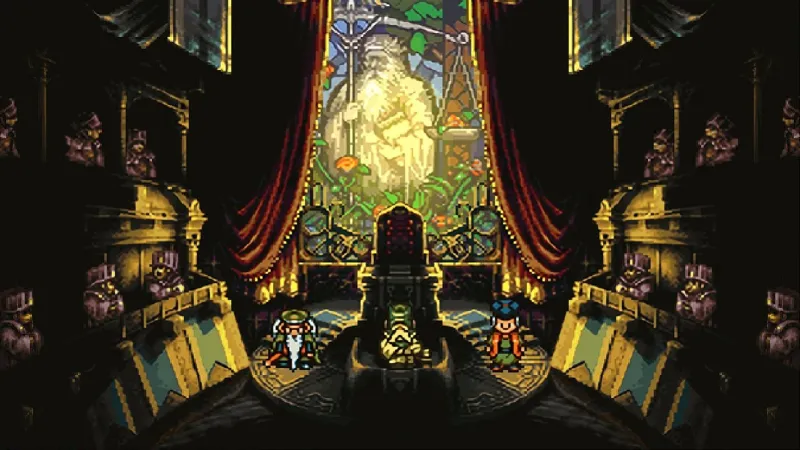
For sure. I definitely get inspired by the score from movies, as well as score from video games. Any time I get to have any kind of string arrangement, or string anything, I go back and I’ll listen to the greats, like Chrono Trigger. I guess Chrono Trigger doesn’t really have… I guess it has some strings, but you know – I’ll go back and listen.

Game Informer

Chrono Trigger (1995)

It’s fun to hear you talk about games like Chrono Trigger. You’re younger than me, but it’s cool that those games have persisted and you found them. I love Chrono Trigger and the soundtrack, of course.

That soundtrack’s amazing. Also, EarthBound. That music is also unbelievable. There’s so much from older Japanese games. I feel like all those composers are just brilliant.

Is that something you were paying attention to even when you were young? When you first picked a guitar, were those tunes on your mind?

I never learned any of them because they were always so complicated. I would have friends, like nerdier friends growing up, that knew piano or something, and they would be able to play something on piano because they were classically trained, and I just… I wouldn’t even know where to start.

What We Learned About Shizuka, The Mysterious Woman Living In Musashi’s Oni Gauntlet In Onimusha: Way Of The Sword

Game Informer

Onimusha is finally returning to the action space next month after a 20-year hiatus at developer-publisher Capcom. Though a lot of the series’ trademarks are returning, like an intense focus on swordplay action, hordes of demons, a samurai protagonist, and the Oni Gauntlet, there’s plenty of new, too. There’s an “open-town” section of Kyoto, which is where this early Edo-period adventure takes place; there’s historical Japanese samurai Miyamoto Musashi as the protagonist this time, using the likeness of the late Toshirō Mifune; and there is also a mysterious woman living inside Musashi’s Oni Gauntlet.

That mysterious woman is named Shizuka, and despite her ethereal appearance, she often speaks with Musashi during this adventure. In case you missed it, Onimusha: Way of the Sword is the latest game to grace the cover of Game Informer, and for my cover story (which subscribers can read right here), I traveled to Capcom’s Osaka HQ to play hours of the game and interview the team making it. Naturally, I asked about Shizuka and her role in the story. 

Game Informer

Previous Onimusha heroes like Samanosuke Akechi and Jūbei Yagyu welcomed the powers of the Oni on their quests in Onimusha: Warlords and Onimusha 2: Samurai’s Destiny, respectively. Musashi, a warrior through and through who wishes to become the greatest swordsman in Japan on skill alone, despises the additional strength the Oni Gauntlet stuck on his arm yields to him. “Musashi is a hero who wants to rise to the top on his own strengths, so him being paired with the gauntlet – this power that he doesn’t want – we thought, provides an interesting contrast to the previous heroes we’ve had,” Way of the Sword director Satoru Nihei tells me. 

Though I don’t exactly know how Musashi comes upon the Oni Gauntlet, it’s very clear he wants it off and believes killing more Genma and collecting their souls will make that happen. “But, as the story progresses, and as he moves on, we kind of see some growth, and he starts to change his opinions on the gauntlet,” Nihei adds. 

Shizuka, somehow stuck inside the Oni Gauntlet, likely has something to do with that. I learn little of her motivations during my time playing the game, but I do note the soft simmering of something between them. Perhaps camaraderie, perhaps romance, perhaps something else entirely, but I suspect the generally solo-minded Musashi will come to appreciate her presence. And for what it’s worth, she’s sorry to have brought him into this mess, despite needing him to one day be freed from the gauntlet’s confines. 

As for how the idea of Shizuka came to be, Way of the Sword lead writer Hiroshi Yamashita tells me she’s there to help the global audience Capcom intends for the game to have. “On a game design level, with the setting of Kyoto, not everyone is familiar with the setting, especially a global audience,” Yamashita tells me. “So, when we were making the game, with Musashi coming to Kyoto on his own, we kind of wondered, ‘How are we going to convey a lot of that information to players?’ We thought we could just have Musashi walk in the streets, talking and mumbling to himself, […] but that would be very unnatural and strange. So that’s where the idea of having a support character […] like Shizuka came from, to explain to him what’s going on, tell him about the Genma, and teach these things.”

The team didn’t just want a companion inside the Oni Gauntlet there for functional game design reasons, though, so the story team integrated her into the narrative. “There is actually a reason,” Yamashita continues. “Something happens to her and she ends up escaping to the gauntlet, so she is in this position where she has something that she wants to achieve, she has a goal, but she doesn’t have a physical form, she can’t fight for herself, and so she’s having to entrust Musashi with this duty.”

Game Informer

Yamashita says Musashi and Shizuka are quite distant with each other in the beginning of Way of the Sword, butting heads often, but notes that “as the story progresses, we see that relationship change a bit as she is quite key to the story itself.” 

I did ask Yamashita about ensuring Shizuka doesn’t fall into the annoying companion trap, and he says the team was cautious about this, looking at other game companions to see where they go right and where they go wrong. I’ll have to take his word on her for now, but in my three hours of playing the game at Capcom HQ, she wasn’t annoying as a presence in the slightest. 

We’ll all soon learn more about her, though, because Way of the Sword launches in just a few weeks on September 4

I’ll continue diving deeper into Capcom’s return to Onimusha as part of Game Informer’s month of Way of the Sword coverage. We’ll be publishing exclusive gameplay and behind-the-scenes videos (including a Rapid-Fire Interview) on the Game Informer YouTube channel as well. Keep an eye on the Onimusha: Way of the Sword coverage hub so you don’t miss any of it.  

In the meantime, here’s some additional Onimusha: Way of the Sword reading for you:

What do you think Shizuka’s role is in Onimusha: Way of the Sword? Let us know in the comments below!

Wolverine-Themed PlayStation 5 Consoles And Controllers Drop In September

Game Informer

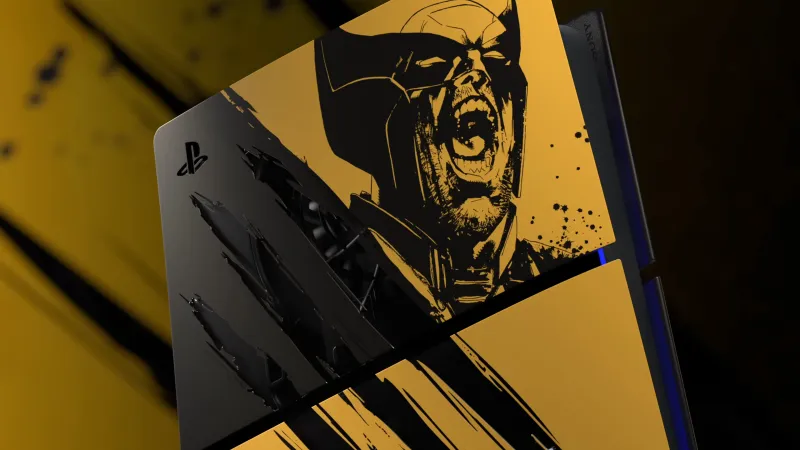
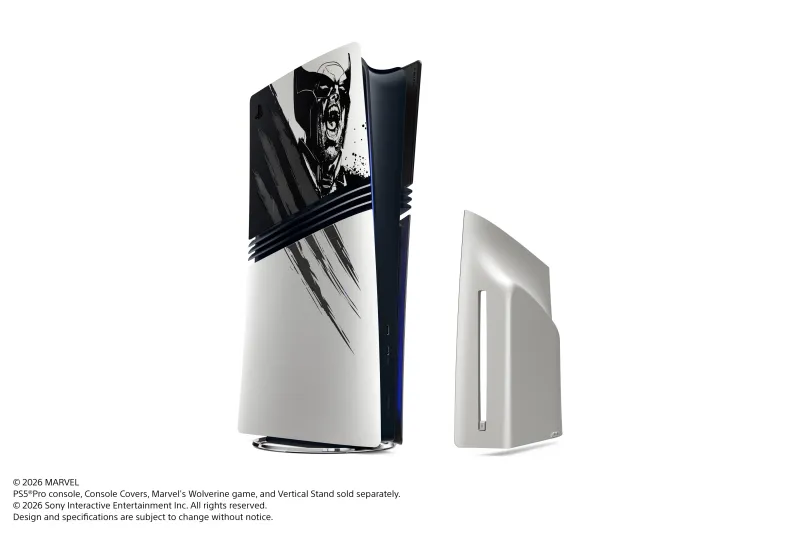
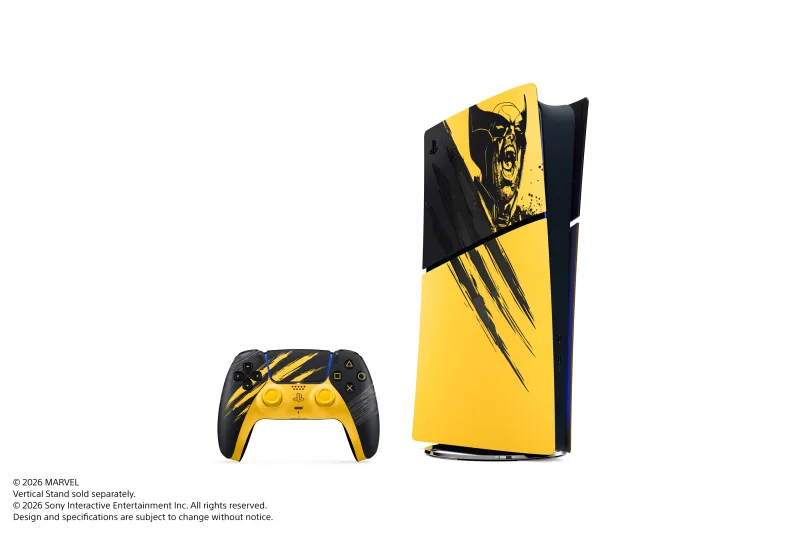
Marvel’s Wolverine, one of the biggest games of the year, comes out it a little over a month. Today we learned it’ll get the same treatment as PlayStation’s other beloved first-party IP and launch alongside a limited edition PS5 console and controller. A bundle with a PS5 digital edition (there’s no disc drive – more on that later), controller, and a game code for Marvel’s Wolverine will be available starting September 15, the same day as the game comes out. Check it out for yourself below.

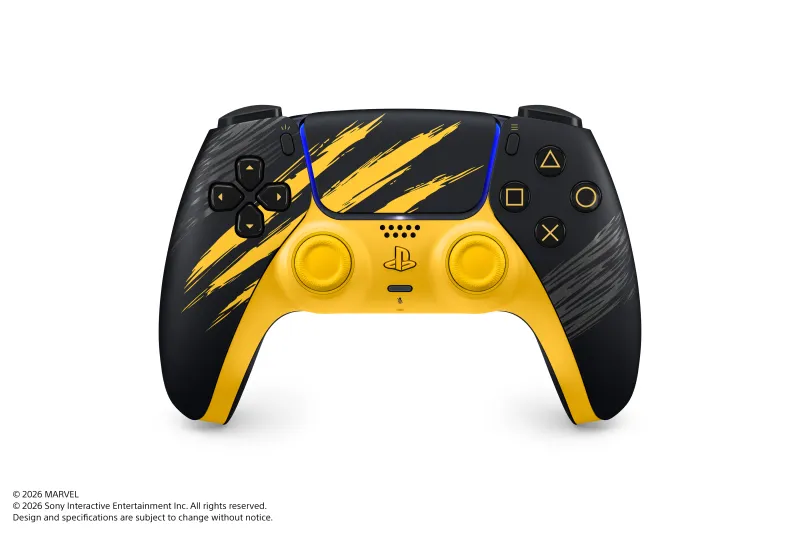
The console and controller feature a slashing design caused by Wolverine’s iconic claws, and the console itself includes art of Wolverine’s face. For those who already have a PS5, PlayStation is also selling console covers, which you can swap out for the system’s base white plates (or whatever color you might have on there now). The covers will get an added color, Adamantium, which swaps out the yellow for silver, but while there are yellow covers for both the PS5 Slim and PS5 Pro, you can only get Adamantium for a PS5 pro. Controllers will come in both colors, however. 

The bundle and yellow controller will be available at “select retailers,” but the console covers and silver controller are exclusive to PlayStation’s online storefront. All of these products have, unsurprisingly, been affected by Sony’s recent string of price increases for its physical hardware and accessories. Here’s how much each item is going to cost:

  • PlayStation 5 Digital Edition – Marvel’s Wolverine Battle Yellow Limited Edition Bundle:
    • $649.99 US / £569.99 GBP/ €649.99 EUR / ¥96,980 JPY 
  • DualSense Wireless Controller – Marvel’s Wolverine Battle Yellow Limited Edition:
    • $84.99 US / £74.99 GBP/ €84.99 EUR / ¥12,480 JPY 
  • PlayStation 5 Console Covers – Battle Yellow Limited Edition:
    • $74.99 US / £64.99 GBP / €74.99 EUR / ¥9,980 JPY 
  • PlayStation 5 Pro Console Covers – Marvel’s Wolverine Battle Yellow Limited Edition:
    • $74.99 US / £64.99 GBP/ €74.99 EUR / ¥9,980 JPY 
  • PlayStation 5 Pro Console Covers –Marvel’s Wolverine Adamantium Limited Edition:
    • $74.99 US / £64.99 GBP / €74.99 EUR 
  • DualSense Wireless Controller – Marvel’s Wolverine Adamantium Limited Edition:
    • $84.99 US / £74.99 GBP/ €84.99 EUR 


Of course, this all comes during a controversial time for PlayStation. Its decision to phase out physical disc releases starting in 2028 has frustrated fans around the world, and the comments of the video linked above are flooded with people complaining about the company’s decision and the bundled console’s lack of a disc drive. Even unrelated videos on the channel, like trailers for third-party games coming to PS5 have their comments full of people standing up for physical discs. At the same time, physical media is undeniably becoming more expensive to produce, and PlayStation has raised the price of its consoles and accessories twice in the last year – first last August, then this March

For more Wolverine, you can check out this trailer showcasing Lady Deathstrike or this interview revealing the game takes place before the X-Men exist. For more on our frustrations around rising prices and our frustrations with gaming’s biggest companies, read executive editor Brian Shea’s opinion piece about why the most recent console generation has been a “race to the bottom.”

Until Dawn and Directive 8020 Developer Supermassive Games Will Lay Off “Up To 75” People

Game Informer

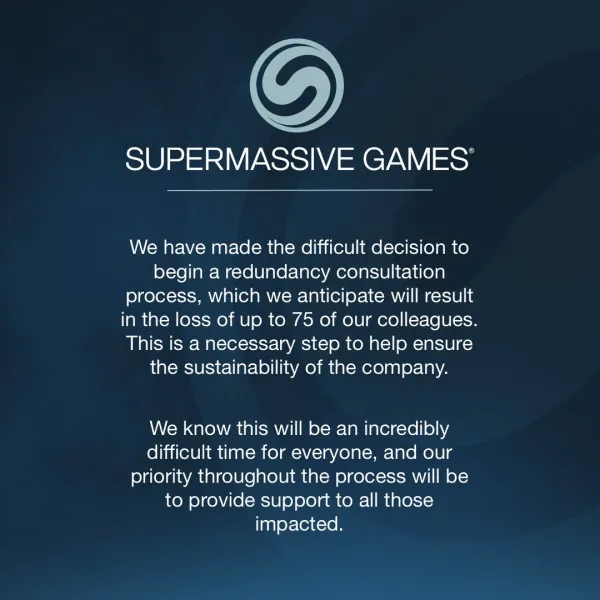
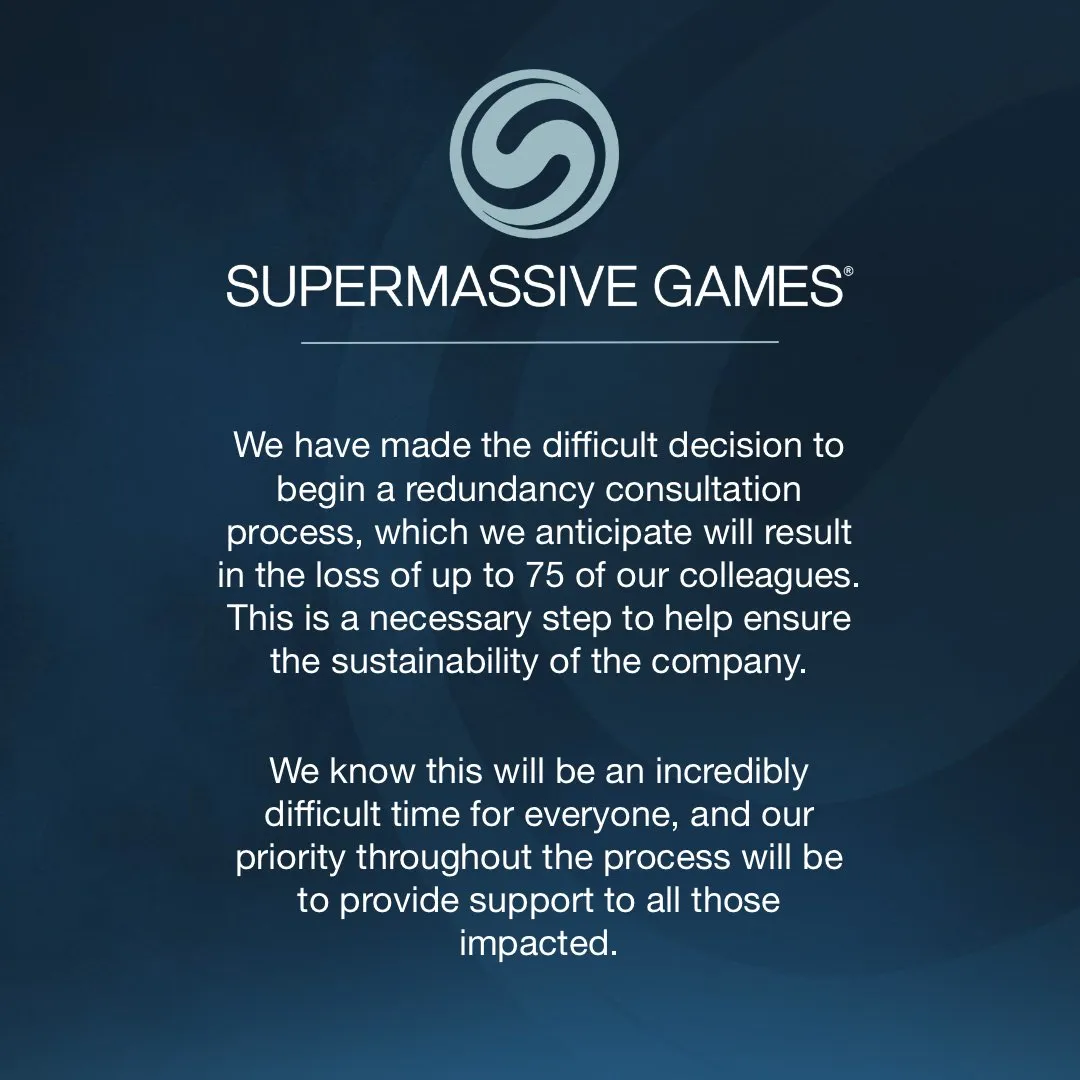
Supermassive Games, developers of games like Until Dawn, The Quarry, and The Dark Pictures Anthology, has announced it’s likely letting go of several of its employees. In an image shared to social media, the company made a statement that it has begun a “redundancy consultation process.” When it concludes. Supermassive expects to lay off “up to 75” of its employees. You can read the full message below.

Game Informer

“We have made the difficult decision to begin a redundancy consultation process, which we anticipate will result in the loss of up to 75 of our colleagues,” the statement reads. “This is a necessary step to help ensure the sustainability of the company. We know this will be an incredibly difficult time for everyone, and our priority throughout the process will be to provide support to all those impacted.”

Supermassive Games just launched its most recent project, Directive 8020, in May. That game was originally slated for last October, but Supermassive issued a similar statement in July of 2025, delaying Directive 8020 into 2026 and laying off 36 people. And back in February 2024, Bloomberg reported that the company underwent the same process, cutting roughly 90 jobs. That’s roughly 200 jobs in less than three years.

None of Supermassive’s most recent games, Directive 8020, Little Nightmares 3, or The Casting of Frank Stone, have been huge critical successes, sitting at 72, 71, and 68 on Metacritic, respectively. Meanwhile, Until Dawn 2 is being developed by a different studio

This is the latest in a years-long trend of mass layoffs in the video game industry. Other major examples from 2026 include Battlefield Studios laying people off, even though Battlefield 6 was the best-selling game of 2025, the decimation of Bungie’s Destiny 2 team (and the game’s final update), and Microsoft parting ways with several studios, laying off thousands.

Star Wars Zero Company Is XCOM Meets Star Wars In The Best Way Possible

Star Wars Zero Company

Platform:
PlayStation 5, Xbox Series X/S, PC

Publisher:
Electronic Arts, Lucasfilm Games

Developer:
Bit Reactor, Respawn Entertainment

Release:

Rating:
Teen

I still remember where I was when I heard that Firaxis was making a Marvel game. While the game I dreamt of – XCOM with the Marvel license – ended up differing pretty substantially from what we ultimately got with Marvel’s Midnight Suns, I still thoroughly enjoyed the unique deckbuilding and social mechanics layered on top of the turn-based tactics I had come to love about Firaxis. 

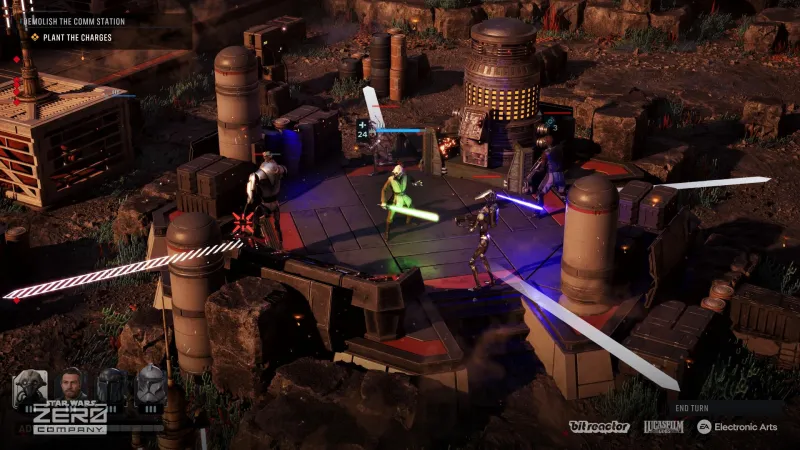
However, with many of the developers who created XCOM: Enemy Unknown, XCOM 2, and Marvel’s Midnight Suns departing Firaxis to form Bit Reactor, and that studio announcing its debut game to be a Star Wars title, it was safe to say I was excited at the prospects of the end result. And now that I’ve spent upwards of 10 hours exploring the Galaxy Far, Far Away in this turn-based tactics experience, I’m finally getting the licensed tactics game that hits many of the same notes that made me fall in love with XCOM back in 2012.

Back to Square Zero

The Maryland-based Bit Reactor was founded in 2021 by several former members of Civilization and XCOM developer Firaxis Games. Co-founder and director Greg Foertsch, who spent 22 years at Firaxis, was joined by several other former Firaxis developers, as well as team members from other studios with diverse backgrounds, which Foertsch says brings new spins and perspectives to that core group’s way of thinking. However, having that foundational group of Firaxis employees helped Bit Reactor hit the ground running, even though the studio was started during the COVID-19 remote work period.

“We were starting this up while people were remote, but we haven’t just shipped one game together… a lot of us have shipped four or five games together, and have been together for decades, not just a year or two,” Foertsch says. “We’re a weird company in that we’re a completely independent startup, and we have days where, from a business side, we’re a startup, but we’ve got the soul of a much older team, and we’ve got a shorthand with each other. We have trust. All those things are so important to building a game that if you don’t have them, they create hurdles. We were, out of the gate, able to sidestep some of the early startup stuff because of our experience together and, most importantly, our trust in each other.”

Game Informer

Bit Reactor was always going to make a turn-based tactics game for its debut title. However, it was the late Vince Zampella, former head of Respawn Entertainment, who pushed Bit Reactor to create a Star Wars game. “I wanted to work with existing IP to begin with; it’s a hurdle that’s taken care of for you, and you can focus on the game part of it and the studio part of it,” Foertsch says. “Vince ended up calling me and said, ‘Hey, can you talk to me about what you want to make?’ And I did, and I can’t say enough about Vince having the vision and conviction to let us pursue this. […] I was pitching a few other places before I talked to Vince, and then once I talked to Vince, I steered all of my attention toward Vince and Respawn because I felt that ideologically, we aligned. Vince believed in developers, and it’s not just about where your funding comes from, it’s about making sure that the people you’re working with understand game and understand that there’s a point where they don’t look good, and understand that there’s a point where, ‘Wow, why did I ever go on a journey to make this thing?’ But that if you have faith in the process, eventually you come out with something great, and you just have to stick with it. So that became pretty clear to me that we matched up well.”

Once that match was made, Electronic Arts signed on to publish the game, with Respawn helping Bit Reactor with development. Respawn’s Star Wars Jedi franchise takes place between the Prequel Trilogy and the Original Trilogy, telling the story of a Jedi taking on the Empire following the execution of Order 66. Bit Reactor decided to go a different route, telling a story during a well-trodden, but ripe part of Star Wars history: the Clone Wars. Despite having a long-running animated series devoted to explaining the events of the Clone Wars, Foertsch knew it was the right time period to tell the story he wants to tell. It turned out Lucasfilm agreed.

Game Informer

“The fact that there is so much stuff surrounding the Clone Wars allows us to put our story in that Clone Wars bubble, and it can kind of exist inside of this thing,” Foertsch says. “And so the edges of the Clone Wars kind of reach in and touch it a little bit, but you’ve got this little bubble that the player is in, and they’re playing a story that’s new and fresh and different, yet it’s got all the familiar stuff that we can pull in. So, if you’re a big Star Wars fan, you’re going to have lots of little things where you’re like, ‘Wow, that’s a deep cut! That’s really cool!’ If you’re not, you’ll learn about some of those things. It’s a way to position us to tell a really good story with enough familiar elements available to bind it.”

As someone who loves both XCOM and Star Wars, I couldn’t wait to dive into the pre-release preview build, which gave me unfettered access to the first several missions of the game, leading up to a climactic battle that gives a big nod to that broader Clone Wars era. That conclusion served as the exclamation point for my time with Star Wars Zero Company, but it was far from the only highlight.

Telling You The Odds

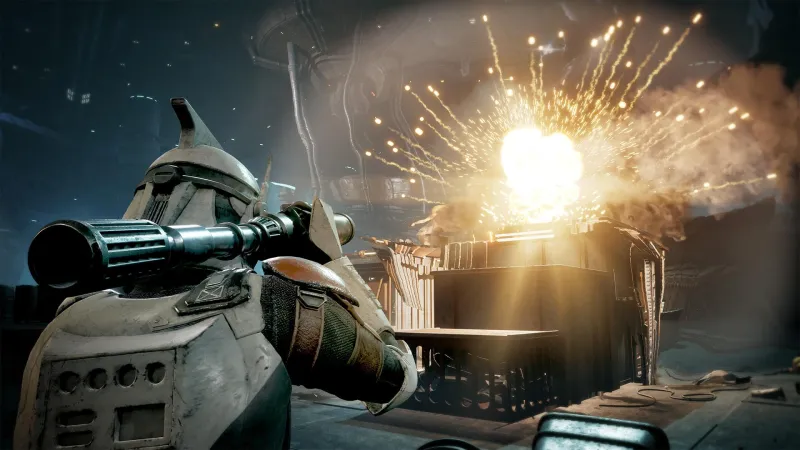
Star Wars Zero Company casts you as Hawks, the fully customizable leader of Zero Company, a ragtag group of mercenaries who start off working jobs for the Republic before slowly unraveling a mystery surrounding a fanatical cult. This cult, The Infinite Coil, is led by Kundri Fathom, who infects all members and initiates with a plague that improves their physical strength seemingly at the cost of their mind and free will. After the first couple of hours, The Infinite Coil establishes itself as insidious, capable, and relentless. Not only that, but it aligns itself with the Separatists and its army of battle droids.

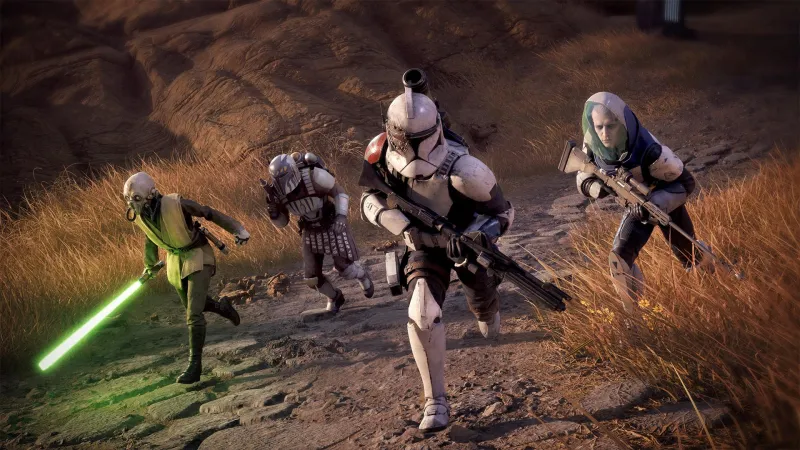
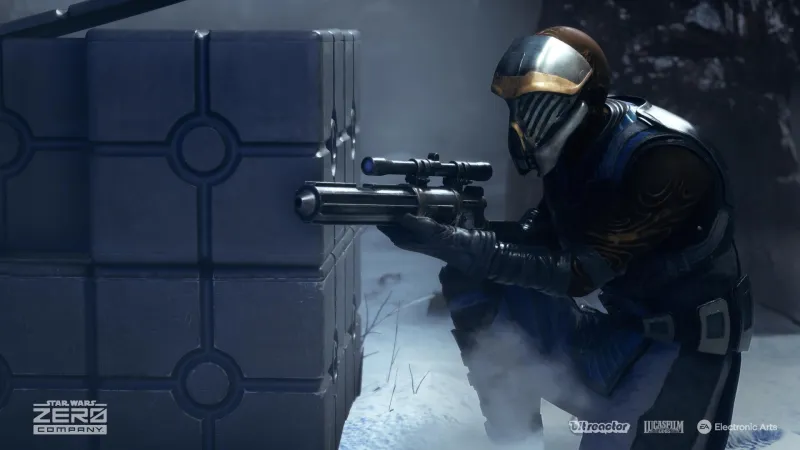
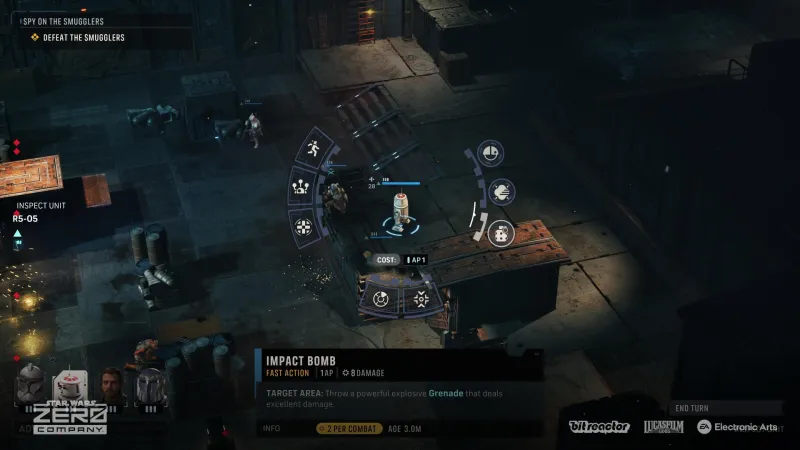
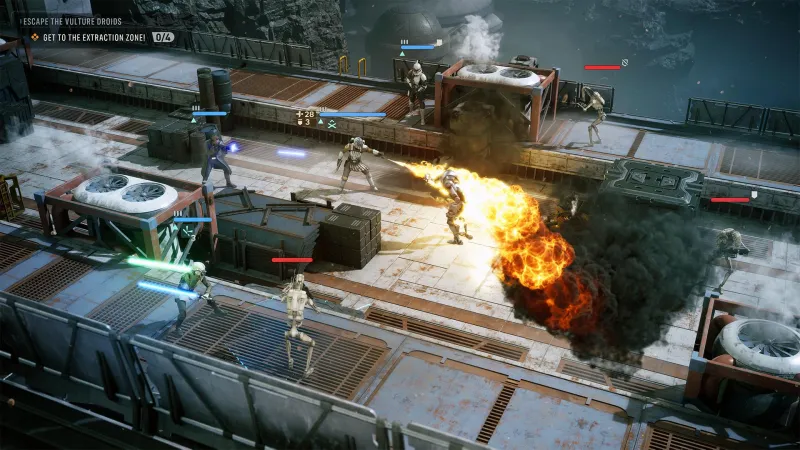
At the start of the story, Hawks is on a mission with Zero Company, which consists of a Rodian named Aurelio, a Clone Trooper named Trick, and a retired Felshi boxer called Kabb Uppercut.  By the end of my time playing, I also added a Jedi and a Mandalorian bounty hunter. Each of these characters has an authored personality and signature look, which might lead you to think they’re irreplaceable. That would be a mistake. As you navigate the turn-based tactical combat, which makes up the bulk of the Star Wars Zero Company experience, there are various ways your play impacts the story and future battles. If you do everything great, leaning on your teammates and relying on assists, your characters will level up, earn focus points to upgrade their abilities, and even develop stat-boosting bonds that make your squad even more formidable. That happened the vast majority of the time. However, it wasn’t always cause for celebration.

Game Informer

Star Wars Zero Company carries forward the common convention of permadeath, so while I was consistently recruiting new members of Zero Company, it wasn’t always due to expansion. In fact, this may be telling on myself for some of the boneheaded moves I made, but by the time I reached the end of my demo, only Hawks and one other Zero Company member from the start of the story remained alive. Sure, I could have reset the mission and tried again, but that feels disingenuous to the way it’s intended to be played. Not only that, but I appreciate the emergent stories that come out of just pushing forward in the game no matter how things go.

“The narrative team did an awesome job on that,” Foertsch says. “We wanted to make sure that the characters provided some archetypes for people to latch to and are familiar with, but weren’t so heavy that you couldn’t attach – like, they didn’t bring too much backstory. Trying to balance that amount of archetype and character and backstory that you bring with your ability to still be able to latch on to these authored heroes as much as the ones that you custom-make was a real big goal for us. I think we’ve threaded it pretty well for people.”

Outside of combat, you can use your intel points to undergo menu-based operations that earn you credits, regional reputation, new tactical missions, and other rewards. You can use your credits to upgrade your base with new modules, upgrade your squadmates with new skills and equipment, send teammates to the medbay for healing, and even purchase new weapons on the Black Market.

There are also gameplay areas where the camera abandons its typical isometric perspective in favor of swinging behind Hawks as he navigates various Star Wars environments. Often, these sequences are quick or inconsequential, but they do add a small touch of gameplay diversity and a heap of immersion you can’t get from a bird’s-eye view. This is especially true in your base, which you explore in the third-person perspective. Walking around the base, talking with teammates, and interacting with different base modules directly gave me Mass Effect vibes, which perfectly complements the kind of story Bit Reactor hopes to tell.

Game Informer

My only major concern from my time with Star Wars Zero Company is the seeming lack of mission variety. While the maps are all thoughtfully crafted, the missions often boil down to eliminating all enemies or reaching a point of interest before evacuating your squad while more enemies spawn in. While those are tried-and-true tactics classics, I was more excited when missions with more variety popped up. One of those had me rescue a downed ally, then blast our way out of the sticky situation alongside the rescued operative. Another broke up the tactical gameplay with a brief espionage sequence in which Hawks donned an officer’s outfit and infiltrated a restricted area to gather intelligence.

Fascinatingly, despite playing on my desktop PC, I only used keyboard and mouse for half of my time playing. I picked up my Xbox controller just to quickly see how it feels and never went back. That may seem sacrilegious for longtime tactics players, but for Bit Reactor, it was by design. “We’ve considered controller just as much as we’ve considered keyboard and mouse,” Foertsch says.

Star Wars Zero Company thoroughly impressed me from the time I started. I cherished each well-executed plan. I cursed my squadmates’ missed shots despite the 90-percent chance of hitting. I gripped my controller tight as the Coil and battle droids descended upon my injured team from multiple angles. I mourned those I lost along the way. I celebrated those who survived and leveled up. But the most telling aspect of my time with Bit Reactor’s debut game is that even after spending more than 10 hours with these characters, I can’t wait to reassume the role of Hawks and lead Zero Company to another hard-fought victory.

A Familiar Hope

I went into my demo expecting an experience that might lightly scratch the XCOM itch I perpetually have. I didn’t expect Star Wars Zero Company to scratch it with the intensity of a lightsaber. I came away from my time with Bit Reactor’s leap into the Star Wars galaxy not only excited to see where the story goes and who might show up, but also feeling incredibly compelled to jump back in for more tactical missions. The gameplay loop, the tactical combat, and the impactful choice and risk/reward mechanics all amount to a formula for something potentially special. Add in the Star Wars dressing, and the nostalgia factor amps the anticipation up even more.

Game Informer

As Foertsch looks ahead to the launch of Star Wars Zero Company in just two weeks, he understands that the gaming world is perhaps more ready to embrace the tactics genre than it was in 2012 when Firaxis retooled the XCOM series. “Our mission is to challenge that space, the thought that these games are niche; they’re not, and we’re about to bring the biggest franchise in the world to it, and hope that people come along for the ride on it and can understand and accept it,” Foertsch says. “A lot of the things that interfered with the genre coming over in the early 2000s are gone, and I think people are more open to, ‘It’s just a great game.’ Final Fantasy Tactics is a great game. I don’t think of it as a tactics game; it’s just a great game. I think we’re starting to see a gamer population that’s more open to, ‘It’s a good game, cool story, cool mechanics, it’s something different.'”

And with an IP like Star Wars, Zero Company may just have a noteworthy leg up over other titles in the tactics space, a feeling further amplified by the fact that it’s crafted by several masters of the genre. However, we won’t know for sure how far-reaching it is until Star Wars: Zero Company arrives on PS5, Xbox Series X/S, and PC on August 27.